



Let’s be honest. You’re staring at your bathroom tile right now, aren’t you? Maybe it’s a lovely shade of 1980s beige, or perhaps you’ve been “blessed” with tiny, grimy squares that have seen better days.
I’ve been there. My first apartment had avocado green tiles that I’m pretty sure were actively plotting against me.
That sad little room is what kicked off my obsession with transforming spaces, starting with the one place you both begin and end your day.
You’re tired of it. You want a change, but walking into a tile store feels like being hit with a tidal wave of porcelain, ceramic, and stone.
The choices are endless, and the “inspiration” photos all look like they belong in a museum, not a real home where people actually, you know, use the toilet.
What you need are real, practical bathroom tile ideas that look amazing without requiring a degree in interior design or a trust fund.
That’s what we’re doing today. We’re going to walk through 10 distinct styles, and I’ll give you my honest take on what works, what doesn’t, and how you can make it happen in your own home. Let’s get that boring bathroom sorted, shall we?
1. Modern Minimalist Bathroom Tile Ideas

First up, the clean, the crisp, the ever-so-chic modern minimalist look. This isn’t about being boring; it’s about being intentional. Think of it as the “Marie Kondo” of bathroom design—if it doesn’t spark joy (or serve a sleek, functional purpose), it doesn’t belong.
The Power of Large Format Tiles
My number one tip for achieving this look? Go big with your tiles. I’m talking 24×24 inch, 12×24 inch, or even larger.
I used large format slate-look porcelain tiles in my own small guest bath, and it was a game-changer. Why does this work so well?
Fewer grout lines. That’s the secret sauce. Grout lines create a grid, which can make a space feel busy and small.
By using large tiles, you minimize that visual clutter, creating a seamless, expansive surface that feels incredibly clean and open. It’s a simple trick with a massive impact.
Monochromatic Magic
Minimalism loves a good monochromatic palette. This doesn’t mean you’re stuck with sterile, hospital-white. Explore the entire spectrum of a single color family. Think about soft grays, warm beiges (often called “greige”), or even moody, dark charcoals.
The key is to create interest through subtle variation. You could use the same color tile on the floor and walls but in different sizes or finishes. For instance, a matte finish on the floor for grip and a polished finish on the walls to reflect light. It’s a sophisticated approach that feels both calm and incredibly high-end.
Texture Over Color
When you pull back on color, you can push forward with texture. A minimalist bathroom is the perfect place to play with textured tiles. I’m not talking about anything too bumpy or crazy, but subtle, three-dimensional surfaces can add a ton of depth.
Look for tiles with a delicate wave pattern, a fabric-like finish, or a brushed concrete look. These textures catch the light in beautiful ways, creating shadows and highlights that prevent the room from feeling flat. It adds a tactile quality that just begs to be touched.
2. Small Bathroom Tile Ideas to Maximize Space

Ah, the small bathroom. The powder room, the tiny en-suite, the “cozy” guest bath. We’ve all got one. The wrong tile can make it feel like a cramped closet, but the right tile? It can perform some serious spatial magic.
The Diagonal Deception
This is one of my favorite tricks for small floors. Instead of laying square or rectangular tiles in a standard grid, have them installed on a diagonal. This simple shift in orientation does something amazing to our brains.
The diagonal lines draw your eyes from corner to corner, making the room appear wider and longer than it actually is. It’s a classic optical illusion that works every single time. It costs nothing extra in materials (just a bit more labor for the cuts), but the payoff is huge. Seriously, try it.
Wall-to-Wall, Floor-to-Ceiling Wonder
Here’s another powerful strategy: use the same tile on the floor and carry it straight up the walls. I recently helped a friend do this in her tiny powder room with a beautiful, light gray porcelain tile. The result was stunning.
By wrapping the room in a single, continuous material, you blur the lines where the floor ends and the walls begin. This makes the space feel cohesive and much larger, as your eye isn’t stopped by a sharp transition. If you’re feeling bold, you can even tile all the way to the ceiling for maximum dramatic effect.
Reflective Surfaces are Your Best Friend
In a small space, light is everything. Choose tiles with a bit of a sheen. This could be a glossy ceramic, a polished porcelain, or iridescent glass mosaics. You don’t have to turn your bathroom into a disco ball, but a little reflection goes a long way.
Glossy tiles bounce light around the room, whether it’s natural light from a window or artificial light from your fixtures. This creates a sense of brightness and airiness that immediately makes a small bathroom feel more open. A glossy subway tile in a shower or a polished marble-look tile on the floor are fantastic options.
3. Luxury Spa-Inspired Bathroom Tile Designs

Who doesn’t want their bathroom to feel like a five-star hotel spa? You know, the kind of place where you could happily spend an entire afternoon. It’s all about creating a sanctuary, and the right tile is the foundation of that feeling. Because, let’s face it, nobody feels relaxed looking at cracked linoleum.
Natural Stone is King (or a Really Good Look-alike)
Nothing says “luxury” quite like natural stone. Marble, travertine, limestone, and slate all bring an organic, earthy elegance that is instantly calming. The veining in marble or the texture of travertine adds a layer of natural art to your walls and floors.
However, let’s be real for a second. Natural stone can be high-maintenance and expensive. It’s often porous, meaning it needs regular sealing to prevent staining. My practical side screamed when I considered real marble for my main bathroom floor. So, what’s the solution?
- High-Quality Porcelain Look-alikes: Modern printing technology is incredible. You can now get porcelain tiles that replicate the look of Calacatta marble or Roman travertine so perfectly that you’d have to get on your hands and knees to tell the difference.
- The Best of Both Worlds: Porcelain is durable, water-resistant, and requires zero sealing. You get the million-dollar look without the high-maintenance headache. IMO, this is the smartest way to get that spa vibe.
Wood-Look Tiles for Warmth
Another key element of a spa is warmth. But wood and water? They don’t traditionally play nice. This is where another hero of the tile world comes in: wood-look porcelain.
These long, plank-shaped tiles have the grain, texture, and color of real hardwood, but they’re completely waterproof. You can use them on the bathroom floor, the shower walls, or even as an accent behind the vanity. They introduce a natural, organic element that instantly makes a bathroom feel cozier and more inviting, breaking up the coldness that can sometimes come with stone or ceramic.
Don’t Forget the Details: Pebbles and Mosaics
The final touch for a spa-like feel is in the details. Pebble tile on the shower floor feels amazing underfoot, like a mini foot massage every time you shower. It adds a rustic, natural texture that connects you to the outdoors.
You can also use small mosaic tiles—think glass, mother of pearl, or tiny marble squares—to create a beautiful accent. A vertical “waterfall” stripe in the shower or a decorative niche for your shampoo bottles can elevate the entire design from “nice bathroom” to “personal retreat.”
4. Budget-Friendly Bathroom Tile Makeovers
Okay, let’s talk about the real world. A full bathroom renovation is expensive. But what if you’re craving a change without wanting to refinance your house? Good news. There are some fantastic, budget-friendly bathroom tile ideas that deliver a big impact for a small price.
The Mighty Subway Tile
Let’s hear it for the humble subway tile. At this point, it’s a design icon. Why? Because it’s incredibly versatile, timeless, and, most importantly, cheap. A standard 3×6 inch white ceramic subway tile is one of the most affordable options on the market.
But cheap doesn’t have to mean boring. You can make subway tile your own:
- Change the Layout: Instead of the standard brick pattern, try a vertical stack for a modern look or a herringbone pattern for a touch of elegance.
- Use Colored Grout: This is a game-changer. Using a dark gray or black grout with white subway tile creates a bold, graphic look that feels custom and expensive.
- Go for Color: White is classic, but subway tiles now come in a huge range of colors, from soft pastels to deep, moody jewel tones.
Peel-and-Stick: The Renter’s Best Friend
I can already hear the design purists groaning, but hear me out. Modern peel-and-stick tiles are not the flimsy vinyl squares of the past. The quality has improved dramatically, and they can be a fantastic temporary (or even semi-permanent) solution.
This is the perfect option for renters who want to cover up an ugly floor or backsplash without losing their security deposit. They are also great for a super-fast, low-commitment refresh. Just be realistic: they won’t last as long as real tile, and I’d be cautious about using them in a constantly wet area like a shower wall. But for a floor or a vanity backsplash? Go for it.
Paint Your Existing Tile? Yes, Really.
This one sounds a little crazy, but it’s a legitimate option if you’re on a shoestring budget. You can’t just grab a can of wall paint and go to town, though. You need to do it right. This is your chance to cover up that 1970s floral tile disaster without a demolition crew.
You’ll need to use a special tile and tub paint, which is an epoxy-based formula designed to adhere to non-porous surfaces like ceramic. The prep work is absolutely crucial here. You must clean the tiles meticulously and likely scuff them up with sandpaper to give the paint something to grip onto. It’s a labor-intensive weekend project, but the transformation can be incredible for under $100.
Read Also 15 Trendy Bathroom Tile Ideas for Effortless Style
5. Bold Patterned Tiles for Statement Bathrooms
Are you the kind of person who thinks “beige” is a four-letter word? Do you believe a room without personality is a room not worth being in? Then this section is for you. Let’s talk about making a statement with bold, beautiful patterned tiles.
Encaustic-Look Tiles for a Pop of Personality
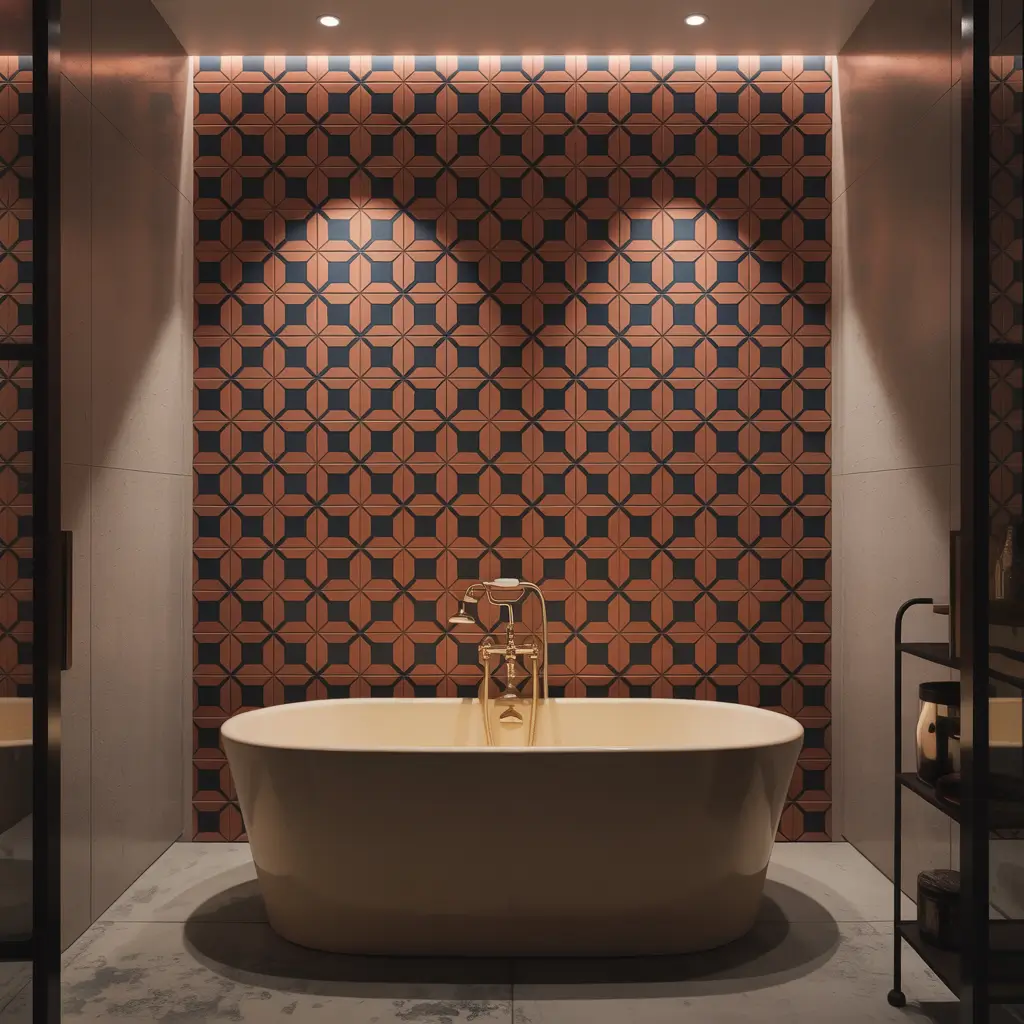
You’ve seen these tiles all over social media, and for good reason. They are stunning. Traditional encaustic tiles are made from colored cement, but today, you can find durable and affordable porcelain versions with the same intricate, colorful patterns.
These tiles are perfect for making a feature out of your floor. Imagine walking into a bathroom and being greeted by a gorgeous, Moroccan-inspired pattern. It immediately sets a unique, eclectic tone for the space. A word of caution: a little goes a long way. Let the floor be the star of the show and keep the wall tiles and fixtures relatively simple.
Geometric Greatness
If intricate floral or star patterns aren’t your thing, you can still go bold with geometrics. Hexagons, chevrons, and fish scales (or fan shapes) are all having a major moment.
- Hexagon Tiles: They can be small and used to create a honeycomb effect, or large for a more modern, graphic look. You can even find them in fun colors or mix and match black, white, and gray for a custom pattern.
- Chevron & Herringbone: These “V” shaped patterns create a sense of movement and direction in a room. A chevron floor can lead the eye towards a focal point, like a beautiful freestanding tub.
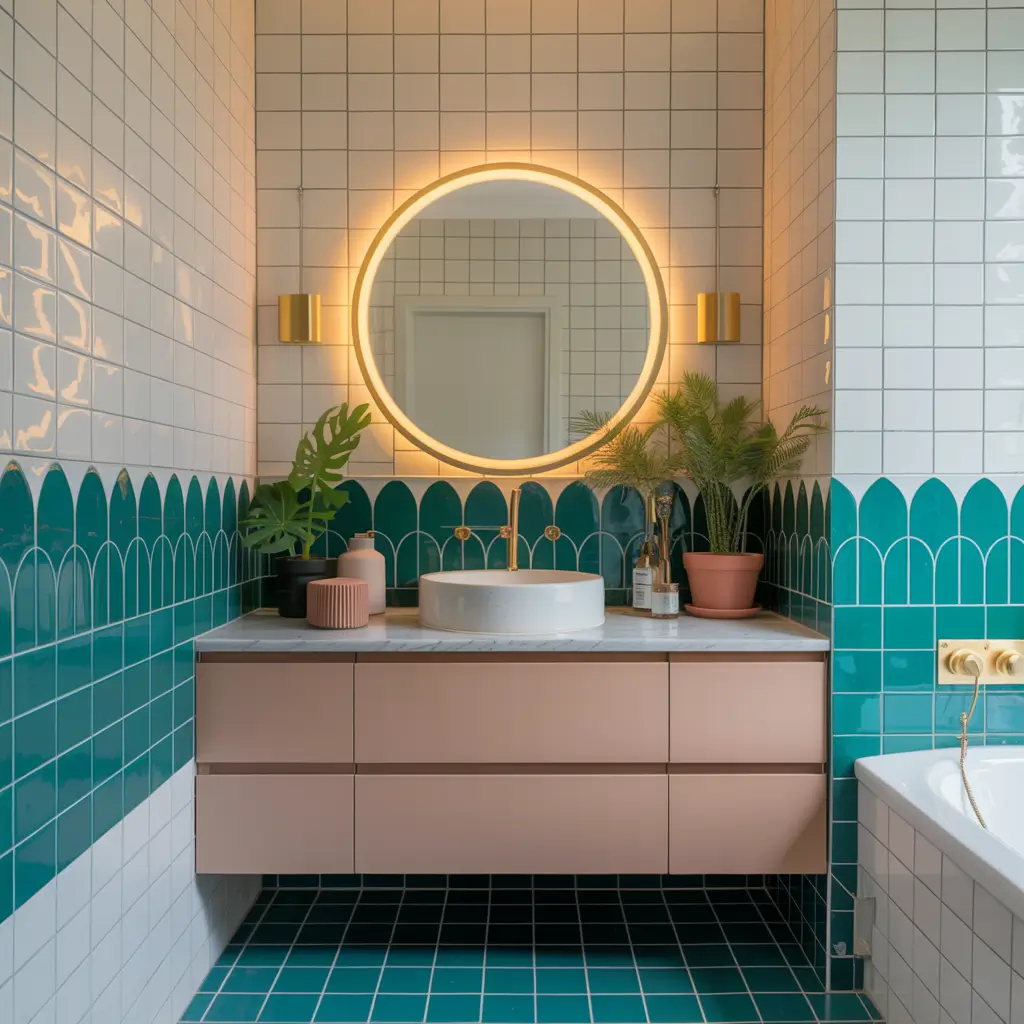
- Fish Scale/Fan Tiles: These bring a touch of Art Deco glamour and a soft, scalloped texture to a wall. They look particularly amazing as a feature wall behind a vanity or in a shower.
How Much is Too Much?
This is the eternal question when dealing with bold patterns. Ever walked into a room and felt an instant headache? Yeah, that’s what we want to avoid. My rule of thumb is the “One Star” rule.
Pick one surface to be the star. If you choose a wild, patterned floor, keep the walls simple. If you want a dramatic, fish-scale feature wall in the shower, keep the floor and other walls neutral. Unless you’re going for a full-blown maximalist explosion (in which case, I salute you!), letting one pattern shine will feel intentional and chic, not chaotic.
6. Neutral and Calming Bathroom Tile Palettes
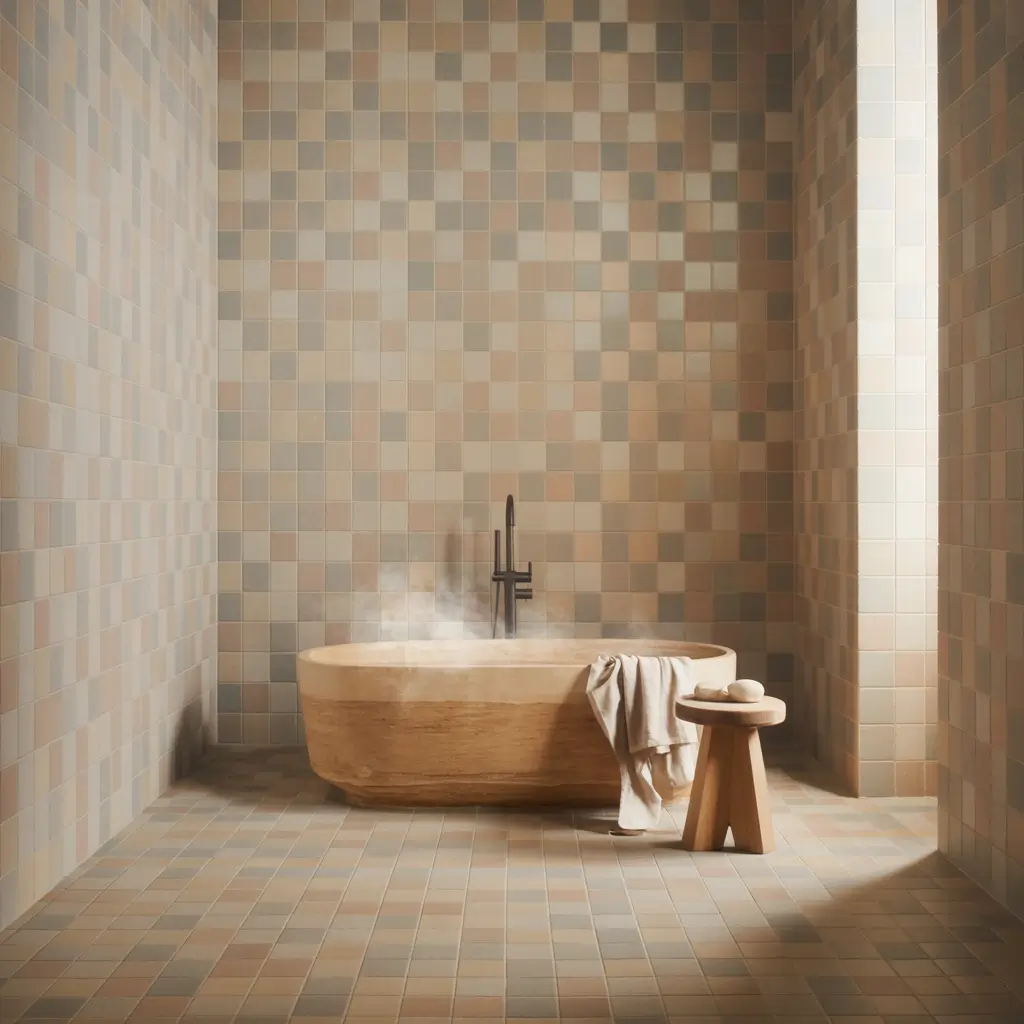
Maybe a bold pattern gives you anxiety. Maybe you just want your bathroom to be a quiet, peaceful escape from the noise of the world. I get that. My master bathroom is my personal zen zone. Creating a serene space is all about a soft, neutral tile palette.
Beyond Beige: Exploring “Greige” and Soft Whites
Neutral does not have to equal boring. The world of neutrals is vast and beautiful. Forget builder-grade beige and explore more sophisticated shades. “Greige” (a mix of gray and beige) is incredibly popular because it’s a perfect warm-cool balance that works with almost any decor.
Also, consider the nuances of white. There are cool, crisp whites with blue undertones, and warm, creamy whites with yellow undertones. Holding tile samples up in your actual bathroom is key, as the lighting in your space will dramatically affect how a color reads. A warm white can make a north-facing bathroom feel cozier, while a cool white can balance the yellow light in a south-facing one.
Zellige Tiles: Perfectly Imperfect
If I had to pick one tile that embodies “calm luxury” right now, it would be Zellige tile. Originating from Morocco, these handcrafted terracotta tiles have a beautifully uneven surface and a high-gloss glaze.
What makes them so special is their imperfection. No two tiles are exactly alike. They have slight variations in color, texture, and size that, when installed together, create a wall with incredible depth and character. The glossy finish reflects light beautifully, creating a shimmering, water-like effect that is just breathtaking. They are the epitome of wabi-sabi design—finding beauty in imperfection.
The Vertical Stack
We talked about tile patterns for bold looks, but they can also be used to create calm. For a modern, serene feel, I love a vertical stack bond. This is where you take a rectangular tile (like a subway tile or something a bit larger) and stack them directly on top of each other in straight columns.
This layout draws the eye upward, making ceilings feel higher. The clean, grid-like lines feel orderly and peaceful, a far cry from the busyness of a traditional brick layout. It’s a subtle architectural detail that lends a sense of calm, spa-like order to a space.
7. Vintage and Retro Bathroom Tile Inspirations
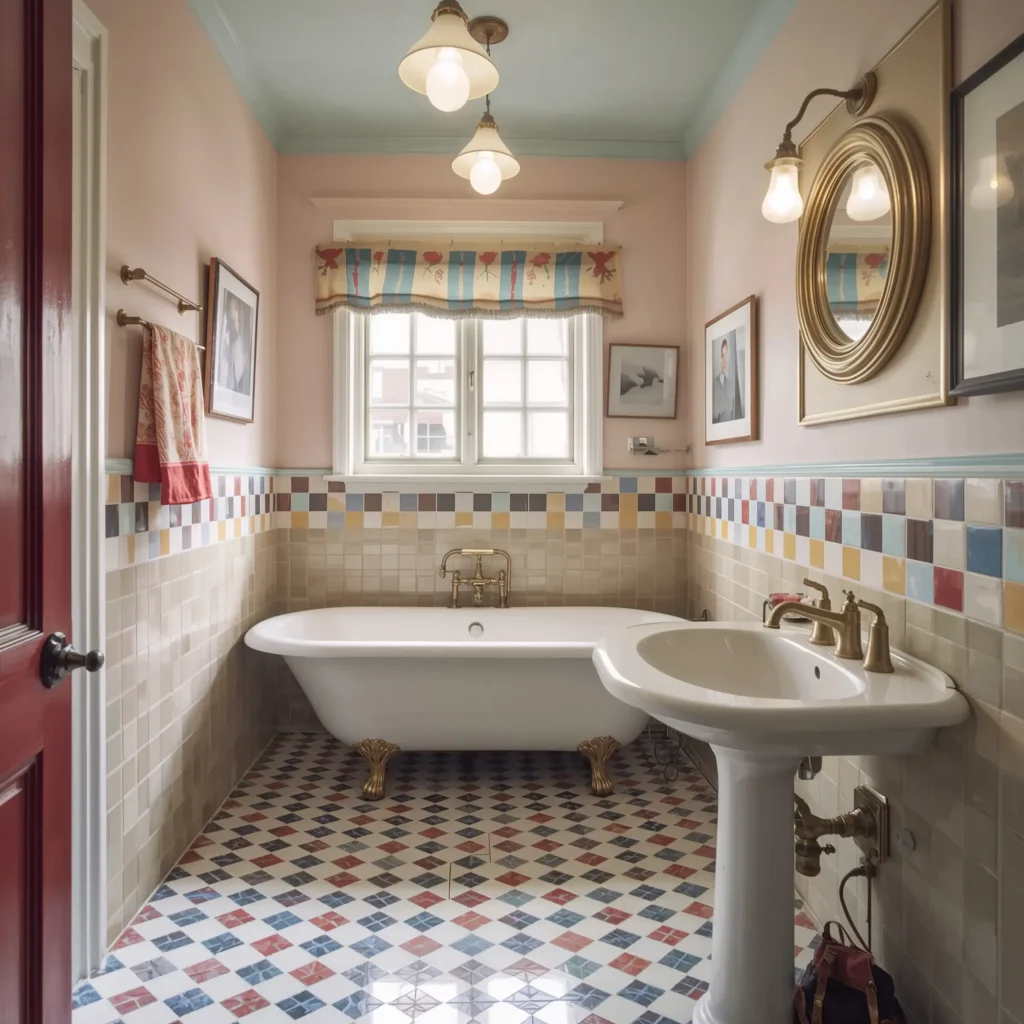
Feeling like you were born in the wrong decade? Is your soul more “Great Gatsby” than “Great Outdoors”? Good news! You can bring that vintage flair into your bathroom with tile. Done right, it’s not dated—it’s timeless.
The Art Deco Comeback
The Roaring Twenties are back, baby! Art Deco is all about glamour, geometry, and a touch of drama. For an Art Deco bathroom, think bold.
- Fan-shaped tiles are the quintessential Art Deco motif. Use them on a feature wall, maybe in a deep emerald green or a dramatic black.
- Pair black and white tiles in strong geometric patterns. Think sharp lines, sunbursts, and stepped forms.
- Don’t forget the accents. This style begs for metallic grout in gold or brass to complement your fixtures. It’s unapologetically lavish.
Mid-Century Modern Vibes
For a slightly more relaxed retro feel, look to the 1950s and 60s. Mid-Century Modern (MCM) design is characterized by clean lines, organic shapes, and a connection to nature. Yes, this is where avocado green and harvest gold came from, but we can do it better now.
Think stacked square tiles in a 4×4 or 6×6 inch format. Instead of a jarring avocado, opt for a softer moss green, a warm mustard yellow, or a pale sky blue. The key is the simple, grid-like pattern of the stacked tiles, which feels honest and functional—a core tenet of MCM design. Pair it with a teak vanity, and you’re golden.
Victorian Elegance with Penny Rounds and Basketweaves
If you want to go even further back in time, the Victorian era offers some of the most classic bathroom tile patterns. These are perfect for floors, especially in older homes.
- Penny Rounds: These tiny, circular tiles (either ceramic or porcelain) create a wonderful texture and are surprisingly grippy, making them great for bathroom floors. A classic black and white pattern or even a custom “rug” design is pure vintage charm.
- Basketweave Mosaic: This is another timeless pattern that uses small rectangular tiles to create a woven look. It’s intricate, elegant, and adds a ton of character without overwhelming a small space.
8. Black and White Tile Ideas for Timeless Bathrooms
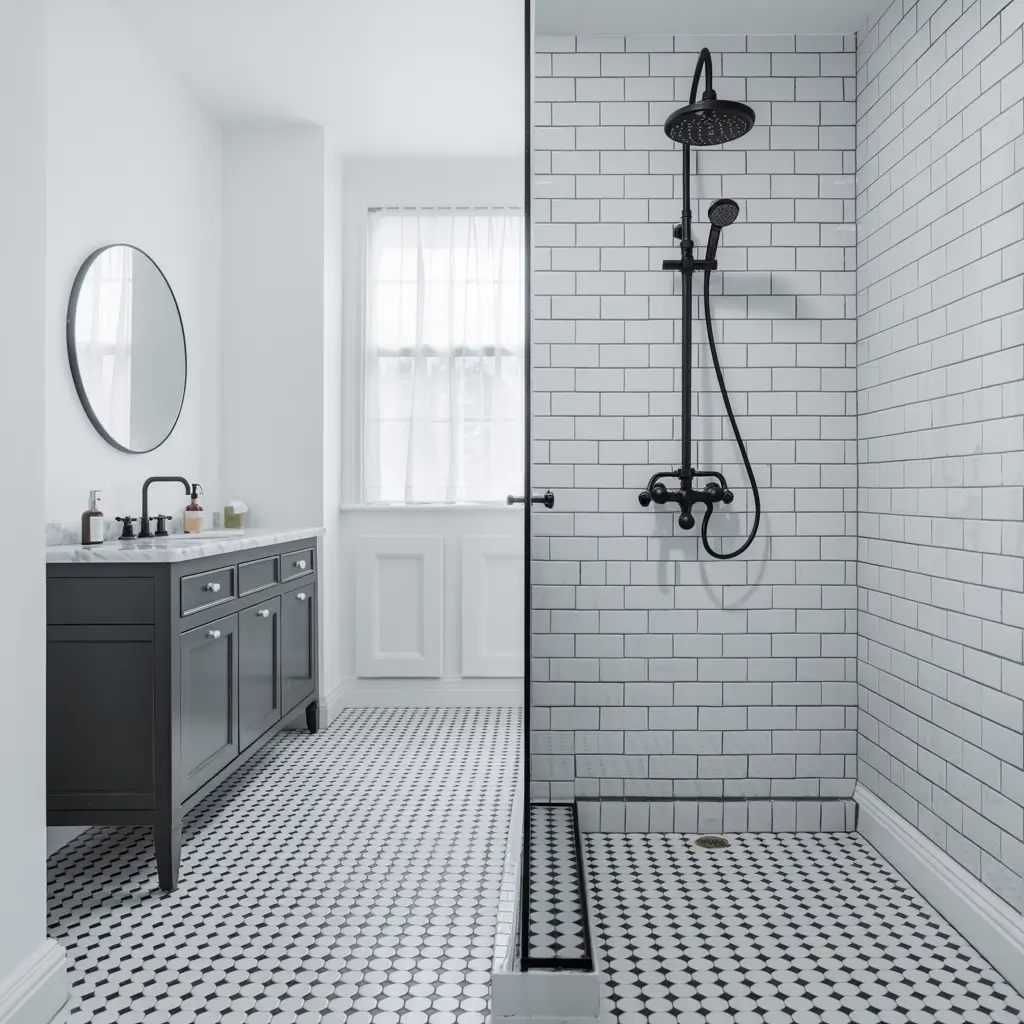
Some things just never go out of style: a good pair of jeans, a classic rock song, and a black and white bathroom. This color combination is the little black dress of interior design—it’s always chic, always works, and can be adapted to fit any style, from ultra-modern to vintage farmhouse.
The Unbeatable Checkerboard
The checkerboard floor is an absolute classic. It’s bold, graphic, and instantly recognizable. But you can put a modern spin on this old favorite. Instead of the standard 12×12 inch vinyl tiles, consider:
- Changing the Scale: Use large 18×18 or 24×24 inch tiles for a more dramatic, contemporary look.
- Laying it Diagonally: A checkerboard pattern laid on the diagonal (a harlequin pattern) feels more dynamic and can help make a narrow room feel wider.
- Playing with Finish: Try using a matte black tile with a polished white tile to add a subtle layer of texture and interest.
Black Walls, White Floor (and Vice Versa)
For a truly dramatic and high-contrast look, commit to one color for the walls and the opposite for the floor. A bathroom with glossy black subway tiles on the walls and a clean white floor feels moody, sophisticated, and incredibly chic. It’s a bold move, but the payoff is a space that feels like a high-end boutique hotel.
Conversely, black floors can ground a space beautifully, hiding dirt and scuffs like a champ. Pairing a dark floor with bright white walls keeps the room from feeling too heavy and creates a crisp, clean aesthetic.
Grout as a Design Element
In a black and white scheme, your grout choice is a powerful design tool. This is not the place for standard gray grout that just blends in.
- White Tile with Black Grout: This is my personal favorite. It makes every single tile pop, creating a strong graphic pattern. It turns simple white subway or square tiles into a major design feature.
- Black Tile with White Grout: This creates an even more intense, almost futuristic grid effect. It highlights the geometry of your tile layout and makes a very bold statement.
9. DIY Bathroom Tile Projects for Beginners
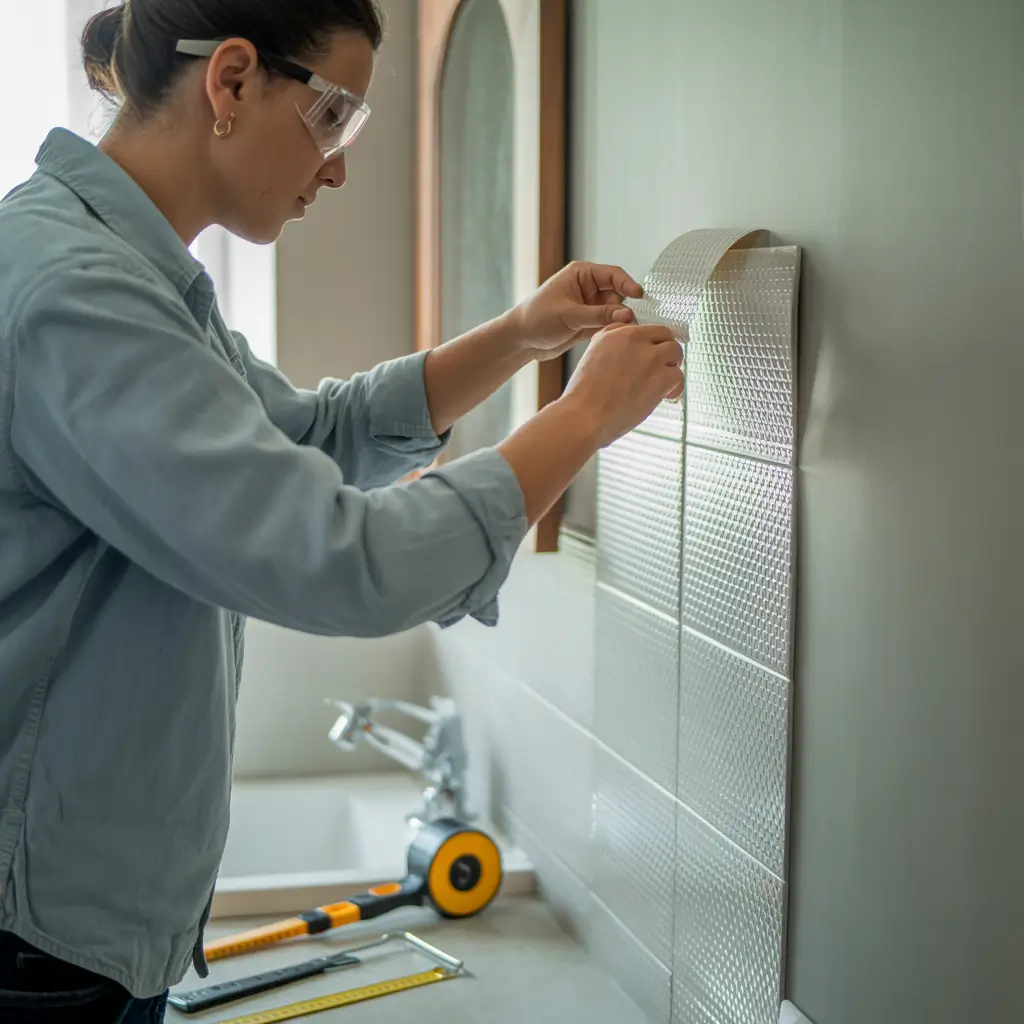
Alright, my fellow hands-on enthusiasts, this one’s for you. Tiling can seem intimidating, but with the right project and a little patience, it’s a totally achievable DIY. The feeling of accomplishment you get from completing your own tile project is unmatched. Just measure twice, cut once, and maybe swear only three times. 🙂
Tiling a Backsplash: Your Starter Project
If you’ve never tiled before, please do not make a complex shower your first project. Start with a vanity backsplash. Why? It’s a small, manageable area. It’s a flat, vertical surface, which is easier than a floor. And if you mess up a little, it’s not the end of the world. It’s the perfect training ground to learn how to mix thin-set, apply it evenly, and place your tiles.
Essential Tools You Actually Need
You can go crazy buying tools, but here’s the bare-bones list to get you started on a small project.
- Tile Cutter or Wet Saw: For simple straight cuts on ceramic tile, a cheap manual “snap” cutter works. For porcelain, glass, or any L-shaped cuts, you’ll really want to rent or buy a small wet saw. It’s a game-changer.
- Notched Trowel: This is what you use to spread the adhesive. The size of the notches depends on the size of your tile—check the back of the adhesive bag!
- Spacers: Don’t try to eyeball it. Just don’t. Use tile spacers. They ensure your grout lines are consistent and your project looks professional.
- Grout Float: A rubber float is essential for pressing grout into the joints without scratching your tiles.
The Most Common Rookie Mistake (and How to Avoid It)
I’ve seen it a hundred times. The biggest mistake beginners make is improper prep or using the wrong adhesive. You cannot tile over a dirty, dusty, or uneven wall. Your surface must be clean, flat, and stable.
Also, make sure you buy the right “glue.” There’s tile mastic (pre-mixed, good for dry areas like backsplashes) and thin-set mortar (a powder you mix with water, necessary for wet areas like showers and floors). Using mastic in a shower is a recipe for disaster. Read the instructions—they’re there for a reason!
Read Also 15 Gorgeous Hexagon Tile Bathroom Designs to Try Now
10. Eco-Friendly and Sustainable Bathroom Tile Options
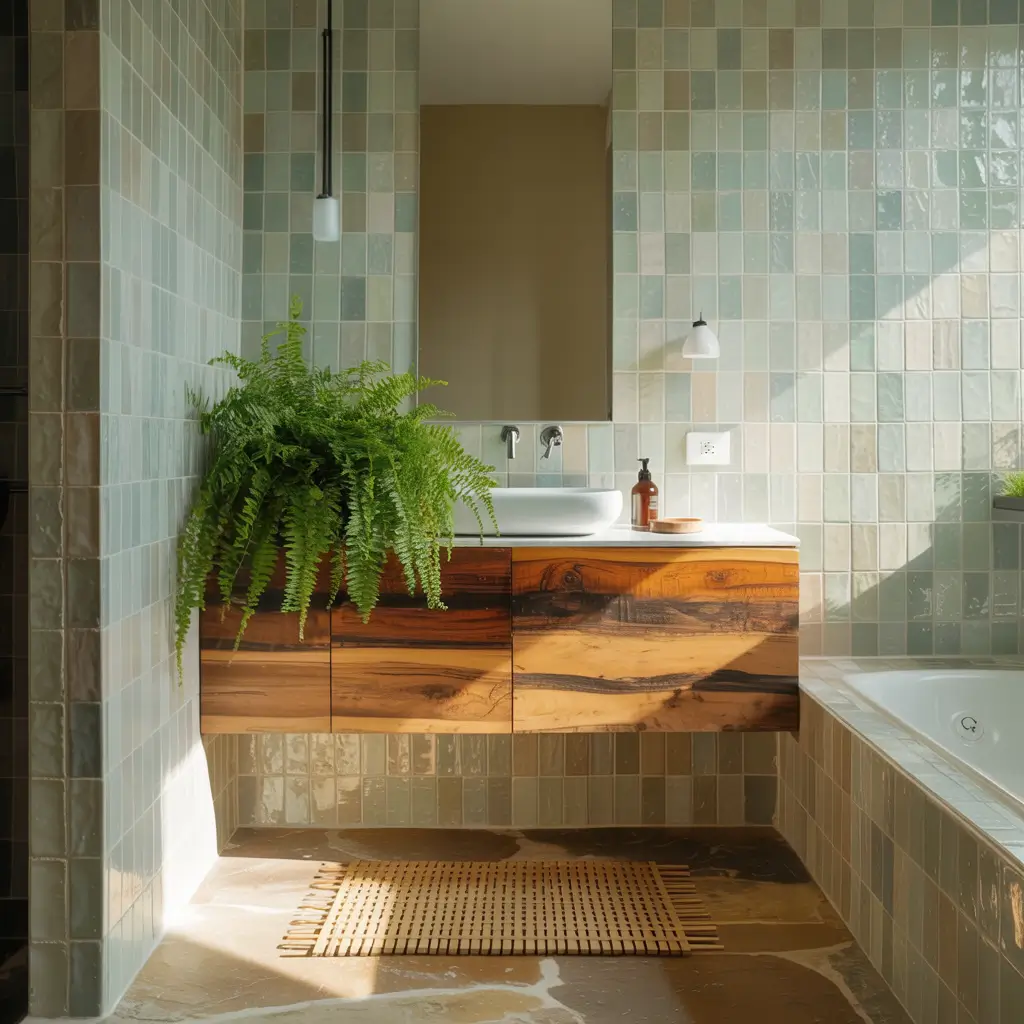
Last but certainly not least, let’s talk about making choices that are good for your home and the planet. The demand for sustainable building materials has exploded, and the tile industry has some fantastic eco-friendly options.
Recycled Glass Tiles: Beauty from Waste
This is one of my favorite sustainable materials. Recycled glass tiles are made from post-consumer waste—think old wine bottles and car windshields. This waste is crushed, melted down, and formed into beautiful, luminous tiles.
They come in an incredible array of colors, from sea-glass blues and greens to vibrant reds. Because they are glass, they are non-porous and completely waterproof, making them perfect for bathroom walls and backsplashes. They reflect light beautifully and add a unique, jewel-like quality to a space.
Cork Flooring? In a Bathroom?
I know what you’re thinking. Cork? In a wet room? But hear me out. Modern cork flooring is incredibly water-resistant. Cork is a natural and renewable resource; it’s harvested from the bark of cork oak trees, which doesn’t harm the tree itself.
It’s naturally anti-microbial and resistant to mold and mildew. Plus, it’s soft and warm underfoot, which is a lovely feeling on a cold morning. You do need to ensure it’s installed correctly and the seams are properly sealed, but it’s a wonderfully warm, quiet, and eco-conscious choice for a bathroom floor.
Look for Low-VOC Grout and Sealants
Sustainability isn’t just about the tile itself; it’s also about what you use to install it. Many traditional grouts, adhesives, and sealants release Volatile Organic Compounds (VOCs) into the air, which can impact your indoor air quality.
When shopping, look for products labeled as “Low-VOC” or “No-VOC.” These formulations are designed to be healthier for you and your family. It’s a small choice that contributes to a healthier home environment, and FYI, the performance is just as good as their traditional counterparts.
Your Bathroom, Your Style
Whew! We covered a lot of ground, from sleek minimalist designs to bold retro patterns. The biggest takeaway I want you to have is this: there is no single “right” way to tile a bathroom. The perfect tile is the one that makes you happy to walk into the room every single day.
Don’t be afraid to mix and match ideas. Take the large format concept from the minimalist look but apply it to a warm, spa-like wood-look tile. Use a budget-friendly subway tile but in a bold, vintage-inspired herringbone pattern.
This is your space. Let it reflect your personality. So take a deep breath, pick a direction that excites you, and start planning. That sad, boring bathroom has had its day. It’s time to create a space you truly love.