


Let’s be real: designing a small bathroom is a special kind of puzzle. You’re constantly battling for every square inch, trying to make a space that feels more like a serene retreat and less like a cramped closet you happen to bathe in. I’ve been there, staring at a tiny bathroom footprint and wondering how on earth I can make it feel anything but small.
Here’s the secret weapon I’ve come to swear by: tile. The right shower tile doesn’t just keep the water off your walls; it’s a design powerhouse. It can trick the eye, create depth, reflect light, and completely transform the vibe of your tiny bathroom. Forget just “making it work.” We’re talking about making it gorgeous.
So, grab a coffee, and let’s chat. I’ve rounded up 15 of my absolute favorite shower tile ideas that work wonders in small spaces. We’ll go through what works, why it works, and how to get the look just right.
1. Modern White Subway Tile Shower
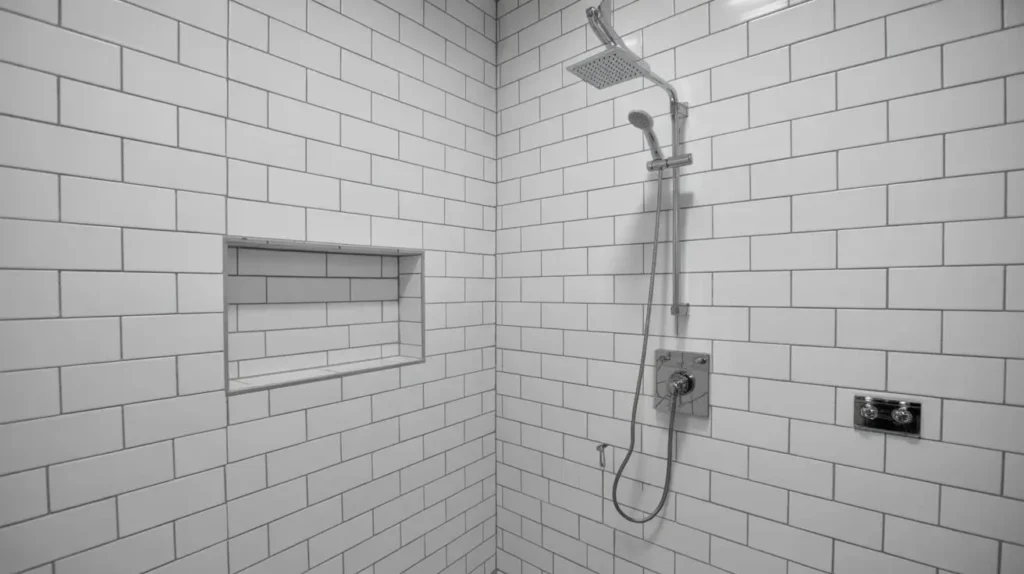
Okay, let’s get the obvious one out of the way first. I can almost hear you now: “White subway tile? Groundbreaking.” I know, I know. But hear me out. There’s a reason this look is an undying classic, especially for small bathrooms. It’s not about being trendy; it’s about being smart.
Why It Works for Small Spaces
White tile is your best friend in a tiny room. It reflects a massive amount of light, which instantly makes any space feel brighter, cleaner, and, most importantly, bigger. A glossy finish doubles down on this effect, turning your shower walls into reflective surfaces that bounce light all around the room. It’s a simple, brilliant illusion.
Getting the Look Right
The magic of subway tile is in the details. You have more control here than you think.
- Grout is Everything: Want a seamless, expansive look? Use a thin, white, or light gray grout line. This makes the individual tiles blend together into one continuous surface. Want a bit more personality and a modern farmhouse or industrial vibe? Go with a dark gray or black grout. This makes the pattern pop but can make the space feel a bit busier, so use it wisely.
- Pattern Play: Don’t just stick to the traditional brick-lay pattern. You can stack them horizontally for a clean, modern grid or vertically to draw the eye upward (more on that later!).
- Tile Size: For a classic look in a small shower, the standard 3×6 inch tile is perfect. It creates a recognizable pattern without overwhelming the space.
My Two Cents
I used glossy white subway tile with a light gray grout in my first apartment bathroom, which was laughably small. It was the single best decision I made. The room went from feeling like a cave to being surprisingly bright and airy. It’s a foolproof, budget-friendly option that you really can’t get wrong.
2. Luxury Marble Tile Walk-In Shower
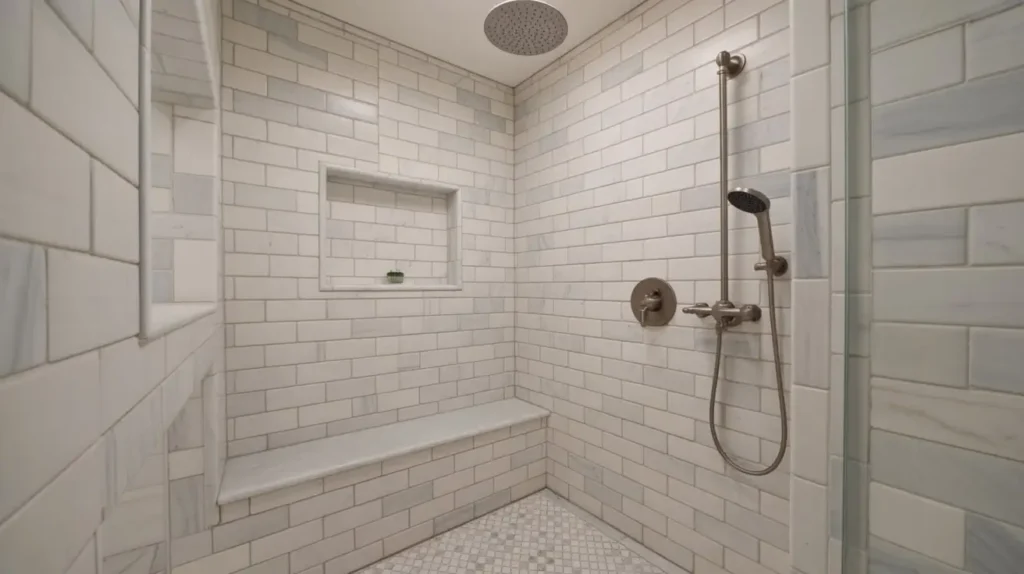
If you want your small bathroom to feel less like an economy cabin and more like a first-class suite, marble is your ticket. It screams luxury, sophistication, and timeless elegance. And yes, you can absolutely make it work in a compact shower.
Why It Works for Small Spaces
The key here is using large-format marble tiles or even full slabs. Similar to the white tile principle, the light tones and subtle, sweeping veining of marbles like Carrara or Calacatta create a sense of movement and flow. With fewer grout lines to break up the visual field, your walls look like a continuous, expansive piece of art. It’s a high-end trick that makes a small space feel grand.
Getting the Look Right
Let’s be honest, real marble can be a bit of a diva. It’s porous, requires sealing, and your wallet might cry a little.
- The Porcelain Pretender: IMO, high-quality, marble-look porcelain is the way to go for most people. The printing technology today is so good, you can get the exact look of luxury marble without the maintenance headache or the heart-stopping price tag. It’s a win-win.
- Bookmatching: If you are going for slabs (either real or porcelain), ask your installer about bookmatching the veins. This is where they install two adjoining slabs as mirror images of each other, creating a stunning, symmetrical pattern that looks incredibly high-end.
- Keep it Simple: When you have a material this beautiful, let it be the star. Pair it with simple, high-quality fixtures like a frameless glass door and sleek chrome or brushed brass hardware.
My Two Cents
Here’s a quick comparison to help you decide:
| Feature | Real Marble | Marble-Look Porcelain |
|---|---|---|
| Cost | High | Medium |
| Maintenance | High (requires regular sealing) | Low (no sealing needed) |
| Durability | Prone to staining and scratching | Highly resistant to stains/scratches |
| Look | 100% unique natural pattern | Highly realistic, consistent patterns |
Honestly, unless you’re a purist with a flexible budget, I always recommend the porcelain version. It gives you 99% of the look with 0% of the stress.
3. Bold Black Tile Rainfall Shower
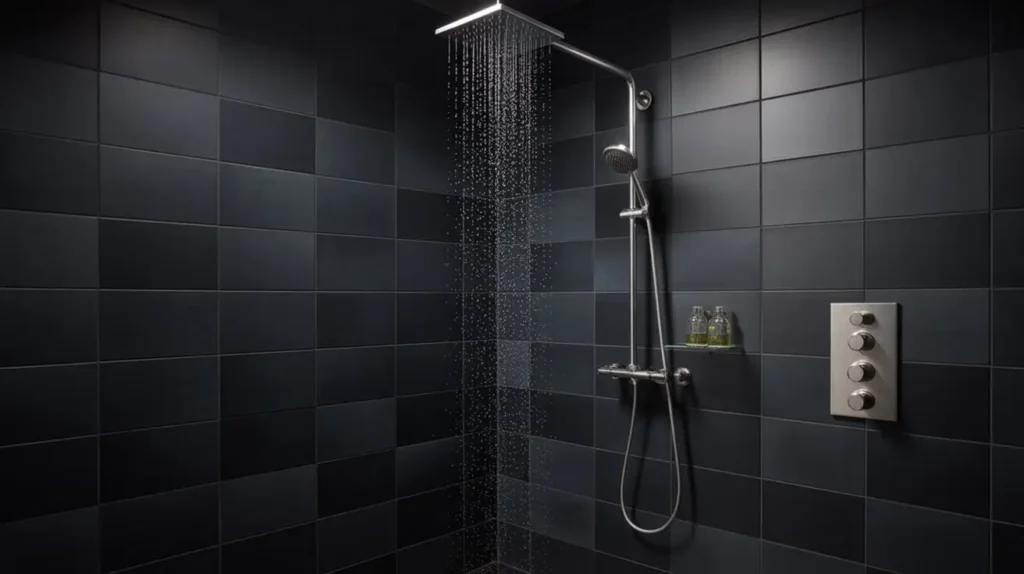
Ready to break some rules? Using black tile in a small bathroom sounds completely counterintuitive, but when done right, it’s a showstopper. Instead of making the space feel small, it can create a sense of infinite depth and high-end drama.
Why It Works for Small Spaces
Think of it like a black-box theater. The dark walls recede, blurring the room’s boundaries and creating a cozy, enveloping, and surprisingly sophisticated atmosphere. It’s a bold move that turns your small shower from a functional box into an intentional, moody escape. This look is all about creating a vibe.
Getting the Look Right
You can’t just slap up black tiles and call it a day. This look requires a strategy.
- Lighting is Non-Negotiable: This is the most important rule. You need excellent lighting to pull this off. That means a good overhead light in the shower, plus potentially some accent lighting. Without enough light, your dramatic retreat will just be a dark cave.
- Go Glossy: A glossy or high-sheen black tile will help reflect what light you do have, adding dimension and preventing the space from feeling completely flat. A matte black tile is also stunning but requires even better lighting.
- Contrast is Key: Pair the black shower with a white or light-colored floor and vanity. This contrast prevents the room from feeling overwhelmingly dark and creates a crisp, modern look. A light wood vanity can also add warmth.
My Two Cents
I saw this in a boutique hotel once and was floored. The shower was tiny, but the floor-to-ceiling glossy black tile, paired with a rainfall showerhead and brass fixtures, made it feel like the most luxurious little cocoon. It’s not for the faint of heart, but if you’re a fan of dramatic design, it’s an unforgettable look.
4. Coastal Blue Mosaic Shower Design
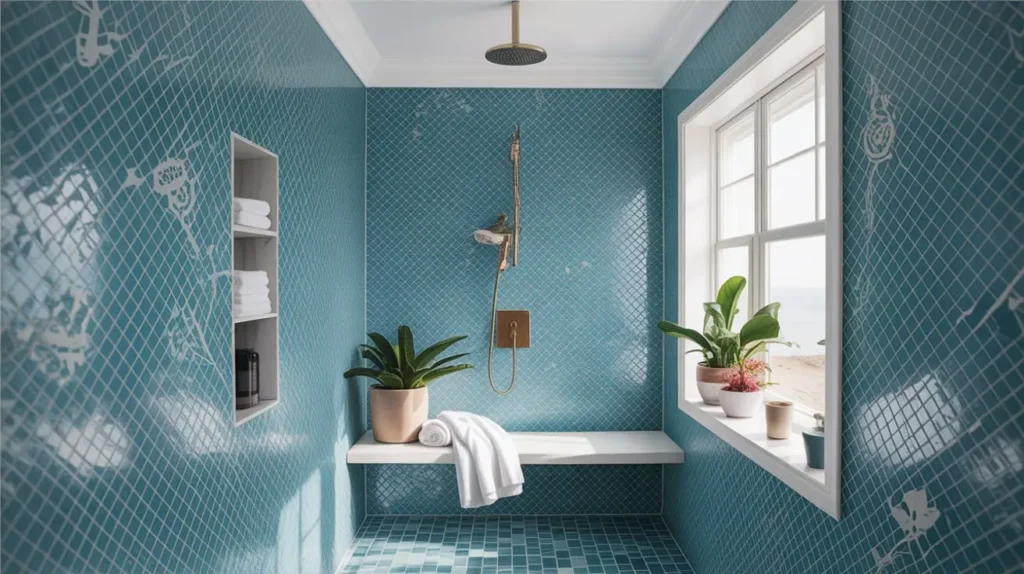
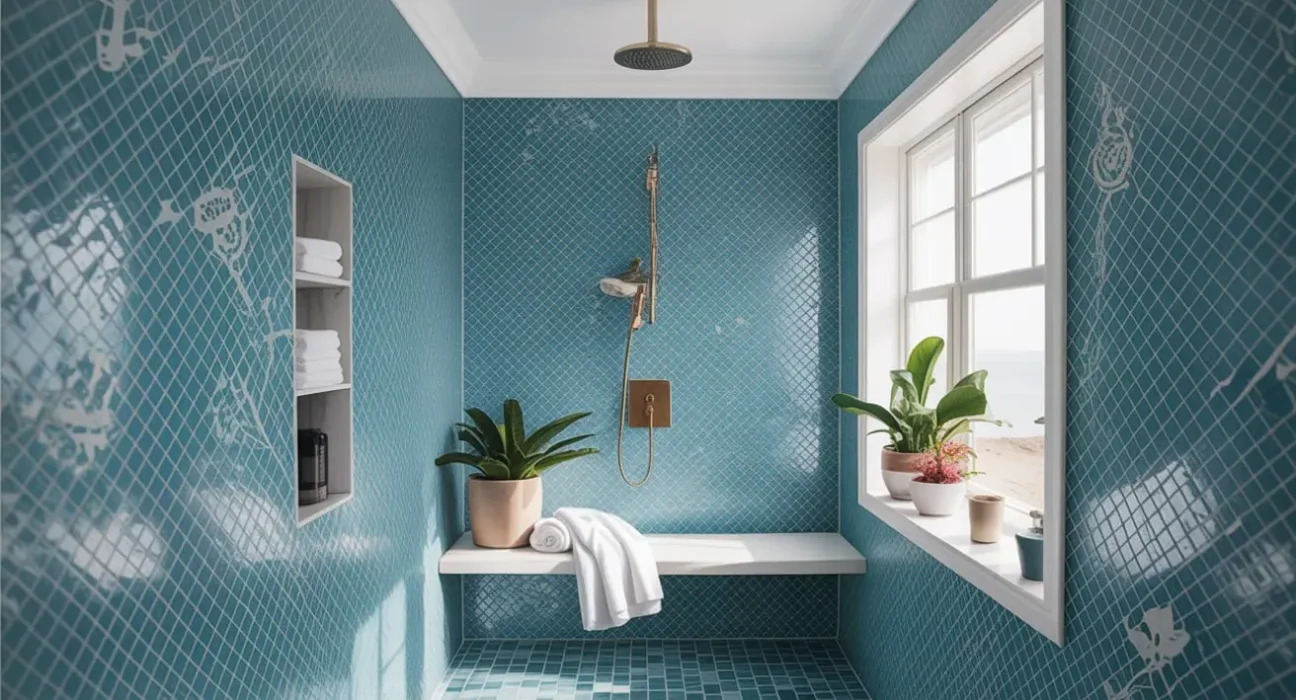
If you’re dreaming of a beach vacation every time you step into the shower, this one’s for you. A beautiful blue mosaic tile can turn your small shower into a vibrant, jewel-box-like feature that feels personal and refreshing.
Why It Works for Small Spaces
Small tiles, like mosaics, can add texture and interest without making the space feel cluttered, especially when used strategically. The trick is to create a feature wall. By tiling just the main wall of your shower in a vibrant blue mosaic and keeping the other walls and floor simple (think large white or light gray tiles), you draw the eye to one stunning focal point. This gives the illusion of depth.
Getting the Look Right
Mosaics offer a ton of options, from tiny penny rounds to intricate glass squares.
- Choose Your Blue: The shade of blue sets the mood. A light, watery aqua feels airy and spa-like. A deep navy or cobalt is more dramatic and sophisticated. A mix of blues can create a beautiful, ocean-inspired look.
- Grout Matters (Again!): With mosaics, grout is a major part of the design. A matching blue grout will blend in, creating a more uniform sheet of color. A white or light gray grout will make every single tiny tile pop, emphasizing the pattern.
- Consider the Finish: Iridescent or glass mosaic tiles are fantastic for small spaces because they catch and reflect light beautifully, adding a subtle shimmer that makes the whole space feel more alive.
My Two Cents
A friend of mine did this with a fish-scale (or “scallop”) mosaic tile in shades of turquoise on her shower’s back wall. It’s absolutely stunning. It proves that you don’t need a huge space to make a huge impact. You just need one bold, beautiful idea.
Read Also 15 Gorgeous White Tile Bathroom Ideas You’ll Love Today
5. Neutral Beige Stone Tile Shower
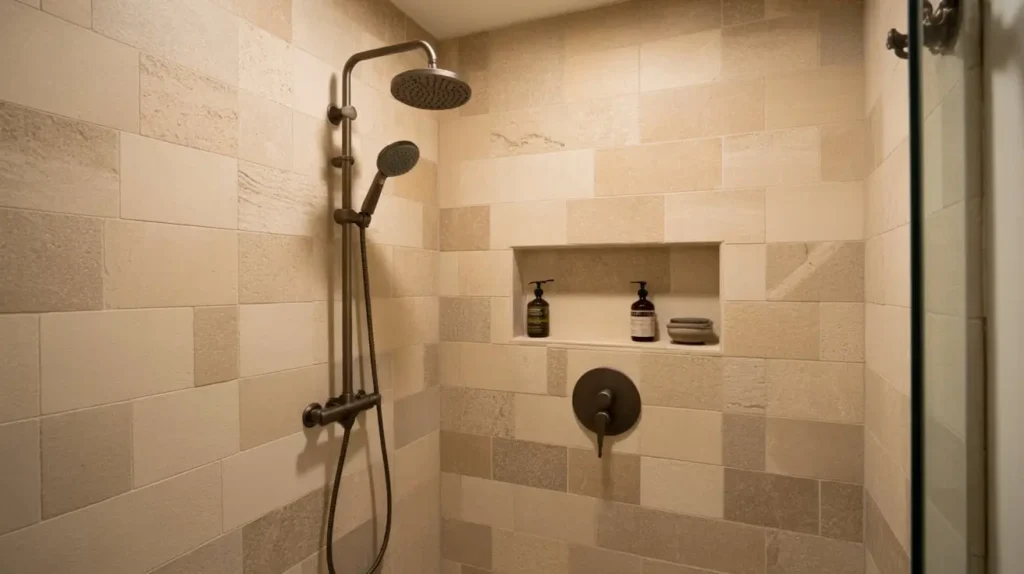
Sometimes, you just want a space that feels calm, warm, and grounded. Enter the neutral beige stone tile shower. This isn’t the boring builder-grade beige from the 90s. We’re talking about sophisticated, earthy tones found in travertine, limestone, or their amazing porcelain lookalikes.
Why It Works for Small Spaces
A monochromatic, neutral color scheme is a classic strategy for making a space feel larger. By using the same beige stone tile on the shower walls and the bathroom floor, you erase the visual boundary between the shower and the rest of the room. This continuity tricks the eye into seeing one larger, cohesive space.
Getting the Look Right
The key to making neutral feel luxurious instead of boring is texture.
- Embrace Natural Variation: Look for tiles that have subtle, natural-looking color variations and texture. This adds depth and character, preventing the color from feeling flat.
- Large Format is Your Friend: Just like with marble, using large-format beige tiles (like 12×24 inches) will minimize grout lines and enhance that seamless, expansive feeling.
- Layer Your Neutrals: Pair the beige tile with other warm, natural textures. Think a light oak vanity, woven storage baskets, and soft, fluffy white towels. This creates a layered, spa-like environment that feels incredibly serene.
My Two Cents
I’m a huge fan of this look for creating a timeless, calming retreat. It’s the opposite of a bold, dramatic statement, and that’s its strength. It’s a quiet luxury. FYI, if you opt for real travertine, make sure it’s properly sealed, as it’s a porous stone. Or just save yourself the trouble and get a high-quality porcelain version. 🙂
6. Elegant Herringbone Tile Shower

Want to take a classic tile like a subway and give it a custom, high-end twist? Lay it in a herringbone pattern. This zigzag design is dynamic, elegant, and an absolute game-changer for adding visual interest to a small shower.
Why It Works for Small Spaces
The diagonal lines of a herringbone pattern create a sense of movement that leads the eye outward and upward. This visual trickery can make a narrow shower feel wider and a short shower feel taller. It adds a sophisticated texture and pattern without introducing a new color or a busy print, keeping the space feeling clean and uncluttered.
Getting the Look Right
The herringbone pattern looks more complicated than it is, but there are a few things to keep in mind.
- Tile Choice: This pattern works best with long, rectangular tiles. The classic 3×6 subway tile is a great option, but you can create an even more dramatic effect with a longer tile, like a 2×8 or 3×12.
- Installation is Key: A herringbone pattern requires more cuts and precision than a standard brick-lay, so labor costs might be slightly higher. Ensure you have an experienced tiler. A poorly executed herringbone is a real eyesore.
- Direction Matters: You can lay the “arrows” of the pattern pointing up and down to emphasize height, or sideways to emphasize width. Think about what your specific space needs most.
My Two Cents
A full herringbone shower is a commitment. If you’re a bit hesitant, try using it on just one feature wall. A white-on-white herringbone (white tile, white grout) is a fantastic way to get that beautiful texture in a very subtle, sophisticated way. It adds class without shouting.
7. Spa-Inspired Large Format Tile Shower
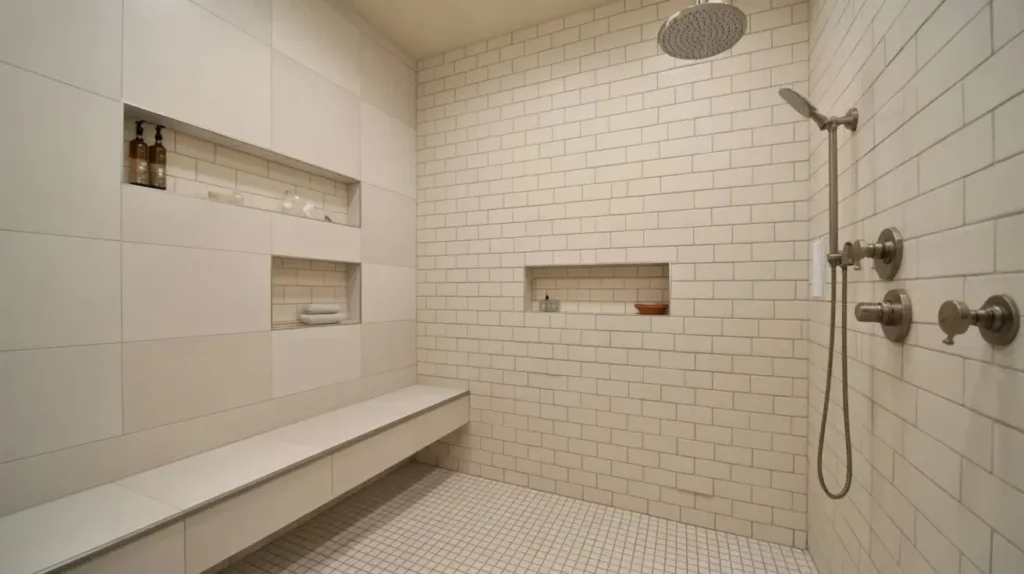
We’ve touched on this already, but it deserves its own spot on the list because it’s one of the most effective strategies for small bathrooms. Using large-format tiles (LFTs) is a professional designer’s go-to trick for creating a serene, seamless, and spacious-feeling shower.
Why It Works for Small Spaces
The logic is simple: fewer grout lines = less visual clutter. Our brains perceive a grid of grout lines as a boundary, subconsciously chopping up a surface into smaller squares. By using massive tiles (think 24×24 inches, 24×48 inches, or even larger), you drastically reduce that grid. The result is a clean, continuous surface that makes your shower walls feel expansive.
Getting the Look Right
Working with LFTs has its own set of rules.
- Choose a Calm Material: This look is all about creating a minimalist, spa-like feel. Opt for tiles that mimic natural stone, smooth concrete, or have a very subtle texture. A busy pattern on a huge tile would be overwhelming.
- Match Your Grout: This is crucial. Use a grout color that is as close as possible to the tile color. You want those few grout lines you do have to disappear completely.
- Logistics Check: This is a practical tip I learned the hard way. Before you fall in love with a giant tile, measure your doorways, hallways, and stairwells. Seriously. You need to make sure you can physically get the tiles into the bathroom. It’s a rookie mistake to overlook this.
My Two Cents
This is my personal favorite for a modern, clean look. It not only makes the space feel bigger, but it’s also a dream to clean. Fewer grout lines mean less scrubbing and less opportunity for mildew to take hold. It’s a win for aesthetics and a win for lazy cleaners like me.
8. Minimalist Gray Porcelain Tile Shower
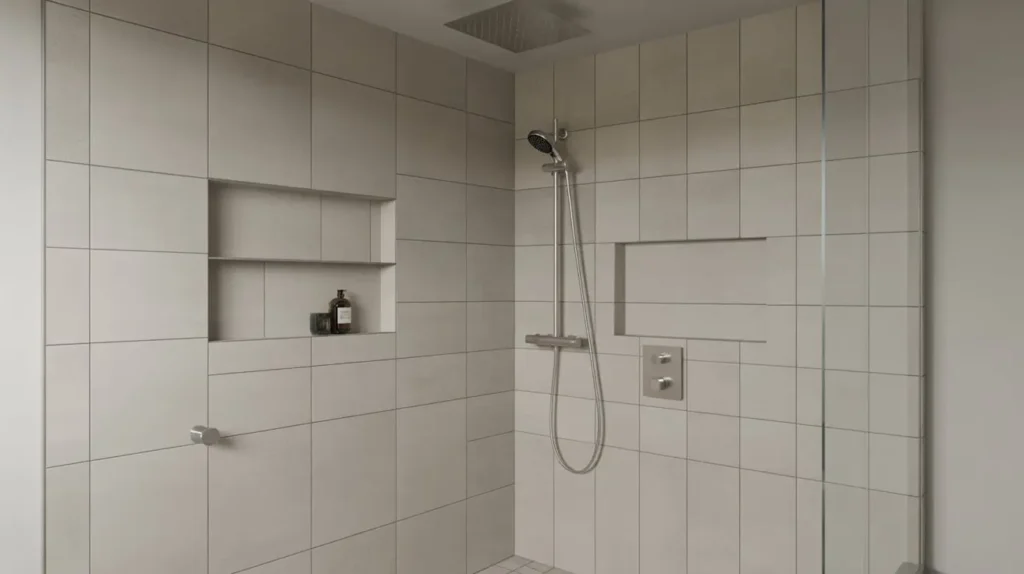
Gray is the sophisticated neutral that has completely overshadowed beige in modern design. It can be cool and crisp or warm and inviting, and it provides the perfect minimalist backdrop in a small shower, allowing you to accessorize with pops of color.
Why It Works for Small Spaces
A medium-to-light gray is a fantastic choice for a small space because it provides a sense of calm and serenity without being as stark as pure white. It has enough depth to be interesting but is light enough to keep the space from feeling closed-in. It’s the perfect canvas.
Getting the Look Right
Gray is incredibly versatile, so you have options.
- Concrete Look: One of the most popular styles right now is a porcelain tile that mimics the look of poured concrete. It gives an industrial-chic, minimalist vibe that is very clean and modern.
- Finish is Key: A matte finish on a gray tile looks incredibly sophisticated and high-end. It absorbs light, creating a soft, velvety look. A glossy finish will, of course, reflect more light and can be a good choice if your bathroom lacks natural light.
- Warm vs. Cool Grays: Pay attention to the undertones. A cool gray with blue undertones will feel very crisp and modern. A warm gray (sometimes called “greige”) with beige undertones will feel cozier and more traditional.
My Two Cents
I love a good concrete-look porcelain tile. Pair a large-format matte gray tile with black matte fixtures and a touch of natural wood (like a teak shower bench). The combination is just chef’s kiss. It’s effortlessly cool and timeless.
9. Geometric Patterned Tile Shower
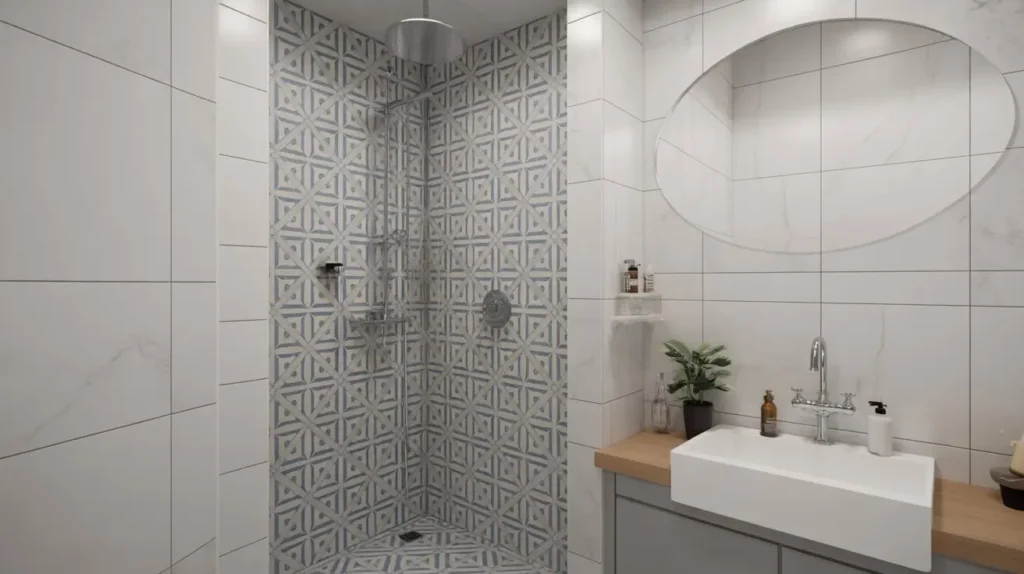
If you’re a maximalist at heart trapped in a minimalist’s space, this is your chance to shine. A bold geometric pattern can inject a huge dose of personality and fun into a tiny shower, turning it into the undeniable focal point of the room.
Why It Works for Small Spaces
Ever heard the term “jewel box” design? The idea is that in a very small space, you can go all-out with a bold pattern or color because it’s contained. Instead of making the space feel busy, it makes it feel intentional and special. A repeating geometric pattern can also create a mesmerizing effect that distracts from the room’s small dimensions.
Getting the Look Right
This is a bold look, so execution is everything.
- One Wall Wonder: To avoid overwhelming the space (and your eyes), it’s often best to use a patterned tile on just one wall—typically the one you see when you first walk in or the back wall of the shower. Keep the other walls and the floor simple.
- Scale is Important: The scale of the pattern matters. A very large-scale pattern might get cut off in a small shower, losing its effect. A medium-scale repeating pattern, like a hexagon, star, or cube design, is often the sweet spot.
- Color Palette: You can go for a high-contrast black and white geometric for a classic, punchy look, or choose a pattern with softer, more tonal colors for a gentler effect.
My Two Cents
This is a fantastic place to use cement or encaustic-look tiles. They have that beautiful, chalky finish and come in a million stunning patterns. They make a space feel unique and curated. It’s a commitment, for sure, but the payoff is a bathroom with a personality all its own.
Read Also 15 Sophisticated Black Tile Bathroom Designs to Copy
10. Textured Matte Tile Shower Look
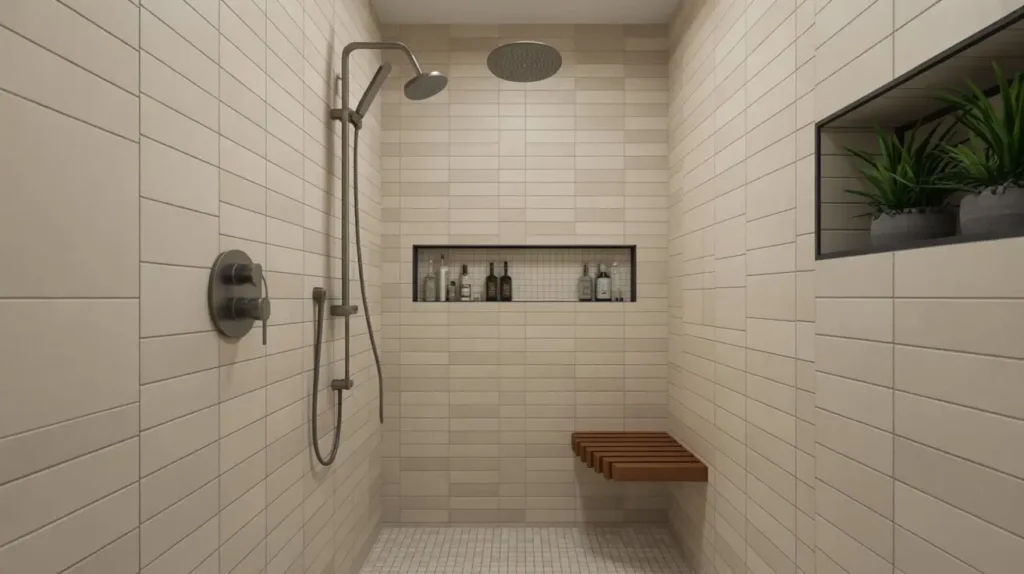
In the world of design, texture is the unsung hero. A shower tiled in a beautiful matte, textured tile feels incredibly sophisticated and tactile. It’s a subtle detail that elevates the entire space from basic to bespoke.
Why It Works for Small Spaces
While glossy tiles reflect light, matte tiles absorb it, creating a soft, serene, and non-glare surface. A textured matte tile—one that has a subtle 3D pattern, a linen-like finish, or a wavy surface—adds depth and interest without using any color or busy patterns. It engages the sense of touch and makes the shower feel like a carefully crafted, high-end installation.
Getting the Look Right
The beauty here is in the subtlety.
- Look for 3D Tiles: Many manufacturers now make “structured” or 3D tiles with subtle patterns like waves, ridges, or geometric reliefs. When light hits them, it creates beautiful shadows and highlights that add a ton of dimension.
- Uniform Color: This look works best when the texture is the star. Stick to a single, uniform color like white, gray, or even a soft green or blue.
- Feel the Tile: If you can, always get a sample. The tactile quality of these tiles is their main selling point. You want something that feels as good as it looks.
My Two Cents
A shower I recently saw used a large-format matte white tile with a subtle, wavy 3D texture. It was stacked vertically. The effect was incredible. It looked like a serene, flowing waterfall wall. It was all white, but it was anything but boring.
11. Earthy Terrazzo Tile Shower

Terrazzo is back, and it’s not the 1970s school hallway floor you remember. Modern terrazzo is chic, playful, and a fantastic way to add color and pattern to a small bathroom in a sophisticated way.
Why It Works for Small Spaces
Terrazzo consists of chips of marble, quartz, granite, or glass set in a binder. The “pattern” is random and organic. A light-colored terrazzo with multi-colored chips can be the perfect all-in-one solution. The light base color keeps the space bright, while the colorful flecks add personality and hide water spots and soap scum like a champ. It’s beautiful and practical.
Getting the Look Right
Modern terrazzo comes in endless color combinations.
- Go Big or Go Home: Just like with other materials, large-format terrazzo porcelain tiles are a great choice for a small shower. They minimize grout lines and create a seamless, speckled surface.
- Pick Your Palette: You can find terrazzo with neutral-colored chips for a subtle, earthy look, or go for one with bold, colorful chips of blue, green, pink, and yellow for a fun, retro vibe. Pull one of the chip colors out to use for your towels or bath mat to tie the room together.
- Real vs. Lookalike: Real, poured terrazzo is an expensive, artisan process. Terrazzo-look porcelain tiles, on the other hand, are durable, affordable, and give you the exact same aesthetic. For a shower, I’d strongly recommend the porcelain version.
My Two Cents
I am so happy terrazzo is having a moment. It’s such a joyful material. A terrazzo-look tile on the shower floor paired with a simple, solid-colored wall tile is a great way to dip your toe into the trend without it taking over the entire room.
12. Vertical Stacked Tile Shower Style
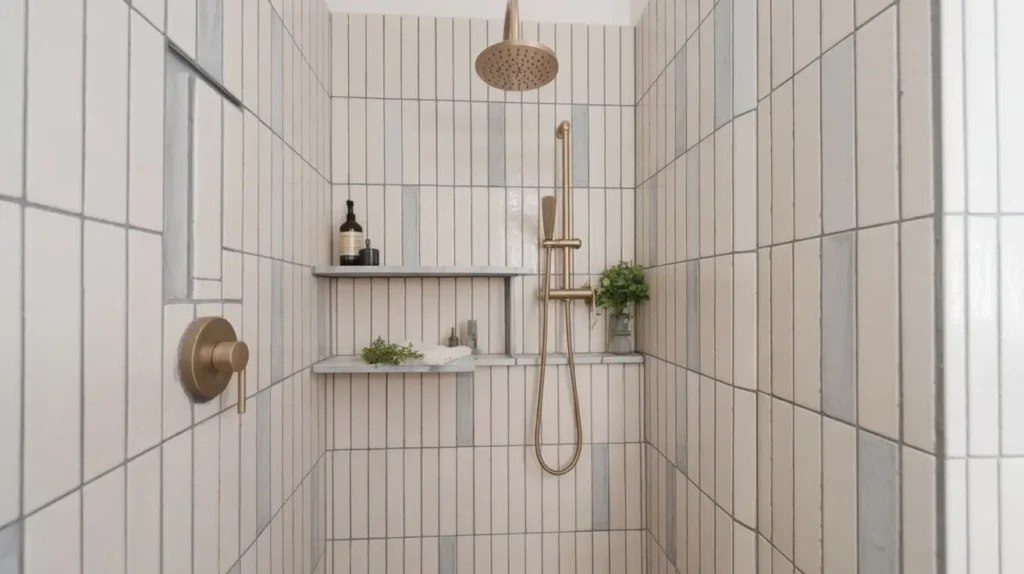
This is less about the tile itself and more about the installation pattern, but it’s a trick so effective for small, short bathrooms that it deserves its own category. A vertical stack bond is clean, modern, and a powerful visual tool.
Why It Works for Small Spaces
It’s the oldest trick in the fashion book: vertical stripes make you look taller. The same principle applies to your walls. By stacking rectangular tiles one on top of the other in straight, clean columns, you draw the eye upward, creating a strong sense of verticality. This gives the illusion of a higher ceiling and a more spacious shower.
Getting the Look Right
This is a simple pattern, but a few choices can change the whole look.
- Tile Shape: This works best with rectangular tiles. A long, skinny tile (like a 2×8 or 3×12) will create an even more pronounced vertical effect than a standard 3×6 subway tile.
- Contrasting Grout: While a matching grout creates a subtle, textured look, using a contrasting grout with a vertical stack really emphasizes those powerful upward lines. White tile with dark gray grout is a classic, graphic combination.
- Extend to the Ceiling: For maximum effect, run the tile all the way up to the ceiling. Stopping it short breaks the vertical line and lessens the height-enhancing illusion.
My Two Cents
This is my go-to recommendation for anyone with a standard 8-foot ceiling (or lower!) in their bathroom. It’s a simple change from the traditional brick-lay pattern, but the impact on the perceived height of the room is huge. It’s modern, clean, and incredibly effective.
13. Two-Tone Tile Shower Combination
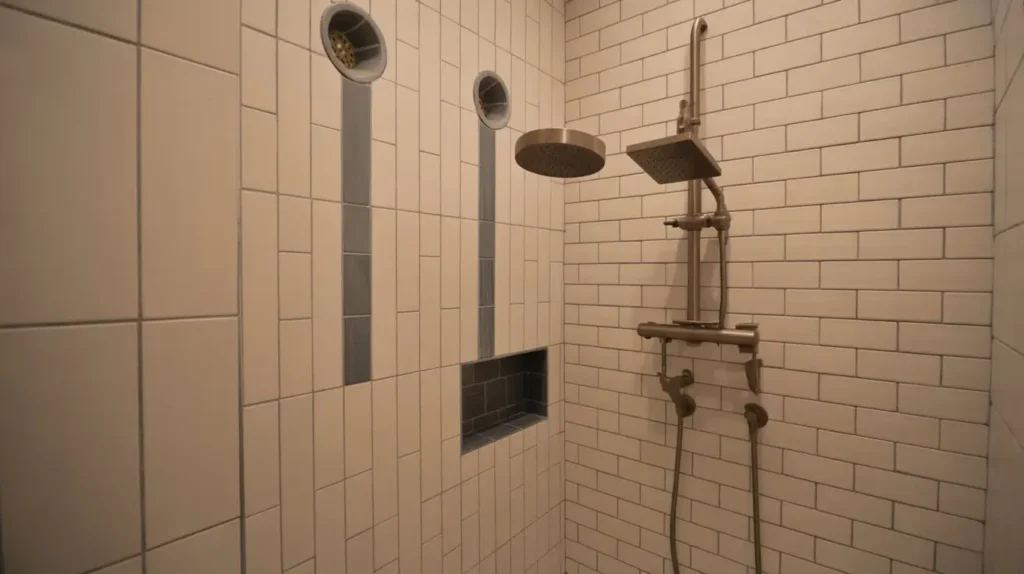
Can’t decide on just one tile? Why not use two? A two-tone shower design is a fantastic way to add custom character and play with proportion in a small space.
Why It Works for Small Spaces
By using a different tile on the bottom half of the wall than on the top half, you can ground the space while keeping it feeling light and airy. A common approach is to use a darker, busier, or more textured tile on the bottom third or half of the wall, and a lighter, simpler tile on the top. This anchors the room without weighing it down.
Getting the Look Right
The success of a two-tone look depends on a thoughtful combination.
- The Classic Wainscot: Use a darker tile (like a black hexagon or a patterned tile) on the bottom portion and a simple white subway tile on the top. This creates a wainscoting effect that is both classic and visually interesting.
- Create a Chair Rail: Separate the two tiles with a decorative “chair rail” or pencil liner tile. This creates a clean, finished transition between the two different materials.
- Play with Texture: You don’t just have to mix colors. Try mixing a smooth tile with a textured one. For example, a smooth, large-format gray tile on the bottom with a white 3D wavy tile on the top.
My Two Cents
This is a great way to incorporate a tile you love that might be too expensive or too bold for the entire shower. By using it on just the bottom third, you get the impact and personality without the overwhelming cost or visual noise.
14. Rustic Natural Stone Tile Shower
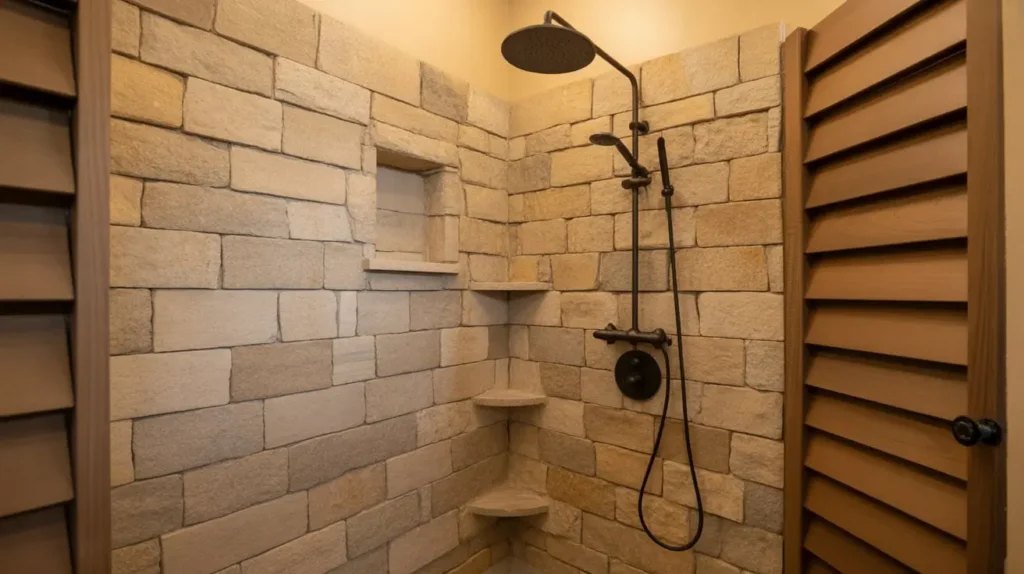
If your ideal bathroom is a rustic cabin or a Mediterranean villa, then natural stone is the way to go. Think rugged slate, tumbled travertine, or stacked stone ledger panels. This look is all about texture, warmth, and bringing the outdoors in.
Why It Works for Small Spaces
This might seem counterintuitive since rustic stone can be dark and heavy, but the key is texture. By creating a highly textured accent wall with something like stacked stone, you create incredible depth. The uneven surface plays with light and shadow, making the wall recede and feel more distant than it is.
Getting the Look Right
This look needs balance to avoid feeling like a medieval dungeon.
- Accent Wall Only: Please, I beg you, do not tile your entire tiny shower in dark, rugged stone. Use it on one feature wall and pair it with smooth, light-colored tiles on the other walls and floor to keep the space from feeling claustrophobic.
- Sealing is a Must: Most natural stones are porous and need to be sealed properly and regularly, especially in a wet environment like a shower. Slate, in particular, needs a good impregnating sealer.
- Lighting Matters: Just like with black tile, good lighting is essential to highlight the beautiful texture of the stone and keep the space from feeling too dark.
My Two Cents
A stacked stone ledger panel on the back wall of a shower, paired with a rainfall showerhead, can make you feel like you’re showering under a waterfall. It’s an amazing way to create a powerful, organic focal point. Just be aware that the rough surface can be a bit trickier to clean.
15. High-Contrast Black and White Tile Shower
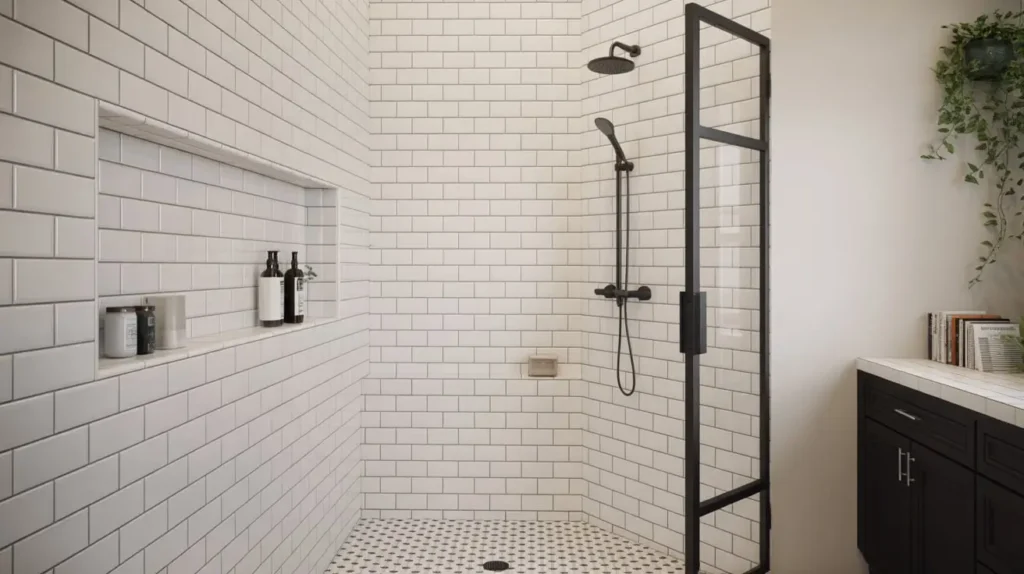
There is nothing more classic, more timeless, and more visually arresting than a black and white color scheme. In a small shower, this high-contrast combination can be used to create sharp, graphic patterns that are full of energy and style.
Why It Works for Small Spaces
A strong black and white pattern creates a powerful visual statement that distracts the eye from the small dimensions of the space. Instead of noticing the size of the shower, you notice the bold, confident design. It’s a classic example of using design as a brilliant diversion.
Getting the Look Right
You can interpret “black and white” in so many ways.
- Checkerboard: A classic checkerboard floor is always a winner, but you can also use it on a shower wall for a bold, retro statement.
- Graphic Patterns: Look for black and white geometric or encaustic-look tiles. A star or pinwheel pattern can look incredible as a feature wall or on the shower floor.
- Subway with a Twist: Use white subway tiles on the walls and a bold black hexagon tile on the floor for a classic pairing. Or, frame your white tile shower with a border of black tile for a sharp, defined look.
My Two Cents
My favorite application of this is a simple one: white subway tile on the walls with a thick black grout, paired with a black and white patterned tile on the floor. It’s graphic, clean, and has a ton of personality. It proves that you don’t need color to make a massive impact.
So, What’s the Takeaway?
Whew, that was a lot. But hopefully, you’re now buzzing with ideas. The main thing to remember is that a small bathroom isn’t a curse; it’s a creative challenge. The right shower tile is your most powerful tool to not just solve the puzzle but to turn it into a work of art.
Don’t be afraid to go bold with a pattern, embrace the depth of a dark color, or play with visual tricks like a vertical stack. Your shower might be small in square footage, but there’s no limit to its potential for style.
Now go start collecting some samples! Which idea is calling your name?