


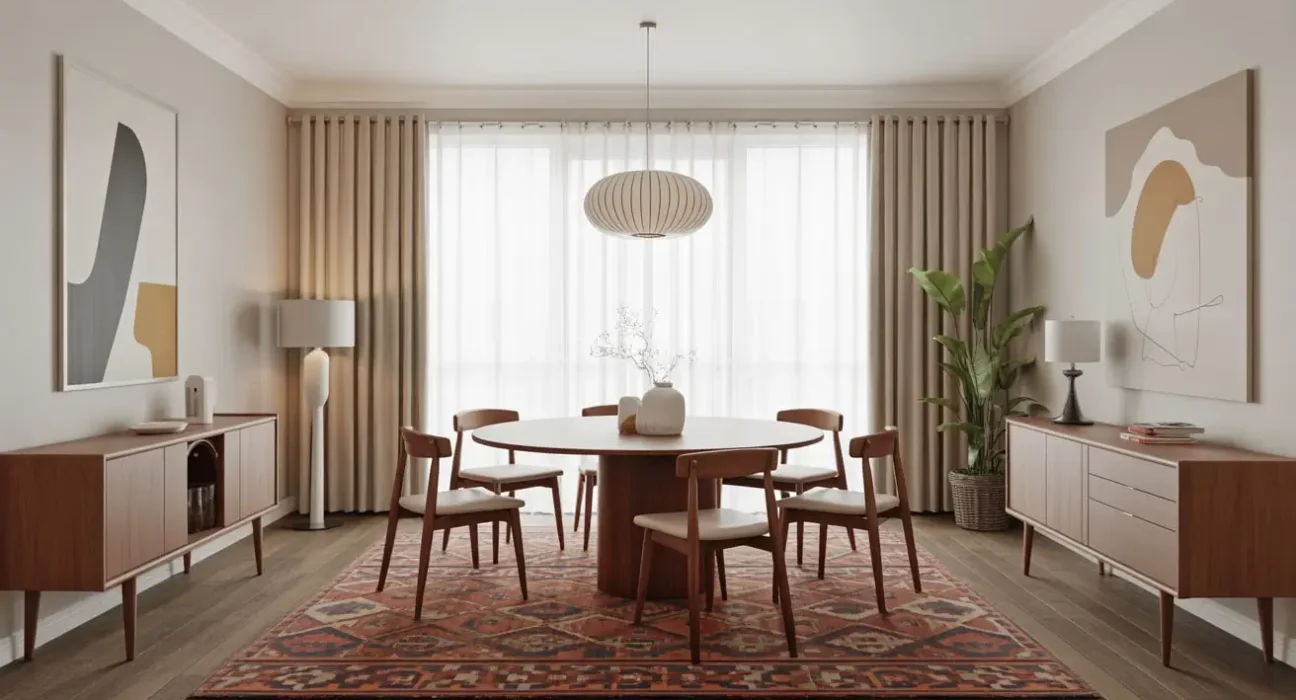
Let’s be honest. Are you staring at your dining room right now and feeling… nothing? A little bit of beige sadness, maybe? A table that’s just… a table? I’ve been there. My own obsession with Mid-Century Modern (MCM) design started because I was sick of living in a sea of generic, soulless furniture. It began with one perfect, flea-market chair, and it spiraled from there.
If you’re here, you’re probably feeling that same pull toward something with more character, more style, and frankly, more soul. You want a dining room that’s not just for eating, but for living. A space that makes you feel like you’ve stepped into an episode of Mad Men, but, you know, with better Wi-Fi and fewer unresolved workplace issues.
So, pour yourself a drink (an Old Fashioned, perhaps?) and let’s walk through 15 killer Mid-Century Modern dining room ideas. We’re going to turn your bland dining space into the stylish heart of your home. No fluff, no jargon—just real, actionable ideas from one design lover to another.
1. Walnut Oval Table Minimalist Setup
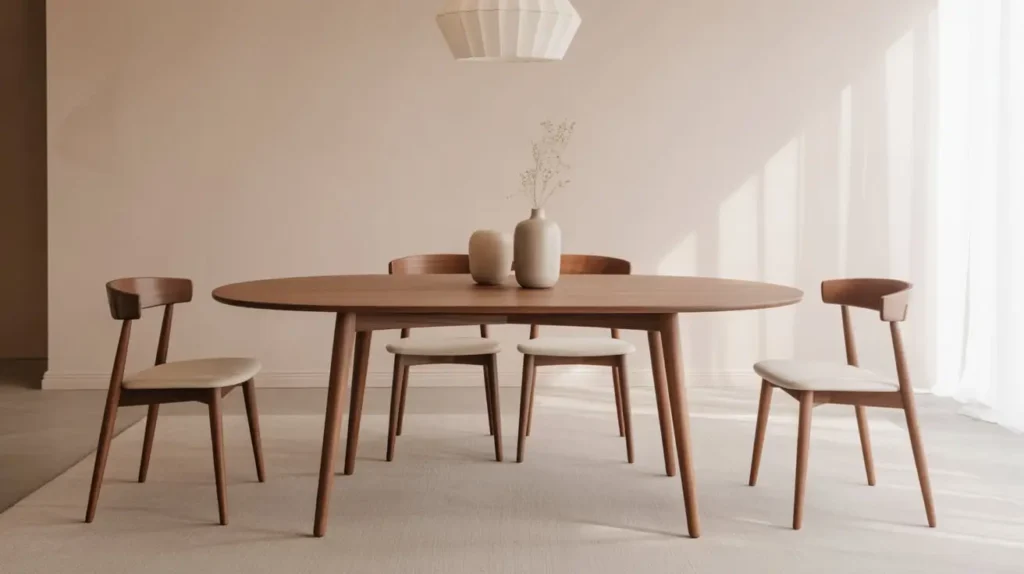
There’s something inherently sophisticated about an oval table. It feels a bit more formal than a circle but way more social than a rigid rectangle. And when you craft that oval table from rich, warm walnut, you’ve got the cornerstone of a killer MCM dining room.
The key here is minimalism. We’re not trying to clutter this beautiful piece of furniture. The walnut is the star, and everything else is just the supporting cast. Think of it as the lead actor in your dining room drama—everything else should be there to make it look good.
Why This Works
The gentle curves of the oval soften the often-sharp lines of other MCM furniture. This creates a beautiful balance. By keeping the rest of the decor minimal, you’re emphasizing the clean lines and organic forms that define the Mid-Century Modern aesthetic. It’s elegant without being stuffy.
Get the Look:
- Find the right table: Look for a walnut oval table with tapered or splayed legs. These are classic MCM features.
- Choose simple chairs: Pair it with chairs that have a low profile and simple silhouettes. Think slim legs and unfussy backs. The chairs shouldn’t compete with the table.
- Keep the centerpiece simple: A single, low-profile ceramic vase or a small, sculptural object is all you need. Don’t you dare put a massive floral arrangement on this thing.
- Stick to a neutral backdrop: Let the warm wood tones pop against walls painted in soft whites, grays, or even a muted earthy green.
2. Retro Leather Dining Chair Ensemble
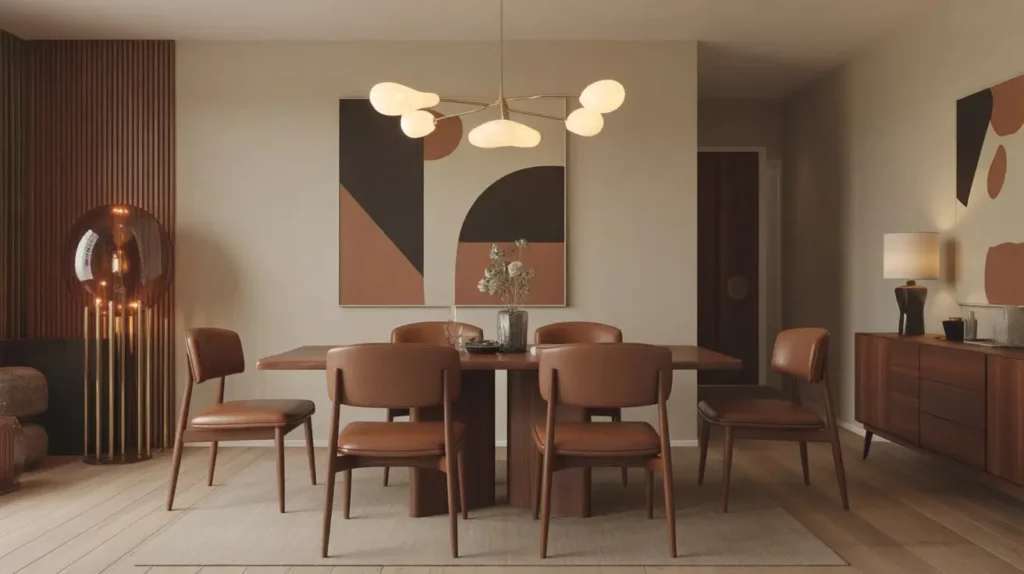
Nothing says “I have excellent taste and I’m not afraid to be comfortable” quite like leather. Forget those stuffy, overstuffed leather armchairs from your grandpa’s study. We’re talking about sleek, retro-inspired leather dining chairs that bring a touch of rugged warmth to the clean lines of MCM.
I personally love a worn-in, caramel-colored leather. It has this incredible patina that just gets better with age and tells a story. Pairing these with a simple wood or even a glass-top table creates a texture-rich environment that feels both sophisticated and incredibly inviting.
Ever wondered why this combination feels so right? It’s the contrast. The organic, slightly raw feel of the leather plays perfectly against the polished, deliberate design of Mid-Century furniture. It’s a match made in design heaven.
Style It Right:
- Color is key: Classic choices are cognac, caramel, or deep chocolate brown. Black leather can also work, but it creates a much moodier, more dramatic look.
- Mix, don’t match: Don’t feel obligated to have a full set of identical leather chairs. Mixing a couple of leather chairs with simple wooden ones can look effortlessly cool.
- Consider the frame: Look for chairs with wooden or thin metal frames. The contrast between the soft leather and the hard frame is what makes this look so appealing.
- Care for it: A little leather conditioner now and then will keep your chairs from cracking and looking sad. A little TLC goes a long way.
3. Sputnik Chandelier Statement Dining
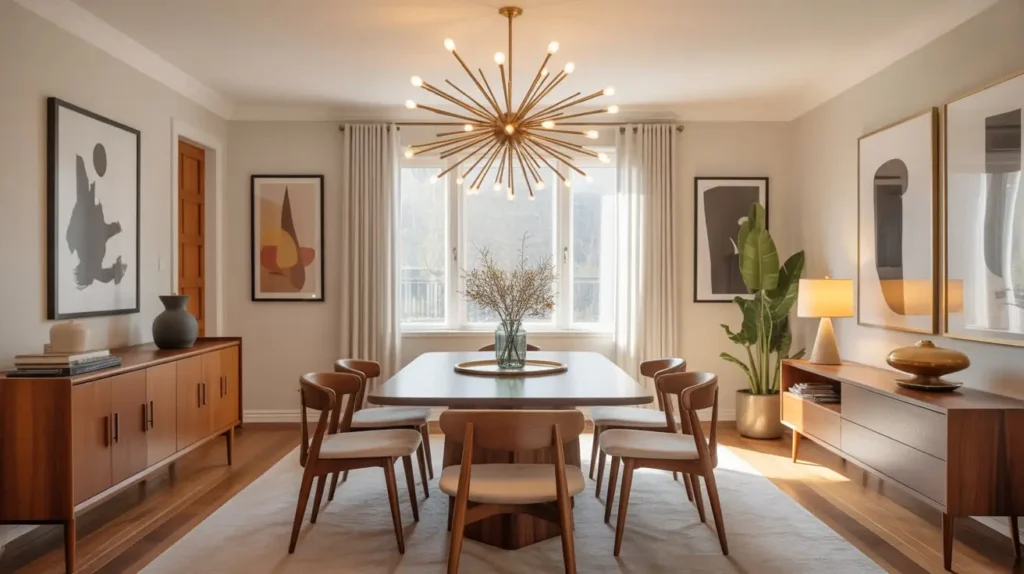
If you want to inject a serious dose of drama and retro-futurism into your dining room, look no further than the Sputnik chandelier. Named after the first satellite to orbit the Earth, this light fixture is the definition of a statement piece. It’s part sculpture, part time-capsule, and all awesome.
Let’s be real: this isn’t a light fixture for the faint of heart. It demands attention. It’s the friend who shows up to a casual brunch in a full-sequin jumpsuit. But when you hang one over a simple dining set, it instantly elevates the entire room from “nice” to “unforgettable.” I once installed one in a client’s home, and they said it was the single best conversation starter they’d ever owned.
Making a Statement (Without Overdoing It)
The trick with a Sputnik is to let it be the star. If you have a loud chandelier, you need a quiet room.
- Size and Placement: The chandelier should be scaled to your table, not necessarily your room. A good rule of thumb is for the diameter to be about 1/2 to 2/3 the width of your table. Hang it so the bottom is about 30-36 inches above the tabletop.
- Keep other decor simple: Your table, chairs, and sideboard should be classic and clean-lined. Let the Sputnik have its moment.
- Finishes matter: Brass is the classic finish and brings warmth. Black or chrome offers a more modern, graphic take on the look.
- Dimmer switch is a must: This fixture can put out a lot of light. A dimmer allows you to go from “performing surgery” brightness to “moody dinner party” ambiance with the turn of a knob. IMO, every dining room light needs a dimmer.
4. Teak Wood Sideboard Accent Wall
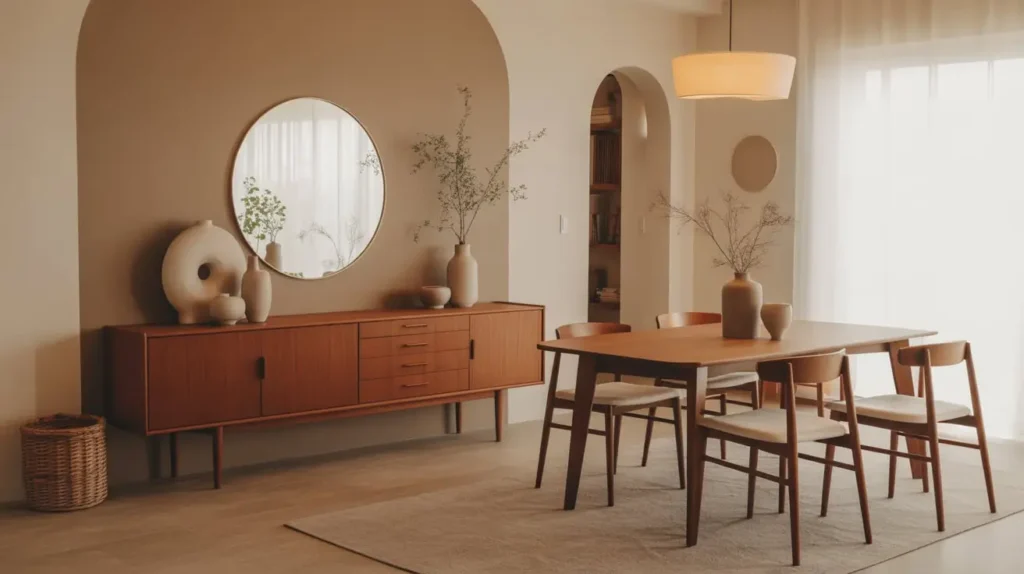
Ah, the sideboard. Or credenza. Or buffet. Whatever you call it, this long, low-slung piece of storage furniture is arguably one of the most iconic elements of Mid-Century design. Placing a beautiful teak wood sideboard against a main wall doesn’t just give you storage; it creates an instant focal point.
Teak was a hugely popular wood during the era, prized for its durability and its rich, warm, almost reddish-gold hue. A vintage teak sideboard, with its clean lines, beautiful grain, and often-sculptural leg details, is more than just furniture. It’s a piece of history. It’s the anchor that holds your entire dining room design together.
The Art of the Sideboard
Think of the wall behind your sideboard as a canvas. The sideboard is the main subject, and everything you place on and above it is part of the composition.
- What to look for: Seek out sideboards with classic MCM details like tapered legs, tambour doors (the cool slatted ones that roll away), or sleek, integrated drawer pulls.
- Create a vignette on top: This is where you can show off your personality. Style it with a mix of objects of varying heights: a cool table lamp, a stack of art books, a sculptural vase, and maybe a tray for your cocktail-making essentials.
- Art above: Hang a large piece of abstract art or a gallery wall (we’ll get to that!) above the sideboard. The center of the artwork should be at eye level, creating a cohesive visual statement.
- It’s functional, too! Let’s not forget its original purpose. Use it to store your fancy dinnerware, linens, and that collection of mismatched candles you swear you’ll use one day.
Read Also 15 Modern Curtains Living Room Ideas That Look Incredible
5. Earthy Tones Mid-Century Palette Room
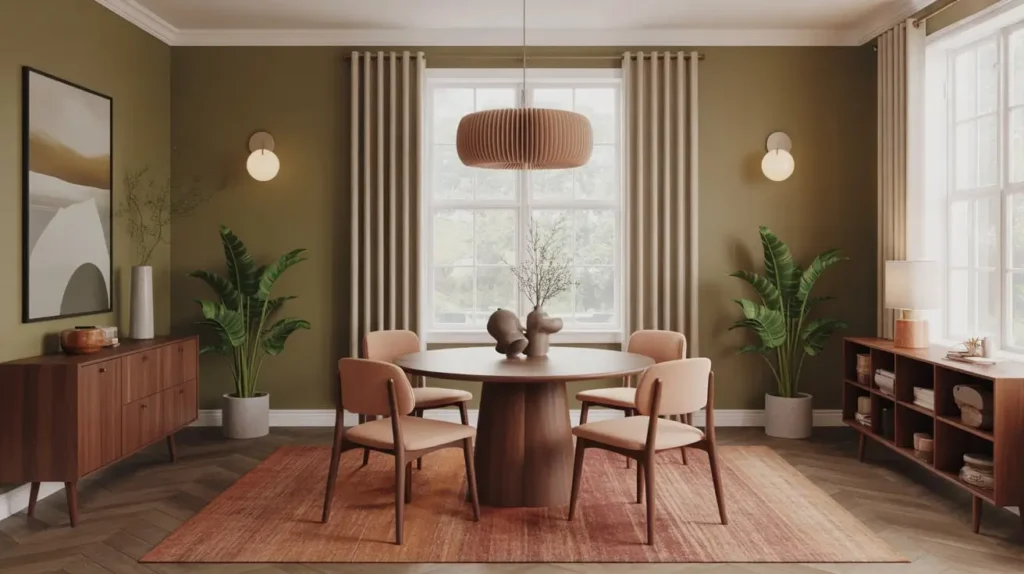
While MCM is known for its pops of bright color, the foundation of the style is deeply rooted in nature. Think of the rich browns of walnut and teak, the deep greens of a forest, the burnt oranges of an autumn sunset, and the mustards of a golden field. Creating a dining room around an earthy color palette is a surefire way to achieve a look that’s warm, inviting, and authentically Mid-Century.
This isn’t about making your room dark or drab. It’s about creating a layered, textured space that feels grounded and connected to the outdoors—a core principle of MCM architecture and design. This is the color scheme for people who want their home to feel like a warm hug.
Building Your Earthy Palette:
- Start with the wood: Your primary wood tone (walnut, teak, oak) will be the base of your palette. This is your main “brown.”
- Choose a wall color: Don’t go for stark white. Instead, opt for a warm off-white, a muted olive or sage green, or a sophisticated greige. An accent wall in a deep terracotta or rust can add incredible depth.
- Layer in textiles: This is where you can bring in other colors. Think about upholstered chairs in a mustard yellow or moss green velvet. A rug could feature shades of brown, cream, and burnt orange.
- Add pops of black: A little bit of black, in a picture frame, a lamp base, or the legs of a chair, acts like punctuation. It sharpens the earthy tones and keeps them from looking muddy.
6. Sculptural Cone Pendant Lighting Look
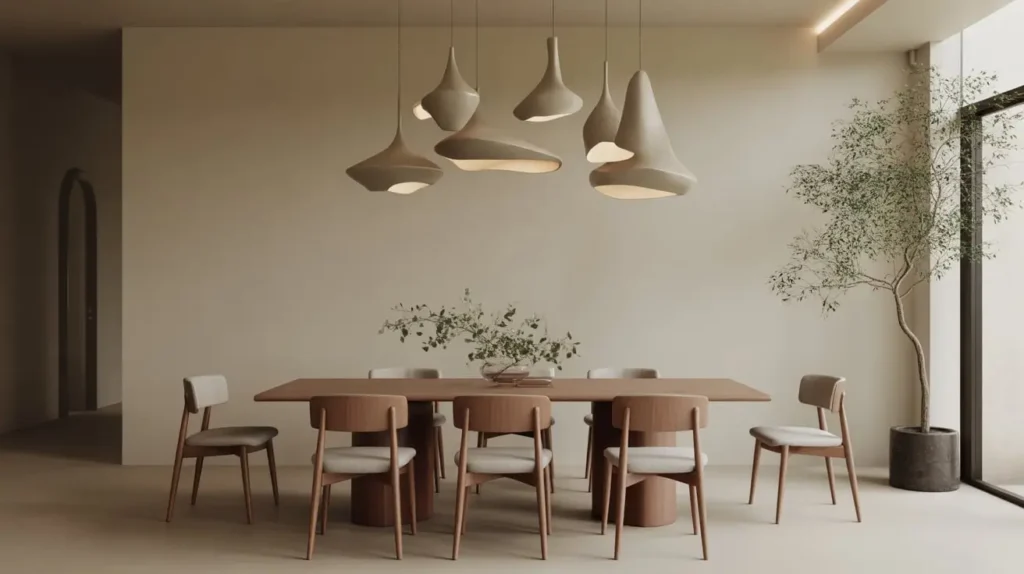
If the Sputnik chandelier is the life of the party, cone pendants are its chic, artistic cousin. Sculptural cone pendant lighting is a more subtle but equally stylish way to light your MCM dining room. Often hung in pairs or a cluster of three at varying heights, these pendants act as functional sculpture.
Their simple, geometric shape is pure Mid-Century. They provide focused, directional light onto your dining table, creating an intimate and cozy atmosphere. It’s less about lighting the whole room and more about creating a pool of light right where you need it. Perfect for highlighting your delicious food and hiding the fact you haven’t vacuumed in a week. 😉
How to Hang Cone Pendants
- Go for asymmetry: Hanging two or three pendants in a straight line can look a bit rigid. Instead, try clustering them in the center or staggering their heights for a more dynamic, modern feel.
- Color and Material: Matte black is a classic choice that goes with everything. White keeps things feeling airy. But don’t be afraid of a pop of color! A red or teal cone pendant can be a fantastic accent.
- Mind the gap: Just like with the Sputnik, hang them so the lowest point is about 30-36 inches from the tabletop. You want to see the person across from you, not the light fixture.
- Consider the beam: These provide downlighting. This is great for ambiance but might not be enough to light the whole room. Ensure you have other light sources, like a floor lamp in the corner or recessed lighting.
7. Curved-Back Upholstered Chair Layout
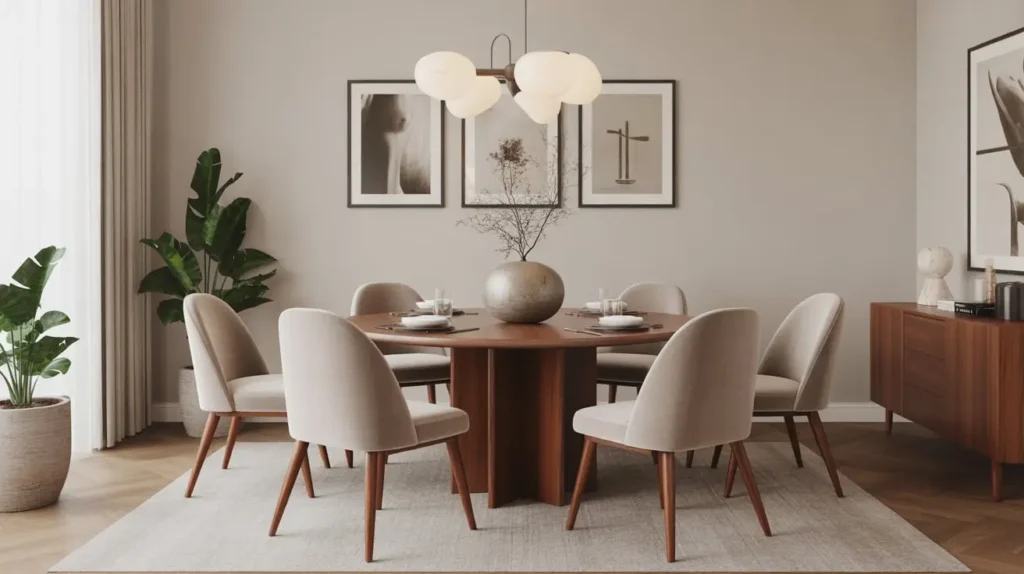
Comfort is not a dirty word in design. While many MCM chairs are celebrated for their sculptural, often-wooden forms, there’s a whole family of curved-back upholstered chairs that offer both style and a place you actually want to sit for more than ten minutes.
These chairs envelop you slightly, their gentle curves providing support and a sense of softness. They are the perfect counterpoint to the straight lines of a rectangular dining table or a sharp-edged sideboard. The upholstery also gives you a fantastic opportunity to introduce color and texture.
Choosing the Right Curve
- Iconic Shapes: Look for designs inspired by classics like the Saarinen Tulip Chair (with its pedestal base) or chairs with a “bucket” or “shell” seat. The key is a continuous, flowing line from the back to the seat.
- Fabric Choices:
- Bouclé: This nubby, looped fabric is having a huge moment and is perfect for adding texture and a cozy, high-end feel.
- Velvet: For a touch of glamour and richness. Jewel tones like emerald green, sapphire blue, or ruby red look stunning.
- Textured Weave: A durable, woven fabric in a neutral or earthy tone is a practical and stylish choice that wears well.
- Legs Matter: The contrast is in the base. Pair that soft, upholstered top with classic tapered wood legs or a slim metal “Eiffel” base to keep it firmly in the MCM camp.
8. Glass-Top MCM Dining Table Design
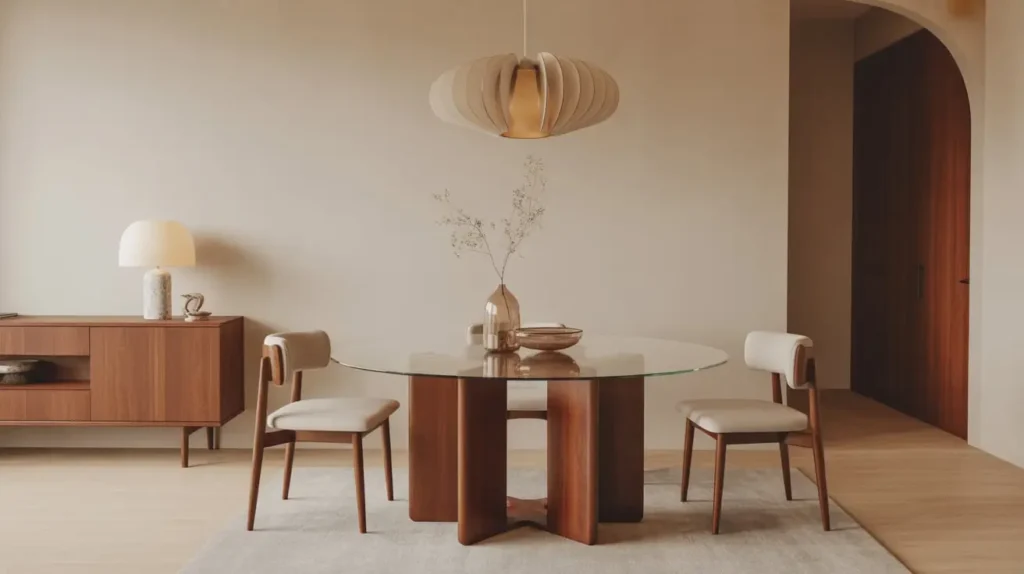
Want to make your dining room feel bigger and brighter? A glass-top dining table is your secret weapon. While wood tables are the default for MCM, a glass top offers a different kind of appeal. It creates a sense of lightness and airiness, allowing light to pass through and making the space feel more open.
The real beauty of a glass-top table in an MCM setting is that it allows the base of the table and the chairs to become the main visual event. Is your table base a sculptural masterpiece? Do you have a set of killer dining chairs you want to show off? A glass top puts them on full display.
Making Glass Work for You
- The Base is Everything: This is where you make your statement. Look for tables with interesting bases. A sculptural walnut base, a crisscrossing “jack” style base, or even a sleek chrome pedestal can all look incredible under glass.
- Show Off Your Rug: A glass table allows your beautiful, patterned MCM rug (more on that later!) to be seen in its full glory.
- Chair Game Strong: Your chairs are no longer hiding under a big slab of wood. This is the perfect opportunity to use those iconic Wishbone chairs or colorful upholstered seats.
- The Downside: Okay, let’s be real. Fingerprints. If you have kids, pets, or are just a messy eater, you’ll be well-acquainted with your glass cleaner. For me, the aesthetic payoff is worth the extra wipe-down.
9. Vintage Art Gallery Wall Dining
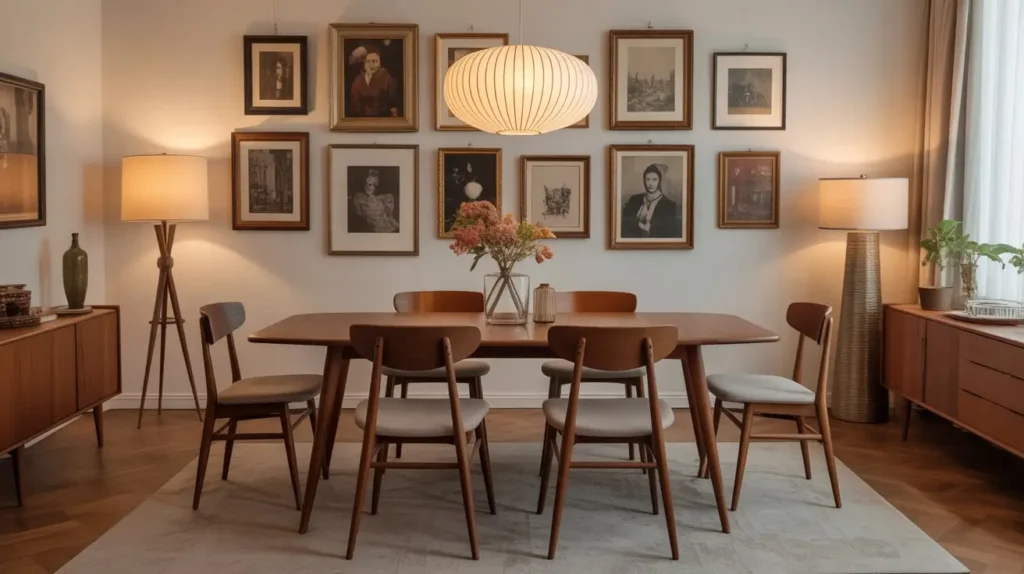
An MCM dining room is the perfect backdrop for art. But instead of one single, giant piece, why not create a vintage art gallery wall? This approach adds a deeply personal, collected-over-time feel to your space. It tells a story and injects a ton of personality and color.
The key is to create a collection that feels curated, not chaotic. This isn’t just about throwing a bunch of pictures on the wall. It’s about creating a balanced composition of different sizes, shapes, and styles that work together.
Curating Your Gallery Wall
- Find a Theme: Your theme could be simple. Maybe it’s all black-and-white photography. Maybe it’s vintage travel posters. Or, my favorite, a mix of abstract prints, line drawings, and graphic art from the 50s and 60s.
- Mix Your Frames: For an eclectic MCM look, use a mix of thin black, white, and natural wood frames. Keeping the frames simple allows the art to be the focus. Using all the same frame creates a more formal, uniform look.
- Lay It Out First: Before you hammer a single nail, lay all your framed pieces out on the floor. Arrange and rearrange them until you find a composition you love. Take a picture with your phone so you don’t forget it.
- Spacing is Key: Keep the spacing between the frames relatively consistent (e.g., 2-3 inches apart) to create a sense of cohesion, even with different sized frames. Start with your largest piece and build out from there.
Read Also 15 Elegant Sheer Curtains Living Room Ideas and Airy Design Tricks
10. Minimalist MCM Round Table Corner
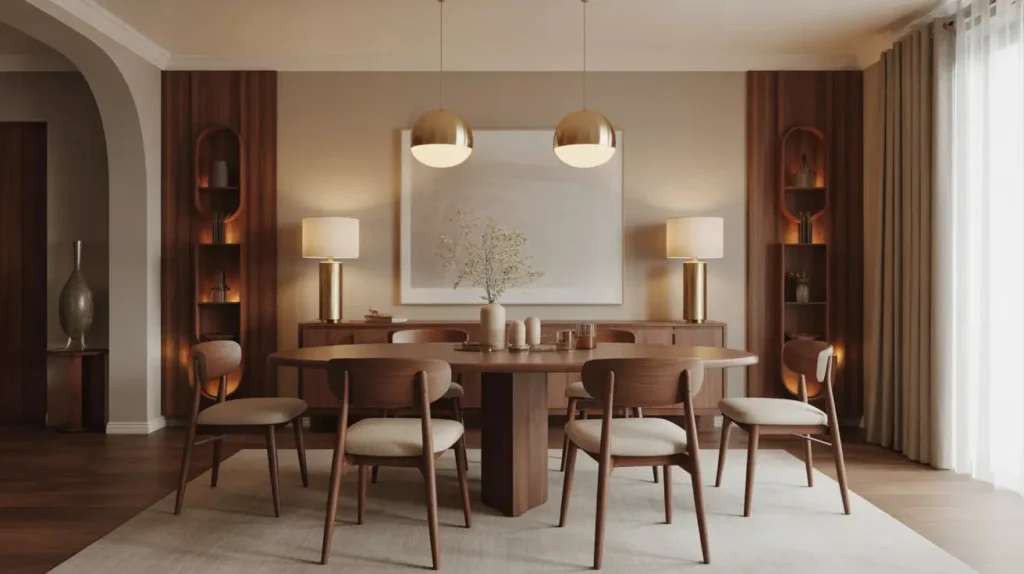
Don’t have a giant, formal dining room? Who does these days? One of the best things about MCM design is its scalability. A small corner, a nook in your kitchen, or a section of your open-plan living area can be transformed into a stylish dining spot with a minimalist MCM round table.
A round table is fantastic for small spaces. It has no sharp corners to bump into, and it promotes conversation because everyone is facing each other. Paired with just two to four simple chairs, it creates an intimate dining experience that feels intentional, not like an afterthought.
Perfecting the Dining Nook
- The Right Table: Look for a round pedestal table (like a Saarinen-inspired Tulip table) to maximize legroom, or a simple table with three or four splayed legs. A diameter of 36-48 inches is usually perfect for seating up to four people.
- Smart Seating: Choose chairs with a small footprint. Iconic molded plastic chairs or simple wood chairs work beautifully. If you’re really tight on space, you could even build in a small banquette on one side.
- Define the Space: Use a small, round rug under the table to visually separate the dining nook from the rest of the room. A pendant light hung low over the center of the table will also anchor the space.
- Keep it Uncluttered: In a small space, less is always more. Keep the tabletop clear when not in use, maybe with just a single small plant.
11. Brass + Wood Mixed Material Setup
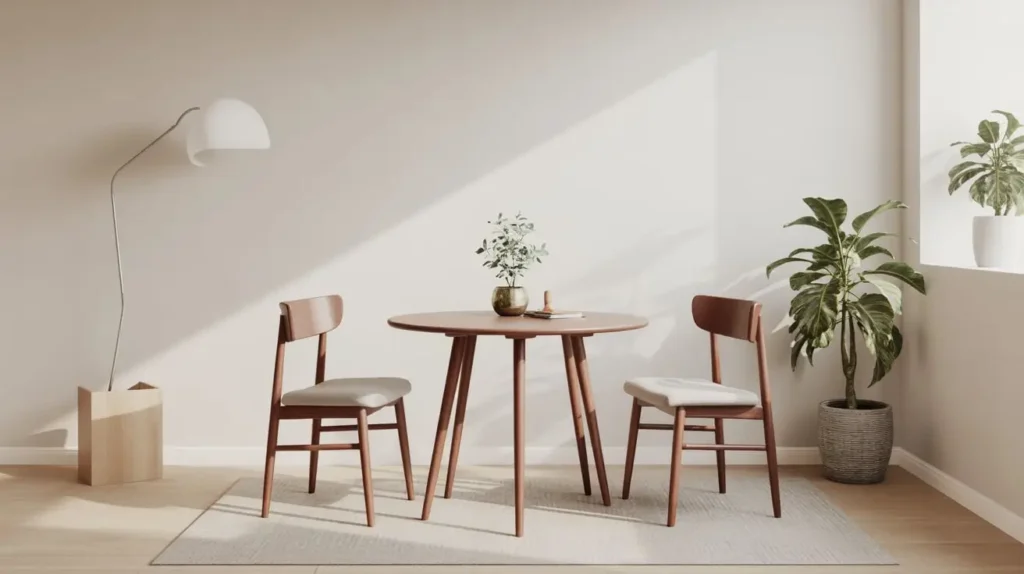
Wood is the heart of Mid-Century Modern design, but what gives it that little bit of sparkle? Brass. The combination of warm, organic wood and gleaming, metallic brass is a hallmark of the era. It’s a pairing that screams sophistication and glamour without being gaudy.
Think of it as jewelry for your room. A little bit of brass can highlight the beautiful grain of a walnut table, add a point of interest to a simple chair, or bring a touch of luxury in the form of a light fixture. It’s all about that delicious contrast between the natural and the man-made.
How to Weave in Brass
- Lighting: This is the easiest and most impactful way. A Sputnik chandelier, cone pendants, or a sculptural table lamp on your sideboard in a brass finish is an instant win.
- Furniture Details: Look for furniture that incorporates brass. This could be brass caps on the ends of table legs (sabots, if you want to be fancy), brass drawer pulls on a sideboard, or a chair with a slim brass frame.
- Decorative Objects: Don’t go overboard. A few well-placed brass objects are all you need. A brass bowl on the table, a set of brass candlesticks on the credenza, or even a mirror with a thin brass frame.
- Choose the Right Finish: Look for a satin or aged brass finish rather than a highly polished, shiny one. It looks more authentic and less like you’re trying to land a 747.
12. Greenery-Filled Warm Wood Dining
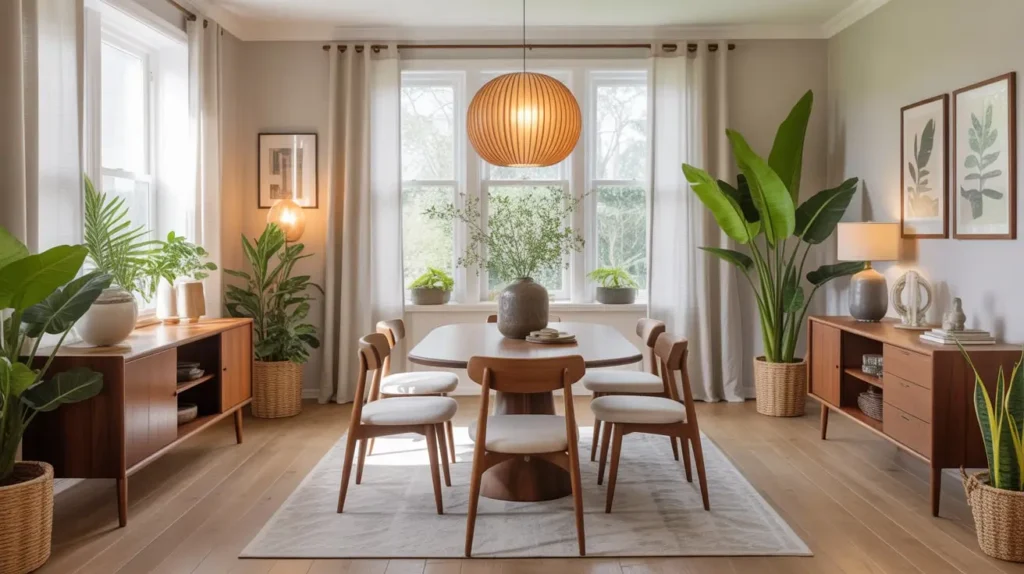
One of the central tenets of MCM design is bringing the outdoors in. The architects of the era famously used floor-to-ceiling windows to blur the lines between the interior and the landscape. You can achieve the same feeling—even without a Frank Lloyd Wright-designed house—by filling your warm wood dining room with greenery.
Plants add life, color, and organic texture to a room. Their vibrant green leaves look absolutely stunning against the deep browns and golds of teak and walnut. It’s a simple, affordable way to make your dining room feel more vibrant, healthy, and complete.
The Indoor Gardener’s Guide to MCM
- Choose Sculptural Plants: Look for plants with interesting shapes that echo the lines of your furniture. A Fiddle Leaf Fig with its large leaves, a Snake Plant with its spiky vertical form, or a Monstera with its iconic split leaves are all fantastic choices.
- Vary the Height: Don’t just put a bunch of small pots on a windowsill. Get a large, statement plant for a corner. Place a medium-sized plant on your sideboard. Hang a trailing plant like a Pothos from the ceiling or a high shelf.
- The Right Pot is Crucial: The pot is just as important as the plant. Look for ceramic planters in simple, geometric shapes and earthy colors. A bullet planter on a wooden stand is the quintessential MCM plant accessory.
- Don’t Forget a Centerpiece: A small succulent or a simple vase with a few fresh-cut monstera leaves or eucalyptus stems makes for a perfect, living centerpiece on your dining table.
13. Mid-Century Patterned Rug Centerpiece
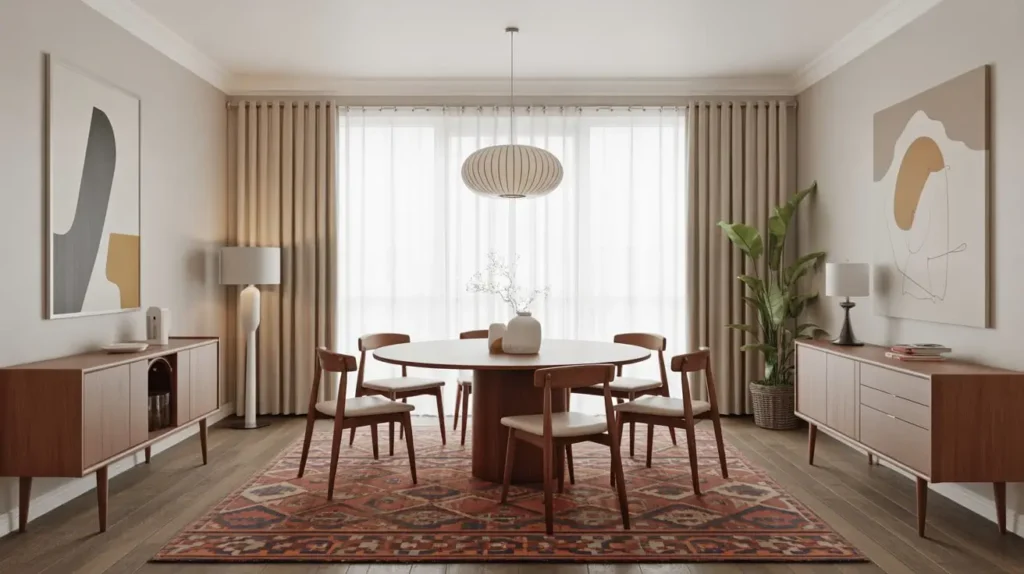
Your floor is the fifth wall of your dining room, so don’t neglect it! A Mid-Century patterned rug is the perfect way to ground your dining set, add a dose of color and pattern, and tie the whole room together. The right rug can act as a piece of art for your floor.
MCM rug patterns are often geometric, abstract, or inspired by natural forms. Think starbursts, clean lines, amoeba-like shapes, and bold color-blocking. It’s a way to be playful and bold in a space that can sometimes feel very structured.
Finding the Perfect Rug
- Size Matters (A Lot): This is the #1 mistake people make. Your rug needs to be big enough so that when you pull the dining chairs out, all four legs of the chair remain on the rug. Nothing is more annoying than a chair leg catching on the edge of a rug. Measure your table, add about 24-30 inches on all sides, and buy that size.
- Pattern and Color: If your furniture is all neutral wood and simple upholstery, go bold with your rug! A rug with pops of orange, teal, and mustard can be the focal point. If you already have colorful chairs or art, choose a more subtle, tonal pattern or a textured solid.
- Material: A low-pile wool rug is a great choice for a dining room. It’s durable, relatively easy to clean, and feels great underfoot. Synthetic options can also be very durable and stain-resistant, which is a huge plus in a dining area.
- Placement: The rug should be centered under your dining table to create a sense of symmetry and purpose.
14. Classic Wishbone Chair Dining Scene
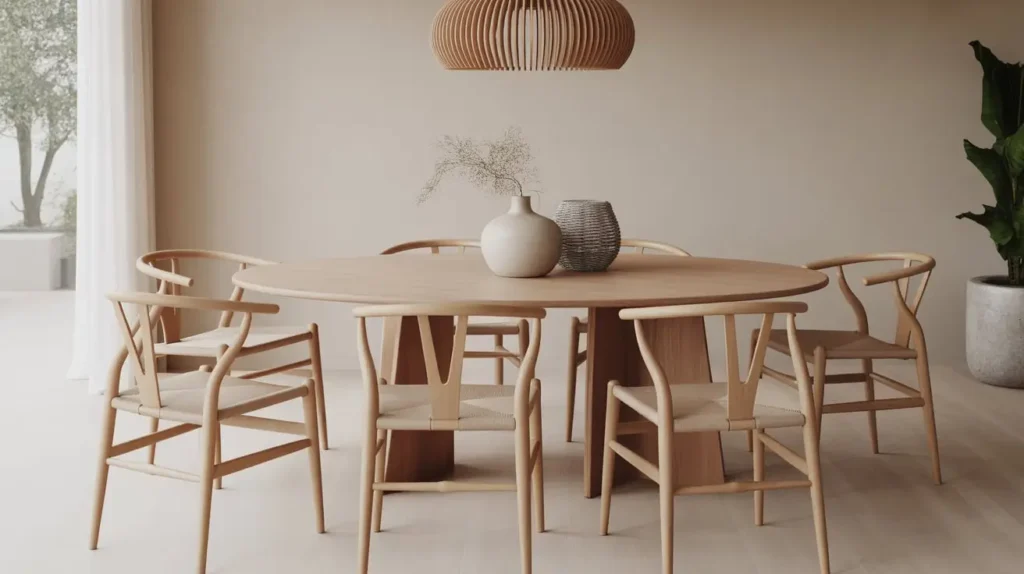
If you were to pick one chair to represent the entire Mid-Century Modern movement, the Wishbone Chair (or CH24, if you’re a design nerd) would be a top contender. Designed by Hans Wegner in 1949, its elegant, sculptural form is instantly recognizable. Creating a dining scene centered around these chairs is a masterclass in timeless style.
The beauty of the Wishbone chair is its complexity disguised as simplicity. The steam-bent back and armrest, the woven paper cord seat—it’s a work of art that also happens to be surprisingly comfortable. They are light, airy, and don’t feel visually heavy, making them perfect for both large and small dining rooms. I saved up for a pair of authentic ones, and I swear my morning coffee tastes better when I’m sitting in one.
How to Style Wishbone Chairs
- Pair with a Simple Table: The chairs are the stars here. They look incredible with a simple round or rectangular wooden table. The contrast between the solid tabletop and the intricate chairs is stunning.
- Mix and Match: A full set of Wishbone chairs is a beautiful, classic look. But you can also mix them. Try using two Wishbone chairs at the heads of a rectangular table, with simpler chairs along the sides.
- Color Variations: The classic is a natural oak or beech frame with a natural paper cord seat. But they also come in black, white, and a variety of colors, which can add a fun, contemporary twist.
- Invest in Quality: This is an iconic piece. While there are many replicas out there, if you can invest in an authentic, licensed chair, you’re buying a piece of furniture that you will have for the rest of your life.
15. Slim-Leg Furniture Airy Dining Space
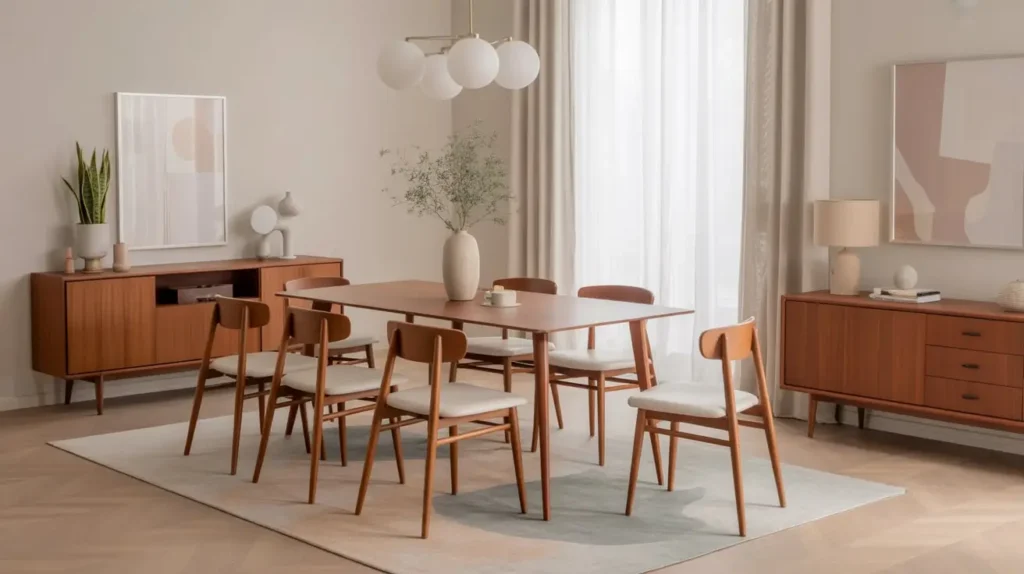
What’s the one design detail that instantly screams Mid-Century Modern? Slim, tapered legs. This single feature is what gives MCM furniture its characteristic sense of lightness and elegance. It’s all about lifting the furniture off the floor, creating an airy, uncluttered feeling.
If you want your dining room to feel spacious and open—even if it’s not—then embracing slim-leg furniture is the way to go. Heavy, blocky furniture can suck the life and light out of a room. Slim-legged tables, chairs, and sideboards allow light and air to flow freely underneath them, making the entire space feel larger.
Achieving an Airy Vibe
- Legs, Legs, Legs: When shopping, make this your mantra. Look for tables with thin, tapered legs. Look for chairs with spindly legs. Look for sideboards that stand proud on elegant splayed legs.
- Keep a Low Profile: Much of MCM furniture is low-slung. This, combined with the slim legs, draws the eye down and then up, creating an illusion of higher ceilings.
- Light Color Palette: To enhance the airy feel, stick to lighter colors on the walls and in your textiles. Soft whites, light grays, and pale blues work wonders.
- Minimal Window Coverings: Don’t block the natural light with heavy drapes. Opt for simple, sheer curtains or leave the windows bare if you have the privacy. The more natural light, the more open your space will feel.
So, Ready to Build Your Dream Dining Room?
Whew! We’ve covered a lot of ground, from statement-making chandeliers to the subtle elegance of a tapered leg. The beauty of Mid-Century Modern design is that it’s not about following a rigid set of rules. It’s about a feeling—a blend of organic and geometric, comfort and style, nostalgia and timelessness.
The most important thing is to choose the ideas that resonate with you. Maybe you’re an all-in Sputnik-and-leather kind of person, or maybe a minimalist walnut table with a touch of greenery is more your speed. Mix these ideas, match them, make them your own. After all, the best dining rooms are the ones filled with good food, good company, and a style that makes you happy every single time you walk in the room.
Now, go forth and banish the beige. Your stylish, new dining room is waiting. Which idea are you totally stealing first?