


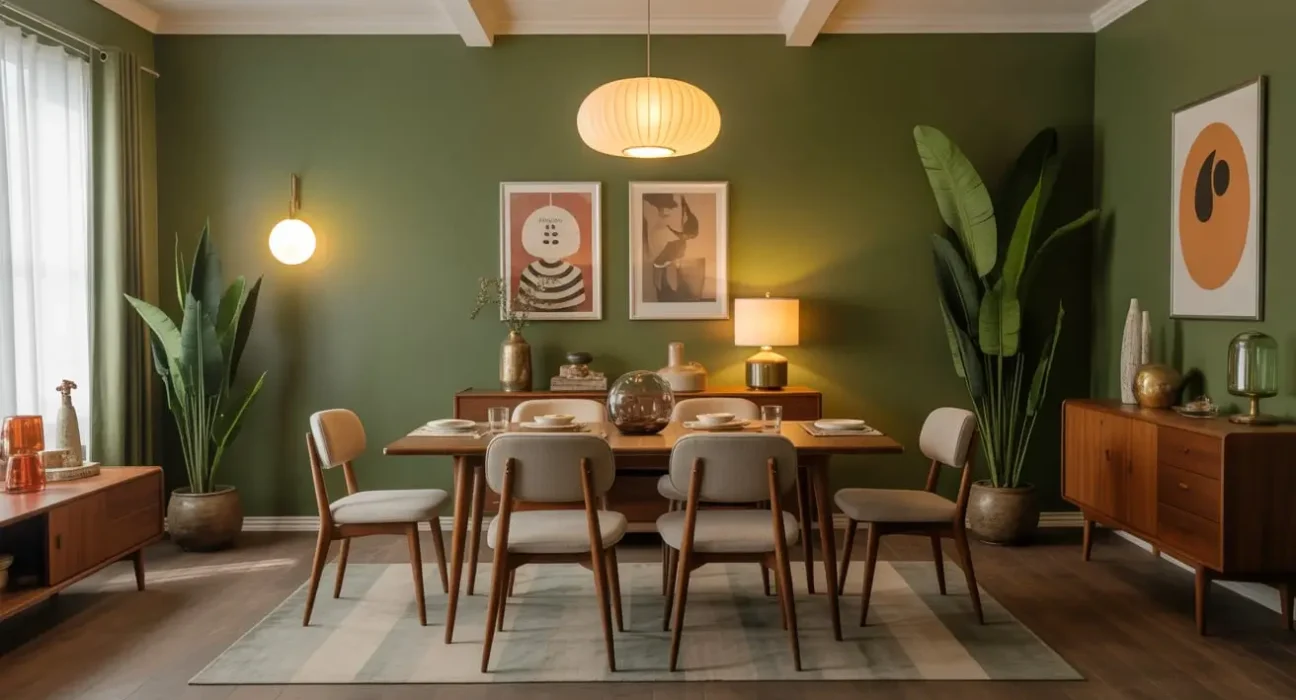
Let’s be real for a second. Is your dining room a little… blah? Is it the forgotten room, a sea of beige that only sees action on holidays? I’ve been there. My first apartment had a dining “area” that I swear was designed to actively repel joy. It was a sad, beige box. It took me years to realize that the dining room isn’t just a place to eat; it’s where conversations happen, where you unwind after a long day, and where you make memories.
And the secret weapon to transform that sad box into a stunning, inviting space? Green.
I know, I know. You might be thinking of your grandma’s avocado-colored kitchen from the ‘70s. But trust me, green has had a serious glow-up. From deep, moody emeralds to soft, calming sages, there’s a shade of green that can completely redefine your dining room. So, if you’re ready to ditch the boring and embrace a color that’s both vibrant and grounding, you’re in the right place. We’re going to walk through 15 incredible green dining room ideas that will make you want to host a dinner party every single night.
1. Emerald Accent Wall Elegance
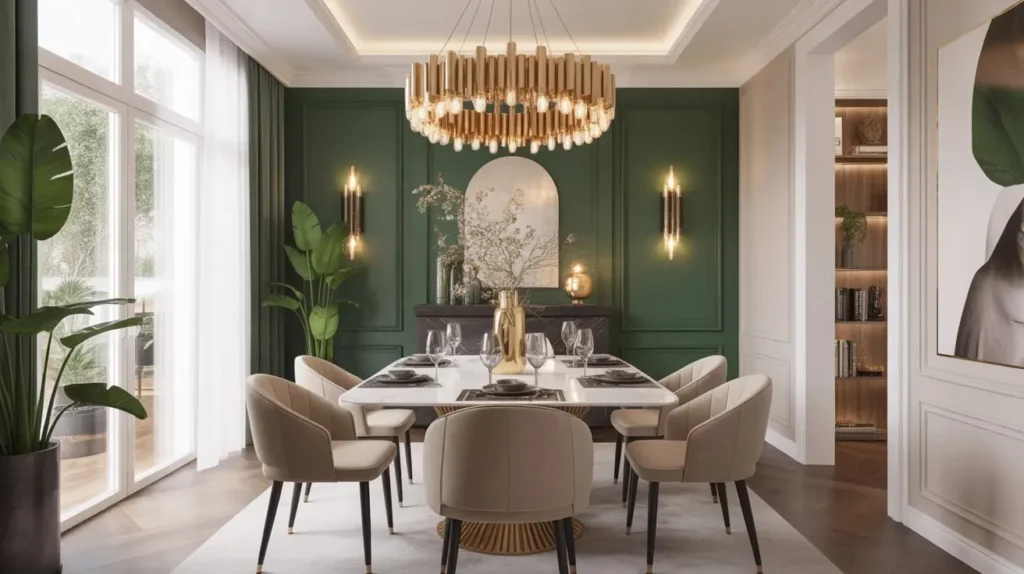
Let’s start with a bang, shall we? An emerald green accent wall is the definition of drama in the best possible way. This isn’t a color for the faint of heart. It’s bold, it’s luxurious, and it makes an immediate, unforgettable statement. Think of a deep, rich jewel tone that feels both opulent and surprisingly cozy.
Every time I see a room with an emerald accent wall, I immediately think it belongs to someone incredibly cool and confident. It’s a power move. Instead of painting the whole room, which could feel a bit like living inside a precious stone (not necessarily a bad thing, but intense), an accent wall provides that pop of sophisticated color without overwhelming the space. It draws the eye, creates a focal point, and serves as a stunning backdrop for your dining table and art.
How to Nail the Look
- Pair with Dark Woods: A rich walnut or dark oak dining table looks absolutely phenomenal against emerald. The warmth of the wood balances the coolness of the green.
- Go for Gold (or Brass): This is a non-negotiable, IMO. Gold or brass accents are emerald’s best friend. Think a brass chandelier, gold-framed mirrors or art, and even gold cutlery. The combination is pure, unapologetic glam.
- Choose Plush Textures: To soften the look, bring in textures like a velvet curtain or upholstered chairs in a neutral color like cream or charcoal gray.
- Lighting is Key: This color craves good lighting. A statement chandelier or some sleek, modern sconces will make the color sing and prevent the room from feeling too dark.
This look is for anyone who wants their dining room to feel like an exclusive, high-end restaurant where you just happen to live. It’s a guaranteed conversation starter.
2. Sage Green Scandinavian Dining

Okay, let’s take a 180 from the high drama of emerald and wander into the serene world of sage. If your personal mantra is more “calm and cozy” than “bold and glamorous,” a sage green Scandinavian dining room is your soulmate. This style is all about simplicity, functionality, and a deep connection to nature.
Sage green is the perfect color for this. It’s a soft, grayish-green that feels incredibly grounding and peaceful. It doesn’t shout; it whispers. When you combine this calming hue with the core principles of Scandinavian design—light woods, clean lines, and a lack of clutter—you create a space that feels like a breath of fresh air. I personally love this style because it’s so livable and timeless. It’s a look that will never feel dated.
How to Nail the Look
- Light Woods are Essential: Think ash, light oak, or birch for your dining table and chairs. The pale wood tones and the soft green create a beautiful, natural harmony.
- Embrace Simplicity: Scandinavian design is famously minimalist. Choose a dining table with simple, tapered legs and chairs with clean, unfussy silhouettes.
- Keep it Bright: Paint the other walls a crisp white or a very light cream to maximize natural light. Sheer white curtains will help diffuse light beautifully throughout the space.
- Add Natural Textures: Introduce elements like a simple linen tablecloth, woven placemats, or a jute rug to add warmth and texture without adding clutter. A few ceramic vases with single stems complete the look.
This is the dining room for slow Sunday morning brunches and peaceful weeknight dinners. It’s effortlessly chic and deeply calming.
3. Deep Forest Luxe Dining Space
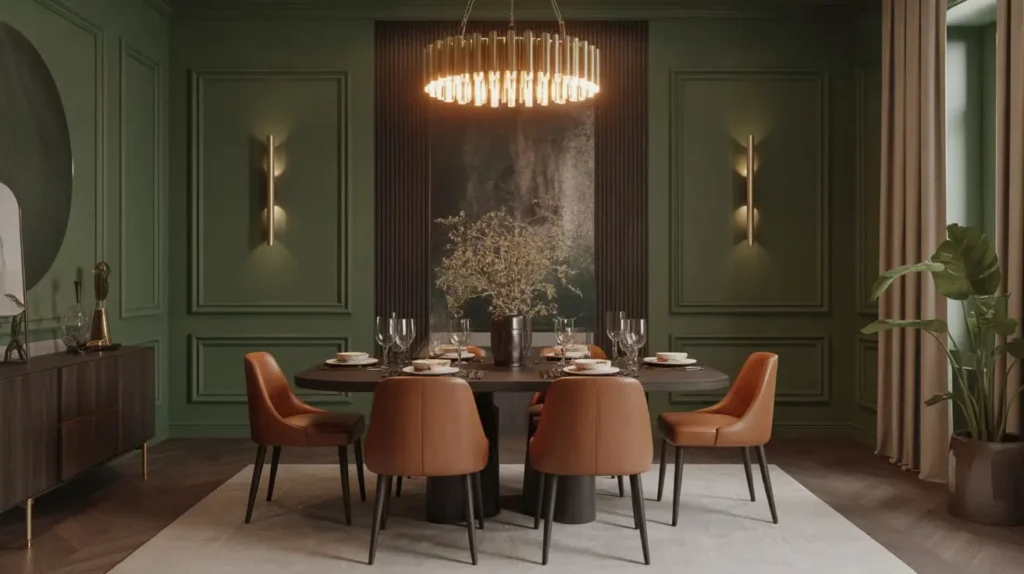
Ever wanted to feel like you’re dining in an enchanted forest? This is how you do it. A deep forest green is darker and more mysterious than emerald. It has a touch more blue or black in it, creating a moody, enveloping atmosphere that is incredibly sophisticated and luxe.
Painting a whole room this color is a commitment, but the payoff is huge. It creates a cocoon-like effect that is surprisingly intimate and cozy, especially in the evening. It makes the space feel special, set apart from the rest of the house. This color works wonders in dining rooms with high ceilings or lots of architectural detail, as it highlights the structure of the room.
How to Nail the Look
- Layer with Dark Tones: Don’t be afraid to lean into the darkness. A black or espresso-colored dining table can look stunning. The key is to vary the textures. Think a matte black table with leather chairs.
- Incorporate Rich Materials: This look calls for luxury. Velvet, leather, and dark-grained wood are your go-to materials. Consider chairs upholstered in a rich cognac leather to add warmth.
- Strategic, Warm Lighting: Ambient lighting is crucial. A dimmer switch is your best friend here. Use a dramatic, low-hanging pendant light over the table and supplement with candles or table lamps to create pools of warm light.
- Bring in Living Green: To really sell the “forest” theme, add plenty of houseplants. A tall fiddle-leaf fig in a corner or some trailing pothos on a shelf will add life and break up the dark color.
This isn’t just a dining room; it’s an experience. It’s perfect for intimate dinner parties that last late into the night.
4. Olive Green Farmhouse Charm
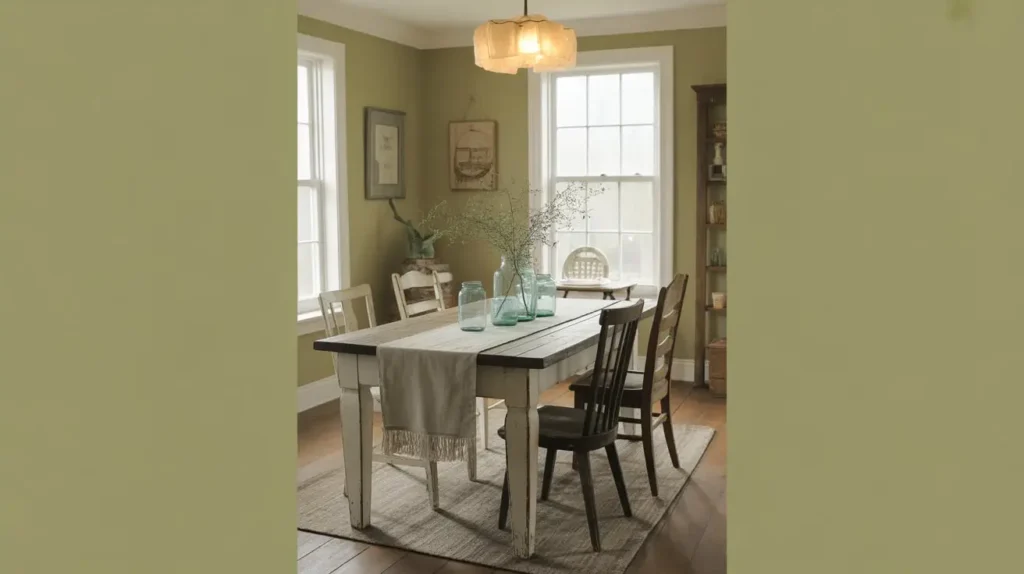
Here’s a look that feels like a warm hug. Olive green is such an interesting color—it’s earthy, warm, and has a wonderful, slightly faded quality that makes it perfect for a modern farmhouse aesthetic. It’s not as crisp as mint or as regal as emerald; it’s grounded, comfortable, and full of character.
The farmhouse style is all about being rustic, practical, and inviting. When you pair that with the warm, organic feel of olive green, you get a dining room that feels like the heart of the home. I’ve always found that olive green has a nostalgic quality that makes a space feel instantly welcoming and lived-in. It’s sophisticated but completely unpretentious.
How to Nail the Look
- Choose Weathered or Reclaimed Wood: A big, sturdy farmhouse table made from reclaimed or distressed wood is the centerpiece of this look. The imperfections in the wood add to the charm.
- Mix and Match Chairs: Don’t feel like you need a matching set. Combine a wooden bench on one side with a few black Windsor-style chairs on the other. This adds to the relaxed, collected-over-time vibe.
- Black Metal Accents: Matte black is the perfect accent metal for this style. Think a simple black iron chandelier, black window frames, or black metal chair legs. It provides a modern edge that keeps the look from feeling too country-kitsch.
- Incorporate Natural Linens: Use simple, unfussy textiles like unbleached linen napkins, a simple cotton runner, and maybe some grain-sack-style pillows on a window bench.
This is a dining room for big family gatherings, messy pasta nights, and making everyone feel right at home.
Read Also 15 Elegant Sheer Curtains Living Room Ideas and Airy Design Tricks
5. Modern Mint Minimalist Dining

Ready for something light, bright, and impossibly fresh? Let’s talk about mint green. This is a pale, crisp green with a touch of blue that feels clean, airy, and distinctly modern. In a minimalist setting, mint green can be a showstopper, providing a gentle wash of color that’s interesting but not distracting.
This isn’t the cloying, super-sweet mint of the 1950s. Modern mint is more subdued and sophisticated. It works beautifully in smaller dining rooms or open-plan spaces because it reflects light and creates an illusion of spaciousness. I love this idea for anyone who craves a clean, organized aesthetic but still wants a hint of personality and playfulness. It’s minimalism with a smile.
How to Nail the Look
- Pair with Stark White: The best way to make mint pop is to surround it with crisp white. Paint the walls mint and keep the trim, ceiling, and even the furniture bright white. This creates a clean, graphic look.
- Sleek, Simple Furniture: This look demands minimalist furniture. Think a white tulip table or a simple waterfall-style table made of light wood or white lacquer. Chairs should be equally simple—molded plastic Eames-style chairs are a classic choice.
- Use Blonde Wood and Chrome: To add a little warmth and texture, incorporate accents of blonde wood (like maple or pale oak) and polished chrome. A chrome-legged table or a sleek pendant light would be perfect.
- Keep Decor to a Minimum: The whole point of minimalism is the absence of clutter. A single, large piece of abstract art with hints of green, or a trio of simple glass vases is all you need. Let the color be the star.
This dining room is clean, refreshing, and invigorating—like chewing a stick of mint gum, but for your house.
6. Green Velvet Chair Statement
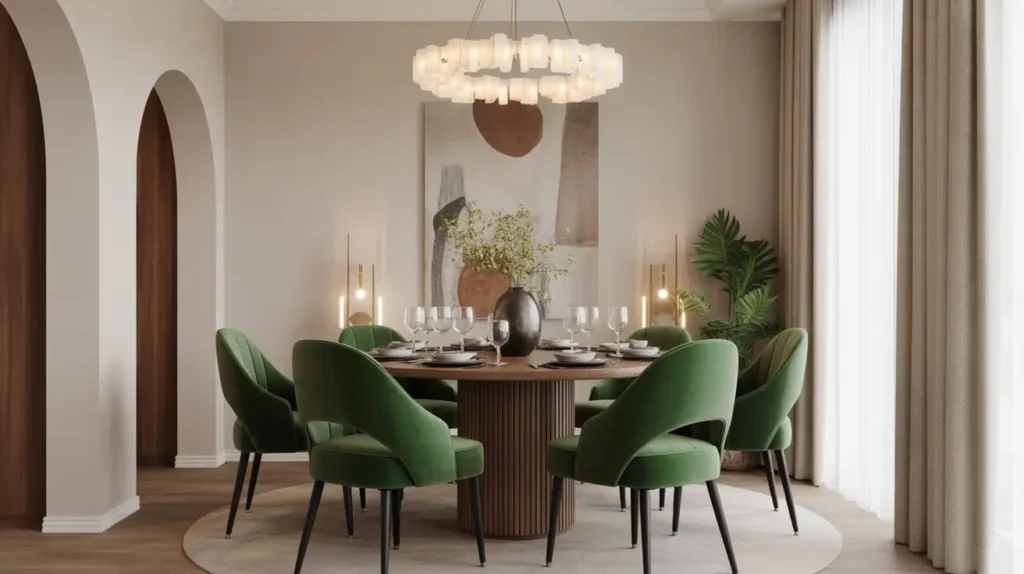
Sometimes, you don’t need to paint the walls to make a green statement. Sometimes, all you need are the right chairs. Green velvet dining chairs are a design trend that I am 100% on board with. They are the perfect way to add color, texture, and a serious dose of luxury to any dining room.
What’s so great about this approach? It’s less permanent than painting. You can have neutral walls (white, grey, even black!) and let the chairs be the focal point. Velvet has a unique way of catching the light that makes colors look incredibly rich and deep. Whether you choose emerald, olive, or forest green, velvet chairs will instantly elevate your space.
How to Nail the Look
- Let the Chairs Shine: The chairs are the main event. Choose a dining table that complements them without competing. A simple wood, glass, or marble table works beautifully. A glass top, in particular, really lets you see the full silhouette of the chairs.
- Choose Your Green Wisely: Emerald green velvet feels glamorous and Art Deco. Olive green velvet feels more mid-century modern and earthy. Forest green velvet is moody and sophisticated. Pick the shade that best matches the vibe you’re going for.
- Coordinate with Metallic Accents: Many green velvet chairs come with metal legs. Match your other accents to this metal. If the chairs have gold legs, use a gold light fixture. If they have black legs, use black accents elsewhere. Consistency is key.
- Tie it in Subtly: You don’t want the chairs to feel totally random. Tie the green in with a few small, subtle accents around the room—a couple of green-toned glasses on a bar cart, a plant in a green pot, or a piece of art with hints of green.
This is a fantastic option for renters or for anyone who’s a bit commitment-phobic about painting. It’s high impact with relatively low effort.
7. Botanical-Inspired Green Dining
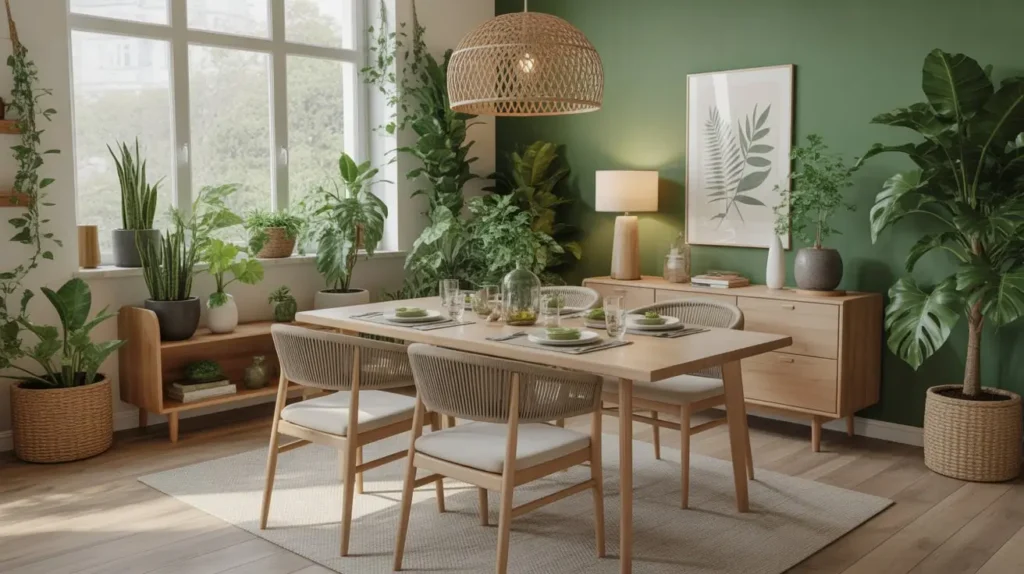
For all the plant parents out there, this one’s for you. Why just have plants in your dining room when your dining room can be the plant? A botanical-inspired theme goes beyond just a few potted ferns. It’s about embracing the patterns, textures, and various shades of green found in nature to create a lush, vibrant, and living space.
This look is all about layering. You can start with a soft green on the walls—like a muted moss or fern green—and then build from there. The goal is to create a room that feels like a chic, stylish greenhouse. It’s fresh, it’s lively, and it’s a wonderful way to bring the outdoors in, which research shows can literally make you feel happier. What’s not to love about that?
How to Nail the Look
- Layer Different Shades of Green: Don’t stick to one green. Use a mix of shades—a light green on the walls, darker green in your upholstery, and the varied greens of your actual plants.
- Incorporate Botanical Prints: This is a must. A large piece of art featuring palm leaves, framed vintage botanical illustrations, or even cushions with a leafy pattern will drive the theme home. You could even go for a botanical-print wallpaper on an accent wall (more on that later!).
- Plants, Plants, and More Plants: This is kind of a no-brainer. Use a variety of plants: a tall tree in the corner, hanging plants near the window, and a collection of smaller succulents on a sideboard.
- Use Natural Materials: Reinforce the natural theme with your furniture and decor. A rattan light fixture, a jute rug, and a solid wood table will all feel right at home in your indoor jungle.
This style creates a dining room that feels alive and breathing. It’s a true escape from the concrete jungle outside.
8. Dark Green Panelled Dining Room
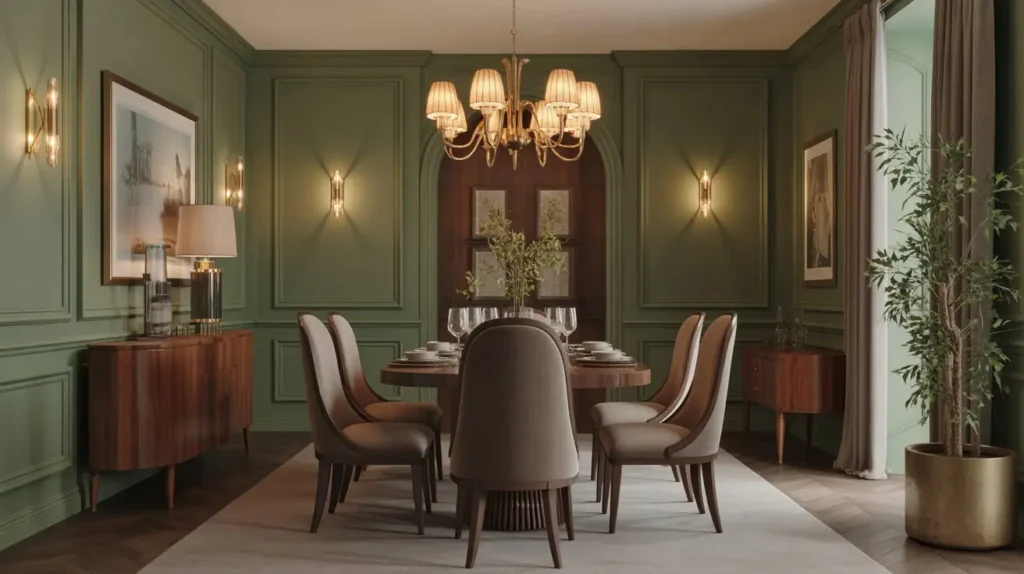
If you want to add instant character, architectural interest, and a hefty dose of traditional-with-a-twist charm, look no further than dark green panelling. This could be full floor-to-ceiling wainscoting, board and batten, or shiplap. Whatever the style, painting it a deep, saturated green is a game-changer.
Panelling adds texture and shadow, which makes a dark color feel even richer and more dynamic. It has a classic, almost historic feel—think old libraries and stately homes—but painting it a bold green gives it a completely modern and edgy twist. I personally find this look incredibly chic and timeless. It feels established and expensive, even if the panelling was a weekend DIY project.
How to Nail the Look
- Choose a Saturated, Moody Green: A dark forest, hunter, or British racing green is perfect for this. The color needs to have enough depth to highlight the shadows created by the panelling.
- Go All In: For maximum impact, paint the panelling, the wall above it, the trim, and even the door all in the same color and finish (usually a satin or eggshell). This monochromatic look is incredibly sophisticated and makes the room feel larger by blurring the edges.
- Contrast with Furniture: To keep the room from feeling like a cave, use furniture that contrasts. A light oak table, chairs upholstered in a light beige linen, or a crisp white marble-topped sideboard would provide a beautiful and necessary contrast.
- Add Warm, Traditional Accents: Lean into the classic vibe with a vintage-style rug, an ornate gold mirror, and brass picture lights to illuminate artwork.
This is a bold, confident look that adds incredible depth and character to a room. It’s perfect for creating a cozy and dramatic dining space.
9. Moss Green Earthy Cozy Dining
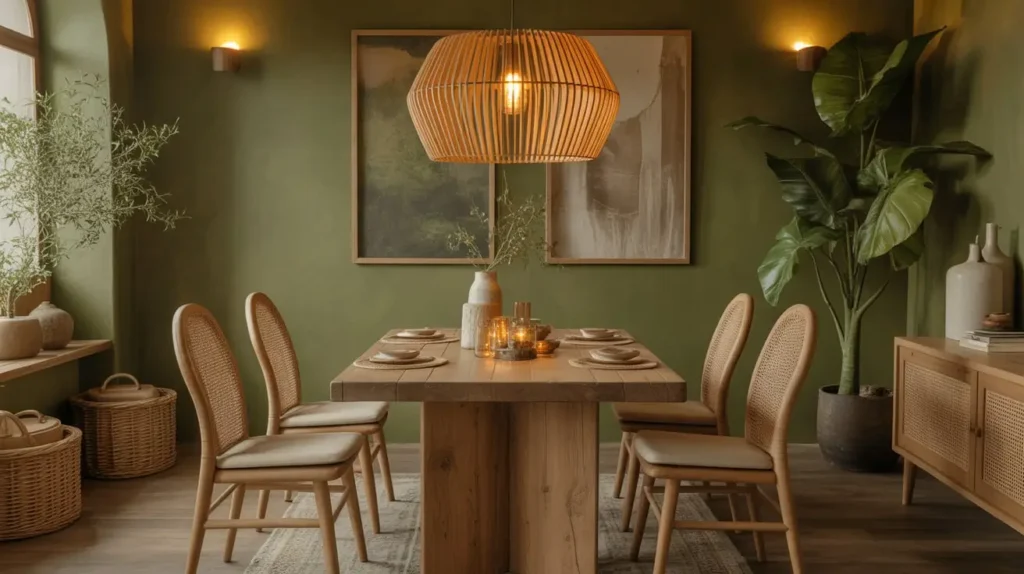
Let’s get grounded. Moss green is a beautiful, mid-tone green with yellow and brown undertones. It’s the color of a forest floor, and it brings an incredible sense of earthy, organic coziness to a space. It’s not as bright as lime or as formal as emerald; it’s a humble, comforting color that invites you to relax.
This style is perfect for anyone who loves a rustic, slightly bohemian, and deeply comfortable aesthetic. It’s all about texture, natural materials, and creating a space that feels nurturing and warm. A moss green dining room is the design equivalent of a warm bowl of soup on a rainy day.
How to Nail the Look
- Embrace Matte Finishes: A flat or matte finish on the walls will enhance the soft, velvety look of moss green. It absorbs light rather than reflecting it, creating a very soft and calming atmosphere.
- Layer on the Natural Textures: This is the most important part. Think a chunky wool or jute rug, linen curtains, woven seagrass placemats, and ceramic or terracotta pottery. The more natural texture, the better.
- Use Warm, Muted Colors: Moss green pairs beautifully with other earthy tones. Think terracotta, rust, mustard yellow, and creamy beige. Use these colors in your textiles, art, and decor.
- Choose Furniture with a Handmade Feel: Look for a dining table and chairs that feel organic and maybe a little imperfect. A rustic wood table, handcrafted ceramic dinnerware, and slightly mismatched chairs all contribute to the cozy, collected vibe.
This is a truly hygge-inspired dining room. It’s a space that prioritizes comfort and well-being above all else.
Read Also 15 Best Mid Century Modern Dining Room Ideas for Stylish Homes
10. Two-Tone Green Contemporary Dining
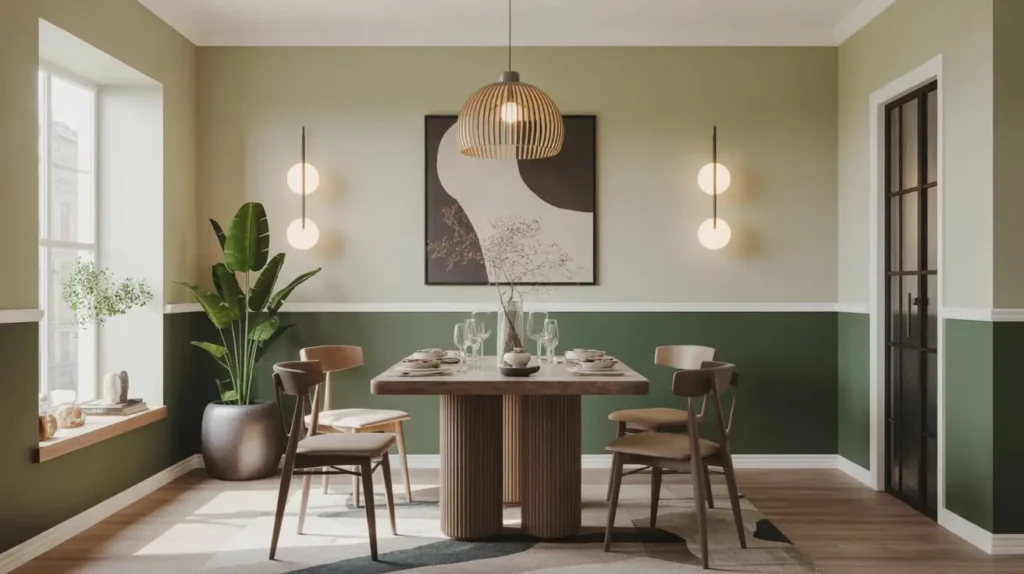
Why choose one green when you can have two? A two-tone wall is a fantastic way to add visual interest and a contemporary edge to your dining room. This typically involves painting the bottom portion of the wall one color and the top portion another, often separated by a chair rail or just a crisp line.
For a super modern look, you can play with two shades of green. Imagine a deep, dark forest green on the bottom third of the wall, with a lighter, softer sage green on the top two-thirds. This technique grounds the space with the darker color while keeping it feeling light and airy with the paler shade. It’s a brilliant design trick that adds architectural interest where there might not be any.
How to Nail the Look
- Play with Proportions: The classic look is to have the darker color on the bottom third of the wall. But for a more dramatic, modern take, you could reverse it or even do a half-and-half split.
- Get a Perfect Line: The success of this look hinges on a perfectly straight, crisp line between the two colors. Use high-quality painter’s tape (like FrogTape) and a level. Take your time with this step; it’s worth it.
- Choose Complementary Greens: Pick two greens from the same family but with different values (lightness/darkness). For example, a light seafoam and a deep teal, or a pale mint and a rich kelly green.
- Bridge the Gap with Furniture and Art: Use your furniture and art to connect the two colors. A piece of art that contains both shades of green, or placing a sideboard that sits right on the dividing line, can help make the look feel intentional and cohesive.
This is a creative and stylish way to use color, offering a custom look that feels very high-design.
11. Green and Gold Glam Dining Room

If you’re looking to dial up the glamour to an 11, the combination of green and gold is your ticket. This is a pairing as classic as champagne and caviar. It evokes the luxury of the Art Deco era and the swankiness of a Hollywood Regency-style interior. It’s bold, it’s dazzling, and it’s absolutely show-stopping.
Any shade of green can work here, but deeper shades like emerald, hunter, or even a dark teal tend to create the most dramatic effect. The green provides a rich, luxurious backdrop, while the gold adds sparkle, warmth, and an undeniable sense of occasion. A green and gold dining room doesn’t just host dinners; it hosts events.
How to Nail the Look
- Go Big with Gold: Don’t be shy. This look calls for statement gold pieces. A large, sculptural gold chandelier, a big sunburst mirror with a gold frame, or a bar cart gleaming with gold are all fantastic choices.
- Incorporate Geometric Patterns: Art Deco design, which heavily influences this style, is famous for its geometric patterns. Look for a rug with a geometric design, or even wallpaper with a green and gold geometric print for an accent wall.
- Lacquer and High-Gloss Finishes: High-shine surfaces add to the glam factor. A high-gloss lacquered sideboard in black or white, or even a dining table with a glossy finish, will reflect light and add to the sparkle.
- Add a Touch of Black: To ground all that green and gold and keep it from looking gaudy, add a few touches of black. Black dining chairs, black picture frames, or a black-and-white rug can provide a sophisticated anchor.
This is the ultimate dining room for someone who loves to entertain and isn’t afraid of a little (or a lot of) glitz.
12. Lime Green Fresh Modern Dining
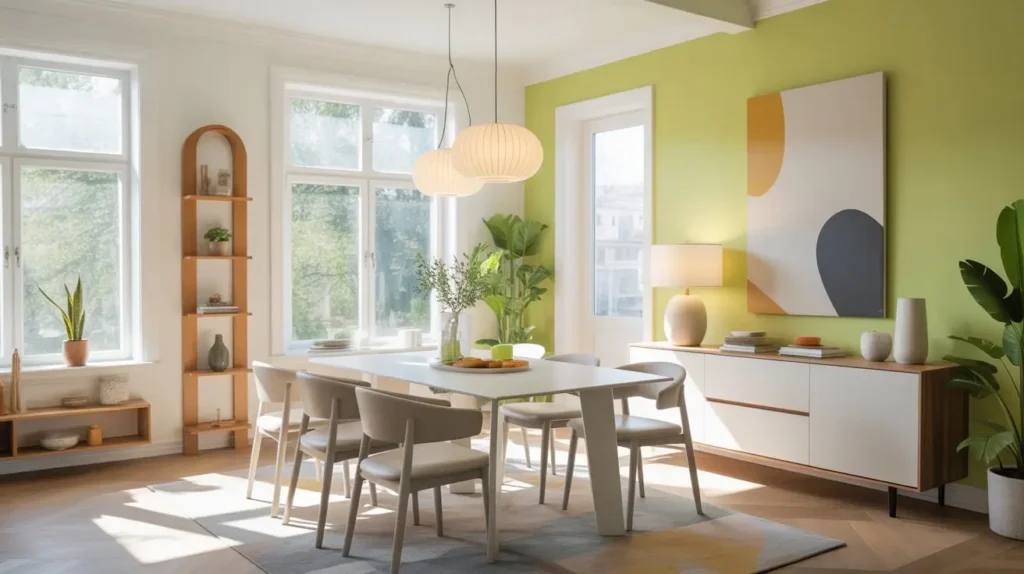
Okay, let’s talk about the wild card: lime green. This is a color that can go very wrong, very quickly. But when it’s done right? It’s spectacular. Lime green is energetic, zesty, and full of life. It’s not for creating a calm, relaxing space. It’s for creating a space that feels vibrant, fun, and full of personality. FYI, you need a certain level of confidence to pull this one off.
The key to using lime green successfully is to use it in a very modern, clean context and to use it sparingly. Think of it as a jolt of caffeine for your home. It’s best used as a feature wall or in strategic accents, paired with a lot of crisp white and clean lines to keep it from feeling overwhelming. This is definitely a high-risk, high-reward choice. :/
How to Nail the Look
- The Accent Wall is Your Friend: Unless you are exceptionally brave, I’d recommend sticking to one lime green accent wall. Paint the other three walls and the ceiling a brilliant, gallery-style white. This gives the lime a clean backdrop to pop against.
- Pair with High-Gloss White and Grey: To keep the look modern and chic, use furniture in high-gloss white. A white lacquered table and simple grey upholstered chairs will balance the intensity of the lime.
- Use Cool Metal Accents: Polished chrome or stainless steel are the best metallic partners for lime green. They have a cool, sleek finish that complements the zesty color without competing with it.
- Keep it Simple: With a color this loud, the rest of the room needs to be quiet. Avoid lots of patterns or clutter. A few simple, well-chosen accessories are all you need.
This is for the design daredevil who wants a dining room that’s fun, funky, and completely unique.
13. Green Coastal Light & Airy Dining
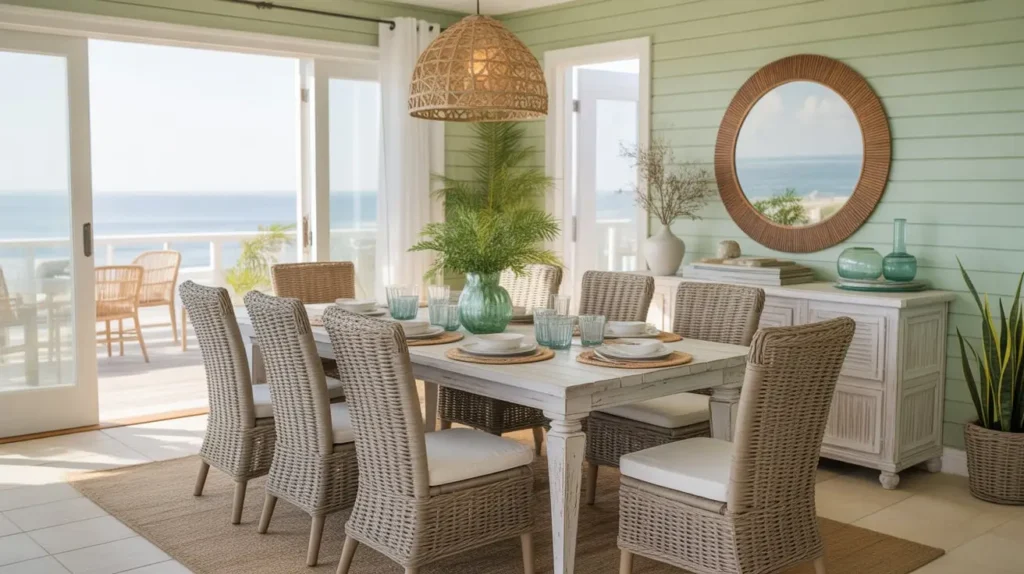
Imagine a breezy beach house on a summer day. That’s the feeling a coastal-themed dining room with soft greens aims to capture. This isn’t about heavy nautical themes with anchors and ship wheels. Modern coastal is much more subtle. It’s about evoking the feeling of the coast through a light, airy color palette and natural, weathered textures.
The perfect greens for this style are seafoam, pale celadon, and light sea glass green. These are soft, watery greens that feel calming and expansive. Paired with lots of white, they create a room that feels bright, open, and incredibly relaxed.
How to Nail the Look
- Light Greens and Lots of White: Use a soft, watery green on the walls and keep everything else—trim, ceiling, curtains—a bright, clean white. This combination is the foundation of the coastal look.
- Choose Weathered or Whitewashed Woods: A dining table made of whitewashed or light, sun-bleached oak is perfect. The finish should feel slightly rustic and weathered by the sea.
- Incorporate Rattan, Jute, and Wicker: Texture is key to bringing the coastal vibe to life. A large jute rug, rattan dining chairs (with comfy cushions, of course), and a woven pendant light are essential elements.
- Keep it Unfussy: The decor should feel casual and collected. A large glass vase filled with beach grass, a simple piece of driftwood on the sideboard, and art that depicts abstract seascapes will complete the look without feeling cliché.
This dining room is a year-round coastal escape, a perfect spot to relax and unwind.
14. Vintage Olive Retro Dining Room
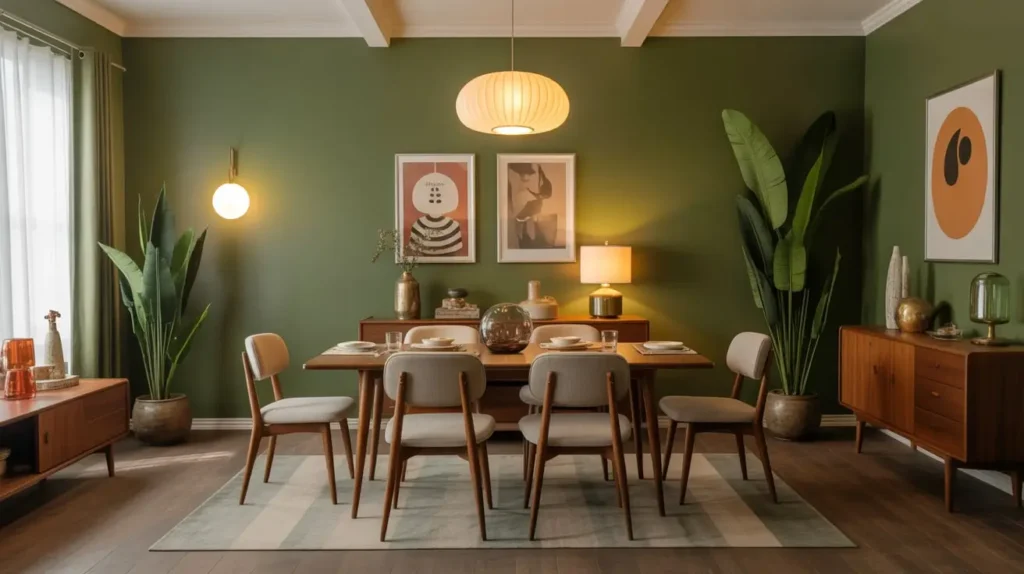
Let’s take a trip back in time, shall we? If you have a soft spot for the 60s and 70s, an olive or avocado green dining room can be incredibly stylish when given a modern update. This isn’t about recreating your grandma’s kitchen exactly; it’s about capturing the warm, funky, and optimistic spirit of the era.
Olive green is the star here. It’s a warm, earthy green that was a hallmark of mid-century modern design. When paired with the right furniture and accents, it feels nostalgic and cool, not dated. It’s a look that’s full of personality and warmth.
How to Nail the Look
- Pair with Teak and Walnut: Mid-century furniture is famous for its use of warm woods like teak and walnut. A vintage sideboard or a dining table with clean lines and tapered legs in one of these woods is a must.
- Bring in Harvest Gold and Burnt Orange: To really capture the retro vibe, you need to pair the olive green with other signature colors of the era. Use accents of harvest gold, burnt orange, or mustard yellow in your art, textiles, or even a set of colorful glasses.
- Look for Funky Shapes: The 70s were all about curves and interesting shapes. Look for chairs with curved backs, a round or oval dining table, or an arc lamp that swoops over the table.
- Add a Shag Rug: Yes, I said it. A shag rug (in a neutral color like cream) under the dining table can instantly add that retro texture and coziness. It’s a fun, playful touch that fully commits to the theme.
This is a fun, personality-packed style for anyone who loves vintage design and isn’t afraid of a little color.
15. Green Wallpaper Feature Dining Room
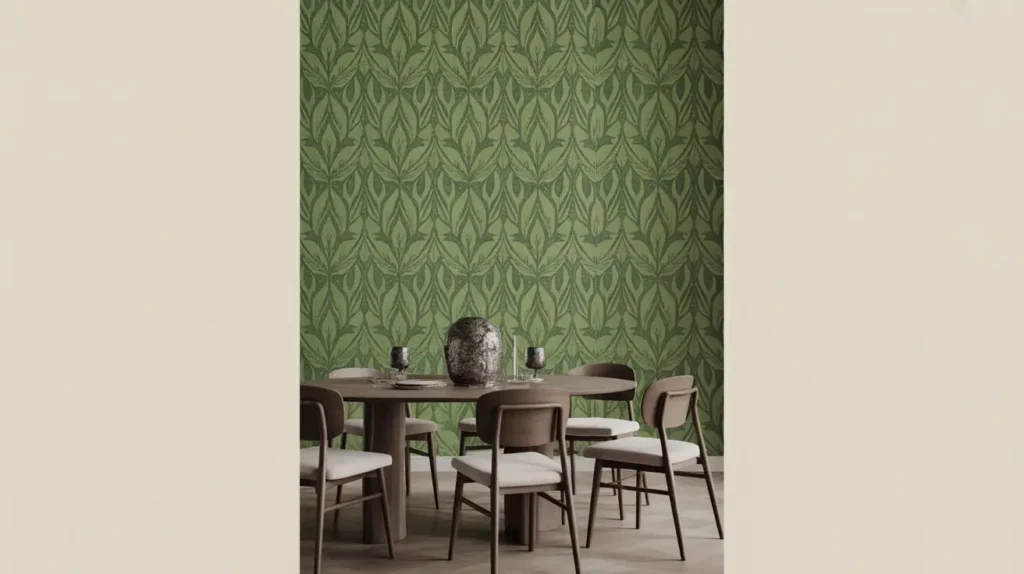
Last but certainly not least, let’s talk about wallpaper. If a solid color feels a little too plain, a green-patterned wallpaper on a feature wall can add an incredible amount of personality, texture, and artistry to your dining room. The options are truly endless, from large-scale banana leaf prints to delicate floral patterns to bold geometric designs.
A wallpapered feature wall acts like a giant piece of art for your room. It creates a powerful focal point and sets the tone for the entire space. It’s a way to be bold and expressive with color and pattern without committing to papering the entire room, which can be overwhelming (and expensive).
How to Nail the Look
- Choose the Right Wall: The best wall for a feature is usually the one you see first when you enter the room, or the wall that the dining table or sideboard is against. It should be a solid wall without too many windows or doors to break up the pattern.
- Pick a Pattern that Matches Your Vibe: A large-scale tropical print feels bold and eclectic. A subtle, tone-on-tone damask print feels traditional and elegant. A geometric art deco print feels glamorous. Let the wallpaper pattern guide the style of the rest of the room.
- Pull Colors from the Wallpaper: Pick out one or two of the secondary colors from the wallpaper pattern and use them for your accents. If the wallpaper has hints of pink, for example, add a couple of pink-toned candles or a vase. This makes the design feel cohesive.
- Keep Other Walls Simple: Let the wallpaper be the star. Paint the other walls in a neutral color pulled from the wallpaper’s background, or a simple white or cream.
This is a fantastic way to inject a huge dose of personal style into your dining room and create a space that is truly one-of-a-kind.
So, Which Green Are You?
Whew! We’ve journeyed from moody, luxe forests to breezy, coastal shores, all through the power of green. As you can see, saying you want a “green dining room” is like saying you want “food for dinner.” The possibilities are endless. Green can be calming or energizing, traditional or ultra-modern, glamorous or down-to-earth.
The most important thing is to choose a green that speaks to you and the kind of atmosphere you want to create. Do you want a dramatic space for hosting memorable dinner parties, or a calm, cozy nook for quiet family meals?
Don’t be afraid to grab a few paint samples and test them out on your walls. See how they look in the morning light versus the evening glow. In the end, the perfect green dining room is the one that makes you happy every time you walk into it. So, which green persona is calling your name? Go on, give your dining room the glow-up it deserves. 🙂