


Ever walk into your dining room and just… sigh? Not a happy, contented sigh, but one of those heavy, “this-room-is-a-dumping-ground-for-mail-and-unfulfilled-dreams” sighs. I’ve been there. My old dining space was a chaotic collection of mismatched furniture and clutter that screamed “I give up.” It wasn’t a place for cozy dinners; it was a place to avoid.
Then, I discovered Japandi. And let me tell you, it was a game-changer. It’s not just another fleeting interior design trend you’ll regret in two years. It’s a philosophy. A beautiful, serene marriage between Japanese rustic minimalism and Scandinavian functional coziness. Think wabi-sabi (finding beauty in imperfection) having a cozy coffee with hygge (the Danish concept of contentment and well-being). The result? A space that’s calm, intentional, and incredibly inviting.
So, if you’re ready to transform your dining room from a chaotic mess into a peaceful sanctuary, you’ve come to the right place. We’re going to walk through 15 stunning Japandi dining room ideas that are more than just pretty pictures—they’re achievable blueprints for creating a space you’ll actually want to eat in. Let’s get to it.
1. Minimalist Wood and Neutral Tones Dining Room
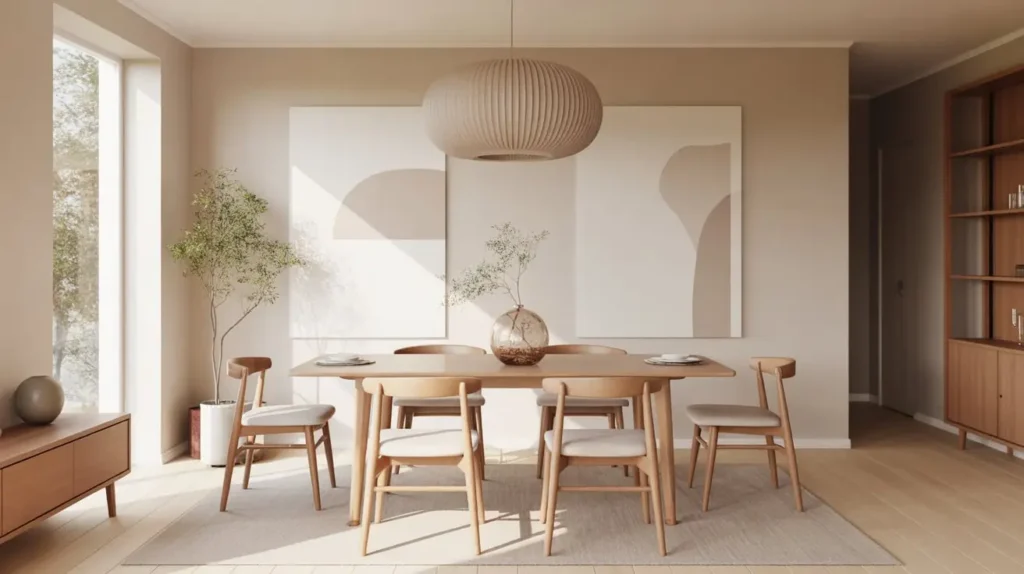
Alright, let’s start with the absolute foundation of Japandi design: wood and neutrals. This isn’t your grandma’s heavy, dark mahogany set that weighs a thousand pounds. We’re talking about clean lines, light-to-medium wood tones, and a color palette that feels like a deep, calming breath.
The goal here is to create a serene backdrop. The focus should be on the quality of the materials and the simplicity of the forms. You want the natural grain of the wood to be the star, not some overly ornate carving. When you pair this with neutral walls—think oat milk, soft grey, or warm beige—the entire room feels instantly more peaceful. It’s a simple formula, but it’s the cornerstone of the whole aesthetic.
How to Get the Look:
- The Table: Opt for a dining table made from light oak, ash, or maple. Look for simple, straight legs or a minimalist pedestal base. Avoid anything too glossy; a matte or satin finish keeps it looking natural.
- The Chairs: Match the wood of the table or introduce a subtle contrast. Simple spindle-back chairs or those with woven seats are perfect. Comfort is key, so don’t be afraid to add a slim cushion.
- The Palette: Paint your walls in a warm neutral. My personal favorite is a color somewhere between beige and grey—often called “greige.” It’s warm without being yellow and cool without being sterile.
- Keep it Simple: The key is to resist clutter. Your table setting should be minimal: simple ceramic plates, linen napkins, and maybe a single, sculptural vase. That’s it.
2. Cozy Japandi Dining with Natural Light
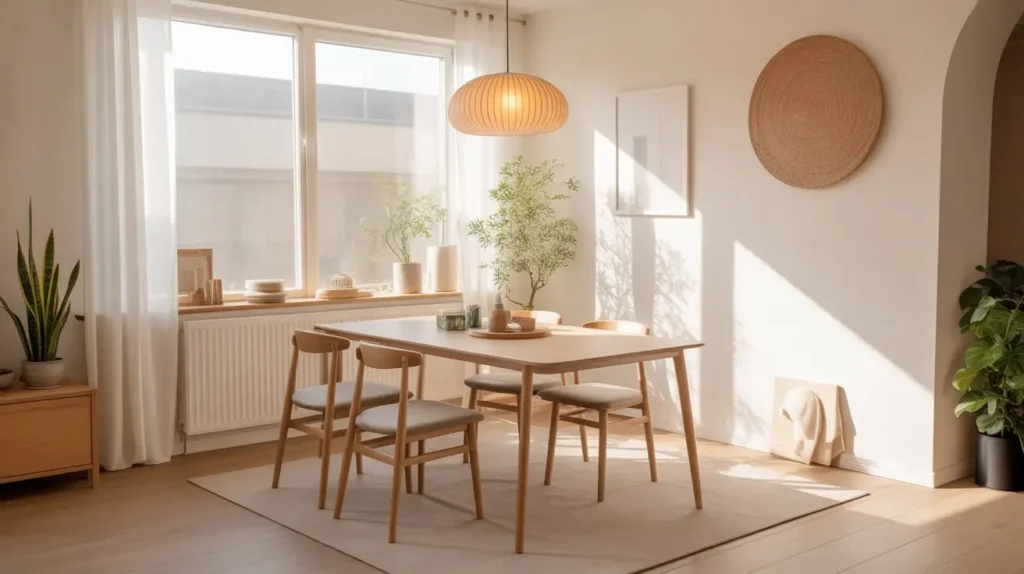
What’s the point of creating a beautiful room if it feels like a cave? Natural light is a non-negotiable element in both Japanese and Scandinavian design. It breathes life into a space, makes it feel larger, and highlights the beautiful textures of your furniture and decor.
Maximizing natural light isn’t just about having big windows (though that helps!). It’s about how you treat those windows and how you arrange your space to take advantage of the light you have. This approach is all about creating a bright, airy atmosphere that feels rejuvenating. It’s the difference between a dining room and a dining experience.
How to Get the Look:
- Ditch Heavy Drapes: Swap out any heavy, dark curtains for sheer linen or cotton panels. They provide privacy while still allowing soft, diffused light to filter through. Or, if you’re brave and your neighbors aren’t too nosy, go completely bare.
- Strategic Placement: Position your dining table where it can catch the best light, usually near the largest window. This not only illuminates your meals but also makes the space feel more inviting throughout the day.
- Use Mirrors (Sparingly): A large, simple-framed mirror placed opposite a window can work wonders. It will bounce light around the room and create an illusion of more space. Just don’t overdo it; one is enough.
- Light-Colored Flooring: If you have the option, light wood floors or a large, neutral-colored rug will reflect light upwards, making the entire room feel brighter.
3. Scandinavian-Inspired Light Wood Dining Space
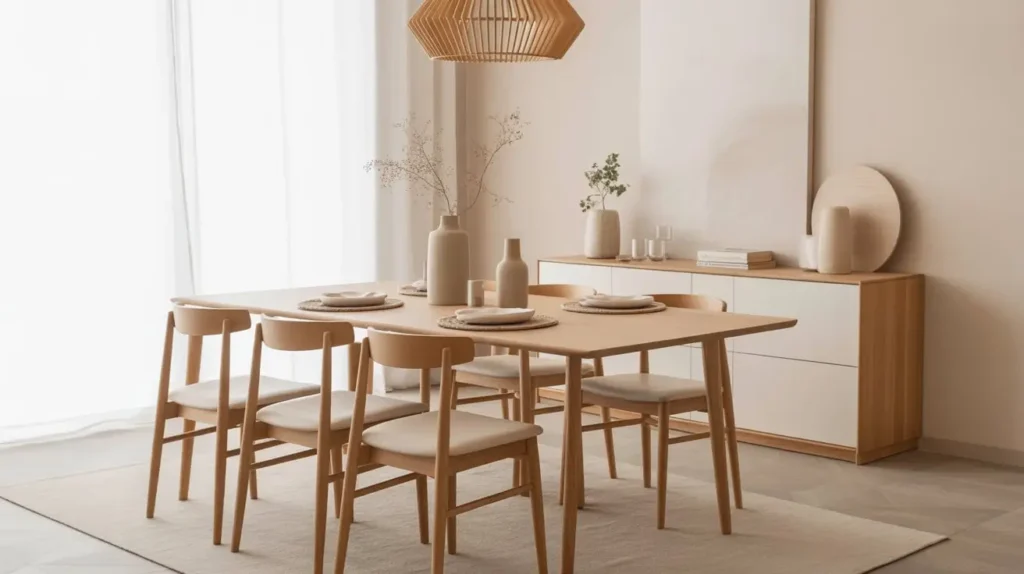
While Japandi is a hybrid, you can definitely lean more heavily into one of its parent styles. A Scandinavian-dominant Japandi dining room is all about pale woods, functionality, and clean, democratic design. Think IKEA, but elevated—and with less frustrating assembly instructions (hopefully).
This look emphasizes brightness and simplicity. The wood tones are almost always on the very light end of the spectrum—birch, pale ash, and light-washed oak. The forms are unfussy and practical, a hallmark of good Scandi design. It’s a look that feels fresh, modern, and eternally cheerful, even on a cloudy day.
How to Get the Look:
- Pale Woods are Your Friend: Look for furniture made from birch, pine, or light ash. A dining table and chairs in these materials will set the perfect Scandinavian tone.
- Iconic Chair Shapes: Incorporate chairs with classic Scandinavian silhouettes. Think about the Wishbone Chair by Hans Wegner or the Series 7 Chair by Arne Jacobsen. You can find many affordable homages to these iconic designs.
- A Pop of Muted Color: While the base is neutral, feel free to add a subtle touch of color. Think dusty blues, sage greens, or pale terracottas in your textiles or a single piece of art. It’s the Scandi way.
- Functional Lighting: A simple, elegant pendant light over the table is a must. Look for something with a clean, geometric shape or a classic dome in white, black, or a soft pastel.
4. Japanese Zen Dining with Low Furniture
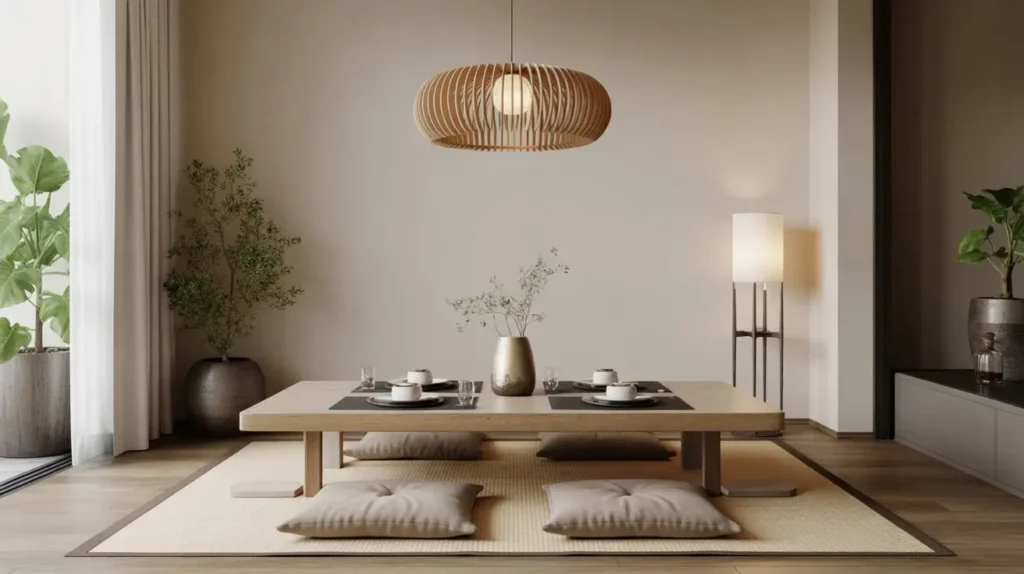
Ready to get a little more traditional? This idea leans heavily into the Japanese side of the equation, creating a space that’s deeply rooted in Zen principles of mindfulness and connection to the earth. The most defining feature? Low-to-the-ground furniture.
Now, before your knees start screaming in protest, hear me out. A low dining table (chabudai) with floor cushions (zabuton) encourages a different kind of dining experience. It’s more intimate, more grounded. It forces you to slow down. If a full low-dining setup is too much, you can capture the essence with a low-profile bench on one side of a standard-height table.
How to Get the Look:
- The Low Table: Find a simple, low-slung wooden table. Darker woods like walnut or stained cedar work beautifully here to create a grounded, earthy feel.
- Floor Seating: Invest in high-quality floor cushions or zafu. Look for ones filled with natural materials like buckwheat or cotton and covered in durable linen or canvas in neutral, earthy tones.
- Tatami Mats: For the full experience, place your setup on a tatami mat or a simple, natural-fiber rug like jute or seagrass. This defines the space and adds another layer of texture.
- Minimalist Tableware: Your dishes should be just as intentional. Think rustic, handmade ceramic bowls (chawan), simple chopsticks, and perhaps a small stone or piece of driftwood as a centerpiece. This is wabi-sabi in action.
Read Also 15 Beautiful Formal Dining Room Ideas and Timeless Styles
5. Earthy Textures and Simple Lines Dining Room
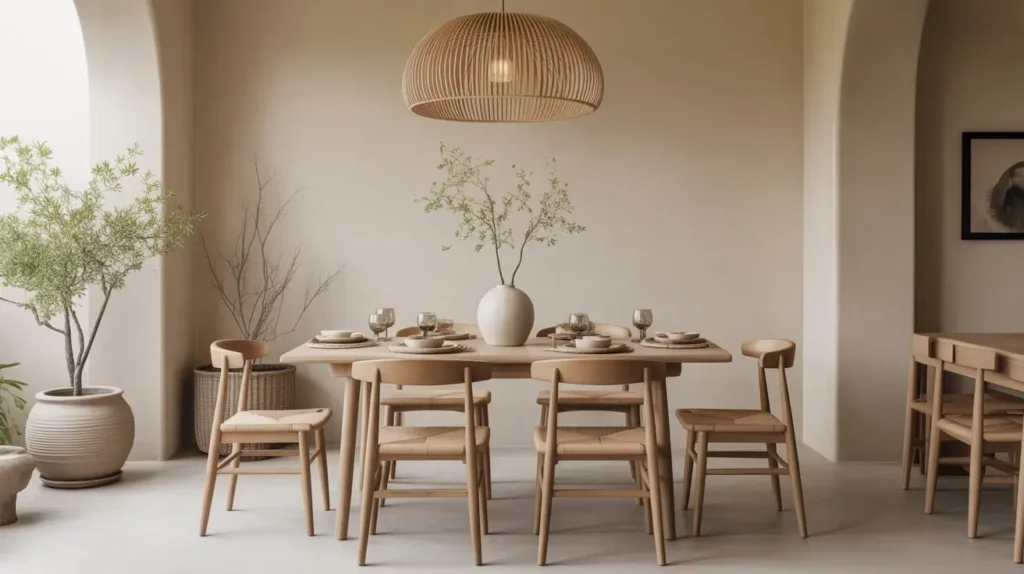
This is where Japandi truly shines—the masterful blend of texture. A room with only smooth, flat surfaces can feel cold and clinical. But a room layered with different textures? That feels rich, complex, and deeply comforting, even if the color palette is simple.
The goal is to engage the senses. Think about the feeling of rough-hewn wood, the softness of a linen napkin, the coolness of a ceramic vase, and the texture of a woven placemat. These elements add visual weight and interest without adding clutter. The lines of the furniture remain simple and clean, allowing the tactile qualities of the materials to take center stage.
How to Get the Look:
- Vary Your Wood: Don’t be afraid to mix wood tones, as long as they have a similar undertone (warm with warm, cool with cool). A medium-oak table with slightly darker chairs can look fantastic.
- Textured Textiles: This is your playground. Use linen tablecloths, slub cotton napkins, and wool or boucle cushions on your chairs. A jute or sisal rug under the table adds incredible texture.
- Ceramics are Key: Display a collection of rustic, handmade ceramics. The slight imperfections and unique glazes are pure wabi-sabi. Use them for serving or as decorative objects on a nearby shelf.
- Natural Weaves: Incorporate woven elements like a rattan-backed chair, a seagrass pendant light, or bamboo placemats. These natural fibers add an instant touch of organic warmth.
6. Monochrome Japandi Dining with Natural Accents
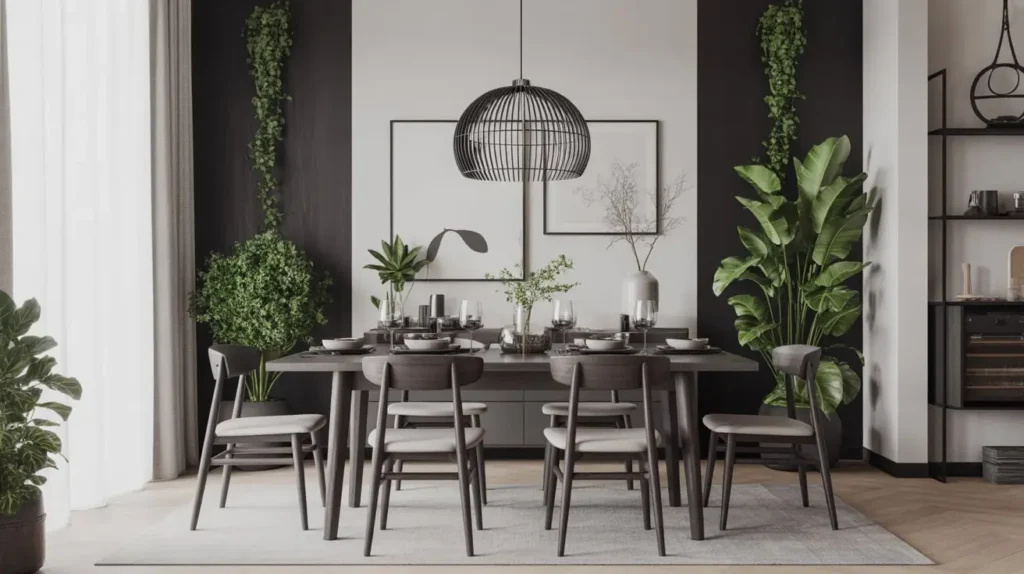
Think monochrome is boring? Think again. A monochrome Japandi dining room isn’t just black and white. It’s a sophisticated exploration of a single color family—usually shades of grey, charcoal, or even deep, inky blues—punctuated by the warmth of natural materials.
The trick to making a monochrome space work is texture, texture, texture. Without it, the room will fall flat. But when you layer different materials in similar tones, you create a space that is dramatic, serene, and incredibly chic. The natural wood and plant accents are crucial here; they keep the space from feeling too cold or stark.
How to Get the Look:
- Choose Your Monochrome: Select a range of shades. If you go with grey, use everything from a pale dove grey to a deep charcoal. Paint the walls in a mid-tone to create a moody, enveloping feel.
- Black as an Accent: Use matte black for key pieces like chair frames, a pendant light, or picture frames. It adds a graphic punch and a touch of modern sophistication.
- Warm it Up with Wood: A natural wood table is essential to break up the monochrome scheme. A beautiful piece of oak or walnut will stand out beautifully against the darker, cooler tones.
- Bring in the Green: A few well-placed plants are non-negotiable. The vibrant green will pop against the monochrome backdrop and add a much-needed touch of life.
7. Indoor Plant-Filled Japandi Dining Space
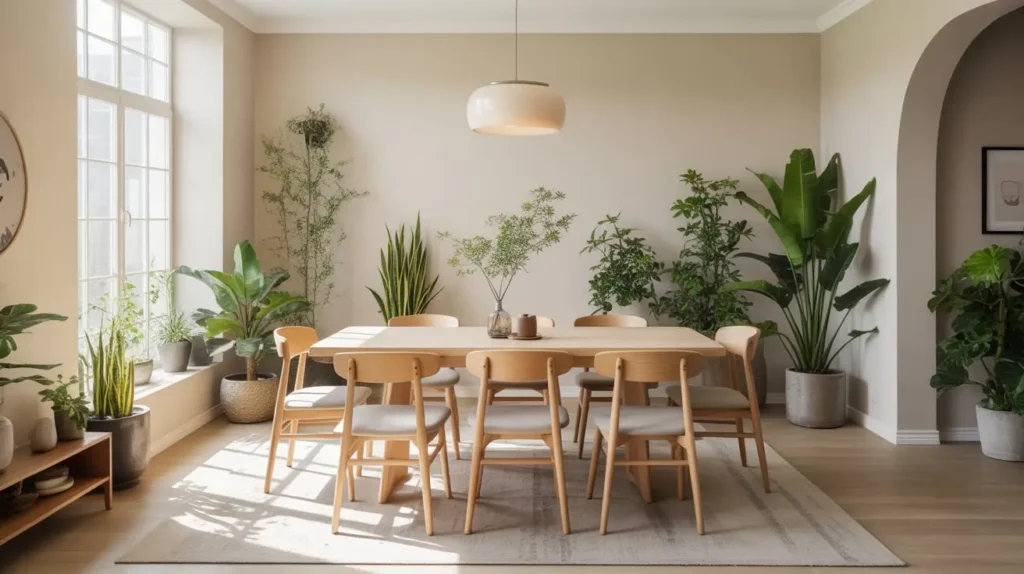
Speaking of plants, why not make them a central feature? Both Japanese and Scandinavian cultures have a deep reverence for nature, so bringing the outdoors in is a fundamental part of the Japandi ethos. A plant-filled dining room feels alive, fresh, and constantly evolving.
But this isn’t about creating a dense, overgrown jungle. It’s about strategic and sculptural plant placement. Each plant should be chosen for its shape and form, acting as a living piece of art. Forget a random collection of plastic pots on the windowsill; think more like a curated botanical gallery.
How to Get the Look:
- Go for Sculptural Plants: Choose plants with interesting shapes. A tall, elegant Fiddle Leaf Fig, a dramatic Monstera Deliciosa, or a delicate Japanese Maple in a pot can act as a stunning focal point.
- Vary Height and Scale: Place a large floor plant in a corner, a medium-sized plant on a sideboard, and a small, trailing plant like a Pothos on a shelf. This creates layers of green throughout the space.
- Choose a Cohesive Pot Style: Stick to simple, minimalist pots in materials like terracotta, concrete, or ceramic. Using similar pots throughout the room creates a sense of unity and intention.
- A Simple Branch: For a truly minimalist Japanese touch, place a single, beautiful branch with a few leaves in a tall vase on your dining table or sideboard. It’s simple, elegant, and incredibly effective.
8. Minimalist Dining with Statement Pendant Light
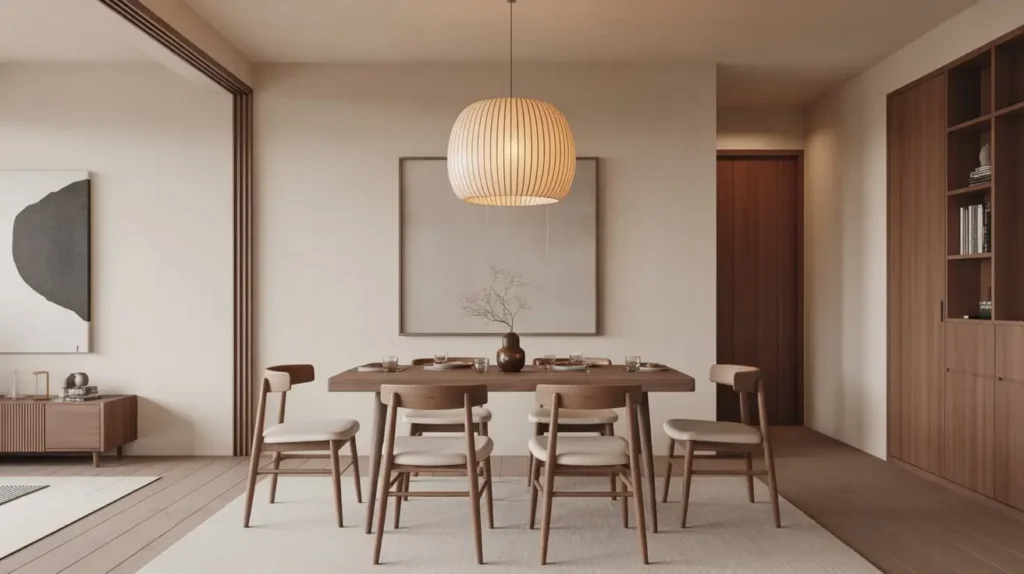
In a minimalist space, every single item has to earn its keep. There’s no room for decorative fluff. This is why a statement pendant light is such a powerful tool in a Japandi dining room. It’s both functional (it lights up your dinner) and sculptural, serving as the room’s primary piece of “jewelry.”
The right pendant light can anchor the entire space and set the mood. But “statement” doesn’t mean “obnoxious.” We’re not talking about a crystal chandelier here. The statement comes from the material, the shape, and the scale. It should be a focal point that draws the eye without overwhelming the serene atmosphere. IMO, this is one of the easiest ways to add a “wow” factor to your minimalist design.
How to Get the Look:
- Embrace Natural Materials: The most iconic Japandi choice is a rice paper lantern, like the Akari lamps by Isamu Noguchi. They provide a beautiful, diffused glow. Other great options include pendants made from woven rattan, bamboo, or bentwood.
- Consider Scale: Don’t be afraid to go big. A large, low-hanging pendant over the dining table creates a sense of intimacy and drama. A good rule of thumb is that the fixture should be about 1/2 to 3/4 the width of your table.
- Simple Shapes: Look for simple, organic, or geometric shapes. A large dome, a cluster of simple globes, or a sculptural, abstract form all work well.
- Dimmer Switches are Your Best Friend: Install a dimmer switch. This allows you to control the mood, from bright and functional for a family dinner to low and intimate for a quiet evening. It’s a small change that makes a huge difference.
9. Warm Wood and White Japandi Dining Room
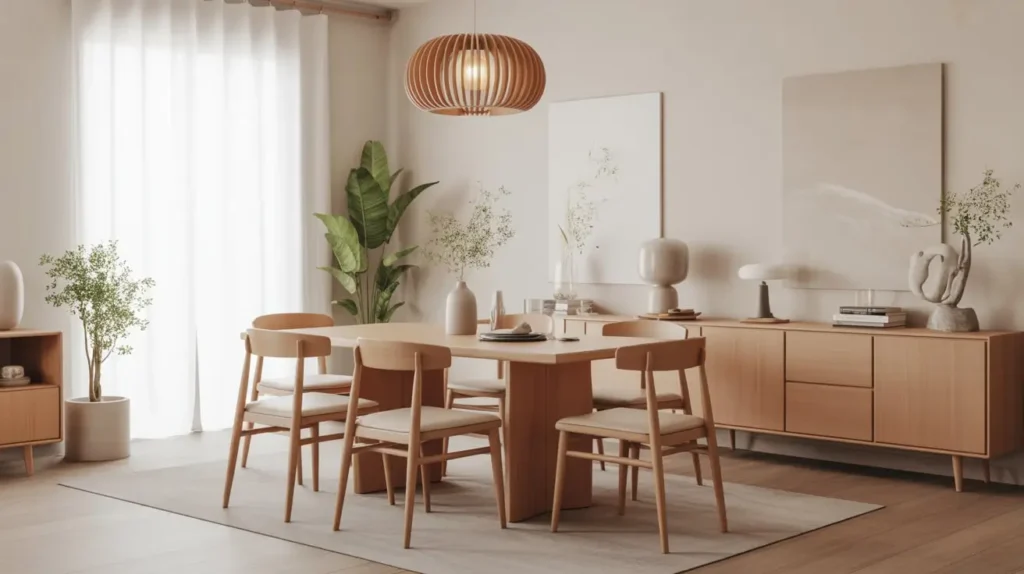
This is a classic combination for a reason. The crisp, clean feeling of white paired with the organic warmth of wood is a match made in design heaven. It’s a slightly softer, more Scandi-leaning take on the Japandi style, feeling bright, airy, and incredibly welcoming.
The key to this look is balance. Too much white can feel sterile; too much wood can feel heavy. You want a harmonious interplay between the two. The white acts as a blank canvas, making the wood grain pop and allowing the simple forms of your furniture to be appreciated.
How to Get the Look:
- White Walls, Wood Floors: This is the quintessential starting point. Crisp white walls make the room feel spacious, while warm wood floors ground the space.
- A Showstopper Table: Since the backdrop is so simple, you can really let your dining table shine. Choose a piece with a beautiful, prominent grain, like solid oak or walnut.
- Mix and Match Chairs: Consider white chairs to contrast with the wooden table, or stick with matching wood and add white cushions. You could even have wooden chairs at the sides and white upholstered chairs at the head of the table.
- White Decor Accents: Use white in your accessories to tie the look together. Think white ceramic vases, white serving platters, and white frames for any artwork.
Read Also 15 Stunning Green Dining Room Ideas and Cozy Modern Styles
10. Small Japandi Dining Nook with Functional Design
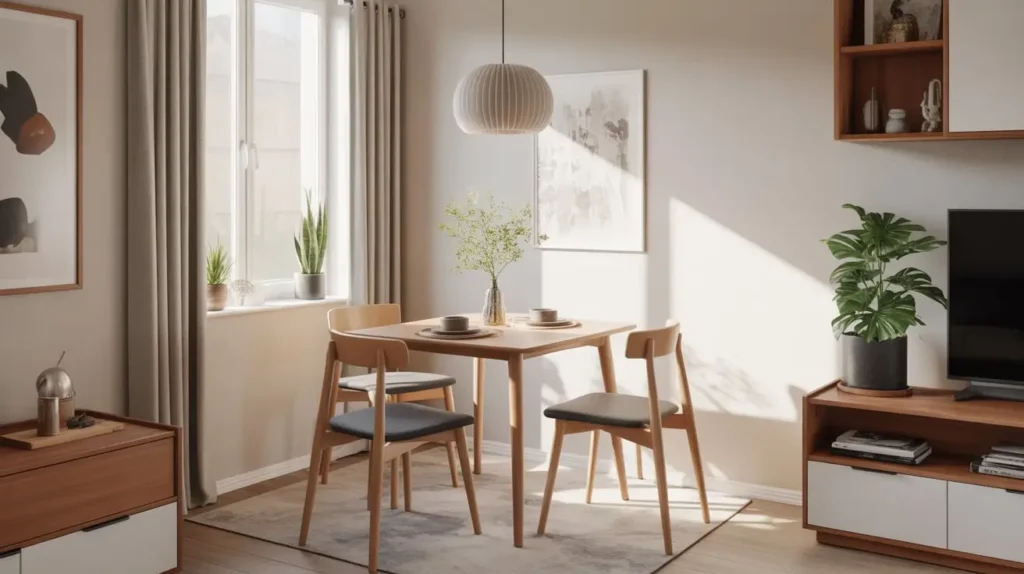
Don’t have a formal dining room? No problem. Japandi is perfect for small spaces because it’s built on principles of minimalism and functionality. You can create a beautiful, cozy dining nook in the corner of a kitchen or living room with a few smart choices.
The focus here is on multi-functional pieces and clever space-saving solutions. Every item needs to be both beautiful and practical. This isn’t about cramming a full-sized dining set into a tiny corner; it’s about creating an intentional, well-designed space that works for you. FYI, a well-designed nook can feel cozier than a huge dining room any day.
How to Get the Look:
- Built-in Bench Seating: A built-in banquette is the ultimate space-saver. It can be pushed right up against the wall and can even include hidden storage underneath the seat. Add some comfy cushions, and you’re set.
- Round or Oval Table: A table with rounded edges is a game-changer in a small space. It has a smaller physical footprint and no sharp corners to bump into, which improves the flow of the room. A pedestal base is even better, as it eliminates legs that get in the way of chairs.
- Wall-Mounted Shelves: Instead of a bulky sideboard or cabinet, use simple, floating wood shelves to store and display your essential tableware.
- Slim-Profile Chairs: Choose chairs that are visually lightweight. Spindle-backs or simple bentwood chairs that you can see through will make the space feel less crowded than solid, chunky ones.
11. Modern Japandi Dining with Open Shelving
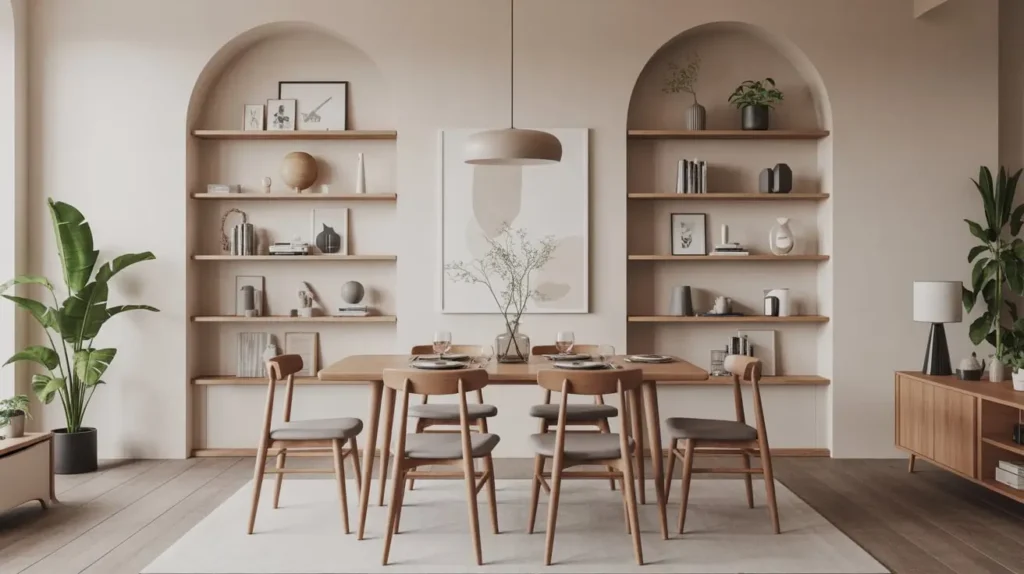
Open shelving is a key feature in many Japandi spaces. Why? It forces you to be intentional. There are no doors to hide your clutter behind. Everything on display must be beautiful, functional, or both. It’s a commitment to a minimalist lifestyle, and it looks fantastic.
In the dining room, open shelving is the perfect replacement for a traditional china cabinet. It’s a place to display your curated collection of ceramics, glassware, and serving pieces. It turns your everyday items into a dynamic art installation. It does require discipline, though—this is not the place for your Tupperware collection. 🙂
How to Get the Look:
- Choose Simple Shelves: Opt for floating shelves in a natural wood that matches or complements your dining table. Simple metal brackets in black or brass can also add a subtle industrial touch.
- Curate, Don’t Clutter: This is crucial. Select only your most beautiful items to display. Think stacks of simple white plates, a row of uniform glasses, a few handmade ceramic bowls, and perhaps a small plant or a piece of art.
- Create Visual Balance: Arrange your items with care. Group similar items together. Vary the height and shape of the objects. Leave plenty of negative space—empty space is just as important as the objects themselves. It gives them room to breathe.
- Combine with Closed Storage: Be realistic. You probably have things you need but don’t want to display. Pair your open shelving with a low, minimalist sideboard with doors to hide away the less-than-beautiful necessities.
12. Soft Fabrics and Natural Elements Dining Room
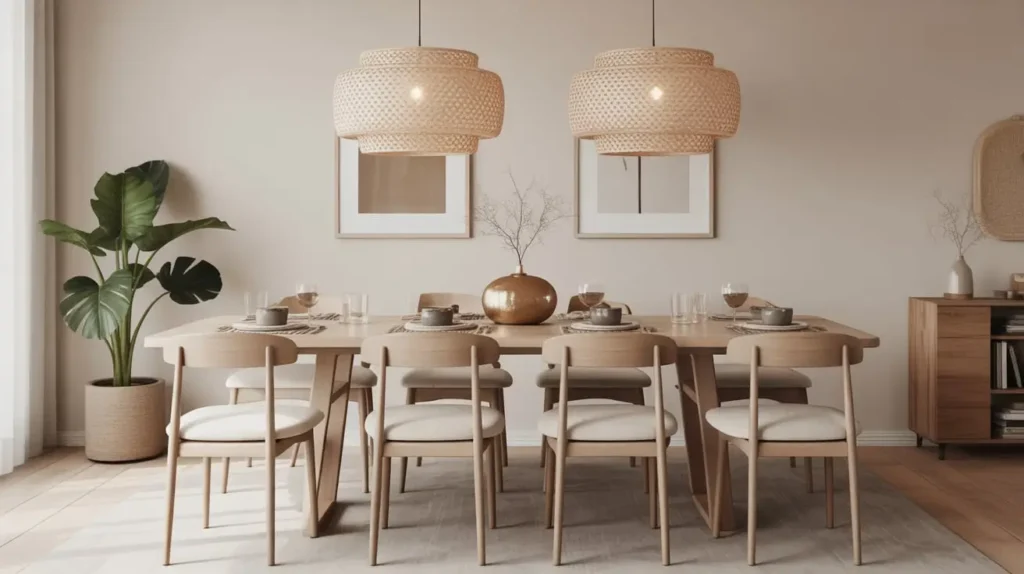
Sometimes minimalism gets a bad rap for being cold or uncomfortable. That’s where the “cozy” part of Japandi comes in, heavily influenced by Scandinavian hygge. This idea is all about layering soft fabrics and natural textures to create a dining room that you’ll want to linger in long after the meal is over.
Forget hard, unforgiving chairs. We’re embracing comfort here. Upholstered seating, plush cushions, and soft textiles transform the dining room from a purely functional space into a relaxing lounge area. It’s about creating a multisensory experience of comfort.
How to Get the Look:
- Upholstered Dining Chairs: Who said dining chairs have to be hard? Choose fully upholstered chairs in a durable, textured fabric like boucle, linen, or a soft wool blend. Stick to neutral colors like cream, beige, or light grey.
- Cushions and Throws: If you love your wooden chairs, just add comfort. Slim seat cushions in a contrasting or complementary fabric can make a world of difference. Drape a soft sheepskin or a light wool throw over one or two of the chairs for an effortlessly cozy look.
- A Soft Rug Underfoot: A plush, high-pile rug under the dining table adds instant warmth and comfort. Choose a neutral color and a material that’s relatively easy to clean.
- Linen Tablecloths: Ditch the stiff, formal tablecloths. A relaxed, slightly rumpled linen tablecloth adds a beautiful, soft texture and an air of casual elegance.
13. Neutral Palette Dining with Minimalist Decor
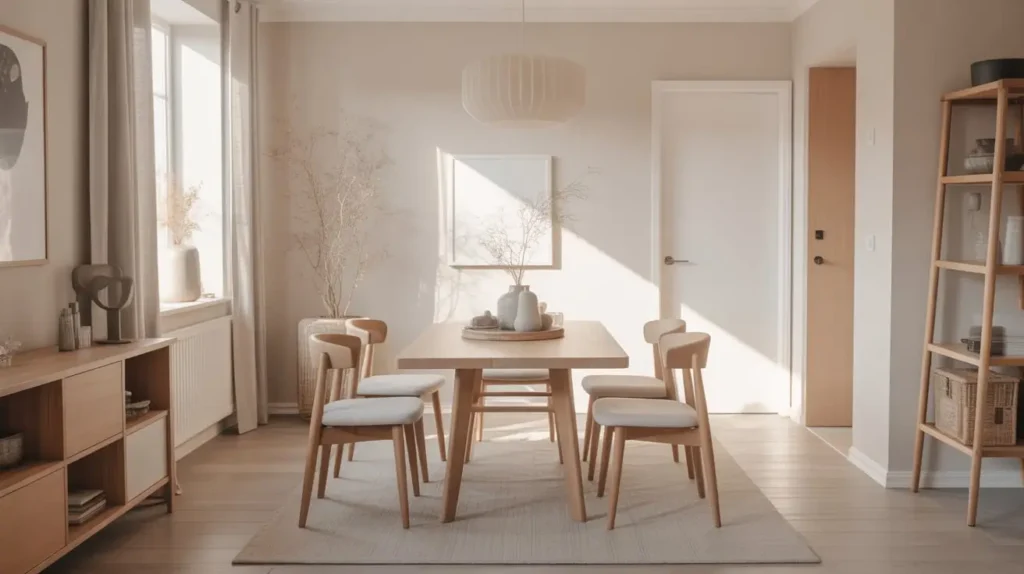
This idea takes the core Japandi palette and dials up the subtlety. It’s a masterclass in nuance, using a tight range of neutral shades to create a space that is incredibly calm and cohesive. We’re talking about the full spectrum of whites, creams, beiges, greys, and taupes.
The magic of this look lies in its quiet confidence. There are no loud colors shouting for attention. Instead, the focus is on the subtle interplay of light, shadow, and texture. The decor is kept to an absolute minimum, with each piece chosen for its form and material. It’s the epitome of “less is more.”
How to Get the Look:
- Layer Your Neutrals: Don’t just pick one beige and stick with it. Use a variety of tones. For example, you could have walls in a soft oat milk color, a dining table in a light ash wood, chairs in a creamy boucle, and a rug in a slightly darker taupe.
- Focus on Form: When your color palette is this restrained, the shape of your furniture becomes paramount. Look for pieces with interesting silhouettes: a table with elegantly tapered legs, chairs with a gracefully curved back, a vase with a unique, organic shape.
- One Piece of Decor: The decor should be extremely edited. A single, large, unadorned ceramic vase on the table. One piece of minimalist line art on the wall. A beautiful wooden bowl on a sideboard. Each item is given space to be appreciated on its own.
- Black as a Punctuation Mark: A tiny touch of black—a thin picture frame, the legs of a chair, a candlestick—can provide a focal point and keep the neutral palette from feeling washed out.
14. Japanese Tea-Inspired Dining Area
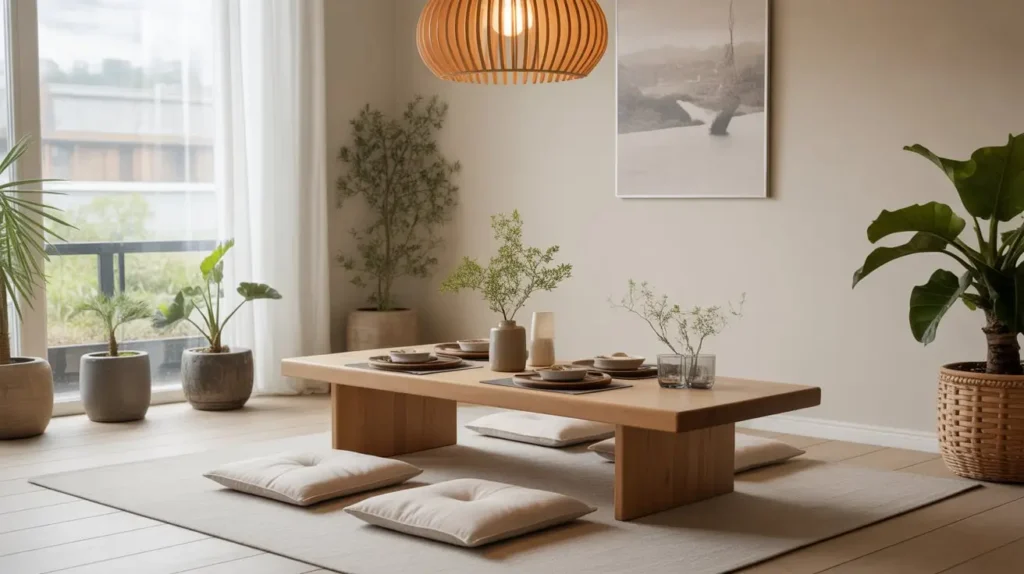
Let’s draw inspiration from one of Japan’s most beautiful and mindful traditions: the tea ceremony. This isn’t about recreating a formal tea house, but about capturing its essence of tranquility, simplicity, and reverence for natural materials.
A tea-inspired dining area is serene and uncluttered. It emphasizes craftsmanship and the beauty of handmade objects. The color palette is often darker and more grounded than a typical Scandi-inspired space, featuring rich woods, earthy greens, and deep charcoals. It’s a space designed for quiet conversation and mindful eating.
How to Get the Look:
- Darker Wood Tones: Move away from the pale Scandi woods and embrace walnut, stained oak, or even blackened wood (shou sugi ban). These darker tones create a more intimate, contemplative mood.
- Handmade Tableware: This is central to the look. Invest in a set of beautiful, rustic ceramic or stoneware dishes. Look for pieces with a tangible, handmade quality—subtle imperfections are a plus.
- Incorporate a Bench: A simple wooden bench on one side of the table is a common feature in Japanese design. It’s communal, simple, and aesthetically clean.
- Natural Stone Elements: Bring in elements of stone. A slate placemat, a small stone paperweight, or a vase carved from soapstone can add a cool, grounding element that contrasts beautifully with the warm wood.
15. Elegant Japandi Dining with Subtle Art Accents
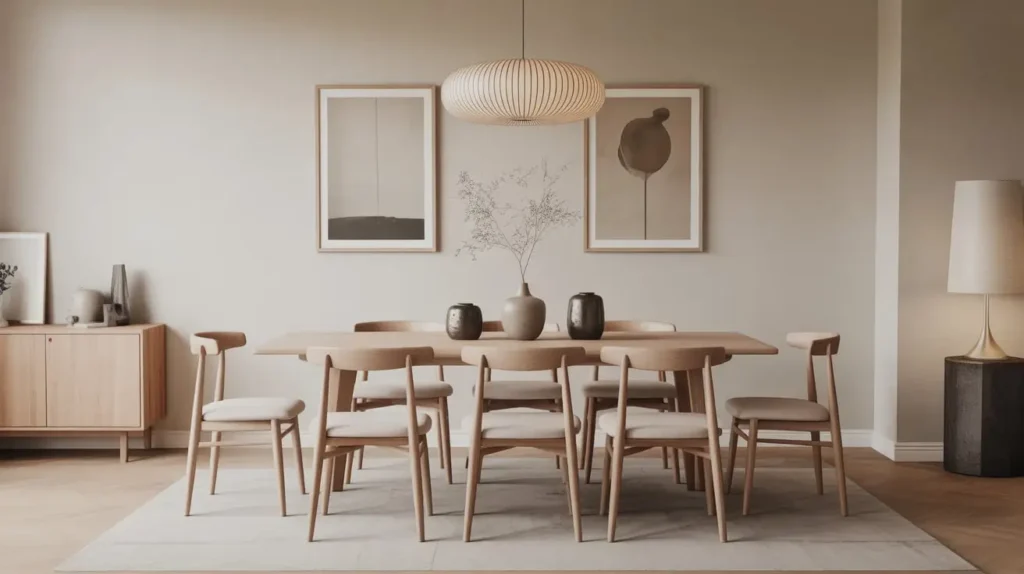
Finally, let’s talk about art. In a Japandi dining room, art isn’t an afterthought; it’s an integrated part of the design. But, true to form, it’s all about subtlety and intention. You won’t find a cluttered gallery wall here. Instead, art is used sparingly to enhance the serene atmosphere, not dominate it.
The goal is to choose pieces that resonate with the Japandi principles of nature, simplicity, and imperfection. It could be a large abstract painting, a simple piece of calligraphy, or a trio of small ceramic sculptures. The key is to give the art space to breathe and to choose something that complements, rather than competes with, the rest of the room.
How to Get the Look:
- One Large Statement Piece: A single, large-scale piece of abstract art can be incredibly effective. Look for paintings with minimal color palettes, lots of negative space, and perhaps some interesting texture.
- Embrace Wabi-Sabi Art: Look for art that celebrates imperfection. This could be a print of a kintsugi-repaired bowl (the Japanese art of mending broken pottery with gold), a photograph of a gnarled old tree, or a piece of abstract art with rough, unfinished edges.
- Calligraphy and Line Art: Simple, black-ink calligraphy or minimalist line drawings are a perfect fit. They are graphic and elegant without being visually noisy.
- Frame it Simply: The frame is just as important as the art. Choose simple, thin frames in natural wood or black. A floating canvas or a simple passe-partout mount also works beautifully to keep the focus on the artwork itself.
Your Peaceful Dining Sanctuary Awaits
So there you have it—15 ways to infuse your dining room with the calm, cozy, and minimalist spirit of Japandi. The most beautiful thing about this style is that it’s not about buying a whole new room of furniture. It’s about making intentional choices, celebrating natural materials, and creating a space that genuinely makes you feel good.
Don’t feel like you have to do everything at once. Start small. Swap out your heavy curtains for sheer ones. Declutter your sideboard and display one beautiful vase. Add some comfy cushions to your chairs. Each small change is a step toward creating a dining room that’s not just a place to eat, but a peaceful retreat from the chaos of the world.
Now, go on and create a space you love. Your future, much more relaxed self will thank you