


Alright, let’s have a little chat. You and me. We need to talk about that one room. You know the one. It’s the living room, but it’s also the dining room. Maybe it’s your home office, too? And on Tuesdays, it doubles as a less-than-zen yoga studio. If your living-dining “combo” feels more like a chaotic compromise than a clever design, I feel you. I’ve been there, staring at a space that felt more like a glorified hallway than a home.
For years, I wrestled with my own tiny apartment layout, trying to make it feel like two distinct, functional areas instead of one cramped, confused room. It felt like an impossible puzzle. But here’s the secret I eventually cracked: it’s not about the square footage you don’t have. It’s about being ridiculously smart with the square footage you do have.
So, forget everything you think you know about small-space limitations. We’re about to turn your design dilemmas into design triumphs. I’ve gathered 15 tried-and-true ideas that actually work. No fluff, no “just buy a smaller house” advice. Just pure, actionable genius. Let’s get to it.
1. Rug-Defined Living and Dining Zones
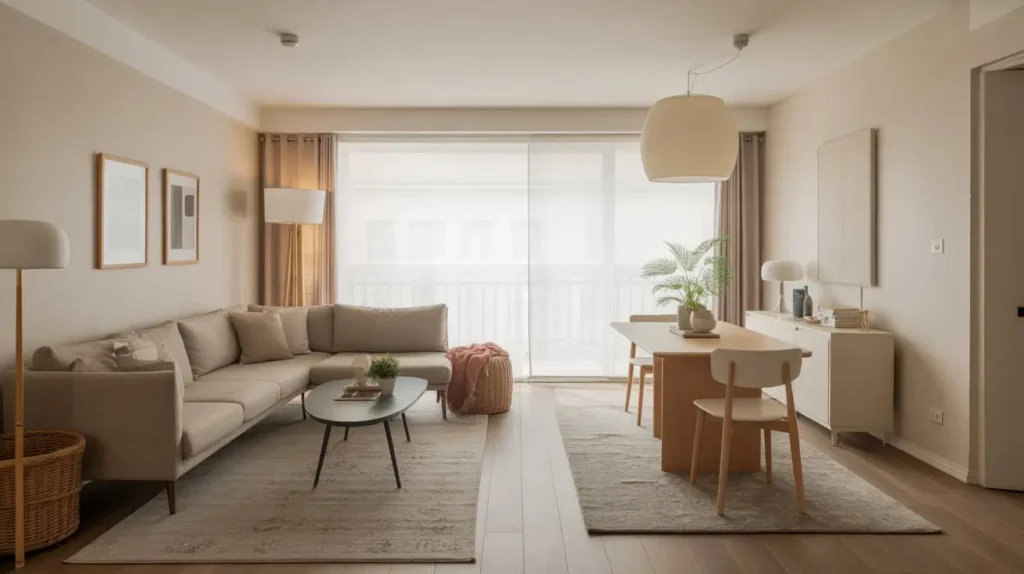
This one sounds almost too simple to work, but trust me, it’s foundational. Using rugs to define separate areas is like drawing invisible walls on your floor. It’s a psychological trick that tells your brain, “Hey, this is the cozy living spot,” and “Over here? This is where we eat.”
Why It’s a Game-Changer
Without physical barriers like walls or bulky screens, your room can feel like one big, undefined blob. A rug creates a visual anchor for each zone. The living room rug groups your sofa, coffee table, and chairs into a cohesive unit. The dining room rug (yes, you can have one there!) frames your table and chairs. It’s the easiest, most effective way to create separation without sacrificing an inch of physical space.
How to Nail the Look
The key here is proper sizing. This is where so many people go wrong. A tiny rug floating in the middle of your furniture just looks sad and disconnected. Here are the rules I live by:
- For the Living Area: Your rug should be large enough that at least the front legs of your sofa and any accent chairs are sitting on it. Ideally, all the furniture should be on the rug, creating a cozy island.
- For the Dining Area: Your rug needs to be big enough that when you pull the chairs out to sit down, they remain completely on the rug. Nothing is more annoying than a chair leg catching on the edge of a rug. Measure your table, add about 24-30 inches on all sides, and that’s your minimum rug size.
Don’t be afraid to mix and match. Using two different but complementary rugs adds another layer of distinction. Maybe a plush, high-pile rug for the living area and a durable, low-pile or flatweave rug for the dining zone? Go for it.
2. Round Dining Table Space Saver
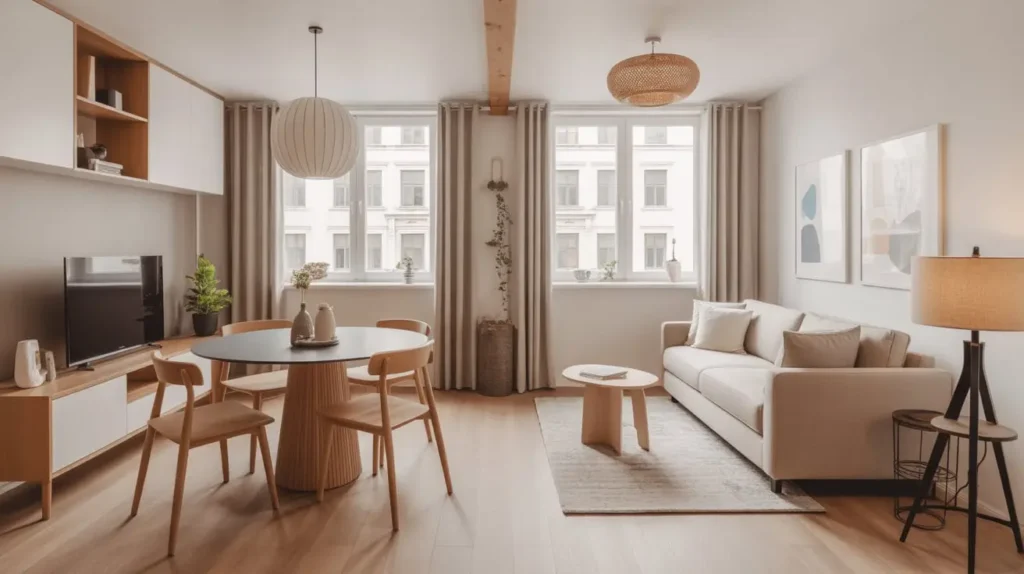
Let’s be honest, sharp corners are the mortal enemy of small, high-traffic spaces. I’ve lost count of the number of times I’ve bruised my hip on the corner of a rectangular table while trying to navigate a tight room. A round table is your secret weapon against this very specific type of domestic violence.
The Geometry of Genius
Think about the physical footprint. A round table has less surface area than a square or rectangular table of the same seating capacity, but more importantly, it eliminates those jutting corners. This creates smoother traffic flow around the table, which is absolutely critical in a combo room. Ever tried to squeeze past a chair at a rectangular table? It’s a dance of awkward shuffles. With a round table, you can just glide right by.
Plus, they are just so… sociable. Everyone is equidistant, making conversation feel more natural and inclusive. No one gets stuck at the dreaded “end of the table.”
Pro Tips for Maximum Impact
I’m a huge fan of pedestal-base round tables. Without four clunky legs at the corners, you gain a ton of visual space and actual legroom. You can easily squeeze in an extra chair without someone having to straddle a table leg. It’s a small detail that makes a massive difference.
To take it a step further, consider pairing your round table with chairs that have a light visual profile. Think chairs with slim legs, or even better, clear acrylic “ghost” chairs. These chairs do their job without adding any visual clutter, making the entire area feel more open.
3. Sofa Back as Natural Room Divider
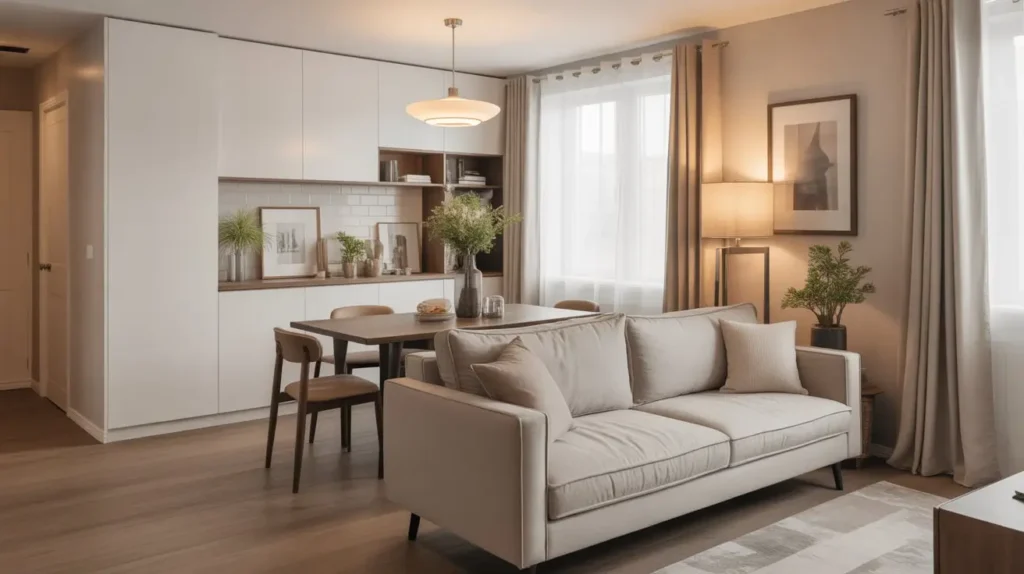
This might feel counterintuitive. Your instinct is probably to push every piece of furniture against a wall to maximize floor space, right? Wrong. Sometimes, the boldest move you can make in a small room is to pull the sofa away from the wall and float it in the middle.
Breaking Up Is Easy to Do
By placing your sofa with its back facing the dining area, you create a powerful, albeit low, divider. The back of the sofa acts as a de facto wall, clearly signaling where the living room ends and the dining room begins. It carves out a distinct conversational nook that feels intentional and cozy.
This works because it forces you to create a dedicated walkway behind the sofa, establishing a natural traffic pattern. People will automatically walk around the “living room” instead of cutting through it, which instantly makes the space feel more organized and less like a thoroughfare.
Making It Look Intentional
The trick to not making this look like you just haven’t finished arranging your furniture is to anchor the sofa. Place a slim console table directly behind it. This is a game-changer. That console table becomes a multi-functional superstar:
- It provides a surface for decorative items like lamps, plants, or books, adding personality.
- It acts as a drop zone for keys and mail.
- It can even double as a mini-bar or a serving buffet when you have guests.
Now, your floating sofa doesn’t look lost; it looks like the centerpiece of a brilliantly designed, multi-functional space.
4. Floating Shelf Zoning Concept

When floor space is at a premium, where do you look? Up! Floating shelves are one of my absolute favorite tools for small spaces because they provide storage and display space without a heavy physical or visual footprint.
Why It’s a Smart Move
Traditional bookcases or cabinets eat up valuable floor space. Floating shelves, on the other hand, keep the floor clear, which creates an illusion of more space. You can use them to create a visual line of separation between your living and dining zones.
Imagine a series of long, floating shelves running along the wall, starting in the living area and extending into the dining area. You can visually divide the zones by what you place on them. In the living area section, display books, photos, and decor. As the shelves move into the dining area, they can hold nice dinnerware, glasses, or a collection of small plants. It’s subtle, but effective.
How to Implement It Effectively
For this to work, you need precision. Use a level—seriously, don’t eyeball this. Crooked shelves will just look messy. Keep the styling clean and uncluttered. The goal is to add function and definition, not create more visual noise.
A personal favorite trick of mine is to install a single, extra-long floating shelf at picture-rail height (about 12-18 inches from the ceiling) that runs the entire length of the wall. This draws the eye upward, making the ceiling feel higher, and unifies the entire room while still allowing you to zone the space below it with rugs and furniture.
Read Also 15 Stunning Small Living and Dining Room Combo Ideas for Cozy Spaces
5. Window-Side Dining Nook Layout

Got a window? You’ve got a prime location for a dining nook. There’s something undeniably charming about sipping your morning coffee or sharing a meal while bathed in natural light. It transforms the act of eating from a necessity into an experience.
Creating a Destination
Placing your dining set by the window gives it a sense of purpose and place. It’s no longer just a table and chairs awkwardly shoved into a corner; it’s a destination. This is especially effective in a small living room dining room combo because it naturally draws the dining function to one side of the room, leaving the rest of the space free for lounging.
Natural light also works wonders for making a small area feel larger and more inviting. Plus, having a view (even if it’s just of the building next door) provides a focal point and makes the dining experience more pleasant.
The Perfect Setup
A built-in banquette or a standalone bench is your best friend here. A bench can be pushed right up against the wall under the window, saving a significant amount of space compared to chairs that need to be pulled in and out. You only need to allow clearance for chairs on one side of the table.
Pair your bench with a slim-profile rectangular table or even a small round one. Add a couple of lightweight chairs on the opposite side. For a finishing touch, hang a simple pendant light over the table to define the nook even further, especially in the evenings. It’s cozy, efficient, and ridiculously chic.
6. L-Shaped Seating Combo Design
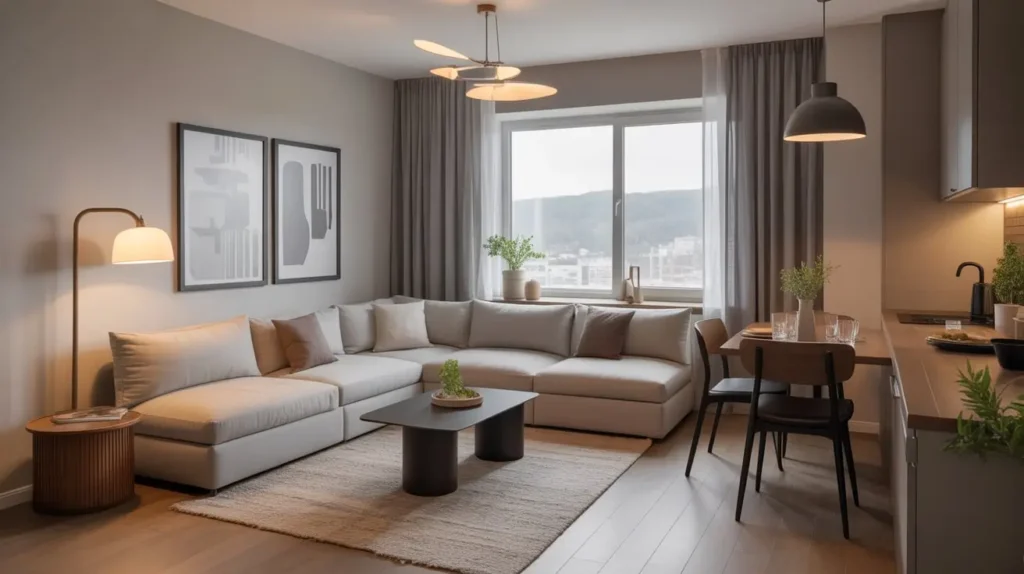
When you’re trying to pack maximum function into minimum space, an L-shaped or sectional sofa can be surprisingly effective. People often think sectionals are only for huge rooms, but a well-chosen one can be a small-space superhero.
The Corner-Hugging Advantage
An L-shaped sofa makes brilliant use of a corner—a notoriously tricky spot to furnish. By tucking a sectional into a corner, you can provide maximum seating without a collection of disparate chairs and loveseats that can look cluttered. It consolidates your seating into one clean, continuous line.
The “L” shape also naturally creates a boundary for the living area. The chaise or shorter arm of the sectional acts as a soft divider, separating the seating zone from the dining space or walkway without needing any extra furniture.
Choosing the Right Sectional
The key is proportion. You can’t just throw any giant sectional in there. Look for “apartment-sized” sectionals. They have shallower depths and shorter overall lengths. A sectional with low arms (or even one armless side) and raised legs will also feel much lighter and less bulky in the room.
My advice? Measure, measure, and measure again. Use painter’s tape on the floor to map out the exact dimensions of the sectional you’re considering. Live with the tape for a day or two. Does it impede traffic flow? Does it feel overwhelming? This little test has saved me from many a costly furniture mistake. IMO, it’s a non-negotiable step.
7. Extendable Dining Table Setup
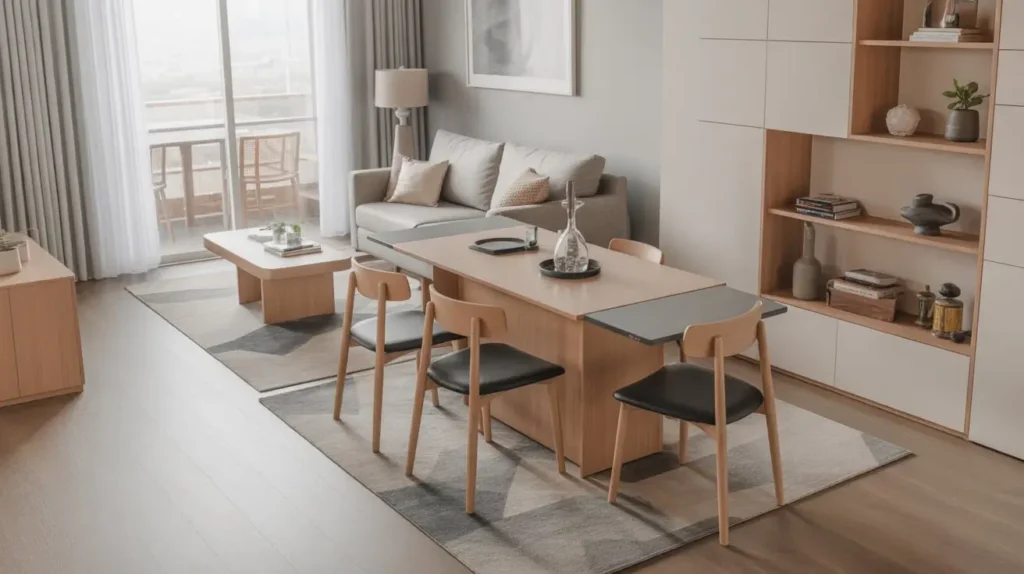
This is the “business in the front, party in the back” of dining tables. An extendable table offers the ultimate flexibility for a small living room dining room combo. Day-to-day, you can keep it in its smallest form, preserving precious floor space for, you know, walking.
The Best of Both Worlds
Why dedicate a huge chunk of your room to a massive dining table you only use for holidays and the occasional dinner party? It makes no sense. An extendable table allows you to live large in a small space. For your everyday meals for one or two, it remains compact and unobtrusive.
But when you decide to host a get-together? Voila! You pull out the hidden leaf (or leaves), and suddenly you’re the host with the most, ready to seat six or eight guests. It’s the perfect solution for people who want the option of entertaining without sacrificing their daily living space.
What to Look For
There are a few different mechanisms for extendable tables:
- Butterfly Leaf: The leaf is stored inside the table and folds out like butterfly wings. Super convenient as you don’t need to store the leaf separately.
- Drop-Leaf: One or two sides of the table are hinged and can be dropped down when not in use. Great for really tight spaces.
- Traditional Leaf: You have to manually insert a separate leaf (or two) into the center of the table. This is a classic, sturdy option, but you need to find a place to store the leaf, which can be a pain.
Personally, I’m a huge fan of modern butterfly leaf tables. The engineering is slick, and the convenience is unbeatable. No more hunting for that leaf in the back of a closet!
8. Open Console Divider Arrangement
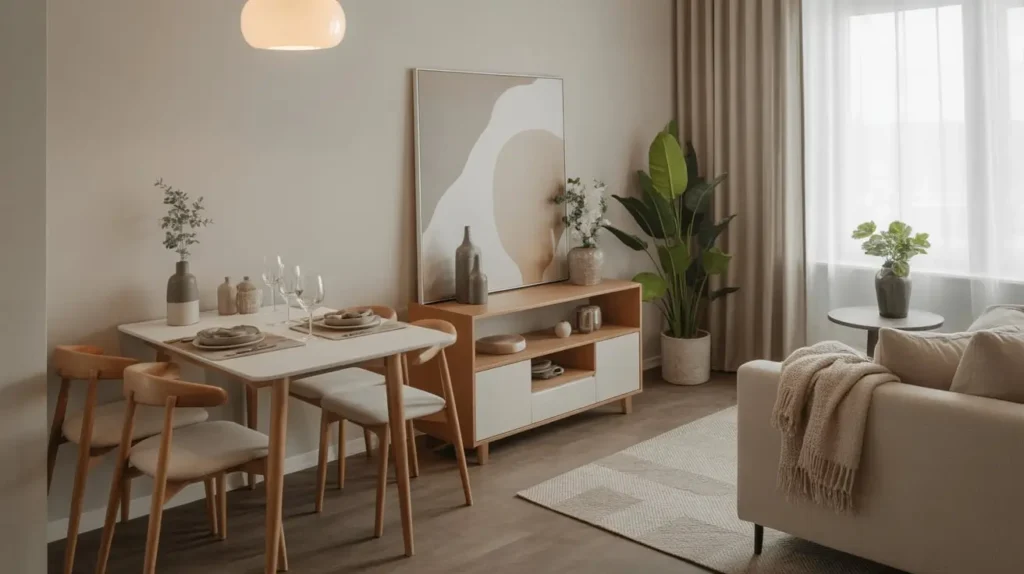
Sometimes you need a divider that’s more substantial than a sofa back but less oppressive than a solid wall or a huge bookcase. Enter the open-back console or étagère. This is the perfect “Goldilocks” solution for separating your living and dining areas.
A See-Through Separation
An open-back shelving unit creates a clear division of space while maintaining an airy, open feel. Because you can see through it, it doesn’t block light or sightlines, which is crucial for preventing a small room from feeling chopped up and claustrophobic.
It serves as a functional and decorative partition. You can style the shelves with books, plants, and art objects, adding personality and texture to your room. It defines the two zones while allowing them to still feel connected and part of a cohesive whole.
Styling It for Success
The way you style the shelves is key. You don’t want to cram them full of stuff. That defeats the whole purpose of it being “open.” Embrace negative space. Leave some areas empty. This allows light to pass through and keeps the look feeling uncluttered.
Try placing items on the shelves that can be appreciated from both the living and dining sides. A beautiful sculpture, a unique vase, or a trailing plant works wonderfully. This turns your divider into a piece of art that serves both zones.
9. Minimalist Japandi Combo Space
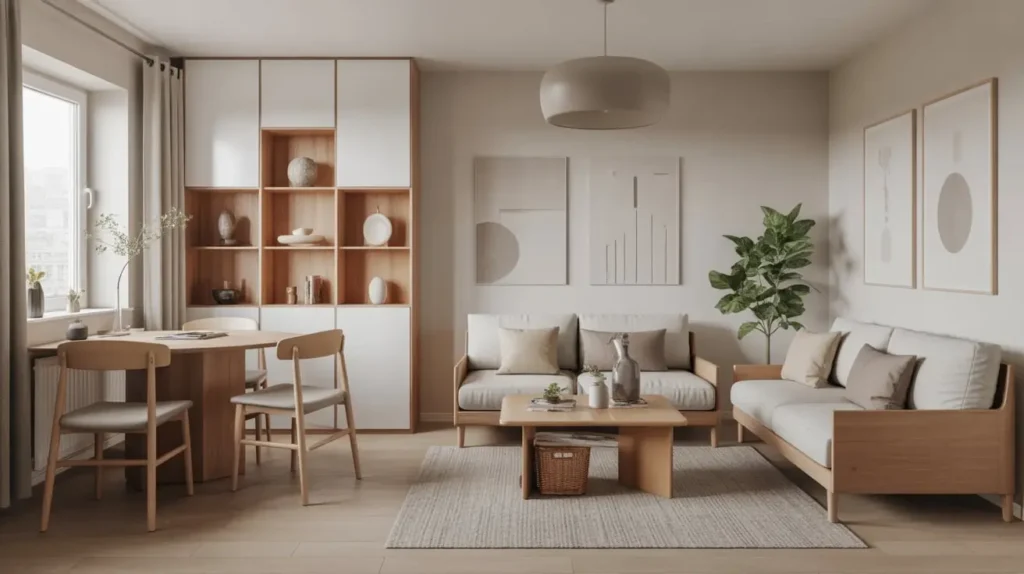
If you find yourself constantly battling clutter, the Japandi design philosophy might just be your salvation. It’s a hybrid of Japanese minimalism and Scandinavian functionality, and it’s a match made in heaven for small combo spaces.
The Philosophy of “Less But Better”
Japandi is all about creating a serene, highly functional, and uncluttered environment. It champions natural materials, muted colors, and clean lines. The focus is on quality craftsmanship over quantity of possessions. Think warm woods, bamboo, linen, and stone, paired with a color palette of beige, cream, charcoal grey, and soft, earthy tones.
In a living-dining combo, this translates to a space that feels calm, cohesive, and intentional. Every single item in the room has a purpose and a place. There’s no room for meaningless clutter. The result is a space that feels both tranquil and surprisingly spacious.
Bringing Japandi Home
To achieve this look, you need to be ruthless with your editing. Start with a neutral, unified color scheme for the walls and large furniture pieces. Then, select furniture with simple, clean silhouettes.
- Living Area: A low-profile sofa with simple lines, a wooden coffee table with a minimalist design, and perhaps a single, beautifully crafted accent chair.
- Dining Area: A simple wooden dining table and chairs. Nothing ornate. The beauty comes from the material and the form.
- Storage: Any storage should be sleek and integrated. Think handleless cabinets or simple floating shelves.
The final touch is texture. Introduce it through linen curtains, a wool rug, or ceramic vases. It’s a style that forces you to be mindful, and in a small space, mindfulness is everything.
Read Also 15 Stunning Shelf Decor Living Room Ideas to Transform Your Space
10. Vertical Storage Wall Solution
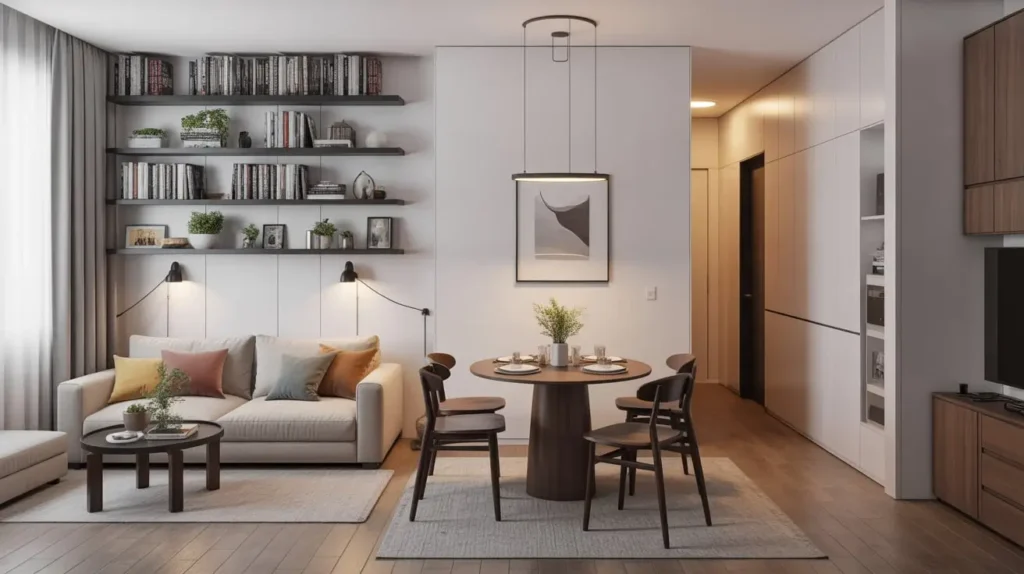
I said it before, and I’ll say it again: when you can’t build out, build up. Dedicating one entire wall to floor-to-ceiling storage is one of the smartest moves you can make in a small combo room. It’s a bold statement that solves a multitude of problems.
The Power of Consolidation
Instead of having a bunch of small, disjointed storage units scattered around the room (a small bookcase here, a media console there, a cabinet over there), you consolidate everything into one streamlined, architectural feature. This is far less visually chaotic.
A storage wall can be designed to serve both the living and dining zones. The lower central part can house your TV and media components. Shelving on one side can be for books and living room decor, while shelving on the other can serve as a pantry or display for your dinnerware. You can even integrate a small, fold-down desk to create a workspace.
Options for Every Budget
You don’t need a custom carpenter for this (though that’s a fantastic option if you can swing it). There are plenty of modular systems out there that let you build your own perfect wall.
- IKEA’s BESTÅ or PLATSA systems: These are endlessly customizable. You can mix and match cabinets, shelves, and drawers to create a configuration that perfectly suits your needs.
- Ladder or Leaning Bookshelves: A series of these lined up against a wall can create a similar, though less built-in, look.
- Pipe Shelving: For an industrial vibe, you can DIY a unit using plumbing pipes and wood planks.
Whatever you choose, painting the storage wall the same color as the surrounding walls will help it recede and feel less massive.
11. Corner Dining Table Placement

We’ve already talked about how L-shaped sofas can conquer a corner. Well, the same logic applies to your dining set. That awkward corner you don’t know what to do with? It’s begging to become a cozy dining nook.
Activating Dead Space
Corners are often underutilized “dead zones” in a room layout. By creating a dining area in a corner, you’re activating that dead space and pulling the dining function neatly out of the main traffic flow of the room. This frees up the central part of your living-dining area, making the entire space feel larger and more open.
This setup is inherently cozy. A corner nook feels like a little restaurant booth, a designated spot for meals and conversation that’s separate from the main living area. It feels intimate and special.
How to Make it Work
The classic corner dining setup involves a small round or square table paired with a built-in or freestanding corner banquette. The banquette provides a ton of seating while taking up minimal space. You can even find banquettes with hidden storage under the seats—a huge win for small spaces.
If a banquette isn’t your style, you can achieve a similar effect with a small table and two to three chairs. The key is to choose a table that fits the corner without jutting out too far. Again, round tables are fantastic here, as they have no sharp corners to get in the way. Add a pendant light above, and you’ve just turned an awkward corner into the cutest spot in your home.
12. Light-Tone Unified Color Scheme
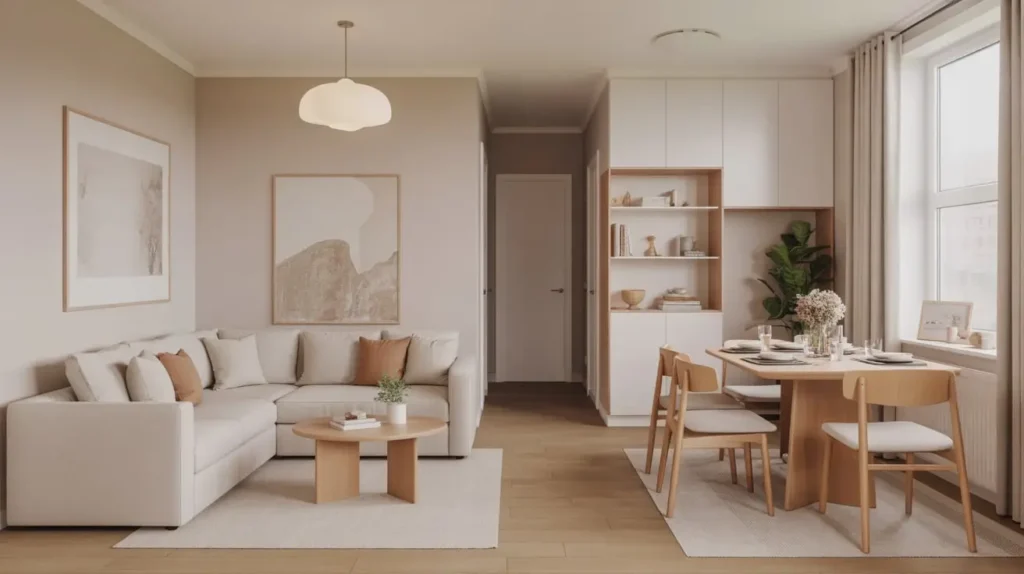
This might be the oldest trick in the book, but that’s because it works. A light, unified color scheme is your best friend when you want to make a small space feel bigger, brighter, and more cohesive.
The Psychology of Pale
Dark colors absorb light, while light colors reflect it. It’s simple physics. By painting your walls a light color—think shades of white, soft grey, pale beige, or a whisper of pastel—you instantly create a space that feels more expansive and airy.
Using a single color (or very similar tones) throughout the entire living-dining combo helps to erase the visual boundaries. The walls recede, and the space feels like one continuous, flowing area rather than a small, compartmentalized room. This creates a serene backdrop that allows your furniture and decor to shine.
But Don’t Be Boring!
A light color scheme does not have to mean a boring, sterile room. The secret to making it work is texture, texture, texture. You need to introduce a variety of materials and finishes to create visual interest and warmth.
- A chunky knit throw on the sofa.
- A nubby, woven rug on the floor.
- Velvet pillows.
- A warm wood coffee table.
- Linen curtains that filter light beautifully.
- Metallic accents in lamps or frames.
All these different textures catch the light in different ways and prevent the room from feeling flat. You get all the space-expanding benefits of a light palette without sacrificing character or coziness.
13. Multifunctional Bench Seating Plan
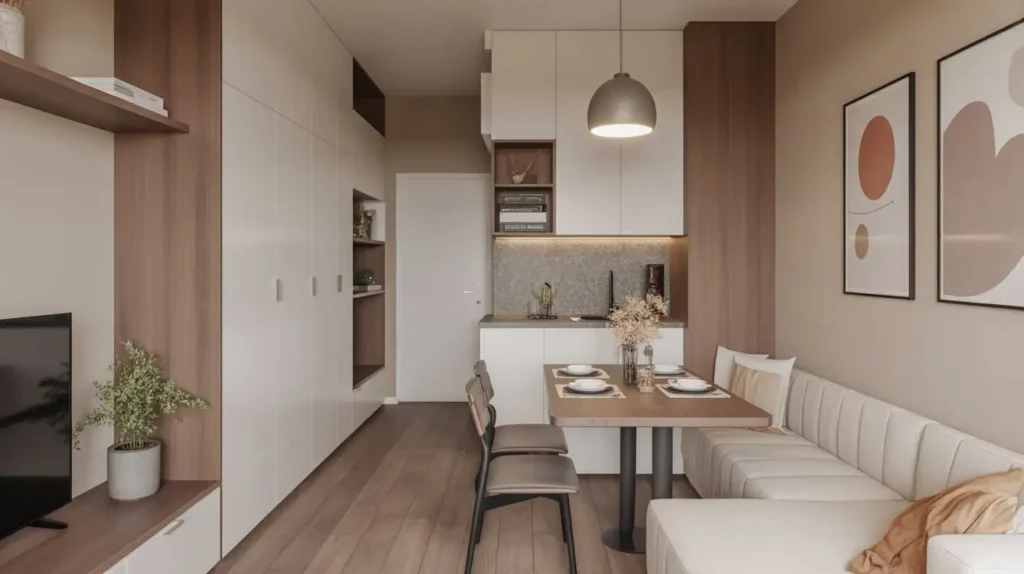
Benches are the unsung heroes of small-space dining. They are versatile, space-saving, and can pack in more people than individual chairs. I am a huge proponent of the dining bench.
The Ultimate Space Saver
Think about it: a dining chair needs space behind it to be pulled out. A bench, placed against a wall, needs zero clearance. This alone can save you a foot or more of precious floor space. Plus, you can typically squeeze three people onto a bench where you might only fit two chairs. It’s perfect for families with kids or for when you have extra guests.
But the real magic of a bench is its multifunctionality. When you’re not using it for dining, it can be extra seating for the living area. Just toss a few pillows on it. Or, you can use it as a low console table behind your sofa. Some benches even come with built-in storage. It’s a piece of furniture that works hard for its spot in your home.
Bench Styles to Consider
- Simple Backless Bench: This is the most versatile option. It can be easily tucked completely under the table when not in use, freeing up maximum floor space.
- Banquette: A more permanent, built-in option that offers superior comfort and often includes storage.
- High-Back Bench: This can offer the comfort of a chair and also act as a subtle visual divider if you float your table away from the wall.
Pair your bench with a couple of stylish chairs on the opposite side of the table to break up the look and add more visual interest.
14. Pendant-Light Dining Zone Focus
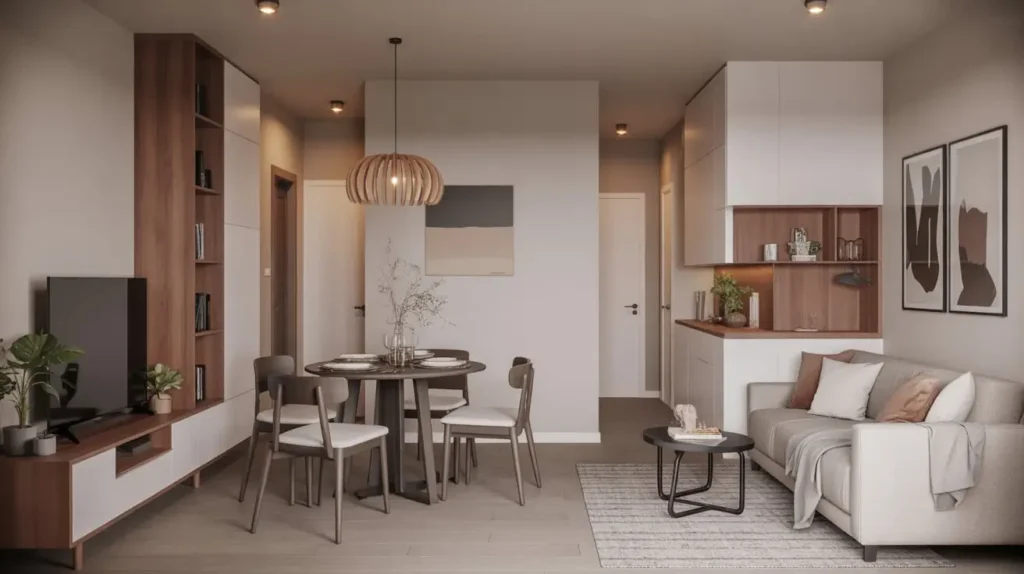
Just like a rug defines a zone on the floor, a pendant light can define a zone from the ceiling. A well-placed light fixture over your dining table is a powerful tool for creating a distinct dining area, especially in an open-concept room.
Creating a Luminous Anchor
Hanging a pendant light low over your dining table creates a focal point and a zone of light. It draws the eye and immediately says, “This is the dining spot.” It’s an anchor that gives the table presence and purpose. At night, when the light is on, it creates a pool of intimate light that makes the dining area feel like its own separate room.
This is also a fantastic opportunity to inject some major personality into your space. A statement pendant light can act as a piece of sculpture. Whether it’s a dramatic sputnik chandelier, a rustic woven rattan shade, or a sleek, modern fixture, the light you choose can help define the style of your entire combo room.
Getting the Placement Right
The “low” part is important. You want the bottom of the fixture to hang about 30-36 inches above the tabletop. This is low enough to feel intimate and connected to the table, but high enough that it doesn’t block sightlines when you’re seated.
And for the love of all that is good, install it on a dimmer switch. This is non-negotiable. Bright light is for prep work; soft, dim light is for dining and ambiance. A dimmer allows you to control the mood completely, transforming your dining nook from a functional eating spot to a romantic bistro with the slide of a button. 🙂
15. Studio-Style Symmetrical Layout

For those who crave order and calm, a symmetrical layout can bring a powerful sense of balance and formality to a living-dining combo. This approach treats the room as a single, unified space and arranges it with near-perfect mirroring.
The Beauty of Balance
Symmetry is naturally pleasing to the human eye. It feels intentional, organized, and calm. In a studio-style layout, you might place a sofa directly opposite two armchairs, with a coffee table perfectly centered in between. The dining table and chairs would then be placed to one side, but its placement would be balanced by, say, a tall cabinet or a large piece of art on the opposite side of the room.
The key is to create a central axis and then arrange elements in a balanced composition around it. This doesn’t mean every single thing has to be a perfect mirror image—that can look a bit rigid. Instead, you’re aiming for visual balance. A large sofa on one side can be balanced by two smaller chairs on the other.
A Cohesive and Elegant Solution
This layout works best when you stick to a very tight, cohesive color palette and style throughout the entire room. Because you’re not using dividers to create separation, the unity has to come from the decor itself. The living area and dining area should share the same design language—similar materials, colors, and furniture styles.
This approach results in a space that feels incredibly elegant and put-together. It’s a sophisticated solution that celebrates the open-concept nature of the room rather than trying to fight it. It’s a bold choice, but when done right, it’s absolutely stunning.
Your Space, Your Rules
So there you have it. Fifteen ways to tackle that tricky living room and dining room combo. The biggest takeaway? Stop seeing your small space as a problem and start seeing it as a design challenge waiting to be conquered.
There’s no single “right” answer. The best solution for you might be a combination of these ideas. Maybe you’ll use rugs to define your zones, add a round pedestal table, and hang a killer pendant light above it. The point is to be creative, be intentional, and not be afraid to break the old-school “rules.” It’s your home, after all.
Go on, reclaim your square footage. You’ve got this.