


Alright, let’s have a real talk. You’ve got a living room that’s… let’s call it “intimate.” Maybe “efficient.” You might even affectionately refer to it as your shoebox. I get it. I’ve lived in apartments where stretching my arms out meant I could touch both walls. Trying to fit a sofa, a coffee table, and a TV stand felt like a cruel game of Tetris where every piece was the wrong shape.
The good news? A small living room isn’t a life sentence of cramped, cluttered misery. It’s an opportunity to get clever. It’s a design challenge that, once you crack it, feels incredibly satisfying. You don’t need more square footage; you need smarter ideas.
So, grab a cup of coffee (or wine, no judgment here), and let’s walk through some seriously smart ways to transform your tiny living space from a claustrophobic box into a cozy, modern haven you’ll actually want to hang out in. These aren’t just generic tips from a dusty design textbook; they’re battle-tested strategies that actually work.
1. Master the Art of the Space-Saving Sofa Layout

The sofa is the undisputed king of the living room. It’s also usually the biggest, bulkiest piece of furniture, capable of dominating a small space with the subtlety of a bull in a china shop. The wrong sofa can single-handedly ruin your room’s flow. I once bought a gorgeous, plush sofa online only to realize it made my living room look like a padded cell. Measure twice, buy once, cry never.
How to Choose the Right Sofa
Your first instinct might be to just get the smallest sofa possible, but that’s not always the best move. Sometimes, a well-placed sectional can actually make a room feel more defined and spacious. The key is scale and shape.
Look for apartment-sized sofas. These are specifically designed with smaller proportions—less depth, lower arms, and a more compact frame—without sacrificing seating. A loveseat can be a great option, but if you love to lounge, an apartment-sized sectional with a chaise is the holy grail. It provides ample seating and a comfy spot to kick your feet up, all while tucking neatly into a corner.
Here are a few styles that are your best friends in a small space:
- Armless Sofas: Removing the bulky arms visually opens up the space and can even allow you to squeeze in an extra seat.
- Low-Profile Sofas: A sofa that sits lower to the ground creates the illusion of higher ceilings.
- Sofas with Exposed Legs: We’ll talk more about this later, but lifting the sofa off the ground makes a massive difference.
2. Embrace the Light Color Minimal Living Room
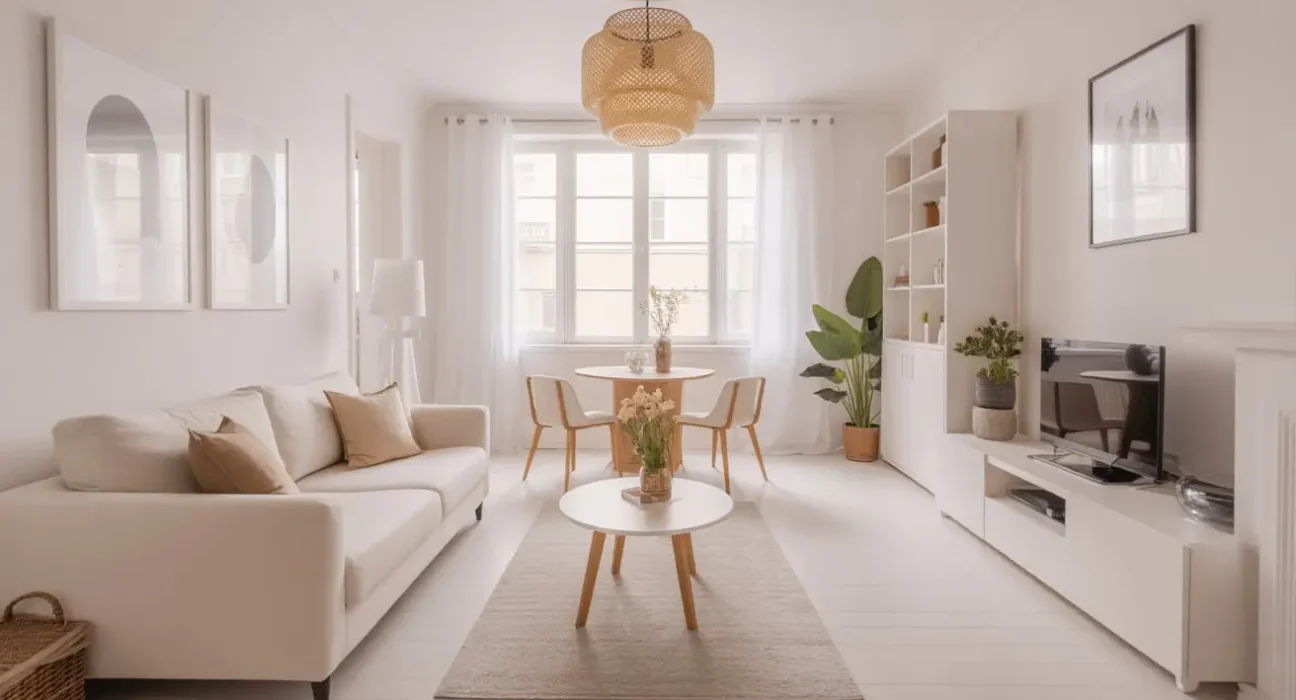
Okay, I know. “Paint it white” is the oldest trick in the small-space book. But hear me out. It’s not just about slapping a coat of brilliant white on the walls and calling it a day. It’s about creating a cohesive, light-reflecting envelope that makes the entire room feel airy and open. Think less sterile hospital room, more serene art gallery.
A light color palette—whites, off-whites, soft grays, pale beiges—works by bouncing natural and artificial light around the room. This tricks the eye into perceiving the space as larger and less confined. Dark colors, while dramatic and cozy, tend to absorb light and can make walls feel like they’re closing in on you.
Beyond Basic White
If stark white feels a bit too… clinical for your taste, you have options. A warm, creamy white can feel much more inviting. Light dove gray adds a touch of modern sophistication, while a pale, sandy beige brings in warmth. The goal is to keep the overall feeling light and bright.
To prevent the room from feeling flat, introduce texture. A white chunky knit throw, a light gray linen curtain, a cream-colored bouclé pillow, or a natural fiber rug add depth and interest without adding visual clutter. It’s the secret to making a minimal, light-colored room feel cozy, not cold.
3. Champion the Multi-Functional Furniture Setup
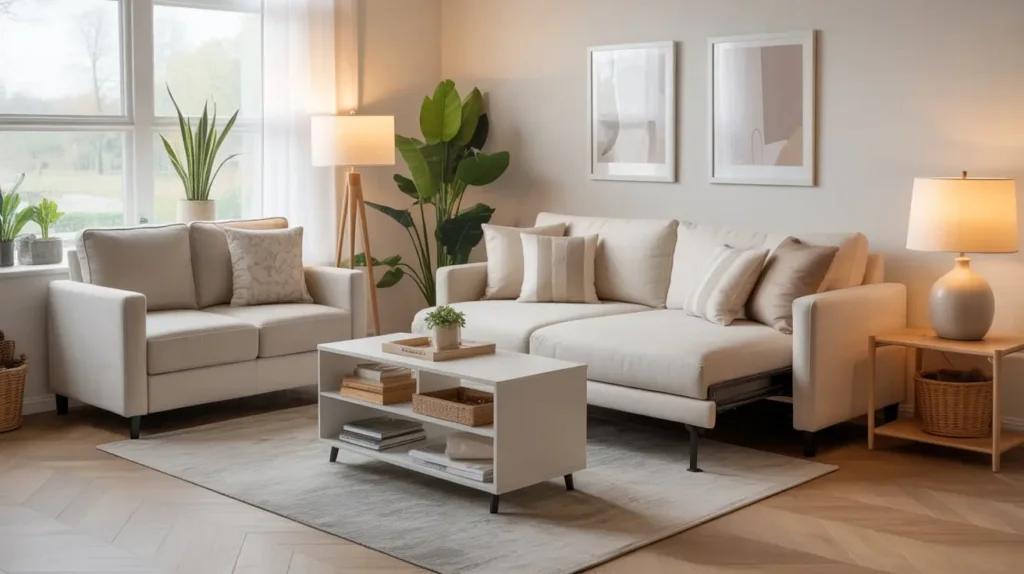
In a small living room, every piece of furniture needs to earn its keep. If something only serves one purpose, it’s a freeloader. You need furniture that works a double, or even triple, shift. This is where multi-functional pieces become your secret weapon.
I have a lift-top coffee table, and it’s honestly one of the best purchases I’ve ever made. Most of the time, it’s a coffee table. But when I need to work from home, it lifts up to become a perfect desk. When friends come over for movie night, it’s our dinner table. It’s a workhorse, and it saves me from needing three separate pieces of furniture.
Your Multi-Functional Dream Team:
- Storage Ottoman: This is a non-negotiable, IMO. It’s a footrest, extra seating for guests, and a hidden treasure chest for blankets, board games, or that pile of magazines you swear you’ll read someday.
- Nesting Coffee Tables: These are brilliant. You can tuck them away to create more floor space when needed or pull them out for more surface area when you have company.
- Sofa Bed or Futon: Modern sofa beds are a far cry from the lumpy, back-breaking contraptions of the past. A stylish sleeper sofa means your living room can double as a guest room without screaming “I’m a temporary bed!”
- C-Shaped Side Table: This little genius slides right under your sofa, providing a perfect spot for a laptop or a drink without taking up precious floor space.
4. Go Vertical with Wall Storage Design
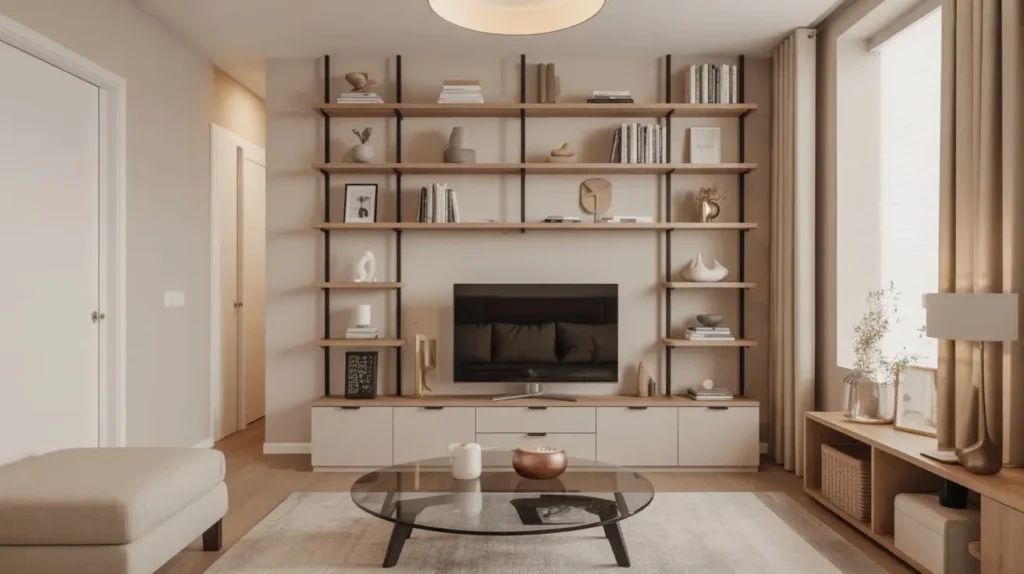
When you can’t build out, build up. Your walls are prime real estate that often goes completely underutilized. Getting things off the floor and onto the walls is one of the most impactful changes you can make in a small living room. It draws the eye upward, creating a sense of height and spaciousness.
Forget bulky, floor-hogging bookcases. Think tall, narrow, and wall-mounted. Vertical storage solutions free up the floor, which is the key to making a room feel less cramped. The more floor you can see, the bigger the room feels. It’s a simple psychological trick, but it works wonders.
Smart Vertical Storage Ideas:
- Tall, Narrow Bookcases: A pair of tall, skinny bookcases flanking a doorway or TV can add a sense of architectural grandeur and provide tons of storage. Paint them the same color as the wall to make them “disappear.”
- Wall-Mounted Media Units: A floating TV console is a game-changer. It keeps your media gear organized while leaving the floor underneath completely clear.
- Picture Ledges: These are super slim and perfect for displaying art, photos, and small decorative objects without the bulk of a traditional shelf. You can create a beautiful, dynamic gallery wall that takes up almost no space.
Read Also 15 Stunning Boho Living Room Inspirations Mid-Century Modern Ideas
5. Use Mirrors to Enhance and Enlarge
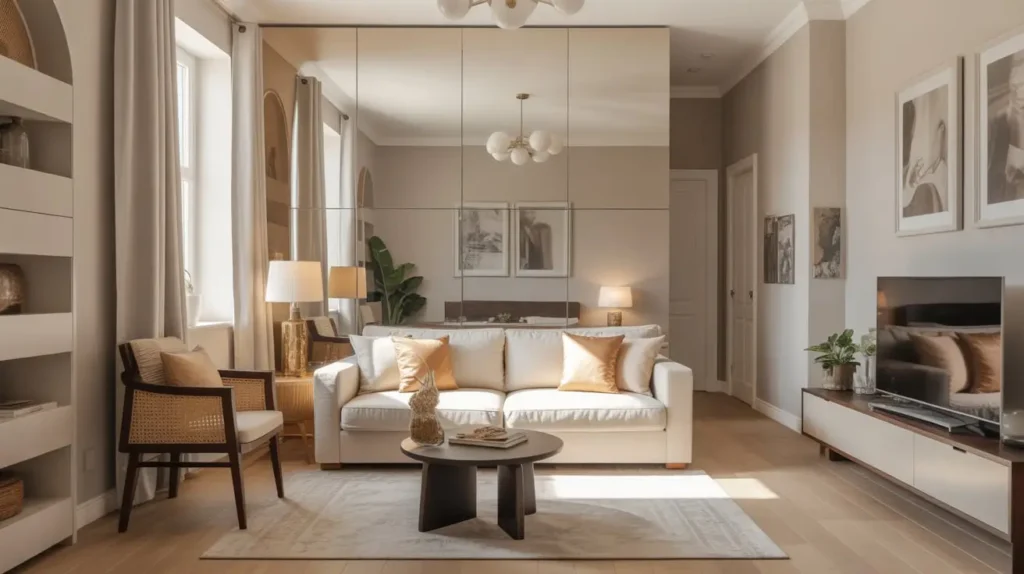
Yes, another classic tip, but for good reason. A well-placed mirror is pure magic. It’s the closest thing we have to a space-expanding superpower. It works in two ways: it reflects light, making the room brighter, and it reflects the view, creating an illusion of depth.
Placing a large mirror on the wall opposite a window is the ultimate power move. It will essentially create a “second window,” bouncing all that gorgeous natural light around the room and reflecting the view of the outdoors. The effect can be truly transformative.
How to Use Mirrors Without Overdoing It
You don’t want your living room to look like a hall of mirrors at a carnival. The key is strategic placement and choosing the right style.
- Go Big: Don’t be shy. A single, large floor-length mirror leaning against a wall can make a much bigger impact than a cluster of small ones. It feels intentional and dramatic.
- Consider the Shape: A round mirror can soften all the hard lines of a modern room. An arched mirror adds a touch of elegance and draws the eye upward.
- Mirrored Furniture: A small, mirrored side table or cabinet can add a touch of glam and help a piece of furniture blend into the background. Use this sparingly, though—one piece is chic; more than that can get tacky.
6. Choose an Open-Leg Furniture Style
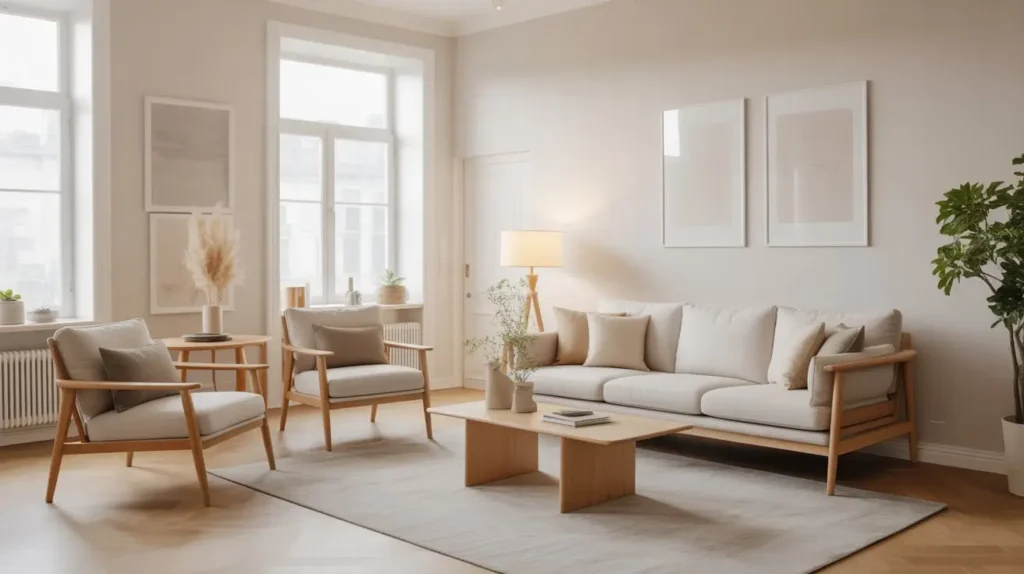
This is one of my favorite, most underrated tips. When you’re choosing furniture—sofas, chairs, coffee tables, sideboards—look for pieces with exposed, slender legs. I call this “leggy” furniture.
Why does this work so well? Because it lifts the furniture off the floor. When your eye can see the floor space continuing underneath a piece of furniture, your brain registers the room as more open and airy. Bulky, solid-to-the-floor furniture, on the other hand, acts like a visual block, chopping up the space and making it feel heavier and smaller.
Think about the difference between a heavy, skirted armchair and a sleek mid-century modern chair with tapered wooden legs. The latter feels light and graceful, while the former can feel like a solid, immovable lump. This simple switch applies to everything:
- Sofas and Armchairs: Look for styles with visible legs.
- Coffee Tables: A table with a metal frame or hairpin legs is a great choice.
- Media Consoles: A console on legs is always better than a solid box on the floor.
It’s a subtle detail, but the cumulative effect of having multiple “leggy” pieces in your room is massive.
7. Install Floating Shelves for a Minimalist Vibe
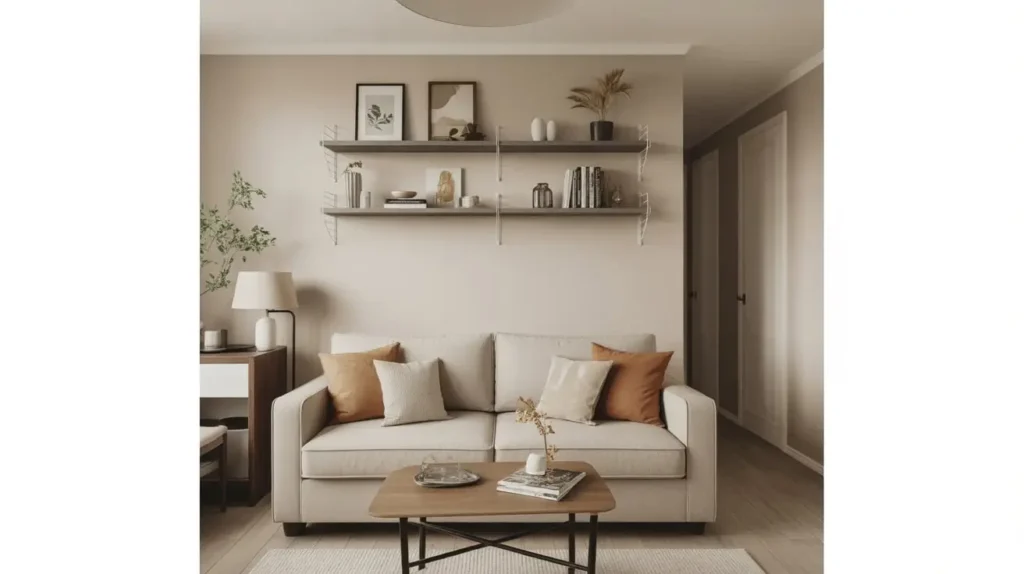
Floating shelves are the minimalist cousin of the bulky bookcase. They offer storage and display space without any of the visual weight. Because they have no visible brackets, they appear to float on the wall, creating a clean, uncluttered look that is perfect for modern spaces.
I use floating shelves in my own small living room to hold books, a few small plants, and some decorative objects. They provide the storage I need without making the wall feel heavy or crowded. Plus, they force you to be curated. You can’t just cram a bunch of junk onto a floating shelf; you have to be intentional about what you display. This, in itself, is a great way to combat clutter.
How to Style Floating Shelves
- Create Asymmetry: Don’t just line them up perfectly. Staggering them at different heights can create a more dynamic and interesting visual.
- Vary Object Heights: When placing items on the shelves, mix it up. A tall vase, a short stack of books, a medium-sized picture frame. This creates a pleasing rhythm.
- Leave Negative Space: The biggest mistake people make is cramming the shelves full. Leave some empty space! This “breathing room” is crucial for achieving that light, minimalist aesthetic.
8. Carve Out a Cozy Corner Seating Area

Sometimes, in a small living room, trying to make the entire room a single, open seating area just doesn’t work. Instead, focus on creating a super cozy, functional corner. This creates a “destination” within the room and can actually make the whole space feel more intentional and better organized.
Find a neglected corner and turn it into the best seat in the house. All you need is a comfortable chair, a small side table, and good lighting. This can become your dedicated reading nook, a spot for your morning coffee, or just a place to unwind.
Elements of the Perfect Cozy Corner:
- The Right Chair: Choose a chair that’s comfortable but not enormous. A slim-profile armchair, a stylish accent chair, or even a large floor cushion can work.
- Task Lighting: A slim floor lamp that arches over the chair is perfect. It provides focused light for reading without taking up any table space.
- A Tiny Table: You just need enough space for a cup and a book. A C-shaped table or a small, round pedestal table is ideal.
- Add Softness: A plush pillow, a soft throw blanket, and a small rug under the chair will complete the cozy vibe.
9. Design a Window-Focused Furniture Arrangement
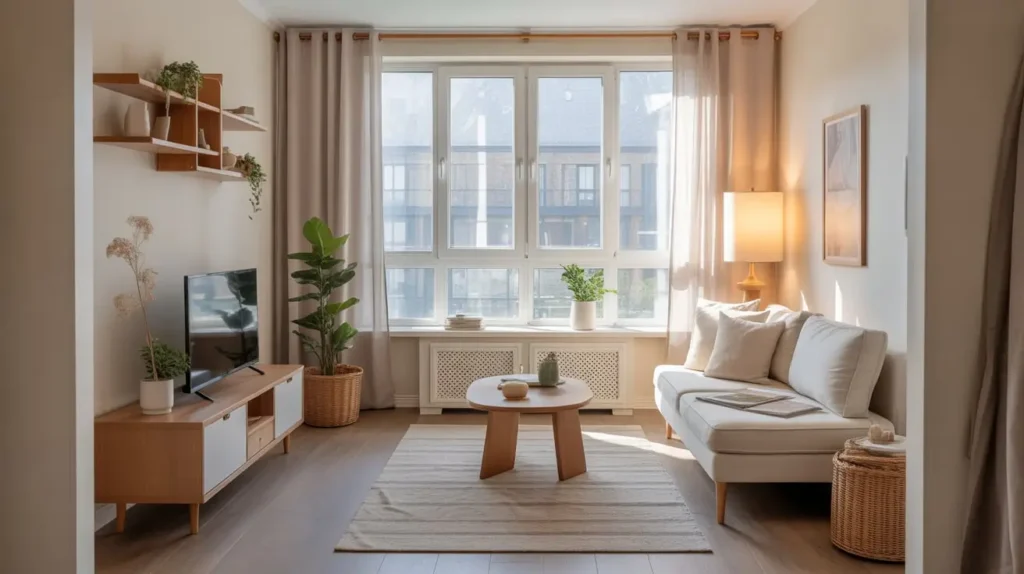
Your window is your room’s greatest natural asset. It provides light, a view, and a sense of connection to the outside world. So why on earth would you block it with a giant sofa? It’s one of the most common small living room mistakes I see.
Instead of fighting your window, make it the star of the show. Arrange your furniture to celebrate it. If you have a nice view, orient your seating towards it. If the view is… less than inspiring (hello, brick wall), you can still use the window as a focal point for light.
Place your sofa on the wall adjacent to the window, not in front of it. If you absolutely must place seating in front of the window, choose a low-profile bench or a pair of small, armless chairs that won’t obstruct the light or the view. For window treatments, opt for sheer, light-colored curtains that offer privacy while still letting light filter through. Mount the curtain rod high and wide—several inches above and beyond the window frame—to make the window appear much larger than it is.
Read Also 15 Stunning Interior Design Living Room Ideas for Every Home
10. Get Sneaky with Hidden Storage
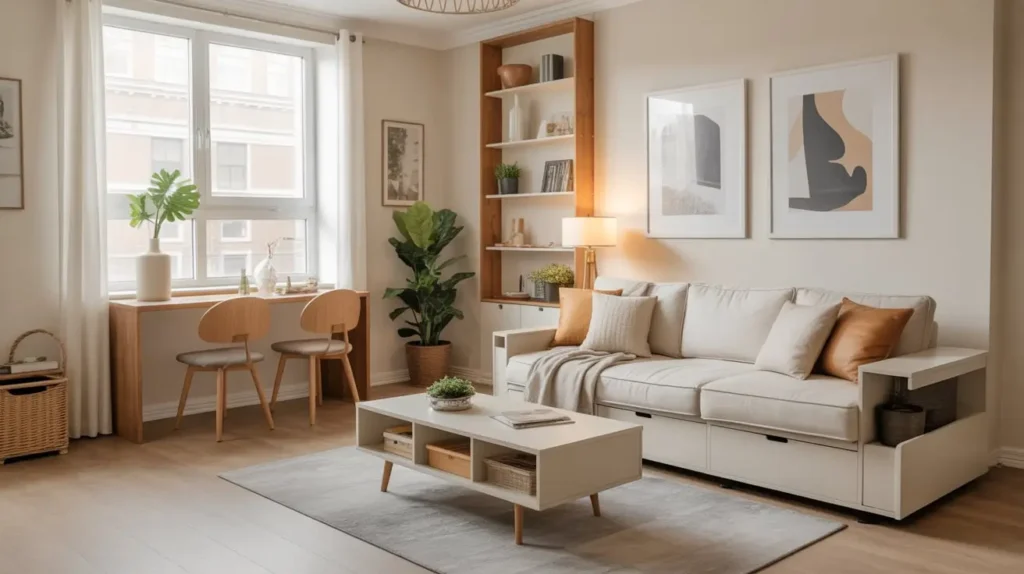
We’ve talked about multi-functional furniture, but hidden storage deserves its own spotlight. This is about finding clever, out-of-sight places to stash the inevitable stuff of life—remotes, chargers, coasters, extra blankets, the dog’s fifty-seven toys. Clutter is the number one enemy of a small space, and hidden storage is your best defense.
Think like a secret agent. Where can you build in storage that no one would ever suspect?
Genius Hidden Storage Spots:
- Sectional with a Storage Chaise: Many modern sectionals have a chaise lounge where the top lifts to reveal a massive storage compartment. It’s the perfect place for bulky items like spare bedding or throw pillows.
- Storage Benches: A slim bench placed under a window or against a wall can provide both seating and a surprising amount of storage.
- Hollow Coffee Tables/Side Tables: Look for designs that have drawers or lift-tops. My lift-top coffee table has a huge hidden compartment inside. FYI, it’s where I hide my “fancy” snacks from the rest of my family. 🙂
- Baskets, Baskets, Baskets: A set of stylish lidded baskets can be tucked under a console table or next to a sofa. They add texture and are perfect for quickly tidying up when guests are on their way.
11. Adopt a Neutral Scandinavian Small Living Room
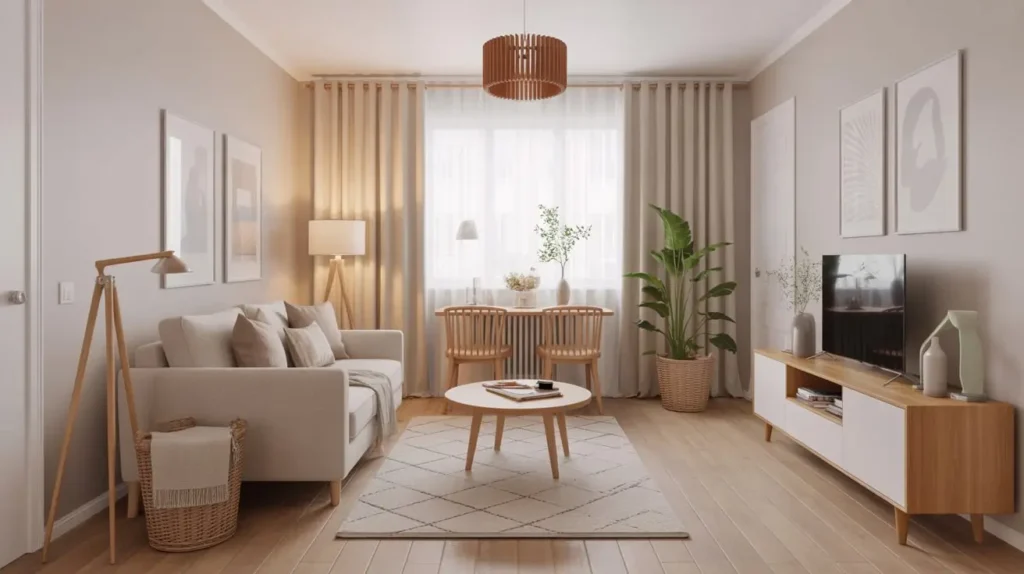
There’s a reason why Scandinavian design is so enduringly popular, especially for small spaces. It’s built on a foundation of functionality, simplicity, and a deep appreciation for light. The Scandi aesthetic is practically tailor-made for making a small living room feel both modern and incredibly cozy.
The core principles are simple: a neutral color palette, an emphasis on natural materials, clean lines, and a clutter-free approach. This isn’t about stark, cold minimalism; it’s about creating a warm, inviting, and practical space. It’s the home of hygge (the Danish concept of coziness and contentment), after all.
How to Get the Scandi Look:
- Color Palette: Start with a base of white, light gray, or muted pastels.
- Natural Materials: Bring in warmth with light-toned woods like birch, ash, and pine. Think wooden furniture legs, a simple wood coffee table, or picture frames.
- Textiles: Layer in natural textiles like wool, linen, and sheepskin. A chunky wool throw and some linen pillows are essential.
- Greenery: A few well-placed plants are a hallmark of Scandi design. They add life, color, and a connection to nature.
- Keep it Simple: The most important rule is to edit. Only keep furniture and decor that is either beautiful or useful (and ideally both).
12. Create a Minimal TV Wall for Small Spaces

The television. It’s a modern necessity for many, but it can also be a giant black hole that sucks all the life and style out of a small living room. A massive TV sitting on an equally massive media console can completely overwhelm the space. The key is to make the TV blend in, not stand out.
Wall-mounting the TV is the single best thing you can do. It immediately frees up floor space and gives you a much cleaner, more streamlined look. If you can, run the cables through the wall for the ultimate minimalist effect. If that’s not an option, use a sleek cable concealer that you can paint the same color as your wall.
Instead of a bulky media console, choose a slim, floating console mounted on the wall below the TV. This continues the airy, off-the-floor aesthetic. If you don’t need much storage, you could even get away with just a simple floating shelf. The goal is for the TV and its related gear to feel like an integrated part of the wall, not a clunky addition to the room.
13. Prioritize a Slim Furniture Living Room Design
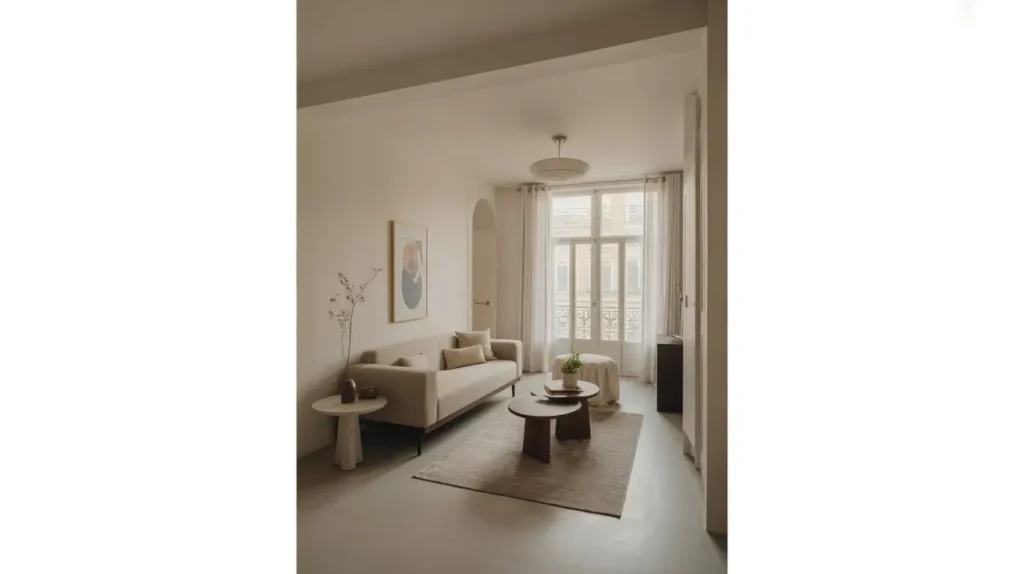
In a small space, every inch counts. This is where the profile of your furniture becomes critically important. Bulky, overstuffed furniture with thick, rolled arms and deep seats might seem luxurious, but in a small room, it’s just a space hog.
Opt for furniture with a slim, trim profile. Look for sofas and chairs with thin arms (or no arms at all), a shallower seat depth, and a tighter back. These pieces provide just as much comfortable seating but take up significantly less physical and visual space.
Think of it this way: you want your furniture to have a tailored, athletic build, not a bulky, cumbersome one. This applies to tables, too. A coffee table with a thin top and slender legs will feel much lighter in the room than a solid, chunky block of wood. This design choice contributes to an overall feeling of nimbleness and grace, preventing the room from feeling weighed down.
14. Go for a Bright White Small Living Room Look

While we touched on light colors earlier, let’s dedicate a moment to the power of an all-white or nearly-all-white room. It’s a bold move, and maybe not for those with toddlers or a deep love for red wine on the sofa, but the payoff can be spectacular.
A predominantly white room is the ultimate space-enhancer. It reflects the maximum amount of light, blurs the boundaries between walls and ceiling, and creates a seamless, expansive feel. It’s like a blank canvas that feels endlessly serene and sophisticated.
Making an All-White Room Work:
- Layer Tones of White: The secret to a successful white room is to avoid making it one-note. Mix different shades—bright white, ivory, cream, and even very light gray—to create depth.
- Texture is Everything: This is the most important rule. Without texture, an all-white room falls flat. Mix materials: a linen sofa, a bouclé chair, a shag rug, a knit throw, sheer curtains. The interplay of these different textures is what makes the room feel rich and inviting.
- Add Natural Elements: Touches of light wood, a few green plants, or a wicker basket will keep the space from feeling sterile and add a dose of organic warmth.
- Pops of Black: A tiny bit of black—a thin black picture frame, the legs of a side table—can act as a grounding element, adding a graphic punch and preventing the room from feeling washed out.
15. Get Creative with Smart Zoning in a Small Living Room
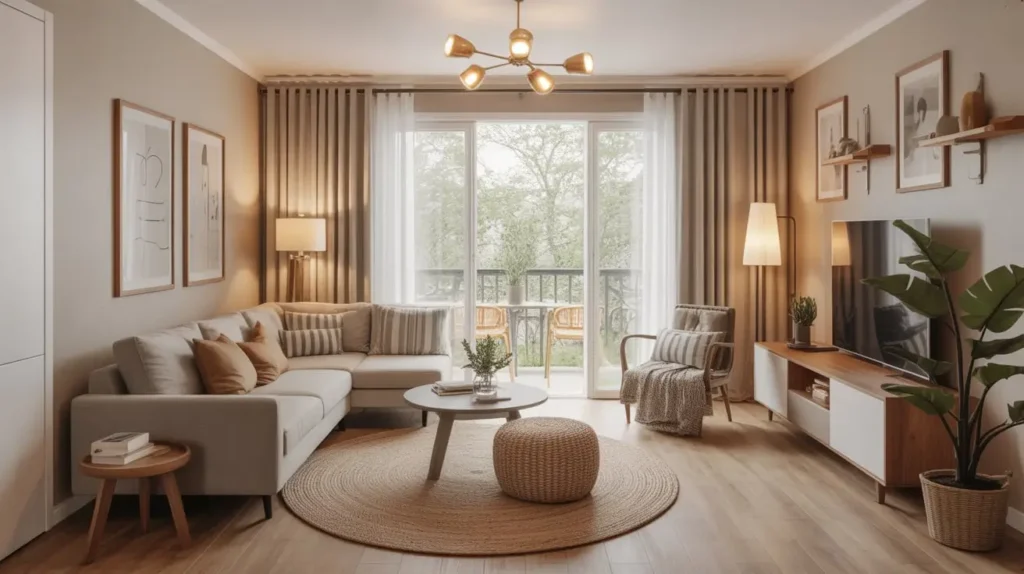
Our final idea is a bit more advanced, but it’s a powerful concept for open-plan or studio living. “Zoning” is the art of using visual cues to create distinct functional areas within a single room. It’s how you can make one small space feel like it has a living area, a dining spot, and a home office, all without building any walls.
How do you pull this off? It’s all about clever placement and a few key tools.
The most effective tool for zoning is a rug. Placing a rug down immediately defines the “living area.” The furniture for that zone—the sofa, chairs, coffee table—should all have at least their front legs on the rug. This visually anchors the space and separates it from, say, the dining area a few feet away.
Other ways to create zones:
- Furniture as Dividers: You can use the back of a sofa to create a soft “wall” between the living zone and another area. A tall, open-backed bookshelf (like an IKEA KALLAX) is also a fantastic divider, as it defines the space while still allowing light and sightlines to pass through.
- Lighting: Use different types of lighting for different zones. A pendant light over the dining table, a floor lamp in the reading corner, and recessed lighting for the main living area.
- Paint: Feeling bold? You can paint an accent wall or even a large color block on a wall to visually designate a specific zone, like a home office nook.
So, What’s the Takeaway?
Living in a small space isn’t a limitation; it’s a creative prompt. It forces you to be more thoughtful, more intentional, and ultimately, a smarter decorator. It’s not about how much space you have, but how you use it.
Don’t feel like you have to implement all 15 of these ideas at once. That’s a recipe for overwhelm. Instead, pick one. Just one idea that resonates with you. Maybe this weekend you decide to hunt for the perfect “leggy” coffee table, or maybe you spend an afternoon mounting a big mirror. See how it feels.
You’ll be amazed at how one smart change can completely alter the energy of your room, making it feel bigger, brighter, and infinitely more you. Now go on, make that cozy modern space a reality. Happy decorating