


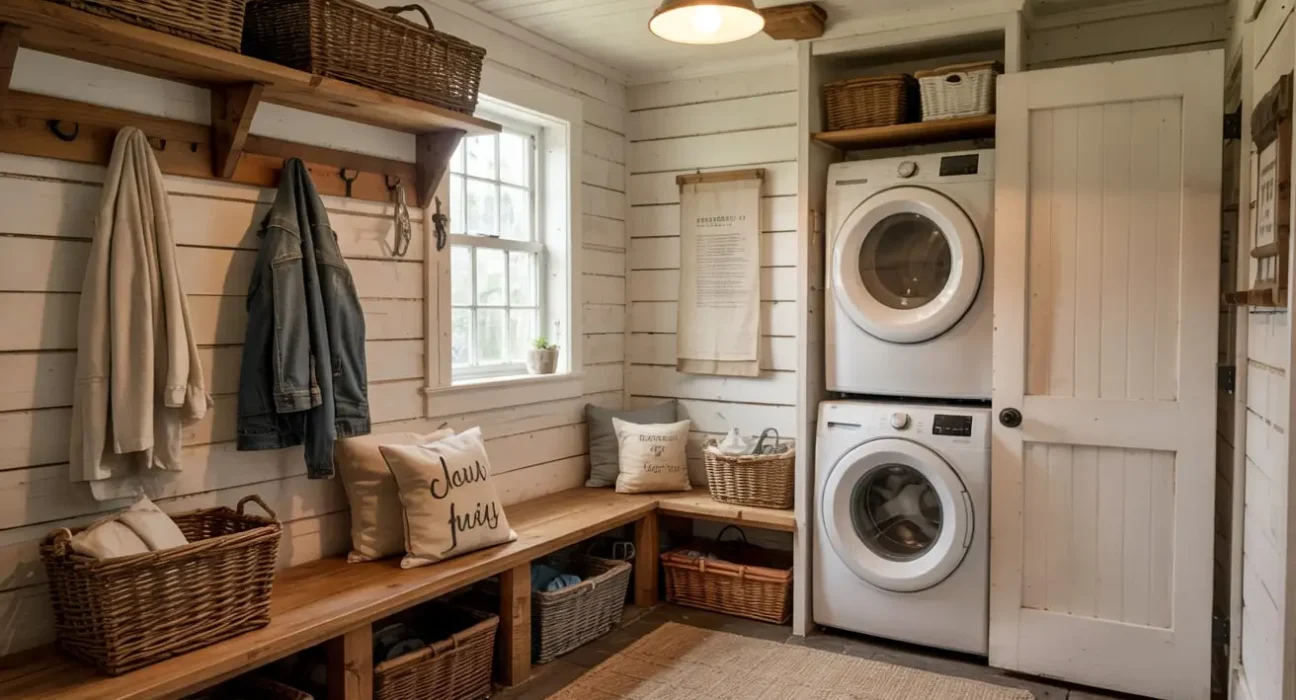
Let’s be real for a second. The corner of your home where dirty shoes, wet jackets, and mountains of laundry congregate isn’t just a space—it’s a battlefield. You’re constantly fighting a losing war against clutter, dirt, and the rogue sock that escaped the hamper. If your home, like mine, lacks the luxury of a dedicated, sprawling mudroom and a separate, glorious laundry room, you know this struggle intimately.
For years, my “mudroom” was the three square feet inside the back door, and my “laundry room” was a gloomy corner of the basement. It was a chaotic, inefficient mess. But what if you could combine these two utility powerhouses into one smart, streamlined, and maybe even—dare I say—beautiful space? Is that even possible without knocking down walls and taking out a second mortgage?
I’m here to tell you it absolutely is. I’ve gone down the rabbit hole of small-space design, and I’ve emerged with some seriously clever tricks. This isn’t about generic advice; this is about tactical, real-world solutions. So, grab a coffee, and let’s chat about how to turn that chaotic corner into the hardworking haven you deserve.
1. Built-In Cubbies with a Stacked Washer and Dryer

This is the undisputed champion of small-space efficiency. We’re talking about going vertical, my friend. When you can’t build out, you build up. Stacking your washer and dryer is the first, most critical move in reclaiming precious floor space.
Why It Works for Small Spaces
A standard washer and dryer side-by-side can eat up about 60 inches of horizontal space. Stack them, and you’ve just cut that footprint in half, leaving you with a glorious 30-ish inches of floor space to play with. What can you do with all that newfound room? You can create a wall of custom-built cubbies, that’s what.
This setup creates a designated “zone” for everything. Laundry happens in one vertical column, and the mudroom storage happens right next to it. No more tripping over a laundry basket to get to the boot tray.
Key Features to Consider
- Machine Compatibility: Before you even dream of this, you must ensure your washer and dryer are stackable. Not all are! Most front-load machines are designed for this, but you’ll need a specific stacking kit made by the manufacturer to secure them safely. Don’t just plop one on top of the other unless you enjoy the sound of crashing appliances.
- Custom vs. Pre-Fab Cubbies: I’m a huge fan of custom built-ins because you can tailor them to your exact needs—a tall spot for boots, smaller squares for baskets, and a hook for every backpack. However, if custom carpentry isn’t in the budget, you can find fantastic modular cube organizers that can be configured to fit your space.
- Ventilation is Key: A stacked unit, especially the dryer, needs proper ventilation. Make sure your design allows for easy access to the back and doesn’t block the dryer vent. A cramped space with poor airflow is a recipe for inefficiency and, frankly, a fire hazard. Plan your ventilation route before you build anything.
Personally, I love this solution because it forces organization. When each kid has their own designated cubby, the “I can’t find my shoes!” morning drama magically decreases. It’s a game-changer.
2. The Entryway Bench Laundry Combo

Ever looked at that cute entryway bench and thought, “You’re pretty, but you’re not really doing much”? Let’s put that bench to work. This idea is all about creating multi-functional furniture that hides your laundry chores in plain sight.
This concept works best with a front-loading washer and dryer, which you can tuck neatly under a custom countertop. The countertop then becomes the “seat” of your bench. Add a cushion, some throw pillows, and suddenly your laundry machines are disguised as stylish seating. Who would ever guess?
Why It Works for Small Spaces
It brilliantly combines sitting, storage, and washing into a single, compact unit. Instead of needing separate floor space for a bench, a shoe rack, and your laundry machines, you’re merging them all along one wall. This is ideal for long, narrow entryways or for that awkward wall in your kitchen.
The bench provides a convenient spot to sit down and wrestle with stubborn winter boots, while the space underneath is some of the hardest-working square footage in your entire home. It’s genius, really.
Key Features to Consider
- Countertop Durability: You’ll be placing wet laundry baskets, heavy bags, and, you know, actual people on this surface. Choose a durable, waterproof countertop material like quartz, butcher block (well-sealed!), or even a high-quality laminate. Avoid porous materials that could stain or warp.
- Vibration Control: Washing machines, especially during the spin cycle, can vibrate. A lot. You’ll want to install anti-vibration pads under the machine’s feet to minimize the shaking. You also need to ensure there’s a small gap (about half an inch) between the machines and the cabinetry to prevent the whole bench from rattling your teeth out.
- Smart Storage Above: With the machines low to the ground, you have a prime opportunity to add hooks, shelves, or cabinets on the wall above the bench. This is the perfect spot for coats, hats, and dog leashes.
3. Vertical Locker-Style Storage Wall
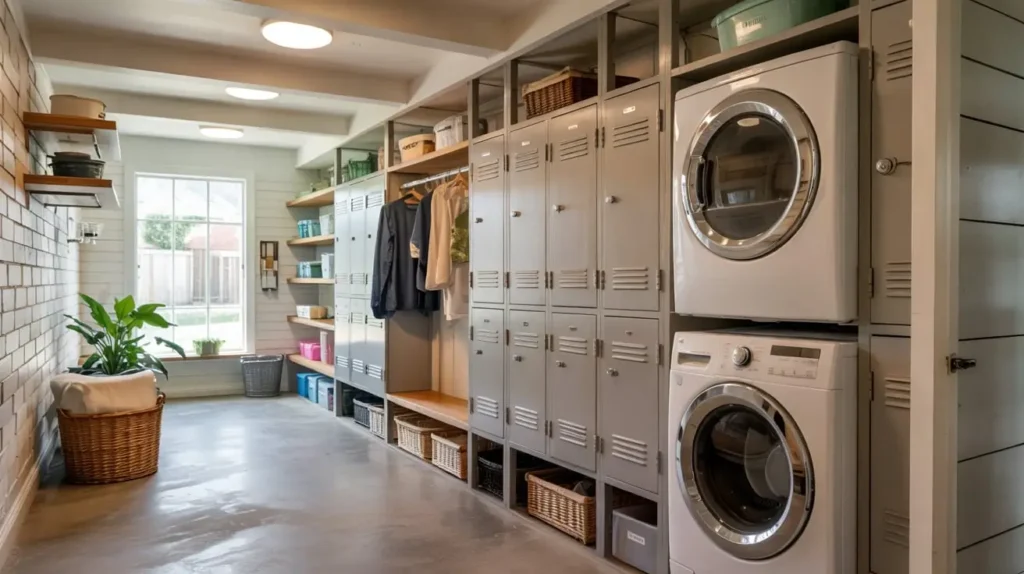
Channel your inner high school student, but make it chic. Vertical lockers are an organizational dream for a mudroom laundry combo. They provide tall, skinny, and dedicated storage compartments that keep clutter contained and out of sight.
Imagine a bank of sleek, floor-to-ceiling lockers. One could house your stacked laundry machines. The one next to it could be for sports equipment. The next two could be assigned to family members for their coats and bags. It’s the ultimate way to compartmentalize chaos.
Why It Works for Small Spaces
This design leverages vertical height to its absolute maximum potential. By going all the way to the ceiling, you capture storage space that is often wasted. The narrow profile of each “locker” means you can fit a ton of storage into a relatively small horizontal footprint.
Because everything is behind a door, the space instantly looks cleaner and more organized. It’s perfect for people (like me!) who can’t stand visual clutter. Out of sight, out of mind, right?
Key Features to Consider
- Interior Organization: The magic of the locker is what you put inside. Install adjustable shelves, hooks, and even pull-out drawers to customize each unit. Some companies make incredible inserts that include charging stations for devices—perfect for a modern family.
- Locker Dimensions: Before you commit, measure your bulkiest items. Will that giant hockey bag actually fit? Does the vacuum cleaner have a home? Plan the interior dimensions of at least one or two lockers to accommodate those awkwardly large items we all have.
- Door Style: The locker doors define the aesthetic. You can go for a classic, vented metal look for an industrial vibe, flat-panel MDF for a modern feel, or Shaker-style doors for a more transitional or farmhouse look. The choice is yours!
4. Hidden Laundry Behind Sliding Barn Doors

Okay, let’s talk about the “now you see it, now you don’t” approach. Sometimes, the best way to deal with your laundry area is to make it disappear completely. And what better way to do that than with a stylish sliding barn door?
This isn’t just for farmhouses anymore. You can find barn door hardware in sleek, modern black, industrial steel, or rustic bronze. The door itself can be anything from reclaimed wood to a smooth, painted panel that blends seamlessly with your wall. Slide it open when it’s laundry day; slide it shut when guests are coming over.
Why It Works for Small Spaces
A traditional swinging door requires a significant amount of clear floor space to open. In a tight hallway or a small room, that’s space you just don’t have. A sliding barn door, on the other hand, glides parallel to the wall, requiring zero swing clearance.
This allows you to place furniture or baskets right next to the opening without worrying about blocking the door. It’s an incredibly practical solution for awkward layouts and narrow passages.
Key Features to Consider
- Wall Space is Crucial: This is the big one. While you don’t need floor space, you absolutely need clear wall space for the door to slide onto when it’s open. The track needs to be at least twice the width of your door opening, so measure carefully.
- Door Weight and Hardware: Barn doors can be heavy. Ensure you purchase hardware that is rated to support the weight of your chosen door. More importantly, make sure the track is mounted securely into wall studs or a properly installed header board. You don’t want that door coming off the wall. Trust me.
- Sound and Gaps: FYI: Barn doors don’t seal like regular doors. There will be gaps around the edges. This means they don’t block sound very well. If your laundry machine is loud, you’ll still hear it. It’s a visual barrier more than a soundproof one.
Read Also 15 Stunning Laundry Room Wallpaper Ideas That Transform Spaces
5. The Small-Space Mudroom Laundry Closet
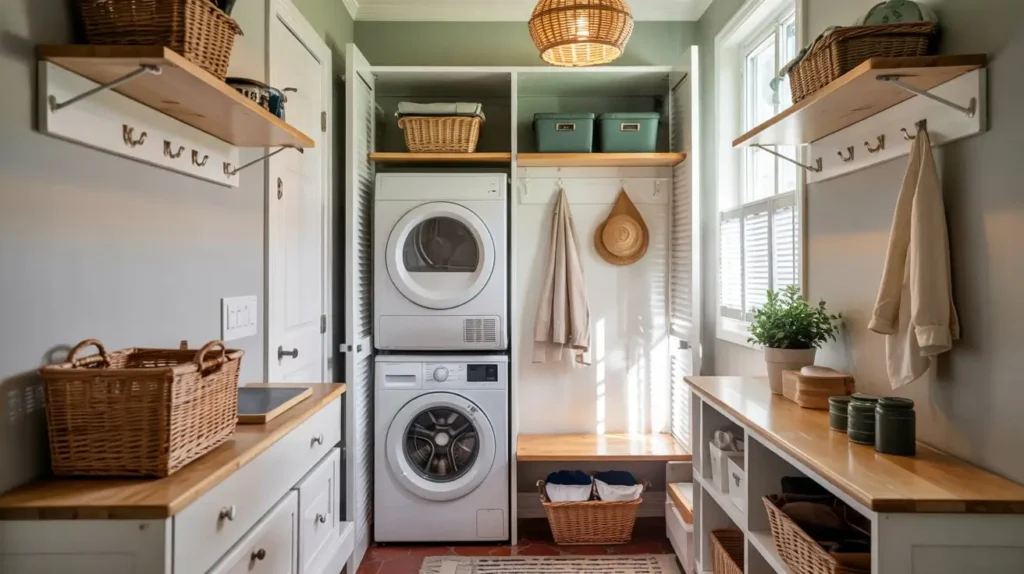
Never underestimate the power of a well-organized closet. You might have a small coat closet near your entryway or a linen closet in a hallway that feels utterly useless. It’s time for a promotion. Let’s turn that humble closet into a utility superstar.
The idea is to gut the existing closet—remove the single rod and shelf—and rebuild it from the ground up as a compact mudroom laundry combo. This is often one of the most budget-friendly options on the list.
Why It Works for Small Spaces
It uses existing architecture. You’re not building a new room; you’re hyper-optimizing a space you already have. By definition, a closet is designed to be a compact storage hub, making it the perfect candidate for a small-scale combo room.
This is the ultimate “hidden” solution. When the doors are closed, no one would ever suspect that a fully functional laundry and mudroom station is hiding inside.
Key Features to Consider
- Plumbing and Electrical: This is the biggest hurdle. You’ll need to run water lines, a drain, and a 240v outlet for the dryer. This is a job for a professional plumber and electrician. Factor this cost into your budget from the very beginning.
- Ventless Dryer Options: If running a dryer vent to the exterior is impossible or prohibitively expensive, look into a ventless heat pump dryer. They are incredibly energy-efficient and don’t require venting, making them perfect for closet conversions. The trade-off? They can take a bit longer to dry a load.
- Use Every Inch: The key to a successful closet conversion is maximizing every square inch.
- Use the back of the doors for storage (think slim shoe racks or hanging organizers for detergents).
- Install a pull-out shelf between the washer and dryer (if stacked) to create a folding surface.
- Use narrow, wall-mounted shelving on the sides for smaller items.
6. L-Shaped Mudroom and Laundry Layout

If you have a corner space to work with, the L-shaped layout can be your best friend. This design uses two adjacent walls to create distinct but connected zones for your mudroom and laundry tasks.
Typically, you’d place the washer and dryer along one wall, topped with a counter for folding. The other wall then becomes your mudroom hub, with a bench, cubbies, and hooks. The corner where they meet is a great spot for a tall cabinet or open shelving.
Why It Works for Small Spaces
The L-shape is incredibly efficient because it creates a natural workflow. You can drop dirty clothes from the mudroom zone directly into the laundry zone. The open floor space in the middle of the “L” makes the room feel larger and less cramped than a galley-style layout.
It also allows you to visually separate the two functions while keeping them physically close. This mental separation can make the space feel more organized and less like one giant “messy” area.
Key Features to Consider
- The “Corner Problem”: Corners in cabinetry can be awkward. You can solve this with a few clever options:
- Lazy Susan: A classic for a reason. Great for storing cleaning supplies or bulk items.
- Diagonal Cabinet: A cabinet that cuts across the corner can provide deep storage.
- Open Shelving: Corner shelves can be great for displaying decorative items or storing things you use frequently.
- Countertop Continuity: For a seamless, high-end look, use the same countertop material on both legs of the “L.” This will visually unite the space and make it feel more intentional and custom.
- Lighting is Important: Corners can be dark. Ensure you have good overhead lighting and consider adding under-cabinet LED strips to illuminate your folding counter and bench area. Good lighting makes any small space feel bigger and more functional.
7. The Open-Shelf Mudroom Laundry Station
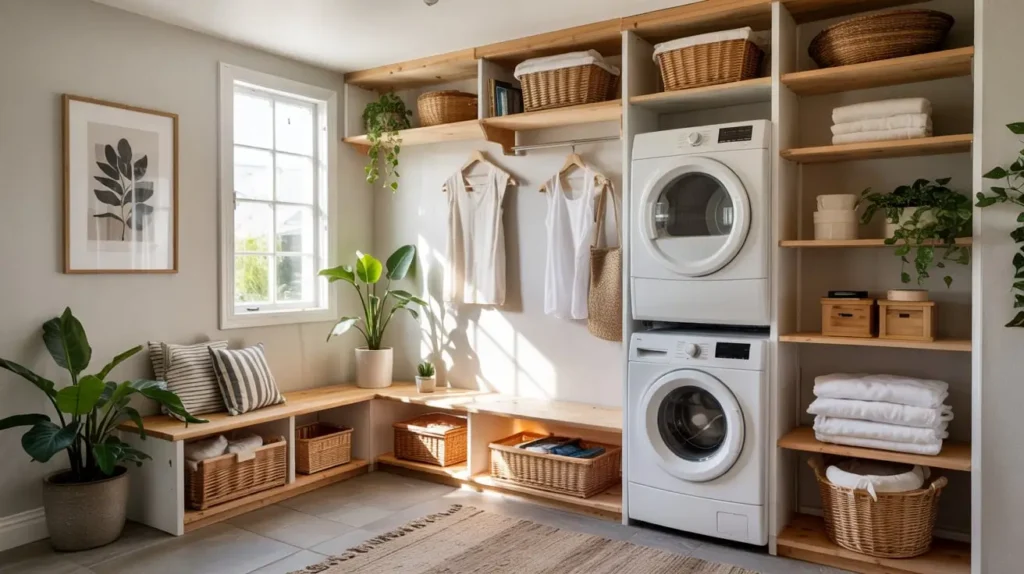
For those who embrace a more open, airy aesthetic (and are disciplined enough to keep things tidy!), an open-shelf design can be a beautiful and budget-friendly solution. This is less about hiding things and more about curating your utility space.
Think thick, floating wooden shelves above your washer and dryer. You can use beautiful baskets and bins to hold detergents, dryer sheets, and other supplies. On the mudroom side, a simple bench with open shelving underneath for shoes and more baskets completes the look.
Why It Works for Small Spaces
Open shelving creates a sense of visual space. Unlike bulky upper cabinets that can make a room feel closed in, shelves keep the sightlines open, making the area feel larger and brighter. It’s an optical illusion that works every time.
This approach can also be significantly cheaper than custom cabinetry. A few sturdy brackets and some quality wood planks can create a ton of storage for a fraction of the cost.
Key Features to Consider
- Curation is Everything: This is the most important rule of open shelving. You can’t just throw stuff up there. You need to use attractive, matching containers. Think wicker baskets, wire bins, or glass jars for laundry powder. Decanting your supplies into pretty containers is the secret to making this look intentional, not messy.
- Shelf Strength: Laundry detergent is heavy. Wet towels are heavy. Make sure your shelves are up to the task. Anchor them securely into wall studs and choose brackets and shelf materials that are rated for significant weight. Don’t just use drywall anchors.
- A Balance of Function and Decor: The beauty of open shelving is that you can mix in a little bit of decor. Add a small potted plant (a faux one if you have a black thumb like me), a framed photo, or a piece of art to personalize the space and make it feel less utilitarian.
8. The Pet Wash Mudroom Laundry Combo
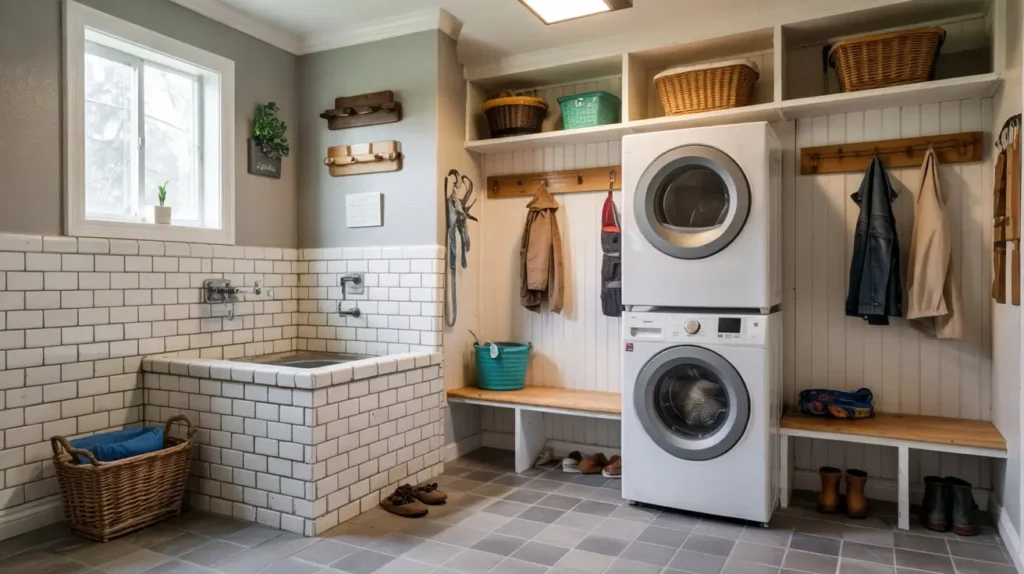
If your family includes a four-legged member, you know that “mudroom” is an understatement. It’s a mud, fur, and paw-print disaster zone. Why not integrate a dedicated pet-washing station right into your mudroom laundry combo? This is a game-changer for pet owners.
This involves installing a small, low-profile shower basin or a tiled nook with a drain and a handheld sprayer. You can place it right next to your washer and dryer. After a muddy walk, you can rinse your pup’s paws, toss the dirty towels directly into the washer, and contain the mess to one easy-to-clean area.
Why It Works for Small Spaces
It consolidates all the “dirty” tasks into one zone. Instead of tracking mud through the house to the bathtub, you handle it right at the point of entry. A small dog wash station doesn’t have to be huge—a 3×3 foot tiled area is often plenty.
You can even elevate the wash basin to save your back from bending over. The space underneath the elevated basin can then be used for storing pet food or supplies.
Key Features to Consider
- Waterproofing is Non-Negotiable: This is a wet zone. You need to treat it like a shower. Use a proper waterproof membrane (like Kerdi or RedGard) behind the tiles, a durable tile, and waterproof grout. The floor should be properly sloped to the drain.
- Sprayer Choice: A handheld sprayer with a long hose is essential. It gives you the flexibility to rinse paws, bellies, and everything in between without making a huge splash.
- Towel and Leash Hooks: Install hooks right next to the wash station for easy access to towels and a place to hang leashes and collars while they dry. Keeping everything within arm’s reach is key to a smooth and (relatively) clean pet-washing experience.
9. Minimalist Mudroom Laundry Wall

For the true minimalist, this is the dream. The goal here is ultimate simplicity and function, with zero extraneous details. Think of a single wall, perfectly outfitted with only the bare essentials.
This usually involves a stacked washer/dryer unit, often integrated into sleek, flat-panel cabinetry. Next to it, a simple bench—perhaps a floating one—with a few elegant hooks above it. The color palette is typically neutral (whites, grays, light woods) to enhance the feeling of calm and order.
Why It Works for Small Spaces
Minimalism, by its very nature, is about making the most of less. By eliminating visual clutter, you make the space feel open, serene, and much larger than it actually is. Every single item has a purpose and a place.
This design forces you to be ruthless about what you keep in the space. You can’t have piles of junk; it would ruin the entire aesthetic. This forced tidiness is, in itself, a small-space hack.
Key Features to Consider
- Integrated Appliances: For the ultimate minimalist look, choose panel-ready appliances that can be fitted with custom cabinet fronts. This makes your washer and dryer completely disappear into the wall of cabinetry, creating an unbroken, seamless surface.
- Hardware-Free Cabinetry: Opt for touch-latch or channel-pull cabinets to eliminate the visual clutter of knobs and handles. The smoother the surface, the more minimalist the feel.
- Focus on Texture: With a simple color palette, texture becomes incredibly important. You can add interest with a reeded wood panel behind the hooks, a nubby cushion on the bench, or the subtle grain of a light oak cabinet. It’s about creating warmth and depth without adding “stuff.”
Read Also 15 Stunning Dream Laundry Room Ideas That Inspire Your Home
10. The Farmhouse Mudroom Laundry Room Combo
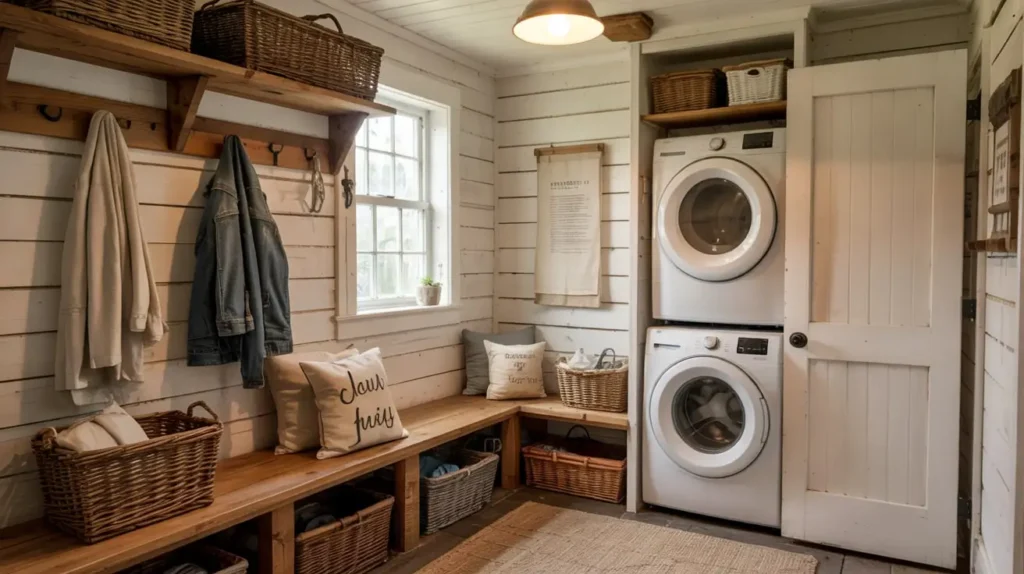
Ah, the modern farmhouse look. It’s popular for a reason: it’s warm, inviting, and feels incredibly homey. You can easily bring this style into your combo space with a few key elements, even if your home is far from a farm.
This style often features Shaker-style cabinets, a deep apron-front “farmhouse” sink (perfect for soaking stained clothes!), and natural wood accents like a butcher block countertop for folding. Details like shiplap on the walls, oil-rubbed bronze hardware, and vintage-style light fixtures complete the look.
Why It Works for Small Spaces
The farmhouse aesthetic is all about practicality and charm. Elements like a large utility sink are not just for looks; they are incredibly functional. The style also embraces a certain level of “coziness,” which can make a small space feel intentional and welcoming rather than just cramped.
IMO, the use of light colors like white and cream, which are staples of this style, is also a huge benefit in a small space, as it reflects light and makes the area feel brighter.
Key Features to Consider
- The Utility Sink: The star of the show. A deep farmhouse sink is perfect for hand-washing delicates, pre-soaking sports uniforms, or even watering plants. Just be sure you have the counter space to accommodate it.
- Shiplap: Horizontal or Vertical?: Shiplap is a hallmark of this style. A good rule of thumb is to use horizontal shiplap to make a narrow room feel wider, and vertical shiplap to make a low ceiling feel taller.
- Flooring Matters: To ground the space and add some rustic charm, consider a durable floor like slate-look tile, brick pavers, or a patterned porcelain tile. It adds character and stands up to the heavy traffic of a mudroom.
11. Modern Black and Wood Combo Space
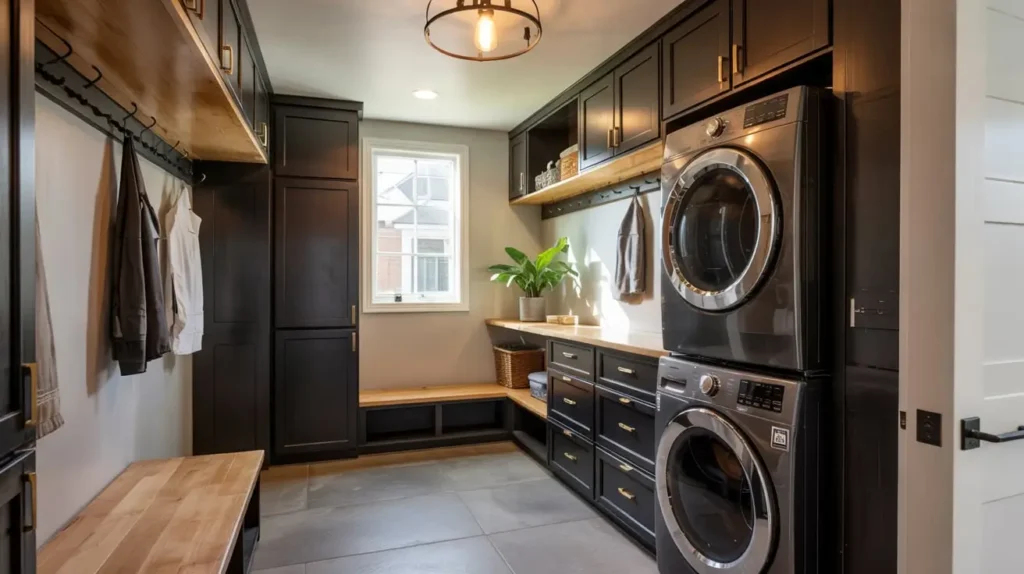
If farmhouse isn’t your vibe, maybe a sleek, modern, and slightly dramatic look is. The combination of matte black and warm wood is a timeless pairing that feels both sophisticated and organic.
Picture this: flat-panel cabinets in a rich walnut or oak, paired with a striking matte black counter. Or, flip it: dramatic black cabinetry with a warm butcher block countertop and floating wood shelves. Black hardware, a black faucet, and modern lighting tie it all together.
Why It Works for Small Spaces
Doesn’t black make a room feel smaller? Not necessarily! When used strategically, black can create a sense of depth and drama that actually makes a space feel more interesting and less boxy. Paired with warm wood tones and good lighting, it doesn’t feel dark or oppressive; it feels bold and intentional.
This high-contrast look draws the eye and creates strong visual lines, which can paradoxically make a space feel more defined and organized.
Key Features to Consider
- Lighting is Everything: When you use a lot of black, you need to be strategic with your lighting. You’ll want bright, clean light (think 3000K-4000K LEDs). Incorporate multiple layers of light: overhead ambient light, under-cabinet task lighting for the counter, and perhaps a stylish sconce over the mudroom bench.
- Wood Tone: The type of wood you choose will set the tone. A light oak or maple will feel more Scandinavian and airy, while a darker walnut or teak will feel more mid-century modern and dramatic.
- Fingerprint Resistance: Matte black surfaces can be notorious for showing fingerprints and smudges. Look for newer materials like Fenix or high-quality laminates that are specifically designed to be anti-fingerprint. It will save you a lot of wiping down. 🙂
12. The Garage Entry Mudroom Laundry Setup
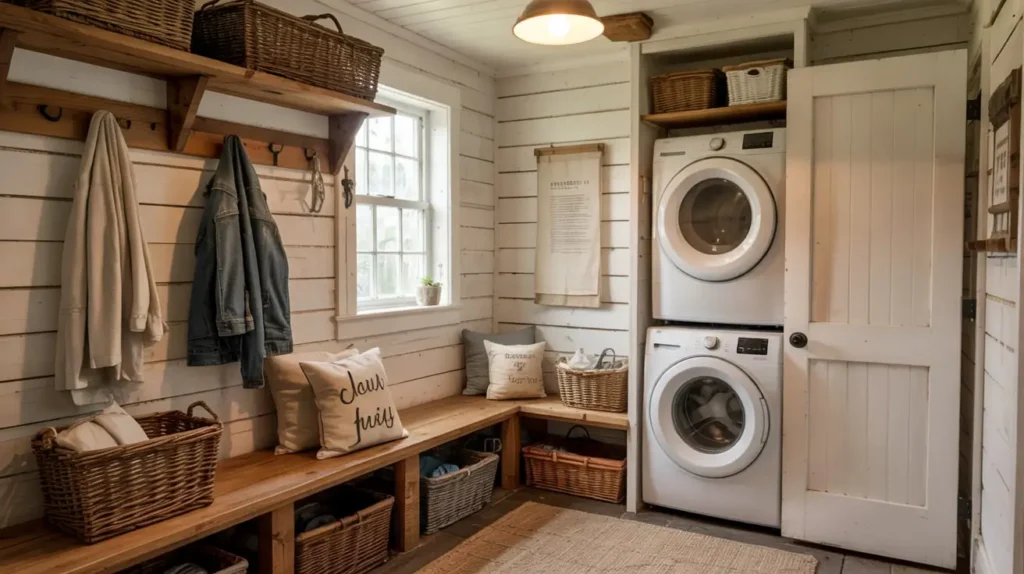
For many of us, the most logical entry point for a mudroom is the door from the garage. This space is often unfinished and underutilized—a prime candidate for a functional makeover.
Creating a mudroom laundry combo here is about carving out a dedicated, finished zone within the garage. This might involve building a small “room” with drywall or simply finishing one wall with flooring, cabinetry, and proper lighting to separate it from the cars and tools.
Why It Works for Small Spaces (in the House)
The biggest benefit? It moves the entire messy operation out of your primary living space. This frees up a closet or corner inside your home for something else entirely. Even if the space in the garage is small, it contains the dirt, noise, and clutter at the source.
Garages often have concrete floors and unfinished walls, making them a blank slate. You don’t have to worry about matching existing high-end finishes, which can make the project more straightforward and affordable.
Key Features to Consider
- Insulation and Climate Control: Garages are typically not climate-controlled. If you live in a place with extreme temperatures, you’ll need to insulate the walls and ceiling of your laundry area. You also need to protect your water pipes from freezing in the winter. A small space heater or tying into your home’s HVAC may be necessary.
- Durable, Easy-to-Clean Finishes: This area will see a lot of dirt. Choose materials that can take a beating. Epoxy flooring, durable tile, and PVC wall panels are all great, easy-to-clean options.
- Proper Hookups: Just like a closet conversion, you’ll need professional help to run plumbing, electrical, and venting. The good news is that access is often easier in a garage than inside the finished walls of your house.
13. Narrow Hallway Mudroom Laundry Design

Do you have a back hallway that’s little more than a glorified walkway? It’s time to put that dead space to work. With clever, shallow-depth solutions, you can turn a narrow hall into a surprisingly functional combo space.
The key here is using shallow cabinetry and a slim, all-in-one washer/dryer unit if possible. These combo machines wash and dry in the same drum, cutting your space requirement in half. A floating bench or a fold-down bench can provide seating without permanently obstructing the walkway.
Why It Works for Small Spaces
It activates transitional space that is otherwise completely wasted. By keeping everything slim and close to the wall, you can maintain the necessary clearance for a walkway while adding a ton of functionality.
This is the ultimate expression of “a little bit of something is better than a whole lot of nothing.” Even 12-15 inches of depth can be enough for shallow cabinets, hooks, and a spot for shoes.
Key Features to Consider
- Shallow-Depth Everything: This is the mantra. Look for “slim” or “compact” washer/dryer units. Your cabinetry should be no more than 15 inches deep. Even the hooks you choose should be low-profile so they don’t snag you as you walk by.
- Fold-Down Surfaces: A fold-down bench is brilliant for seating when you need it and disappears when you don’t. You can also install a fold-down countertop above your machine to serve as a temporary folding station.
- Mirrors and Light Colors: To prevent the hallway from feeling like a cramped tunnel, use every trick in the book to create a sense of space. Paint the walls a light color, use reflective surfaces, and consider adding a large mirror on the opposite wall to visually double the width of the hall.
14. Basement Mudroom Laundry Conversion
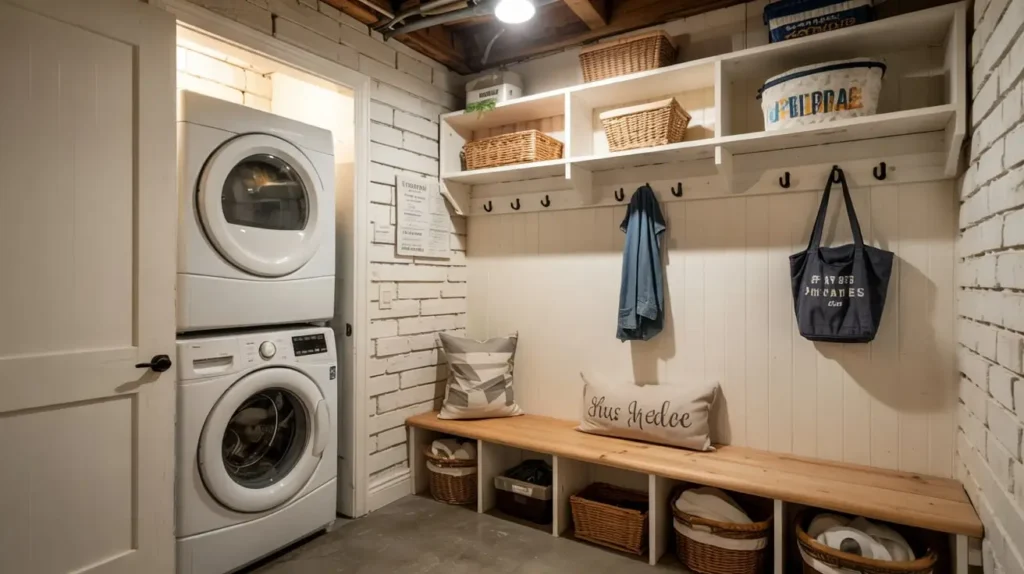
If your basement is your main laundry area, but you also have a walk-out or exterior door down there, you have a golden opportunity. Instead of just a laundry corner, you can create a full-fledged mudroom and laundry room destination.
This is often less about small space and more about “making a dingy space amazing.” You can define the area with new flooring, build out walls to create a proper room, and add all the mudroom essentials: a bench, storage, and hooks.
Why It Works for Your Home
It keeps the dirt and mess contained to the lower level of your home, far away from your main living areas. If kids come in from playing in the yard, they can strip off their muddy clothes right there and throw them in the wash.
Basements often have more available square footage to work with, so you may not have to make as many compromises. You might have room for side-by-side machines, a large folding counter, and a generous mudroom bench. What a luxury!
Key Features to Consider
- Moisture Control: Basements are prone to dampness. Before you invest in beautiful new finishes, address any moisture issues. This means sealing the foundation, running a dehumidifier, and choosing moisture-resistant materials like luxury vinyl plank (LVP) flooring and mold-resistant drywall.
- Lighting and Egress: Basements can be dark. Invest in great lighting to make the space feel bright and welcoming. Also, ensure your basement entry meets local building codes for egress (a safe exit in case of emergency).
- Finishing the Ceiling: Exposed joists and pipes can make a basement feel unfinished. You can paint everything a uniform color (black or white is popular) for an industrial look or install a proper drywall or drop ceiling for a more polished feel.
15. Scandinavian Style Mudroom Laundry Combo

Last but not least, let’s talk about the calm, clean, and highly functional Scandinavian style. This aesthetic, rooted in simplicity and nature, is a perfect match for a utility space. It’s all about light colors, natural materials, and clever, uncluttered design.
Think white walls, light wood tones (like birch or ash), and simple, functional forms. A white-tiled backsplash, simple black metal hooks, and an abundance of natural light (if possible) are hallmarks of this style. Storage is often a mix of open shelving and simple, unadorned cabinetry.
Why It Works for Small Spaces
The core principle of Scandinavian design is “hygge”—a sense of coziness and contentment. This philosophy translates into creating spaces that are not only beautiful but also highly functional and calming to be in. In a small, hardworking space, that feeling of calm is priceless.
The emphasis on light colors, clean lines, and uncluttered surfaces is a natural fit for making a small room feel bigger, brighter, and more organized.
Key Features to Consider
- Natural Light: If you have a window in your space, cherish it! Keep window treatments minimal—a simple roller shade or bare window is perfect. If you don’t have a window, mimic the effect with bright, natural-looking artificial light.
- A Mix of Textures: To keep the neutral palette from feeling sterile, incorporate a variety of natural textures. Think of a woven wool rug on the floor, a wooden bench, linen baskets for storage, and a live green plant in the corner.
- Functional Simplicity: Every item should be both beautiful and useful. Choose simple, well-designed hooks, elegant but sturdy baskets, and cabinetry that prioritizes function over ornamentation. This is about finding the beauty in everyday utility.
So, Ready to Tackle That Corner?
Whew! We’ve covered a lot of ground. From hiding your machines behind a barn door to creating a pet-washing paradise, the possibilities for your mudroom laundry combo are endless. The main takeaway is this: you don’t need more space; you need a smarter space.
The perfect solution for you will depend on your budget, your layout, and how your family lives. But hopefully, these ideas have sparked some inspiration and shown you that you don’t have to live with that chaotic corner forever. You can create a space that not only works hard but also brings you a little bit of joy and a whole lot of order.
So go on, measure that wall, start a Pinterest board, and reclaim your entryway. You’ve got this.
Happy organizing