



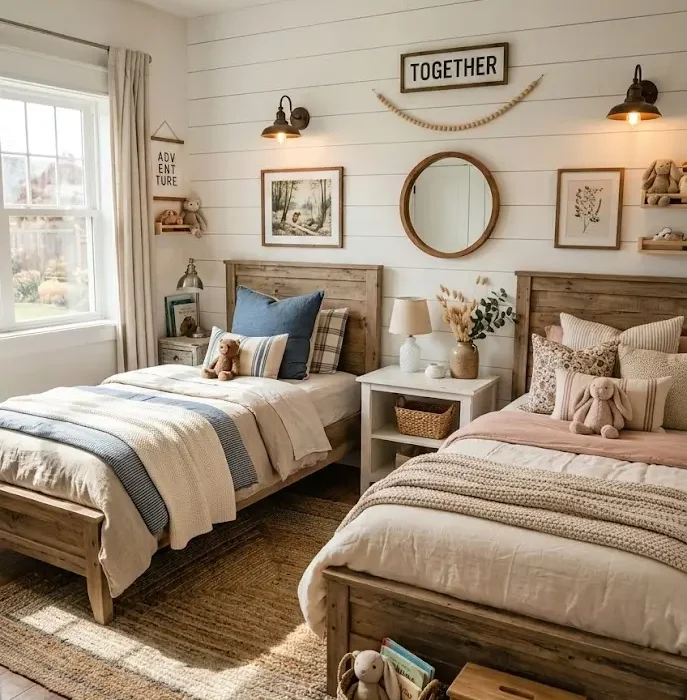
You know that moment when you’re staring at a bedroom that needs to work for both your son and daughter, and your brain just… freezes? Yeah, I’ve been there. Creating a shared bedroom that doesn’t turn into a daily battle zone while keeping both kids happy feels like trying to solve a Rubik’s cube blindfolded. But here’s the thing – shared bedrooms can actually be amazing spaces that teach kids about compromise, creativity, and coexistence.
I’ve spent years helping families navigate this exact challenge, and trust me, there are some seriously clever solutions out there. These 15 ideas will transform that tricky shared space into something both your kids will love (and you’ll actually want to show off to guests).
Neutral Color Palette Boy Girl Shared Bedroom
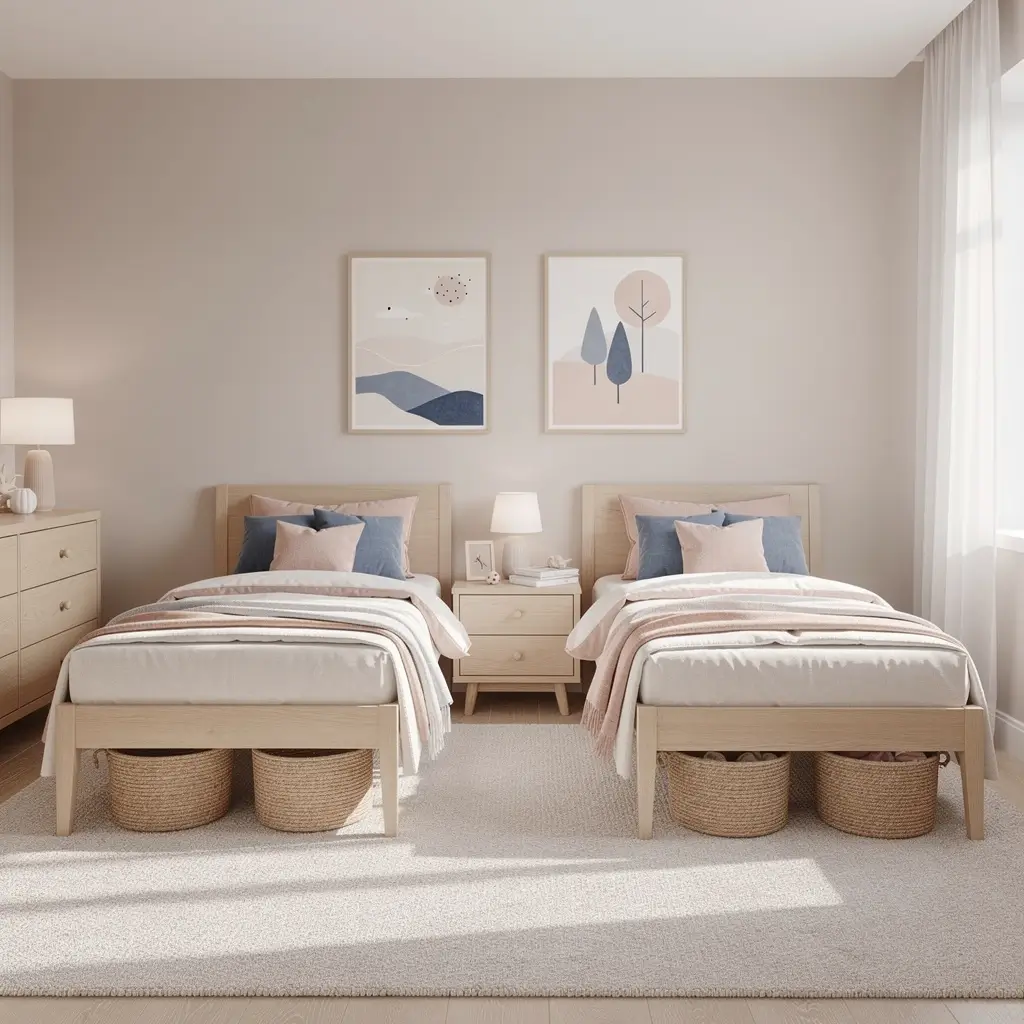
Let’s start with the safest bet that never fails – neutral colors are your best friend when you’re designing for two different personalities. I’m talking soft grays, warm whites, and those gorgeous sage greens that somehow make everyone happy.
The beauty of a neutral foundation? You can add personality through accessories, bedding, and artwork without committing to pink princesses or blue trucks forever. Think of neutrals as your blank canvas – they let each child express their style through smaller elements they can easily change as they grow.
I’ve seen families use warm beige walls with white trim and then add pops of each child’s favorite color through throw pillows, artwork, and storage bins. One family I worked with painted their walls a soft mushroom gray and let their kids pick out colorful rugs for their individual spaces. The result? A cohesive room that still felt personal to each child.
The trick with neutrals is choosing the right undertones. Cool grays can feel sterile, but warm grays with beige undertones create that cozy, inviting atmosphere you’re after.
Bunk Bed Boy Girl Shared Bedroom Design
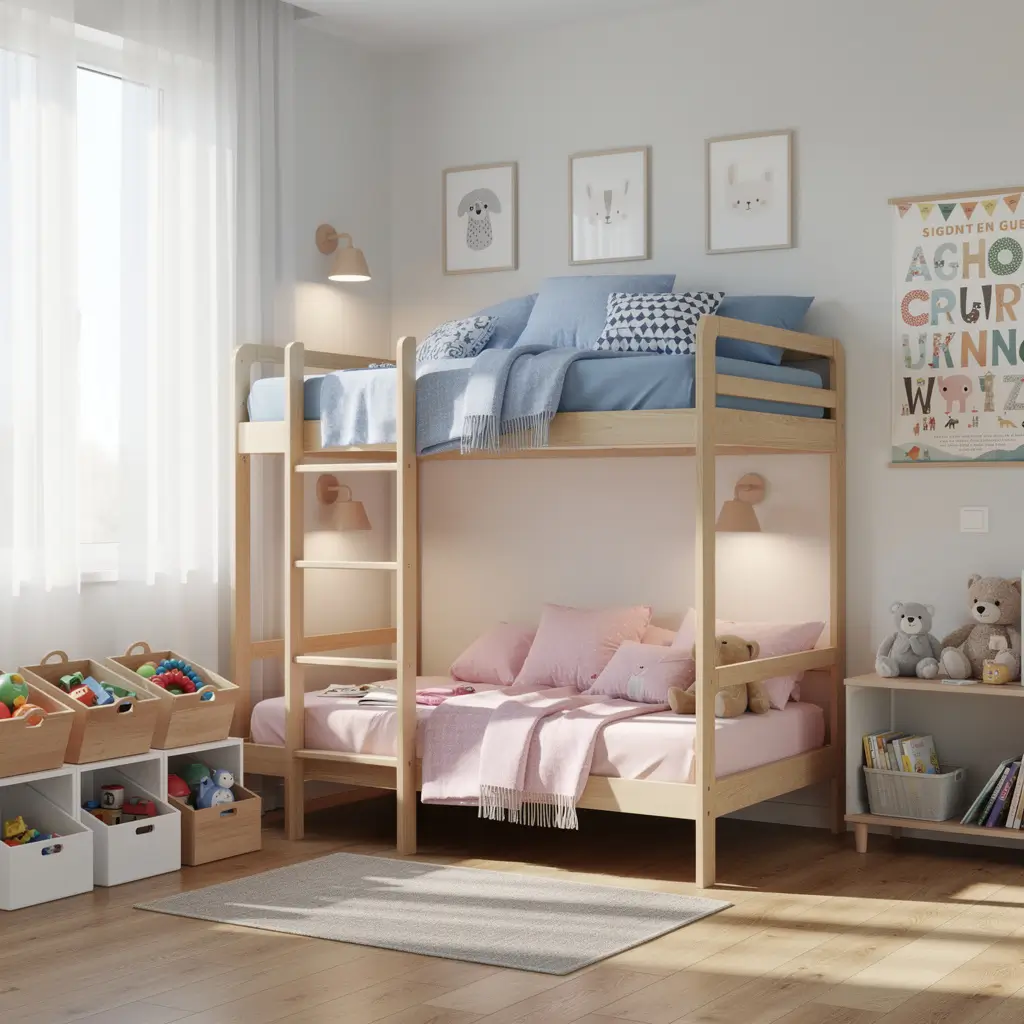
Bunk beds aren’t just space savers – they’re adventure makers and problem solvers rolled into one genius piece of furniture. Ever noticed how kids automatically get excited about bunk beds? There’s something magical about having your own elevated hideaway.
For boy-girl rooms, bunk beds solve the “who gets which side” debate by creating distinct levels. I always recommend letting the older child choose their preferred spot first – it cuts down on arguments and gives them a sense of responsibility.
Safety comes first, obviously. Make sure you’ve got proper railings, a sturdy ladder, and that the top bunk user is at least six years old. I’ve seen too many midnight tumbles from overeager younger siblings trying to climb up.
Consider bunk beds with built-in storage or desks underneath. Some designs include drawers in the steps or shelving along the sides. One family I helped chose a loft-style bunk where the bottom “bunk” was actually a cozy reading nook with built-in storage – genius, right?
The key is choosing a design that doesn’t scream “little kid furniture.” Look for clean lines and quality construction that’ll grow with your children.
Half and Half Boy Girl Shared Bedroom Layout
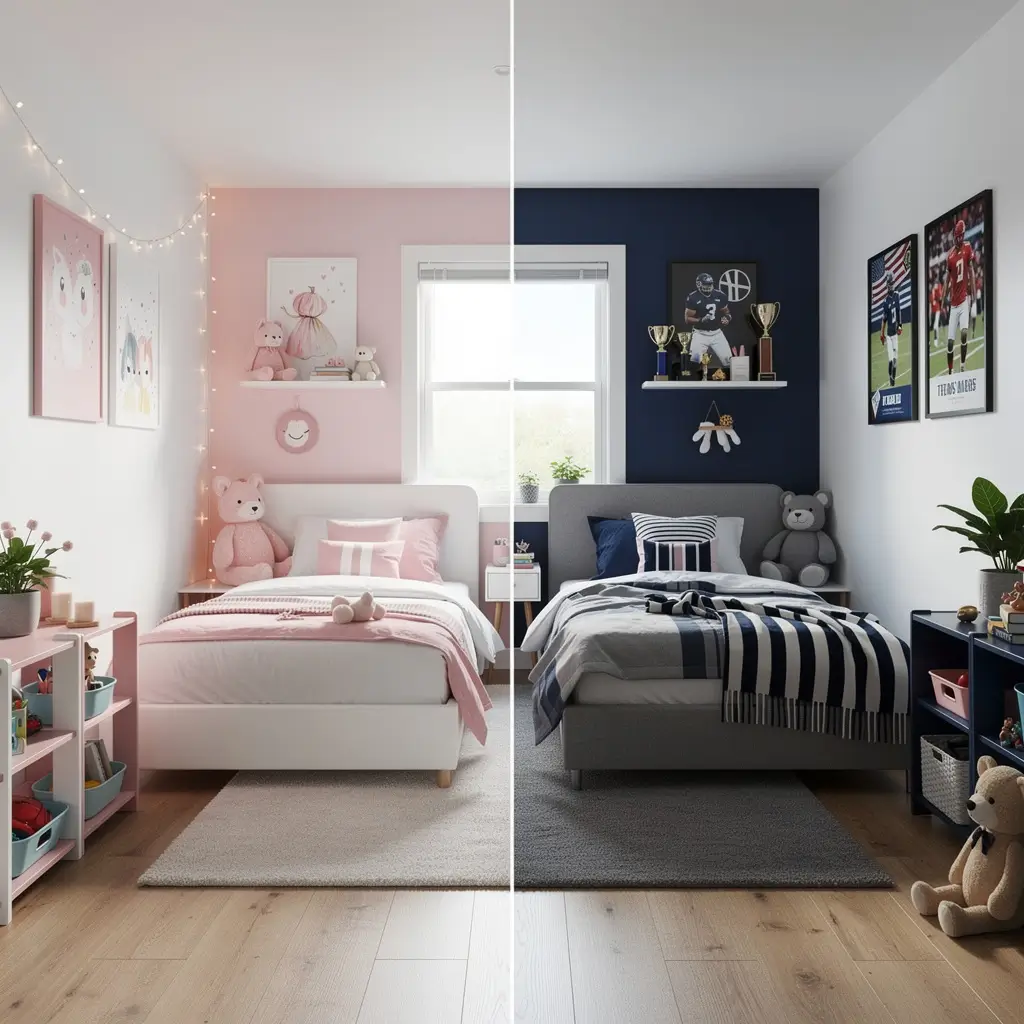
This approach is basically diplomatic bedroom design – you’re creating two distinct territories within one space. It’s like drawing an invisible line down the middle of the room without actually doing it (though some families literally do paint a line, and honestly? Sometimes that works).
I love this layout because it teaches kids about boundaries and respect while giving each child ownership over their space. You can achieve this division through furniture placement, different bedding styles, or even slight color variations on each side.
One clever family used a tall bookshelf as a natural room divider, creating two separate sleeping areas while maintaining the open feel of the space. Each child got to decorate their side of the bookshelf, turning it into a shared art gallery.
The middle ground becomes shared territory – perfect for a play area, reading corner, or shared storage. This teaches kids that some spaces belong to everyone and need to be kept tidy for the whole family’s benefit.
Pro tip: Use area rugs to define each child’s space. Different patterns or colors create visual boundaries without permanent changes to the room.
Scandinavian Style Boy Girl Shared Bedroom
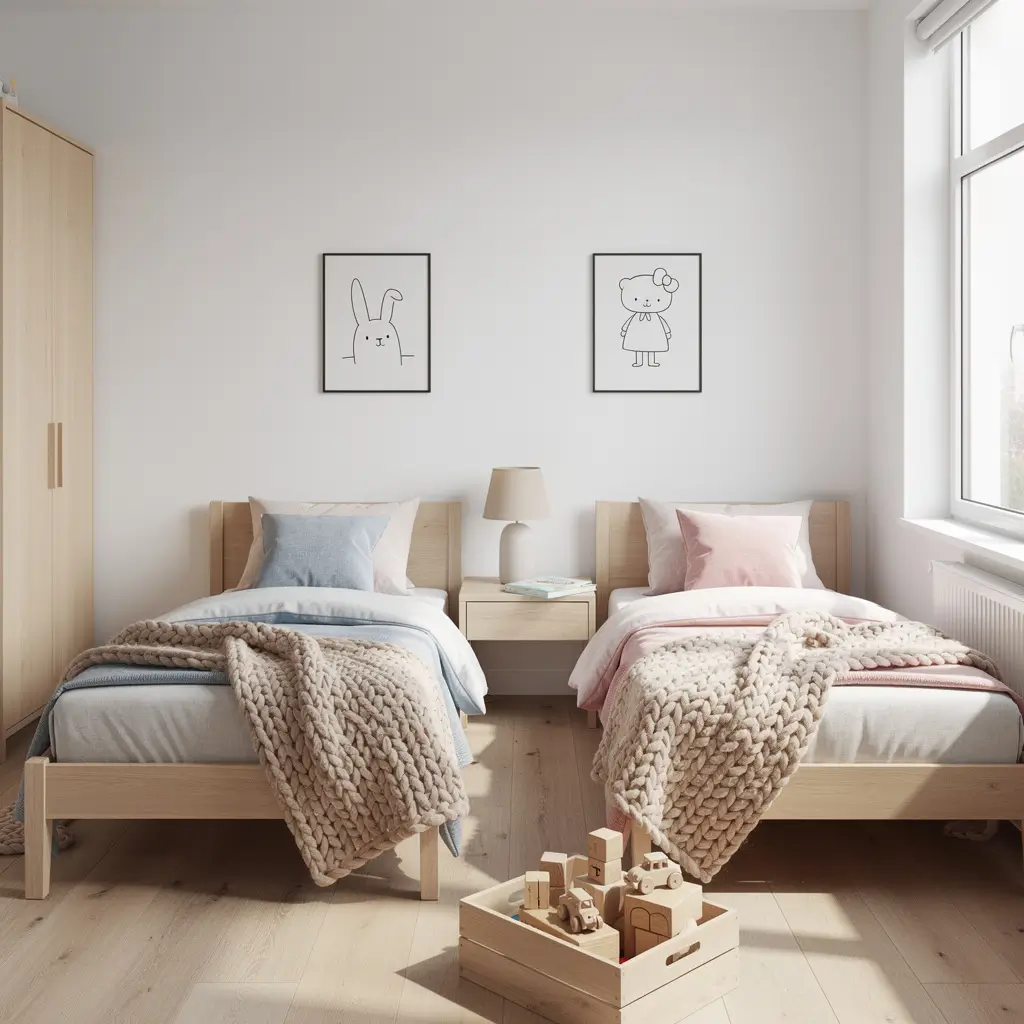
Scandinavian design is like the zen master of bedroom styles – it’s calm, functional, and naturally gender-neutral. Think clean white walls, natural wood furniture, and that effortlessly cozy vibe that makes you want to grab a cup of cocoa and read a book.
The Scandinavian approach focuses on quality over quantity and function over flash. You’ll use fewer pieces of furniture, but each one serves multiple purposes. A simple wooden bench becomes seating, storage, and a display space for favorite books.
I’m obsessed with how Scandinavian design handles color. Instead of bright, overwhelming hues, you’ll use soft pastels and natural tones that feel soothing rather than stimulating. Dusty pink, pale blue, and sage green work beautifully together without feeling too feminine or masculine.
Natural materials are essential here – think wooden toys, linen bedding, and woven baskets for storage. These materials age beautifully and create that timeless look that won’t need updating as your kids grow.
The lighting is crucial too. Skip the overhead fluorescent nightmare and opt for warm table lamps, string lights, or pendant lights that create a cozy atmosphere your kids will actually want to spend time in.
Small Space Boy Girl Shared Bedroom Setup
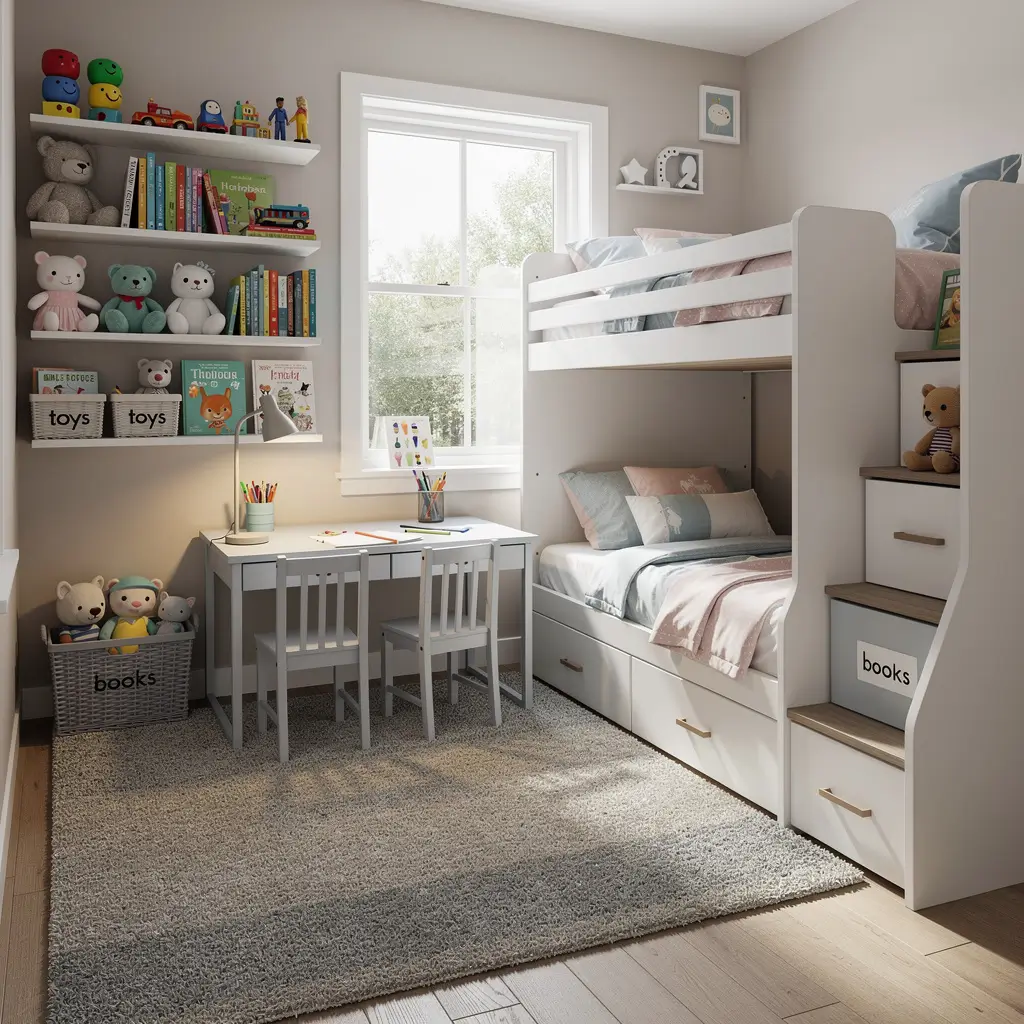
Small shared bedrooms require ninja-level space optimization, but they can actually be more cozy and functional than larger rooms when done right. The key is thinking vertically and choosing furniture that works overtime.
Every square inch needs to earn its keep in a small space. I’m talking about beds with built-in storage drawers, wall-mounted desks that fold down when needed, and closet organizers that maximize vertical space.
One of my favorite small space tricks? Loft beds with everything underneath – desk, dresser, and play area all tucked below the sleeping space. It’s like creating a two-story bedroom within normal ceiling height.
Wall storage becomes your best friend. Floating shelves, pegboards for hanging backpacks and jackets, and over-the-door organizers can hold an amazing amount of stuff without taking up floor space.
Don’t forget about under-bed storage. Rolling bins, vacuum-sealed bags for seasonal clothes, and even custom-built drawers can turn dead space into valuable storage real estate.
The color strategy for small spaces? Light colors reflect light and make spaces feel larger, but don’t be afraid to use one bold accent wall to add personality without overwhelming the space.
Also Read: 15 Chic Modern Bedroom Designs That Wow Instantly
Boho Style Boy Girl Shared Bedroom
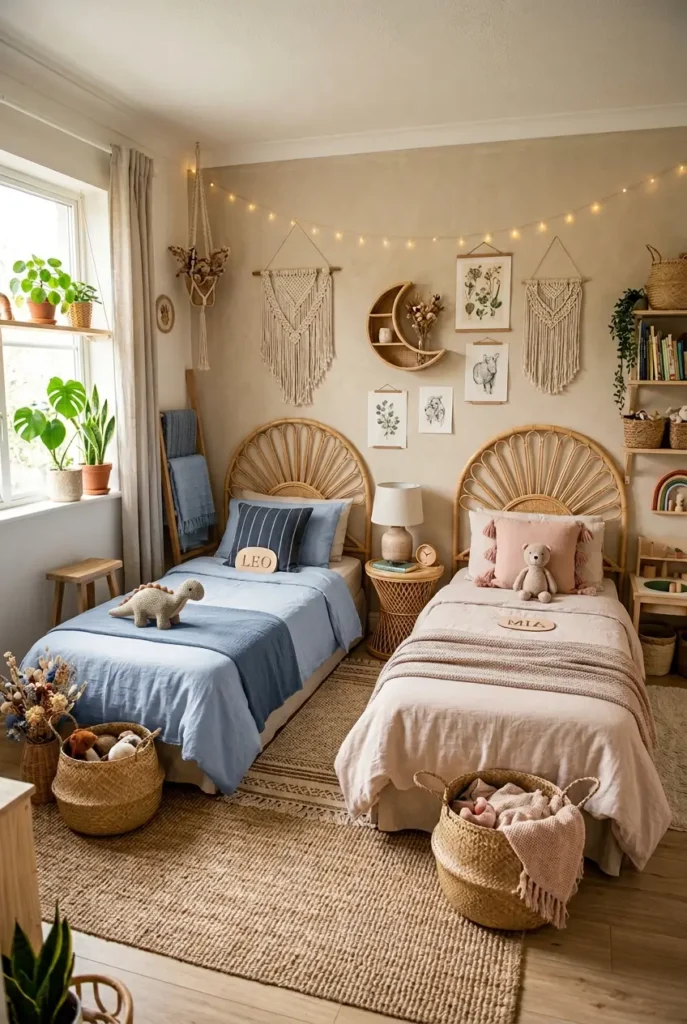
Boho style is pure magic for shared bedrooms because it celebrates mixing patterns, textures, and colors in a way that feels intentional rather than chaotic. It’s like giving both kids permission to express their personalities without worrying about everything matching perfectly.
The foundation of boho design starts with layered textiles – think tapestries on walls, multiple rugs layering over each other, and lots of throw pillows in different patterns and textures. It sounds like it would be overwhelming, but when done right, it creates this incredibly cozy, lived-in feeling.
I love using floor cushions and poufs instead of traditional chairs in boho rooms. They’re portable, perfect for kids who like to rearrange their space, and add to that relaxed, informal vibe.
Plants are essential in boho design, but with kids, I recommend low-maintenance options like snake plants or pothos. Hanging planters work great because they’re out of reach but still add that natural, earthy element.
Macrame wall hangings, dream catchers, and woven baskets bring in texture and visual interest without taking up floor space. Plus, kids love the tactile elements of boho design – everything begs to be touched and explored.
Shared Study Area Boy Girl Bedroom Design
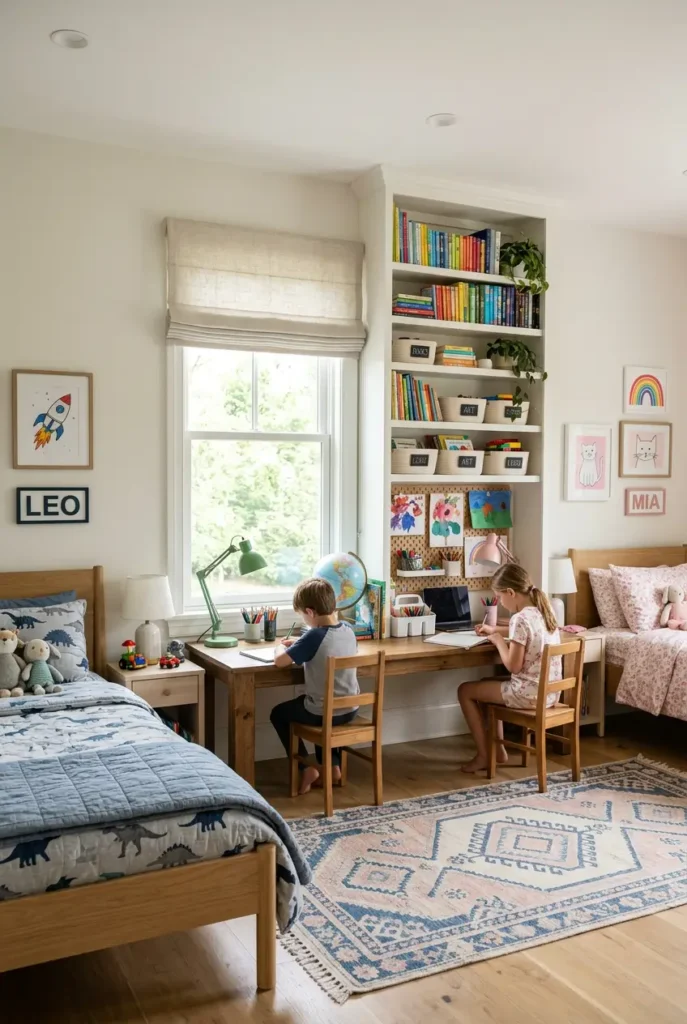
Creating a dedicated homework zone in a shared bedroom requires some serious strategic thinking, but it’s absolutely worth the effort. Nothing kills sibling harmony faster than fighting over desk space during homework time.
The easiest solution? Two separate desks positioned so kids aren’t staring at each other while working. I’ve seen families put desks on opposite walls, or use a long counter-style desk with a small divider in the middle.
Good lighting is non-negotiable for study areas. Each child needs their own task lighting – desk lamps that provide focused light without creating glare on computer screens or casting shadows on homework.
Storage around the study area should be immediately accessible and clearly labeled. Each child needs their own supply caddy, file system, and space for textbooks. I’m a huge fan of rolling carts that can move where needed and then tuck away when it’s playtime.
Consider sound management too. Some kids work better with background music, others need complete silence. Noise-canceling headphones or white noise machines can help create individual sound zones within the shared space.
The key is making sure both children feel like they have equal access and equal resources in the study area. Nothing breeds resentment faster than one child feeling like they got the short end of the homework stick.
Montessori Inspired Boy Girl Shared Bedroom
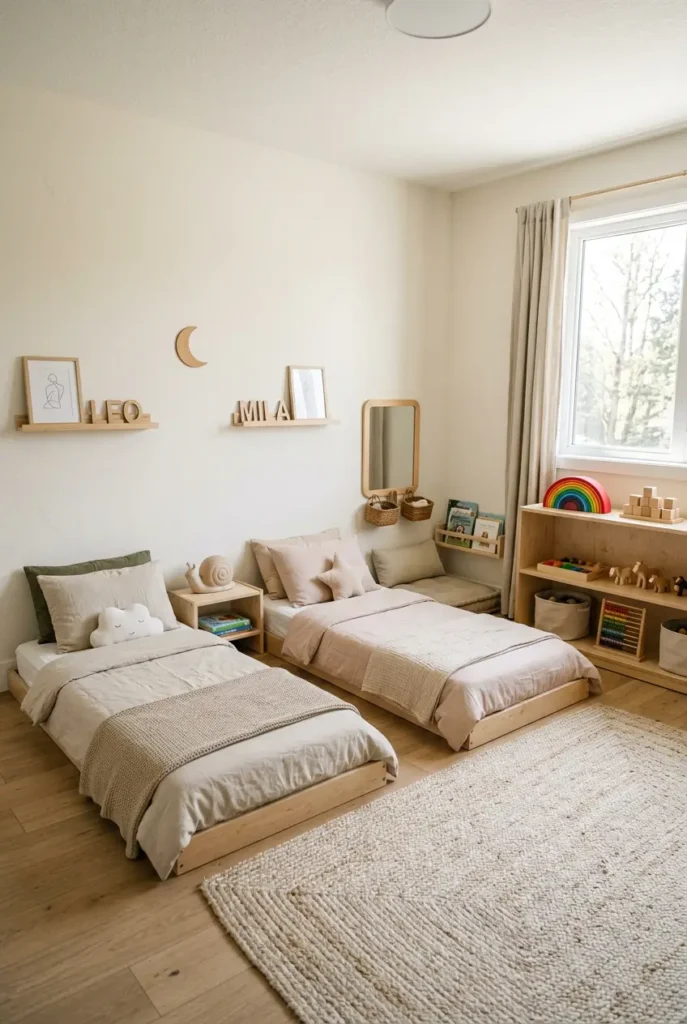
Montessori principles create incredibly peaceful shared bedrooms because they focus on child-sized furniture, natural materials, and organized, accessible storage. It’s like designing a room that teaches independence while looking effortlessly beautiful.
The most important Montessori element? Everything at child height. Low beds, accessible closet rods, and storage bins that kids can reach independently. This isn’t just practical – it builds confidence and responsibility.
Floor beds are quintessential Montessori, and they work amazingly well in shared rooms because they don’t dominate the space visually. Plus, kids can get in and out independently, which means fewer middle-of-the-night wake-up calls for parents 🙂
Natural materials rule in Montessori spaces. Wooden furniture, cotton bedding, and woven baskets create a calm, grounded feeling that helps kids focus and relax. Avoid plastic furniture and synthetic materials when possible.
Organization is key, but it should be simple and logical. Each item has a designated place, and kids learn to maintain order because the systems make sense to them. Clear bins, picture labels, and logical groupings help children manage their belongings independently.
Curtain Divider Boy Girl Shared Bedroom
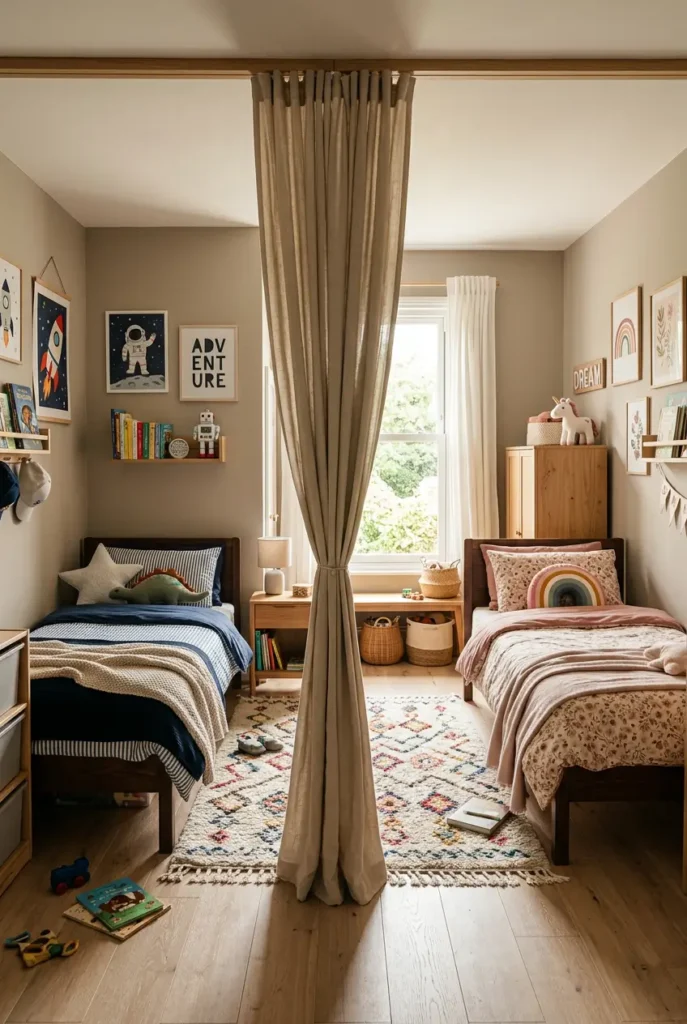
Curtain dividers are brilliant for creating privacy without permanent changes to the room. They’re budget-friendly, easily adjustable, and can completely transform the feel of a shared space.
The magic of curtains? They can be opened for shared playtime and closed for private time. It’s like having a room that adapts to your kids’ changing needs throughout the day.
I’ve seen families get incredibly creative with curtain installations. Ceiling-mounted tracks allow curtains to curve around bed areas, creating cozy alcoves. Some families use multiple curtain panels that can slide in different configurations.
Fabric choice matters enormously. Heavy fabrics provide more privacy and sound dampening, while sheer fabrics maintain light flow while creating visual separation. Some families use different fabrics on each side to reflect each child’s personality.
Don’t forget about functionality beyond privacy. Curtains can hide storage areas, create a dress-up corner, or even serve as a backdrop for reading time. One family I worked with used their curtain divider to create an impromptu puppet theater – genius, right?
Installation tip: Make sure your ceiling or wall mount can handle the weight of the curtains and the inevitable tugging from excited children.
Loft Bed Boy Girl Shared Bedroom Layout
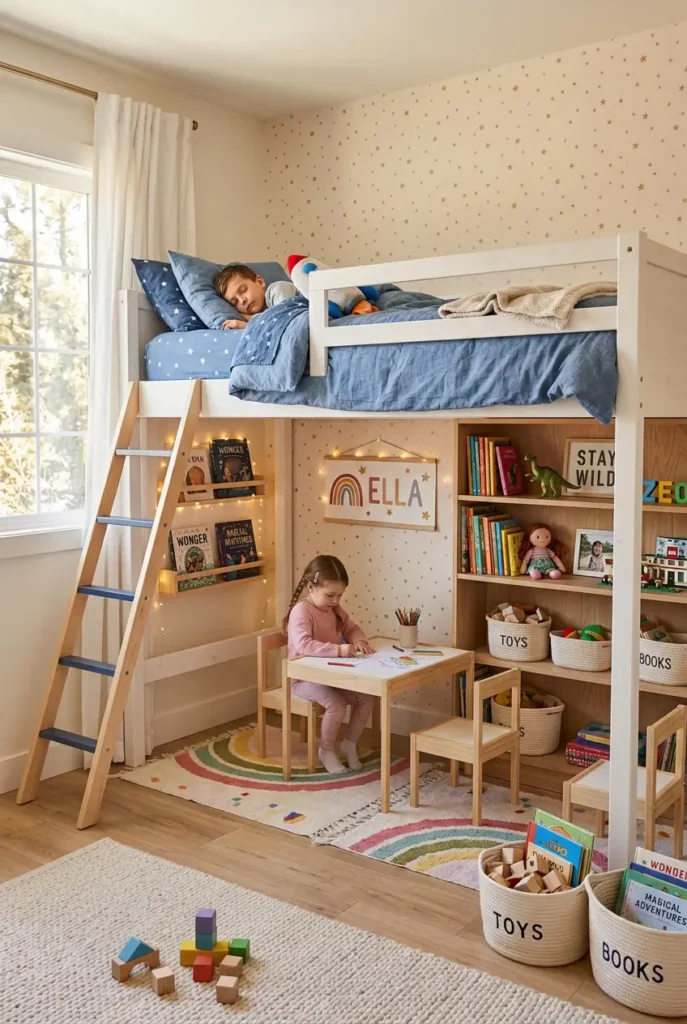
Loft beds are space-maximizing champions that turn one bedroom into a multi-level adventure. They’re especially perfect for shared rooms because they literally create more usable square footage in the same footprint.
The space underneath becomes prime real estate for desks, play areas, or additional storage. I’ve seen families create everything from art studios to reading nooks to mini living rooms under loft beds.
One clever layout I love? Two loft beds positioned to create a central play area underneath. It’s like building a clubhouse within the bedroom – kids get their own elevated sleeping spaces while sharing an amazing play zone below.
Safety considerations are crucial with loft beds. Make sure your ceiling height is adequate (at least 8 feet), install proper railings, and ensure the child using the loft bed is mature enough to navigate the ladder safely.
Consider the long-term functionality too. As kids grow into teenagers, that under-loft space might transform from a play area into a study zone or hangout space. Choose a loft bed design that can adapt to changing needs.
Pro tip: Use the area under the loft for frequently used items to maximize the convenience factor. If homework supplies live under the bed, homework time becomes easier for everyone.
Also Read: 15 Trendy Black and White Bedroom Ideas for Dreamy Spaces
Nature Theme Boy Girl Shared Bedroom
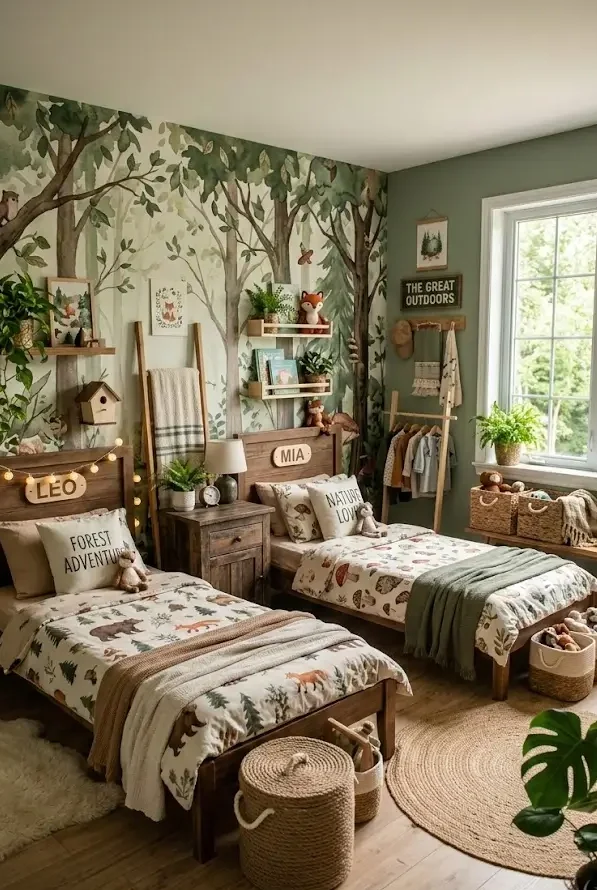
Nature themes create universally appealing spaces that work beautifully for children of any gender. There’s something inherently calming about bringing outdoor elements inside, and kids naturally gravitate toward nature-inspired designs.
Forest themes work particularly well for shared bedrooms. Think tree wall decals, woodland creature artwork, and color palettes inspired by forest floors – browns, greens, and warm earth tones that feel grounding and peaceful.
I love incorporating real natural elements when possible. A small indoor tree (if your space and light allow), river rocks in decorative bowls, or driftwood shelving bring authentic nature vibes into the room.
Adventure and exploration themes appeal to kids’ natural curiosity. Create a camping corner with a small tent, hang a world map for dream destinations, or install rock climbing holds on one wall (properly secured, obviously).
The beauty of nature themes? They grow with your children. A preschooler might love friendly forest animals, while older kids gravitate toward adventure and exploration elements within the same theme.
Color palettes should reflect the natural world – sage greens, warm browns, sky blues, and sunset oranges create a cohesive look that feels both energizing and soothing.
Minimalist Boy Girl Shared Bedroom Design
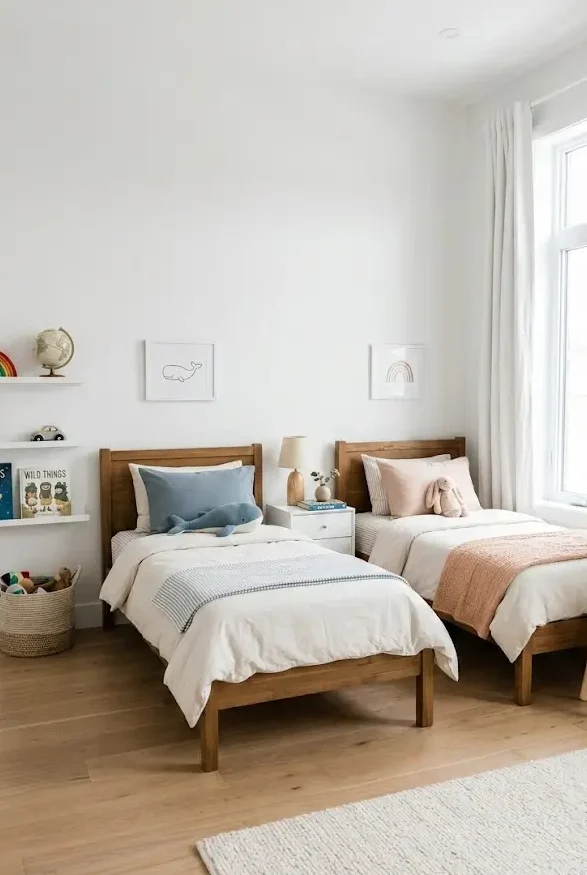
Minimalist design in shared bedrooms is pure genius for overwhelmed families. Fewer items mean less to clean, organize, and argue about. It’s like giving your sanity a daily gift.
The key to kid-friendly minimalism? Choose fewer, higher-quality items rather than lots of cheap stuff. A beautiful wooden toy chest that doubles as a bench beats a pile of plastic storage bins every time.
Clean lines and simple color palettes create visual calm that actually helps children focus and relax. I’ve noticed kids sleep better and play more creatively in minimalist spaces because they’re not overstimulated by visual clutter.
Storage becomes even more important in minimalist rooms because everything visible needs to look intentional. Built-in storage, under-bed boxes, and multi-functional furniture help maintain that clean aesthetic.
Don’t confuse minimalist with boring, though. One beautiful piece of artwork, a stunning light fixture, or a gorgeous area rug can add personality without cluttering the space.
The maintenance factor is huge here – minimalist rooms stay cleaner longer and are easier for children to maintain independently. It’s like designing a room that teaches organizational skills automatically.
Twin Bed Symmetrical Boy Girl Shared Bedroom
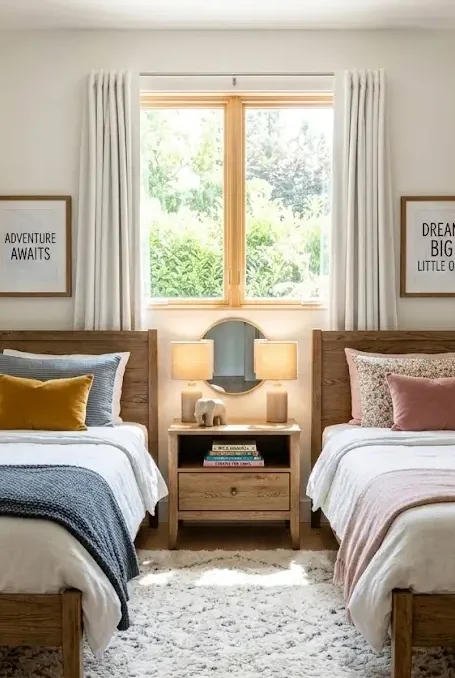
Symmetrical layouts are diplomatic design at its finest – nobody can argue about unfairness when everything is exactly equal. It’s like Switzerland in bedroom form.
Matching twin beds positioned identically create instant visual balance and eliminate the “their side is better” complaints. I typically recommend placing beds on opposite walls with matching nightstands and lamps.
The magic happens in the personalization details. While the major furniture pieces match, each child gets to choose their own bedding, wall art above their bed, and personal storage accessories.
Central focal points work beautifully in symmetrical rooms. A shared bookshelf between the beds, a window with matching window seats, or a central play area creates balance while encouraging shared activities.
Color coordination requires some strategic planning. You might use the same base color with different accent colors for each child, or choose complementary colors that work together harmoniously.
FYI, symmetrical doesn’t have to mean identical. Same furniture style in different finishes or matching beds with different headboards can create visual interest while maintaining that balanced feeling.
Playful Color Block Boy Girl Shared Bedroom
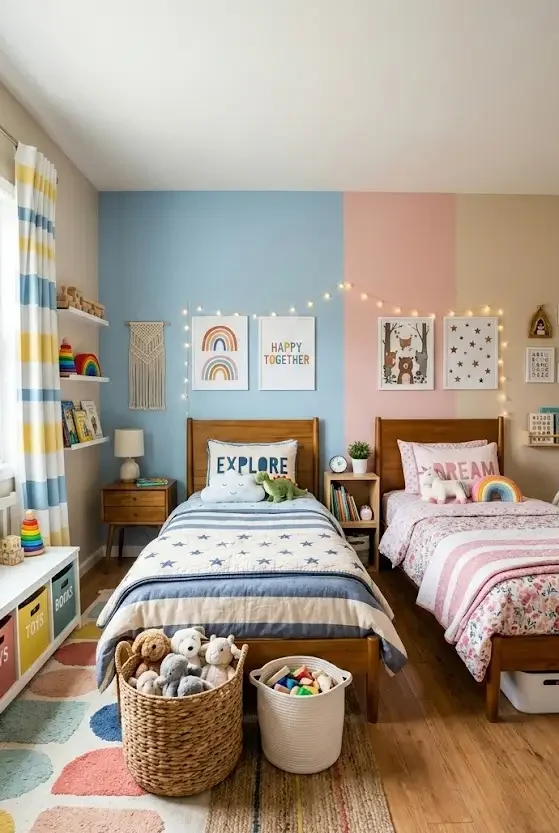
Color blocking is bold, fun, and surprisingly sophisticated when done right. It’s like giving each child their own color personality while creating a cohesive overall design.
The key is choosing colors that work together rather than compete. I love using complementary colors or different shades within the same color family. Think coral and navy, or different shades of green and blue.
Geometric color blocking on walls can define individual spaces within the shared room. One wall might be half pink and half blue, or you might paint each child’s sleep area in their chosen color while keeping common areas neutral.
Don’t limit color blocking to walls, though. Color-blocked storage bins, bedding, and even furniture can carry the theme throughout the room without overwhelming the space.
Balance is crucial with this approach. Use neutral elements to ground the bold colors – white or natural wood furniture prevents the room from feeling like a crayon box explosion.
One family I worked with created color-blocked zones using removable wall decals, which let them change the design as their kids’ preferences evolved. Smart parenting right there!
Modern Farmhouse Boy Girl Shared Bedroom
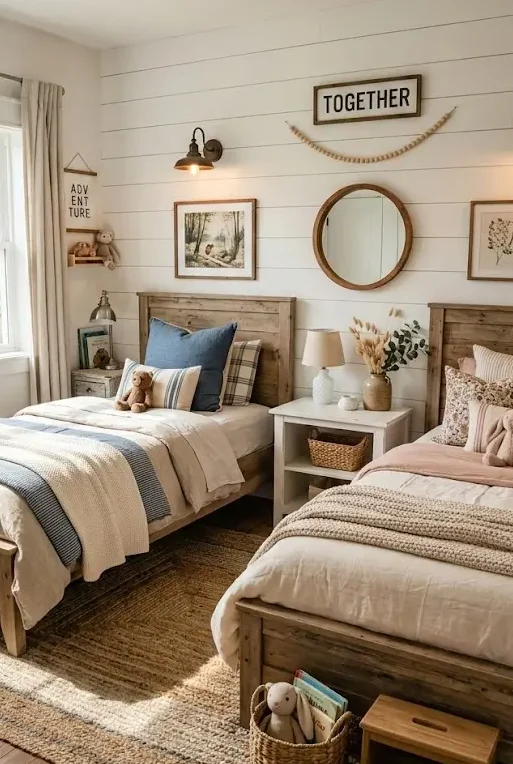
Modern farmhouse style brings cozy rustic charm with contemporary functionality – perfect for creating a shared bedroom that feels both timeless and current. It’s like designing a room that could work in a Pinterest-worthy farmhouse or a modern suburban home.
Shiplap walls are basically farmhouse magic, but you don’t need to install real wood planks. Removable wallpaper or even painted faux shiplap can give you that authentic look without the renovation headaches.
Natural wood furniture with clean lines captures the modern farmhouse aesthetic perfectly. Think white or natural wood beds with simple headboards, matching dressers, and rustic-looking storage solutions.
The color palette should feel warm and inviting – whites, creams, soft grays, and natural wood tones create that farmhouse foundation. Add personality through accessories in muted pastels or classic barn red accents.
Vintage or vintage-inspired accessories complete the look. Mason jar lighting, galvanized metal storage bins, and cozy plaid or gingham textiles bring that authentic farmhouse feeling to the space.
I love how modern farmhouse style naturally incorporates practical storage solutions – think ladder-style bookshelves, vintage trunks, and wire baskets that look beautiful while keeping clutter contained.
Making It All Work Together
Creating the perfect shared bedroom isn’t about finding one magical solution – it’s about understanding your specific family’s needs and choosing elements that work together harmoniously. Each of these 15 styles offers something different, and honestly? Most successful shared bedrooms blend elements from multiple approaches.
The secret sauce is involving your kids in the decision-making process without letting them drive the entire design. Give them choices within parameters you can live with – “Would you prefer the blue or green accent wall?” rather than “What do you want your room to look like?”
Remember that shared bedrooms teach incredible life skills. Your kids are learning compromise, respect for others’ belongings, and how to coexist peacefully in a space that belongs to both of them. These are lessons that’ll serve them well long after they move into their own homes.
Most importantly, don’t stress about creating perfection. The best shared bedrooms evolve over time as your children grow and their needs change. Start with good bones – quality furniture, good storage, and a flexible color palette – and let the personality develop naturally.