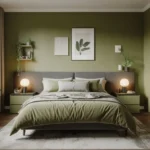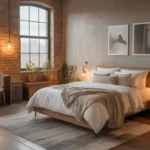


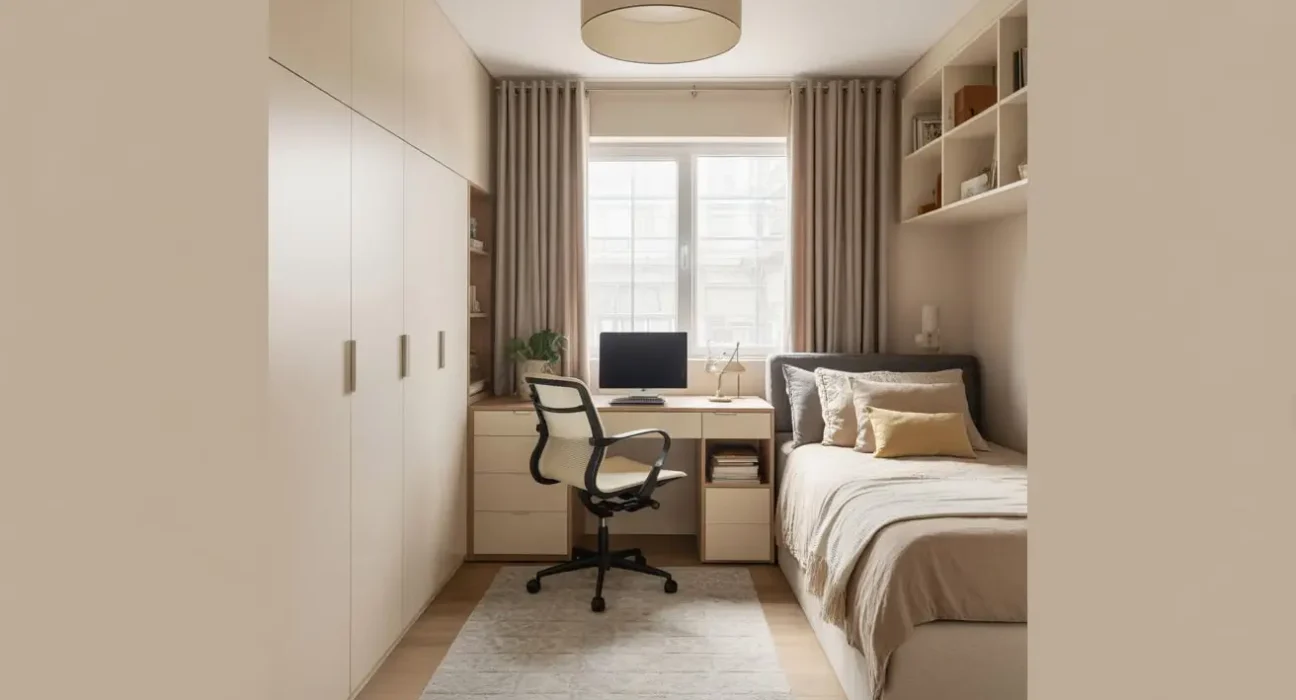
Let’s be real for a second. Living in a shoebox isn’t exactly the dream, is it? You walk into your bedroom, trip over a sneaker, bump your hip on the dresser, and immediately want to scream. I’ve been there. My first apartment bedroom was basically a glorified closet with a window. But here is the thing: a small footprint doesn’t doom you to a cramped existence. You just have to outsmart the square footage.
We often think we need a contractor and a sledgehammer to fix space issues. You don’t. You need strategy. By tweaking your layout, fooling the eye with lighting, and utilizing furniture that works harder than you do on a Monday morning, you can transform that tiny cell into a sanctuary. I’m going to walk you through 15 amazing bedroom ideas for small rooms to feel spacious. We’ll cover everything from defying gravity with loft beds to the magic of mirrors. Grab a coffee, and let’s fix your room.
Space-Saving Loft Bed Designs
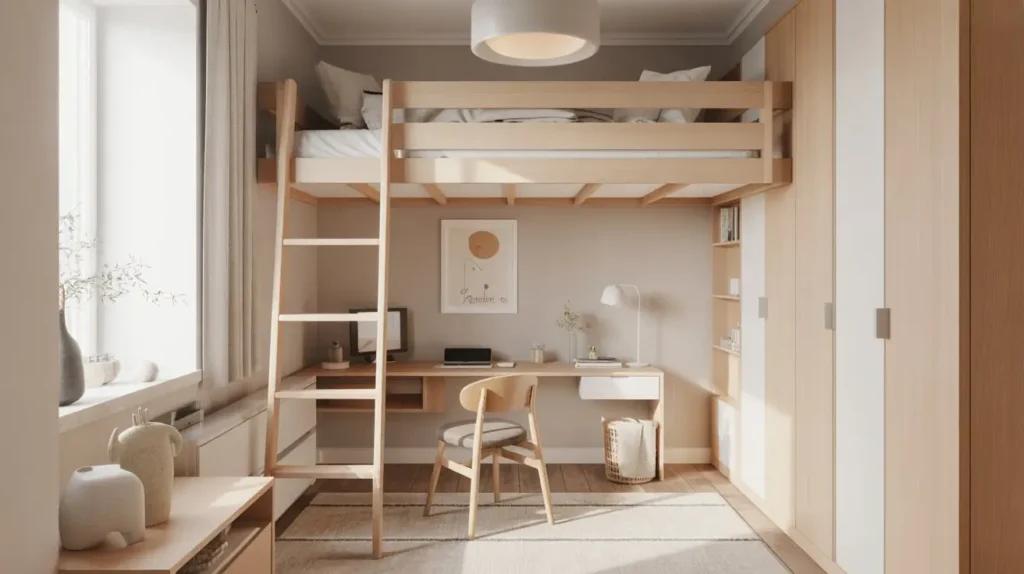
Why let your bed hog all the precious floor space? In a tiny room, the floor is prime real estate, and your mattress is the greedy landlord occupying 80% of it. Loft beds solve this problem instantly. By raising your sleeping area, you reclaim the entire footprint underneath for something else.
Now, get the image of a creaky college dorm bed out of your head. Modern adult loft beds look sleek, stylish, and incredibly sturdy. I once built a custom loft setup in a studio, and it changed my life. Suddenly, I had a bedroom and a living room in the same 10×10 space.
Here is how you make this work:
- Create a Work Zone: Place your desk and computer setup directly under the loft. You create a focused “office” that feels separate from your sleep area.
- Build a Lounge: Throw a loveseat or some bean bags underneath. It becomes a cozy den for reading or gaming.
- Install a Closet: If your room lacks closet space, use the area under the loft to hang clothes racks and install drawers.
Do you see the potential here? You literally double your usable space. Just make sure you measure your ceiling height first. You don’t want to wake up and concuss yourself on the drywall. That’s a rough way to start the day :/
Minimalist Small Bedroom Layouts

Clutter creates anxiety. In a small room, clutter also physically shrinks the walls. Adopting a minimalist layout doesn’t mean you have to live with a single mattress on the floor and one sad plant. It means prioritizing flow.
You need to ruthlessly edit your furniture. Ask yourself: Do I actually use this giant armchair, or is it just a laundry catcher? If it’s the latter, get rid of it. IMO, you should keep only the essentials visible. Push your bed against a wall or into a corner. While design purists scream about symmetry and walking space on both sides of the bed, you don’t have that luxury. Cornering the bed opens up a massive chunk of central floor space.
Key principles for a minimalist layout:
- Low Profiles: Choose furniture that sits lower to the ground. Low-profile beds and nightstands make the ceilings feel higher.
- Leggy Furniture: Pick pieces with exposed legs rather than solid blocks that sit on the floor. Seeing the floor continue under the furniture tricks your brain into thinking the room is bigger.
- Clear Pathways: Ensure you can walk from the door to the bed without shimmying sideways.
Creative Under-Bed Storage Solutions
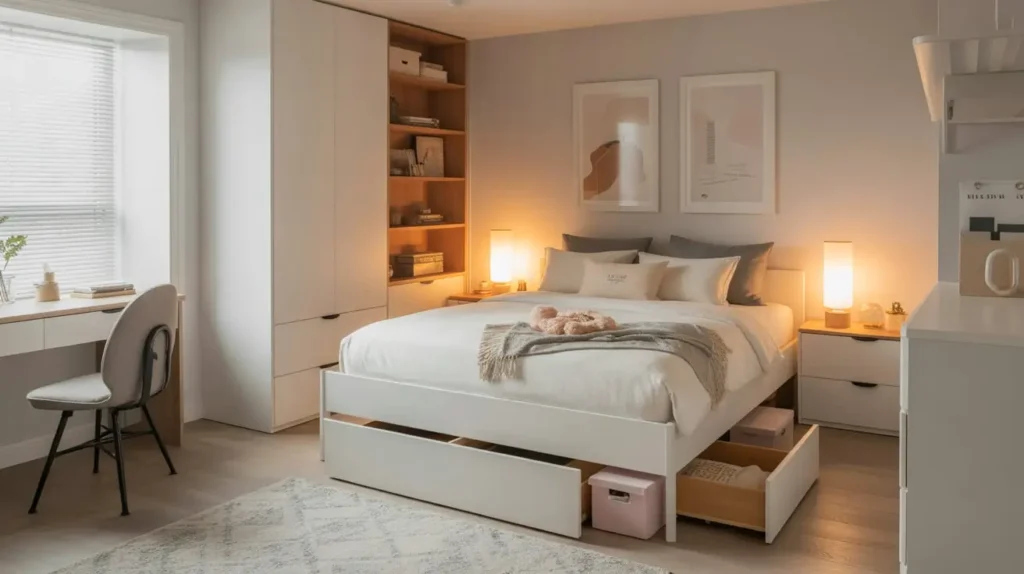
If you aren’t using the space under your bed, you are wasting the biggest storage locker in your house. The monsters don’t need that space; your winter coats do. Under-bed storage keeps the visual clutter out of your line of sight.
I rely heavily on rolling bins. You can buy plastic ones, but I prefer wooden drawers on casters because they look like intentional furniture. You slide them out, grab your sweater, and kick them back in. It’s effortless.
Consider these options:
- Vacuum Seal Bags: These are magic. You can shrink a mountain of duvets into a flat pancake. Slide these into shallow bins under the bed frame.
- Bed Risers: If your bed frame sits too low, buy a set of sturdy risers. Adding just three or four inches of height creates a massive amount of cubic storage space.
- Hydraulic Bed Frames: These lift up like a car hood. You get access to the entire footprint of the mattress for storage. It’s perfect for bulky items like suitcases or camping gear.
Compact Wardrobe and Closet Ideas
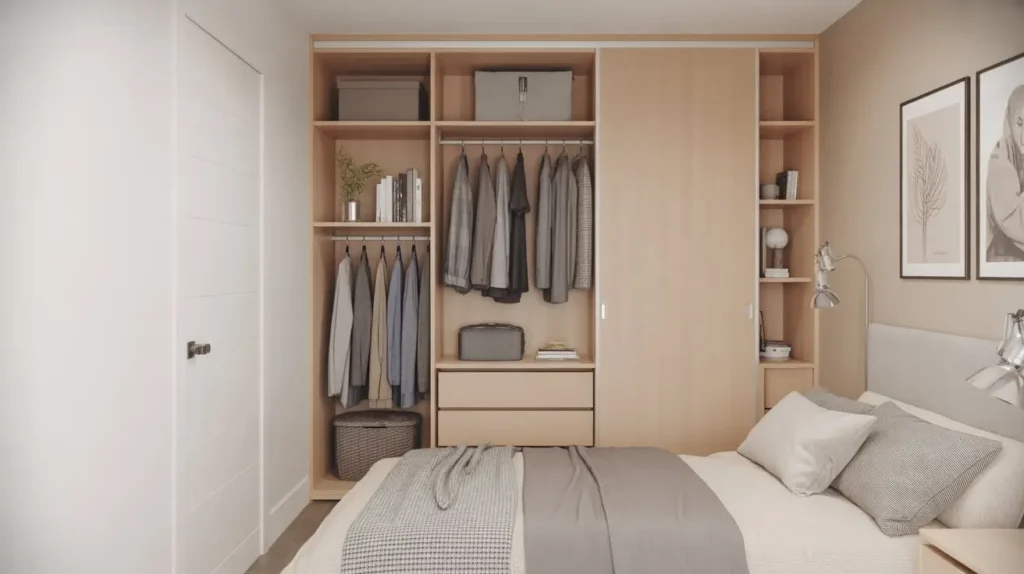
Most small bedrooms suffer from “tiny closet syndrome.” Sometimes, you don’t even get a closet. So, what do you do? You improvise. A bulky armoire will kill your room’s vibe. It takes up too much visual weight. Instead, look for open wardrobe systems or slim-profile closets.
I love the look of an exposed garment rack, provided you keep it tidy. It turns your clothes into part of the decor. However, if you possess a chaotic wardrobe, hide it. A messy exposed rack just makes the room look smaller.
Try these compact solutions:
- Corner Wardrobes: Corners often sit empty. A tall, thin corner cabinet swallows a surprising amount of stuff without encroaching on the main floor area.
- Curtain Partitions: Install a ceiling track and hang a curtain across a nook. Behind it, install shelves and rods. It’s a closet when you need it and a soft wall when you don’t.
- Double Rails: If you have a standard closet, double the hanging space. Install a second rail halfway down for pants and skirts. You just doubled your capacity without knocking down a wall.
Small Bedroom Color Schemes to Brighten Space

You will hear people say, “Paint it white, it makes it look bigger.” While true, it’s also a bit boring, isn’t it? Color theory plays a massive role in spatial perception. You want light to bounce, not get absorbed.
Light, cool colors recede, meaning they make walls feel further away. Think soft grays, icy blues, or sage greens. These hues create a serene, expansive feeling. If you love dark colors, don’t panic. You can still use them, but you need a strategy.
Color tricks to fool the eye:
- Monochromatic Schemes: Paint your walls, trim, and even the ceiling the same color. This blurs the boundaries of the room. Your eye doesn’t stop at the edges, making the space feel infinite.
- The Accent Wall: If you want a dark, moody color (like navy or charcoal), put it on the wall behind the bed. Keep the other walls light. This adds depth without closing the room in.
- Bright Ceilings: Keep the ceiling lighter than the walls. It draws the eye upward and creates a sense of airiness.
Multifunctional Furniture for Tiny Bedrooms
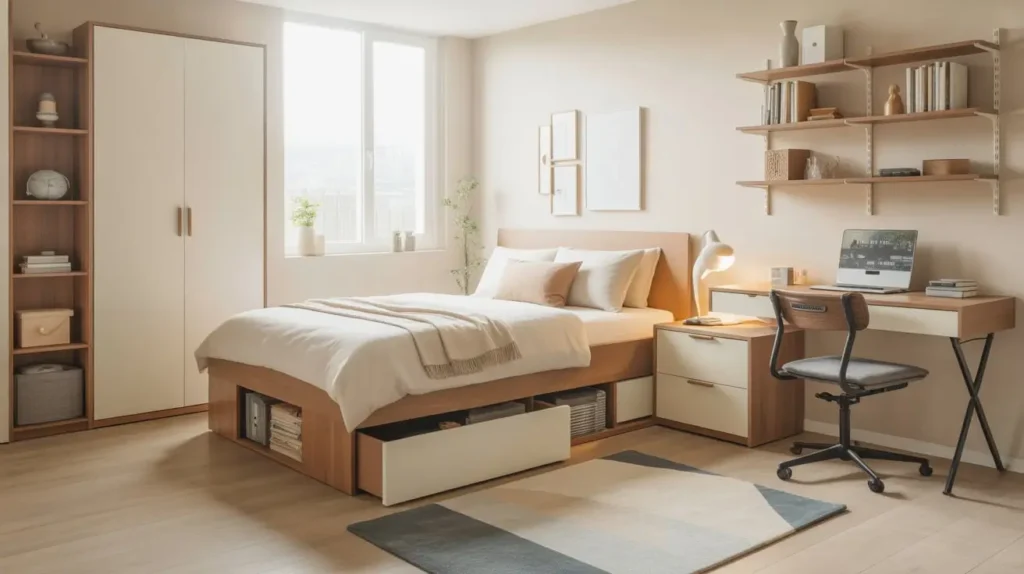
In a small room, every piece of furniture must earn its keep. Single-purpose furniture is a luxury for people with guest wings. You need Transformers. I’m talking about pieces that shift, fold, and hide.
The classic example is the Murphy bed. During the day, it’s a wall or a desk. At night, it’s a bed. While expensive, they are the ultimate space saver. But you don’t have to go that extreme.
Look for these dual-purpose heroes:
- Storage Ottomans: It’s a seat. It’s a footrest. It’s a place to hide your extra linens.
- Vanity Desks: A slim desk can serve as both a workspace and a makeup vanity. Just hang a mirror above it.
- Headboard Storage: Buy a bed frame with a headboard that has built-in shelves or a pull-out compartment. You instantly eliminate the need for nightstands.
Wall-Mounted Shelves for Maximum Storage
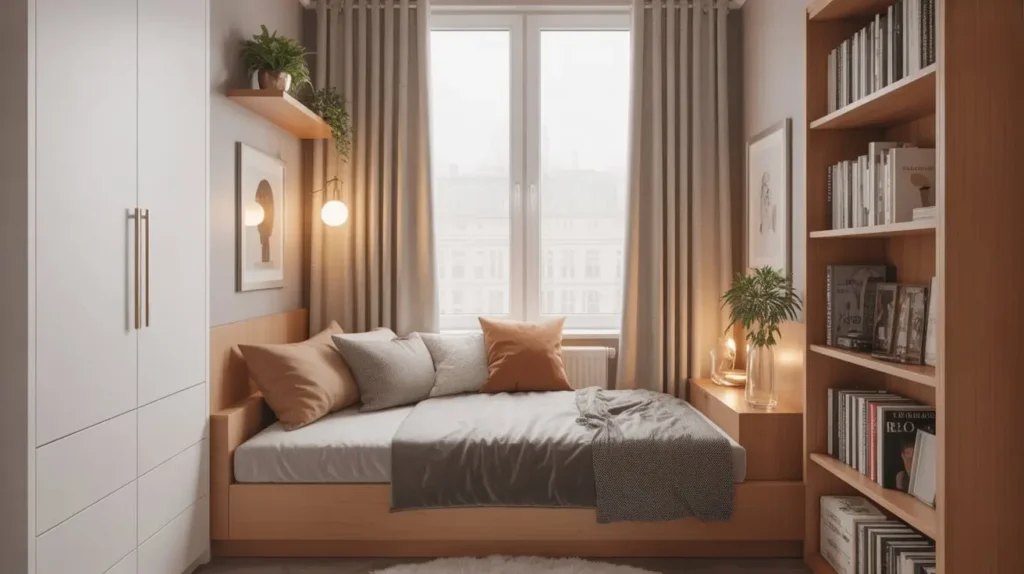
Floor space is limited. Wall space is plentiful. Start thinking vertically. Floating shelves are your best friends in a tight bedroom. They provide storage without the visual bulk of a bookcase.
When I redesigned a tiny guest room, I installed shelves running the entire perimeter of the room, about 12 inches from the ceiling. It created a “library halo.” I stored books, decorative boxes, and plants up there. It drew the eye up and kept the floor completely clear.
Installation tips for maximum impact:
- Above the Door: This is dead space. Put a shelf there for items you don’t need daily, like seasonal hats or archived paperwork.
- Corner Shelves: Use floating corner shelves to turn an awkward angle into a display area.
- Vertical Stacks: Stack small shelves vertically next to your bed. This replaces a nightstand and takes up zero floor inches.
Cozy Nooks in Small Bedrooms

This sounds counterintuitive, right? Why chop up a small room into smaller sections? Because defining spaces distracts from the size. If you just have a bed in the middle of a room, it looks like a room that only fits a bed. If you carve out a tiny reading nook, the room suddenly feels like a suite.
You don’t need much. A small armchair in the corner, a floor lamp, and a tiny side table create a destination. It tells the brain, “Look, this room is so big it has a lounge area!”
How to create a nook without crowding:
- Window Seats: If you have a window, place a bench or a sturdy storage chest under it. Throw some pillows on top. Now you have a dreamy spot to drink coffee.
- Floor Cushions: If a chair is too bulky, keep a large, high-quality floor cushion in the corner. It serves as seating but keeps the visual line low.
- Canopy Corners: Hang a sheer canopy in a corner with a pile of pillows. It creates a distinct “zone” without building walls.
Mirrors and Lighting Tricks to Open Small Rooms
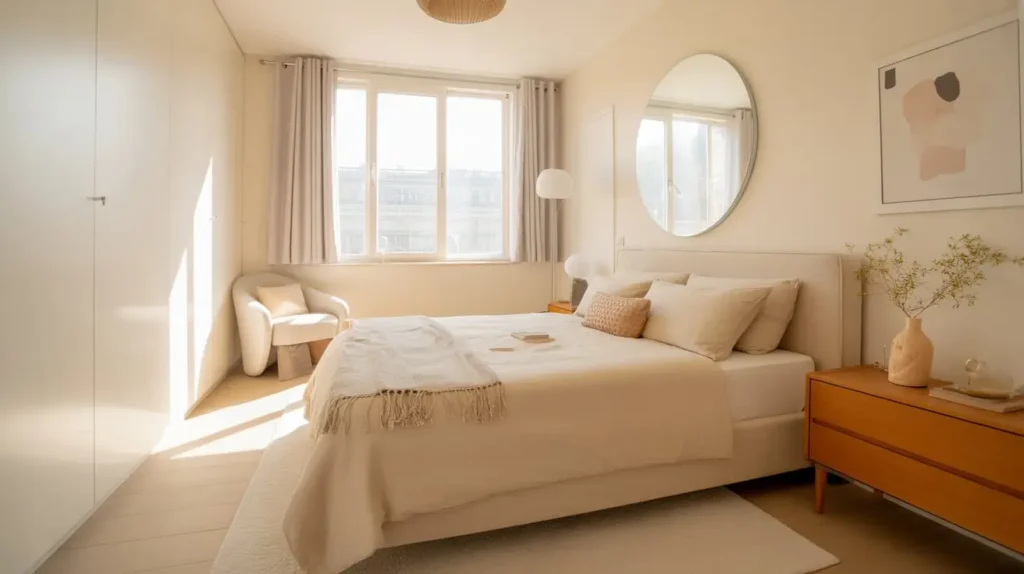
Mirrors are the oldest trick in the designer handbook for a reason. They bounce light and double the visual space. A well-placed mirror acts like a fake window. It breaks up the wall and tricks your brain into thinking the room extends further than it does.
Lighting is equally critical. A single overhead “boob light” casts harsh shadows and makes the corners of the room disappear into darkness, shrinking the space. You want layered lighting.
Combine these for the best effect:
- The Opposite Wall Strategy: Place a large mirror directly opposite your window. It reflects the outdoors and natural light, brightening the entire room.
- Full-Length Leaners: A tall mirror leaning against the wall draws the eye upward to the ceiling.
- Wall Sconces: Ditch the table lamps that clutter your nightstand. Install wall sconces. They provide excellent light and look high-end.
- Backlighting: Put LED strips behind your headboard or under shelves. This adds depth and drama, pushing the walls back visually.
Stylish Small Bedroom Decor on a Budget

You might think you need custom built-ins to save space, but you can achieve a spacious feel on a shoestring budget. It’s about curation, not consumption. A few well-chosen pieces make a stronger statement than a room full of cheap clutter.
Thrift stores and DIY are your allies here. I once painted an old, ugly laminate dresser a high-gloss white and changed the knobs to gold. It reflected light beautifully and cost me about twenty bucks.
Budget-friendly decor moves:
- Large Art: Instead of a gallery wall of 20 tiny frames (which can look cluttered), hang one massive piece of art or a tapestry. It creates a focal point and anchors the room.
- Light Curtains: Hang sheer, white curtains. They let light in while providing privacy. Hang the rod as high as possible—right up to the ceiling—to make the room feel taller.
- Rug Placement: Buy a large rug. A tiny postage-stamp rug floating in the middle of the floor makes the room look disjointed. A rug that sits under the bed and extends out ties the room together.
Sliding Door Ideas for Tiny Spaces
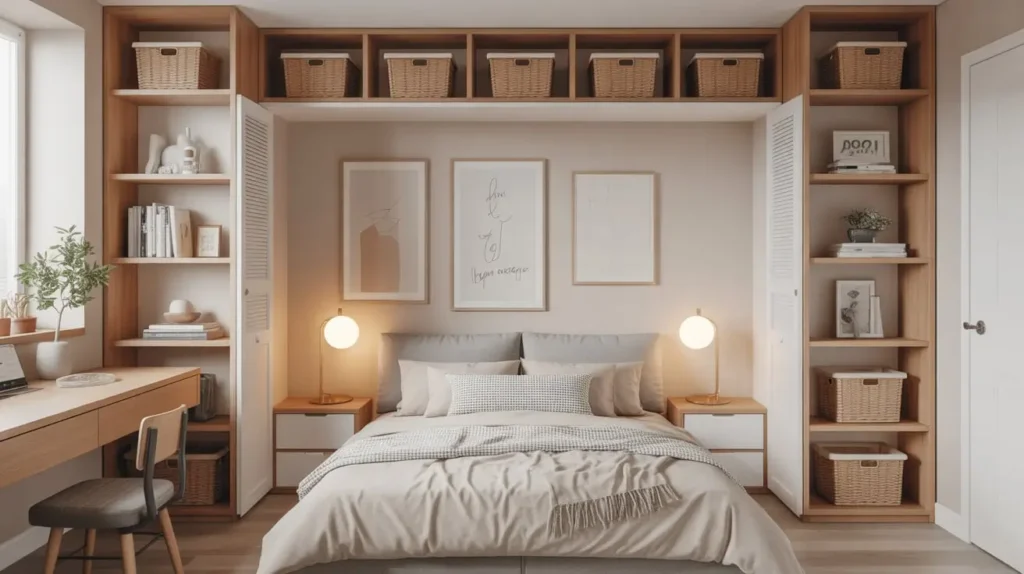
Doors are annoying. Standard swinging doors require a “swing radius”—a chunk of floor space that must remain empty so the door can open. In a tiny bedroom, that swing radius is wasted space.
Replace your standard closet doors or even your bedroom door with sliding options. Barn doors are trendy, but if that rustic look isn’t your vibe, sleek modern tracks work just as well.
Why this changes the game:
- Furniture Placement: With a sliding door, you can place a dresser or nightstand right next to the door frame. You couldn’t do that with a swinging door.
- Pocket Doors: If you are doing a renovation, install a pocket door that disappears into the wall. It is the ultimate space saver.
- Mirrored Sliders: Kill two birds with one stone. Install mirrored sliding doors on your closet. You get the space-saving benefit and the room-expanding reflection.
Vertical Storage Hacks for Bedrooms

We talked about shelves, but let’s get more aggressive with vertical storage. You have walls; make them work. Pegboards, grids, and hanging organizers allow you to store odd-shaped items without needing a drawer.
I use a pegboard near my desk area. It holds headphones, cables, scissors, and even small baskets for keys. It keeps the desk surface clear, which is crucial for maintaining a sense of space.
Get vertical with these hacks:
- Over-the-Door Organizers: These have come a long way from cheap plastic shoe holders. You can find stylish fabric or metal ones. Use them for shoes, accessories, or even toiletries.
- Hook Rails: Install a rail of hooks for coats, bags, and hats. This keeps them off the floor and the bed.
- Ladder Shelves: These lean against the wall and get narrower at the top. They provide deep storage at the bottom but don’t feel “heavy” visually near the ceiling.
Foldable Furniture for Space Optimization
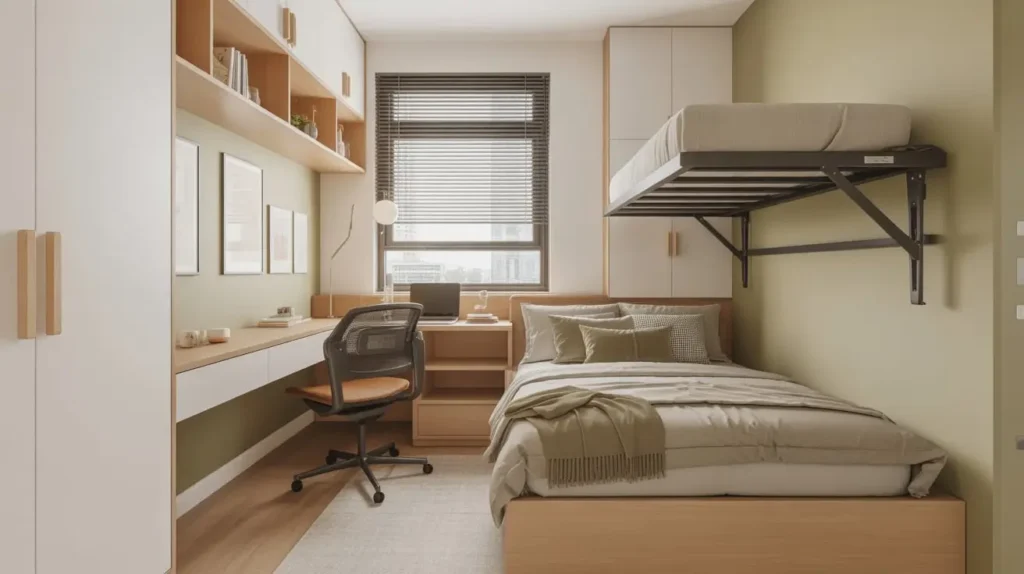
Sometimes, you need a piece of furniture for only one hour a day. Why let it take up space for the other twenty-three? Foldable furniture gives you function on demand.
This is especially true for desks and chairs in a bedroom. If you work from your bedroom, you don’t want to stare at your office when you’re trying to sleep.
Foldable favorites:
- Wall-Mounted Drop Desks: These look like a shallow cabinet on the wall. Unlatch it, and the front drops down to become a desk surface. When you finish, fold it up. Your office disappears.
- Folding Chairs: Keep a slim, stylish folding chair hung on a hook behind the door or slid under the bed. Pull it out only when you need it.
- Nesting Tables: These are small side tables that stack inside one another. Spread them out when you have guests or need extra surface area, and stack them up to save space later.
Small Bedroom Plant and Greenery Ideas
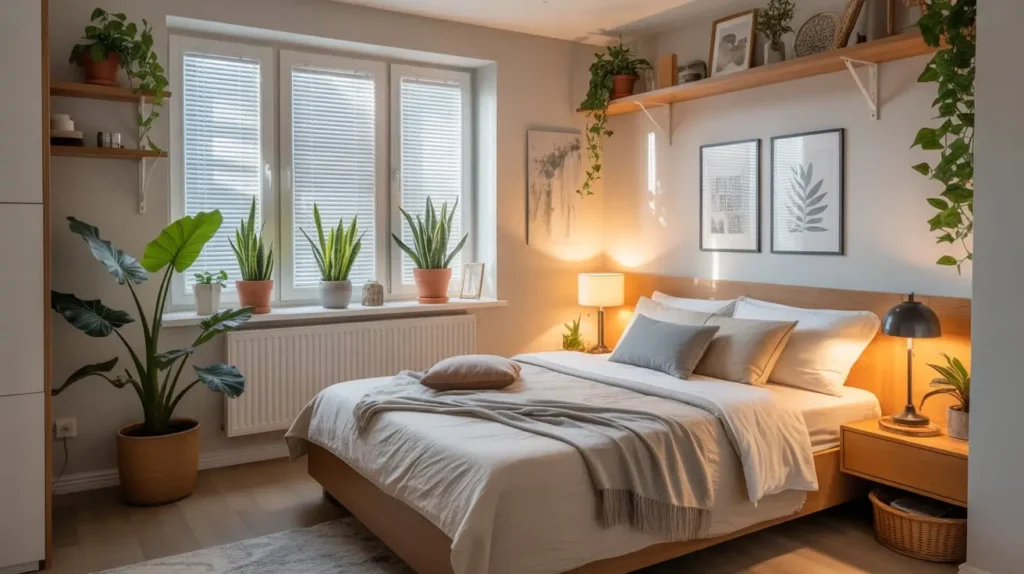
You might think plants take up space you don’t have. But plants add life and depth. A room without organic elements feels sterile and boxy. The trick is choosing the right plants and placing them strategically so they don’t eat your floor space.
Plants also improve air quality, which helps when you are sleeping in a small, enclosed area. Plus, looking at greenery reduces stress. Who doesn’t need that?
Greenery strategies for small rooms:
- Hanging Planters: Hang a pothos or ivy from the ceiling or a high shelf. The vines draw the eye upward and add texture without touching the ground.
- Wall Planters: Mount small pots directly onto the wall. You create a “living wall” that acts as art.
- The Snake Plant: If you have a narrow corner, put a snake plant there. They grow straight up, not out, so they have a tiny footprint. Plus, they are almost impossible to kill. FYI, I once forgot to water mine for a month, and it thrived.
Smart Desk and Workstation Ideas for Small Rooms
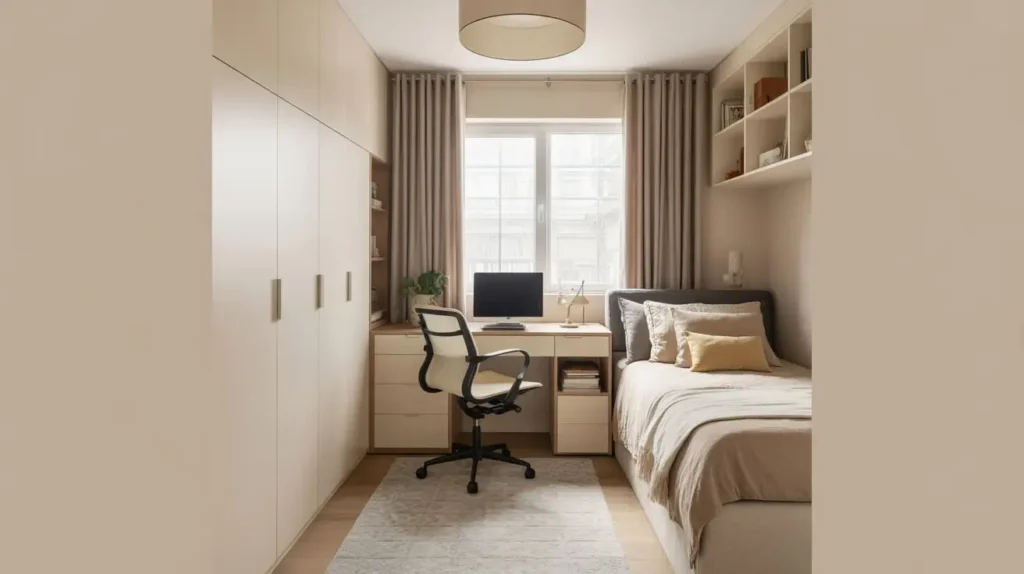
Working from your bedroom is a reality for many of us. The challenge is keeping the “work” from taking over the “rest.” You need a smart workstation that blends in.
Avoid bulky executive desks. They dominate the room. You want sleek, airy, or hidden solutions. The goal is to have a functional workspace that doesn’t scream “office” at 10 PM.
Smart desk solutions:
- The Cloffice: If you have a closet, convert it into an office. Take the doors off (or leave them on to hide the mess), install a deep shelf as a desk, and add overhead lighting.
- Floating Desks: Mount a desktop directly to the wall with brackets. No legs mean more legroom and a cleaner look.
- Window Desks: If you have a deep windowsill, extend it to create a desk. You get natural light, and you aren’t using up a blank wall that could be used for furniture.
Conclusion
So, there you have it. Having a small bedroom doesn’t mean you have to sacrifice style or sanity. It just forces you to be a little more clever than the average homeowner. By utilizing vertical space, fooling the eye with light and mirrors, and choosing furniture that pulls double duty, you can create a room that feels spacious and functions perfectly.
Remember, the best bedroom is one that makes you feel relaxed the moment you walk in, regardless of the square footage. Don’t be afraid to experiment. Move things around. Try that bold paint color. It’s your space—own it. Now, go declutter that under-bed mess. You’ll thank me later! 🙂