

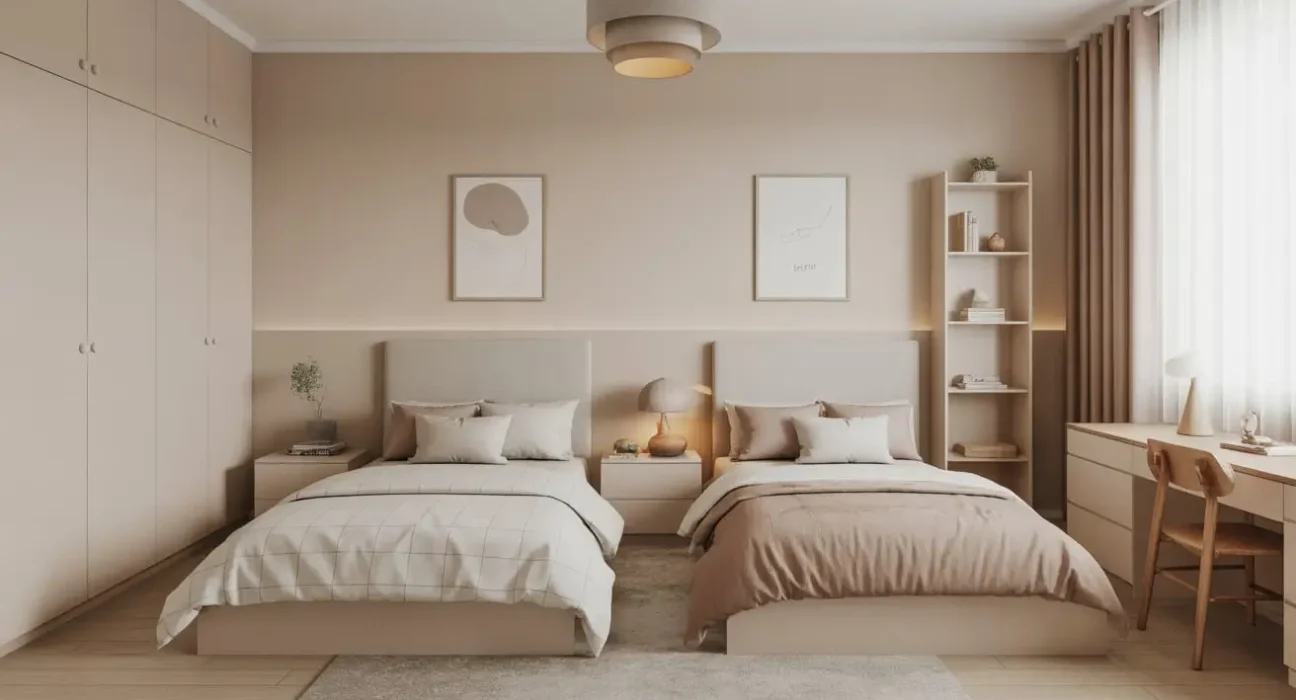
So, you’ve got a boy and a girl sharing a bedroom, and you’re wondering how on earth you’re going to make it work without World War III breaking out over princess posters versus superhero wallpaper? Trust me, I’ve been there. When my niece and nephew had to share a room after their family moved to a smaller house, the design challenges seemed endless. But here’s the thing—shared bedrooms for mixed-gender siblings can actually look amazing and function even better when you approach them with creativity and a solid plan.
Gone are the days when you had to paint one side pink and the other blue and call it a day. Today, we have so many brilliant options that make boy girl shared bedroom designs not just tolerable, but genuinely stylish. Whether you’re working with a tiny apartment bedroom or a slightly more generous space, these 15 creative ideas will help you transform that shared room into a functional, beautiful haven that both kids will love.
Let’s get into it, shall we?
1. Gender-Neutral Bunk Bed Layouts
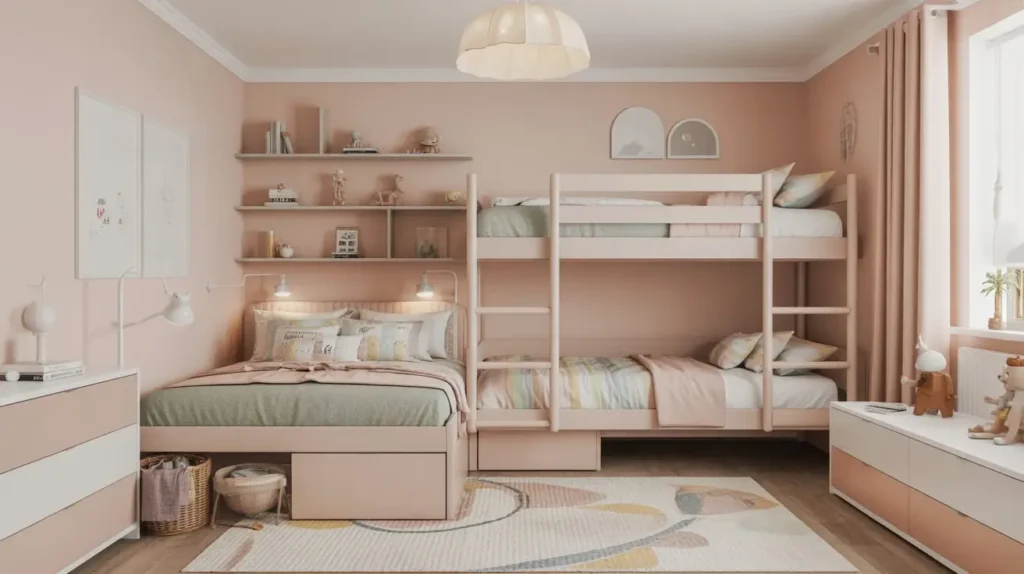
Bunk beds are basically the bread and butter of shared bedroom solutions, but when you’re designing for both a boy and a girl, the layout matters more than you might think. The key here is choosing gender-neutral bunk bed designs that don’t scream “this is clearly for one gender.”
Think natural wood finishes, sleek white frames, or even industrial-style metal bunks. These options create a blank canvas that works beautifully for any child. I personally love the house-shaped bunk beds that have become super popular—they feel whimsical without leaning too heavily into any particular aesthetic.
Making It Fair
Here’s a pro tip from someone who has witnessed many sibling arguments: let each child personalize their own bunk level. Give the top bunk kid their own string lights and wall decals, while the bottom bunk kid gets their own curtain setup or reading lamp. This way, both children feel ownership over their space without the overall design looking chaotic.
Consider these bunk bed layout options:
- L-shaped bunks: Perfect for corner placement and creates extra floor space
- Perpendicular arrangements: Offers more privacy for each child
- Triple bunks with storage: Ideal if you need extra sleeping space for sleepovers
- Low-profile bunks: Great for younger kids who aren’t ready for climbing heights
The beauty of a well-planned bunk bed layout is that it opens up valuable floor space for play areas, desks, or storage—all of which you’ll desperately need in a shared room.
2. Creative Room Dividers for Shared Spaces

Want to give each child their own territory without building an actual wall? Room dividers are your secret weapon for creating distinct zones in a shared bedroom. And no, I’m not talking about those sad accordion-style folding screens from the 1980s.
Modern room dividers come in so many creative forms. Curtain dividers hung from ceiling tracks look sophisticated and can be pulled back during playtime. Bookshelf dividers serve double duty as storage and separation. Even tall headboards placed strategically can create visual boundaries between sleeping areas.
Types of Dividers That Actually Work
I’ve experimented with several options, and here’s what delivers the best results:
- Curtain panels: Affordable, easy to install, and available in countless colors
- Open-back shelving units: Maintains light flow while creating separation
- Hanging beaded curtains: Fun, bohemian vibe that kids love
- Folding screens with chalkboard surfaces: Functional and creative
- Tall plants or plant walls: Brings nature indoors while dividing space
The trick is choosing dividers that don’t completely block light from windows. You want separation, not a dungeon atmosphere. Sheer fabrics or open shelving keep the room feeling airy while still giving each child their designated territory.
3. Twin Study Corners in One Room
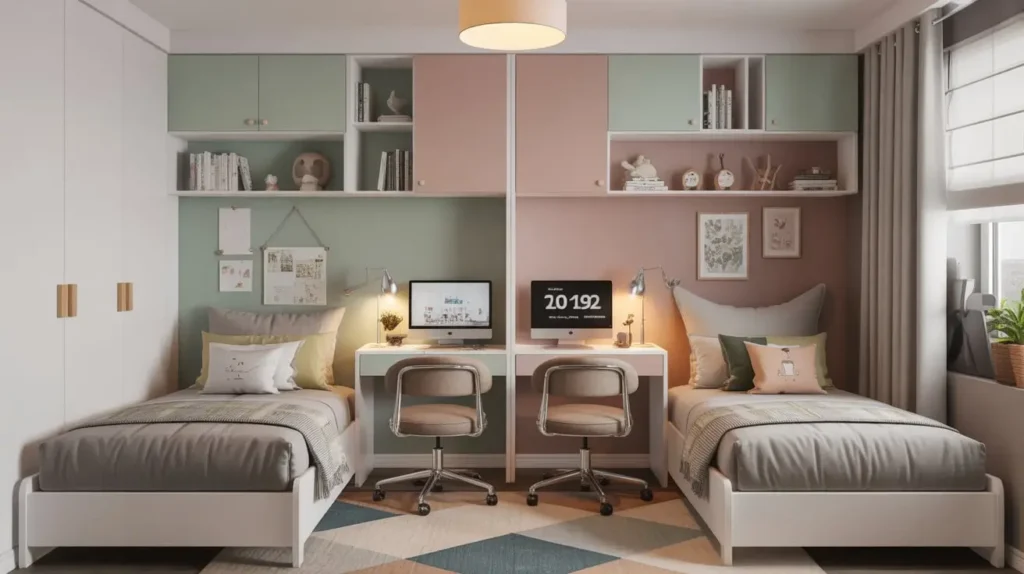
Homework time in a shared bedroom can either be productive or pure chaos—there’s really no in-between. Setting up dedicated study corners for each child eliminates the “they’re looking at my paper!” drama and helps both kids focus on their work.
The most effective approach involves creating mirror-image study setups. Position two identical desks facing opposite walls, or place them back-to-back in the center of the room if you have space. This arrangement minimizes distractions and gives each child their own academic zone.
Essential Elements for Study Corners
When designing twin study corners, make sure each workspace includes:
- Individual task lighting: Adjustable desk lamps prevent eye strain
- Personal bulletin boards: For displaying schedules, art, and reminders
- Adequate desk storage: Drawers or desktop organizers keep supplies tidy
- Comfortable seating: Ergonomic chairs make long homework sessions bearable
- Power access: Outlets or power strips for laptops and devices
Here’s something I learned the hard way: label everything. When two kids share study supplies, things go missing faster than socks in a dryer. Giving each child their own labeled pencil holder and supply drawer prevents a lot of arguments.
4. Under-Bed Storage Solutions for Two Kids

Floor space becomes premium real estate when two children share a bedroom, so you absolutely must maximize the storage potential under both beds. This often-overlooked area can hold an impressive amount of stuff when you approach it strategically.
Rolling bins and drawers work beautifully for everyday items like toys, books, and extra bedding. Vacuum-sealed bags are perfect for storing out-of-season clothing without taking up much vertical space. And if you’re investing in new beds, consider frames specifically designed with built-in drawers—they look polished and hide clutter like a dream.
Storage Ideas by Category
Organize under-bed storage by assigning specific purposes:
- Child 1’s rolling toy bins: Easy access for daily playthings
- Child 2’s matching bins: Mirror setup for fairness
- Shared seasonal storage: Holiday decorations, winter gear
- Extra bedding containers: Spare sheets, pillows, and blankets
- Book storage trays: Overflow from bookshelves
IMO, the best under-bed storage systems use clear containers with labels. Kids can actually see what’s inside without dumping everything on the floor during their search for that one specific toy. Trust me, your future self will thank you for this organizational approach.
5. Color Palette Ideas for Boys & Girls
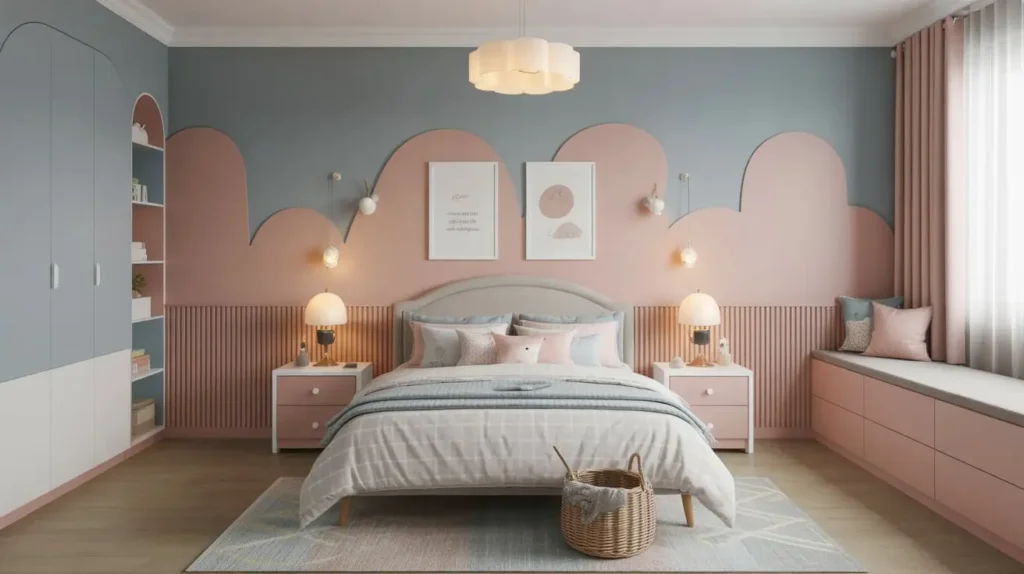
Forget the outdated pink-versus-blue debate. The most successful shared bedroom color schemes embrace gender-neutral palettes that appeal to everyone while still feeling warm and inviting. This doesn’t mean your only option is beige—far from it!
Think about colors like sage green, sunny yellow, warm coral, cheerful orange, or calming teal. These shades work beautifully for any child and create a cohesive backdrop for personalized accents. You can let each child express their individual preferences through bedding, pillows, and accessories rather than painting competing colors on the walls.
Winning Color Combinations
Here are some palette ideas that have worked wonderfully in real shared bedrooms:
- White + mint green + natural wood: Fresh, clean, and universally appealing
- Gray + yellow + pops of teal: Modern and energetic
- Cream + terracotta + sage: Earthy and calming
- Navy + coral + white: Bold but balanced
- Lavender + soft green + cream: Gentle and soothing
The secret sauce? Choose a neutral base and add personality through accents. This approach means you won’t need to repaint when preferences change—and they will change approximately every six months during childhood. 🙂
6. Cozy Shared Reading Nooks
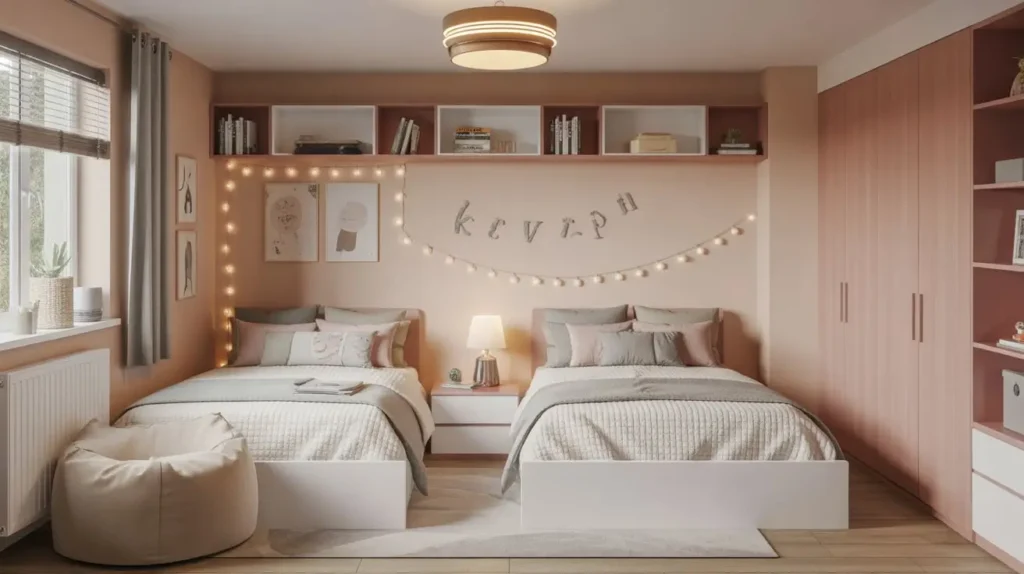
Every kid deserves a special spot to curl up with a good book, and you can absolutely create shared reading nooks that accommodate both children without feeling cramped. These cozy corners become beloved escapes and encourage independent reading habits.
Consider building a window seat with storage underneath that’s wide enough for two small readers. Alternatively, a corner canopy with oversized floor cushions creates an instant magical hideaway. The key is making the space feel special and distinct from the rest of the room.
Creating the Perfect Nook
Essential elements for a fantastic reading nook include:
- Comfortable seating: Bean bags, floor cushions, or built-in benches
- Good lighting: Reading lamps or string lights for ambiance
- Book storage nearby: Floating shelves or a small bookcase
- Soft textiles: Blankets and pillows for coziness
- Semi-enclosed feeling: Canopy, curtains, or positioned furniture
I’ve found that kids appreciate having their own designated seat within the shared nook. Even something as simple as different colored cushions helps each child claim their spot without conflict. Plus, it teaches sharing and respecting personal boundaries—bonus parenting win!
7. Personalized Wall Décor for Each Child
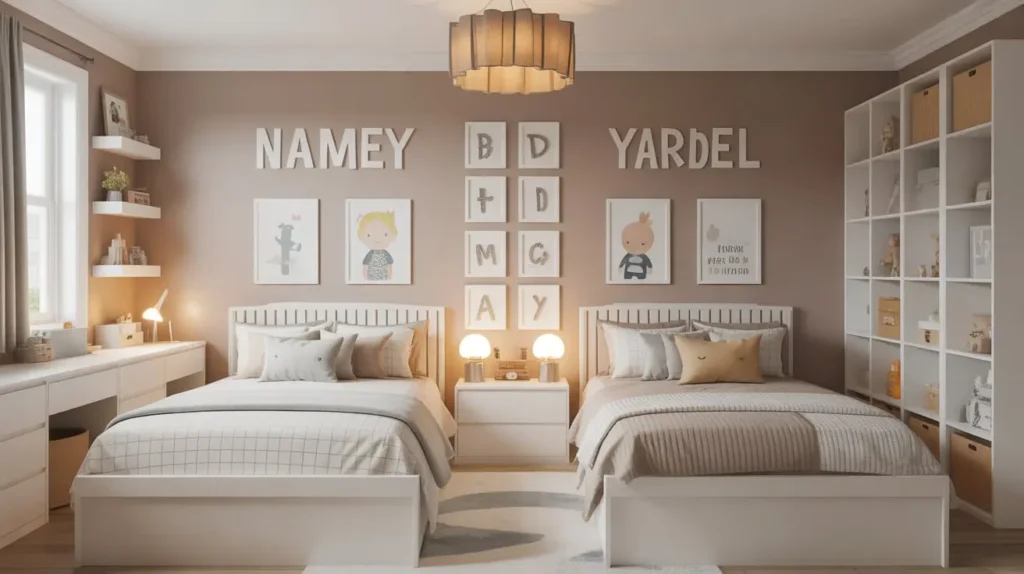
Here’s where you can really let each child’s personality shine. Personalized wall décor transforms a generic shared room into a space that reflects both occupants’ interests and tastes. The trick is maintaining visual harmony while celebrating individual differences.
Assign each child a specific wall or section above their bed for personal expression. One child might display sports posters and achievement ribbons, while the other showcases artwork and fairy lights. As long as you maintain some cohesive elements—like matching frames or a consistent color thread—the room will feel unified rather than fragmented.
Personalization Ideas That Work
Consider these options for individual expression:
- Name signs or monogram art: Available in countless styles and materials
- Gallery walls with personal photos: Each child curates their own collection
- Floating shelves for treasures: Display awards, collections, or keepsakes
- Custom decals or murals: Removable options allow for easy updates
- Pegboards with accessories: Functional and decorative
Pro tip: establish some ground rules about wall décor to prevent total chaos. Maybe each child gets three framed pieces and one fun element like a banner or lights. Boundaries actually help creativity flourish within a workable structure.
8. Multi-Functional Furniture for Small Rooms
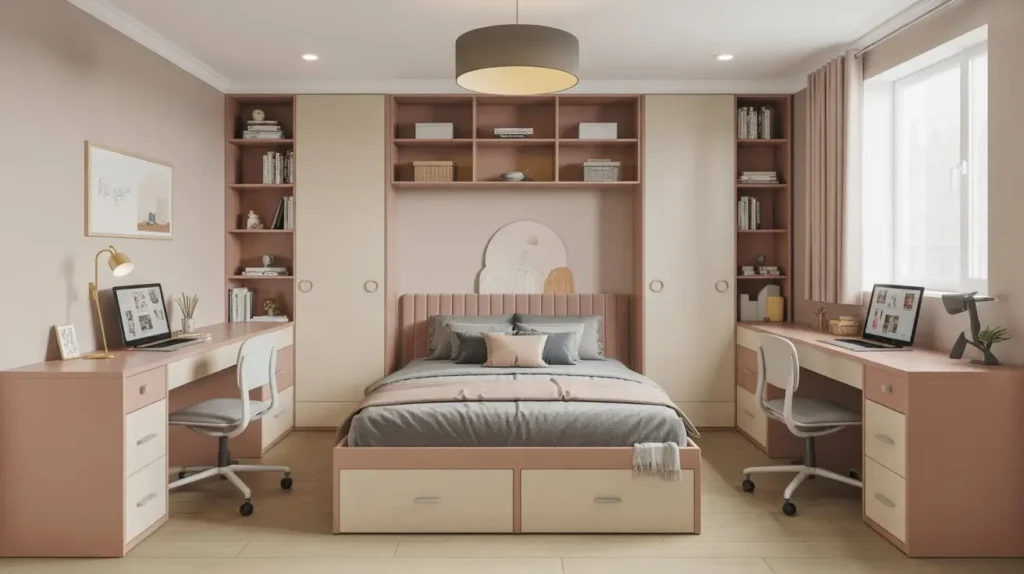
When square footage is limited, multi-functional furniture becomes absolutely essential for shared bedrooms. Every piece needs to earn its spot by serving more than one purpose. Fortunately, furniture designers have gotten incredibly creative with space-saving solutions.
Trundle beds provide guest sleeping without taking up permanent floor space. Desks that fold into the wall disappear when not in use. Storage ottomans serve as seating, footrests, and hidden toy bins simultaneously. These pieces might cost a bit more upfront, but they pay dividends in functionality.
Must-Have Multi-Functional Pieces
When furnishing a small shared bedroom, prioritize:
- Loft beds with desk or seating below: Vertical space utilization at its finest
- Storage benches: Seating plus hidden compartments
- Nesting tables: Multiple surfaces that stack when not needed
- Beds with built-in drawers: Eliminates need for separate dressers
- Convertible futons or daybeds: Transition from sofa to sleeping surface
FYI, measuring your space carefully before purchasing furniture prevents the heartbreak of discovering that amazing bunk bed won’t actually fit through your doorway. Ask me how I know.
9. Fun Themed Zones in One Bedroom
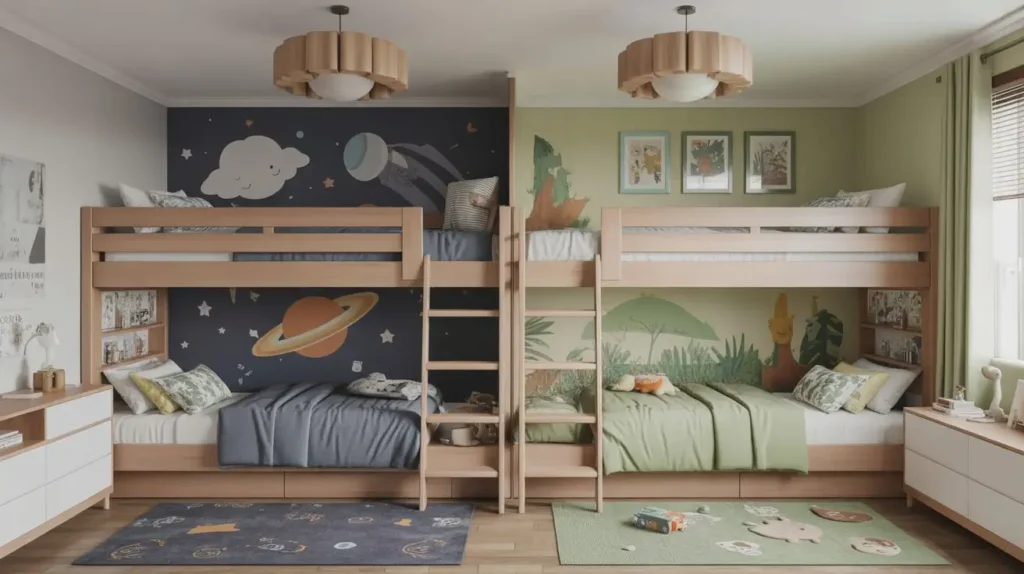
Who says shared bedrooms have to be boring? Creating themed zones within one room adds personality and excitement while clearly delineating different areas. The key is choosing themes that complement each other rather than clash dramatically.
Perhaps one corner becomes a reading forest with tree decals and green accents, while another area transforms into a creative art studio. You might designate a space-themed ceiling area or a sporty corner with a mini basketball hoop. Themes should enhance functionality, not just look cute.
Theme Zone Ideas
Consider these zone concepts for shared bedrooms:
- Adventure zone: Maps, globes, and explorer-inspired décor
- Creative corner: Chalkboard wall, art supplies, display space
- Cozy camping area: Indoor tent, lanterns, nature elements
- Music station: Instrument storage, music posters, listening nook
- Science space: Shelves for collections, experiment area
The beauty of themed zones is that they can reflect both children’s interests while maintaining visual cohesion through repeated colors or materials. Just avoid going overboard—you want defined zones, not an amusement park.
10. Space-Saving Wardrobe Hacks
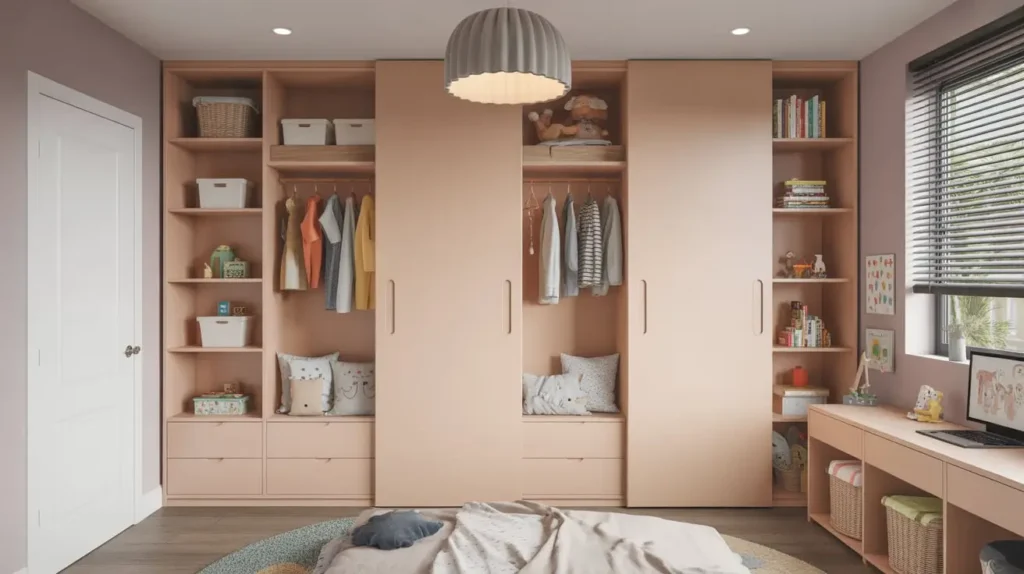
Clothing storage for two kids in one room requires serious strategic thinking. Space-saving wardrobe hacks can double or even triple your storage capacity without adding bulky furniture. These solutions keep clothes organized, accessible, and wrinkle-free.
Start by maximizing vertical closet space with double hanging rods—one at adult height and one lower for kid-friendly access. Add door-mounted organizers for shoes, accessories, or small items. Shelf dividers create designated sections for each child within shared closet areas.
Wardrobe Organization Strategies
Implement these hacks for maximum storage efficiency:
- Color-coded hangers: Blue for one child, pink for another (or any colors they choose)
- Drawer dividers: Keep folded items separated and organized
- Over-door shoe organizers: Holds more than just shoes—use for accessories, small toys
- Vacuum storage bags: Compress out-of-season items to fraction of size
- Rolling carts: Mobile storage that fits in closets or slides under beds
- Hooks at kid-height: Easy access for jackets, bags, and tomorrow’s outfit
The organizational hack that changed my life? Outfit planning stations. A simple set of hanging organizers labeled with days of the week eliminates morning wardrobe battles and teaches kids independence with dressing themselves.
11. DIY Shared Bedroom Organization Ideas
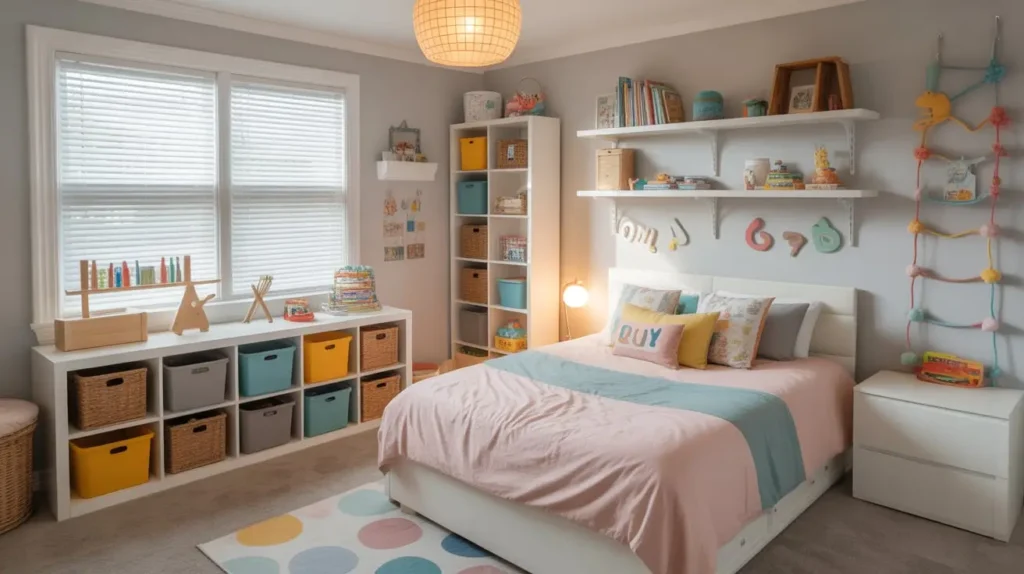
Sometimes the best solutions don’t come from expensive stores—they come from your own creativity. DIY organization projects let you customize storage solutions specifically for your space and your children’s needs while keeping costs reasonable.
Mason jar organizers mounted on boards hold art supplies, hair accessories, or small toys. Painted pegboards become customizable wall storage that adapts as needs change. Repurposed crates and boxes transform into stylish storage with just a little paint and imagination.
Easy DIY Projects
Try these accessible projects for better organization:
- Fabric bins from cardboard boxes: Cover in coordinating fabrics for custom storage
- PVC pipe shoe racks: Wall-mounted, colorful, and space-efficient
- Magnetic boards for small toys: Keeps items contained and visible
- Rope shelves: Simple, bohemian-style storage that’s easy to make
- Labeled chalkboard containers: Repaint old containers with chalkboard paint
Getting kids involved in DIY projects makes them more invested in keeping their space organized. When they helped create it, they feel ownership and responsibility. Plus, it makes for fun weekend family activities.
12. Loft Bed Ideas with Dual Desks
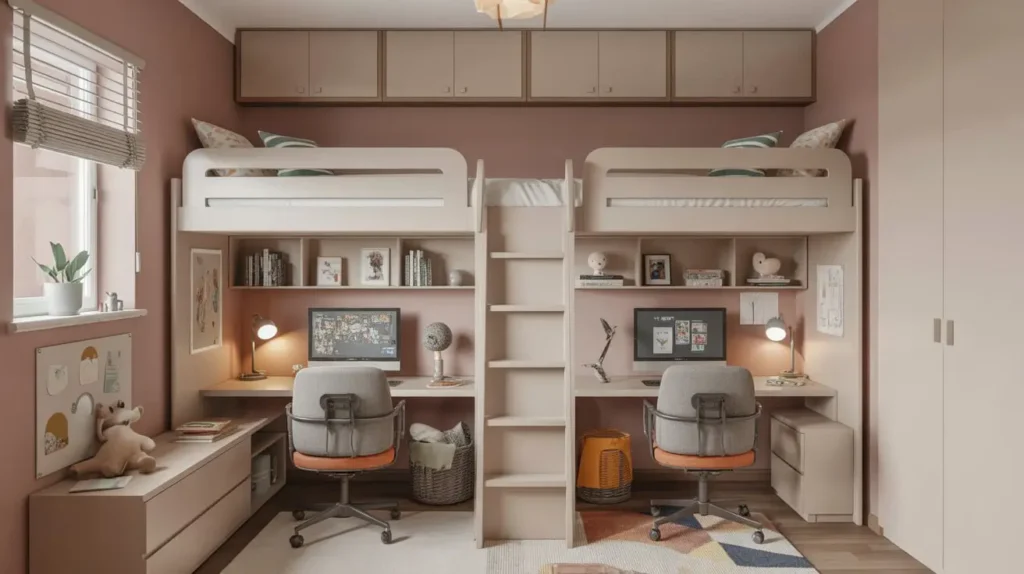
For older children who need serious study space, loft bed designs with dual desks underneath represent the ultimate space-saving solution. This configuration literally doubles your floor space by stacking sleeping and studying vertically.
Two single loft beds can face each other with a shared desk counter running between them, or each bed can have its own distinct desk area beneath. The elevated sleeping positions create a sort of bedroom within a bedroom, giving each child their own elevated retreat.
Loft Bed Considerations
When planning loft bed setups with desks, consider:
- Ceiling height requirements: Ensure adequate headroom in sleeping area
- Weight limits: Verify beds can safely support your children
- Ladder placement: Safe access that doesn’t obstruct desk space
- Lighting needs: Separate lighting for desk and sleeping areas
- Safety rails: Essential for preventing nighttime falls
The investment in quality loft beds pays off tremendously in reclaimed floor space. You essentially gain an entire room’s worth of usable area that would otherwise sit empty above regular beds.
13. Seasonal Decor Swaps for Shared Rooms

Keeping a shared bedroom feeling fresh doesn’t require constant redecorating. Seasonal decor swaps let you update the look periodically while teaching kids about cycles of change and giving them something to look forward to throughout the year.
Focus on easily switchable elements: bedding, throw pillows, curtains, and small accent pieces. Keep the larger furniture and wall colors neutral so seasonal items pop against a consistent backdrop. Store off-season items in those under-bed containers we discussed earlier.
Seasonal Swap Ideas
Plan these rotating elements for each season:
- Spring: Floral prints, pastels, fresh greenery, butterfly accents
- Summer: Bright colors, beach themes, lightweight fabrics
- Fall: Warm tones, cozy textures, nature-inspired elements
- Winter: Soft blankets, holiday touches, twinkle lights
This approach keeps the room interesting year-round and gives kids ownership over decisions about their space. Let them vote on new pillow covers or choose which seasonal art prints to display—it’s a simple way to honor their preferences while maintaining design cohesion.
14. Minimalist Design for Mixed-Gender Kids

Less really can be more, especially in shared bedrooms where clutter accumulates at an alarming rate. Minimalist design principles create calm, functional spaces that feel spacious regardless of actual square footage. This approach works particularly well for mixed-gender rooms because it sidesteps gender-stereotyped décor entirely.
Focus on quality over quantity. Choose furniture with clean lines and neutral colors. Limit decorative items to meaningful pieces rather than accumulating random stuff. Embrace white space on walls and floors—it’s not empty, it’s intentional.
Minimalist Essentials
A minimalist shared bedroom needs only:
- Two comfortable beds: Simple frames, quality mattresses
- Essential storage: One dresser or closet system that handles everything
- Adequate lighting: Natural light maximized, simple light fixtures
- Personal touches: Limited but meaningful items for each child
- Functional furniture only: If it doesn’t serve a purpose, it doesn’t belong
The minimalist approach requires ongoing maintenance through regular decluttering sessions. Make it a family habit—monthly toy purges, seasonal clothing edits, and continuous assessment of what’s actually being used versus what’s taking up space.
15. Play & Sleep Zones in One Room
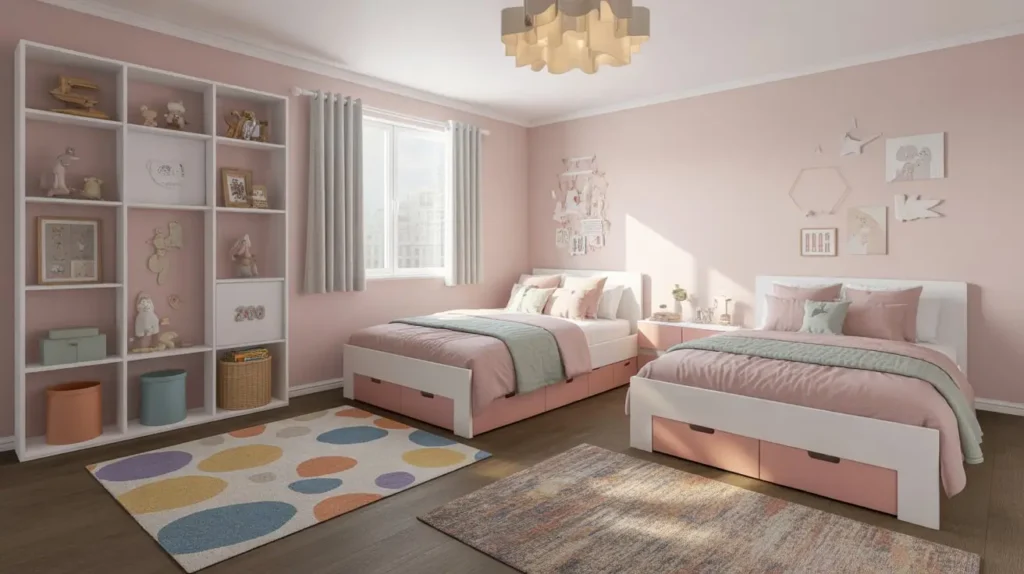
Finally, let’s address the ultimate challenge: creating distinct play and sleep zones within one shared bedroom. Children need space to be active and creative during waking hours, but they also need a restful environment conducive to quality sleep.
The key is visual and physical separation between areas. Position beds away from play zones when possible. Use rugs to define boundaries—perhaps a soft carpet under beds and a durable play mat in the activity area. Establish rules about keeping toys in designated zones to maintain the sleep area’s calm atmosphere.
Zone Planning Strategies
Effective zone separation involves:
- Clear physical boundaries: Different flooring, rugs, or furniture arrangement
- Appropriate storage in each zone: Toy bins in play area, books near beds
- Lighting differences: Bright in play areas, dimmable near beds
- Sound considerations: Play zone away from the door if possible
- Cleanup routines: Toys return to play zone before bedtime
This separation also teaches kids important lessons about wind-down time and sleep hygiene. When they physically leave the play zone and enter the sleep zone, their minds begin transitioning toward rest. It’s behavioral design that actually works.
Wrapping It All Up
Creating a shared bedroom for a boy and girl might seem daunting initially, but armed with these 15 creative ideas, you have everything you need to design a space that works brilliantly for both children. The secret lies in balancing shared elements with personalized touches—giving kids enough individual expression while maintaining overall design harmony.
Remember, the most successful shared bedrooms prioritize function alongside aesthetics. Storage solutions, defined zones, and smart furniture choices prevent sibling conflicts and keep daily routines running smoothly. When both children feel ownership over their designated areas within the larger shared space, everyone wins.
Start with the ideas that address your biggest challenges first. Maybe that’s storage, maybe it’s study space, maybe it’s simply making the room feel fair to both kids. Then layer in additional elements as budget and time allow. Rome wasn’t built in a day, and neither is the perfect shared bedroom—but every improvement you make brings you closer to that functional, stylish space you’re imagining.
Now go forth and create something amazing. Your kids will thank you—eventually, maybe after they stop arguing about whose turn it is to sleep on the top bunk. 🙂