


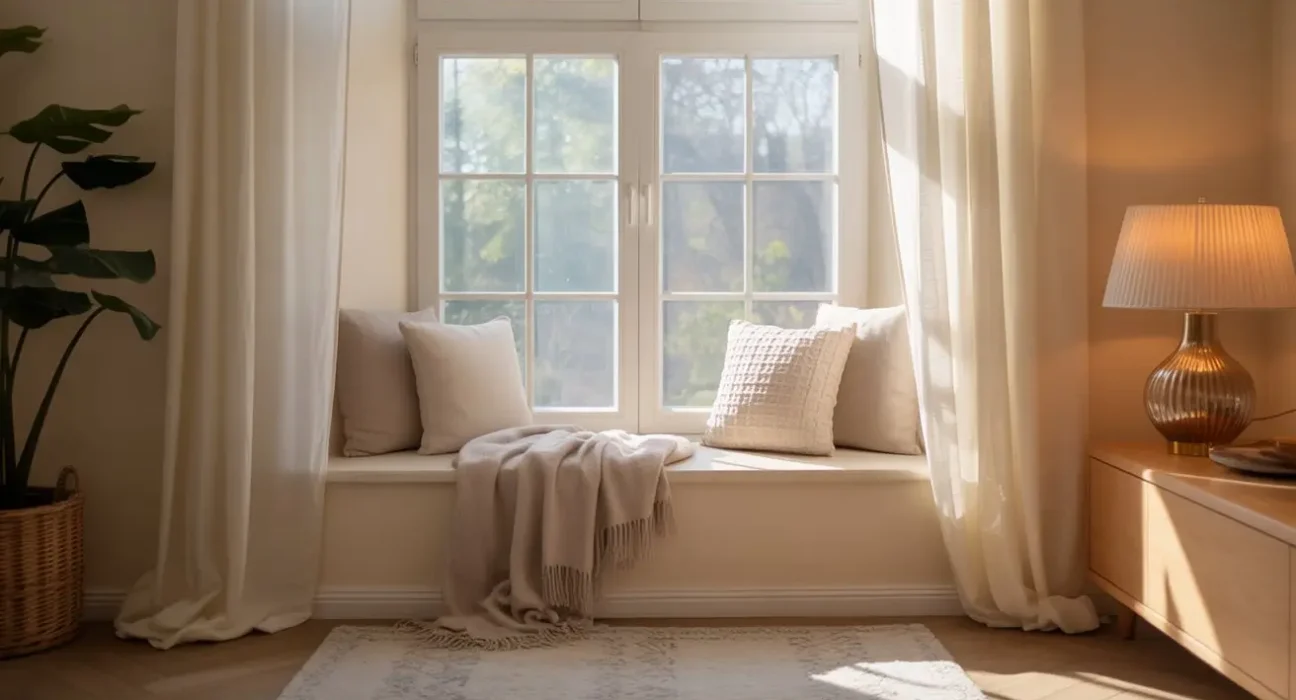
Let’s be honest for a second. We’ve all scrolled through those picture-perfect home design accounts, staring at living rooms that look like they belong in a museum. They’re beautiful, sure. But cozy? Inviting? Could you actually kick off your shoes, curl up with a bag of chips, and binge-watch a questionable reality show in there? Probably not.
That’s where the real magic lies—in creating a space that doesn’t just look good but feels good. A room that gives you a genuine, soul-deep “ahhh” the moment you walk in. I’ve spent years, and probably way too much money, chasing that perfect “hug-in-a-room” feeling. My living room has been my personal laboratory for all things cozy, and I’ve learned a thing or two (mostly through trial and a lot of error).
So, if you’re tired of living rooms that feel more like sterile showrooms, you’re in the right place. We’re going to walk through 15 tangible, totally achievable ideas to transform your living space into the warm, inviting sanctuary you deserve. Forget the untouchable aesthetics; we’re getting real about comfort.
1. Layered Textiles Living Room
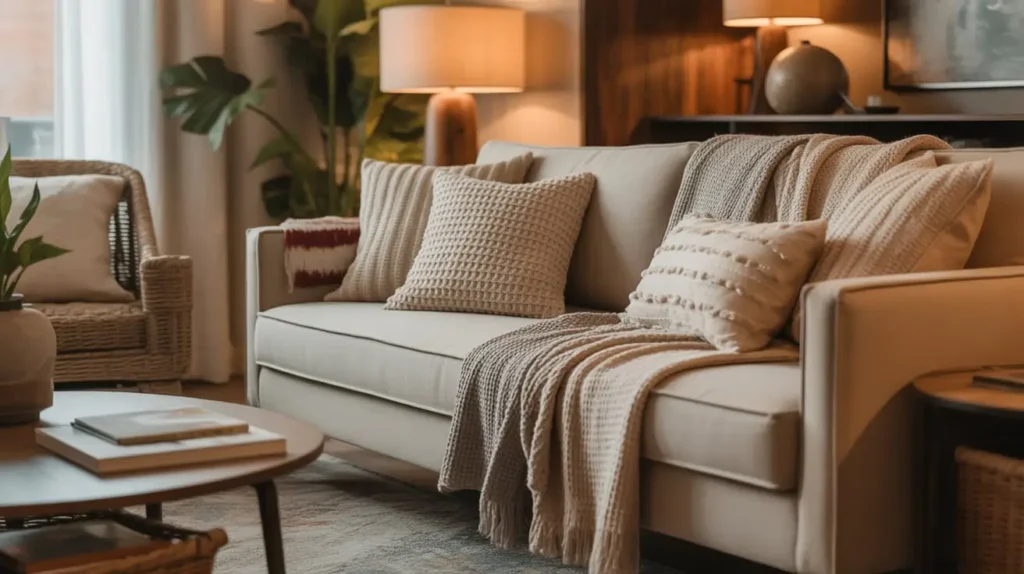
First things first, let’s talk textiles. If you want instant coziness, you need to think in layers. A living room with just a sofa and a bare floor feels cold and echoes, doesn’t it? Layering textiles is like dressing your room in its comfiest, softest sweater. It’s the fastest way to add warmth, depth, and a crucial sense of touchable comfort.
This isn’t just about throwing a blanket on the couch. It’s a deliberate art of mixing and matching different materials to create a rich, tactile experience. When you walk into a room and your eyes can feast on a variety of textures, your brain immediately registers it as a place of comfort and security.
How to Nail the Layered Look
To get this right, you need to think beyond just color. Texture is your new best friend. You want to combine materials that feel different to the touch.
- Throws: Don’t just have one. Drape a chunky knit throw over the arm of the sofa and maybe a lightweight, faux-cashmere one folded on a nearby armchair. The contrast is what makes it interesting.
- Pillows: This is where you can go wild. Mix a smooth velvet pillow with a fuzzy bouclé one, a classic linen pillow, and maybe even one with some embroidered detail. The visual and physical variety is key.
- Curtains: Ditch the flimsy, cheap-looking blinds. Opt for heavy, floor-length drapes in a material like linen, cotton velvet, or a thick cotton blend. They not only block out harsh light but also absorb sound, making the room feel instantly quieter and more intimate.
- Rugs: We’ll get into layering rugs later, but even a single, plush rug underfoot does wonders. It defines the space and provides a soft landing for your feet.
I once had a sleek leather sofa that looked amazing but felt a bit… cold. I fought with it for months until I tossed a giant, fluffy sheepskin throw over the back. It completely changed the dynamic of the couch and, honestly, the entire room. It went from “look at me” to “come sit with me.” That’s the power of a single, well-placed textile.
2. Warm Neutral Cozy Lounge
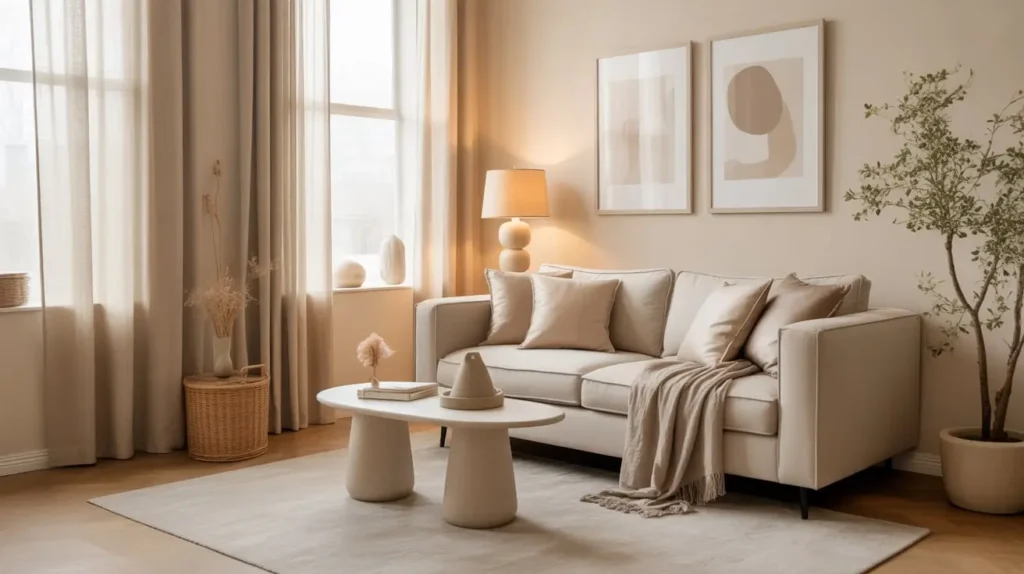
Okay, I know what you might be thinking. “Neutrals? Isn’t that just… boring beige?” Hold on. We’re not talking about the flat, lifeless beige of a 90s office building. We’re talking about warm, complex, and sophisticated neutrals that create a serene and gentle backdrop for your cozy haven.
Think less ‘hospital waiting room’ and more ‘creamy latte on a rainy day.’ Warm neutrals are colors like oatmeal, warm taupe, mushroom, ivory, and greige (a beautiful mix of gray and beige). These colors have undertones of yellow, pink, or red, which gives them an inherent warmth that cool grays and stark whites simply lack.
Using a palette of warm neutrals makes a room feel cohesive and calming. It allows the textures and shapes of your furniture and decor to stand out without competing for attention. It’s a quiet confidence that says, “I don’t need to shout to be beautiful.”
Choosing Your Warm Palette
The trick is to layer different shades from the same warm neutral family. This creates a monochromatic look that has tons of depth and sophistication.
- Walls: Start with a soft, warm white or a light greige on the walls. This creates a bright-yet-warm canvas. My personal favorite is a color that looks like melted vanilla ice cream.
- Sofa: A sofa in a slightly darker shade, like a warm taupe or a soft oatmeal, will anchor the space.
- Accents: Bring in even more shades through your textiles—pillows in a deep mushroom color, a cream-colored throw, and a rug that ties all the tones together.
Beige gets a bad rap, mostly from people who don’t know its warm, sophisticated cousins. When you embrace the full spectrum of warm neutrals, you create a room that feels both incredibly chic and ridiculously comfortable. It’s the perfect foundation for a truly inviting home.
3. Soft Lighting Corner Living Room
Have you ever noticed how you feel under the harsh, fluorescent lights of a supermarket versus the dim, golden glow of a nice restaurant? Lighting is everything. You can have the plushest sofa and the softest rug, but if your living room is lit by a single, glaring overhead light, it will never, ever feel cozy. I call this “The Big Light,” and its only purpose is to help you find something you dropped.
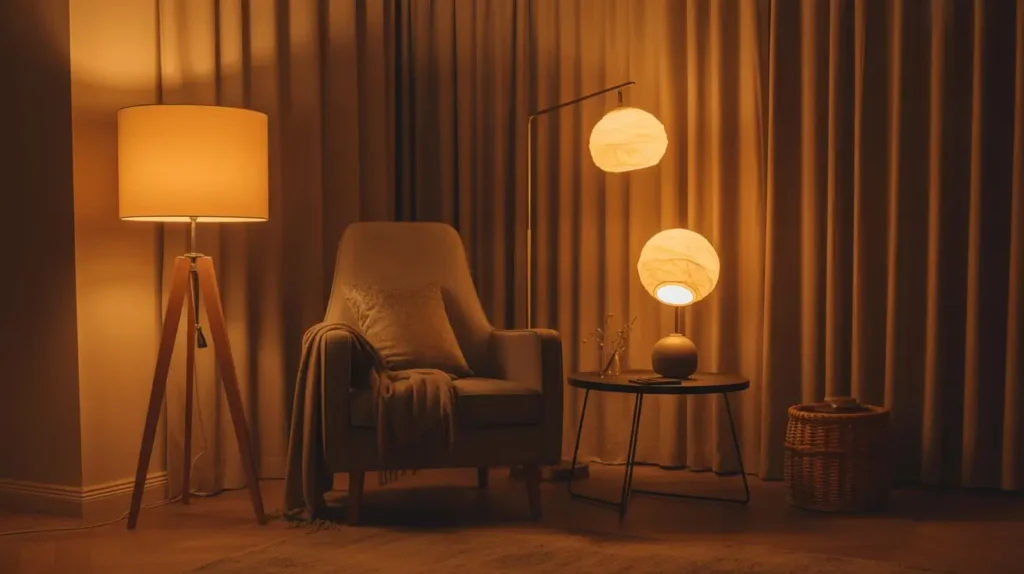
The secret to a cozy living room is creating pools of soft, warm light. You want to have multiple light sources at different heights, all emitting a warm-toned glow. This strategy, known as layered lighting, eliminates harsh shadows and makes everyone and everything look better. Seriously, it’s like a real-life Instagram filter for your home.
The Holy Trinity of Lighting
To achieve this, you need a mix of ambient, task, and accent lighting.
- Ambient Lighting: This is your general, overall light. Instead of a harsh ceiling fixture, use a central pendant with a dimmer switch and a fabric shade that diffuses the light.
- Task Lighting: This is your focused light for activities like reading. A stylish floor lamp next to your favorite armchair or a small table lamp on a side table is perfect. It creates an intimate, functional little zone.
- Accent Lighting: This is the fun part. Use small, low-wattage lamps on bookshelves, a picture light over a piece of art, or even some subtle uplighting behind a plant. These little touches add depth and a warm, ambient glow.
Pro-tip: Change your bulbs! Make sure every single bulb in your living room is a “warm white” (typically 2700K on the Kelvin scale). Avoid anything labeled “cool white” or “daylight” like the plague. They emit a blue-toned light that feels clinical and harsh—the absolute enemy of coziness.
4. Hygge-Inspired Living Space
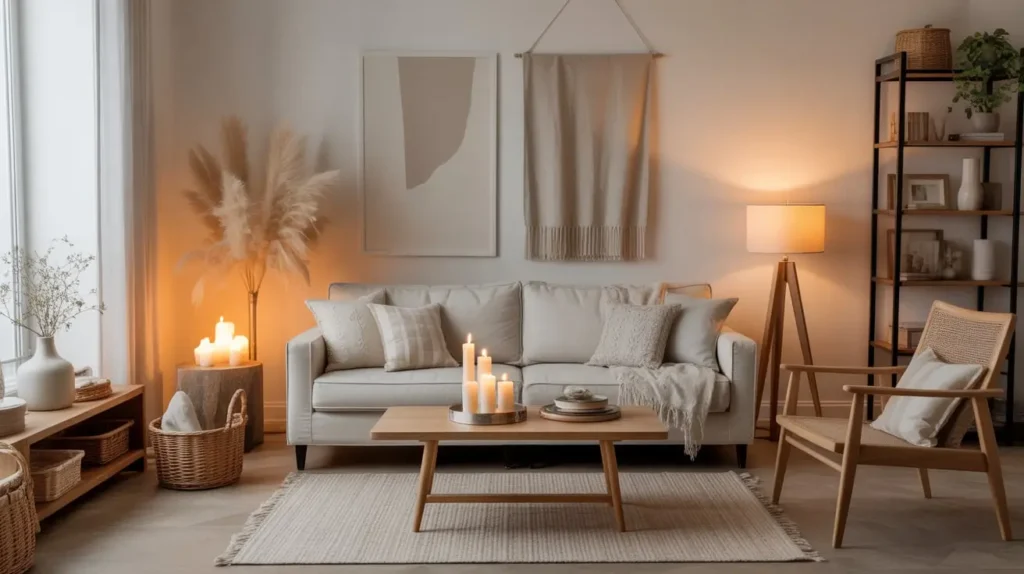
If anyone knows cozy, it’s the Danes. They have a whole cultural concept dedicated to it: hygge (pronounced hoo-gah). Hygge doesn’t have a direct translation in English, but it’s all about a feeling of cozy contentment, well-being, and enjoying the simple pleasures of life. Creating a hygge-inspired living space is about focusing on atmosphere and experience over mere aesthetics.
A hygge living room is your personal retreat from the chaos of the outside world. It’s a space designed for slowing down, being present, and feeling safe and content. Sounds pretty good, right? It’s less about a specific style and more about curating a collection of things that bring you joy and comfort.
How to Bring Hygge Home
So, how do you capture this elusive Danish feeling? It’s simpler than you think.
- Embrace Natural Elements: Bring the outdoors in with wood, wool, leather, and lots of plants. These materials connect us to nature and have a calming, grounding effect.
- Candlelight is Non-Negotiable: The soft, flickering glow of a candle is the epitome of hygge. Group several candles of different heights on a tray for a beautiful, dynamic effect. If you have pets or kids, high-quality flameless candles can give you a similar vibe without the fire hazard.
- Create a “Hyggekrog”: This translates to a “cozy nook.” Designate one corner of your living room for pure relaxation. Think of a comfy armchair, a soft footstool, a small side table for your tea, and a good reading lamp. This is your personal spot to decompress.
- Cherish Imperfection: Hygge isn’t about a perfectly tidy, minimalist space. It’s about a lived-in home. A stack of books on the floor, a half-finished knitting project in a basket, a mug left on the coffee table—these are signs of life, not mess.
Hygge is a mindset. It’s about giving yourself permission to relax and indulge in comfort. It’s the joy of reading a book under a soft blanket while it rains outside. Your living room should be the stage for these simple, beautiful moments.
Read Also 15 Stunning Modern Living Room and Dining Room Combo Ideas to Try
5. Earthy Tones Cozy Living Room
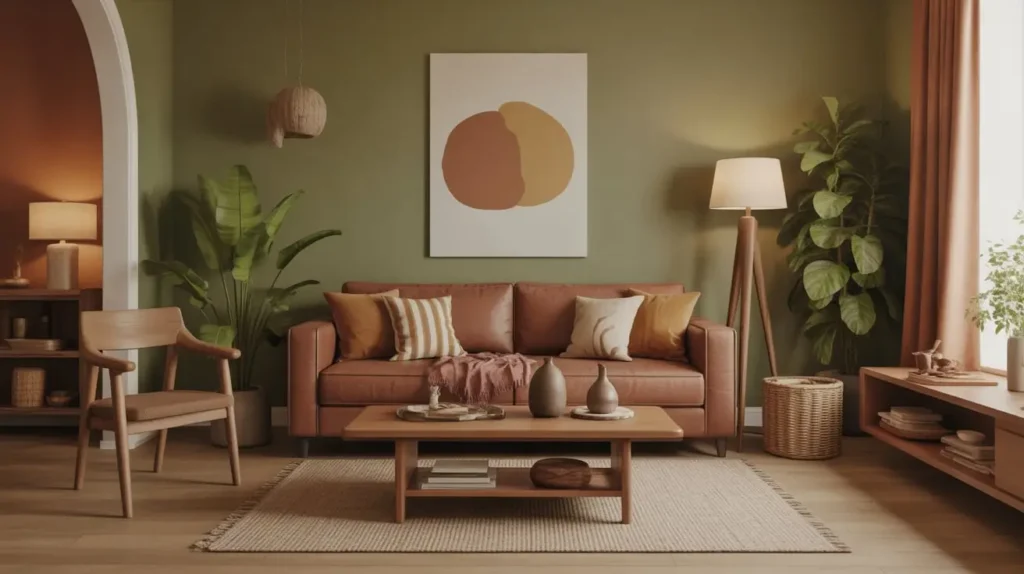
If warm neutrals are like a creamy latte, earthy tones are like a walk in the forest on a crisp autumn day. This palette is all about bringing the rich, grounding colors of the natural world into your home. We’re talking about deep terracotta, mossy green, rich soil brown, and muted clay shades.
These colors are inherently calming and create a sense of stability and connection to the earth. An earthy-toned living room feels organic, timeless, and deeply restful. It’s a step beyond warm neutrals into a more colorful, but still incredibly soothing, territory.
Painting with the Colors of the Earth
The beauty of an earthy palette is how well the colors work together. You can be quite bold with them because they are all found together in nature.
- Feature Wall: Afraid of painting your whole room a deep forest green? Try it on a single feature wall, perhaps the one behind your sofa. It creates a dramatic, yet cozy, focal point. I did this in my own living room, and it was a game-changer. The room immediately felt more sophisticated and enveloping.
- Furniture & Decor: If painting a wall feels too permanent, bring in earthy tones through your decor. A terracotta-colored armchair, olive green velvet pillows, or a rich brown leather ottoman can all inject that earthy vibe.
- Natural Materials are a Must: This look pairs perfectly with natural materials. Think raw wood coffee tables, jute or sisal rugs, and lots of live plants with lush green leaves. The combination of earthy colors and natural textures is a surefire recipe for coziness.
FYI, this color scheme is fantastic for hiding minor scuffs and marks, making it a practical choice for homes with kids or pets. An earthy living room feels robust and real, not delicate and precious.
6. Plush Seating Comfort Zone
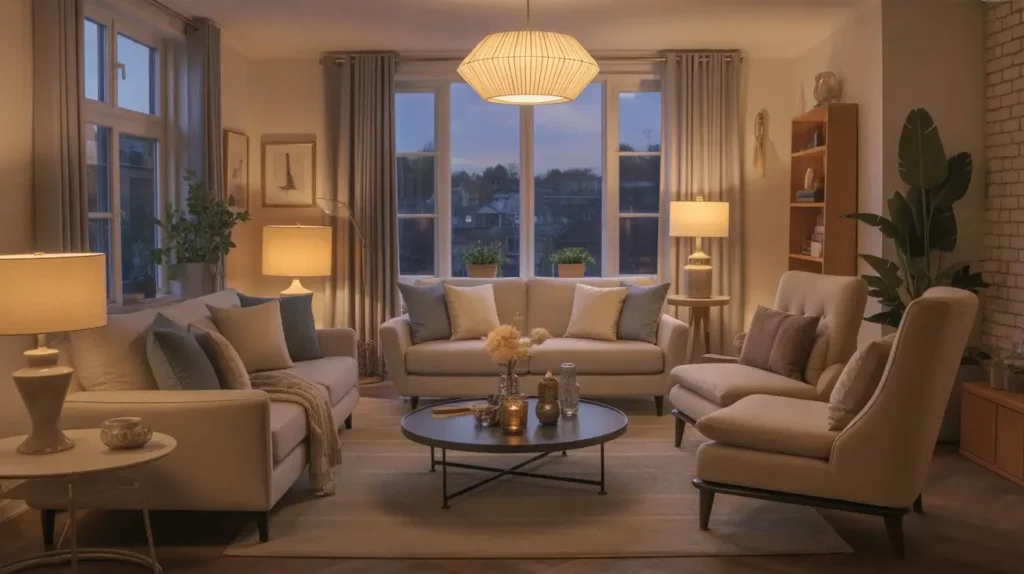
Let’s be real: the sofa is the undisputed king of the living room. It’s where you lounge, nap, cuddle, and host movie nights. If your sofa isn’t comfortable, your living room will never be truly cozy. It’s the one piece of furniture where you absolutely cannot compromise on comfort for the sake of style.
I once made the mistake of buying a super chic, low-profile sofa. It looked great on Instagram but felt like sitting on a stylish rock. I lasted six months before I sold it at a loss and invested in a sofa I could actually sink into. Lesson learned. Plush, deep, and inviting seating is the cornerstone of a comfortable living room.
The Anatomy of a Comfy Couch
When you’re shopping for a truly cozy sofa or armchair, here’s what to look for:
- Deep Seats: You want a sofa you can curl up on, not just perch on. A seat depth of at least 24 inches allows you to pull your feet up and get comfortable.
- Soft-but-Supportive Cushions: The ideal cushions are filled with a mix of foam (for support) and down or feathers (for that sink-in softness). If you’re allergic, down-alternative fills have gotten incredibly good.
- Touchable Fabric: The material matters. Velvet, chenille, a soft brushed cotton, or a high-quality bouclé all feel wonderful against the skin. They invite you to touch them, which is a key part of the cozy experience.
- Lots of Pillows: Even the comfiest sofa can be made cozier with an abundance of throw pillows. They add extra softness and allow you to customize your lounging position.
IMO, when it comes to living room seating, function over form is the golden rule. Luckily, these days you don’t have to choose. There are so many stunning sofas out there that are also cloud-like in their comfort.
7. Cozy Small Space Living Room
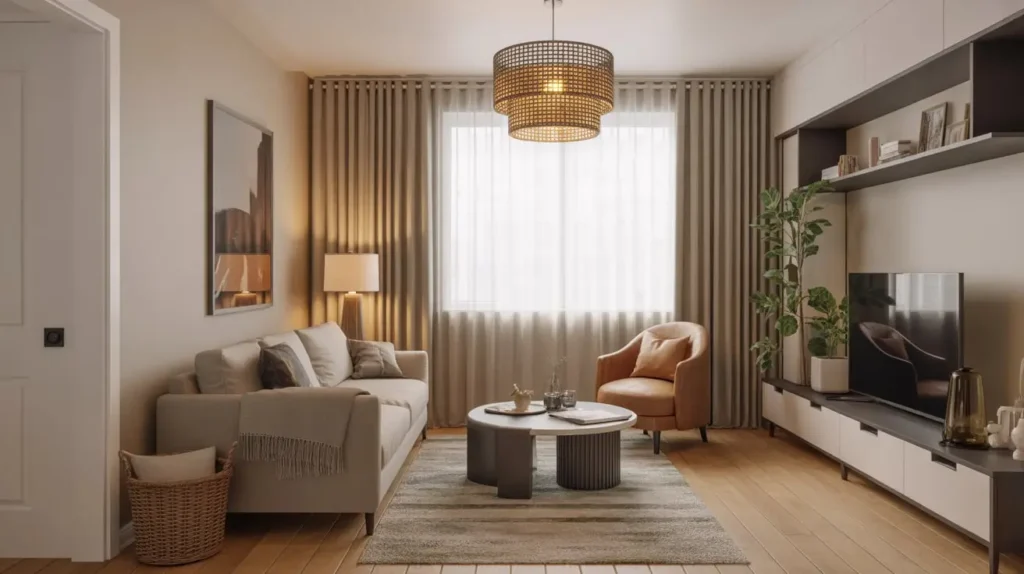
Think you can’t have a cozy living room because your space is tiny? Think again. A small living room has a secret advantage: it’s naturally intimate. The goal isn’t to make it feel huge; it’s to make it feel intentionally snug and jewel-box perfect.
The biggest mistake people make in small living rooms is using tiny, spindly furniture in an attempt to save space. This often just makes the room feel cluttered and insubstantial. A better approach is to use fewer, but more substantial and comfortable, pieces. A small-scale but deep-seated sectional can actually make a room feel cozier and more functional than a tiny loveseat and a bunch of mismatched chairs.
Smart Tricks for Small Spaces
Maximizing coziness in a compact room is all about clever choices.
- Define the Zone: Use a properly sized rug to anchor your seating area. It should be large enough that at least the front legs of all your furniture are on it. This creates a clear, cohesive “cozy zone.”
- Go Vertical: Draw the eye upward with tall, slim bookshelves or floating shelves. This makes the ceiling feel higher and provides valuable storage and display space without eating up floor real estate.
- Multi-Functional Furniture: Every piece should work hard. An ottoman with hidden storage, a C-table that can slide over the sofa arm, or a console table that doubles as a small desk are all brilliant choices.
- The Magic of Mirrors: A large mirror placed opposite a window will bounce light around the room, making it feel brighter and more open, without sacrificing the cozy, enclosed feeling.
A small living room forces you to be deliberate. You can’t afford to have anything in the room that doesn’t serve a purpose or bring you joy. The result can be a space that is incredibly personal, efficient, and wonderfully cozy.
8. Fireplace-Focused Cozy Room
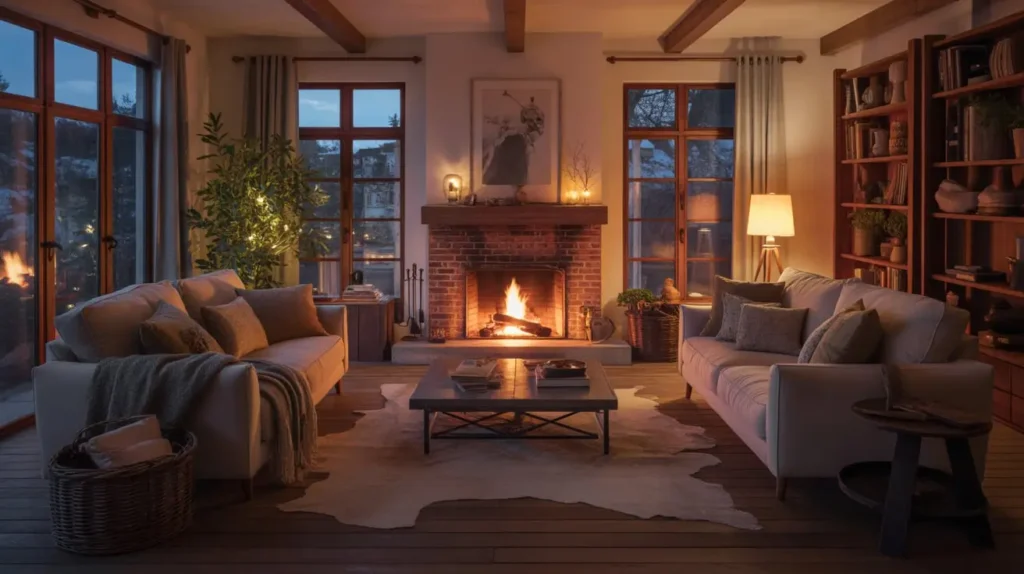
Is there any symbol of coziness more iconic than a crackling fireplace? It provides literal warmth, a mesmerizing visual, and a primal sense of safety and comfort. If you are lucky enough to have a fireplace in your living room, you absolutely must make it the star of the show.
Arranging your furniture around the fireplace is the key. Don’t just shove your sofa against the opposite wall. Create a conversational grouping that is oriented towards the hearth. A sofa facing the fireplace with two armchairs flanking it is a classic, unbeatable layout. This invites people to gather, talk, and enjoy the warmth.
No Fireplace? No Problem.
But what if you live in an apartment or a modern home without a built-in fireplace? Don’t despair! You can still create that same warm, glowing focal point.
- Electric Fireplaces: These have come a long way from the tacky plastic logs of the past. Modern electric fireplaces can be incredibly realistic, with convincing flame effects and even a crackling sound feature. Many come built into stylish media consoles, giving you a focal point and storage in one.
- Bio-Ethanol Fireplaces: These are ventless, real-flame fireplaces that burn clean-burning bio-ethanol fuel. They come in all shapes and sizes, from small tabletop versions to large, wall-mounted units. They provide a real, dancing flame without any smoke or soot.
- The “Faux” Fireplace: Create the idea of a hearth. Arrange a cluster of different-sized pillar candles on a large tray or inside a decorative lantern on the floor. When they are all lit, they create a beautiful, flickering glow that mimics the feeling of a fire. You can even buy a vintage mantelpiece and place it against a wall to create an architectural focal point where you can display art and candles.
The goal is to create a central, glowing heart for your living room. Whether it’s a real wood fire or a clever imitation, that focal point is a magnet for coziness.
9. Candlelit Evening Living Room
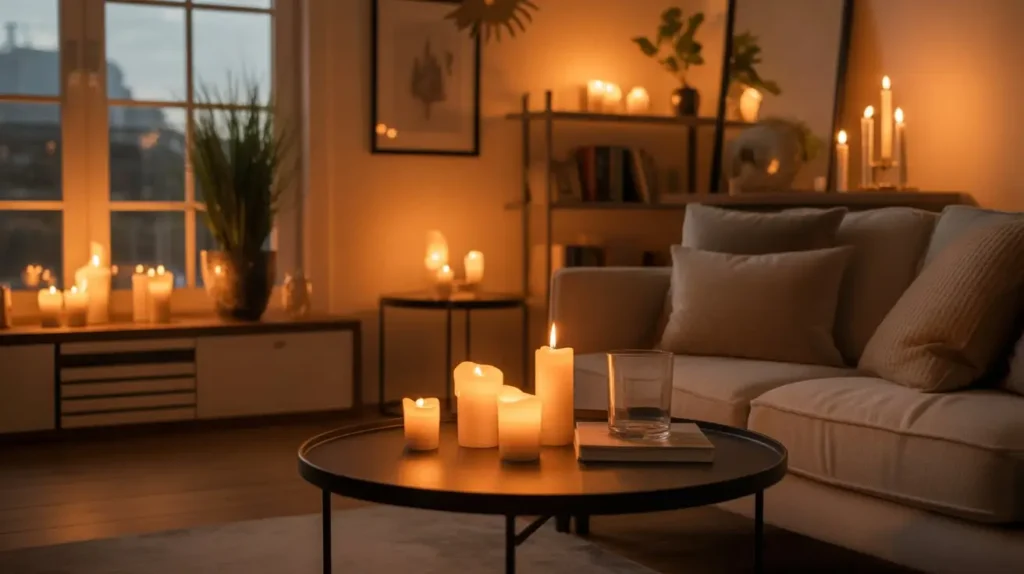
This idea builds on the principles of soft lighting and hygge, but it takes it to the next level. This is about transforming your living room for the evening. During the day, it can be bright and functional, but as dusk falls, you can shift the mood entirely with the simple, magical act of lighting candles.
There is something undeniably special and ceremonial about lighting candles. It signals a transition from the busy-ness of the day to the calm of the evening. The soft, dancing light is flattering, relaxing, and creates an atmosphere of intimacy and peace that electric lights just can’t replicate.
Mastering the Art of the Glow
To really embrace the candlelit vibe, you can’t just light a single tea light and call it a day.
- Group Them Together: A single candle is nice, but a group of candles is an event. On your coffee table, use a large tray (to protect the surface and contain wax) and arrange an assortment of pillar candles in various heights and widths.
- Scented vs. Unscented: This is a personal choice. I like to have one high-quality scented candle (in a subtle, natural scent like sandalwood or cedar) and then supplement with plenty of unscented pillar or taper candles. Too many competing scents can be overwhelming.
- Spread Them Around: Don’t confine all your candles to the coffee table. Place a few tapers in elegant holders on a mantelpiece or console table. Put a small votive on a bookshelf. The idea is to have little pockets of flickering light throughout the room.
- Safety First: This should go without saying, but never leave lit candles unattended. Always place them on stable, heat-resistant surfaces away from curtains, books, or anything flammable. And please, keep them out of reach of pets and small children. If safety is a major concern, invest in a set of high-end, realistic flameless candles with remote controls and timers.
Making a ritual of lighting your candles each evening can become a beautiful mindfulness practice. It’s a small act that can have a huge impact on how you feel in your space.
Read Also 15 Stunning Open Concept Living and Dining Room Ideas to Try
10. Rug-Layered Cozy Living Area
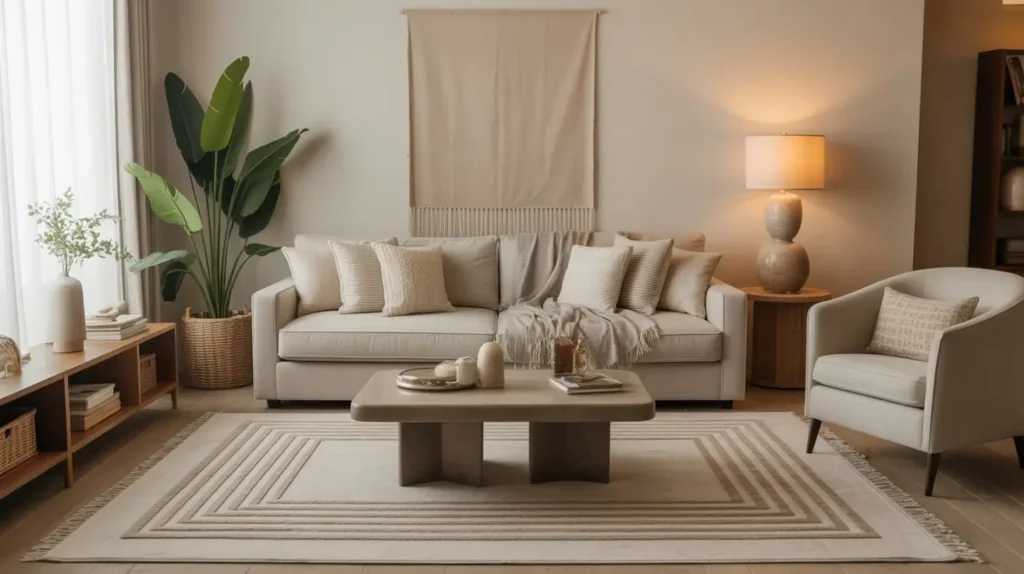
Why stop at one rug when you can have two? Layering rugs is a designer trick that adds an incredible amount of texture, pattern, and plushness to a living room. It’s a fantastic way to make a large room feel cozier or to add a dose of personality to a neutral space.
The concept is simple: you start with a larger, neutral base rug and then layer a smaller, more decorative rug on top. This creates a focal point, defines a specific zone (like your main seating area), and feels amazing underfoot.
The Rules of Layering
There are a few guidelines to make this look work without it looking like a mistake.
- The Base Rug: Your bottom rug should be large and relatively neutral. A natural fiber rug like jute, sisal, or a simple, low-pile wool rug in a solid color works perfectly. It should be big enough to fit under all the main pieces of furniture in your seating arrangement.
- The Top Rug: This is where you have fun. Your top rug should be significantly smaller than the base rug. It can be a plush shag, a colorful vintage Persian rug, a faux cowhide, or a sheepskin. This top layer is all about adding a pop of color, pattern, or luxurious texture.
- Contrast is Key: The magic is in the contrast. If your base rug is a rough, natural jute, layer a soft, plush shag on top. If your base is a solid neutral, choose a top rug with a bold pattern. The difference in texture and style is what makes it visually interesting.
I love this trick because it’s so versatile. It allows you to use that beautiful (but maybe too small) vintage rug you fell in love with. By layering it over a larger, inexpensive jute rug, you get the perfect size and the perfect look. It’s a win-win.
11. Wood Accent Cozy Living Room
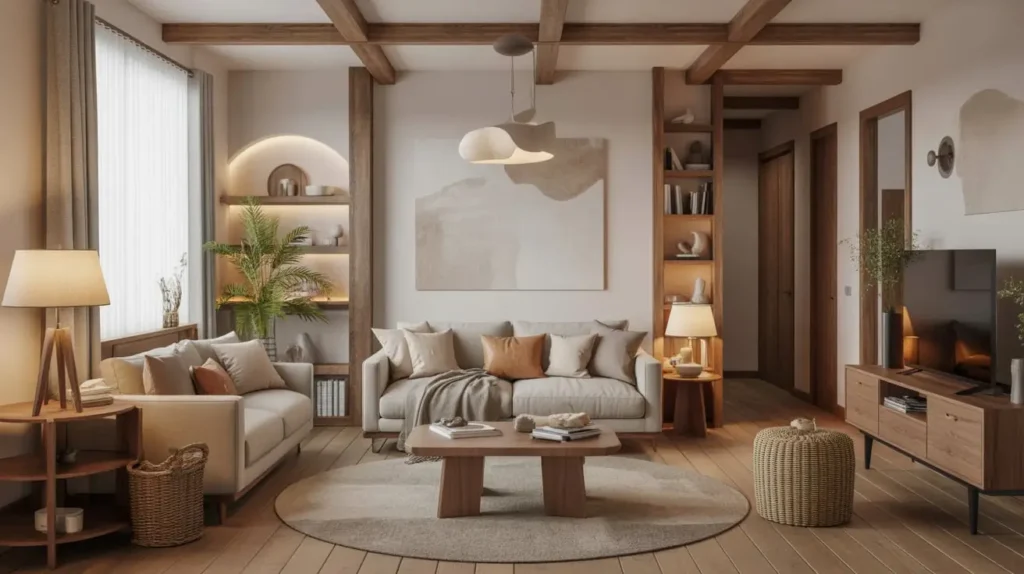
In our modern world of plastic and metal, there is something deeply reassuring and grounding about wood. It’s a natural material that brings warmth, character, and a connection to the outdoors into our homes. Incorporating wood accents is a foolproof way to make any living room feel cozier and more established.
We’re not talking about a full-on 70s wood-paneled basement here (unless that’s your vibe, no judgment!). It’s about thoughtfully adding wooden elements to balance out the softer textures in the room. Wood provides structure and a sense of permanence that complements plush sofas and soft textiles perfectly.
Ways to Weave in Wood
You can incorporate wood in both big and small ways.
- Furniture: A solid wood coffee table, a beautiful teak side table, or the exposed wooden legs of an armchair all add warmth. Look for woods with a warm, rich grain like oak, walnut, or acacia.
- Shelving: Floating shelves made of reclaimed wood can add a rustic, cozy touch while providing a beautiful spot to display books, plants, and personal treasures.
- Decorative Objects: Even small touches make a difference. Think wooden picture frames, a large carved wooden bowl on the coffee table, or a stack of logs by the fireplace (even a faux one!).
- Flooring: Of course, hardwood floors are the ultimate cozy foundation. If you have them, show them off! Use rugs to define zones but let that beautiful wood shine through.
The key is to mix different wood tones and finishes. Don’t worry about matching your coffee table exactly to your floors. A mix of light, medium, and dark woods creates a more authentic, collected-over-time look that is the essence of a cozy, inviting home.
12. Window Nook Cozy Living Space
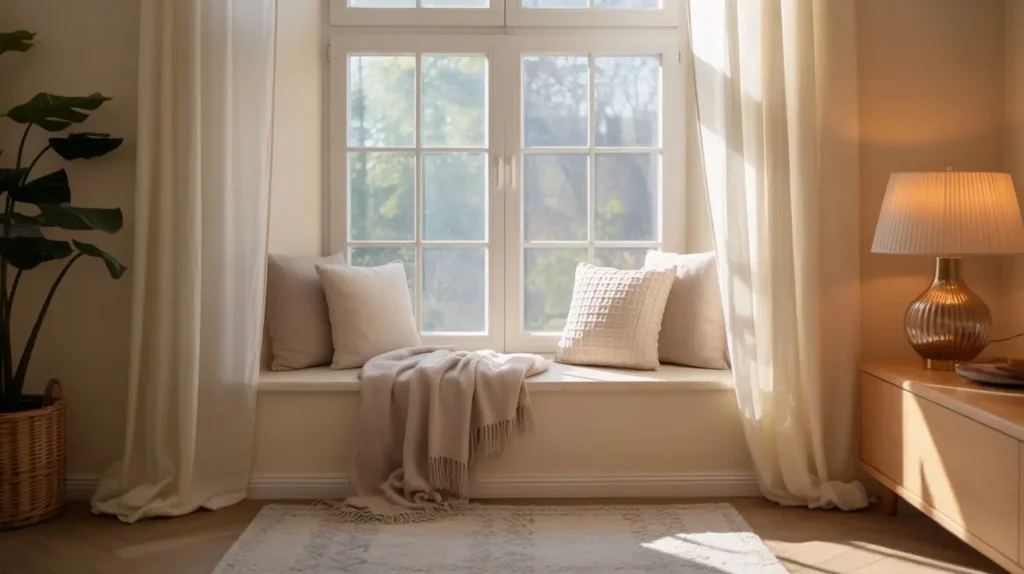
Is there anything more romantic or inviting than a window nook? It’s a little space carved out just for you, a perfect spot to curl up with a book and a cup of tea and watch the world go by. If you have a bay window or even just a wide, low-silled window in your living room, you have the perfect opportunity to create a super cozy feature.
A window nook is a “room within a room.” It’s a designated zone for quiet contemplation and relaxation. Even if you don’t have the architecture for a built-in bench, you can easily create the feeling of a nook with a comfy armchair and an ottoman placed in a sunny corner.
Crafting the Perfect Nook
Whether you’re building it in or faking it with furniture, the ingredients for a perfect window nook are the same.
- A Comfortable Seat: This is paramount. If you’re building a bench, make sure it’s deep enough to curl up on and top it with a thick, custom-made cushion. If you’re using a chair, choose one that’s plush and inviting.
- An Abundance of Pillows: Load it up with soft pillows in various shapes and sizes. This is what transforms it from a simple bench into a luxurious nest.
- Good Lighting: You’ll have natural light during the day, but what about at night? Install a small, adjustable wall sconce so you can continue to use your nook for reading after the sun goes down.
- A Place for Your Drink: A small side table or even just a wide-enough windowsill is essential for holding your mug, a book, or a small plant.
A window nook is pure, unadulterated comfort. It’s an invitation to pause, and in our busy lives, what could be a greater luxury than that?
13. Moody Cozy Living Room Style
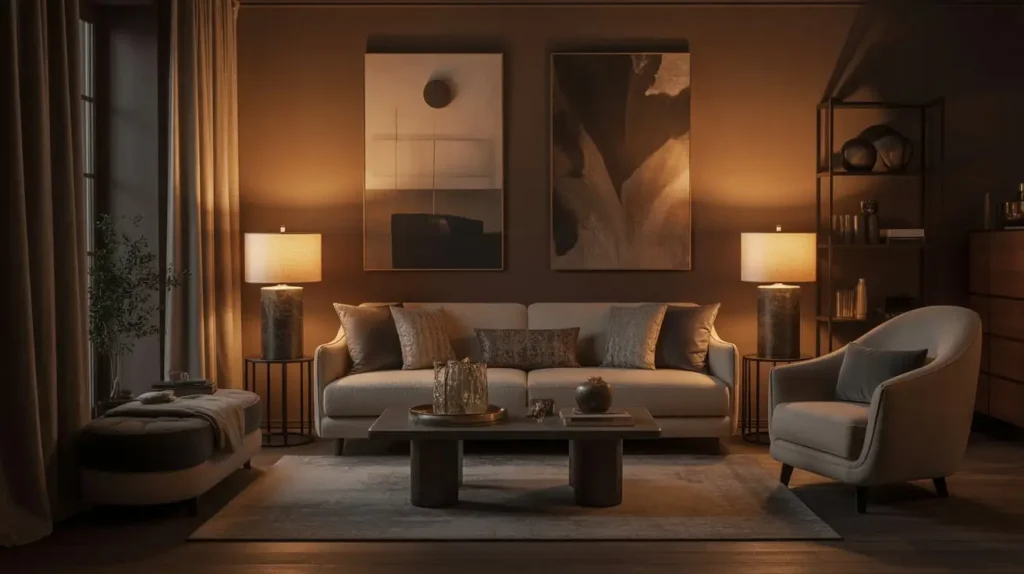
For a long time, the prevailing wisdom in design was “light and airy.” But what if you’re not a light and airy person? What if you crave a space that feels like a warm, dark, enveloping hug? Enter the moody living room.
Embracing dark, saturated colors can be scary, but the payoff is huge. Deep colors like charcoal gray, deep navy blue, forest green, or even a rich plum can make a living room feel incredibly intimate, dramatic, and sophisticated. Instead of reflecting light, these colors absorb it, which makes the boundaries of the room seem to recede, creating a cozy, cave-like effect.
Dare to Go Dark
This look is not for the faint of heart, but it is unbelievably rewarding when done right.
- Commit to the Color: The key to a successful moody room is to really go for it. Painting all four walls (and maybe even the ceiling!) in a deep, matte color creates a truly immersive experience. If that’s too much, a large feature wall is a great starting point.
- Balance with Warmth: To keep the dark colors from feeling cold or oppressive, you must balance them with warm elements. Rich wood tones, tan leather, and metallic accents in brass or gold all look stunning against a dark backdrop.
- Lighting is Crucial: A moody room needs excellent layered lighting more than any other style. You’ll need plenty of warm, soft light from lamps to create a glow and prevent the space from feeling like a dungeon. Dimmers are your best friend here.
- Texture, Texture, Texture: In a room with a dark, monochromatic palette, texture becomes even more important. A velvet sofa, a faux fur throw, and a nubby wool rug will add depth and prevent the room from feeling flat.
A moody living room is a bold statement. It’s for those of us who find endless white walls a little… uninspired. 🙂 It’s a space that has atmosphere, character, and an undeniable sense of cozy drama.
14. Minimal Yet Cozy Living Room
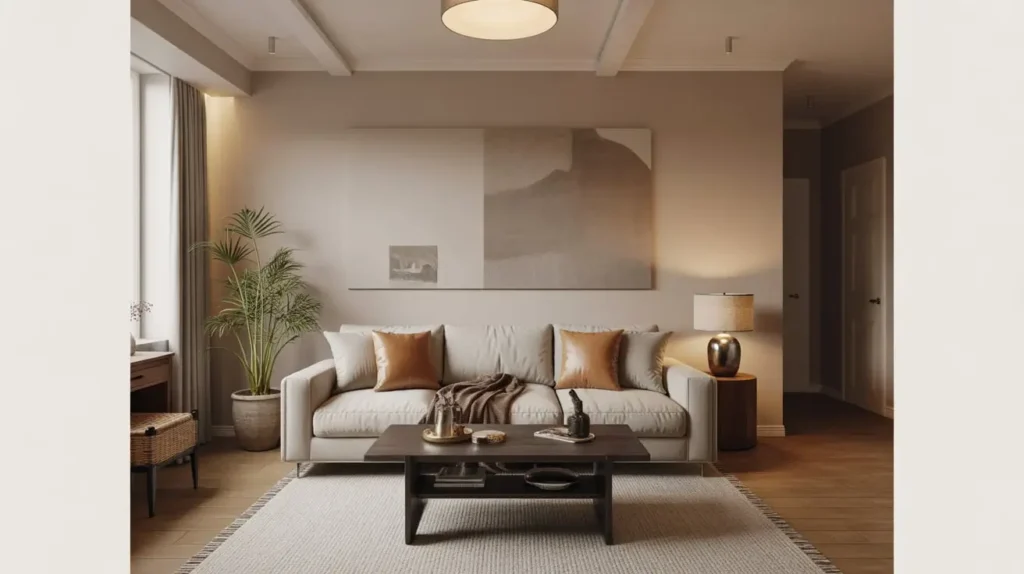
Wait, “minimal” and “cozy” in the same sentence? Isn’t that an oxymoron? Not at all. Cozy minimalism, sometimes called “warm minimalism,” is a growing trend for a reason. It proves that you don’t need a lot of stuff to create a warm and inviting space.
This style is about quality over quantity. It’s about stripping away the unnecessary clutter and focusing on a few beautifully made, highly functional, and texturally rich pieces. It’s the Marie Kondo approach to coziness, but you get to keep more than 30 books. The feeling is serene, intentional, and deeply calming.
The Art of Cozy Simplicity
Achieving this look is about restraint and careful selection.
- Focus on Natural Materials: A warm minimalist room relies heavily on the inherent beauty of its materials. Think of a simple sofa upholstered in natural linen, a solid oak coffee table, and a hand-knitted wool throw. The focus is on the tactile quality of each item.
- A Soft, Warm Palette: Stick to a limited palette of warm neutrals, soft whites, and earthy tones. The cohesion of the color scheme is what creates the serene, uncluttered feeling.
- Shape and Form: When you only have a few pieces of furniture, their shape becomes very important. Look for pieces with soft, curved lines—a rounded armchair, a circular coffee table—to soften the space and make it feel more welcoming.
- Every Object has a Purpose: In a minimalist space, every item should be either beautiful or useful (and ideally both). A beautiful ceramic vase, a stack of art books, a single floor plant—these items are chosen with intention and given space to breathe.
A minimal yet cozy living room is the ultimate peaceful retreat. It’s a testament to the fact that warmth comes from texture, light, and thoughtful choices, not from an abundance of possessions.
15. Vintage Touch Cozy Living Room
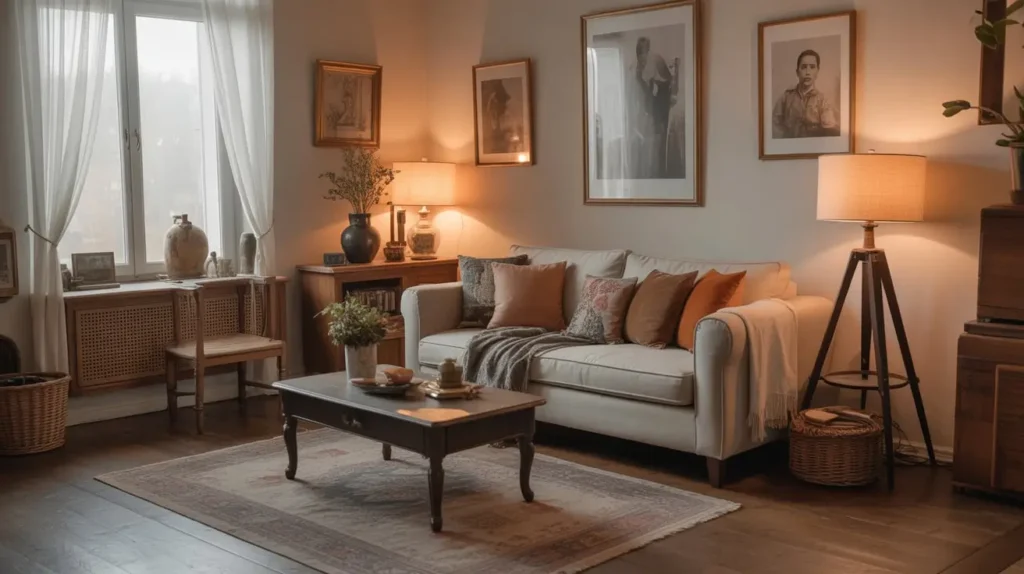
Finally, the secret ingredient that every single cozy, inviting, and truly personal living room has: a touch of vintage. A room filled with only brand-new items can feel flat and a little soulless, like a page from a catalog. Introducing vintage or antique pieces adds history, character, and a story that you just can’t buy new.
These don’t have to be expensive, museum-quality antiques. We’re talking about a weathered side table you found at a flea market, a beautifully worn Persian rug, a set of quirky old art prints, or a mid-century armchair with its original fabric. These pieces have a patina of age and a sense of history that makes a room feel lived-in and authentic.
How to Hunt for Treasure
Incorporating vintage is a joy. It’s a treasure hunt where the prize is a more interesting home.
- Start Small: You don’t need a vintage sofa. Start with small, easy-to-incorporate items. Look for vintage brass candlesticks, old ceramic pottery, or a stack of antique books to use as a riser on your coffee table.
- Mix Eras: Don’t be afraid to mix a modern sofa with a Victorian side table or a mid-century lamp. The contrast between old and new is what creates a dynamic and personal style. It shows that your home was curated over time, not bought in a single weekend.
- Look for Good Bones: When buying larger vintage furniture, look for pieces with a solid structure and a beautiful shape. You can always reupholster a chair or refinish a table, but you can’t fix a fundamentally bad design.
- It Tells Your Story: The best vintage pieces are the ones that speak to you. Maybe it’s a landscape painting that reminds you of a place you love, or a piece of pottery in your favorite color. These are the items that make your house your home.
A vintage touch is the soul of a cozy living room. It’s the layer that says, “a real person with a real life lives here.”
Your Cozy Haven Awaits
Phew, that was a journey, wasn’t it? We’ve covered everything from textiles and lighting to moody color palettes and the magic of a good vintage find. The common thread through all these ideas is that a cozy, inviting living room is born from thoughtful, personal choices.
It’s not about following a rigid set of rules or spending a fortune. It’s about layering textures that feel good to the touch, creating pools of warm light that make you want to relax, and choosing pieces that tell your story. It’s about creating a space that serves your life and your comfort above all else.
So, what’s your first move? Are you going to hunt down the perfect vintage rug, or maybe just start with a ridiculously soft throw blanket? Whatever you choose, remember that the goal is to create a room that feels like an exhale at the end of a long day.
Happy decorating, and may your living room always feel like a warm hug.