

So, you’ve fallen down the farmhouse rabbit hole. Welcome. The water’s warm, the shiplap is plentiful, and there’s always a pitcher of sweet tea on the reclaimed wood table. You’re staring at your dining room, and it’s just… fine. It’s a room with a table and chairs. But you want more than that, don’t you? You want a feeling. You want that cozy, lived-in, “everyone-gather-’round” vibe that makes a house a home.
I get it. I’ve spent more hours than I’d like to admit scrolling through Pinterest, saving images of dining rooms that look effortlessly perfect. The thing is, “effortless” is usually the result of a whole lot of effort. The good news? It’s not as complicated as it looks. You don’t need to buy a literal farm to get the farmhouse look.
We’re going to break down 15 actually achievable ideas to transform your dining room from a sterile eating zone into the heart of your home. Forget the generic advice. We’re getting into the nitty-gritty, the stuff that makes a real difference. Ready to make some magic?
1. Modern White Farmhouse Dining Room
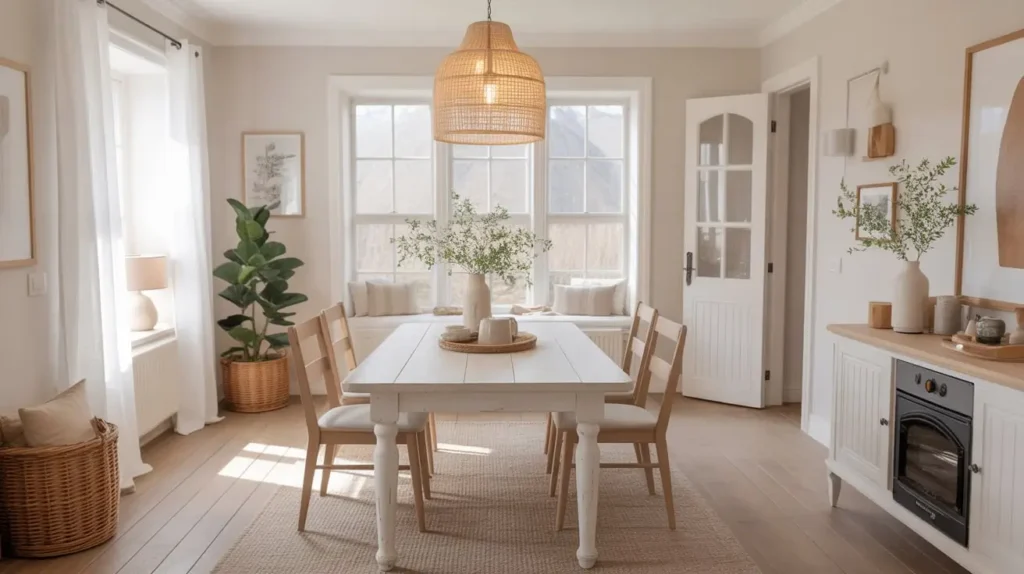
Let’s start with a classic that people often get wrong. When you hear “white farmhouse,” you might picture a room so sterile it feels like an operating theater. That’s not the goal. The modern white farmhouse look is all about using white as a clean, bright canvas and then layering in warmth and texture.
It’s the perfect blend of contemporary cleanliness and rustic charm. Think of it as the sophisticated older sibling to the more distressed, country-style farmhouse look. It’s less “chickens in the yard” and more “sipping a crisp chardonnay.”
Getting the White Right
Believe it or not, the most crucial step here is choosing the right shade of white. Walk into any paint store and you’ll be assaulted by a wall of what looks like the same color with a thousand different names. Snowbound, Alabaster, Pure White, Dove White… it’s enough to make you want to just leave the walls beige.
But don’t give up. The secret is in the undertones.
- For a warmer, cozier feel: Look for whites with a creamy, yellow, or slightly beige undertone. These will feel inviting and soft, especially in rooms with lots of natural light. Benjamin Moore’s White Dove is a personal favorite for this.
- For a crisper, more modern look: Choose a white with a subtle gray or blue undertone. These feel cleaner and more architectural. Be careful, though; too much blue can make a room feel cold.
Adding Warmth to the White
Okay, you’ve painted the walls. Now your room looks like a giant marshmallow. What next? Texture and natural materials are your best friends. This is non-negotiable. A white room without texture is a boring room.
You need to introduce elements that break up the monotony. Think about:
- A light wood dining table to anchor the space.
- Woven rattan or wicker chairs to add organic texture.
- Linen curtains that diffuse light beautifully.
- A jute or sisal rug under the table to define the area and add a natural feel.
- Black metal accents, like a chandelier or chair legs, to provide a sharp, modern contrast.
The interplay between the crisp white and these earthy, raw materials is what creates that signature modern farmhouse magic. It’s clean but not cold, simple but not boring.
2. Rustic Wood Table Farmhouse Style
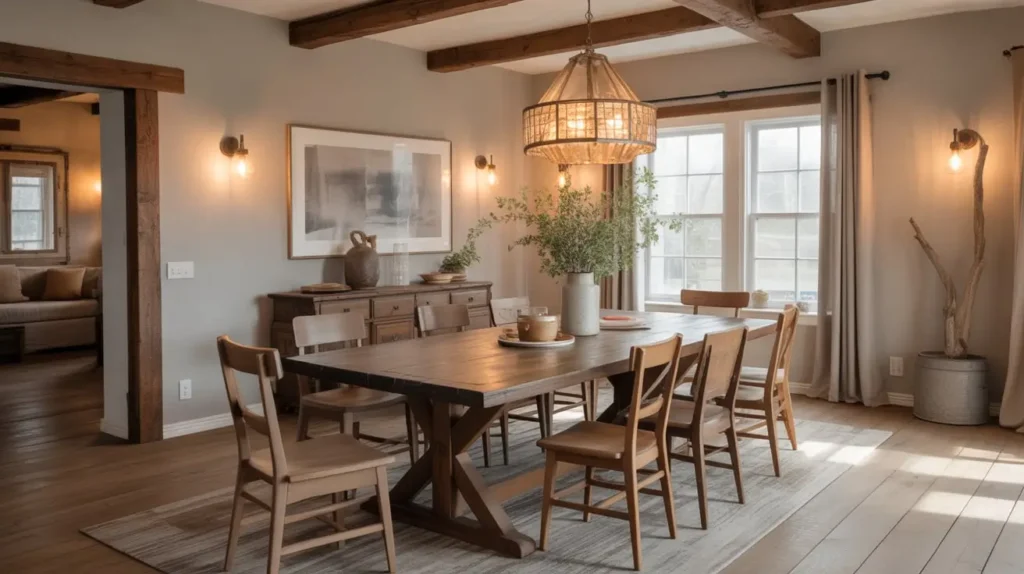
If the farmhouse dining room has a soul, it’s the rustic wood table. This is the centerpiece, the workhorse, the gathering spot. This isn’t your grandma’s fussy, lacquered mahogany table that you’re terrified to breathe on. A true farmhouse table welcomes a few scratches, water rings, and elbow marks. It’s meant to be used and loved, telling the story of your family’s life.
Ever wondered why this single piece of furniture is so powerful? It’s because wood brings an unparalleled sense of history and organic warmth into a space. It’s a direct connection to nature, and that authenticity is the bedrock of farmhouse style.
Finding “The One”
The quest for the perfect rustic table can feel like a grand adventure. You have a few paths you can take:
- Reclaimed Wood: This is the holy grail. Tables made from old barn wood, salvaged beams, or bowling alley lanes have a character that you simply can’t fake. Each knot, nail hole, and saw mark tells a story. They can be pricey, but IMO, they are a lifetime investment.
- New Wood with a Distressed Finish: A more budget-friendly option is a new table made from solid wood (like pine or oak) that has been intentionally distressed. Look for finishes that are hand-scraped or wire-brushed for a more authentic texture. Avoid anything that looks too uniform or machine-made.
- DIY It: Feeling brave? You can build your own. There are tons of tutorials online for building a beautiful farmhouse table. It’s a weekend project that will give you major bragging rights. Plus, you get to control the exact size, style, and finish.
Styling Your Masterpiece
Once you have the table, the temptation is to over-style it. Resist! A beautiful rustic table doesn’t need much help. A simple linen runner, a few earthenware vases with fresh greenery, or a collection of pillar candles is often all you need for an everyday look. Let the wood be the star of the show.
3. Neutral Farmhouse Dining Room Palette
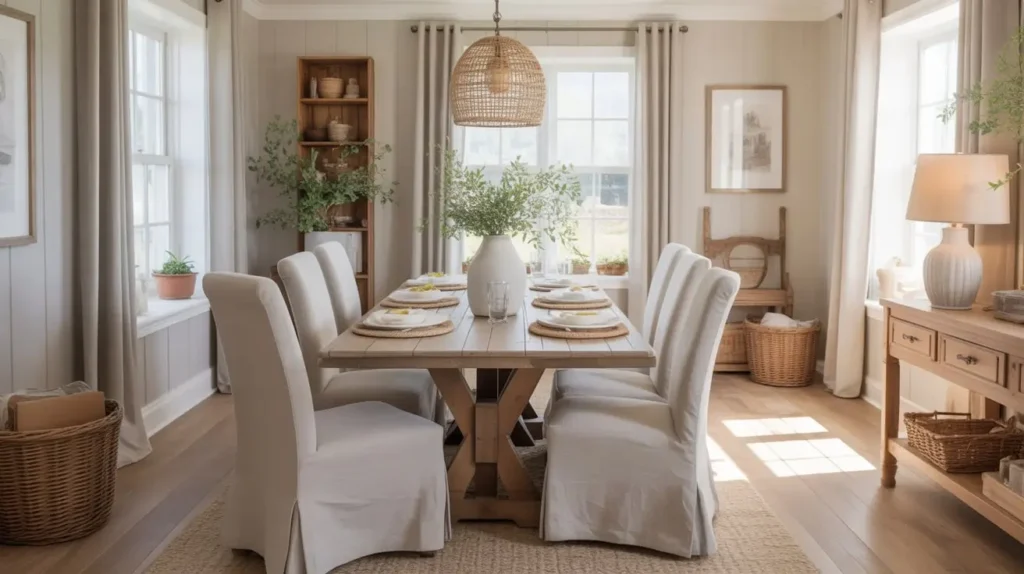
Color can be intimidating. If you’re not careful, your attempt at a “bold accent wall” can end up looking like a feature at a children’s funhouse. The beauty of a neutral farmhouse palette is that it’s incredibly forgiving and timeless. We’re talking about a spectrum of whites, creams, beiges, greiges, and soft grays.
But wait, doesn’t neutral mean boring? Absolutely not. A well-executed neutral room is serene, sophisticated, and anything but dull. The secret is to create interest through subtle variation and a rich tapestry of textures.
Think of it like a perfectly composed black-and-white photograph. The lack of color forces you to appreciate the light, shadow, form, and texture more deeply. A neutral dining room works the same way. When the walls are a soft greige, the grain of your wooden table pops. When the chairs are a creamy linen, the weave of the rug underneath becomes a focal point.
Here’s a simple formula to follow:
- Walls: Pick a light, warm neutral. Greige (a mix of gray and beige) is a fantastic choice because it adapts to both warm and cool light. Sherwin-Williams’ Agreeable Gray is popular for a reason—it just works.
- Furniture: Stick to wood tones and light-colored upholstery. Think an oak table, chairs upholstered in off-white or light gray fabric, and maybe a white or cream-colored buffet.
- Textiles: This is where you can really play. Layer in different textures in the same color family. A chunky knit throw over a dining chair, nubby linen placemats, a soft wool rug.
- Accent: Your “color” comes from natural elements. Greenery from houseplants, the warm glow of candlelight, and the subtle metallic sheen of a light fixture or hardware.
4. Farmhouse Dining Room With Shiplap Walls
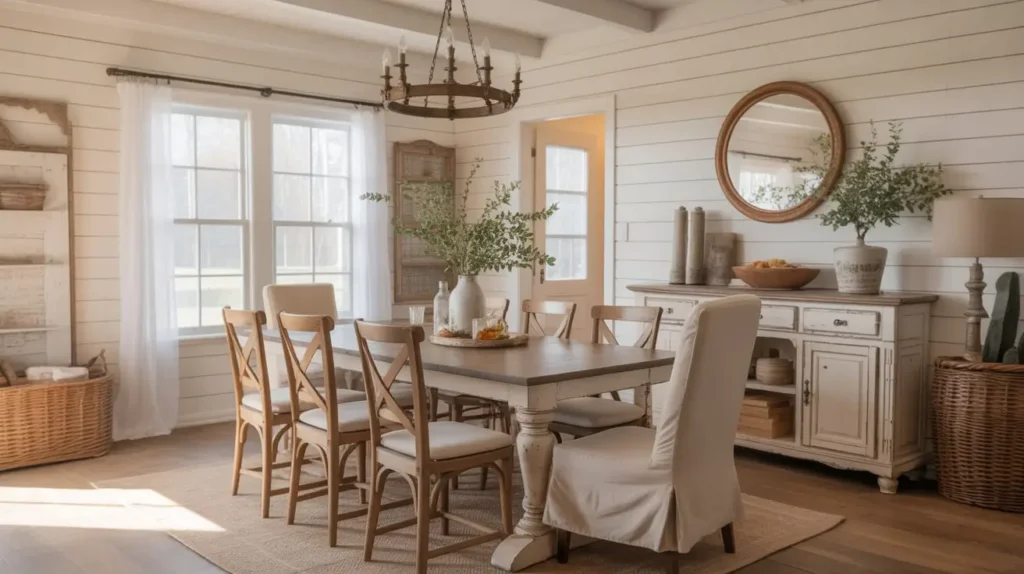
Yes, I know. Shiplap. Again. It feels like for a few years there, you couldn’t flip on a home renovation show without someone getting giddy over a wall of horizontal planks. There was a point where I thought people were going to start putting shiplap on their cars.
But hear me out. There’s a reason it became a phenomenon. When used correctly, shiplap adds instant architectural interest and rustic texture to a plain, boxy room. It’s a nod to the authentic building materials of old farmhouses and barns, and that historical connection gives it a comforting, familiar feel.
To Shiplap or Not to Shiplap?
The key to using shiplap in a way that feels fresh and not dated is restraint. Please, for the love of all that is holy, do not shiplap your entire house. Instead, use it strategically.
In the dining room, an accent wall of shiplap is a fantastic way to create a focal point. The wall behind your buffet or the main wall your table sits against is the perfect candidate. It draws the eye and provides a beautiful textured backdrop for your furniture and decor.
Another great idea is to install shiplap on the bottom half of the walls, like a modern take on wainscoting. This adds character without overwhelming the space. Paint it a crisp white or a soft, moody gray for different effects. Vertical shiplap is also making a huge comeback and can make your ceilings feel taller. See? It’s more versatile than you think.
Read Also 15 Cozy Boho Dining Room Decor Ideas with Warm Style
5. Cozy Farmhouse Dining Room Lighting
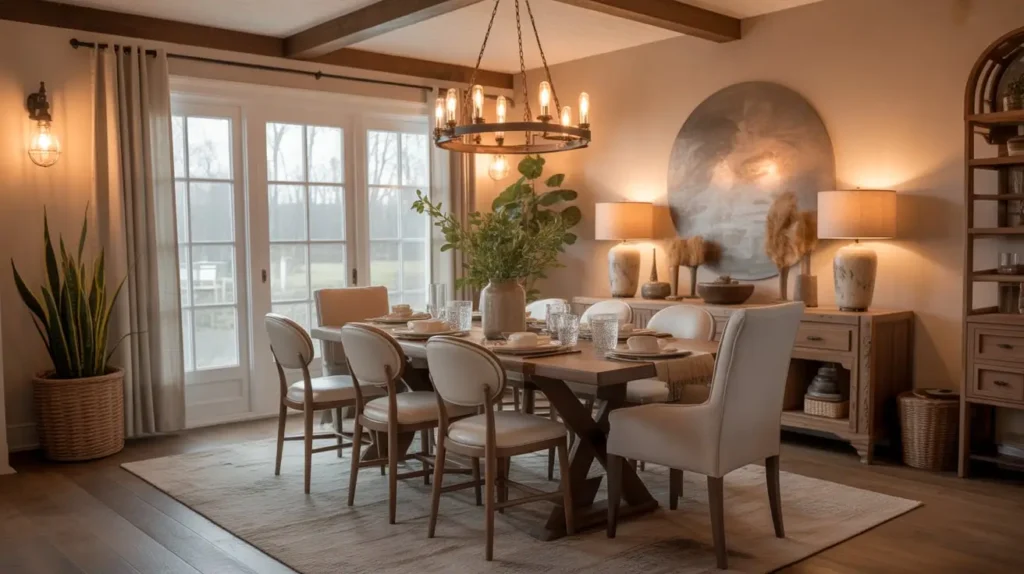
Lighting is everything. I will die on this hill. You can have the most beautifully designed room in the world, but if the lighting is bad, the whole vibe is ruined. Who wants to eat a delicious meal under harsh, interrogation-level overhead lighting? No one.
The goal in a farmhouse dining room is to create a warm, layered, and inviting glow. You’re not lighting a surgical suite; you’re setting a mood. The key is to use multiple light sources and, most importantly, put everything on a dimmer. A dimmer switch is the single best $20 you can spend on your dining room.
The Lighting Trio
You generally want three types of lighting working together:
- Ambient Lighting: This is your main overhead source. It’s usually a chandelier or a pendant light hanging over the center of the table. We’ll talk more about statement chandeliers later.
- Task Lighting: This is more focused light for specific areas. Think about a pair of sconces on the wall flanking a buffet or a small lamp on a console table. These add pockets of light and create a lovely, intimate atmosphere.
- Accent Lighting: This is the fun stuff. Candlelight is the ultimate accent light for a dining room. Nothing beats the flickering glow of real candles for creating a cozy, romantic mood. If you have open shelving or a glass-front cabinet, you can also add small puck lights to highlight your favorite dishes.
By combining these sources, you create a dynamic lighting scheme that feels rich and intentional. And when you dim them all down for dinner, your room will feel magical.
6. Vintage Farmhouse Dining Room Accents
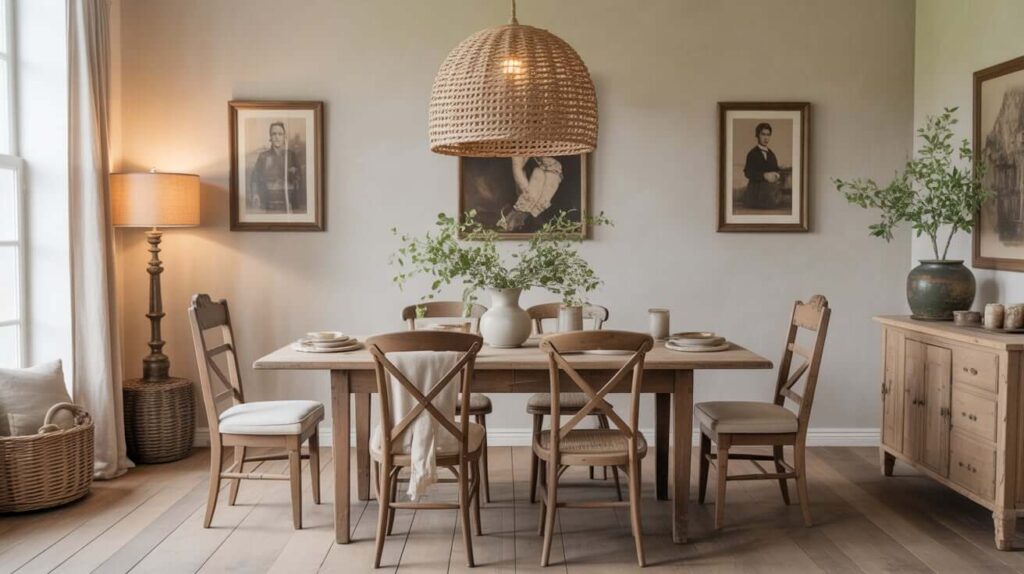
This is where you get to inject your personality into the space. A farmhouse room without any vintage or antique pieces can feel a bit like a furniture showroom—nice, but lacking soul. Vintage accents are the secret sauce; they add a sense of history and tell a story that you can’t buy off the shelf.
Don’t worry, you don’t need to be an expert antique hunter. The fun is in the search. Flea markets, thrift stores, antique malls, and even your own grandparents’ attic are treasure troves.
What to Look For
You’re not looking for museum-quality artifacts. You’re looking for pieces with a bit of wear, a bit of patina, and a lot of character.
- Vintage Dishes & Glassware: Mismatched floral china plates, old silver-plated cutlery, or chunky pressed-glass water goblets look beautiful on a farmhouse table. Display them on open shelves or in a hutch.
- Old Crocks & Pottery: Stoneware crocks, originally used for pickling or storage, make fantastic vases for branches or utensils.
- Antique Signage: An old wooden sign from a general store or a rusted metal advertisement adds instant graphic punch and authenticity.
- Architectural Salvage: Look for old window frames, corbels, or doors. You can hang an empty window frame on the wall as art or use a pair of corbels to create a unique shelf.
- Textiles: Vintage grain sacks can be turned into pillows or a table runner. An old, soft quilt can be draped over a bench.
The key is to mix這些 old items with your newer pieces. This contrast between old and new is what makes a room feel curated and dynamic, not like a dusty museum.
7. Small Farmhouse Dining Room Layout

Living in a smaller space doesn’t mean you have to sacrifice style. In fact, a small dining room can be even cozier and more intimate than a large one if you’re smart about the layout. The goal is to maximize function and create the illusion of more space.
It’s all about clever tricks and making every square inch count. You can’t just throw a giant table in there and call it a day. That’s a recipe for bruised hips and dinner-party traffic jams.
Smart Solutions for Small Spaces
Here are some tried-and-true strategies I’ve used in my own small-space battles:
- Go Round: A round pedestal table is a small dining room’s best friend. It has no sharp corners to bump into, and the single base frees up legroom, making the space feel more open. You can often squeeze more people around a round table than a rectangular one of a similar footprint.
- Use a Bench: We’ll cover this more next, but pushing a bench against a wall saves a ton of space compared to chairs, which need room to be pulled in and out.
- Think Vertically: If you can’t build out, build up. Use tall, narrow furniture like an open étagère or a hutch to draw the eye upward and provide storage without eating up a lot of floor space.
- The Magic of Mirrors: It’s the oldest trick in the book for a reason. A large mirror on one wall will reflect light and create the illusion of depth, making the room feel significantly larger.
- Light & Bright Palette: Stick to lighter colors for the walls and large furniture pieces. Dark, heavy furniture will make a small room feel like a cave.
8. Farmhouse Dining Room With Bench Seating
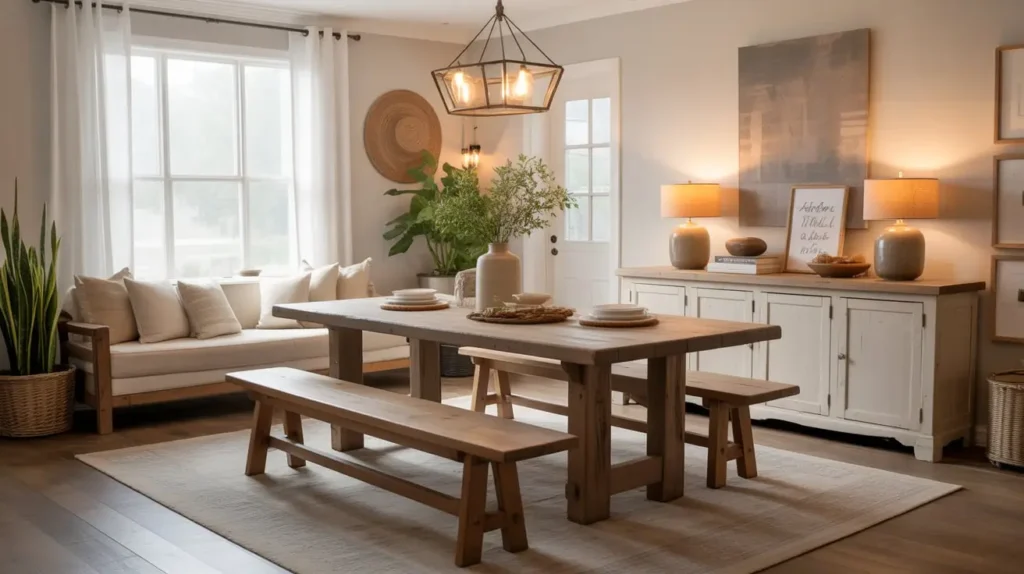
There is something so wonderfully communal and relaxed about bench seating. It’s a callback to old schoolhouses and church pews, and it instantly makes a dining room feel less formal and more family-friendly. Plus, from a practical standpoint, it’s a genius space-saver.
Remember trying to squeeze one more cousin at the kids’ table during Thanksgiving? With chairs, it’s impossible. With a bench, you just tell everyone to scooch over. It’s the epitome of “the more, the merrier.”
Ways to Work a Bench
You have a couple of options for incorporating a bench, and they both have their merits.
- The Classic Dining Bench: This is a simple, backless bench that tucks neatly under the table when not in use. You can buy one that matches your table for a cohesive look, or mix it up with a bench in a different wood tone or even a painted finish for more visual interest. Tossing a few pillows or a sheepskin throw on it adds comfort and texture.
- The Built-In Banquette: If you’re ready for a more permanent solution, a built-in banquette or breakfast nook is a game-changer. It provides tons of seating, can be built with hidden storage underneath (hello, extra space for all your seasonal decor!), and creates an incredibly cozy and custom look. You can tuck it into a corner or run it along an entire wall. Add a custom cushion and a pile of pillows, and I promise it will become the most coveted spot in the house.
9. Elegant Modern Farmhouse Dining Room
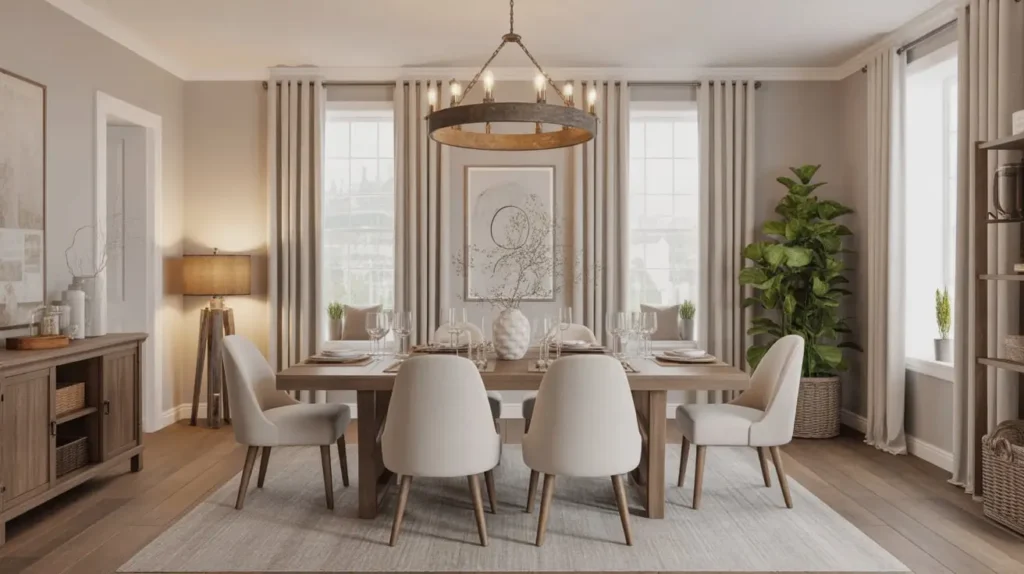
If your taste leans more “Nancy Meyers movie” and less “country cottage,” then an elegant, modern farmhouse approach is for you. This style takes the foundational elements of farmhouse—natural materials, comfort, simplicity—and elevates them with a more refined, sophisticated touch.
It’s about striking a perfect balance. The room should still feel approachable and warm, but with a sleeker, more curated aesthetic. Think less rustic, more refined.
Achieving the Elegant Look
How do you add elegance without losing that cozy farmhouse soul? It’s all in the details.
- Refined Furniture: Instead of a heavily distressed table, you might choose one with a smoother finish and cleaner lines. For chairs, consider fully upholstered dining chairs in a high-quality fabric like linen or even velvet, or classic Windsor chairs painted black for a dramatic contrast.
- Elevated Materials: Incorporate materials that feel a bit more luxe. A marble-topped buffet, brass or polished nickel hardware, and silk-blend curtains can add a touch of glamour without feeling stuffy.
- A Curated Color Palette: While still neutral, the palette might be a little more dramatic. Think about pairing warm whites with a deep, moody charcoal gray or a sophisticated navy blue on an accent wall or the base of a kitchen island.
- Art & Decor: This is a great place to bring in a modern touch. A large piece of abstract art can look stunning against a shiplap wall. Keep decorative objects to a minimum, focusing on a few high-quality, sculptural pieces rather than a collection of small trinkets.
Read Also 15 Stunning Dining Room Lighting Ideas for Dreamy Spaces
10. Farmhouse Dining Room With Statement Chandelier

Let’s go back to lighting for a second, because this is important. If the dining table is the soul of the room, the chandelier is its jewelry. A statement chandelier is a chance to be bold and establish the specific “flavor” of your farmhouse style.
Forget those sad, generic light fixtures that builders love. You need something with presence. Something that draws the eye up and says, “Yeah, I’ve got style.” A great chandelier can single-handedly elevate an entire room.
Finding Your Statement Piece
The world of farmhouse chandeliers is vast and wonderful. FYI, your choice here will heavily influence the overall vibe.
- The Classic Iron Chandelier: Think wagon wheel or candelabra styles in black or oil-rubbed bronze. This is a timeless choice that leans traditional and rustic. It’s strong, graphic, and works in almost any farmhouse setting.
- The Beaded Chandelier: For a softer, more bohemian or coastal farmhouse look, a chandelier draped in wood or glass beads is a beautiful option. It diffuses the light wonderfully and adds a ton of texture and sculptural interest.
- The Modern Linear Fixture: If you have a long, rectangular table, a linear chandelier can be a great choice. These fixtures provide even light across the entire table and have a clean, contemporary feel that’s perfect for a modern farmhouse aesthetic.
- The Rustic Crystal Chandelier: Wait, crystal? In a farmhouse? YES. The juxtaposition of a glamorous, glittering crystal chandelier against a rustic wood table and shiplap walls is design magic. It’s unexpected, elegant, and adds a perfect touch of sparkle. It says, “I’m down-to-earth, but I also like to be a little fancy.” 🙂
11. Minimal Farmhouse Dining Room Decor
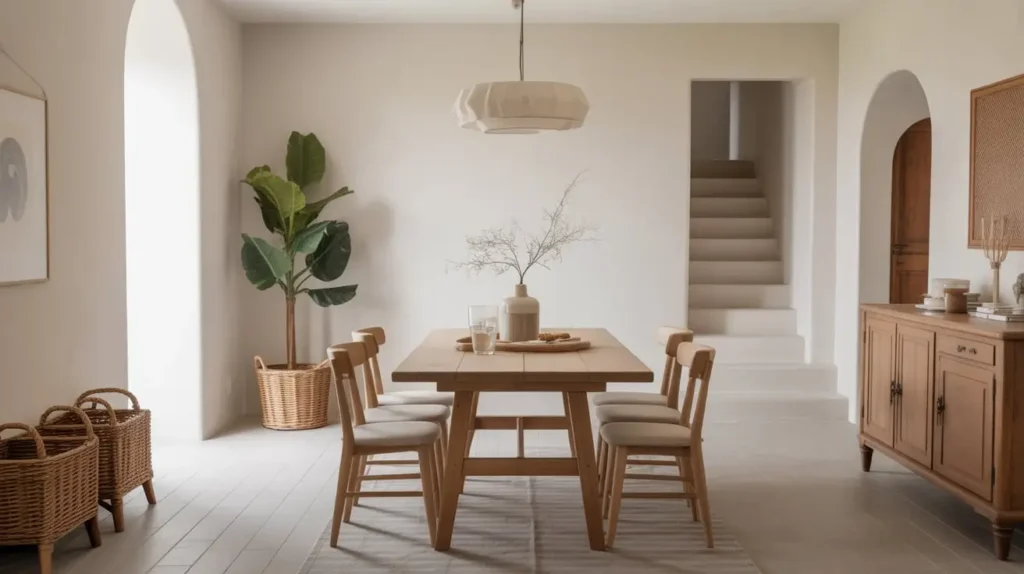
Maybe you love the warmth of farmhouse style but you’re also a minimalist at heart. The thought of shelves cluttered with vintage doodads gives you hives. Good news: you can absolutely have both.
Minimal farmhouse is about stripping the style down to its bare essentials: clean lines, natural materials, and a focus on function. It’s a quiet, calming aesthetic that celebrates simplicity. It’s not about having no decor; it’s about choosing each piece with extreme intention.
The Minimalist’s Toolkit
To nail this look, you need to edit, edit, and then edit some more.
- A Simple, Quality Table: The table is still the star, but choose one with a very clean silhouette. A simple plank top with straight, square legs is perfect.
- Unfussy Seating: Think simple wooden chairs (like a classic Shaker style), metal bistro chairs, or a clean-lined bench. No ornate details, no heavy upholstery.
- Negative Space is Key: Resist the urge to fill every wall and surface. Let the room breathe. An empty corner is not a problem to be solved; it’s a moment of visual calm.
- Decor with Purpose: Your decor should be beautiful and functional. A set of beautiful wooden salad bowls on an open shelf, a simple ceramic pitcher that you actually use for water, or a single, large-scale piece of art are all you need.
- Focus on Form: When you have fewer items in a room, the shape and form of each one becomes more important. Pay attention to the silhouette of your chairs, the curve of your vase, and the line of your light fixture.
12. Farmhouse Dining Room With Mixed Wood Tones
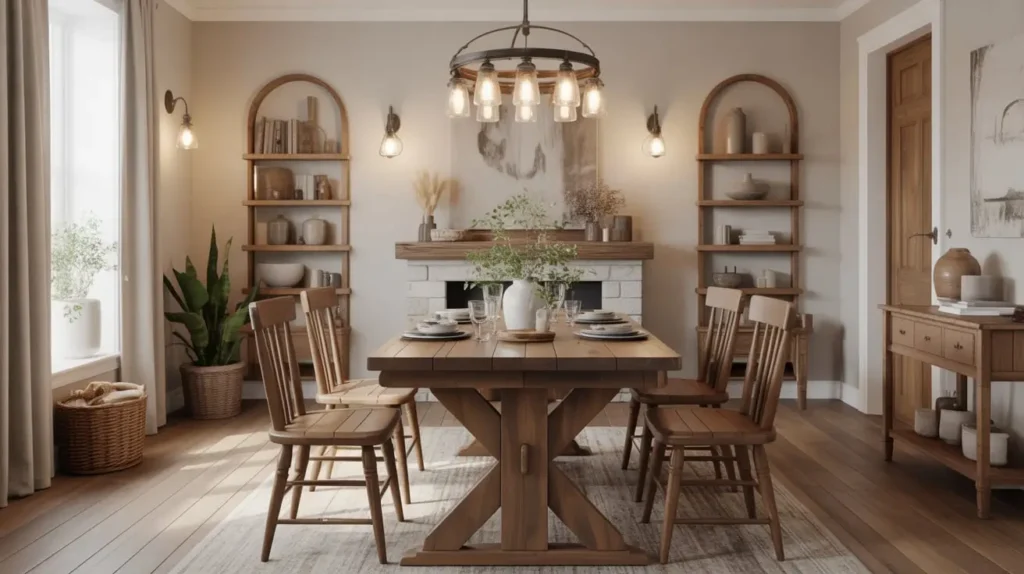
There’s an old, outdated design rule that says all your woods have to match. Please, I beg you, ignore that rule. A room where the table, chairs, floor, and buffet are all the exact same shade of “Golden Oak” looks dated and flat.
Mixing wood tones is the secret to creating a room that feels layered, collected over time, and full of depth. It’s one of the hallmarks of a professionally designed space. It can feel a little scary at first, but there’s a simple trick to it.
The key is to identify a dominant wood tone and then choose other woods that complement it. Your dominant tone will likely be your largest piece—either your flooring or your dining table.
Let’s say you have medium-toned oak floors. You could bring in:
- A darker walnut or espresso-finished buffet for a moody contrast.
- Lighter, natural pine or ash chairs to keep things bright.
- A reclaimed wood mirror frame that has a mix of several tones in it.
To make it all feel cohesive, make sure the undertones are compatible (i.e., stick to mostly warm woods or mostly cool/ashy woods) and repeat each wood tone at least once somewhere else in the room. For example, if you have dark chairs, maybe you have a dark picture frame on the wall, too. This simple repetition makes the mix feel intentional, not accidental.
13. Bright Farmhouse Dining Room With Natural Light

If you’re lucky enough to have a dining room with big windows, you’ve already won half the battle. Natural light is the ultimate decorating accessory. It’s free, it makes every color look better, and it instantly boosts your mood. The goal is to maximize every single ray of sunshine.
Let the Light In
Don’t sabotage your natural light with heavy, dark window treatments.
- Go Bare: If privacy isn’t an issue, consider leaving your windows completely bare. It’s a clean, modern look that lets in the maximum amount of light.
- Sheer or Linen Curtains: If you need some privacy or just want to soften the look of the windows, opt for light and airy curtains. Sheer white or natural linen panels are perfect. They’ll give you privacy while still allowing light to filter through beautifully. Hang the curtain rod high and wide—several inches above and outside the window frame—to make your windows look even bigger.
- Woven Wood Shades: For a bit more texture and light control, woven wood or bamboo shades are a fantastic choice. They bring in a natural, organic element and cast a lovely, dappled light when partially lowered.
Beyond the windows, you can amplify the light you have by using a light wall color and placing a large mirror on the wall opposite the window. The mirror will bounce light all around the room, making it feel twice as bright.
14. Farmhouse Dining Room With Woven Textures
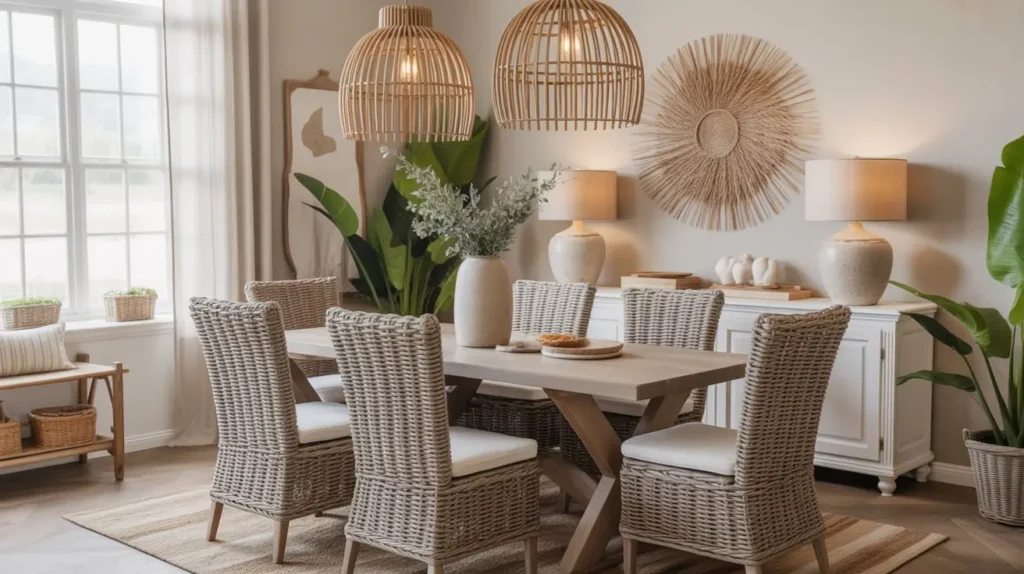
We’ve touched on this a few times, but it deserves its own moment in the spotlight. Texture is the unsung hero of farmhouse design. A room can have the perfect color palette and furniture, but without a variety of textures, it will fall flat.
Woven natural fibers are a cornerstone of this look. They bring an organic, earthy quality that is essential for achieving that warm, rustic feel. Think about all the different ways you can incorporate them:
- Rugs: A jute, sisal, or seagrass rug is a no-brainer for a farmhouse dining room. It’s durable, it adds a ton of texture, and its neutral color goes with everything.
- Chairs: Rattan or wicker dining chairs are a fantastic way to add texture and a slightly more casual, coastal, or bohemian vibe. Even just two at the heads of the table can make a big impact.
- Baskets: A large woven basket in a corner can hold extra blankets or pillows. A collection of smaller baskets on a wall can serve as unique, textural art.
- Lighting: A pendant light with a woven rattan or seagrass shade makes a beautiful, earthy statement over a dining table.
- Placemats: Simple woven placemats are an easy and inexpensive way to add a layer of texture to your tablescape.
15. Timeless Farmhouse Dining Room Design
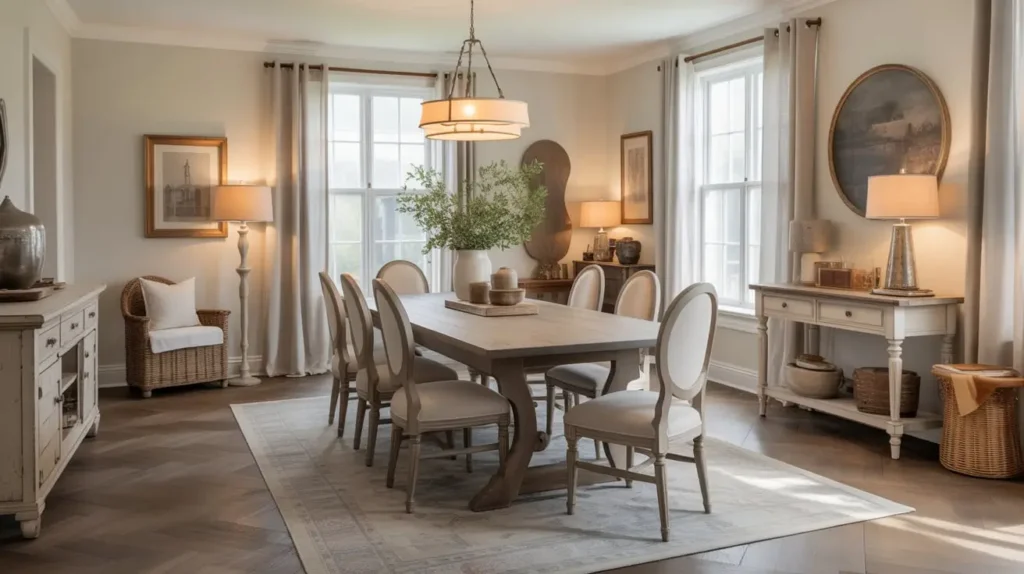
Trends come and go. Remember when everyone was painting chevron stripes on everything? Yikes. The ultimate goal is to create a space that you will love for years to come, not just until the next big thing comes along. A timeless farmhouse design is rooted in classic principles, not fleeting fads.
So how do you create a look with staying power?
- Invest in Classic Furniture Silhouettes: Choose a table and chairs with simple, classic lines that have stood the test of time. A trestle table, Shaker-style chairs, or a Windsor bench will never go out of style.
- Stick to a Neutral Foundation: Keep your major elements—walls, sofa, large furniture—neutral. You can always bring in trendier colors and patterns with inexpensive, easy-to-change accessories like pillows, throws, and art.
- Prioritize Quality Over Quantity: One beautiful, well-made solid wood table is better than a room full of cheap, particleboard furniture. Invest in pieces that are built to last.
- Focus on Authenticity: The most timeless designs are authentic. Incorporate pieces that have personal meaning to you—heirlooms, travel souvenirs, art from a local maker. A room that reflects who you are will always feel right.
Your Turn
Whew. That was a lot. But here’s the thing: you don’t have to do it all at once. The best-designed rooms evolve over time. They aren’t assembled in a weekend from a catalog.
Pick one or two ideas from this list that really speak to you. Maybe you start by hunting for the perfect rustic table. Or perhaps your first move is simply installing a dimmer switch and grabbing some candles.
So, what’s your first move? The most important step is just to start. Create a space where you can gather with the people you love, share a meal, make a mess, and create memories. At the end of the day, that’s what a dining room is all about. Now go make some magic.