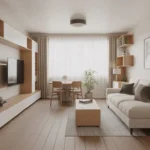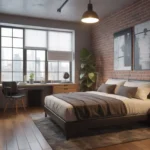


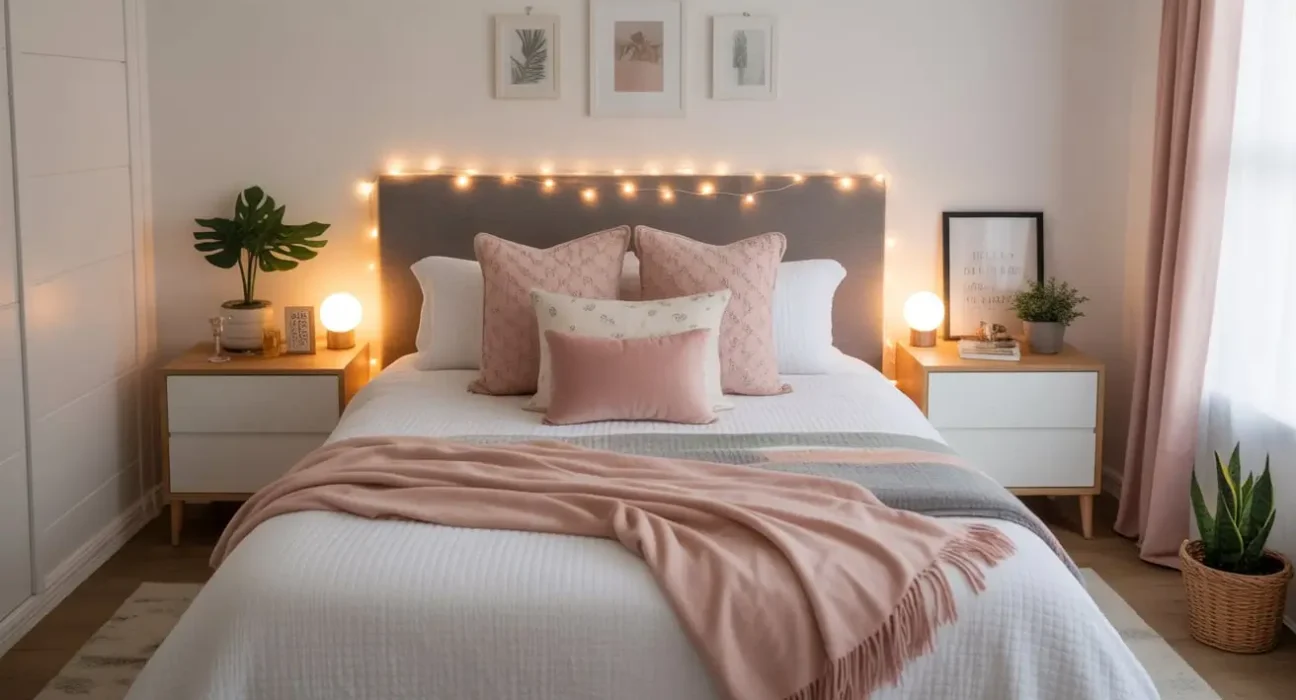
So, you did it. You have the keys. They’re probably still sitting on your counter, looking all shiny and important. You’ve walked through your new, gloriously empty first apartment about a dozen times, picturing where the couch will go, where you’ll binge your next favorite show, and where you’ll inevitably stack a pile of mail you mean to sort later.
The excitement is real. But so is the overwhelming sense of… emptiness. Right now, it’s just a box with walls, floors, and probably a very questionable shade of “landlord beige.” My first apartment had this one wall that I swear was painted with leftover mustard. It was a vibe, just not a good one. The pressure to turn this blank canvas into a cozy, warm, you-feeling home is immense. Where do you even begin?
Don’t panic. I’ve been there, staring at a sad, empty living room with nothing but a hand-me-down air mattress and a sense of impending doom. You don’t need a massive budget or a degree in interior design. You just need a few good ideas and a little bit of guidance. Let’s walk through some decorating styles that are perfect for creating that warm, inviting atmosphere in your very first place.
1. Cozy Neutral Starter Space

Let’s start with a classic for a reason. When you hear “neutral,” you might think “boring.” You might picture a sea of beige that slowly saps the will to live. Sound a bit dramatic? Maybe, but bad decor can do that. A truly cozy neutral space, however, is anything but boring. It’s all about creating a calm, serene backdrop that feels sophisticated and timeless.
The magic of a neutral palette is its versatility. It’s the perfect foundation because you can easily add or subtract color later without having to redo the entire room. Think of it as the perfect pair of jeans in your wardrobe—it goes with everything. We’re talking shades of cream, ivory, soft gray, taupe, and even muted charcoal.
The Secret Sauce: Layering Textures
Since you aren’t relying on bold colors to create interest, your new best friend is texture. This is non-negotiable. Layering different materials is what stops a neutral room from looking flat and turns it into a rich, tactile experience. You want your eyes—and your hands—to have something interesting to explore.
Here’s how you can do it:
- A chunky knit throw blanket tossed artfully (or, let’s be real, just thrown) over the arm of your sofa.
- Linen or cotton curtains that feel light and airy, but still have a visible weave.
- A plush, high-pile or jute rug to anchor your seating area. Your bare feet will thank you.
- Velvet or bouclé accent pillows to add a touch of softness and luxury.
- Wooden or rattan elements, like a coffee table, a side table, or even a decorative bowl.
I personally love starting with a great neutral rug. It sets the tone for the entire room and gives you a clear palette to work from. It’s an investment, but it’s one you won’t regret.
2. Minimalist Small-Apartment Setup
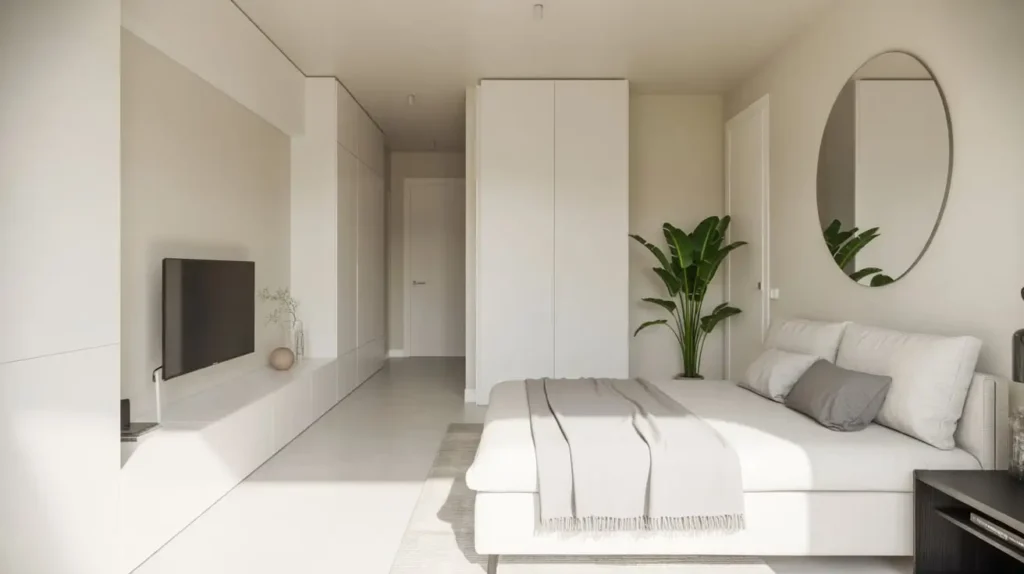
“Minimalism” is a word that gets thrown around a lot. For some, it conjures images of stark white rooms with a single, painfully uncomfortable chair. That’s not what we’re going for. For a first apartment, especially a small one, minimalism is about intentionality. It’s about choosing fewer, better things that you truly love and that serve a purpose.
This approach is a lifesaver in a small space because it inherently fights clutter. Less stuff means more visual space, which makes your apartment feel bigger and more breathable. It’s about quality over quantity. Instead of five cheap, wobbly bookshelves, you invest in one solid, well-designed piece.
Making “Less” Feel Like “More”
The key to a warm, cozy minimalist apartment is to focus on clean lines, a simple color palette, and the function of every single item. Does this spark joy? More importantly, does it have a place to live when you’re not using it?
- Stick to a limited color scheme. Three to four complementary colors are plenty. This creates a sense of cohesion and calm.
- Choose furniture with clean, simple lines. Think mid-century modern or Scandinavian designs. Avoid anything overly ornate or bulky.
- Every item should have a purpose. That decorative vase? Great, but can it also hold fresh flowers to brighten the room? That ottoman? It better have storage inside.
- Embrace negative space. Don’t feel the need to fill every single wall and corner. Letting parts of your room “breathe” is a design choice in itself.
My first attempt at minimalism was a disaster. I just got rid of stuff and was left with a room that felt empty and sad. The trick I learned was to make the few things I did have really count. A beautiful piece of art, a plant with interesting leaves, or a lamp with a unique shape can become a powerful focal point in a minimalist room.
3. Boho First-Apartment Vibes
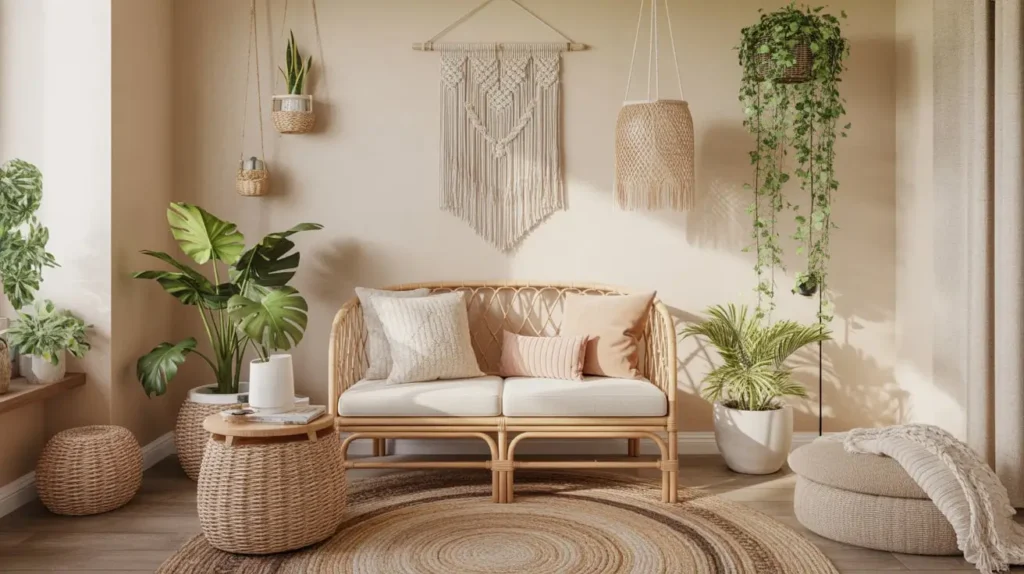
If neutrals feel too restrictive and minimalism sounds like your personal nightmare, let’s swing the pendulum in the other direction. Welcome to the world of Boho, or Bohemian, decor. This style is for the free spirits, the travelers, the artists, and anyone who believes “more is more.”
Boho is eclectic, personal, and wonderfully chaotic. It’s about mixing patterns, textures, and items from different cultures and eras to create a space that tells a story—your story. There are very few rules here, which can be both liberating and a little daunting. The goal is a space that feels lived-in, comfortable, and full of personality from day one.
How to Get the Look Without Looking Messy
The danger with Boho is that it can quickly slide from “eclectic and cool” to “hoarder-in-training.” The key is to find a loose connecting thread. Maybe it’s a warm color palette of terracotta, mustard, and forest green, or maybe it’s a consistent use of natural materials.
- Plants, Plants, and More Plants: Seriously, you can’t have a Boho apartment without plants. Hanging plants, floor plants, tiny succulents… they bring life and color into the space.
- Mix and Match Textiles: Layering is huge in Boho design. Combine a Moroccan-print rug with macrame wall hangings, mudcloth pillows, and a fringed throw blanket.
- Natural Materials are a Must: Rattan, wicker, wood, and jute are the backbone of this style. Think a wicker peacock chair in the corner or a large jute rug.
- Global-Inspired Decor: This is your chance to display treasures from travels (or from the World Market aisle, no judgment here). Think carved wooden figures, colorful textiles, or hand-painted pottery.
- Vintage and Secondhand Finds: A weathered wooden chest as a coffee table or a vintage mirror adds soul and history that you just can’t buy new.
4. Modern Aesthetic Living Corner
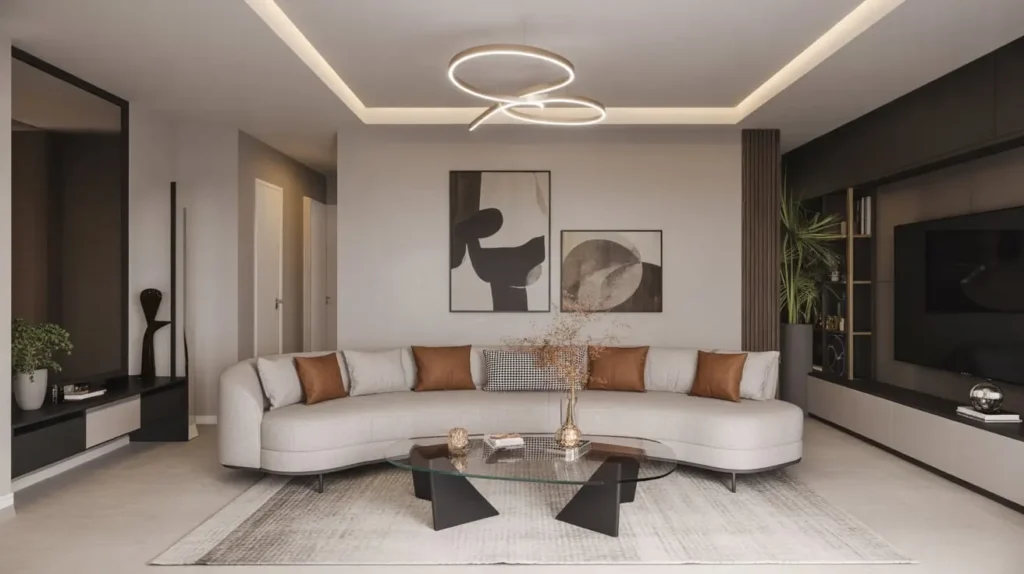
Maybe you’re not a “plants and patterns” person. Maybe you crave something sleek, sophisticated, and distinctly “grown-up.” A modern aesthetic can deliver that polished look, even in a small corner of your first apartment. Modern design, which peaked in the mid-20th century, is all about simplicity, clean lines, and a lack of fussy ornamentation.
This isn’t the same as contemporary design, which is about what’s trendy right now. Modern design is a specific, established style. Think smooth surfaces, geometric shapes, and a connection between the furniture and its function. It’s sharp, it’s clean, and it can make any space feel incredibly chic.
Creating a Sleek and Cozy Nook
A “cozy” modern space? Isn’t that an oxymoron? Not at all. While modern design can sometimes feel cold, you can easily warm it up with the right choices.
- Furniture is the Star: Look for pieces with tapered legs, simple silhouettes, and natural wood tones (like walnut or teak). A low-profile sofa, a simple platform bed, or an Eames-style chair are quintessential modern pieces.
- Color Palette: Start with a neutral base of white, gray, and black. Then, inject pops of saturated, earthy colors like mustard yellow, olive green, burnt orange, or deep teal.
- Graphic Patterns: Unlike the intricate patterns of Boho, modern design favors bold, graphic patterns. Think geometric prints on pillows or a simple striped rug.
- Warm it Up: To avoid a sterile look, bring in warmth through a plush area rug, a soft throw blanket in a solid color, and warm-toned metals like brass or gold for lamp bases or picture frames.
I have a friend who absolutely nailed this in her tiny studio. She had a simple grey sofa, a sleek walnut media console, and one giant, abstract painting with a pop of orange. It was minimal but packed a huge punch.
Read Also 15 Smart Apartment Decorating Living Room Ideas for Every Space
5. Budget-Friendly Bedroom Makeover
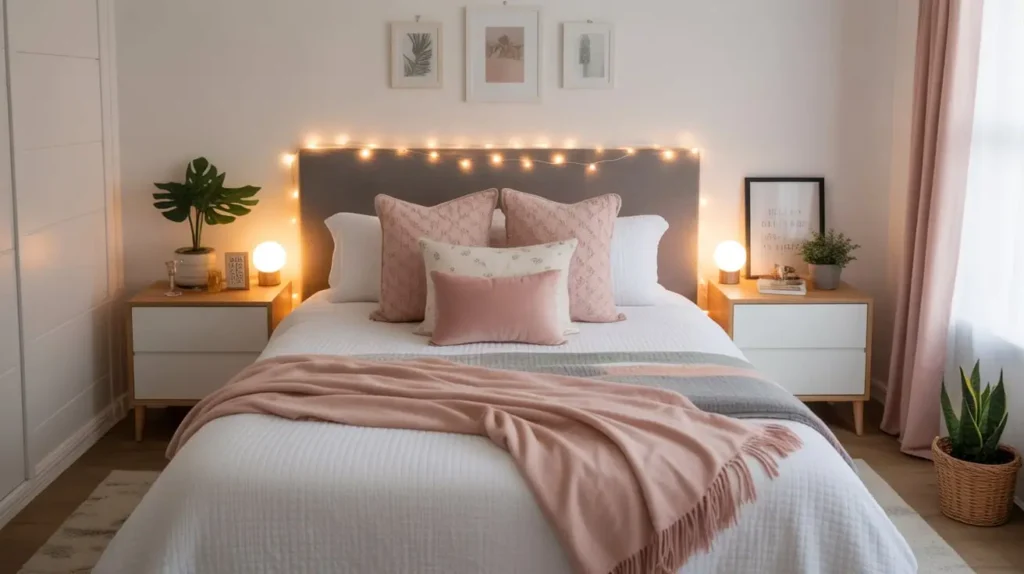
Your bedroom is your sanctuary. It’s the one room that’s truly yours, away from roommates or guests. It should be the coziest, most comfortable spot in your whole apartment. The good news? You can achieve a five-star hotel feel on a one-star motel budget.
A bedroom makeover is less about buying all-new furniture and more about strategic upgrades and focusing on what really matters: comfort. You spend a third of your life in this room, so let’s make it a place you actually want to be.
Where to Splurge and Where to Save
Not all decor is created equal. Knowing where to invest your limited funds is crucial for a budget makeover.
- Splurge on Bedding: This is my number one tip. You don’t need a fancy bed frame, but good quality sheets, a fluffy duvet, and comfortable pillows will change your life. You can find surprisingly affordable linen or high-thread-count cotton sets online if you hunt for sales.
- Save on the Bed Frame: A simple metal platform frame or even a sturdy wooden pallet base can look surprisingly chic and costs a fraction of an upholstered headboard. You can always fake a headboard by painting a rectangle on the wall behind your bed or hanging a large piece of tapestry.
- DIY or Thrift the Nightstands: Mismatched nightstands have a certain charm. A small thrifted table, a stack of vintage books, or a simple floating shelf can all do the job.
- Lighting is Key: Ditch the harsh overhead light. A pair of simple plug-in sconces on either side of the bed frees up nightstand space and adds a touch of hotel-like symmetry. Or, a simple floor lamp in the corner with a warm bulb is perfect.
The biggest game-changer for me was layering my bed. A fitted sheet, a flat sheet, a duvet, a quilt or coverlet at the foot of the bed, and a ridiculous number of pillows. It looks incredibly inviting and feels even better.
6. Renter-Friendly Wall Decor Setup

Ah, the dreaded rental agreement. “No nails, no holes, no painting, no fun.” It can feel like you’re sentenced to live with stark white walls for the duration of your lease. But you are not powerless! Getting creative with your walls is one of the fastest ways to inject personality into a space, and thankfully, there are tons of ways to do it without risking your security deposit.
Forgoing nails doesn’t mean forgoing style. It just means you have to be a little smarter about how you hang things. This is about working with your limitations, not against them.
Your New Best Friends: Damage-Free Solutions
Get ready to become intimately familiar with the command strip aisle at your local hardware store. Those things are pure magic.
- Command Strips and Hooks: These are the holy grail of renter-friendly decor. They come in all shapes and sizes, from tiny hooks for fairy lights to heavy-duty strips that can hold a surprisingly large framed print. Always check the weight limit!
- Peel-and-Stick Wallpaper: This is a game-changer. You can create a stunning accent wall in an afternoon and simply peel it off when you move out. Pro-tip: Buy a small sample and test it on an inconspicuous spot for a week to make sure it doesn’t damage the paint.
- Gallery Walls with Washi Tape: For lightweight prints and photos, you can create cool, geometric frames directly on the wall using colorful washi tape. It’s cheap, creative, and peels off with zero residue.
- Large-Scale Art: Instead of hanging a bunch of small things, invest in one large, lightweight canvas and lean it against the wall from the floor or from the top of a console table. It makes a huge impact with zero holes.
- Tension Rods: These aren’t just for shower curtains. You can use a tension rod in a nook to hang a curtain as a room divider, or even use smaller ones inside a window frame to hang lightweight plants.
7. Soft Pastel Apartment Aesthetic
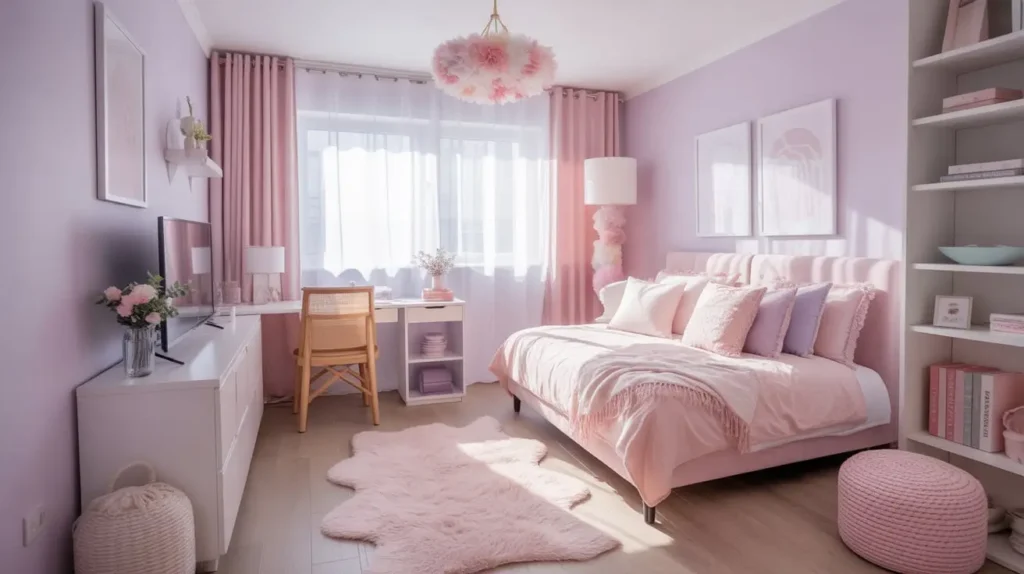
If you’re looking for a style that’s gentle, dreamy, and brings a subtle touch of color, a soft pastel aesthetic might be your perfect match. This isn’t about recreating a nursery; it’s about using sophisticated, muted shades of pink, blue, green, and yellow to create a light, airy, and calming atmosphere.
This look works wonders in small, light-starved apartments, as the pale colors help to reflect light and make the space feel brighter and more open. It’s a cheerful and optimistic style that still manages to be incredibly serene. Think blush pink, sage green, baby blue, and buttery yellow.
How to Do Pastels Without It Feeling Juvenile
The key to a grown-up pastel space is balance. You don’t want every single thing to be a pale, chalky color. You need to ground it with other elements.
- Ground with Neutrals: Your primary furniture pieces, like your sofa or bed frame, should probably be a solid neutral like light gray, white, or a natural wood tone. This gives your pastels a sophisticated backdrop to pop against.
- Incorporate with Intention: Use pastels for your accent pieces. Think throw pillows, blankets, area rugs, art prints, and smaller decor items like vases or candles.
- Mix in Metallics: Gold, brass, or rose gold accents look absolutely stunning next to pastels. A gold-framed mirror or a brass floor lamp can add a much-needed touch of glam and maturity.
- Vary the Shades: Use different tones of the same pastel color. For example, pair a blush pink pillow with a slightly deeper rose-colored vase. This adds depth and keeps the look from feeling one-note.
I find that sage green is one of the most versatile and calming pastels to work with. It pairs beautifully with wood tones and cream, and it feels very connected to nature, which instantly adds a sense of tranquility.
8. Industrial Chic First Living Room
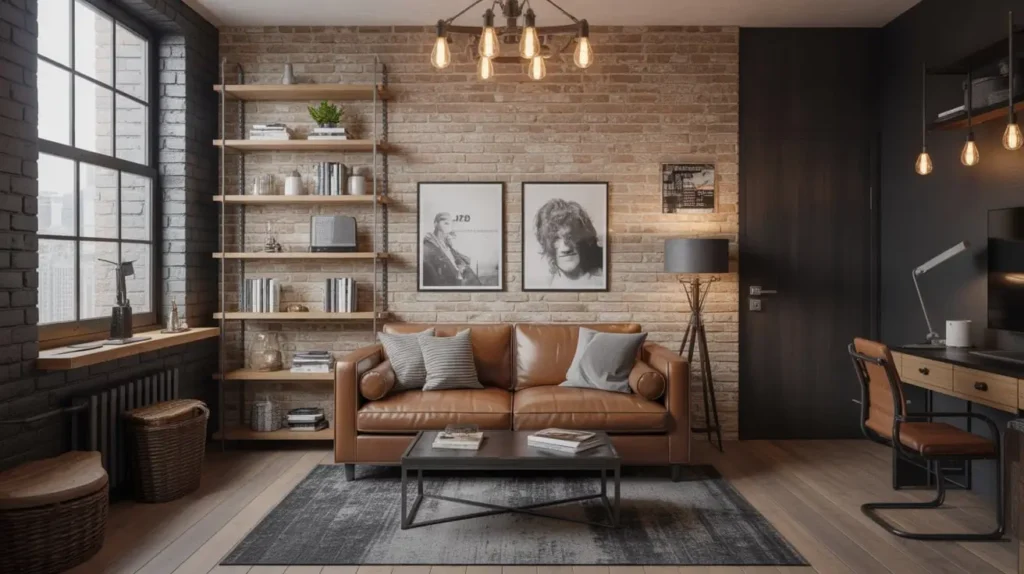
Exposed brick, concrete floors, metal piping… the Industrial look is born from old factories and warehouses. It’s raw, it’s edgy, and it has a distinctly urban, masculine feel. But how on earth do you replicate that in a standard, cookie-cutter apartment?
You fake it ’til you make it. You can absolutely capture the spirit of industrial design without needing a loft in a converted factory. It’s about celebrating raw materials, embracing imperfections, and mixing hard and soft elements.
Faking an Industrial Loft Vibe
The trick is to introduce industrial elements in a way that feels authentic to your space. You’re not trying to build a factory; you’re just borrowing its best features.
- The “Brick” Wall: No exposed brick? No problem. There are incredibly realistic peel-and-stick faux brick wallpapers available. An accent wall behind your sofa or bed can instantly set an industrial tone.
- Furniture with Mixed Materials: Look for pieces that combine wood and metal. A coffee table with a reclaimed wood top and black steel legs is a perfect example. Bookshelves made from pipes and wood planks are a classic DIY-friendly project.
- Lighting is Crucial: Exposed-bulb fixtures, metal cage pendants, and track lighting are hallmarks of this style. An Edison bulb in a simple socket hanging over a side table is an easy and affordable way to get the look.
- Soften the Edges: This is the most important part! An all-industrial space can feel cold and unwelcoming. You absolutely must soften it with cozy textiles. A worn leather sofa, a plush wool rug, and plenty of soft pillows and throws are essential for creating that “chic” and comfortable balance.
9. Multi-Functional Small Studio Layout
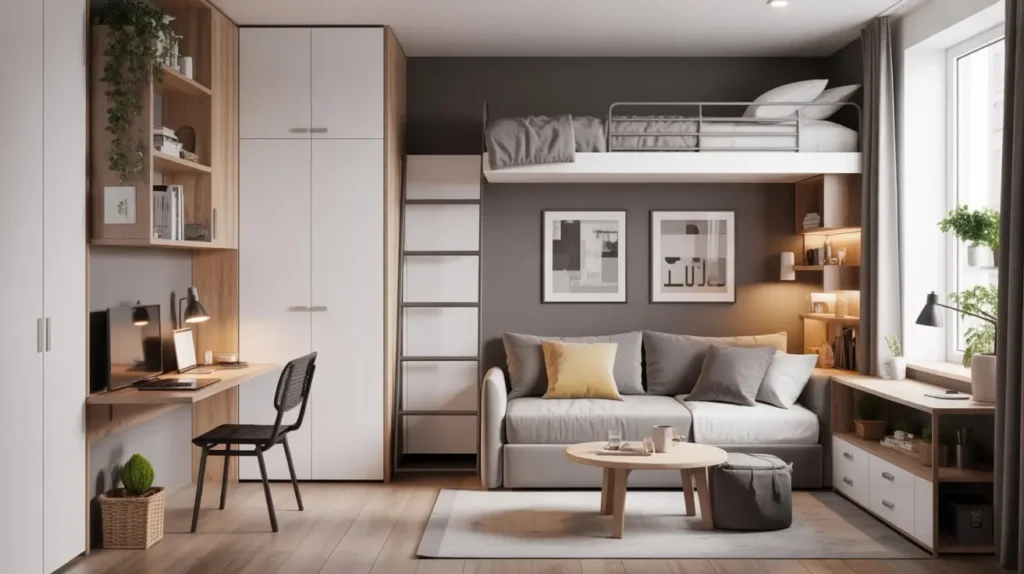
Living in a studio apartment is a masterclass in efficiency. Your living room, bedroom, and dining room are all essentially the same room. The challenge isn’t just decorating it; it’s defining different “zones” so you don’t feel like you’re eating dinner in your bed. A warm, cozy studio is one that’s clever, organized, and doesn’t feel cramped.
The name of the game is multi-functional furniture. Every major piece you buy should be able to pull double or even triple duty. Your space is limited, so your furniture’s imagination shouldn’t be.
Furniture That Does More Than Just Sit There
Think of your furniture as a team of hardworking employees. Each one needs a clear job description, and ideally, more than one.
- The Sofa Bed (That’s Actually Comfortable): They’ve come a long way from the lumpy, back-breaking futons of the past. Invest in a good one, and you have both seating and a guest room.
- The Storage Ottoman: This is a non-negotiable. It’s a footrest, extra seating for guests, and a secret hiding spot for blankets, board games, or the clutter you need to hide in 30 seconds.
- The Drop-Leaf or Extendable Dining Table: Use it as a small console table or desk against a wall, then pull it out and pop up the leaves when you have company for dinner.
- The C-Table: These little tables are designed to slide under the edge of your sofa. It’s an instant side table, laptop desk, or TV tray that takes up virtually no floor space.
- Room Dividers: Use a tall, open bookshelf (like the IKEA KALLAX) as a room divider. It separates your “bedroom” from your “living room” while providing much-needed storage and still letting light through.
My old studio had a C-table that I used as a nightstand, a work desk, and a dinner table. It was the MVP of the entire apartment, hands down.
Read Also 15 Stunning Black Hexagon Tile Bathroom Ideas for Modern Homes
10. Warm Ambient Lighting Decor
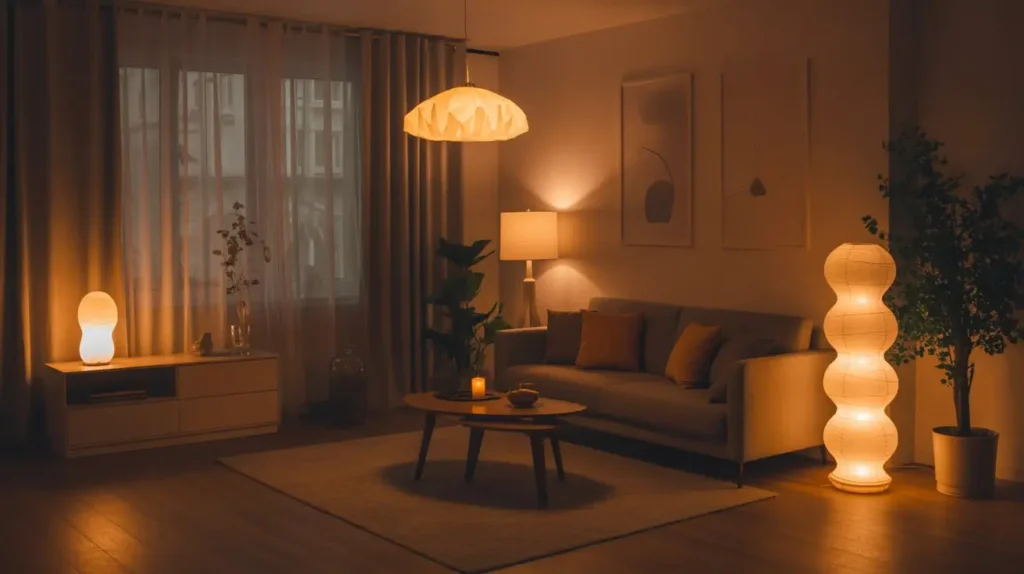
This isn’t so much a “style” as it is a fundamental principle of cozy decor that applies to every single other idea on this list. If you take away only one piece of advice, let it be this: good lighting is everything. You can have the most beautiful furniture and the softest textiles, but if your only light source is a harsh, single overhead fixture (I call it “the big light”), your apartment will never feel cozy.
Creating a warm ambiance is about layering your light sources. You need a mix of different types of light at different levels to create depth, warmth, and mood. The goal is to have a soft, golden glow throughout the room, not a sterile, operating-room brightness.
The “Big Light” Is Not Your Friend
Seriously, turn it off. Unless you’re performing surgery or have lost a contact lens, you probably don’t need it. Instead, build your lighting scheme around these three layers:
- Ambient Light: This is the overall illumination in the room. Instead of the overhead fixture, this should come from a combination of sources like floor lamps, table lamps, and natural light from the windows.
- Task Light: This is focused light for specific activities. Think a reading lamp by your favorite chair, an under-cabinet light in the kitchen for chopping veggies, or a desk lamp.
- Accent Light: This is the fun stuff. It’s light that highlights architectural features or decor. This could be a picture light over a piece of art, an uplight placed behind a large plant, or even string lights or LED light strips for a magical glow.
The single most important technical detail? Buy warm-toned light bulbs. Look for bulbs with a color temperature of 2700K (Kelvin). This will give you that soft, yellowish, candle-like glow that is the very definition of cozy. IMO, it’s the biggest mood-setter you can buy for under ten dollars.
11. Scandinavian First-Apartment Style

If you want a space that feels bright, clean, and effortlessly cozy, look no further than Scandinavian (or Scandi) design. Hailing from the Nordic countries, this style is a beautiful blend of minimalism and comfort. It’s born from a culture that spends a lot of time indoors during long, dark winters, so they’ve perfected the art of making home a bright and happy sanctuary.
The philosophy is centered around “hygge” (pronounced hoo-gah), a Danish concept that doesn’t have a direct English translation but roughly means a feeling of cozy contentment and well-being. Think clean lines, natural materials, a lack of clutter, and a focus on light.
Achieving “Hygge” in Your Home
Scandi style is perfect for first apartments because it’s inherently uncluttered and relies on simple, often affordable, pieces.
- A Light and Bright Color Palette: The foundation is almost always white or very light gray walls. This maximizes natural light and makes the space feel open and airy.
- Natural Wood Tones: Light-colored woods like beech, ash, and pine are everywhere in Scandi design—in furniture legs, flooring, and decorative objects.
- Simple, Functional Furniture: Scandi furniture is known for its clean lines, expert craftsmanship, and lack of ornamentation. Function is just as important as form.
- Cozy Textiles are Essential: This is where the hygge comes in. To balance the minimalist backdrop, you need lots of soft textures. Faux fur or sheepskin throws, wool blankets, and soft linen pillows are must-haves.
- Bring the Outdoors In: Plants are a key element, as are other natural touches like pinecones or branches in a simple vase.
- Less is More: Scandi design is not about filling every space. It values simplicity and thoughtful curation. Choose a few meaningful pieces of decor rather than a lot of clutter.
12. Luxe-on-a-Budget Apartment Look

You have champagne taste but, let’s be honest, a beer budget. Welcome to the club! 🙂 Creating an apartment that looks expensive and luxurious has very little to do with how much money you actually spend. It’s all about strategic choices, clever illusions, and knowing what materials and finishes read as “high-end.”
This is the art of the “high-low mix.” You save money on the big, foundational pieces and then splurge just a little on the small details that make a huge impact. It’s about fooling the eye into seeing luxury.
Tricks to Make Your Apartment Look Expensive
Ready to make your friends think you have a secret trust fund? Here are the secrets.
- Focus on Fabrics: Rich-feeling fabrics are an instant upgrade. Velvet, faux silk, and linen all look more expensive than they often are. A few velvet throw pillows on an IKEA sofa can elevate the entire piece.
- The Power of Paint: A can of paint is your cheapest, most powerful tool. Dark, moody colors like navy, charcoal gray, or deep emerald green can make a room feel incredibly sophisticated and cozy. Or, a fresh coat of a crisp, clean white can make everything look newer.
- Hardware is Jewelry for Your Rooms: Swap out the generic silver knobs on your kitchen cabinets, bathroom vanity, or a cheap dresser for something more substantial. Heavy brass or matte black hardware can make a basic piece of furniture look custom.
- Go Big with Art and Mirrors: A single, oversized piece of art (even an affordable print in a nice frame) looks more luxurious than a cluster of small, dinky ones. A large mirror not only makes a room feel bigger and brighter but also adds a touch of glamour.
- Curtain Tricks: Hang your curtain rod as high and as wide as possible. This draws the eye upward and makes your windows (and the entire room) feel taller and grander. Make sure your curtains are long enough to just “kiss” the floor.
13. Vintage-Inspired First Home Decor
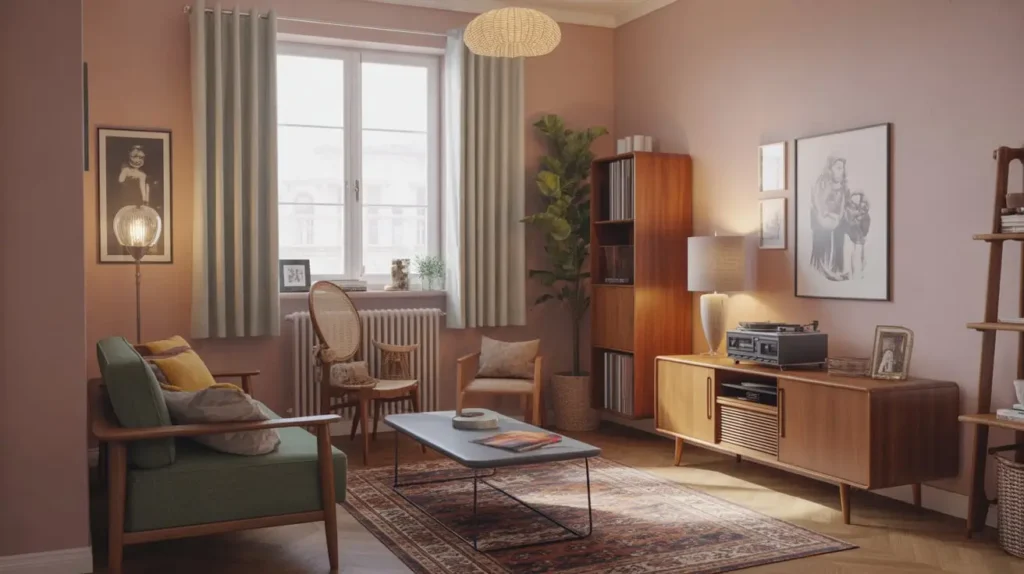
If you love items with a story and find charm in things that aren’t perfectly new, a vintage-inspired space might be your calling. This isn’t about creating a museum or a time capsule of a specific decade. It’s about artfully mixing secondhand and vintage pieces with modern items to create a home that feels unique, personal, and collected over time (even if you just collected it all last weekend).
This is one of the most budget-friendly and sustainable ways to decorate. You’re giving old items a new life, and you’ll end up with a space that is guaranteed to be one-of-a-kind.
The Thrill of the Hunt
Decorating with vintage finds is a treasure hunt. Your main shopping destinations will be thrift stores, flea markets, antique shops, and online marketplaces.
- Don’t Be Afraid to Mix Eras: A mid-century modern credenza can look amazing under a gilt-framed Victorian mirror. The key to making it work is to find a common thread, like a similar wood tone or color.
- Start with Statement Pieces: Look for one or two “wow” items to anchor your room, like a unique armchair, a vintage rug with a beautiful faded pattern, or an ornate dresser.
- Balance Old with New: To keep your apartment from feeling like your grandma’s house (unless that’s the vibe you want!), it’s crucial to mix in modern elements. Pair a vintage wooden dining table with sleek, modern chairs. Place a modern lamp on an antique side table.
- Look for Good Bones: Don’t be put off by scratched paint or dated fabric. If a piece of furniture is solid wood and well-made, you can easily sand and repaint it or get it reupholstered.
- Vintage Art and Decor: This is the easiest way to dip your toe in. Vintage landscape paintings, old maps, quirky ceramic figurines, colored glassware, and brass candlesticks are all easy to find and add instant character.
14. Color-Pop First Apartment Design
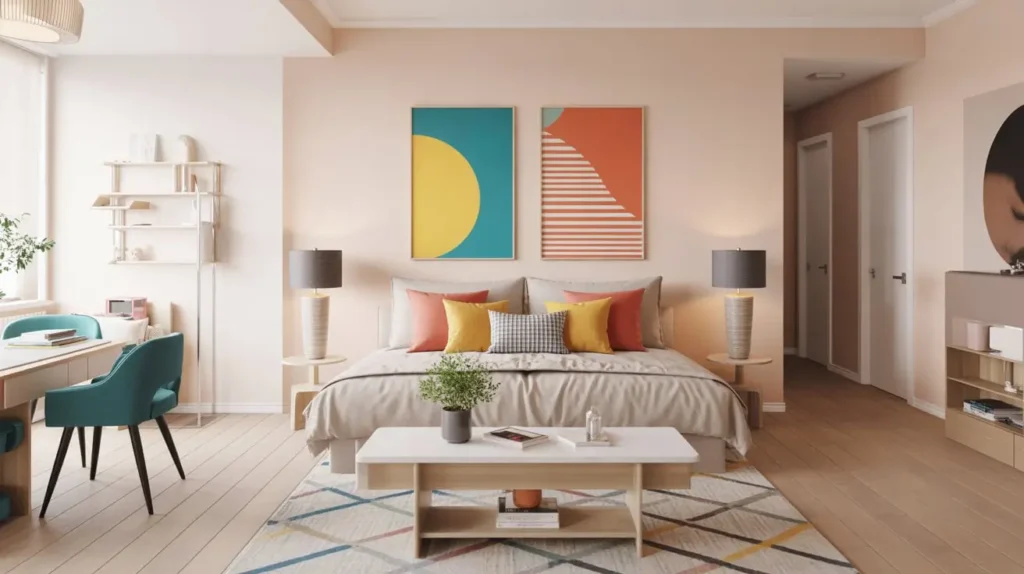
Are you a person who lives life in full color? Does the thought of an all-neutral room make you yawn? Then embrace it! A color-pop design is all about starting with a relatively simple, neutral base and then injecting bold, vibrant, and unexpected doses of your favorite colors.
This approach gives you the best of both worlds. You get the energy and personality of a colorful space without it feeling overwhelming or chaotic. It’s also incredibly flexible. Tired of hot pink? You can easily swap out your pink accents for emerald green in a single afternoon without having to repaint or buy new furniture.
How to Be Bold (But Not Blinding)
The key to a successful color-pop design is restraint. The “pop” only works if it has a calm background to pop against.
- Choose Your Neutral Base: Start with walls, floors, and large furniture (like your sofa) in shades of white, gray, or even black. This creates the canvas for your color explosion.
- Pick a Color Palette (and Stick to It): Choose two or three main accent colors that you love and that work well together. Think complementary colors (like blue and orange) or analogous colors (like blue and green). Using a consistent palette makes the look feel intentional, not random.
- The 60-30-10 Rule: This is a classic design guideline. 60% of your room should be your dominant (neutral) color, 30% should be your secondary color, and 10% should be your boldest accent color. That 10% is where your “pop” lives—think throw pillows, a vase, a piece of art, or even a single statement chair.
- Spread the Color Around: Don’t concentrate all of your color in one spot. Sprinkle it throughout the room to create a sense of rhythm and balance. A yellow pillow on the sofa, a yellow vase on the bookshelf, and a piece of art with a hint of yellow will tie the whole room together.
15. Earthy Natural-Toned Apartment Style

Let’s end with a style that is inherently warm and cozy. An earthy, natural-toned apartment is all about bringing the calming colors and textures of the outdoors inside. This style creates a grounding, peaceful retreat from the hustle and bustle of the outside world. It’s warm, inviting, and deeply connected to nature.
The color palette is pulled directly from the landscape: think terracotta, olive green, sandy beige, deep browns, and stony grays. These are colors that feel organic and timeless. Combined with natural materials, the result is a space that feels like a warm hug.
Bringing the Outside In
This style is a sensory experience. It’s as much about how the room feels as it is about how it looks.
- A Warm, Earthy Palette: Go all-in on nature-inspired colors. You could paint an accent wall in a deep terracotta or choose a sofa in a rich olive green.
- Abundant Natural Materials: This is the core of the look. Use wood, stone, clay, linen, cotton, and wool liberally. A live-edge wood coffee table, ceramic vases, linen curtains, and a wool rug are all perfect additions.
- Plenty of Plants: Like the Boho style, plants are non-negotiable here. They are a literal piece of nature in your home, purifying the air and adding vibrant green life.
- Handmade and Artisanal Touches: Pieces that show the hand of the maker fit perfectly with this aesthetic. Look for hand-thrown pottery, woven baskets, and hand-dyed textiles. These items add a layer of soul and authenticity.
- Embrace Imperfection: Natural materials aren’t perfect. Wood has knots, linen wrinkles, and handmade pottery is never perfectly symmetrical. Embracing these “flaws” is part of the beauty and what makes the space feel real and lived-in.
Your Apartment, Your Sanctuary
Whew, that was a lot. But decorating your first apartment shouldn’t be a stressful chore. It’s an exciting opportunity to create a space that is a true reflection of you. Don’t feel pressured to get it all perfect overnight. The best homes evolve over time.
Pick one idea that resonates with you, start small with a corner or a single wall, and have fun with the process. Mix and match, experiment, and don’t be afraid to make mistakes. After all, it’s your space, your rules. Now go turn that empty box into a cozy, warm, and wonderful home. You’ve got this.