

Let’s be honest. You’re staring at your bathroom, and it’s just… there. It’s functional, sure. The toilet flushes, the shower works. But does it spark joy? Does it make you feel like you’ve stepped into a personal spa? Or does it feel more like a sad, beige box of utility? If you’re nodding along, you’ve come to the right place.
I’ve been obsessed with interior design for as long as I can remember, and my personal crusade is saving people from boring bathrooms. The secret weapon I pull out time and time again? The herringbone tile pattern. It’s classic, it’s modern, it’s versatile, and it has this magical ability to make any space look about a thousand times more expensive than it actually is.
Forget sad, square tiles. We’re about to explore 15 herringbone tile bathroom styles that will give your space a fresh look and some serious personality. Ready to give your bathroom the glow-up it so desperately deserves? Let’s get to it.
1. Classic White Herringbone Shower Walls
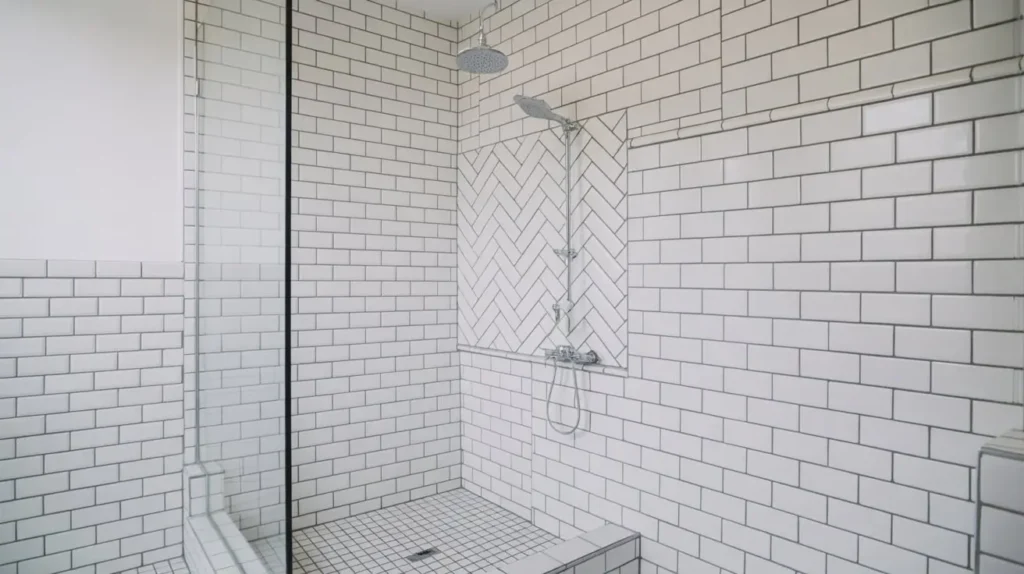
Okay, let’s start with a classic for a reason. You simply cannot go wrong with a timeless white herringbone shower. It’s the little black dress of bathroom design—always in style, effortlessly chic, and it looks good on everyone (or, in this case, every bathroom). I’ve seen this look in five-star hotels and minimalist modern homes, and it never fails to impress.
The beauty of this style is its subtle complexity. From a distance, it reads as a clean, bright white wall. But as you get closer, the dynamic V-shape of the herringbone pattern reveals itself, adding a layer of texture and movement that a standard subway tile layout just can’t compete with. It’s the perfect way to say, “I have impeccable taste,” without screaming it from the rooftops.
Grout is Everything Here
Now, let’s talk about the secret sauce: grout. Your grout choice here is critical, and it completely changes the vibe.
- White Grout: Using white grout with white tile creates a seamless, textured look. It’s soft, elegant, and perfect for a serene, spa-like atmosphere. The pattern is more of a whisper than a shout.
- Light Gray Grout: This is my personal favorite. A light gray grout provides just enough contrast to make the herringbone pattern pop without being too aggressive. It defines each tile, showcasing the beautiful zig-zag layout while maintaining a bright and airy feel.
- Dark Gray or Black Grout: Want more drama? Go with a dark grout. This creates a bold, graphic look that really emphasizes the geometry of the pattern. We’ll talk more about this later, but just know it’s an option even with classic white tile.
This look is a fantastic choice if you’re worried about a pattern becoming dated. Herringbone has been around for centuries (fun fact: the Romans used it for their roads!), so I think it’s safe to say it has some serious staying power.
2. Marble Herringbone Luxury Bathroom
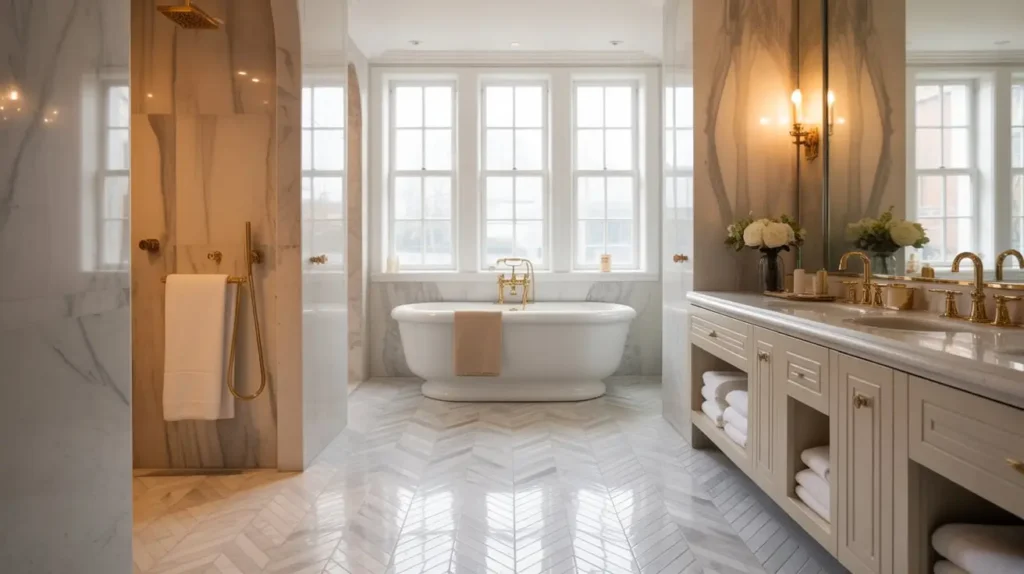
If you want to take that classic elegance and dial it up to eleven, then say hello to marble herringbone. This is the absolute pinnacle of bathroom luxury. Using real marble, like Carrara or Calacatta, in a herringbone pattern transforms your bathroom from a simple utility room into a palatial retreat. The natural veining of the marble adds an organic, one-of-a-kind beauty that manufactured tiles can only dream of replicating.
Each tile is a unique piece of art, and when you lay them together in this dynamic pattern, the result is breathtaking. The way the light hits the polished surface and dances across the different angles of the herringbone layout is just chef’s kiss. It’s a look that feels both ancient and utterly modern at the same time.
But let’s be real for a second. Is this a budget-friendly option? Absolutely not. Real marble is a significant investment, both in material cost and installation. It’s also porous, which means it requires sealing to protect it from stains and water damage. It’s a high-maintenance relationship, but for some, the payoff is totally worth it. Ever wondered why you feel so fancy in a high-end hotel bathroom? It’s probably the acres of marble.
For those of us who love the look but not the price tag (or the upkeep), there’s good news. The porcelain tile industry has gotten insanely good at creating high-quality marble lookalikes. You can find porcelain tiles with incredibly realistic veining and texture that give you 90% of the look for a fraction of the cost and none of the maintenance headaches. It’s the ultimate design cheat code.
3. Black Herringbone Tile Accent Wall
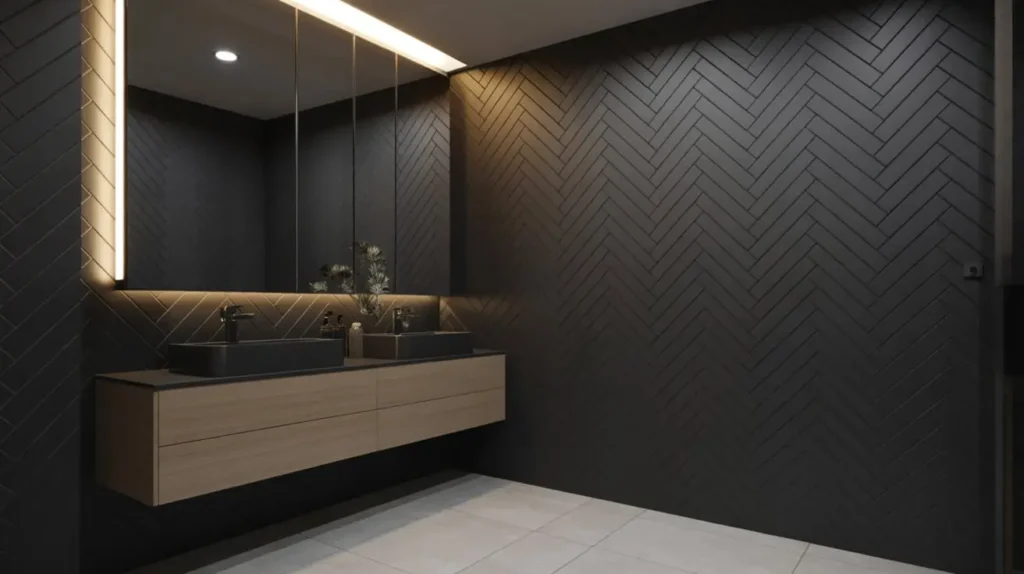
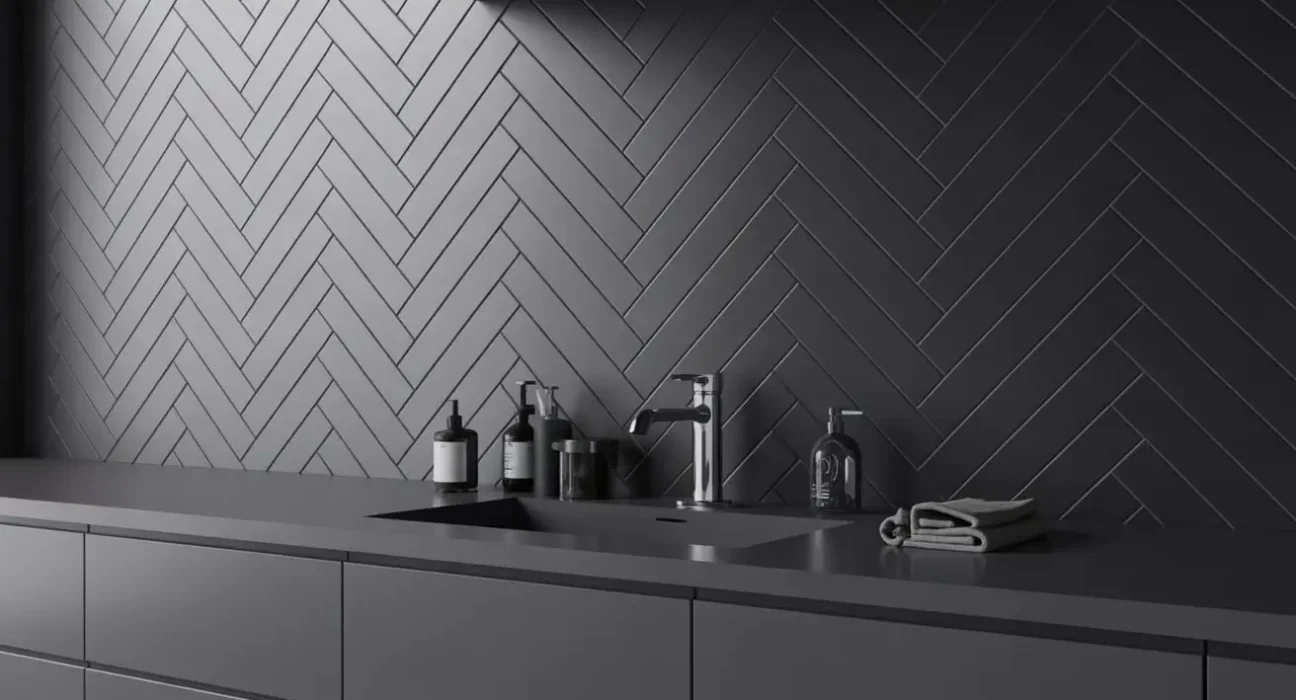
Ready for some drama? A black herringbone tile accent wall is pure, unadulterated moodiness in the best way possible. This isn’t a look for the faint of heart. It’s bold, it’s sophisticated, and it instantly creates a powerful focal point in any bathroom. I absolutely love this for a wall behind the vanity or as the back wall of a shower.
The dark, rich color absorbs light, creating a sense of depth and intimacy. When laid in the energetic herringbone pattern, the effect is mesmerizing. The sharp angles of the pattern catch the light, so the wall never looks like a flat, black void. Instead, it has a subtle shimmer and a ton of visual interest. It’s the design equivalent of a perfectly tailored tuxedo—sharp, confident, and undeniably cool.
A Few Things to Keep in Mind
If you’re considering this audacious move (and I fully support you), here are a couple of tips. First, this look thrives on good lighting. A bathroom with a big window or a well-thought-out lighting plan with bright vanity lights and overhead fixtures will keep the space from feeling like a cave. The light will bounce off the tile surfaces and make the whole room feel alive.
Second, think about balance. A full-on, four-walls-of-black-herringbone bathroom might be a bit much unless you’re going for a very specific, gothic-chic vibe. Using it as an accent wall and pairing it with lighter floors and walls creates a stunning contrast that feels balanced and intentional. Pair it with brass or gold fixtures for a touch of warmth and glamour, and you’ve got a bathroom that will be the envy of all your friends.
4. Small Bathroom with Vertical Herringbone
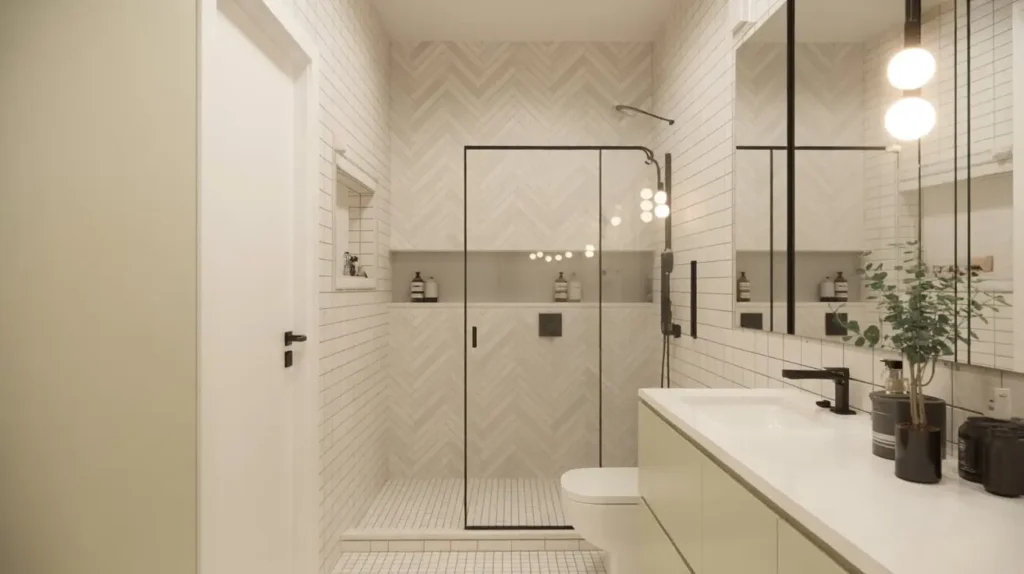
Living with a small bathroom? I feel your pain. It can feel like you’re designing inside a shoebox. But I have a secret weapon for you: a vertical herringbone layout. This is one of my favorite design “tricks” because it’s so simple yet so effective. By orienting the “V” of the herringbone pattern so it points up and down instead of side to side, you create a powerful illusion of height.
How does it work? Your eyes are naturally drawn along the lines of the pattern. When those lines are pointing upward, they pull your gaze with them, making the ceiling feel much higher than it actually is. It’s a visual sleight of hand that can completely transform a cramped powder room or a shower with a low ceiling. Who needs a major renovation to raise the roof when your tiles can do it for you?
This technique is especially powerful in a narrow space, like the back wall of a tub surround or a small walk-in shower. The upward movement of the pattern visually “stretches” the wall, making the entire space feel more open and grand. You can use any color or material for this, from a simple white ceramic to a more textured porcelain, and the effect remains the same. It’s a testament to the fact that smart design isn’t about how much space you have, but how you use it.
Read Also 15 Gorgeous Grey Tile Bathroom Looks and Cozy Decor Inspo
5. Herringbone Tile Floor with Light Grout
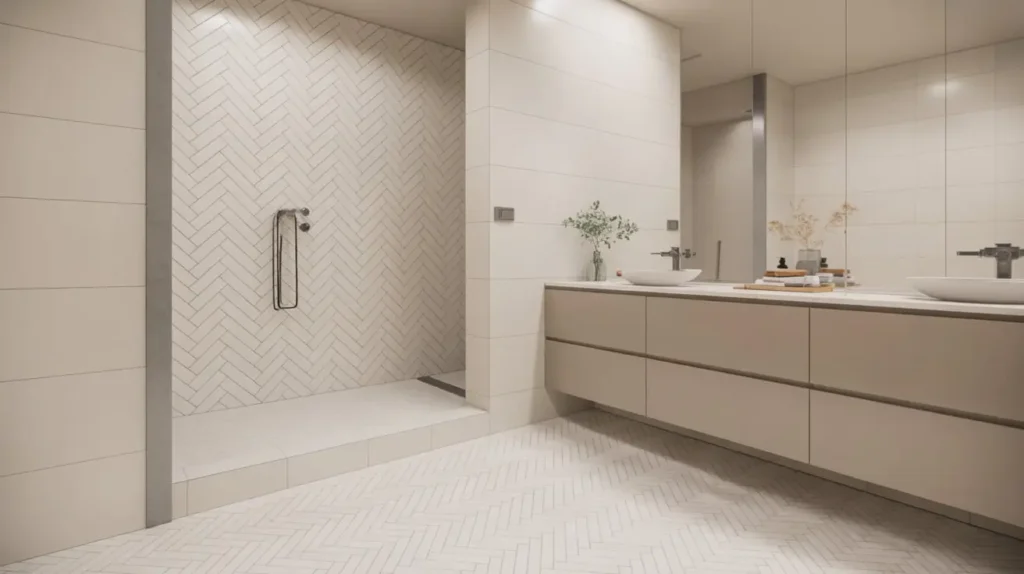
So far, we’ve talked a lot about walls. But let’s not forget the fifth wall: the floor! A herringbone tile floor is a fantastic way to introduce pattern and personality into your bathroom without overwhelming the space. It acts as a stunning foundation that can elevate even the simplest vanity and fixtures.
My go-to recommendation for this look is to use a light-colored grout. Why? Because it defines the pattern in a really beautiful, subtle way. Think of a medium-gray tile with a light-gray or off-white grout. The grout lines trace the herringbone shape, making it the star of the show, but the low contrast keeps the overall look from feeling too busy or jarring.
This approach gives you a pattern-forward floor that still feels calm and cohesive. It’s perfect for someone who loves the idea of a patterned floor but is worried about it clashing with other elements in the room. This subtle contrast allows you to still have fun with a colorful vanity or bold wallpaper on the walls, because the floor is interesting but not screaming for attention.
A practical tip from me to you: pure white grout on a floor is a brave choice. It looks incredible for about five minutes, and then life happens. I usually suggest a light gray or a warm beige. It will still provide that lovely contrast but will be infinitely more forgiving when it comes to hiding a bit of dust or dirt. You can thank me later. 🙂
6. Navy Blue Herringbone Feature Wall
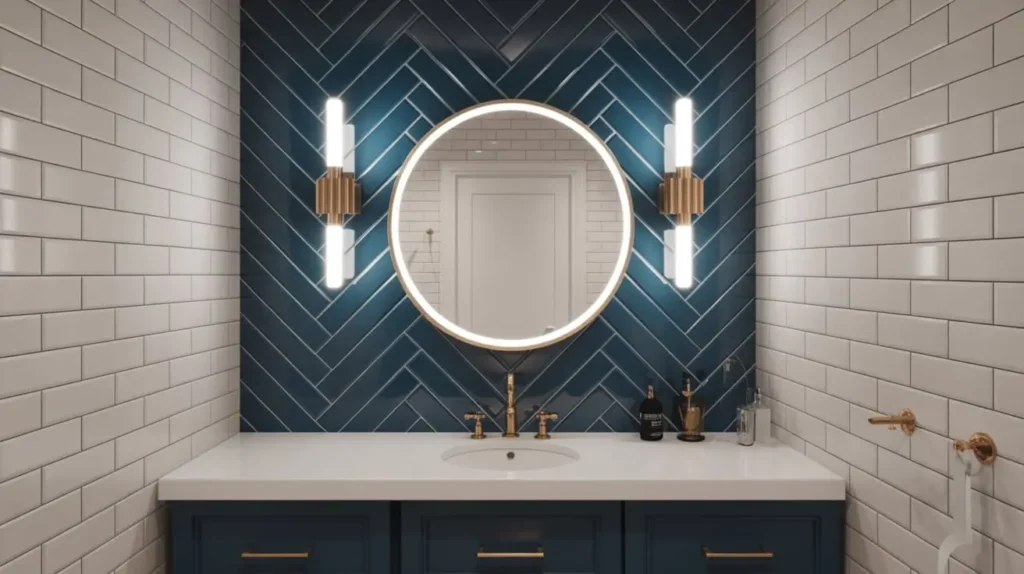
If white is too safe and black is too bold, may I present the perfect middle ground? A navy blue herringbone feature wall. Navy is one of my all-time favorite colors for interior design. It’s a “neutral” that’s packed with personality. It’s deep, rich, and sophisticated, and it evokes a sense of calm and stability.
When you take that gorgeous, inky blue and lay it in a herringbone pattern, magic happens. The wall takes on an almost jewel-like quality. Depending on the tile’s finish—whether it’s a high gloss, a smooth matte, or a handcrafted zellige with natural imperfections—the look can range from sleek and modern to earthy and organic.
IMO, this style is a showstopper. It creates a rich and moody backdrop that makes everything else in front of it look better.
- Vanity: A crisp white or a warm wood vanity looks absolutely stunning against a navy wall.
- Fixtures: This is where you can really have fun. Navy blue pairs beautifully with brass or brushed gold fixtures. The warmth of the metal against the cool blue is a match made in design heaven.
- Accents: White towels, a touch of greenery, and maybe a framed piece of art are all you need to complete the look.
A navy herringbone wall behind the vanity is a power move. It feels custom, luxurious, and incredibly thoughtful.
7. Rustic Wood-Look Herringbone Bathroom
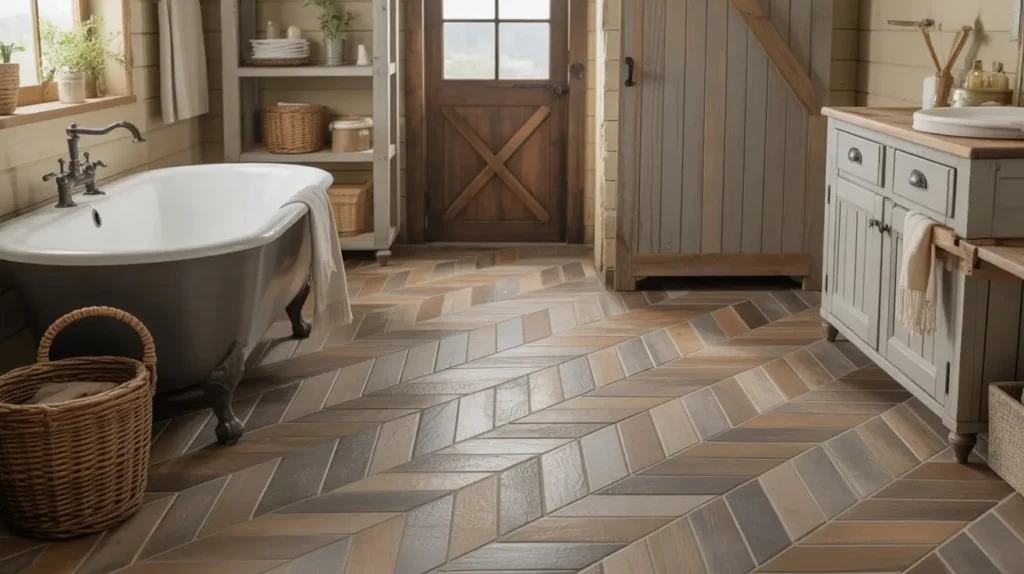
Do you love the warmth and texture of a rustic farmhouse or a cozy cabin, but dread the idea of real wood in a wet environment like a bathroom? I get it. Wood and water are not exactly best friends. But what if I told you that you could have the warmth of wood with the durability of porcelain? Enter the wood-look porcelain tile.
This stuff is a game-changer. The technology has become so advanced that these tiles have realistic graining, texture, and color variations that make them nearly indistinguishable from real hardwood. Now, imagine laying these long, plank-like tiles in a herringbone pattern on your bathroom floor. The result is absolutely stunning.
You get the classic, rustic appeal of a wooden floor but in a completely waterproof and incredibly durable material. The herringbone pattern adds a touch of European elegance to the rustic vibe, creating a style I like to call “farmhouse chic.” It’s perfect for creating a cozy, spa-like retreat that feels connected to nature. This look works beautifully for floors, but I’ve also seen it used on a shower wall for a super unique, sauna-inspired feel.
8. Minimal Beige Herringbone Spa Bathroom
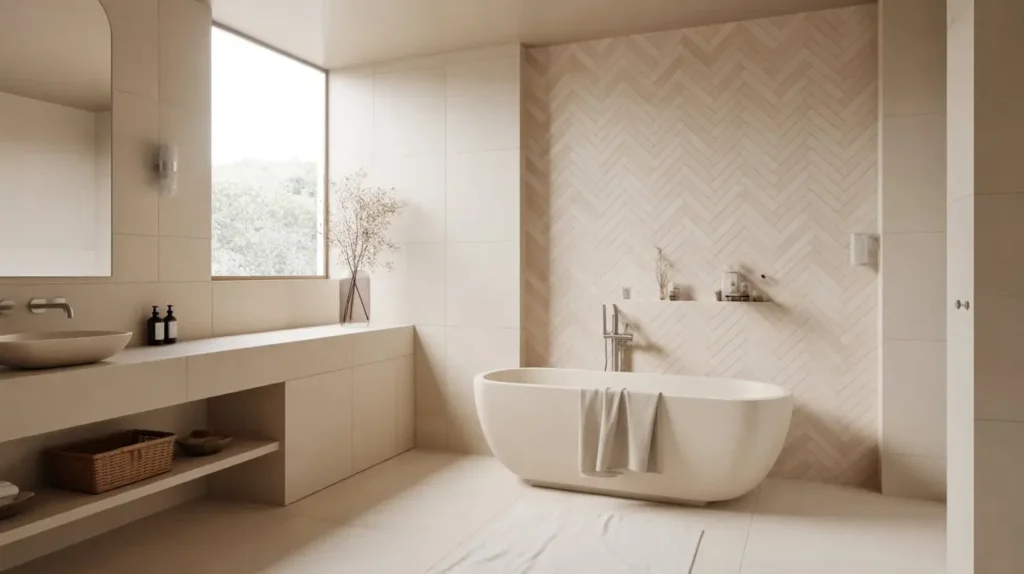
Sometimes, the goal isn’t drama or bold statements. Sometimes, you just want your bathroom to be a calm, quiet sanctuary where you can escape the chaos of the world. For that, I present the minimal beige herringbone spa bathroom. Now, I know what you might be thinking. “Beige? Isn’t that the definition of boring?” And you’re not wrong, but hear me out.
When used thoughtfully, beige can be the foundation for an incredibly serene and spa-like atmosphere. The key is texture. By using a beautiful beige tile in a herringbone pattern, you introduce a layer of subtle, organic movement. To really lean into the minimalist spa vibe, I recommend a tone-on-tone approach. Use a grout color that is almost an exact match to the tile.
The result is a wall or floor where the pattern is just a whisper. You don’t see it so much as you feel it. The subtle texture of the herringbone layout adds depth and interest without creating any visual noise. The space feels calm, cohesive, and incredibly soothing. Pair this with natural materials like a light wood vanity, some linen towels, and a few simple plants, and you’ve created your very own Zen retreat. It’s proof that minimalism doesn’t have to be cold or sterile.
9. Bold Herringbone Tile with Dark Grout
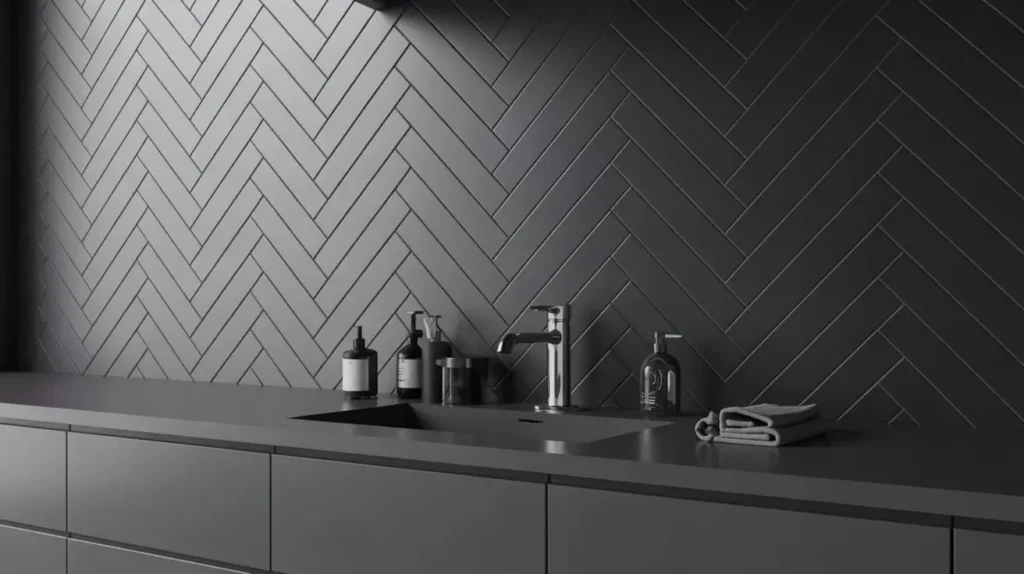
Remember when we talked about using dark grout with white tiles? Let’s blow that idea up. This style is all about creating a graphic and modern statement by pairing any light-to-medium colored tile with a dark, contrasting grout like charcoal or black. This is the ultimate way to highlight the herringbone pattern itself.
With this approach, the grout lines become a key part of the design. They create a powerful grid that makes the zig-zag shape pop. Every single tile is clearly defined, and the overall effect is geometric, bold, and incredibly eye-catching. It’s a very contemporary look that feels architectural and intentional.
However, I must offer a small word of warning. This is not a job for a novice tile installer. Dark grout is brutally honest—it will highlight every single flaw, every slightly crooked tile, and every uneven grout line. So, if you’re going for this look, make sure you hire a pro. As I like to tell my clients, “Your tile installer better be good, because dark grout shows every imperfection.” But when it’s done right? It’s a masterpiece.
Read Also 15 Elegant Penny Tile Bathroom Floor Inspirations for Homes
10. Grey Herringbone Floor in Modern Bath
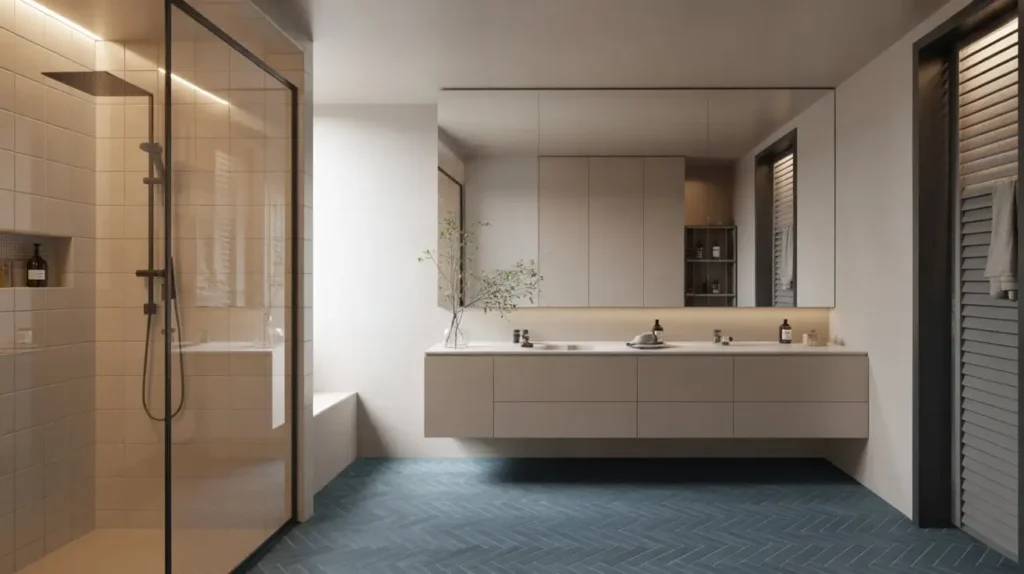
Grey is the ultimate chameleon of the design world. It can be warm or cool, light or dark, dramatic or subtle. This inherent versatility is what makes a grey herringbone floor such a fantastic choice for a modern bathroom. It’s a sophisticated neutral that provides a perfect foundation for almost any design scheme you can dream up.
Want a bathroom with a bright pop of color, like a yellow or teal vanity? A light grey herringbone floor will ground the space without competing. Prefer a moody, monochrome look? A charcoal grey herringbone floor paired with black fixtures and white walls is the epitome of modern cool. See what I mean? It’s incredibly versatile.
The herringbone pattern keeps the grey floor from feeling flat or industrial. It adds just the right amount of movement and classic charm to an otherwise modern palette. You can choose from a huge range of materials, from concrete-look porcelain for an industrial edge to a soft, matte ceramic for a gentler feel. No matter what shade or material you pick, a grey herringbone floor is a choice that you’re unlikely to regret. It’s a timeless foundation that can adapt as your style evolves over the years.
11. Herringbone Half-Wall with Subway Tiles
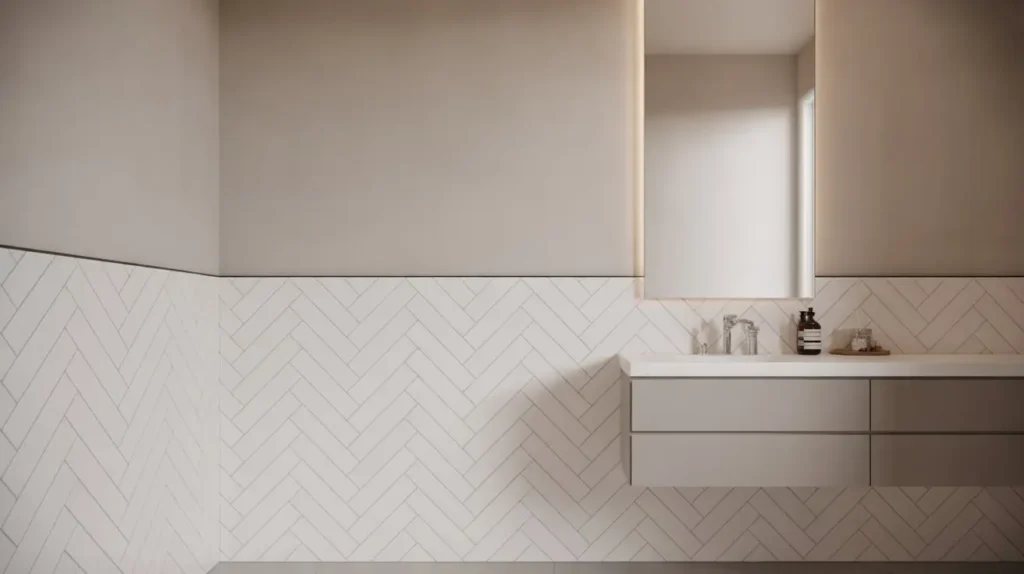
Can’t decide between the classic simplicity of subway tile and the dynamic energy of herringbone? Well, who says you have to choose? A herringbone half-wall is a brilliant way to get the best of both worlds. This design involves creating a wainscoting effect using tile.
Here’s how it works: you install herringbone tile on the bottom portion of the wall, typically up to chair-rail height (around 36-42 inches). Then, you cap it with a decorative trim piece and install classic, horizontally-laid subway tile on the wall above. The result is a layered, custom look that is full of character.
I love this idea for a few reasons. First, it adds a ton of visual interest without the commitment (or cost) of a full herringbone wall. Second, the contrast between the two patterns is fantastic. The simple grid of the subway tile makes the herringbone pattern below it feel even more special and dynamic. It’s a creative wainscoting solution that is both practical (the more intricate pattern is on the lower, high-splash part of the wall) and beautiful.
12. Double Herringbone Pattern Bathroom

Okay, design nerds, this one is for you. If you find the standard herringbone pattern a little too delicate, allow me to introduce you to its bigger, bolder cousin: the double herringbone. The concept is simple. Instead of laying single tiles in the V-shape, you lay two (or even three) tiles side-by-side before changing direction.
This creates a larger-scale pattern that feels more substantial and makes a bigger impact. It’s a fantastic choice for larger bathrooms or for a floor where you want the pattern to be clearly visible and not get lost. Think of it as herringbone on steroids. It has all the same dynamic energy but with a chunkier, more graphic presence.
This bold and unique variation works especially well with longer, skinnier tiles, as it emphasizes their length. You can use it on floors or walls to create a look that feels both familiar and refreshingly different. It’s a subtle twist on a classic that will make people do a double-take and ask, “What exactly is that pattern? I love it.” It’s a great way to put a personal stamp on a timeless design.
13. Chevron vs. Herringbone: Let’s Settle This Once and For All
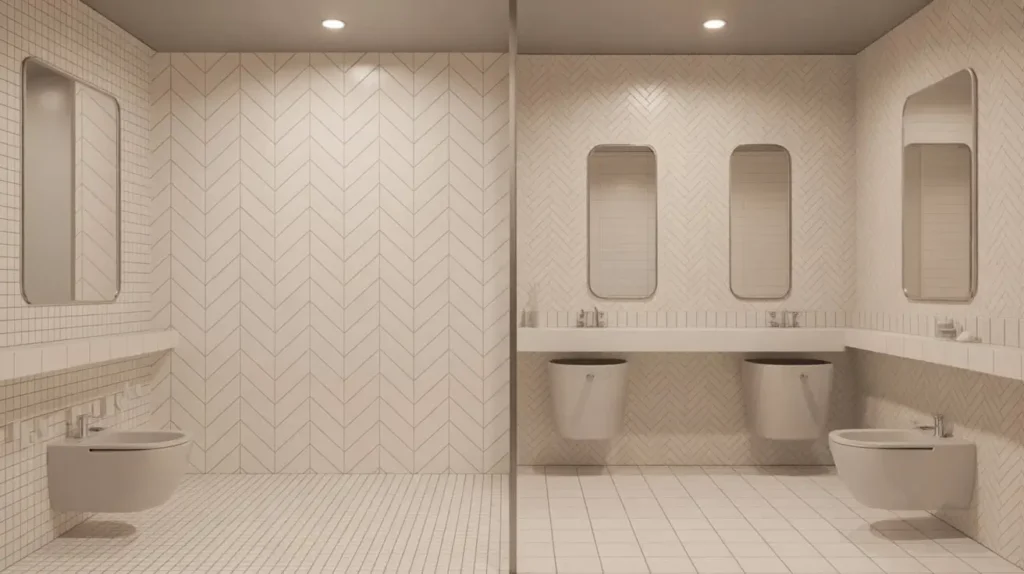
Alright, it’s time to address the elephant in the room. People use the terms “chevron” and “herringbone” interchangeably all the time, but they are, in fact, two distinct patterns. As a self-proclaimed tile enthusiast, it’s my duty to set the record straight. So, what’s the difference? FYI, it’s all in the tile ends.
Let’s break it down:
- Herringbone:
- The Tile: Herringbone patterns use simple rectangles. Think of a standard subway tile.
- The Layout: The end of one tile is laid against the side of the next tile, creating a staggered, interlocking “L” shape.
- The Look: This creates a “broken” or offset zig-zag effect. It has a more textured and intricate appearance.
- Chevron:
- The Tile: Chevron patterns require parallelograms—tiles whose ends have been cut at an angle (usually 45 degrees).
- The Layout: The angled ends of the tiles are laid point-to-point.
- The Look: This creates a perfectly continuous, seamless “V” shape that flows across the surface. It’s a cleaner, more uniform look.
So, which one is better? It’s purely a matter of personal preference. I find herringbone to have a bit more classic charm and textural depth, while chevron feels more modern and graphic. From a practical standpoint, herringbone is often easier and less expensive to install because you’re using standard rectangular tiles. A chevron pattern requires either specially ordered tiles or a lot of precise, custom cuts on site, which can add to labor costs. Now you know!
14. Scandinavian Neutral Herringbone Design
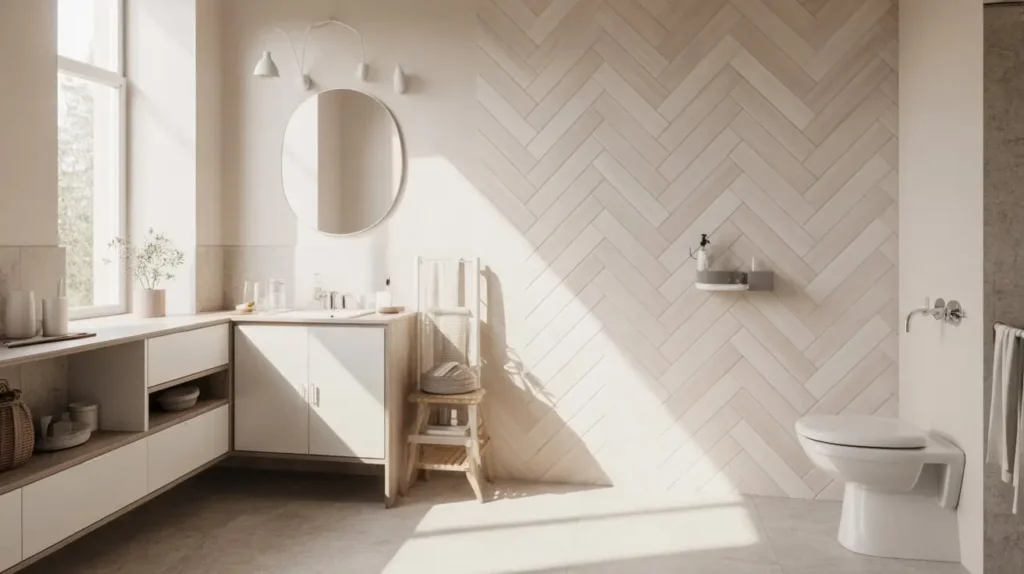
If you’re drawn to the clean lines, light-filled spaces, and cozy textures of Scandinavian design, then a neutral herringbone is the perfect way to bring that vibe into your bathroom. The Scandi aesthetic is all about warm minimalism, and while it favors simplicity, it is never, ever boring. Texture is key.
This is where the herringbone pattern shines. Using a tile in a soft, neutral palette—think light woods, creamy whites, or the softest of grays—and laying it in a herringbone pattern adds that crucial layer of textural interest. It elevates a simple color scheme by creating subtle movement and a handcrafted feel.
The goal here isn’t to shout; it’s to create a space that feels calm, bright, and effortlessly stylish. A light wood-look porcelain tile laid in a herringbone pattern on the floor is a hallmark of this style. It brings the warmth of nature indoors, which is a core principle of Scandinavian design. Paired with a simple white vanity, some black matte fixtures for a touch of contrast, and plenty of natural light, you have a bathroom that is the epitome of “hygge”—a feeling of cozy contentment.
15. Mixed Tile Bathroom with Herringbone Strip
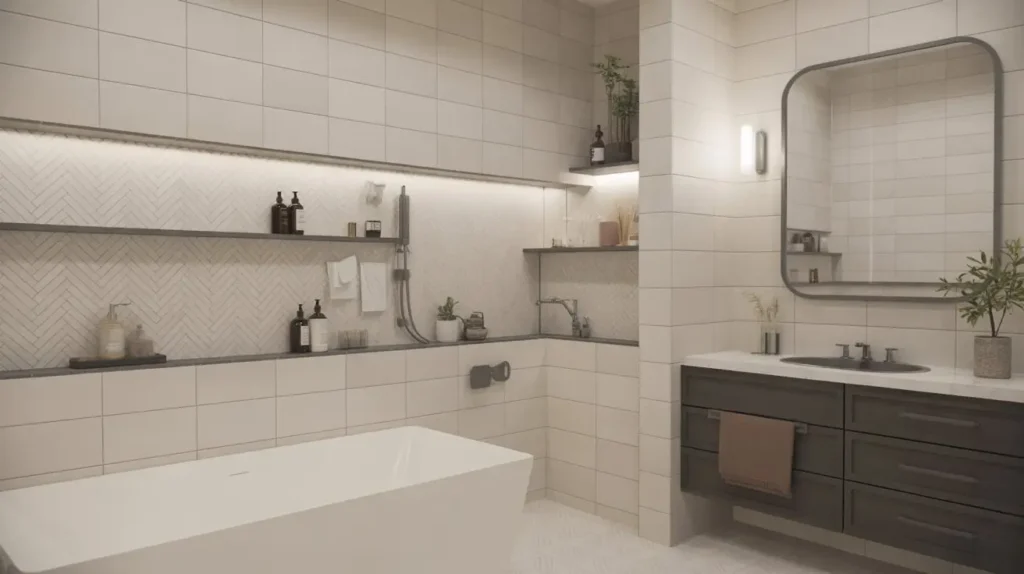
Feeling inspired but worried about your budget? Don’t be. You don’t have to tile your entire bathroom in an intricate pattern to make a statement. One of the most effective and budget-friendly strategies is to use herringbone as a high-impact accent. I’m talking about a mixed tile design with a herringbone strip.
Imagine a shower surround tiled with large, simple, and inexpensive 12×24 inch porcelain tiles. Now, picture a vertical stripe, about 12 inches wide, running from the floor to the ceiling right behind the shower fixtures, all done in a beautiful herringbone pattern. That one simple strip instantly elevates the entire shower, making it look like a custom, high-end installation.
You can also use this technique for a horizontal “belt” around the room or as a “rug” inlay on the floor. It’s a designer look for less. You get all the visual punch of the herringbone pattern in a concentrated dose, which saves a ton on both material and labor costs. I like to think of it as a racing stripe for your shower. It just makes the whole thing feel faster… I mean, fancier. It’s a smart, stylish, and wallet-friendly way to get the herringbone look you love.
So, Ready for a Refresh?
Whew! We’ve covered a lot of ground, from timeless white walls to bold black accents and everything in between. As you can see, the herringbone pattern is so much more than just a trend. It’s a design powerhouse that can be adapted to fit literally any style, space, or budget. It can be the quiet, textural background or the bold, dramatic star of the show.
The most important takeaway is not to be afraid to play with pattern. Your bathroom is a personal space, and it should reflect your personality. Whether you go for a subtle, tone-on-tone spa look or a dramatic, high-contrast feature wall, herringbone is a fantastic tool to help you create a bathroom you truly love.
So, which style is calling your name? Go on, give your bathroom the glow-up it deserves. You’ll be surprised at how a little bit of pattern can make a huge difference.