

You know that feeling when you walk into someone’s living room and instantly think, “Wow, they’ve got this figured out”? Yeah, that’s the vibe we’re going for here. Your living room isn’t just some space where your couch lives—it’s where life happens, where you binge-watch your favorite shows, where your friends gather, and honestly, where you probably spend way too much time scrolling through your phone. So why not make it look absolutely stunning?
I’ve spent years obsessing over interior design (some might say unhealthily so), and I’ve learned that creating an elegant living room doesn’t require a celebrity designer or a trust fund. What you need is the right style direction that speaks to YOU. Whether you’re working with a shoebox apartment or a sprawling space with ceilings that seem to touch the sky, there’s a design approach that’ll make your heart skip a beat.
Let me walk you through 15 elegant living room styles that actually work in real life. No stuffy design jargon, no impossible-to-execute ideas—just honest, practical inspiration that’ll transform your space from “meh” to “come over and see what I did!”
Modern Minimalist Living Room Design
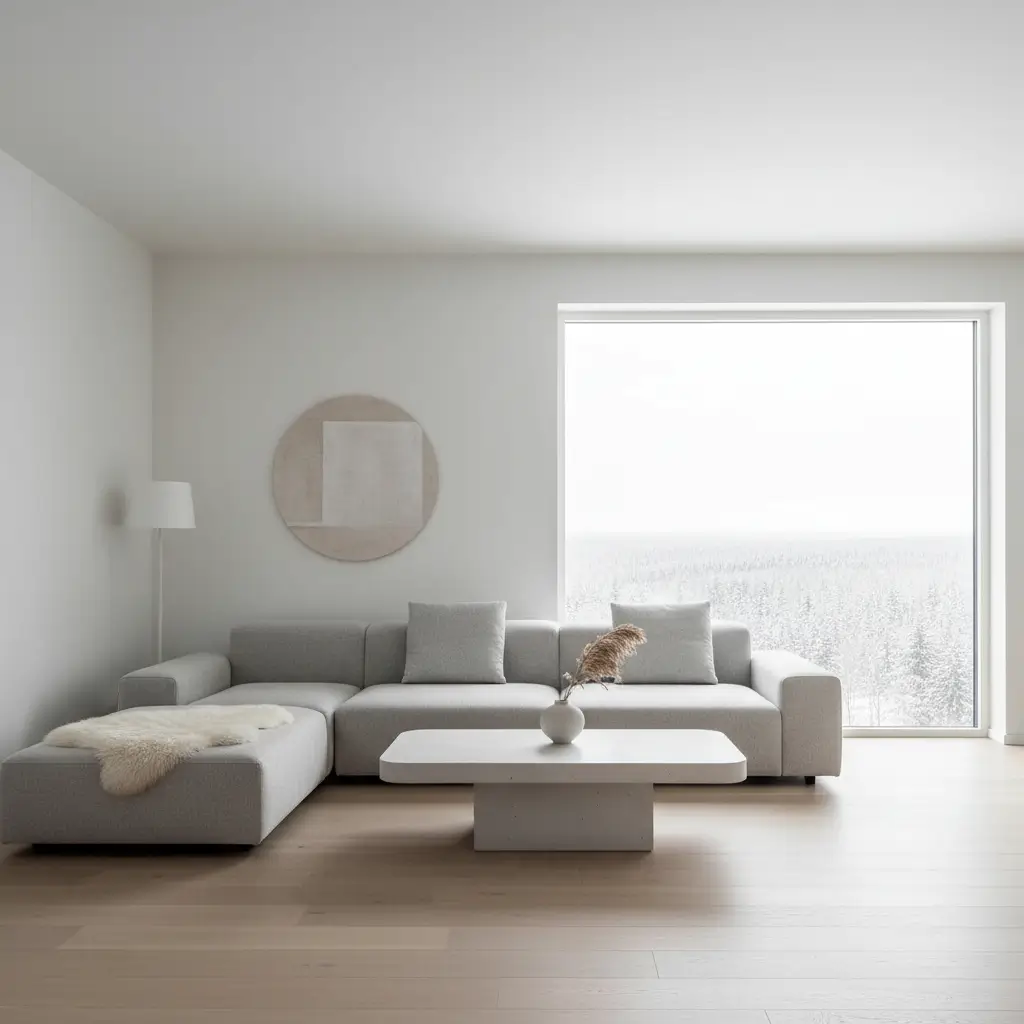
Less is more, right? Well, with modern minimalist design, less is EVERYTHING.
This style strips away all the unnecessary clutter and focuses on clean lines, functional furniture, and breathing room. I remember when I first attempted minimalism in my own living room—I got rid of approximately 40% of my stuff, and suddenly the room felt twice as big. Magic? Nope, just smart design.
The color palette sticks to neutrals: whites, grays, blacks, with maybe one accent color if you’re feeling spicy. You’ll want furniture with sleek silhouettes and zero ornate details. Think of a streamlined sofa in a solid color, a simple coffee table (maybe glass or light wood), and storage solutions that hide away all your random stuff.
Here’s what makes minimalist design work:
- Quality over quantity: One amazing piece beats five mediocre ones
- Intentional empty space: That’s not wasted space; it’s called negative space, and it’s doing heavy lifting
- Hidden storage: Because your life isn’t actually minimalist, even if your living room looks like it
- Natural light: Maximized through sheer curtains or bare windows
The trick? Every single item in the room needs to earn its place. If it doesn’t serve a function or bring you genuine joy (yes, I went there), it’s gotta go.
Luxury Interior Design Living Room
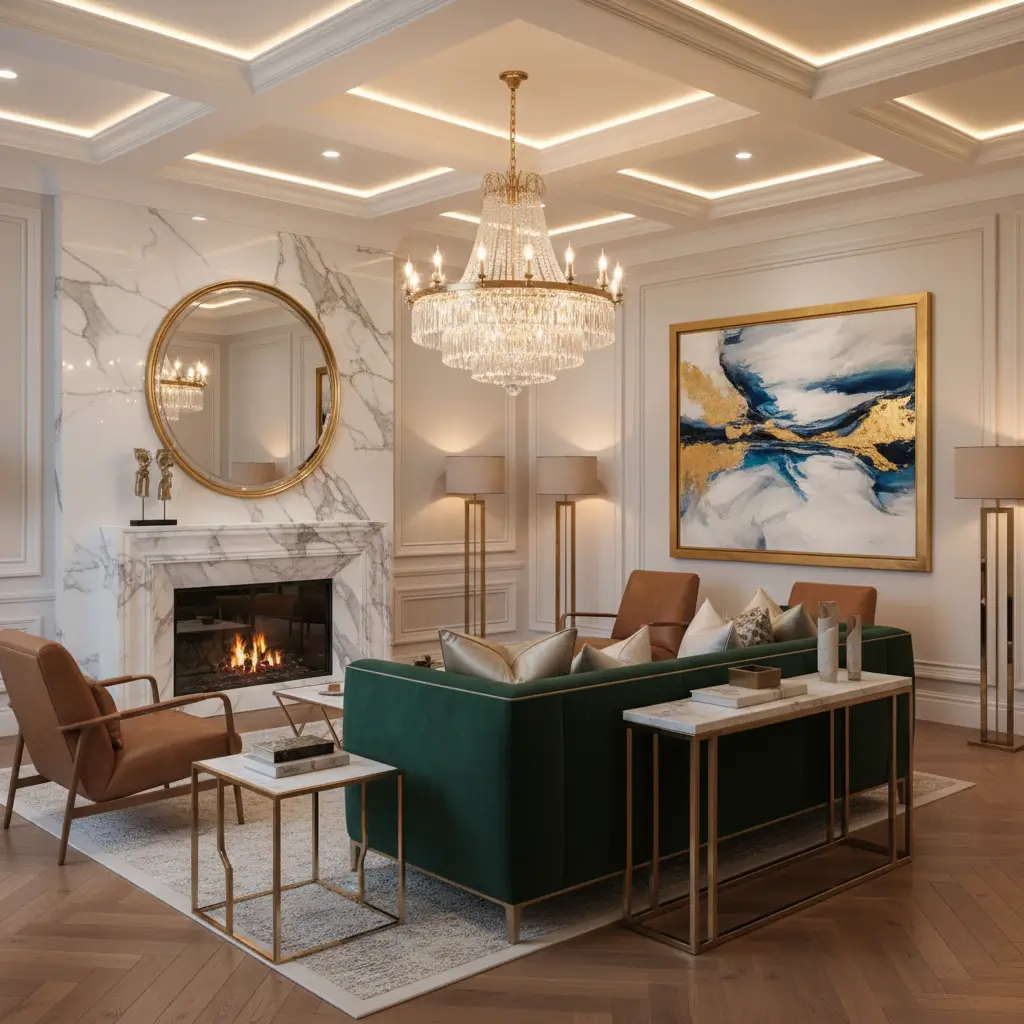
Want to feel like you’re living in a five-star hotel? Luxury interior design brings that opulent, “I’ve made it” energy to your living room.
This style screams sophistication through rich materials, plush textures, and statement pieces that cost more than your car payment. Okay, maybe not literally, but you get the vibe. Velvet sofas, marble coffee tables, crystal chandeliers, silk curtains—we’re not playing small here.
I once visited a friend’s newly designed luxury living room, and I genuinely didn’t want to sit down because everything looked too perfect. That’s both the beauty and the slight impracticality of this style. But if you can pull it off without turning your living room into a museum, you’ll create a space that feels absolutely magnificent.
Key elements include:
- Jewel-toned accent colors: Deep emerald, sapphire blue, or rich burgundy
- Metallic finishes: Gold, brass, or chrome details on lighting and accessories
- Layered lighting: Chandeliers, sconces, table lamps—all creating ambiance
- High-end materials: Genuine leather, silk, marble, and hardwood
The color scheme typically features deep, saturated colors balanced with neutrals. You’re creating drama and elegance, not a circus, so restraint matters even when going luxe.
Small Space Living Room Interior Ideas
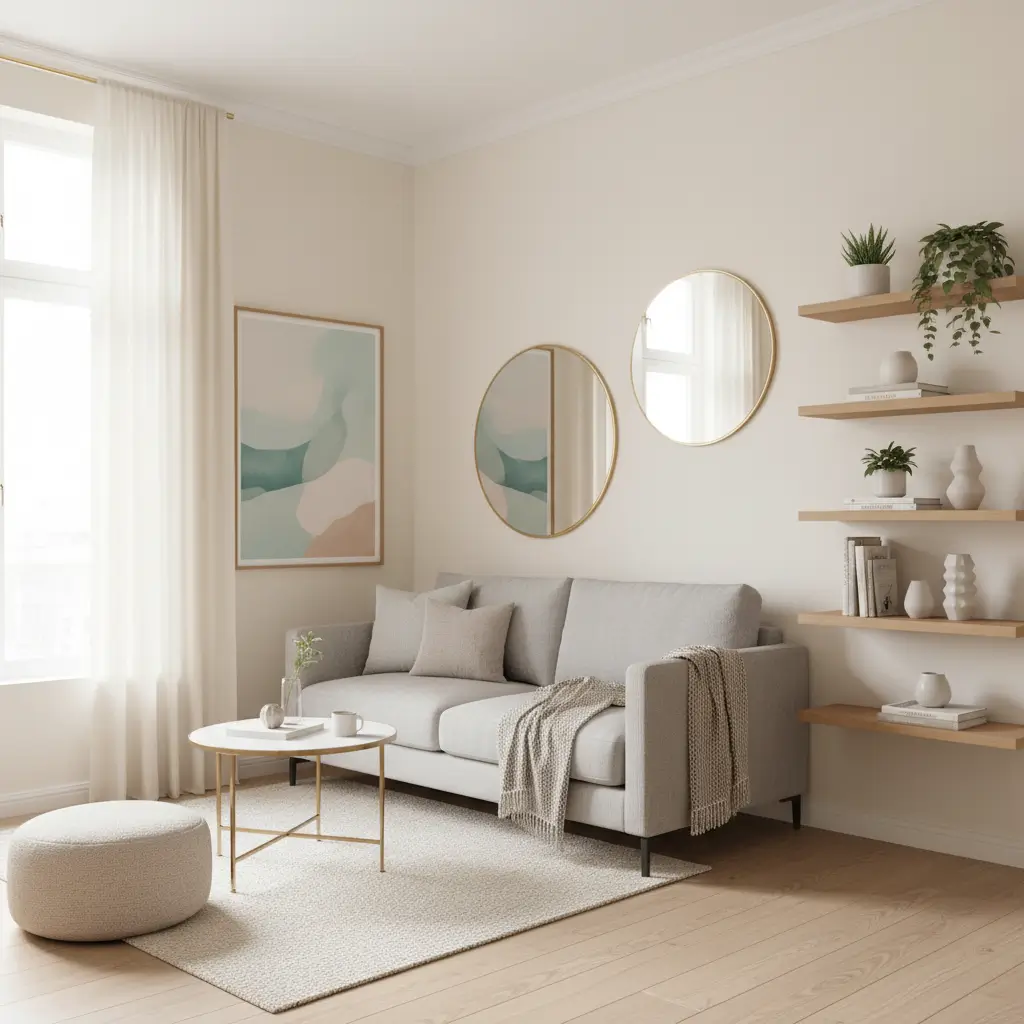
Plot twist: Small living rooms can look incredibly elegant when you design them correctly.
I lived in a 300-square-foot studio for three years, and my living room was basically a corner. But you know what? I made that corner WORK. The secret to small space design lies in strategic furniture placement, smart storage, and visual tricks that make the space feel larger than it actually is.
Mirrors become your best friend—they reflect light and create the illusion of depth. You’ll want to choose furniture that serves multiple purposes, like an ottoman with hidden storage or a sofa bed for guests. Scale matters hugely here; oversized furniture will swallow your space whole, so opt for pieces with exposed legs and lighter frames.
Small space essentials:
- Vertical storage: Use your wall height since floor space is limited
- Light colors: They make spaces feel open and airy
- Furniture with exposed legs: Creates visual flow underneath
- One statement piece: Instead of many small decorations that create clutter
Ever wondered why some small spaces feel cozy while others feel cramped? It’s all about balance. You want enough furniture to make the room functional without turning it into an obstacle course.
Cozy Contemporary Living Room Style
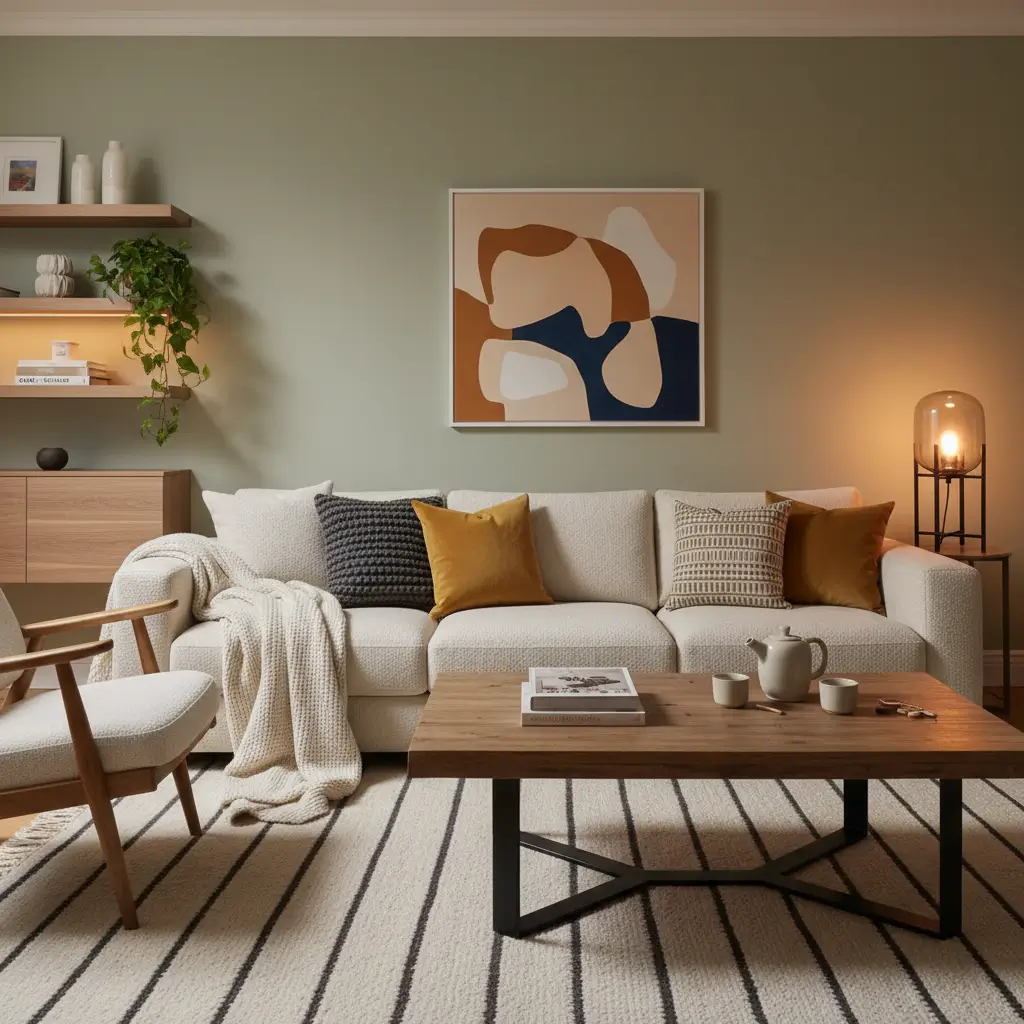
Contemporary design gets a bad rap for being cold, but cozy contemporary proves the haters wrong.
This style blends current design trends with warm, inviting elements that make you actually want to curl up and relax. You get clean lines and modern aesthetics, but with soft textiles, warm lighting, and comfortable seating that doesn’t sacrifice function for form.
The contemporary framework uses neutral bases with pops of current trendy colors. Right now, that might be terracotta, sage green, or dusty pink. But you layer in chunky knit throws, plush area rugs, and plenty of cushions to create that “ahh, I’m home” feeling.
What sets cozy contemporary apart:
- Texture mixing: Smooth leather with soft wool, sleek metal with natural wood
- Comfortable seating: Modern design that you can actually sink into
- Warm lighting: Multiple light sources at different levels
- Natural elements: Plants, wood, stone bringing organic warmth
I’m personally obsessed with this style because it doesn’t make you choose between looking good and feeling good. Your living room can photograph beautifully AND be the place where you fall asleep during movies. Win-win.
Scandinavian Living Room Design Inspiration
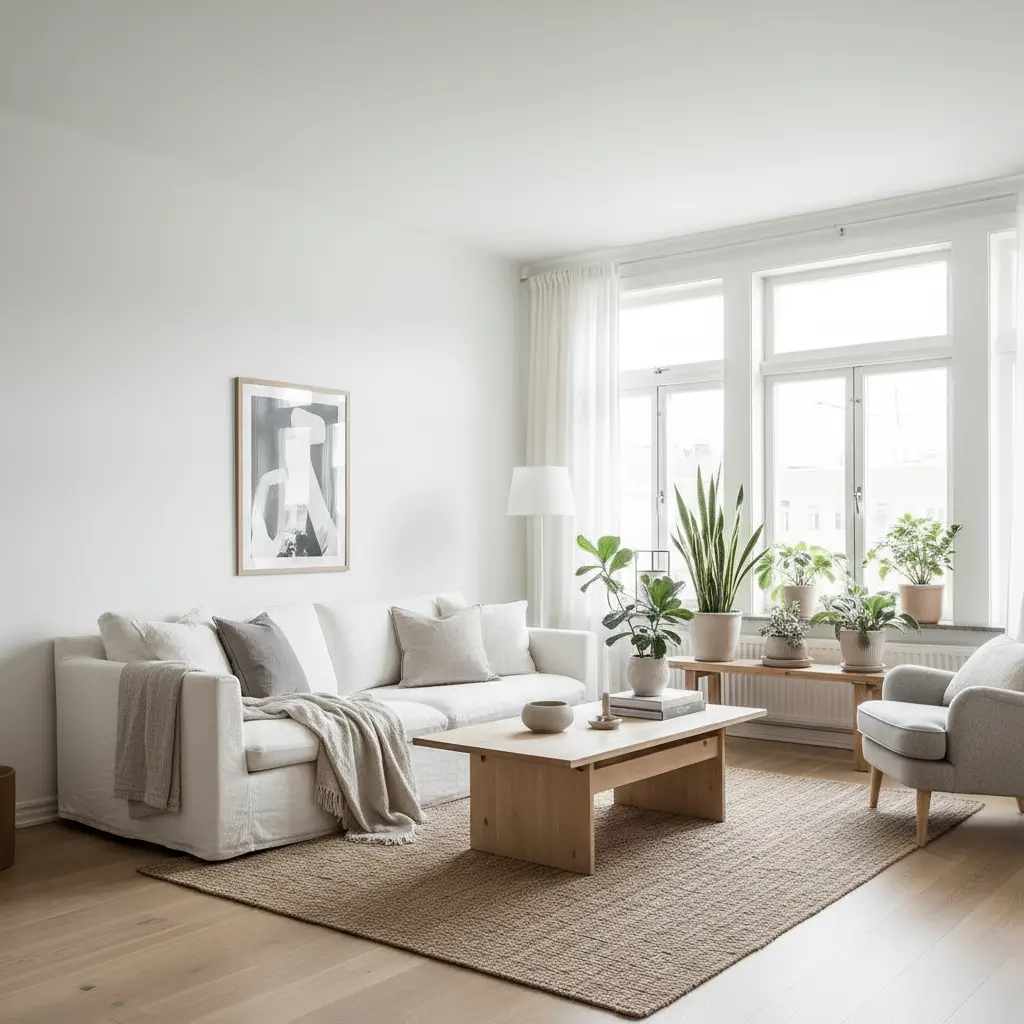
The Danes have “hygge,” the Swedes have “lagom,” and we have… well, we have Scandinavian design inspiration, which basically bottles up that Nordic magic.
Scandi design centers on functionality, simplicity, and connection to nature. Think bright whites, light woods, and pops of muted colors. The whole vibe says “effortlessly chic” while being supremely practical. FYI, this style works incredibly well in spaces with limited natural light because it maximizes every ray of sunshine.
The furniture keeps things simple with clean-lined wooden pieces, often with those iconic tapered legs. You’ll see lots of natural materials—wood, leather, linen, wool—all in their most honest forms. Nothing too polished or precious.
Scandinavian essentials:
- White walls: Reflects light and creates a clean backdrop
- Natural wood: Light oak, beech, or pine in warm tones
- Minimal decoration: Only meaningful pieces make the cut
- Cozy textiles: Sheepskin throws, wool blankets, linen cushions
- Indoor plants: Bringing life and air quality improvement
The beauty of Scandinavian design? It never looks dated. You could design a Scandi living room today, and it’ll still look fresh in ten years. That’s some serious staying power.
Also Read: 15 Modern Living Room Ideas for Small Apartments Living
Boho Chic Living Room Interior
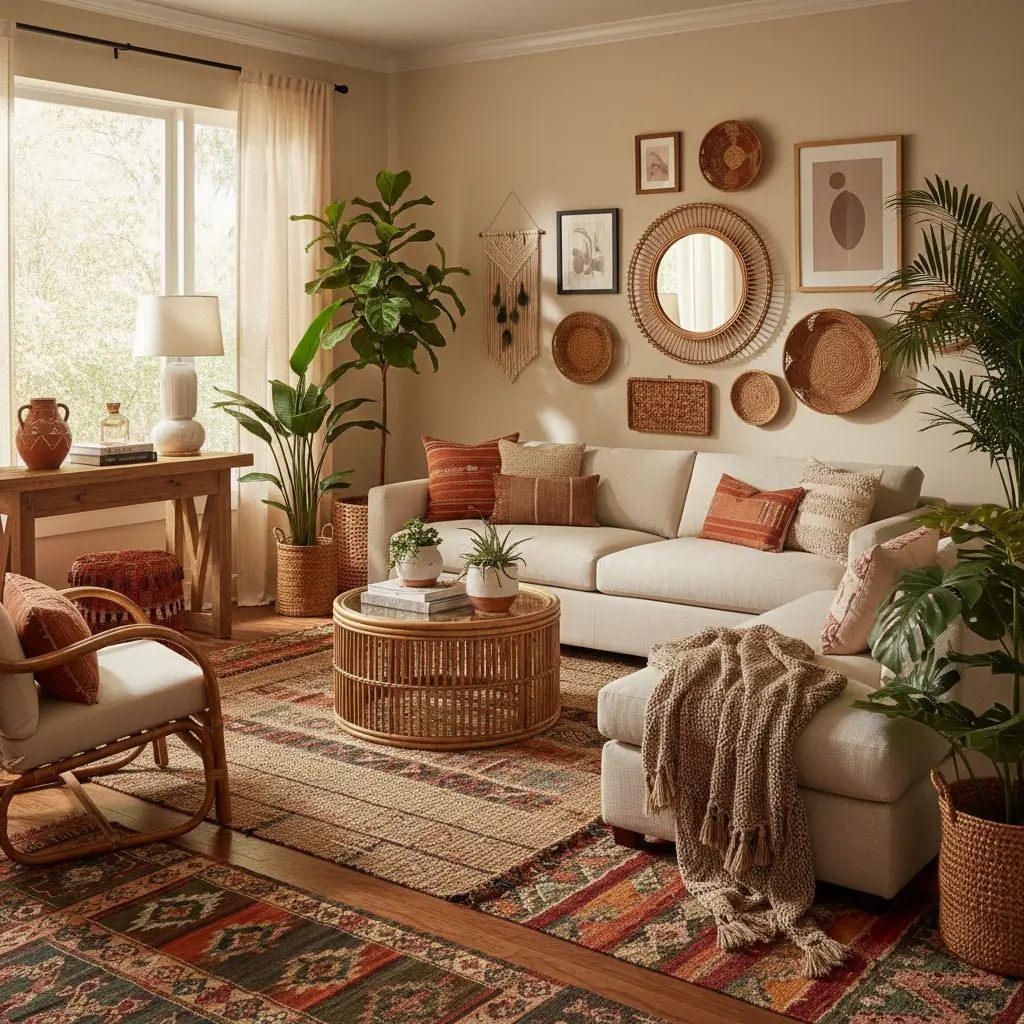
If maximalism and eclecticism had a beautifully chaotic baby, it would be boho chic design.
This style throws out the rulebook and embraces layered patterns, global influences, and personal collections that tell your story. I’ve seen boho living rooms that look like organized chaos in the best possible way—vintage rugs layered over each other, plants in every corner, wall hangings from different continents, and somehow it all WORKS.
The key to pulling off boho without looking like a thrift store exploded? Cohesion through color. Pick a palette (earthy tones work great) and let everything fall within that family. Then you can mix patterns and textures like nobody’s business.
Boho must-haves:
- Layered textiles: Rugs, throws, cushions—pile them on
- Natural materials: Rattan, jute, macramé, wood
- Vintage and handmade pieces: The more unique, the better
- Abundant plants: More is more in boho world
- Global influences: Moroccan poufs, Turkish rugs, Indian textiles
Here’s the thing about boho design—it evolves with you. You pick up a new piece from your travels? It fits right in. Your style shifts slightly? Boho adapts. It’s the ultimate forgiving design style.
Neutral Tone Living Room Design
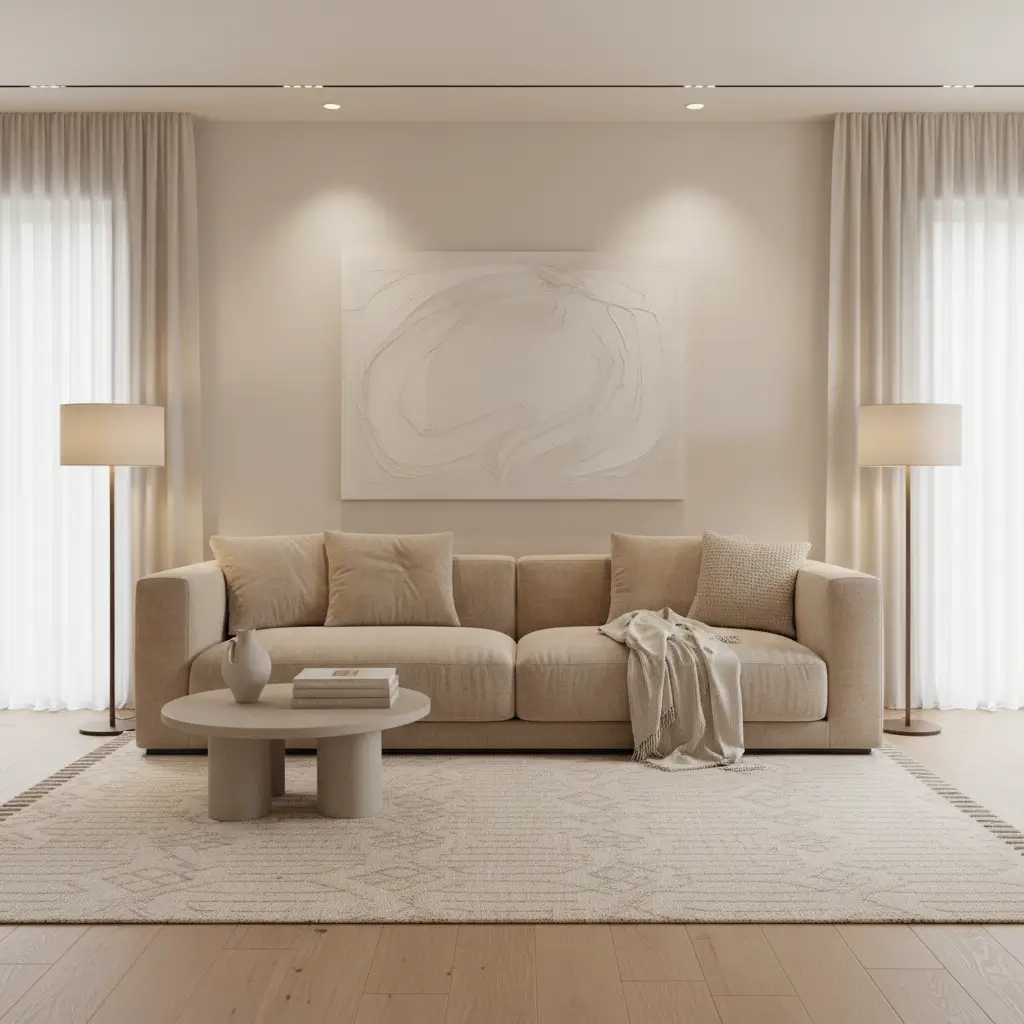
Neutrals get dismissed as boring, and I’m here to defend their honor because neutral doesn’t mean beige and bland—it means sophisticated and timeless.
A neutral-toned living room uses shades of white, cream, beige, taupe, gray, and soft browns to create a calming, cohesive space. The magic happens through layering different tones and textures within that neutral palette. You might have a cream sofa, taupe walls, gray curtains, and a beige rug—all neutrals, but all different enough to create depth.
I designed my current living room in neutrals after years of bold colors, and the peace it brings me is unmatched. Plus, when everything’s neutral, switching up your accent colors becomes ridiculously easy. Feeling springy? Add some green pillows. Want winter vibes? Bring in some navy and burgundy.
Why neutrals work:
- Timeless appeal: Trends come and go; neutrals stay elegant
- Versatile foundation: Easy to switch up accessories and accents
- Sophisticated aesthetic: Elevated without trying too hard
- Calming atmosphere: No visual competition for attention
The texture becomes your best friend here. Mix smooth with rough, shiny with matte, soft with structured. That’s how you keep a neutral room from feeling flat.
Open Concept Living Room Layout Ideas
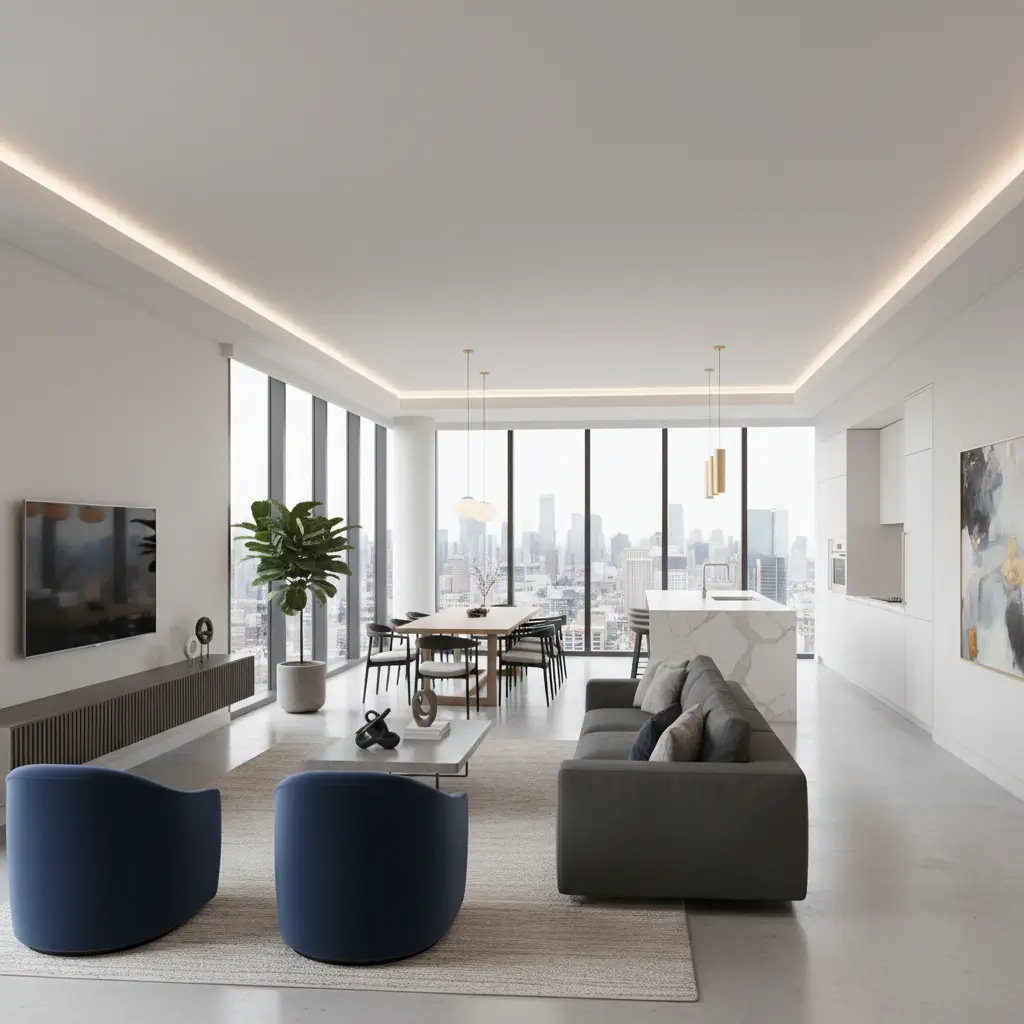
Knocking down walls changed the game for modern living spaces, and open concept living rooms reign supreme in contemporary homes.
This layout merges your living room with dining and sometimes kitchen areas, creating one flowing space. The challenge? Defining separate zones without actual walls. You’ll use furniture placement, area rugs, and lighting to create invisible boundaries that your brain recognizes even when your eyes don’t see barriers.
I’ll be honest—open concept can be tricky. My sister has an open-plan space, and when we first helped her arrange it, we basically played Tetris with furniture for an entire weekend. But once you nail it, the spaciousness and flow are incredible.
Open concept strategies:
- Area rugs: Define different zones (living area, dining area)
- Furniture as dividers: Position your sofa to create a boundary
- Consistent color palette: Maintains cohesion across the merged spaces
- Varied lighting: Different fixtures for different zones
- Sightlines matter: Arrange furniture so traffic flows naturally
The biggest benefit? Your space feels enormous, and you never feel isolated in one room. The biggest challenge? Noise carries like crazy, so maybe reconsider if you have loud hobbies. 🙂
Elegant Classic Living Room Interior
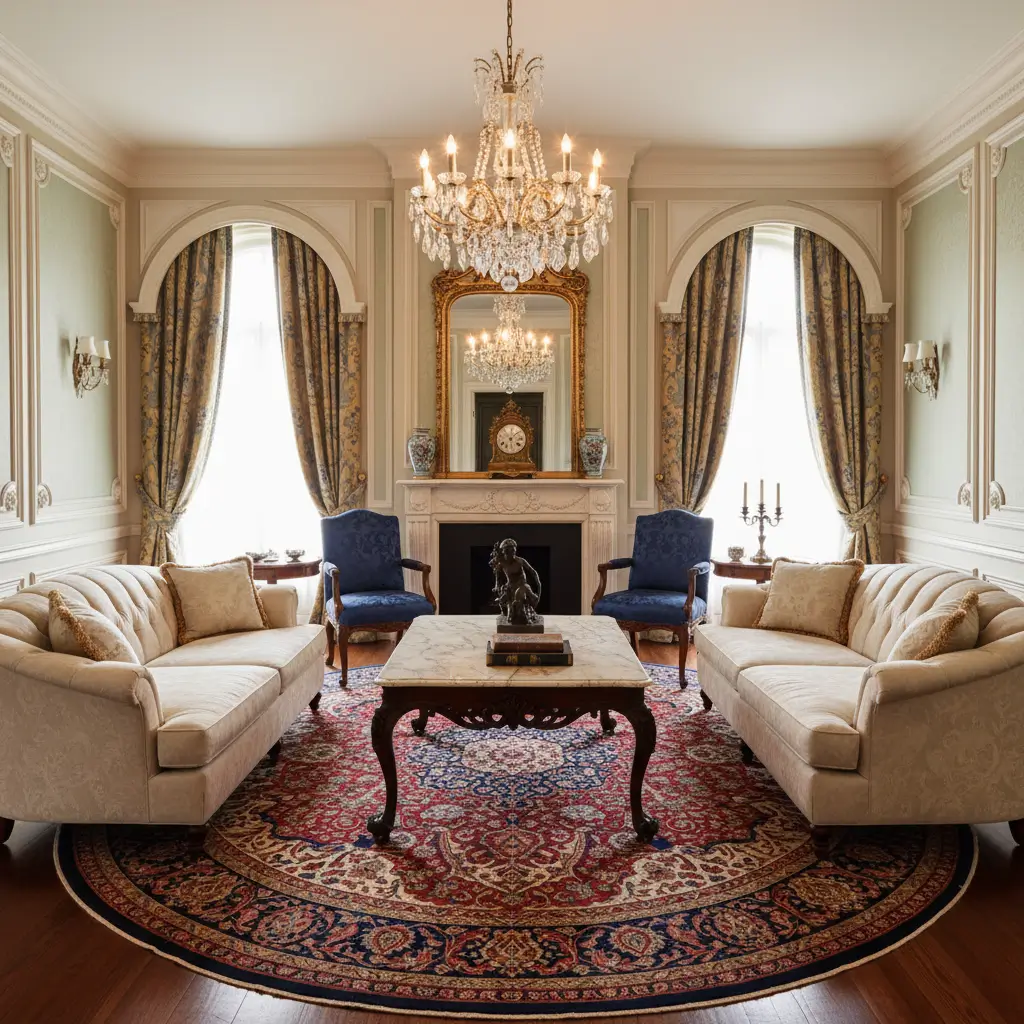
Classic design proves that some things never go out of style—we’re talking traditional elegance that’s been refined over centuries.
This style draws from Georgian, Victorian, and other historical periods, featuring symmetrical arrangements, rich wood tones, and ornate details. Crown molding, coffered ceilings, traditional furniture with carved details—we’re channeling old-world sophistication here.
But here’s where people mess up: Classic doesn’t mean stuffy. You can create a classic living room that feels elegant and inviting, not like a museum where you’re afraid to touch anything. The trick lies in balancing formal elements with comfortable, livable pieces.
Classic living room elements:
- Symmetrical layout: Matching lamps, balanced furniture placement
- Rich wood furniture: Dark mahogany, cherry, or walnut
- Traditional fabrics: Damask, silk, velvet in rich colors
- Architectural details: Crown molding, wainscoting, decorative trim
- Classic color schemes: Deep reds, forest greens, navy blues with cream
I’ve noticed that younger homeowners shy away from classic design, assuming it’s for older generations. IMO, that’s a mistake—when you blend classic elements with modern touches, you get a timeless space with character that new builds often lack.
Dark Theme Living Room Design
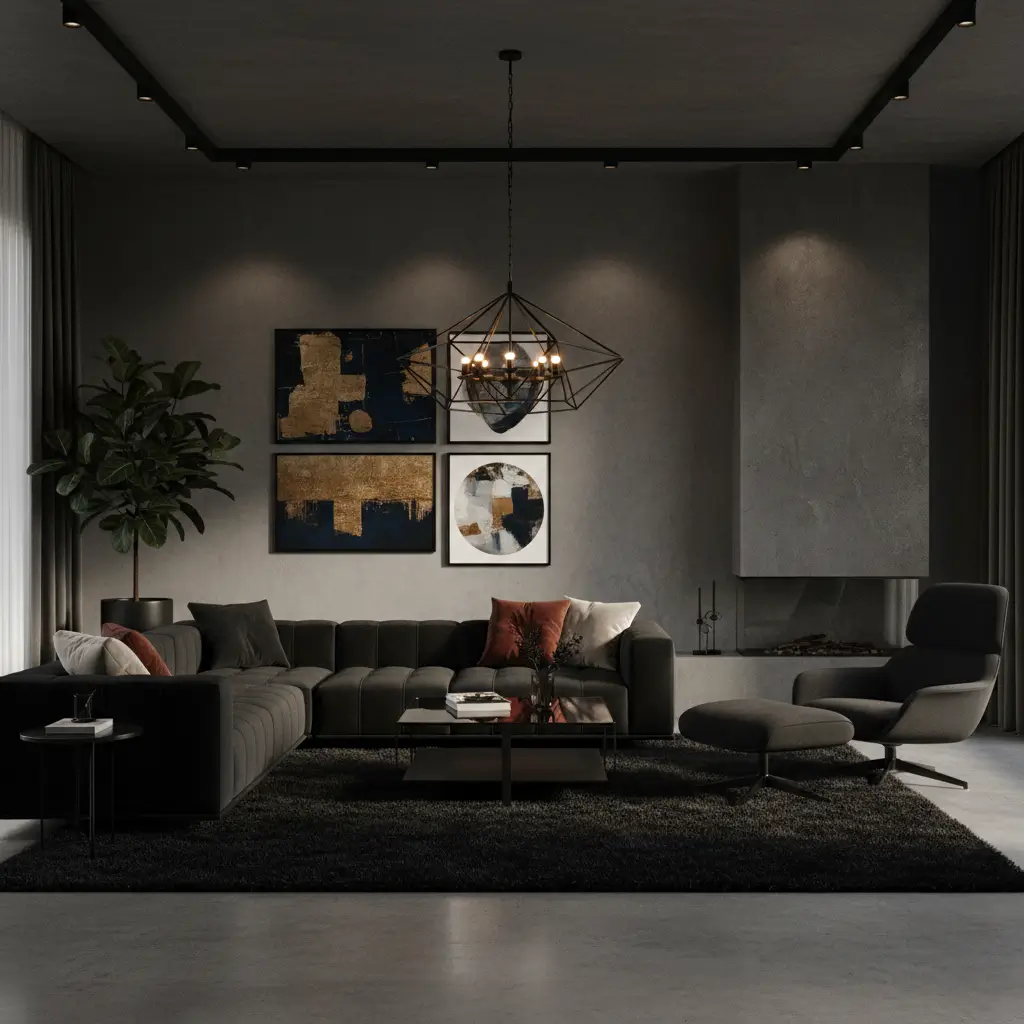
Ready to embrace the dark side? Dark-themed living rooms create drama, intimacy, and unexpected sophistication.
Painting your walls dark might seem counterintuitive—won’t it make the room smaller and gloomier? Actually, when you commit to dark design properly, it creates depth and an envelope of coziness that lighter rooms can’t achieve. Navy blues, deep greens, charcoal grays, even black walls can look absolutely stunning.
The secret? You can’t half-commit. If you go dark on walls but keep everything else light, it looks unfinished. You need to embrace the darkness through layered shades, and then strategically place lighting to create that moody, atmospheric vibe.
Dark design done right:
- Layered lighting: Essential when natural light gets absorbed by dark colors
- Metallic accents: Brass, gold, or copper pop beautifully against dark backgrounds
- Texture variation: Keeps the space from feeling like a cave
- Strategic light elements: Lighter furniture or accessories create contrast
- Quality paint: Cheap dark paint looks terrible; invest in good stuff
Ever walked into a dimly lit, well-designed bar and thought “I wish my home felt this cool”? That’s what dark theme living rooms deliver—that sophisticated, slightly mysterious ambiance.
Also Read: 15 Trendy Bohemian Living Room Aesthetic Concepts
Budget Friendly Living Room Interior Ideas
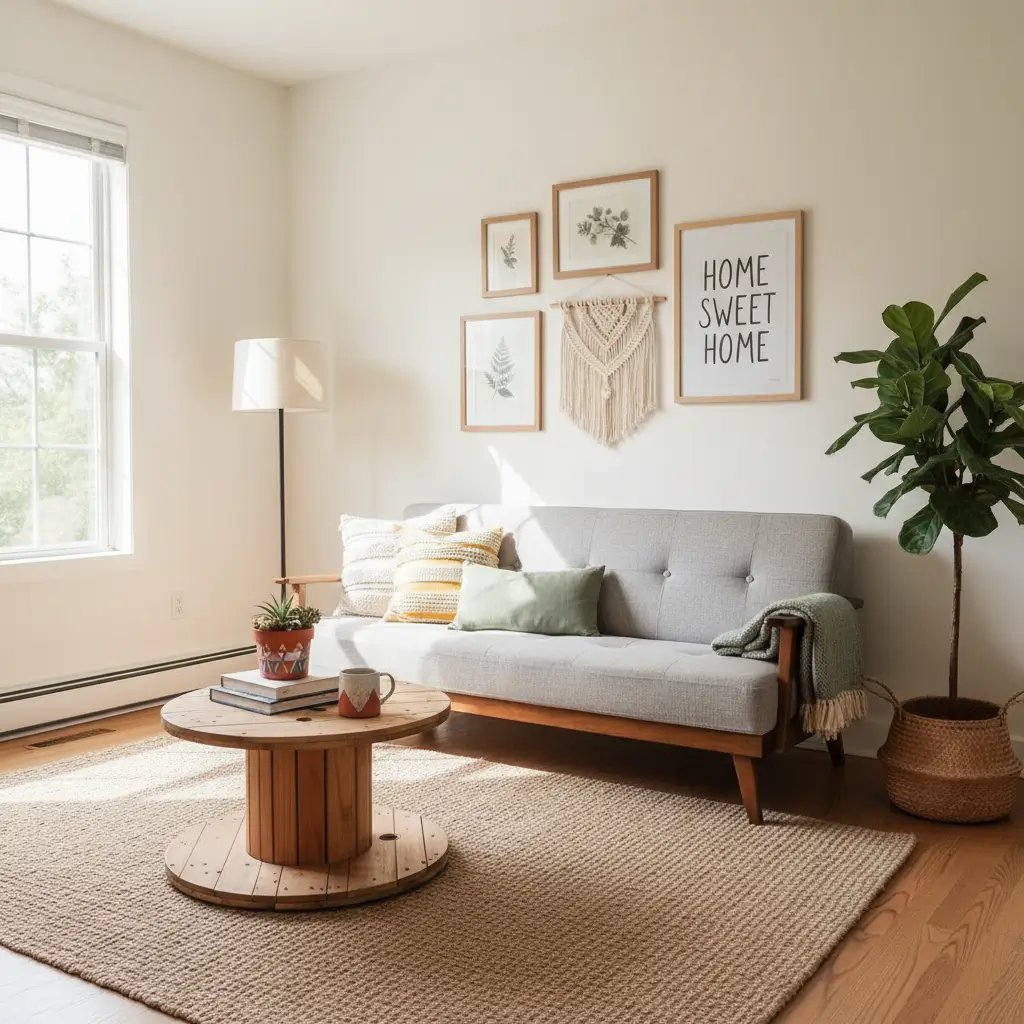
Let’s talk real talk: Most of us aren’t working with unlimited funds, and that’s completely fine.
Creating an elegant living room on a budget requires creativity, patience, and strategic shopping. I’ve designed beautiful spaces with mostly secondhand furniture, DIY projects, and strategic splurges on key pieces. The Instagram-perfect living rooms you drool over? Many of them cost way less than you’d think.
The budget design philosophy centers on investing in foundational pieces (a good sofa matters) while saving on trendy items that you’ll replace anyway. Thrift stores, Facebook Marketplace, and estate sales become treasure hunting grounds. That vintage coffee table for $50? Beats a $500 new one that’s made of particle board.
Budget-friendly strategies:
- DIY artwork: Frame fabric, create gallery walls from prints, paint your own
- Thrift and refinish: Old furniture + new paint = unique pieces
- Strategic splurges: Good sofa, quality rug, then save on everything else
- Removable updates: Peel-and-stick wallpaper, temporary fixes for renters
- Shop sales and clearance: Patience pays off literally
Pro tip: Nobody who visits your living room knows what you paid for things. They just see the finished result. A well-styled room from Target and thrift stores looks just as good as one from designer boutiques.
High Ceiling Living Room Design
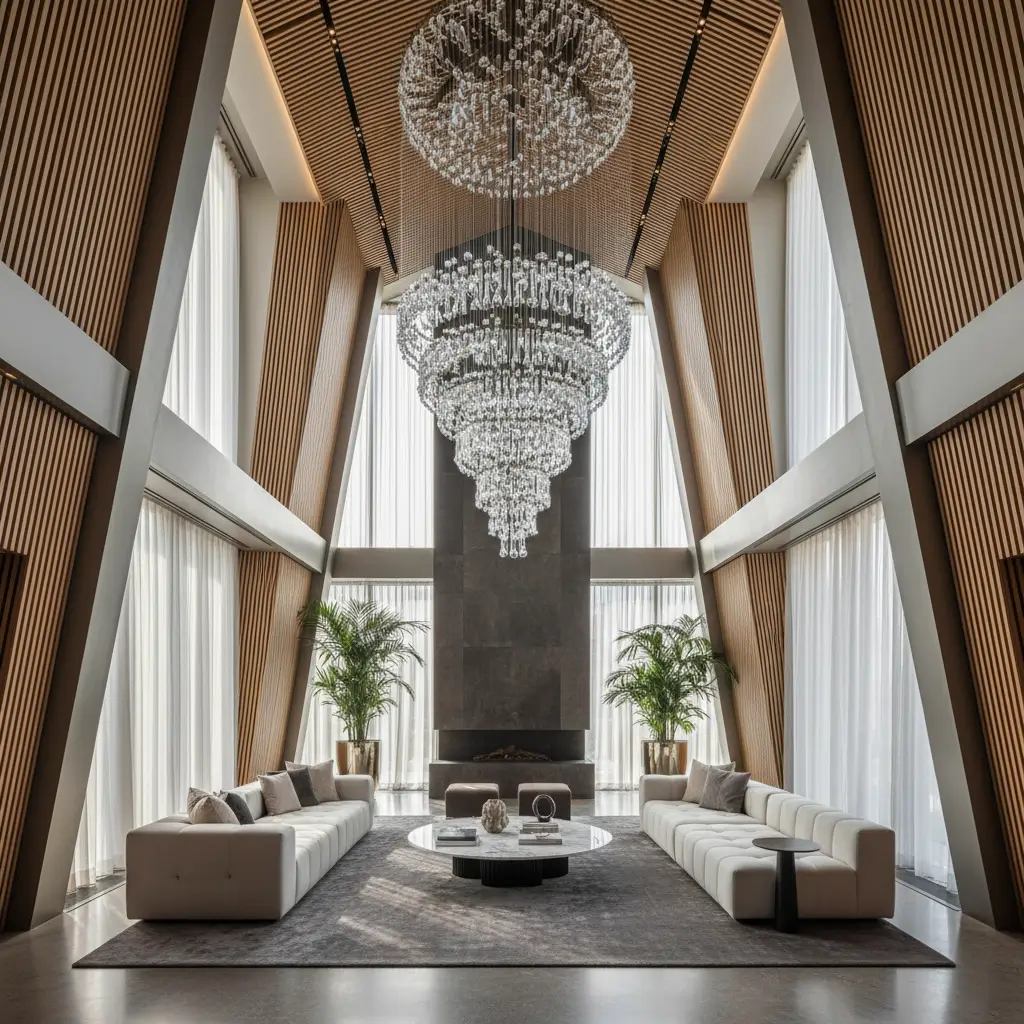
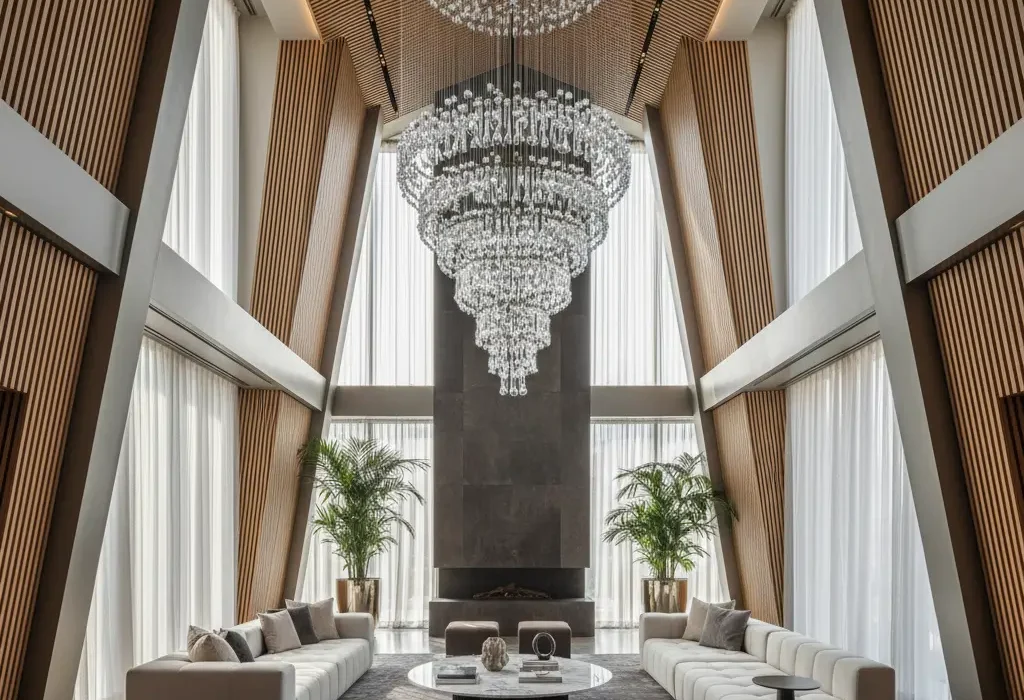
High ceilings are a blessing and a design challenge rolled into one gorgeous architectural feature.
Vertical space creates grandeur, but it also creates the risk of your living room feeling cavernous and disconnected if you don’t design intentionally. You can’t just push your furniture against the walls and call it a day—you’ll end up with awkward proportions and wasted space above eye level.
I helped my parents design their living room with 14-foot ceilings, and the biggest lesson? Think vertically. Use your wall height with tall bookshelves, dramatic artwork, floor-to-ceiling curtains, and statement light fixtures that draw the eye upward.
High ceiling solutions:
- Tall artwork or gallery walls: Fill that vertical space
- Statement lighting: Chandeliers or pendants that hang appropriately low
- Floor-to-ceiling curtains: Emphasize the height dramatically
- Vertical shelving: Use the full wall height
- Color blocking: Paint upper portions different colors to manage proportions
The goal? Make the high ceilings feel intentional and integrated, not like you’re living in a gymnasium. Balance that impressive height with grounding elements at eye level so the room still feels intimate despite its volume.
Apartment Living Room Interior Inspiration
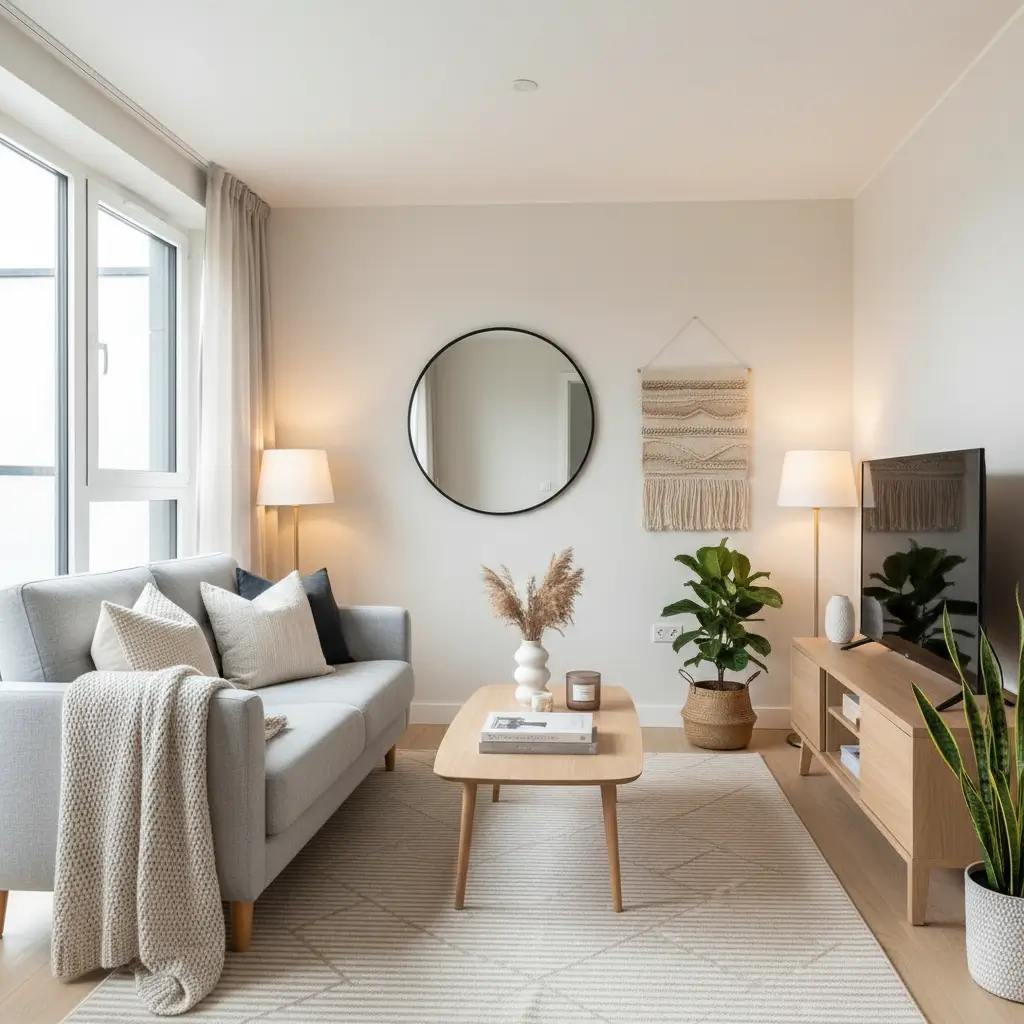
Apartment living comes with unique challenges—rental restrictions, limited space, quirky layouts, and the dreaded “builder-grade everything”.
But apartment living rooms can absolutely achieve elegance within these constraints. I’ve spent most of my adult life in apartments, and I’ve learned every renter-friendly trick in the book. The key? Temporary solutions that pack major visual impact without losing your security deposit.
Removable wallpaper transforms boring walls. Command strips hang artwork without nail holes. Area rugs cover unfortunate flooring choices. Furniture arrangement creates flow in weird layouts. You work with what you’ve got and make it spectacular anyway.
Apartment design hacks:
- Removable solutions: Peel-and-stick products for walls and floors
- Furniture as focal points: Since you can’t change architecture
- Lighting upgrades: Swap out basic fixtures (keep originals to reinstall)
- Strategic coverage: Hide ugly elements with plants, furniture, curtains
- Maximize vertical space: When floor space is limited, go up
The bonus of apartment design? You’re forced to be creative and intentional. Some of the most impressive living rooms I’ve seen were in small apartments where every choice mattered.
Statement Wall Living Room Ideas
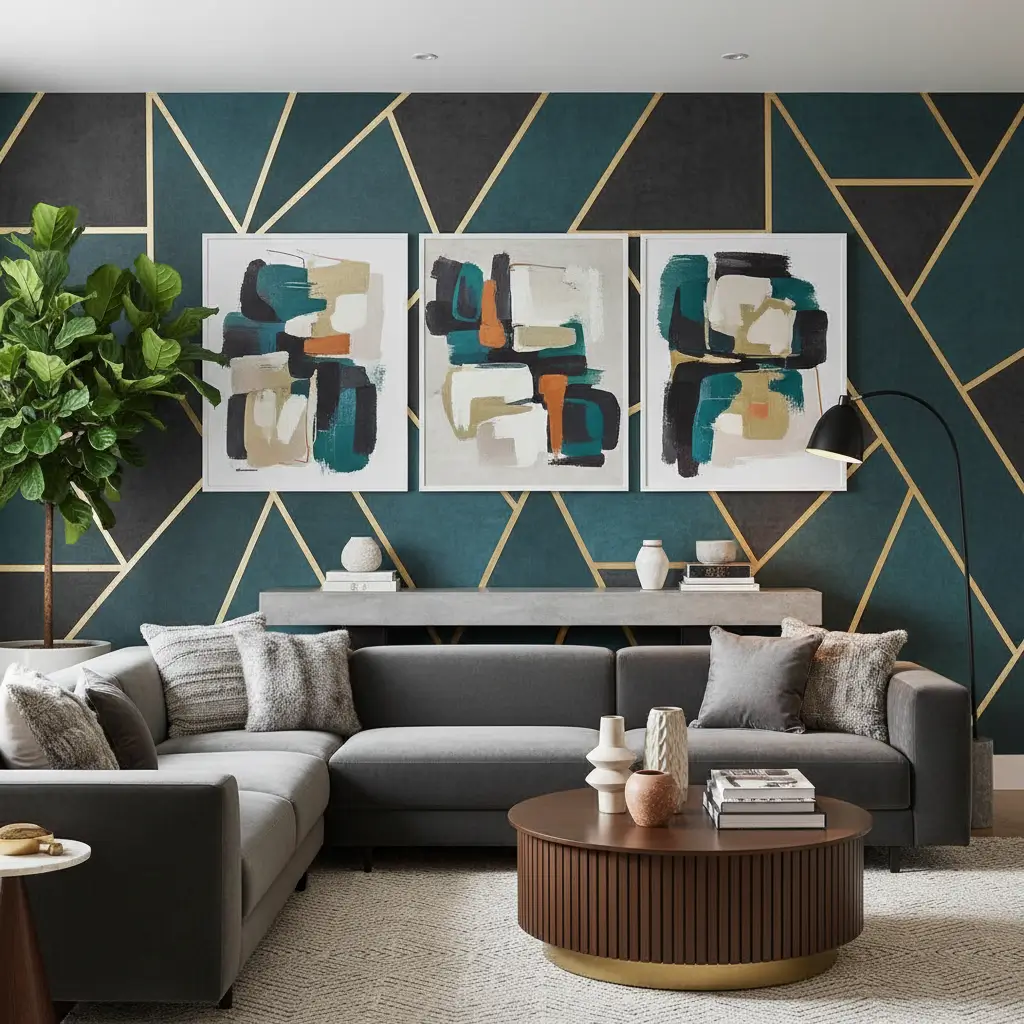
Sometimes your living room needs a hero, and a statement wall steps up to save the day.
This design approach dedicates one wall to being the dramatic focal point while keeping other walls more subdued. Accent paint colors, wallpaper, wood paneling, gallery walls, textured treatments—you’ve got options for days.
I created a statement wall in my living room using peel-and-stick wallpaper in a bold geometric pattern, and it completely transformed the space. Suddenly my basic rental living room had personality and visual interest. The best part? It took one afternoon and cost under $100.
Statement wall ideas:
- Bold paint color: While other walls stay neutral
- Wallpaper: Patterns, textures, or murals
- Gallery wall: Curated collection of artwork and photos
- Wood paneling: Shiplap, board-and-batten, or reclaimed wood
- Textured treatments: 3D panels, fabric, or unique materials
Here’s what I love about statement walls—they give you that “wow” factor without overwhelming your entire room. You get to be bold and play it safe simultaneously, which is basically having your design cake and eating it too.
Family Friendly Living Room Design
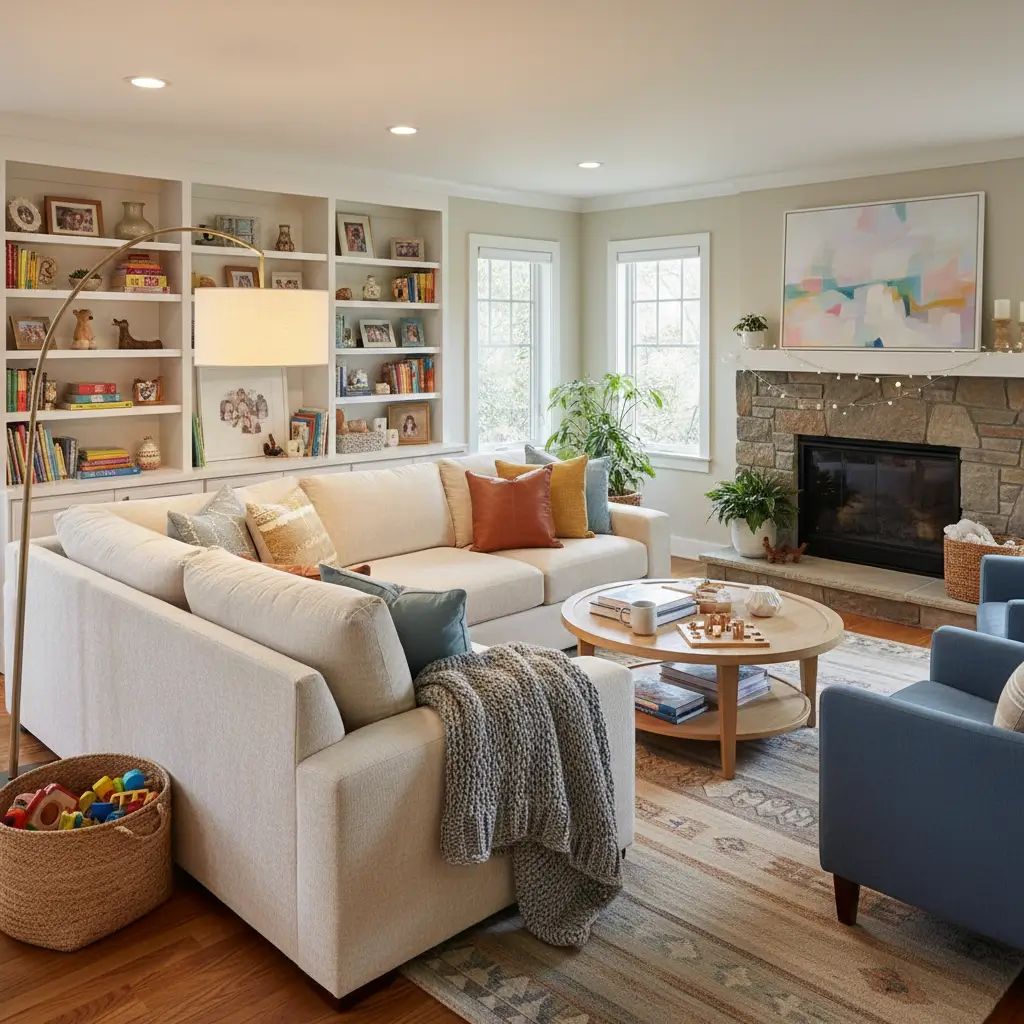
Real families have real living rooms with juice stains, toy explosions, and furniture that takes daily beatings from tiny humans.
Designing a family-friendly living room means creating beauty that’s also durable, practical, and forgiving. You can absolutely have an elegant space that doesn’t require you to panic when your kid walks in with a popsicle. It’s all about smart material choices and realistic layouts.
Performance fabrics have come SO far—you can get gorgeous sofas in materials that repel stains and clean easily. Washable rugs exist and look fantastic. Coffee tables with rounded edges protect little heads. Storage solutions corral toys. You’re designing for real life while maintaining style. :/
Family-friendly features:
- Performance fabrics: Stain-resistant, durable, cleanable upholstery
- Washable rugs: Because spills happen constantly
- Durable surfaces: Skip glass and marble for wood and metal
- Smart storage: Built-in solutions that hide the toy chaos
- Rounded edges: Safety meets style on furniture choices
The secret sauce? You don’t have to sacrifice elegance for functionality. Companies finally figured out that parents want beautiful homes too, so the market offers tons of options that check both boxes. Your living room can handle family life AND look magazine-worthy.
Conclusion
There you have it—15 elegant living room styles that prove you’ve got options no matter your space, budget, or lifestyle. The beauty of interior design? There’s no single “right” answer. Your perfect living room might blend elements from several of these styles, creating something uniquely yours.
What matters most is creating a space that makes you excited to come home. Whether you’re drawn to the clean simplicity of minimalism, the cozy warmth of Scandinavian design, or the bold drama of a dark-themed room, trust your instincts. Your living room should reflect who you are, not what a design magazine tells you to be.