



Ever stand in the middle of your living room, look around, and think, “…meh”? You’re not alone. I’ve been there, staring at the same sofa, the same lopsided lamp, and the same questionable art I bought five years ago, feeling completely uninspired. The living room is supposed to be the heart of the home, but sometimes it feels more like the appendix—a bit useless and prone to causing problems.
The internet bombards you with a million “perfect” living rooms, and honestly, it’s overwhelming. So, let’s cut through the noise. I’m not here to give you a textbook lecture. Think of this as a chat with a friend who just happens to be obsessed with interior design and has made all the mistakes so you don’t have to.
We’re going to walk through 15 distinct ideas, from minimalist to maximalist and everything in between. Ready to find a style that actually feels like you? Let’s get this sorted.
1. Minimalist Modern Living Room Makeovers
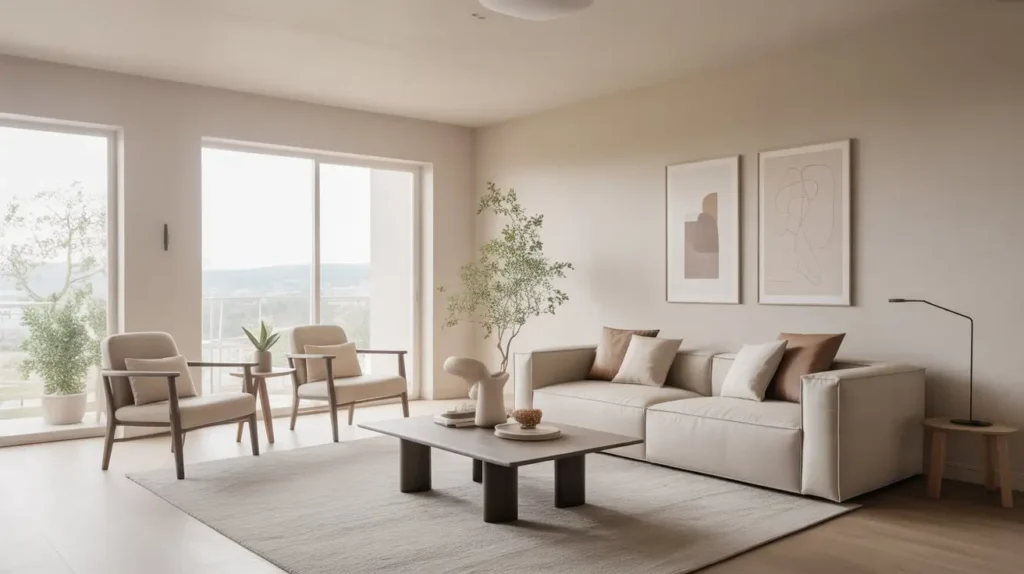
Let’s start with the one everyone thinks they want until they realize it means getting rid of half their stuff. Minimalism isn’t about living in a white, empty box. I promise. It’s about intentionality. It’s the art of making “less” feel like “so much more.”
The Core Philosophy
The goal here is a clean, uncluttered space where every single item has a purpose and a place. You get rid of the visual noise so you can actually breathe. Think clean lines, simple forms, and a sense of calm. It forces you to ask, “Do I really need this decorative gourd?” The answer is probably no.
Nailing the Vibe
- Color Palette: Stick to a tight, neutral color scheme. We’re talking whites, creams, grays, and blacks. You can introduce a single, subtle accent color, but don’t go crazy. The power is in the restraint.
- Furniture: Choose furniture with sharp, clean lines and simple silhouettes. A low-profile sofa, a sleek metal coffee table, and an armless accent chair are classic choices. The furniture itself becomes a piece of art.
- Let There Be Space: This is the big one. Negative space—the empty area around objects—is just as important as the objects themselves. Don’t feel the need to fill every corner. Let the room feel open and airy.
I once tried to go full minimalist. I lasted about a week before my collection of quirky mugs and unnecessary throw pillows staged a rebellion and reclaimed their territory. The key I learned is finding a balance. You can have a minimalist aesthetic without becoming a monk.
2. Cozy Scandinavian Style Living Rooms
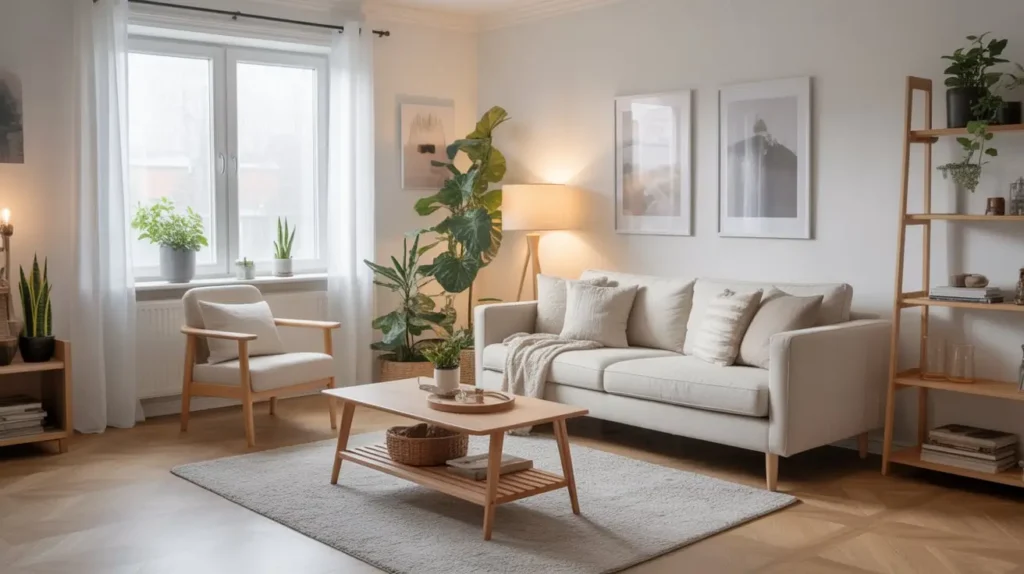
If minimalism feels a little too cold, say hello to its cozier, friendlier cousin: Scandinavian design. This style, born from the long, dark winters of Nordic countries, is all about creating a warm, inviting, and practical home. It’s the physical embodiment of “hygge” (pronounced hoo-gah), the Danish concept of cozy contentment.
Ever wondered why this style is so universally loved? It’s because it’s both beautiful and livable. It’s a space you actually want to curl up in with a good book and a cup of tea.
The Hygge Handbook
A Scandi living room feels bright, airy, and connected to nature. You achieve this through a few key elements. First, maximize natural light. Keep window treatments simple—think sheer white curtains or even bare windows if you have the privacy.
Next, focus on a light and neutral color palette, but with more warmth than pure minimalism. Think whites, soft grays, pale blues, and lots of natural wood tones. Speaking of which, light-colored woods like pine, ash, and beech are your best friends here. Use them in your flooring, furniture, and even on the walls.
Finally, layer in the coziness. Add soft, natural textiles like wool throws, linen pillows, and a plush area rug. And plants! A few well-placed green plants bring life and a pop of natural color into the space, preventing it from feeling sterile. It’s a simple formula, but man, does it work.
3. Boho Chic Living Room Inspirations
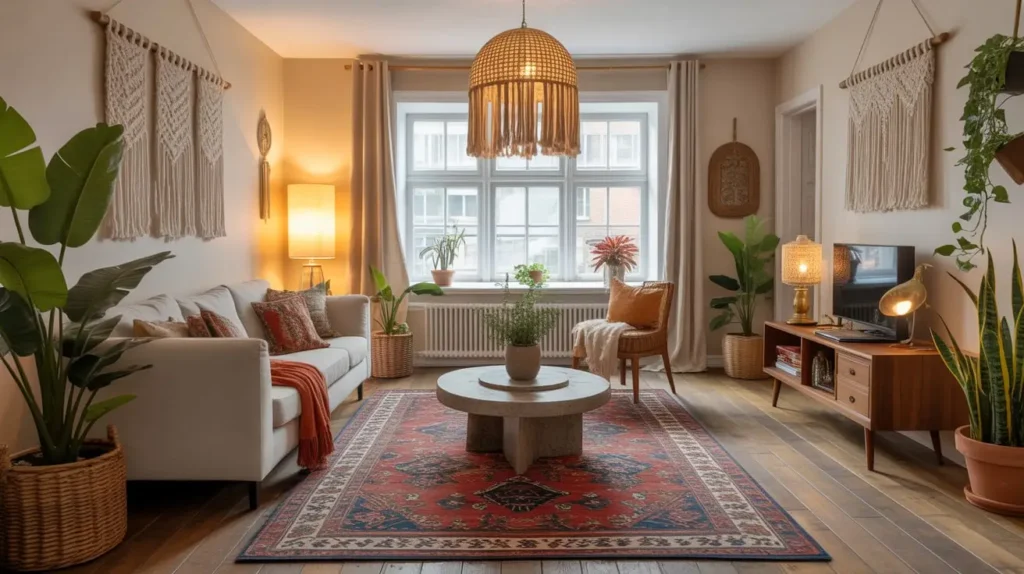
Alright, let’s swing the pendulum in the complete opposite direction. If minimalism is a quiet, curated whisper, Boho Chic is a joyful, free-spirited shout. This style is for the collectors, the travelers, the artists, and anyone who believes “more is more.”
There are no strict rules here, which is both liberating and slightly terrifying. The goal is to create a space that feels personal, eclectic, and full of life. It’s a reflection of your own unique story.
Your Guide to Going Boho
- Embrace Texture and Pattern: This is non-negotiable. Mix and match patterns with abandon—think Moroccan prints, tribal designs, and floral motifs. Layer different textures like macrame wall hangings, shaggy rugs, velvet pillows, and woven baskets.
- A Global Vibe: Boho style often incorporates items from around the world. Display souvenirs from your travels, textiles from different cultures, and unique, handcrafted pieces. It should look like a well-traveled individual lives there, even if your furthest trip was to the next town over.
- Bring the Outdoors In: You can’t have a boho room without an urban jungle. Fill your space with plants—hanging plants, potted trees, tiny succulents, you name it. They add color, life, and purify the air. Just, you know, try to keep them alive.
- Low-Level Lounging: Think low-slung sofas, floor cushions, and poufs. The vibe is relaxed and informal, encouraging guests to kick off their shoes and get comfortable.
A word of warning: there’s a fine line between beautifully curated Boho and “I just raided a thrift store” chaos. The key is a semi-cohesive color story and a sense of intentional placement. Even in a maximalist paradise, every item should feel like it belongs.
4. Luxury Living Room Design Ideas
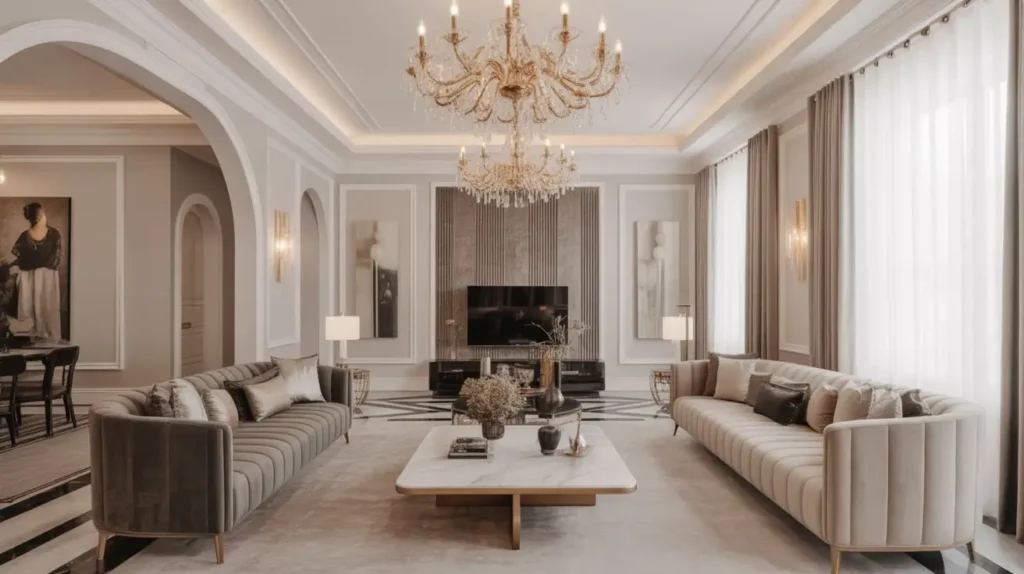
Ready to feel a little fancy? Luxury design isn’t about plastering gold leaf on everything or buying the most expensive sofa just because you can. True luxury is about quality, comfort, and sophistication. It’s a feeling, not a price tag.
A luxurious living room feels curated, timeless, and incredibly comfortable. It’s the kind of room that makes you want to pour a glass of something nice and sink into a ridiculously plush chair.
How to Add a Touch of Luxe
The secret is in the materials. Focus on rich, tactile fabrics. I’m talking plush velvet sofas, silk or satin pillows, and faux fur throws. These textures immediately signal opulence and comfort. Don’t be afraid to mix them up for a layered, decadent feel.
Lighting is another huge factor. Ditch the boring ceiling flush mount and invest in a statement chandelier or a sculptural floor lamp. Good lighting not only illuminates the space but also acts as a piece of jewelry for the room. Dimmers are also a must for setting that moody, sophisticated ambiance.
Finally, pay attention to the details.
- Metallic Accents: Incorporate touches of gold, brass, or chrome in your decor. Think picture frames, table legs, light fixtures, or decorative objects.
- High-End Finishes: Consider details like crown molding, elegant curtain rods, or a beautiful marble-topped coffee table.
- Large-Scale Art: A single, oversized piece of art makes a much bigger impact than a gallery wall of tiny prints. It feels confident and intentional.
You don’t need a millionaire’s budget. It’s about choosing a few key pieces that exude quality and building the rest of the room around them.
Read Also 15 Cozy Cozy Living Room Ideas for Warm Inviting Homes
5. Small Space Living Room Solutions

Living in a small space doesn’t mean you have to sacrifice style. In fact, I think it’s an opportunity to get creative and super smart about your design choices. It’s like a puzzle, and when you solve it, the result is incredibly satisfying. I lived in a tiny apartment for years, and it taught me every trick in the book.
The number one rule? Every piece must earn its keep. There’s no room for freeloaders in a small living room.
Big Ideas for Small Rooms
- Multi-Functional Furniture: This is your holy grail. Look for an ottoman with hidden storage, a coffee table that lifts to become a desk, or a sofa bed for overnight guests.
- Go Vertical: When you can’t build out, build up. Use tall, narrow bookshelves to draw the eye upward and provide storage without taking up precious floor space. Wall-mounted shelves are also a fantastic option.
- The Magic of Mirrors: This is the oldest trick in the book for a reason—it works. A large mirror can visually double the size of your room by reflecting light and the space itself. Place it opposite a window for maximum effect.
- Light and Bright Color Palette: Dark colors can make a small room feel like a cave. Stick with light, airy colors like white, cream, and pastels to make the space feel larger and more open.
- Furniture with Legs: Opt for sofas and chairs with exposed legs. Seeing the floor underneath the furniture creates an illusion of more space. A bulky, floor-grazing sofa will just eat up the room. FYI, this little trick is a game-changer.
6. Rustic Farmhouse Living Room Decor

Thanks to a certain TV power couple, the modern farmhouse look has been having a major moment. But its appeal goes beyond shiplap walls. At its heart, this style is about creating a comfortable, welcoming, and unpretentious space that feels rooted in tradition.
It’s cozy, it’s a little bit country, and it’s perfect for family life. The goal is to make your living room feel like a warm hug.
Getting the Farmhouse Look
The foundation of farmhouse style is a neutral color palette. Think shades of white, beige, and gray. This creates a clean, calm backdrop for all the rustic textures you’re about to add.
Next, bring in the wood. Reclaimed or distressed wood is a hallmark of this style. You can use it in a coffee table, shelving, ceiling beams, or even an accent wall. It adds instant warmth and character. Don’t worry about it being perfect; a few knots and imperfections are part of the charm.
For furniture, think comfortable and slightly oversized. A big, slipcovered sofa you can sink into is perfect. Mix in some vintage-inspired pieces, like a weathered armchair or a rustic console table. And yes, you can have shiplap. Just maybe don’t do it on every wall, okay? A single accent wall is often enough to get the point across without turning your home into a barn.
7. Contemporary Open-Concept Living Rooms
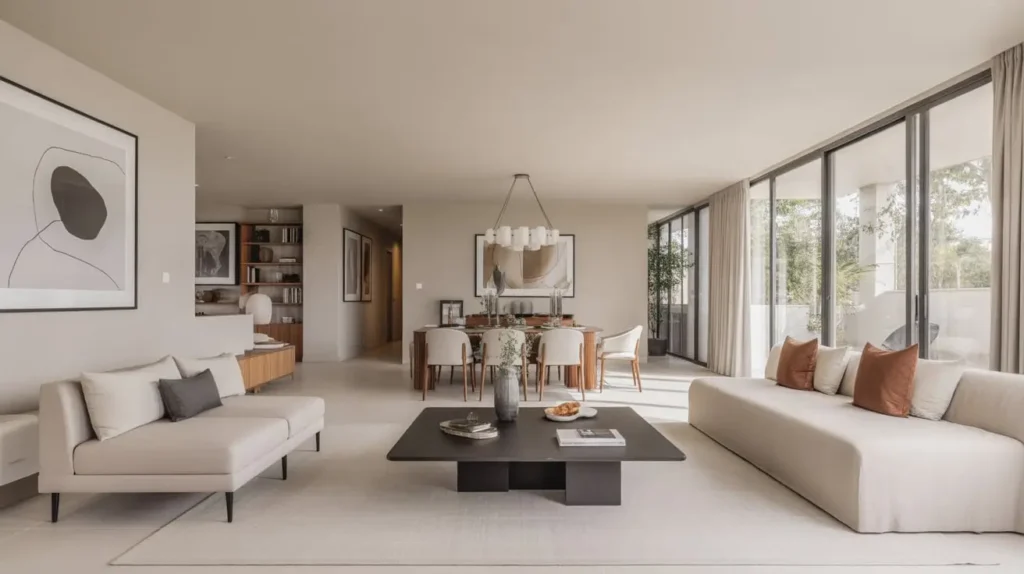
Ah, the open-concept layout. A blessing and a curse. It’s fantastic for entertaining and creating a sense of spaciousness, but it can also feel like you’re living in one giant, chaotic room. How do you define the living room when there are no walls?
The key is to create distinct “zones” without building physical barriers. You want the whole space to feel cohesive, but each area should have its own defined purpose.
Mastering the Open Plan
Your most powerful tool is the area rug. Use a large area rug to anchor your living room furniture. It visually separates the seating area from the dining area or kitchen, creating a room within a room. Make sure the rug is large enough that at least the front legs of all your furniture pieces are sitting on it.
Furniture placement is also critical. Instead of pushing everything against the walls (which you don’t have!), float your sofa in the middle of the space. Place a console table behind it to create a soft boundary and provide a surface for lamps or decor. This arrangement feels intentional and helps define the conversation area.
To maintain a sense of cohesion, stick to a consistent color palette throughout the entire open-concept area. You can use different shades or accent colors in each zone, but they should all work together harmoniously. This will tie everything together and prevent the space from feeling disjointed.
8. Colorful Eclectic Living Room Designs
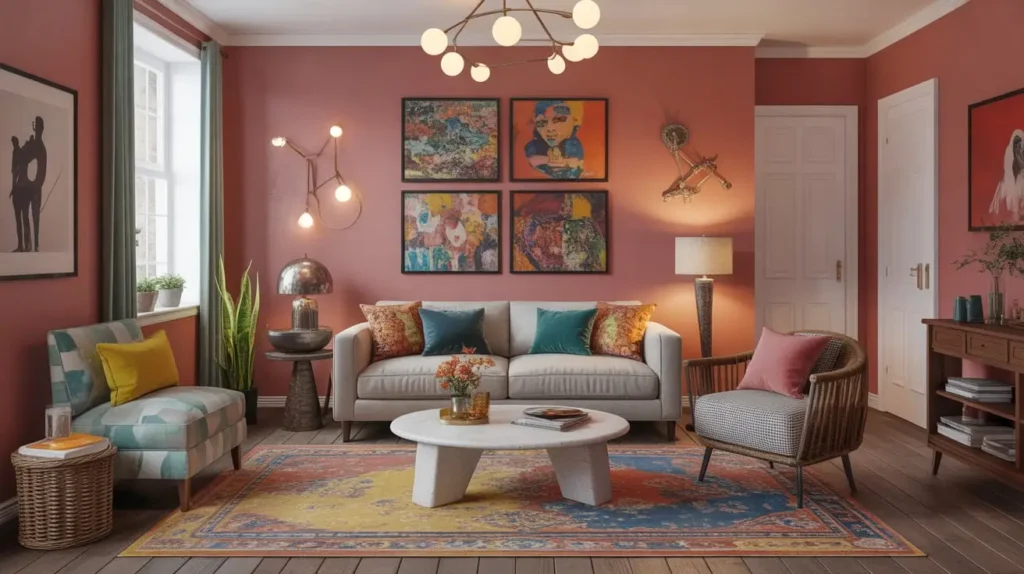
For those who find rules restrictive and color palettes boring, welcome to the world of eclectic design. This style is all about mixing, matching, and creating a space that is uniquely and unapologetically you. It’s a curated collection of things you love, regardless of their style, era, or origin.
This is my personal happy place. My own living room is a mix of a Mid-Century chair I inherited, a modern sofa, and a ridiculously ornate vintage gold mirror. Does it “match”? No. Does it work? IMO, absolutely. 🙂
The Art of the Mix
Eclectic design is not a free-for-all. To prevent your room from looking like a jumble sale, you need a unifying element. This could be a repeating color, a consistent texture, or a common shape.
For example, you could have furniture from five different decades, but if they are all tied together with shades of blue and pops of yellow, the room will feel cohesive. Or perhaps you mix different styles but keep the material palette limited to wood, leather, and brass.
The key is to balance the old with the new, the sleek with the ornate, and the bold with the simple. If you have a very loud, patterned sofa, pair it with a simple coffee table. If you have a gallery wall of chaotic art, ground it with a neutral-colored rug. It’s a dance of contrast and harmony. It takes confidence, but the result is a room with more personality than any other.
9. Mid-Century Modern Living Room Ideas
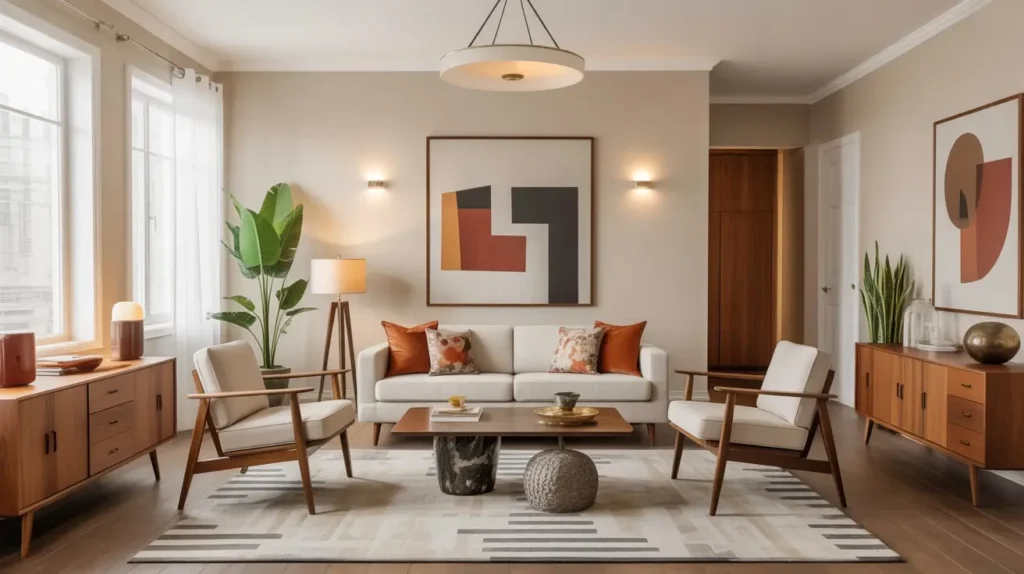
Step into a time machine back to the 1950s and ’60s. Mid-Century Modern (MCM) design is characterized by its clean lines, organic shapes, and a deep appreciation for natural materials. Think of the sets from Mad Men, but maybe with fewer ashtrays.
This style has had a massive resurgence, and it’s easy to see why. It’s sophisticated yet unfussy, and its timeless appeal works in almost any home.
The MCM Essentials
- Iconic Furniture: This style is defined by its furniture. Look for pieces with tapered, peg-like legs, simple geometric shapes, and a lack of fussy ornamentation. Think of the Eames lounge chair or the Noguchi coffee table. You don’t need authentic vintage pieces; many stores sell fantastic reproductions.
- Wood Tones: Warm wood tones are essential. Teak, walnut, and rosewood are the stars of the show. A beautiful wood credenza or media console is a perfect anchor piece for an MCM living room.
- Color and Pattern: While the furniture is simple, MCM isn’t afraid of color. It often features earthy tones like olive green, mustard yellow, and burnt orange, paired with bold, graphic patterns. A starburst clock on the wall is practically a requirement.
- Integration with Nature: MCM homes often featured large windows and sliding glass doors to blur the line between indoors and out. You can replicate this feel with plenty of houseplants and by keeping window treatments minimal.
Read Also 15 Stunning Boho Living Room Inspirations to Transform Your Space
10. Budget-Friendly Living Room Transformations
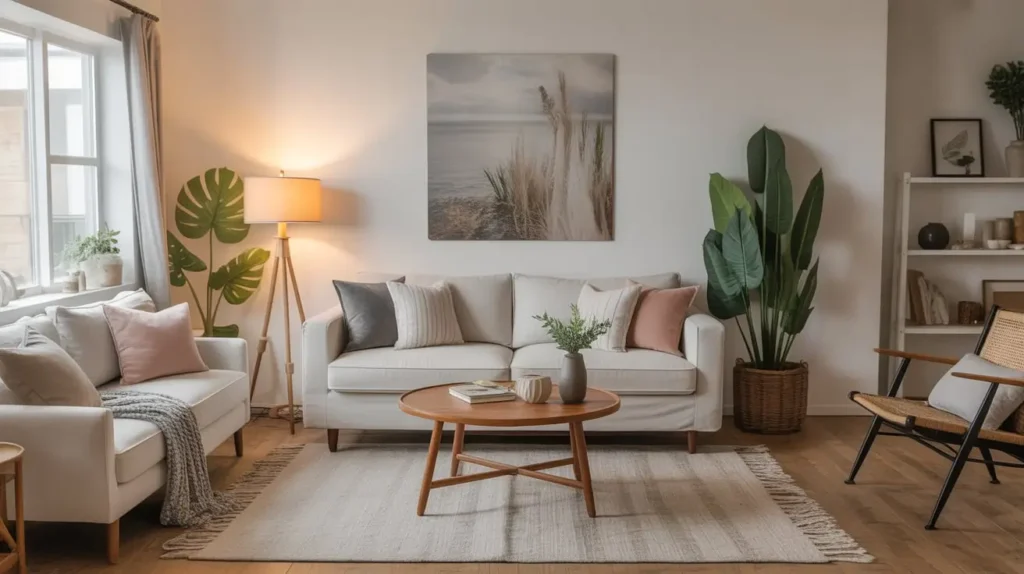
Let’s be real: most of us don’t have an unlimited budget for a full-on living room overhaul. But that doesn’t mean you’re stuck with a room you hate. A little creativity and some elbow grease can go a very long way.
I’ve decorated entire rooms on a shoestring budget, and honestly, those are the projects I’m proudest of. You appreciate things more when you’ve put in the work yourself.
Champagne Taste on a Beer Budget
- The Power of Paint: Never underestimate what a fresh coat of paint can do. It’s the cheapest, most impactful change you can make. You can paint the walls, a piece of tired old furniture, or even your fireplace surround.
- Thrift and DIY: Become best friends with your local thrift stores, flea markets, and online marketplaces. You can find incredible, unique pieces for a fraction of the cost of new. A little sanding and a coat of paint can transform a dated wooden dresser into a chic media console.
- Switch Up the Textiles: Can’t afford a new sofa? Change the pillows and add a new throw blanket. Can’t afford new flooring? Get a large, stylish area rug to cover up the old stuff. Textiles are a relatively inexpensive way to completely change the color scheme and feel of a room.
- Update Your Hardware: This is a tiny change with a huge impact. Swap out the generic knobs on your media console or cabinets for something more modern and stylish. It takes ten minutes and makes the piece look instantly more expensive.
11. Urban Industrial Style Living Rooms
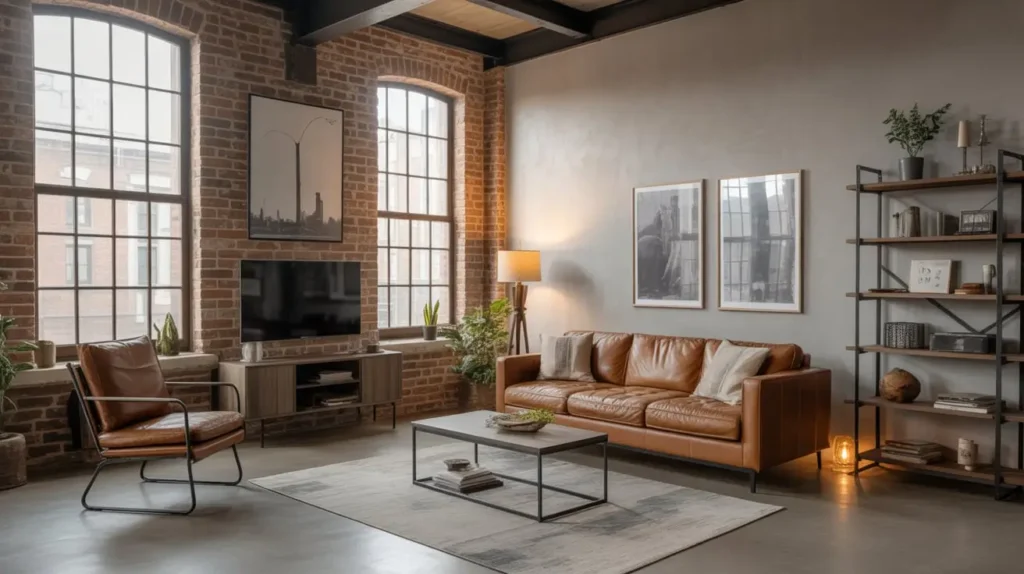
Inspired by old factories and urban lofts, the industrial style is all about embracing raw, unfinished materials. It’s edgy, it’s a little bit rugged, and it has a cool, downtown vibe that’s hard to resist.
The challenge? Making a style that celebrates concrete and metal feel like a place you want to relax. How do you soften such a hard-edged look?
Making Industrial Livable
The key is to balance the hard with the soft. You absolutely need those core industrial elements:
- Exposed Brick or Concrete: If you’re lucky enough to have it, flaunt it. If not, there are some surprisingly realistic faux brick or concrete wallpapers out there.
- Metal Accents: Black steel, iron, and galvanized metal are staples. Look for them in lighting fixtures, window frames, and furniture legs.
- Raw Wood: Choose wood that looks unfinished or reclaimed, not polished and perfect.
Now, for the softening. Bring in a large, comfortable sofa with plenty of plush pillows. Add a soft, high-pile rug to warm up the floor. Incorporate leather, whether it’s a worn-in armchair or a sleek modern sofa, as its natural texture works perfectly with the raw materials. These cozy elements provide the necessary contrast to make the space feel like a home, not a warehouse.
12. Coastal and Beachy Living Room Vibes
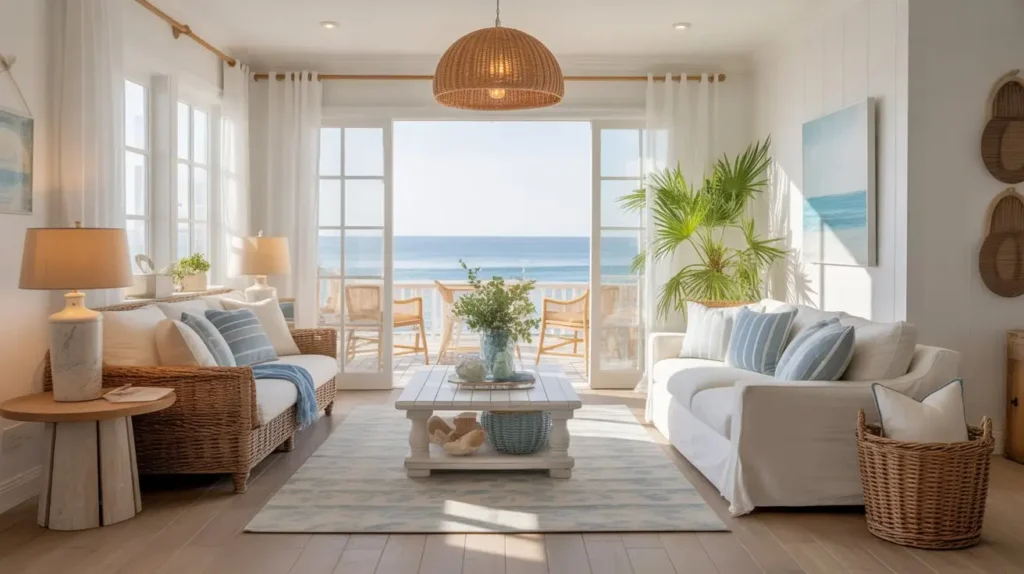
You don’t need to live by the ocean to enjoy a coastal-inspired living room. This style is about capturing the light, airy, and relaxed feeling of a day at the beach. It’s an instant mood-lifter.
But please, I beg of you, step away from the bowl of seashells and the “Life’s a Beach” sign. A sophisticated coastal look is much more subtle. It’s about evoking a feeling, not creating a theme park.
A Modern Take on Coastal
The foundation is a light and breezy color palette. Think crisp whites, sandy beiges, and various shades of blue, from pale sky blue to deep navy. This mimics the colors of the sea and sky.
Texture is your next best friend. Use natural, woven materials to bring in that beachy feel. Think of a jute or sisal rug, rattan or wicker furniture, and linen curtains that billow in the breeze. These textures add warmth and a casual, organic feel.
Keep the furniture light and simple. A slipcovered sofa in white or light beige is a classic choice because it feels relaxed and is easy to clean. Incorporate light-toned or whitewashed wood to keep the space feeling bright. The goal is to create a room that feels effortless, clean, and full of natural light. It should be your own personal, year-round vacation spot.
13. Smart Storage Solutions for Living Rooms

This might not be the sexiest topic on the list, but I promise it’s one of the most important. A beautiful living room can be completely ruined by clutter. Remote controls, kids’ toys, magazines, random cables… where does it all go?
Good design isn’t just about what things look like; it’s about how they function. Integrating smart, discreet storage is the secret to maintaining that clean, beautiful look you worked so hard to create.
Hiding the Mess in Style
- Furniture That Pulls Double Duty: We touched on this in the small spaces section, but it applies to any size room. A storage ottoman is the perfect place to hide blankets and video game controllers. A media console with closed doors is far better than one with open shelves for hiding ugly electronics.
- Think Vertically (Again): A set of matching, tall bookcases can look incredibly chic and provide a massive amount of storage. Use a mix of decorative items and stylish storage boxes on the shelves to keep it from looking messy.
- Go Custom with Built-Ins: If your budget allows, custom built-ins around a fireplace or along a wall are the ultimate storage solution. They look seamless and can be designed to perfectly fit your needs, hiding everything from a TV to a home bar.
- Baskets, Baskets, Baskets: Never underestimate the power of a good basket. A large woven basket in a corner is the perfect catch-all for kids’ toys or extra throw pillows. They add texture and are an easy, stylish way to corral clutter.
14. Vibrant Accent Wall Ideas for Living Rooms

Are you a little color-shy but want to make a bold statement? An accent wall is your answer. It’s a fantastic way to inject personality and a focal point into your living room without committing to painting the entire space a crazy color.
But an accent wall can be so much more than just a different color of paint. What’s the best way to make it feel modern and intentional?
Beyond Just a Coat of Paint
- Bold Paint Color: This is the classic choice. Pick a deep, moody color like navy, emerald green, or charcoal to create a dramatic backdrop for your sofa or a piece of art. It adds depth and sophistication.
- Graphic Wallpaper: Wallpaper has made a huge comeback, and the options are endless. Choose a large-scale botanical print for a touch of drama, a subtle geometric pattern for a modern feel, or a textured grasscloth for an organic, high-end look.
- Wood Paneling: Forget the ’70s basement. Modern wood paneling can be incredibly chic. Think of vertical slats of light wood for a Scandi feel, or a board and batten treatment painted a dark color for a sophisticated, traditional look.
- Shiplap: Yes, we’re back to shiplap. Placed horizontally, it gives a farmhouse or coastal vibe. Placed vertically, it can make a room feel taller. Painted a dark color, it feels modern and moody. It’s surprisingly versatile.
The key is to choose the wall that you want to be the focal point of the room—usually the one behind your sofa or your TV.
15. Multi-Functional Living Room Layouts
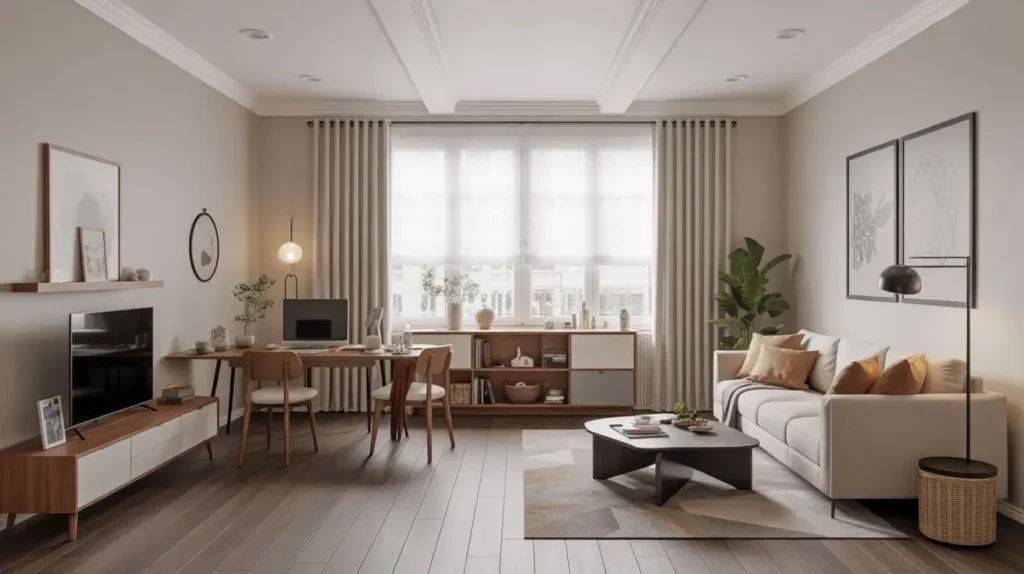
The living room of today has to work a lot harder than it used to. For many of us, it’s not just a place to watch TV. It’s also a home office, a kids’ play area, a yoga studio, and a classroom. How on earth do you make one room serve all these purposes without it looking like a chaotic mess?
The answer, once again, is zoning. It’s about carving out dedicated spaces for each activity so that you can easily transition from “work mode” to “relax mode.”
The Living Room That Does It All
Creating a small home office nook is a common need. Find an underutilized corner and add a small desk and a comfortable (but still stylish) chair. You can use a decorative screen to visually hide the workspace at the end of the day. A “cloffice”—a closet converted into an office—is another brilliant solution if you have one to spare.
If you have kids, designate a corner as the play zone. Use a soft rug and low, accessible storage bins or baskets for toys. This contains the chaos to one area and makes cleanup easier. When the toys are put away, the corner just looks like a cozy nook with some colorful storage.
You can also use furniture to create flexibility. A lightweight coffee table can be easily moved aside to make room for a yoga mat. A C-shaped side table can slide over the sofa to become a temporary laptop desk. It’s all about choosing smart, flexible pieces that can adapt to your needs on any given day.
Your Turn to Create
Phew, that was a lot. But hopefully, you’re not feeling overwhelmed anymore. Instead, I hope you’re feeling inspired and empowered. Your living room has so much potential, and now you have a whole arsenal of ideas to unlock it.
Don’t feel like you have to pick one style and stick to it rigidly. The most beautiful and personal homes are often a mix of different influences. Maybe you love the clean lines of Mid-Century Modern but want to add the cozy textures of Scandinavian design. Go for it!
The most important takeaway is this: your home should be a reflection of you. So pick the ideas that excite you, ditch the ones that don’t, and don’t be afraid to experiment. Now, go look at your living room again. I bet you’re not thinking “meh” anymore, are you? 😉