

Alright, let’s have a real talk. You’re staring at your kitchen and dining room, a cup of lukewarm coffee in hand, and thinking… something needs to change. You’ve scrolled through a thousand perfect-looking pins on Pinterest, and your Instagram feed is a highlight reel of dream interiors that seem completely out of reach. It’s overwhelming, right?
As someone who has spent way too many late nights obsessing over cabinet finishes and the “perfect” dining chair, I get it. The sheer volume of inspiration can be paralyzing. But what if we just broke it down, style by style, without all the high-brow designer jargon?
That’s exactly what we’re going to do. We’ll walk through 15 distinct kitchen and dining room ideas, and I’ll give you my honest take on what makes them tick, what to watch out for, and how you can steal a few elements for your own space. Forget the fluff. Let’s get into the good stuff.
1. Modern Minimalist Kitchen and Dining Combo

First up, the ever-popular modern minimalist look. This is for the person who finds peace in clean lines and a clutter-free environment. Or, more realistically, for the person who is really, really good at hiding their mess in cleverly designed cabinets. No judgment here.
The whole point of this style is to strip everything back to its essential form and function. It’s less about having no stuff and more about having only the right stuff. Think of it as the Marie Kondo of interior design, but with a sleeker, more architectural edge.
Key Elements of the Look
- Flat-Panel Cabinets: This is non-negotiable. You’ll want cabinets with no fussy details, no beveled edges, and definitely no ornate hardware. Handleless, push-to-open cabinets are the gold standard here.
- Integrated Appliances: The refrigerator, the dishwasher—they all play hide-and-seek behind cabinet panels. This creates a seamless, uninterrupted wall of beautiful simplicity.
- Neutral Color Palette: We’re talking whites, grays, blacks, and muted earth tones. Color is used sparingly, if at all, to maintain that serene, gallery-like feel.
- Simple, Sculptural Lighting: A single, striking pendant light over the dining table or a sleek track lighting system is all you need.
My Two Cents
I genuinely love the calmness a minimalist kitchen brings. Waking up and walking into a space that feels so orderly can do wonders for your morning mindset. The challenge? Maintaining it. You have to be disciplined about putting things away. If you’re someone who leaves the blender out for a week (guilty), this style might be a constant battle.
2. Cozy Farmhouse Kitchen with Rustic Dining Area
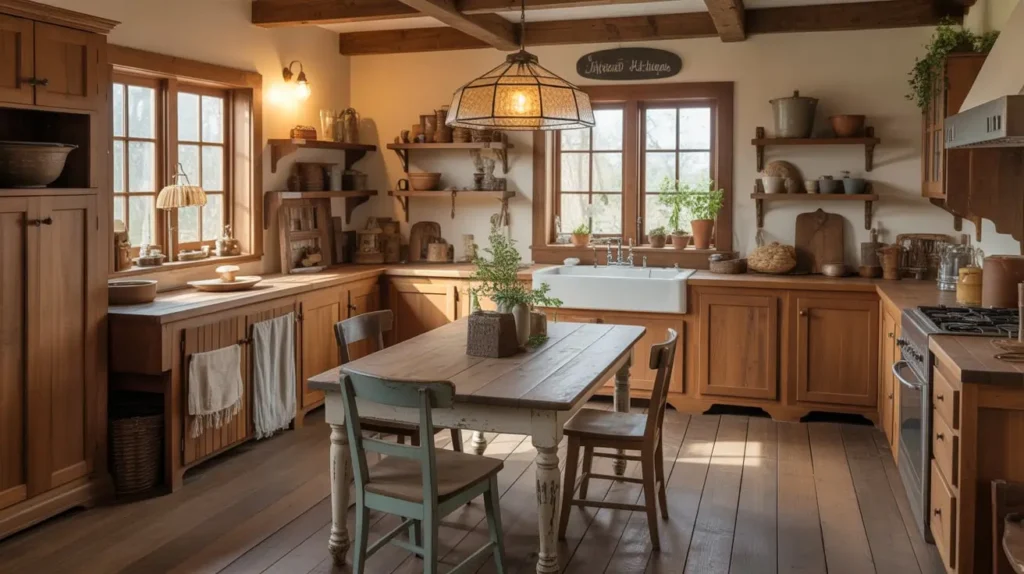
Now, let’s swing the pendulum to the complete opposite end of the spectrum: the cozy farmhouse kitchen. If minimalism feels a bit cold to you, this style wraps you in a warm hug. It’s all about comfort, nostalgia, and creating a space that feels lived-in and loved from day one.
Think of Joanna Gaines, but with your own personal twist. This isn’t about slapping shiplap on every available surface. It’s about texture, warmth, and a feeling of history, even if your house was built last year.
The Farmhouse Vibe
The goal is to create a space that feels like the heart of the home, where everyone gathers. It’s imperfect, a little bit rustic, and full of character. You want materials that look like they have a story to tell.
- Shaker-Style Cabinets: Their simple, timeless design is the backbone of the farmhouse look. Classic white or a soft, muted color like sage green or light gray works beautifully.
- Apron-Front Sink: Also known as a farmhouse sink, this deep, wide basin is both practical and a major style statement.
- Open Shelving: Instead of hiding everything away, farmhouse style encourages you to display your favorite dishes, mugs, and glassware on chunky, wooden open shelves.
- A Big, Chunky Dining Table: The dining table is the star. Look for a solid wood table, perhaps with a distressed finish, that looks like it could host a feast for twenty.
A Personal Anecdote
My friend’s house has a farmhouse dining table that’s covered in little dings and scratches from years of family dinners, homework sessions, and late-night board games. And you know what? It’s the most beautiful piece of furniture she owns. It’s a physical record of memories, and that’s something you just can’t buy.
3. Open-Concept Kitchen with Elegant Dining Space
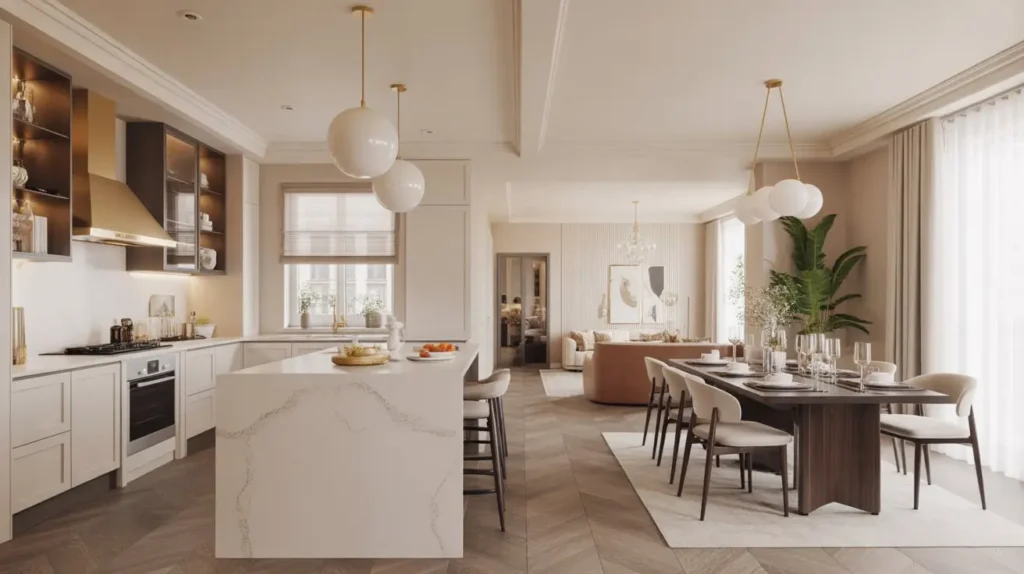
Ah, the open-concept layout. The darling of modern home design. Tearing down the wall between the kitchen and dining room is a popular move, and for good reason. It creates a bright, airy, and sociable space. The catch? You need to make the two “rooms” feel connected yet distinct.
This isn’t just about having no walls. It’s about creating a cohesive flow. The biggest mistake I see people make is designing the kitchen and then just…placing a dining table nearby. You have to think of them as one unified zone.
Making It Work
How do you create harmony without it all blurring into one big room?
- Consistent Flooring: Using the same flooring material throughout the entire space is the number one way to create a seamless flow. It instantly connects the kitchen and dining areas.
- A “Zone” Rug: Place a large area rug under your dining table and chairs. This visually anchors the dining space and defines it as a separate zone without needing a wall.
- Coordinated Color Palette: You don’t need to match everything perfectly, but the colors should complement each other. For example, you could pull a color from your kitchen backsplash and use it for your dining chair upholstery.
- Lighting as a Divider: Use different types of lighting. Task lighting (like under-cabinet lights) in the kitchen, and a dramatic chandelier or pendant over the dining table. This helps signal the different functions of each area.
The Trade-Off
I love the social aspect of an open-concept space. You can cook and still be part of the conversation. The downside? There’s nowhere to hide your mess. If the kitchen is a disaster zone, your elegant dining space will feel it. It demands a certain level of tidiness.
4. Small Space Kitchen and Dining Room Hacks

Living in a small apartment or a home with a tiny kitchen? Don’t despair. You don’t have to eat every meal on the sofa. With a little bit of creative thinking, you can carve out a functional and stylish kitchen and dining area.
This is all about being clever and choosing pieces that work double-duty. Every square inch counts, so you have to make smart decisions. Forget the giant, clunky furniture; think light, airy, and multifunctional.
Smart Solutions for Tiny Spaces
- Banquette Seating: A built-in bench or banquette against a wall is a game-changer. It takes up less space than traditional chairs and often includes hidden storage underneath the seats. It’s a win-win.
- Drop-Leaf or Extendable Tables: These are your best friends in a small space. Use them in their smallest form for daily meals and extend them when you have guests.
- Go Vertical: Use your wall space! Install floating shelves for dishes, a magnetic knife strip to free up counter space, and a wall-mounted pot rack.
- The Power of Mirrors: Placing a large mirror on the wall in your dining area can create the illusion of a much larger, brighter space. It’s the oldest trick in the book for a reason—it works.
- Round Tables: A round pedestal table has a smaller footprint than a square one and has no legs at the corners to bump into, making it easier to navigate around in a tight space.
Read Also 15 Stunning Antique White Kitchen Cabinets and Cozy Design Ideas
5. Luxury Kitchen with Statement Dining Table
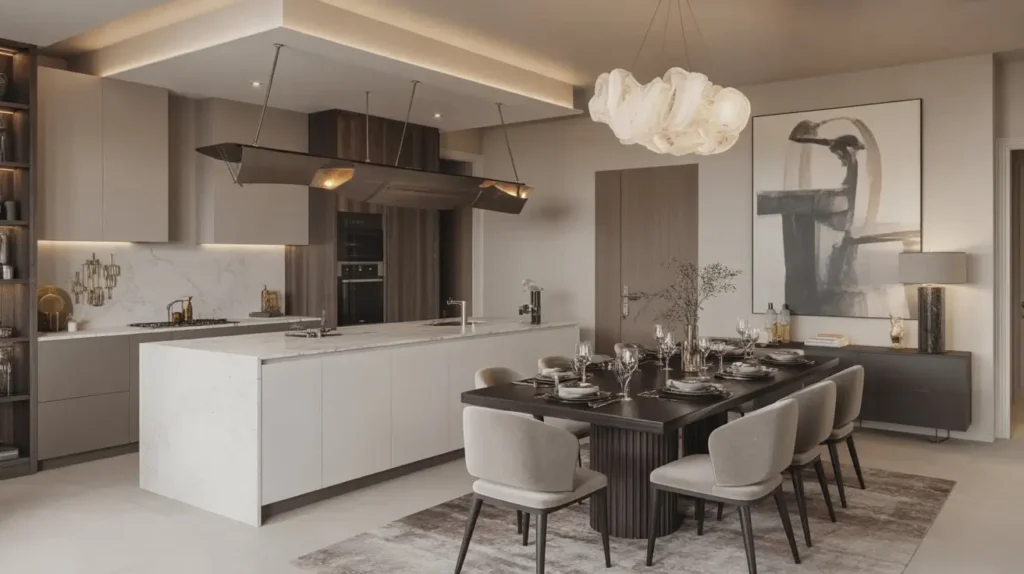
Alright, let’s dream a little. If money were no object (wouldn’t that be nice?), the luxury kitchen is where it’s at. This style is about high-end materials, custom craftsmanship, and a level of detail that just screams “opulence.”
But luxury isn’t just about being expensive. It’s about a feeling of substance and quality. It’s the satisfyingly heavy feel of a solid brass cabinet pull or the cool, smooth surface of a marble countertop.
The Elements of Luxury
- Premium Materials: We’re talking Calacatta Gold marble countertops, custom cabinetry made from rift-sawn white oak, and backsplashes made of handcrafted Zellige tiles.
- Top-of-the-Line Appliances: Think Sub-Zero refrigerators, Wolf ranges, and Miele dishwashers. These aren’t just workhorses; they are status symbols.
- The Statement Dining Table: The dining room is dominated by a single, spectacular piece. This could be a massive live-edge wood slab table or a sculptural marble dining table that looks more like a work of art.
- Layered, Professional Lighting: A luxury space has a complex lighting scheme designed by a professional, including ambient, task, and accent lighting to make everything look its best.
A Dose of Reality
Let’s be honest: this look costs a fortune. A single slab of that fancy marble can cost more than my entire kitchen renovation. But you can borrow elements! Invest in one show-stopping piece, like a gorgeous chandelier over your dining table, or upgrade your cabinet hardware to something heavy and beautiful. These small touches can add a sense of luxury without requiring a second mortgage.
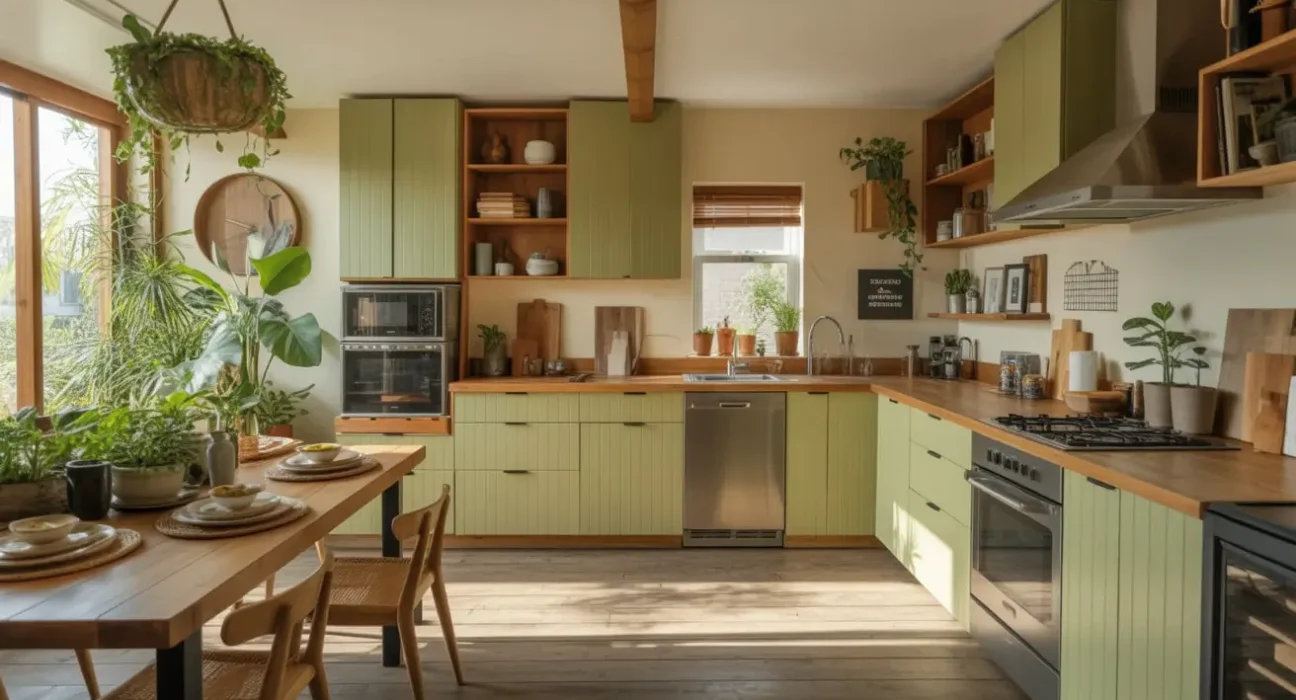
6. Scandinavian-Inspired Bright Kitchen and Dining
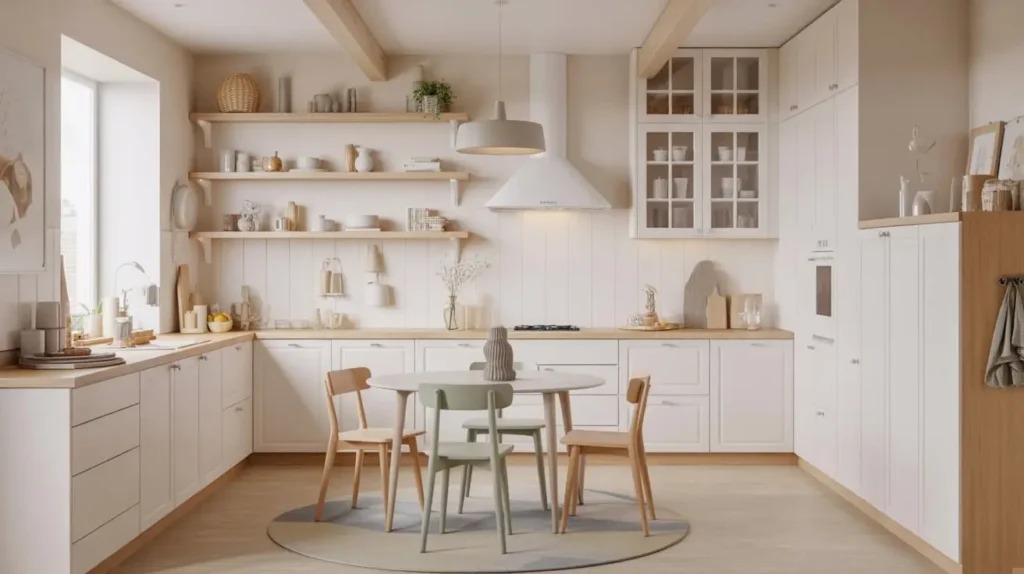
Scandinavian design is often confused with minimalism, but they’re not the same. While both appreciate simplicity, Scandi design has a warmth and coziness that minimalism sometimes lacks. The core concept is hygge (pronounced hoo-gah), a Danish word for a feeling of cozy contentment.
This style, born out of long, dark winters, is all about maximizing light, embracing natural materials, and keeping things functional yet beautiful. It’s effortlessly cool and incredibly inviting.
Creating the Scandi Look
- Light, Bright, and White: White walls are a hallmark, used to bounce as much natural light around the room as possible. The base palette is almost always light and airy.
- Natural Wood Tones: Light-colored woods like ash, beech, and pale oak are used extensively for floors, cabinets, and furniture. This brings in that essential natural warmth.
- Pops of Black and Muted Color: To keep the white-and-wood combo from feeling bland, Scandi design often incorporates black accents in lighting, chair legs, or picture frames. Soft, muted colors like dusty pink or pale blue can also be used.
- Clean-Lined, Functional Furniture: The dining table and chairs will have simple, elegant lines. Think iconic designs from brands like HAY or Carl Hansen & Søn.
- Greenery is a Must: Plants are essential for adding life and a pop of natural color to the space.
Why It’s So Livable
I think the reason Scandinavian design has such staying power is that it’s designed for real life. It’s beautiful, yes, but it’s also practical, comfortable, and unpretentious. It doesn’t demand perfection; it just asks for thoughtful simplicity.
7. Vintage Charm Kitchen with Retro Dining Accents
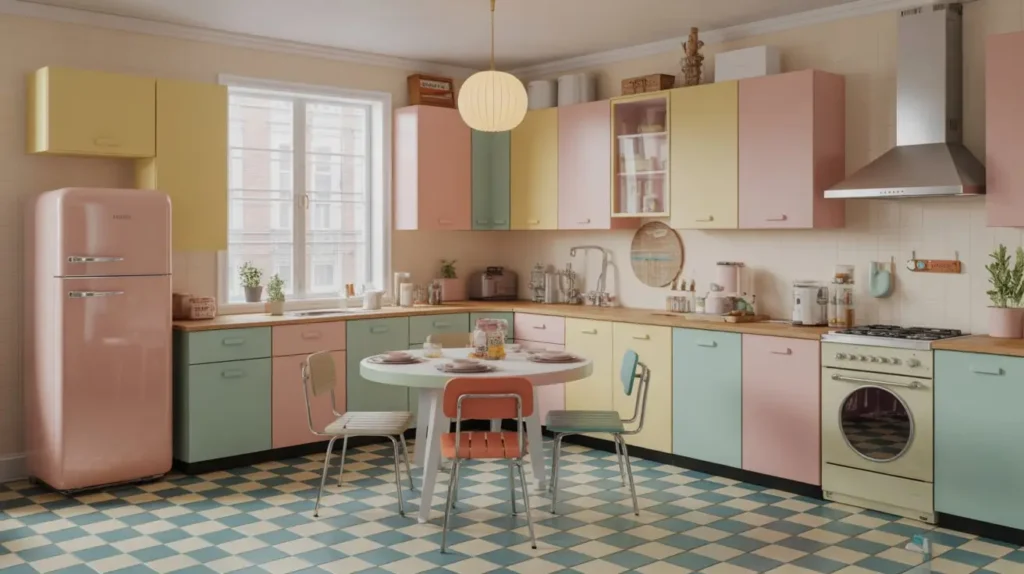
Ready for a trip back in time? The vintage charm style is all about celebrating the past. This isn’t about creating a museum; it’s about cherry-picking the best design elements from the ’50s, ’60s, or ’70s and giving them a fresh, modern context.
This look is fun, full of personality, and a fantastic way to incorporate unique flea market finds. It’s perfect for anyone who cringes at the thought of a cookie-cutter kitchen.
Bringing Back the Past
- Retro Appliances: A colorful Smeg refrigerator is the ultimate centerpiece for a vintage-inspired kitchen. Or, you can find restored vintage appliances for a truly authentic touch.
- Checkered Flooring: Black and white checkerboard floors instantly evoke a ’50s diner vibe. It’s a bold move, but it has a huge impact.
- Playful Colors: Don’t be shy! Mint green, butter yellow, and cherry red were all popular choices. You can use them on cabinets, as a backsplash, or in your accessories.
- Curved Silhouettes: Look for dining furniture with rounded edges and tapered legs, characteristic of mid-century modern design. A kidney-shaped table or chairs with curved backs would be perfect.
- Quirky Accessories: This is where you can have fun. Display vintage Pyrex, hang retro-style art, and find a cool, old-school clock for the wall.
8. Sleek Industrial Kitchen and Dining Room Design

Inspired by old factories and urban lofts, the industrial style is raw, edgy, and unapologetically honest. It celebrates the building materials that other styles try to hide: exposed brick, concrete, and metal ductwork.
This look has a masculine energy, but it can be softened with the right elements to create a space that is both tough and chic. It’s about finding the beauty in imperfection and utility.
Forging an Industrial Space
- Exposed Elements: If you have an exposed brick wall, you’ve hit the jackpot. If not, you can use thin brick veneers to get the look. Exposed ceiling beams and visible ductwork are also key features.
- A Mix of Metal and Wood: The warmth of wood is crucial to keep the space from feeling like a cold warehouse. A reclaimed wood dining table paired with black metal chairs is a classic industrial combination.
- Concrete Surfaces: Concrete countertops or a polished concrete floor provide that raw, utilitarian foundation. They are incredibly durable, but FYI, they can be prone to staining if not sealed properly.
- Factory-Style Lighting: Think Edison bulbs in simple cages, large metal dome pendants, or track lighting. The lighting is functional and often a major design feature.
- Open Shelving with Metal Brackets: Instead of upper cabinets, many industrial kitchens use simple wooden shelves held up by chunky metal pipes or brackets.
9. Colorful Bold Kitchen with Playful Dining Decor

Who says kitchens have to be white or gray? If you’re a maximalist at heart and color makes you happy, then embrace a bold, playful kitchen and dining room. This style is all about self-expression, joy, and breaking the rules.
The key is to be fearless but intentional. It’s not about throwing every color of the rainbow at the wall. It’s about creating a cohesive, yet vibrant, palette that reflects your personality.
How to Go Bold (Without Going Overboard)
- Pick a Hero Color: Choose one main color to be the star. This could be deep teal cabinets, a sunny yellow backsplash, or even a hot pink island.
- The 60-30-10 Rule: This is a classic designer trick. 60% of your room should be a dominant color (like your main wall or cabinet color), 30% a secondary color (dining chairs, an accent wall), and 10% an accent color (pillows, art, small accessories).
- Pattern Play: Don’t be afraid to mix patterns. A patterned tile floor, a bold floral wallpaper in the dining nook, or striped upholstery on your chairs can add so much life. The trick is to vary the scale of the patterns.
- Unexpected Pairings: Pair a sleek, modern dining table with brightly colored, mismatched vintage chairs. Or install a traditional-style kitchen but paint the cabinets in a shocking electric blue. The surprise is what makes it exciting.
My Personal Opinion
This is my favorite style because it’s so personal. It tells a story about the person who lives there. It takes confidence to pull off, but the result is a space that is guaranteed to make you smile every time you walk into it. 🙂
Read Also 15 Stunning Dining Room Lighting Ideas for Dreamy Spaces
10. Eco-Friendly Sustainable Kitchen and Dining Ideas
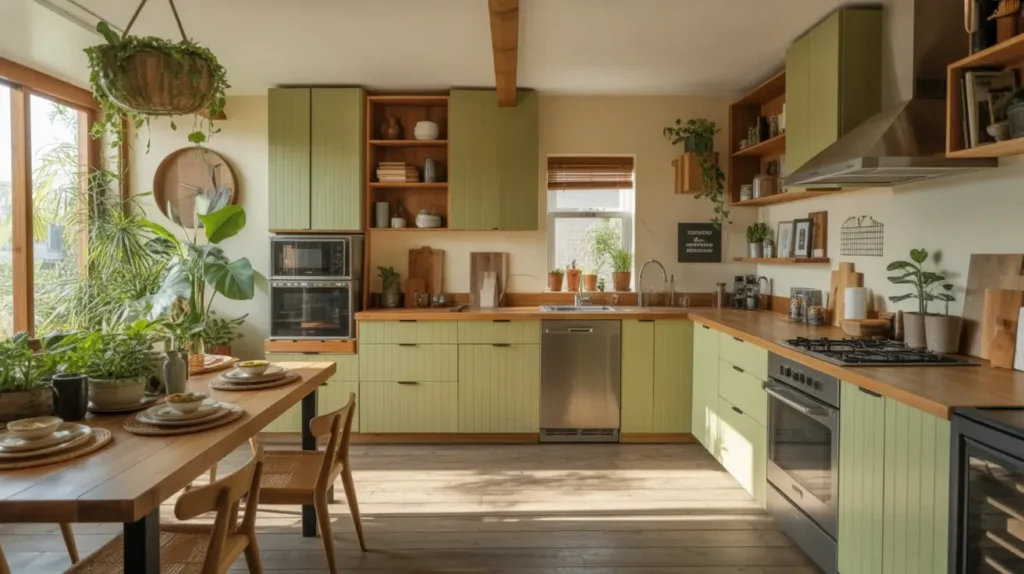
Designing a beautiful kitchen doesn’t have to be at odds with being kind to the planet. An eco-friendly kitchen focuses on sustainable materials, energy efficiency, and reducing waste. And the best part? These spaces are often incredibly beautiful, with a natural, earthy aesthetic.
This is about making conscious choices. It’s about thinking about the lifecycle of the products you bring into your home, from where they came from to where they will end up.
Key Components of a Green Kitchen
- Sustainable Materials:
- Reclaimed Wood: Using wood salvaged from old buildings for floors, beams, or your dining table is both eco-friendly and adds immense character.
- Bamboo: A fast-growing grass, bamboo is a great renewable resource for flooring and cabinetry.
- Recycled Countertops: You can find stunning countertops made from recycled glass, paper, or other materials.
- Energy-Efficient Appliances: Look for appliances with the ENERGY STAR® rating. They use significantly less energy and water, which is good for the planet and your utility bills.
- Low-VOC Paints: Choose paints and finishes that are labeled “Low-VOC” or “No-VOC” (Volatile Organic Compounds). These release fewer harmful chemicals into the air.
- Quality Over Quantity: Instead of buying cheap, disposable furniture, invest in a well-made dining table and chairs that will last a lifetime. This reduces waste in the long run.
11. Smart Kitchen with High-Tech Dining Features
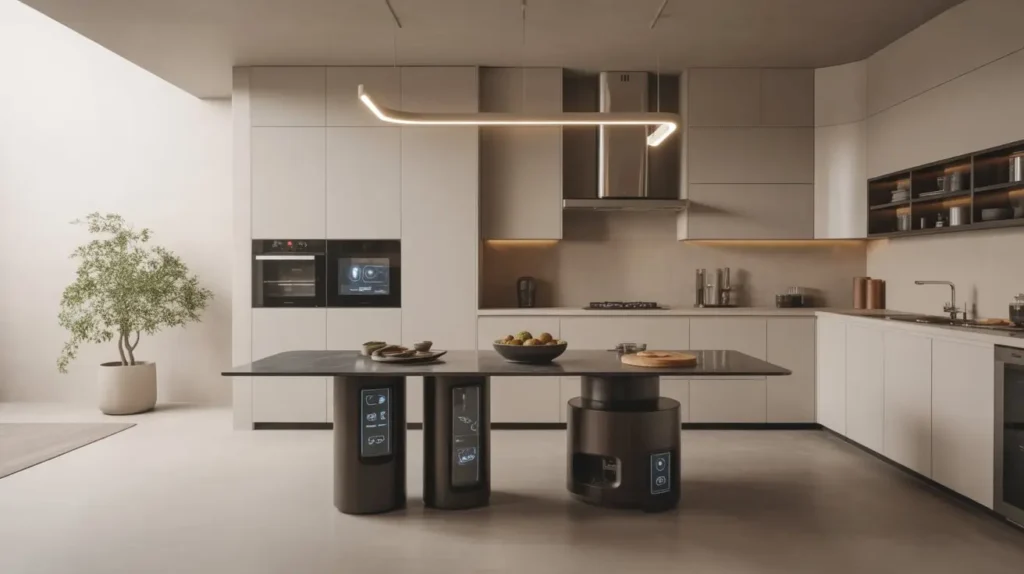
Welcome to the future. The smart kitchen integrates technology to make your life easier, more efficient, and, let’s be honest, a lot cooler. This isn’t about gimmicks; it’s about seamless functionality that works for you.
From a fridge that tells you when you’re out of milk to a faucet you can turn on with your voice, this style is for the tech enthusiast who loves efficiency. Ever wondered what it’s like to preheat your oven on your way home from work? This is how you find out.
High-Tech Highlights
- Smart Appliances: Refrigerators with internal cameras and touch screens, ovens you can control with an app, and dishwashers that automatically order more detergent. The possibilities are growing every day.
- Voice-Activated Faucets: When your hands are covered in dough, you can just ask your faucet to turn on. It feels like magic.
- Automated Lighting: You can program your kitchen and dining room lights to turn on and off at certain times, dim for a dinner party, or even change color temperature throughout the day.
- Integrated Charging Stations: Build wireless charging pads directly into your countertop or dining table so you can power up your devices without messy cords.
- Smart Blinds: Program your window blinds to open in the morning to let the sun in and close in the evening for privacy, all from your phone.
12. Coastal Beach-Inspired Kitchen and Dining Room
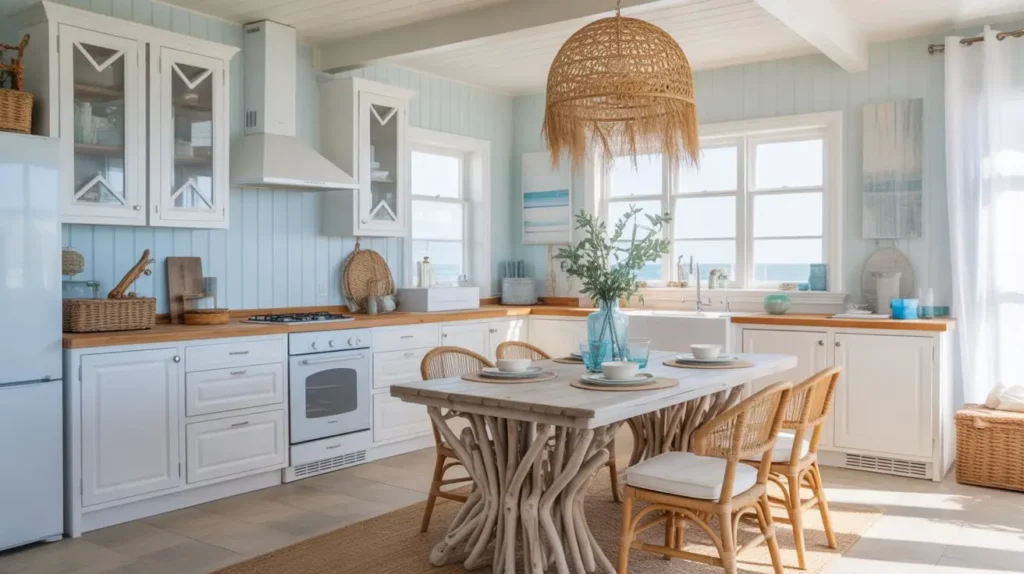
You don’t need to live by the sea to enjoy a coastal-inspired kitchen. This style is all about capturing that light, airy, and relaxed feeling of a beach vacation and bringing it into your everyday life.
It’s more sophisticated than just scattering seashells everywhere. It’s about a specific color palette, natural textures, and maximizing light to create a serene and breezy atmosphere.
Capturing the Coastal Vibe
- Light and Airy Color Palette: The foundation is almost always a crisp white, paired with various shades of blue and sandy beige. Think of the colors of the sea, sky, and sand.
- Natural Textures: Bring in textures that remind you of the beach. A jute or sisal rug under the dining table, rattan or wicker dining chairs, and linen curtains that billow in the breeze.
- Light Wood Tones: Whitewashed or light-weathered wood finishes for the floors or dining table enhance the bright and breezy feel.
- Shiplap or Beadboard: These wall treatments add subtle texture and a classic coastal or cottage feel. Using them on a ceiling or an accent wall can be very effective.
- Simple, Clean Lines: The furniture and cabinetry should feel relaxed and unfussy. Avoid anything too heavy or ornate.
13. Classic White Kitchen with Timeless Dining Style
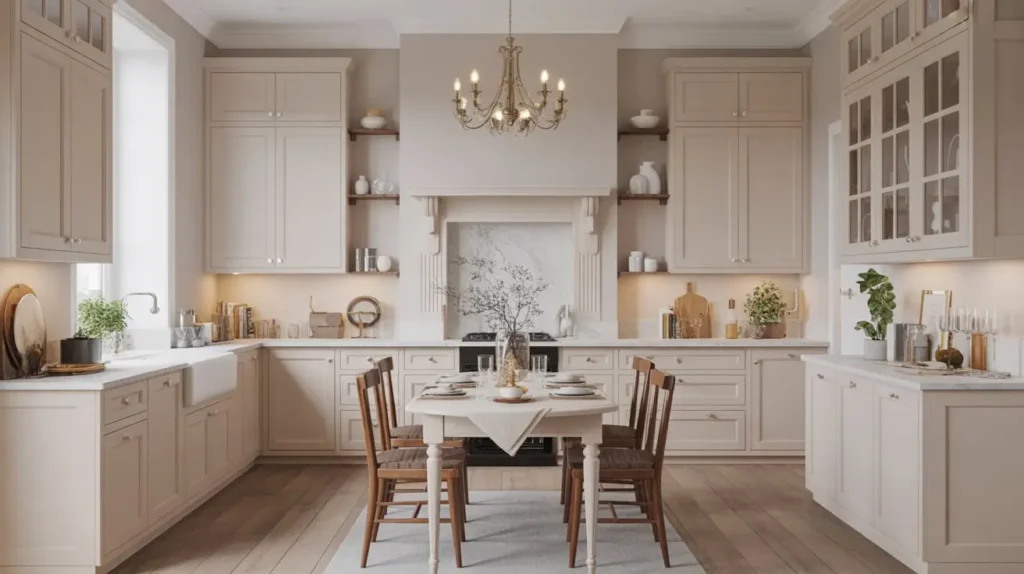
There’s a reason the all-white kitchen is a perennial favorite. It’s timeless, clean, and incredibly versatile. It acts as a blank canvas that you can easily update with accessories as your tastes change. It’s a safe bet, but “safe” doesn’t have to mean “boring.”
The key to a successful white kitchen is to add depth and personality through texture, materials, and a few carefully chosen accent pieces. Without these, you risk veering into sterile, hospital-like territory.
Making a White Kitchen Shine
- Mix Your Whites: Don’t use the exact same shade of stark white everywhere. Layer different tones—a creamy white on the cabinets, a slightly grayer white on the walls—to add subtle depth.
- Introduce Texture: This is crucial. A marble-veined quartz countertop, a textured subway tile backsplash, and shaker-style cabinets all prevent the space from feeling flat.
- Warm It Up with Wood: A hardwood floor or a wooden dining table provides much-needed warmth and contrast against all the white.
- Metallic Accents: The hardware is like jewelry for your kitchen. Brass or polished nickel cabinet pulls and a beautiful faucet can elevate the entire look.
- A Pop of Color in the Dining Area: While the kitchen stays white, you can inject personality in the dining space. Think colorful dining chairs, a patterned rug, or bold artwork.
14. Bohemian Chic Kitchen with Eclectic Dining Setup

The Bohemian, or “Boho,” style is for the free spirit, the traveler, and the collector. It’s a style that follows no rules. It’s about mixing colors, patterns, and textures to create a space that is deeply personal and eclectic.
This look is warm, inviting, and a little bit wild. It’s a curated collection of things you love, from macrame wall hangings to mismatched vintage chairs. It’s the opposite of minimalism; it’s a celebration of more.
The Bohemian Recipe
- A Rich Mix of Textures: Layering is everything. Think a shaggy Moroccan rug on the floor, macrame plant hangers, wicker chairs, and velvet cushions. The more textures, the better.
- Global-Inspired Patterns: Incorporate patterns from around the world, like kilim, ikat, or paisley. You can do this through your rug, backsplash tiles, or textiles.
- Plants, Plants, and More Plants: Greenery is a fundamental part of the Boho look. Fill your space with hanging plants, potted trees, and fresh flowers.
- Mismatched and Vintage Furniture: The dining setup is the perfect place for this. Hunt for unique, mismatched chairs at flea markets. No two need to be the same!
- Warm, Earthy Colors: While there are no strict color rules, Boho style often leans on a base of warm, earthy tones like terracotta, mustard yellow, and olive green.
15. Mixed Materials Kitchen and Dining Room Fusion

Can’t decide between industrial and farmhouse? Love the clean lines of modern design but also the warmth of wood? Then the mixed materials style is for you. This is a sophisticated approach that involves confidently blending different materials to create a rich, layered, and completely unique space.
This is arguably the most “custom” look you can achieve. It’s a design fusion that reflects a well-traveled and confident aesthetic. The trick is to find a balance so the space feels curated, not chaotic.
How to Master the Mix
- The Rule of Three: A good guideline is to stick to a maximum of three dominant materials. For example, you might combine dark wood cabinets, a concrete waterfall island, and sleek brass hardware.
- Contrast is Key: The magic happens in the contrast. Pair something raw and rustic (like a reclaimed wood dining table) with something sleek and modern (like minimalist metal chairs).
- Create a Common Thread: To keep the look cohesive, have one element that ties everything together. This could be a consistent color (like black accents) or a repeated material (like brass appearing in both the light fixtures and the cabinet pulls).
- An Example Fusion: Imagine a kitchen with smooth, matte black cabinets (modern), a warm butcher block countertop on the island (farmhouse), and an exposed brick backsplash (industrial). It works because each material gets its moment to shine while complementing the others.
Final Thoughts
So, there you have it—15 kitchen and dining room ideas to get your creative gears turning. Feeling inspired? A little less overwhelmed? I hope so.
Remember, you don’t have to pick one style and stick to it religiously. The most beautiful and interesting homes are the ones that reflect the people who live in them. Pick and choose the elements you love from different looks. Maybe you want the clean cabinets of a modern kitchen but the cozy dining table of a farmhouse. Go for it!
The best next step? Don’t try to plan the whole thing at once. Just pick one thing—one single element you absolutely love—and start from there. Whether it’s a color, a material, or a single piece of furniture, let that one thing be your guide.
Now if you’ll excuse me, all this talk has made me realize my own dining chairs are looking a bit sad. I have a date with a Pinterest board and a dream. Happy decorating! 🙂