

So, you’ve got one room that needs to do double duty. Welcome to the club! I remember standing in my first apartment, staring at a rectangular space and wondering how on earth I was supposed to fit a couch, a dining table, and any semblance of style into what felt like a glorified hallway. Spoiler alert: I figured it out, and honestly? That combined living and dining space became my favorite room I’ve ever designed.
Here’s the thing—living room and dining room combos aren’t just for tiny apartments anymore. Homeowners everywhere embrace open floor plans, and even folks with sprawling homes choose to merge these spaces for that connected, social vibe we all crave. The challenge? Making it look intentional, not cramped.
I’ve spent years experimenting, making mistakes (so many mistakes), and finally landing on design approaches that actually work. Whether you’re working with 500 square feet or 1,500, these 15 creative combo designs will help you transform your space into something genuinely impressive.
1. Cozy Minimalist Living & Dining Combo
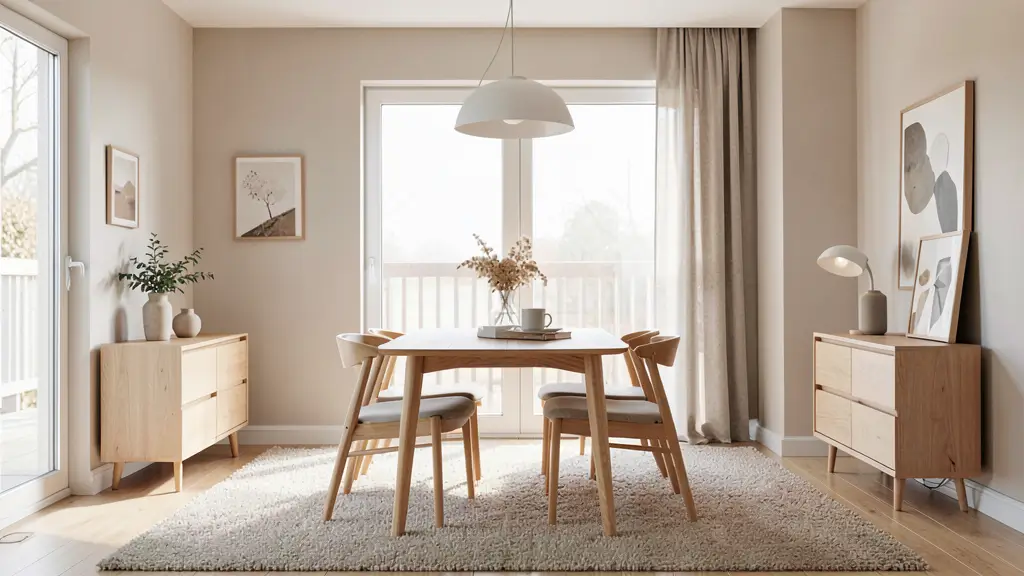
Let’s start with an approach that speaks to my soul: minimalism with warmth. Because let’s be honest—nobody wants their home to feel like a sterile museum exhibit, right?
The secret to nailing a cozy minimalist combo lies in intentional choices. You’re not just buying less stuff; you’re selecting pieces that earn their spot in your room. Think clean-lined sofas with soft, textured throws. Consider dining chairs that prioritize comfort without visual bulk.
Key Elements for This Style:
- Neutral base colors (warm whites, soft grays, gentle beiges)
- Natural materials like wood, linen, and wool
- Strategic negative space that lets the room breathe
- One or two statement pieces that anchor each zone
I’ve found that the biggest mistake people make with minimalist combos involves lighting. They throw in one overhead fixture and call it a day. Instead, layer your lighting—a pendant over the dining table, a floor lamp by the sofa, and maybe some candles for evening ambiance. The warmth comes from these details.
Pro tip: Float your furniture away from the walls. It sounds counterintuitive in a combined space, but this creates better flow and actually makes rooms feel larger.
2. Small Space Open Concept Layouts
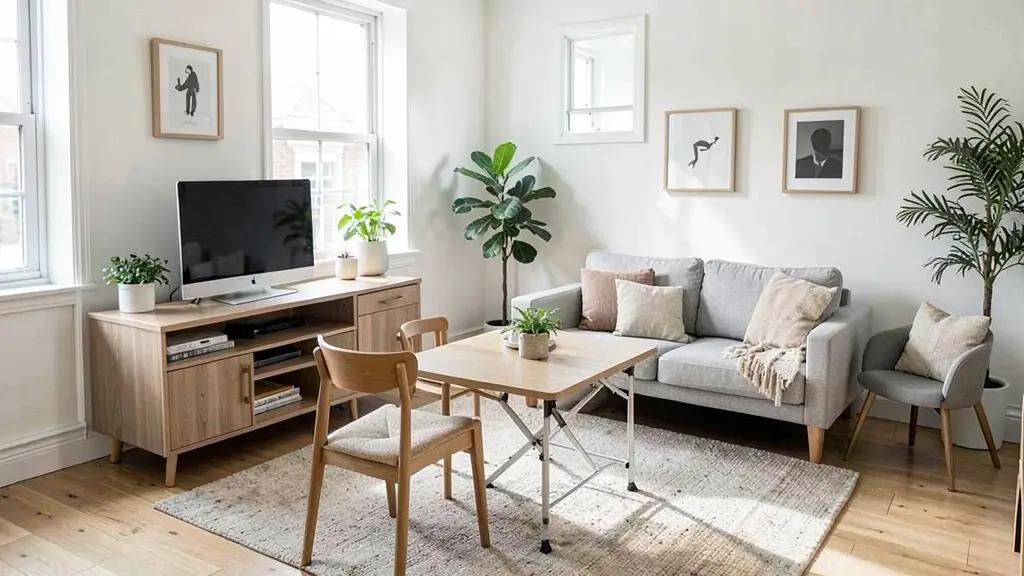
Okay, this one hits close to home. My first “real” apartment measured about 600 square feet, and the living-dining area ate up maybe 300 of those. Every square inch mattered.
Small space design requires ruthless prioritization. You can’t have a sectional that seats eight AND a farmhouse table for twelve. You’ve got to choose your battles.
Strategies That Actually Work:
- Round dining tables eliminate sharp corners and ease traffic flow
- Apartment-sized sofas (think 72-80 inches) provide seating without dominating
- Glass or acrylic furniture pieces reduce visual weight
- Wall-mounted options free up precious floor space
- Mirrors strategically placed to create the illusion of depth
Here’s something I wish someone had told me earlier: scale matters more than quantity. A well-proportioned two-seater sofa and a 42-inch round table can feel luxurious. Four mismatched pieces crammed together will always feel chaotic.
Also, consider traffic patterns. Can you walk from the kitchen to the couch without doing an obstacle course? If not, rethink your layout.
3. Modern Luxury Living-Dining Fusion
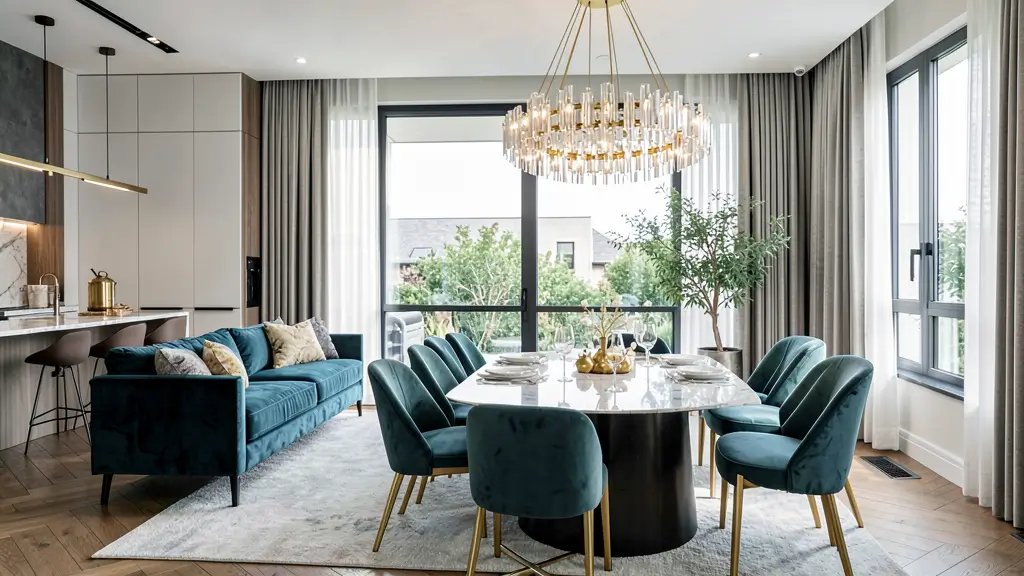
Want your combo space to feel like a boutique hotel? Same. Modern luxury combines sleek sophistication with livable comfort, and honestly, it’s one of my favorite approaches for open-concept spaces.
The foundation of luxury design starts with quality over quantity. That means investing in fewer pieces but choosing materials that look and feel expensive—genuine leather, marble accents, polished metals, rich velvets.
Hallmarks of Modern Luxury Combos:
- Dramatic lighting fixtures (chandeliers, sculptural pendants)
- High-contrast color schemes (think black, white, and gold)
- Architectural interest through built-ins or feature walls
- Consistent material palette throughout both zones
- Intentional art placement that commands attention
The trick? Don’t overdo it. Luxury whispers; it doesn’t scream. One stunning marble dining table makes a statement. Adding marble everything creates a bathroom showroom vibe.
I splurged on a gorgeous velvet sofa once, and it single-handedly elevated my entire space. That’s the power of one exceptional piece.
4. Rustic Farmhouse Combo Inspiration
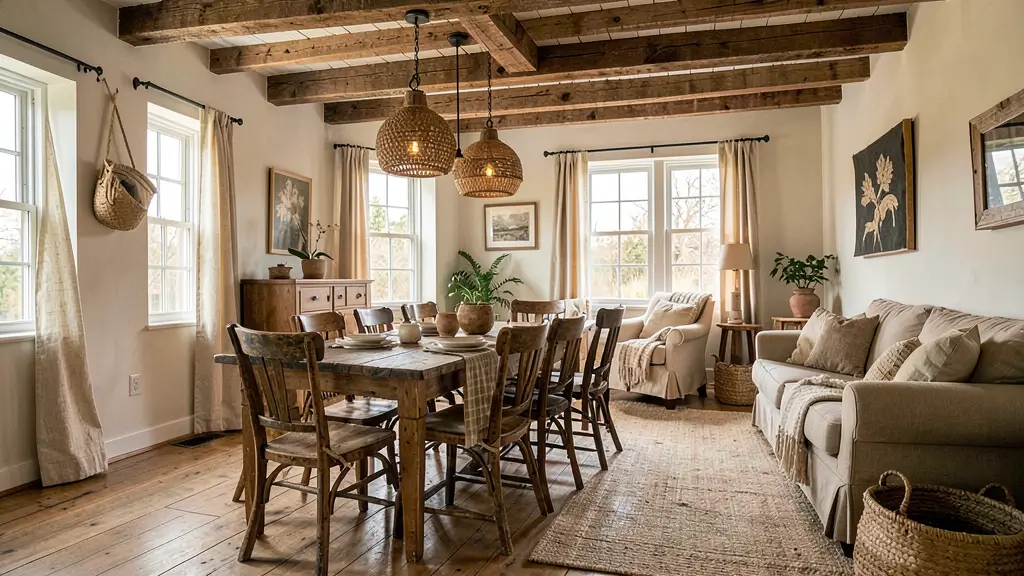
FYI, farmhouse style isn’t going anywhere, no matter what the trend forecasters predict. There’s something genuinely timeless about warm wood tones, natural textures, and that lived-in patina that makes spaces feel like home.
In a living-dining combo, farmhouse elements create automatic cohesion. A reclaimed wood dining table pairs beautifully with a comfortable linen sofa. Exposed beams or shiplap walls visually connect both zones without feeling forced.
Essential Farmhouse Elements:
- Distressed or reclaimed wood furniture
- Vintage or reproduction light fixtures (lanterns, wrought iron chandeliers)
- Natural fiber rugs (jute, sisal, seagrass)
- Mixed seating (benches combined with chairs)
- Greenery and botanical accents
- Open shelving displaying everyday items
One thing I love about farmhouse combos: they embrace imperfection. Your dining table doesn’t need to be pristine. Those scratches? Character. That mismatched chair? Intentional.
Word of caution: Modern farmhouse walked so industrial farmhouse could run, but both can veer into cliché territory fast. Skip the “gather” signs and focus on authentic, meaningful pieces.
5. Scandinavian Style Living & Dining
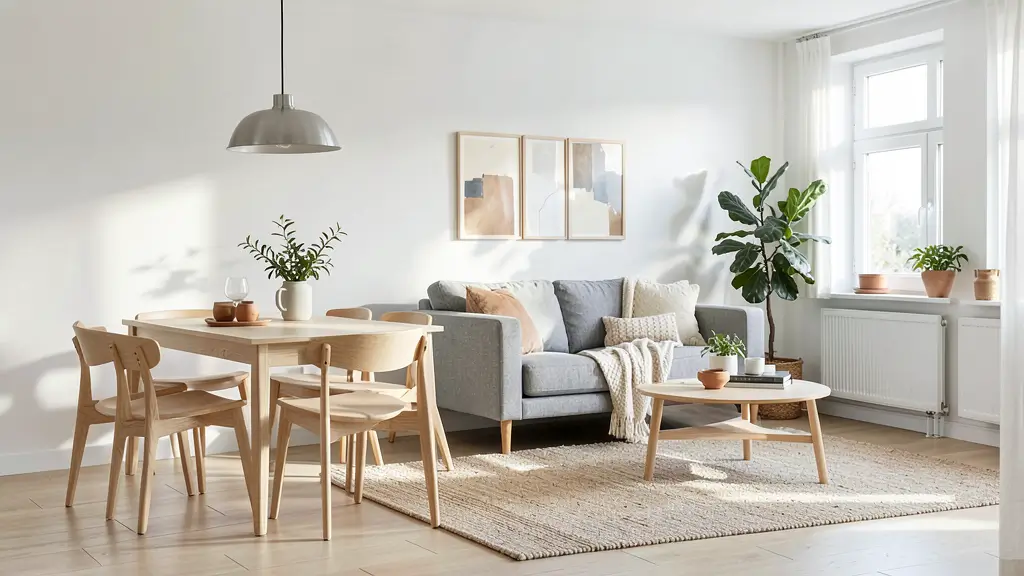
Scandinavian design solves the open-concept puzzle beautifully because it prioritizes functionality, simplicity, and light—three things every combo space desperately needs.
The Scandinavian approach keeps rooms feeling serene without sacrificing comfort. You’ll see lots of white walls, blonde wood tones, and carefully curated accessories. Everything serves a purpose; nothing feels superfluous.
Building a Scandi Combo Space:
- Pale color palette with strategic color pops
- Clean-lined furniture with tapered legs
- Abundant natural light (minimal window treatments)
- Cozy textiles like sheepskin throws and chunky knits
- Indoor plants bringing life to neutral spaces
- Functional storage that maintains visual calm
What separates good Scandinavian design from IKEA-catalog-gone-wrong involves layering textures. When your color palette stays muted, texture provides the visual interest. Think bouclé sofas, ribbed vases, woven baskets, and plush rugs.
I converted to Scandinavian principles years ago, and my spaces have felt calmer ever since.
Also Read: 15 Elegant Open Concept Living and Dining Room Transformations
6. Colorful Eclectic Open Spaces
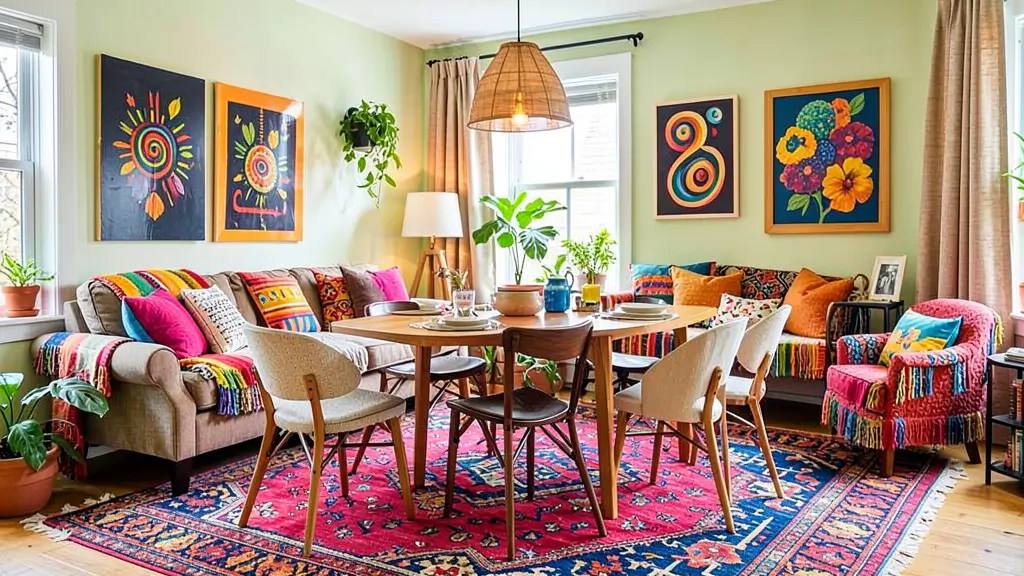
Alright, let’s shake things up! Not everyone wants neutrals and minimalism. Some of us thrive in bold, personality-packed environments where every corner tells a story.
Eclectic combo spaces work because they embrace the mix. Your vintage sideboard coexists with your modern sofa. Your grandmother’s dining chairs sit around a contemporary table. The magic happens when seemingly unrelated pieces find common ground.
Making Eclectic Work (Not Chaotic):
- Choose one unifying element—a color, material, or era that repeats
- Balance busy with calm (pattern-heavy sofa, solid chairs)
- Vary heights and scales to create visual rhythm
- Edit ruthlessly—eclectic doesn’t mean everything
- Let collections shine through intentional display
Here’s the reality check: eclectic design requires confidence. You’ve got to trust your instincts and ignore the “rules.” If you love that teal velvet chair and that orange abstract painting, put them together. See what happens.
The secret ingredient? Repetition. Use your accent colors at least three times throughout the combined space, and suddenly everything looks intentional.
7. Budget-Friendly Combo Room Hacks
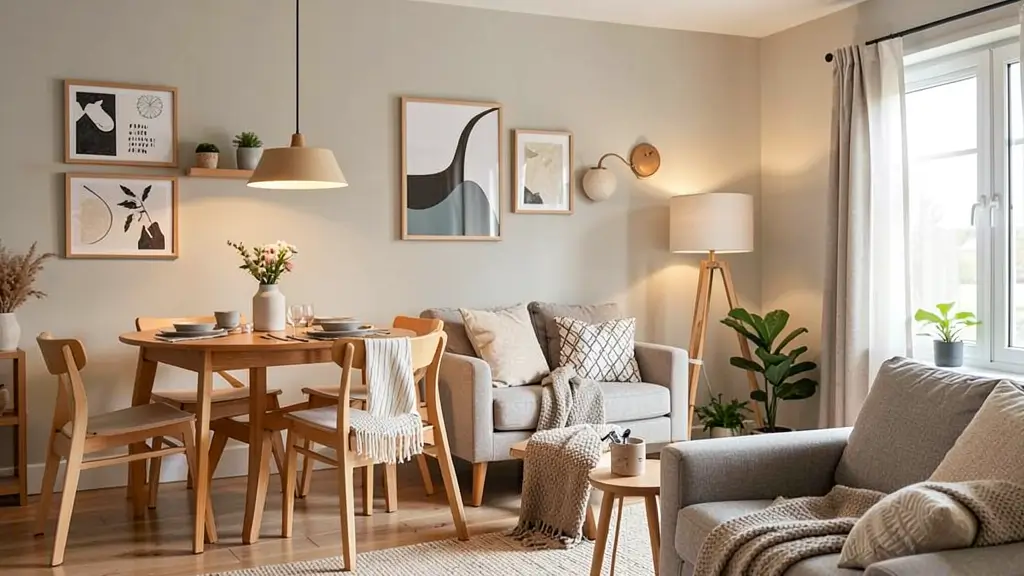
Let’s get real—most of us aren’t working with unlimited funds. I’ve furnished entire combo spaces for under $2,000, and you know what? Some of those rooms photographed better than spaces with $20,000 budgets.
Budget design demands creativity, patience, and strategic shopping. You’re hunting for deals, repurposing what you have, and prioritizing where your money makes the biggest impact.
Money-Saving Strategies:
- Thrift stores and estate sales for character pieces
- Facebook Marketplace for gently used furniture (always inspect first!)
- DIY slipcovers to transform outdated sofas
- Paint as the cheapest room transformer available
- Budget retailers (IKEA, Target, Wayfair) for basics
- Splurge strategically on one visible investment piece
IMO, rugs and lighting deliver the best bang for your buck. A great rug defines your living zone instantly. Good lighting elevates everything it touches.
Also, don’t underestimate rearranging what you already own. Sometimes that dresser works perfectly as a dining room buffet. That bookshelf creates a natural room divider. Work with what you’ve got before buying new.
8. Multi-Functional Furniture Ideas
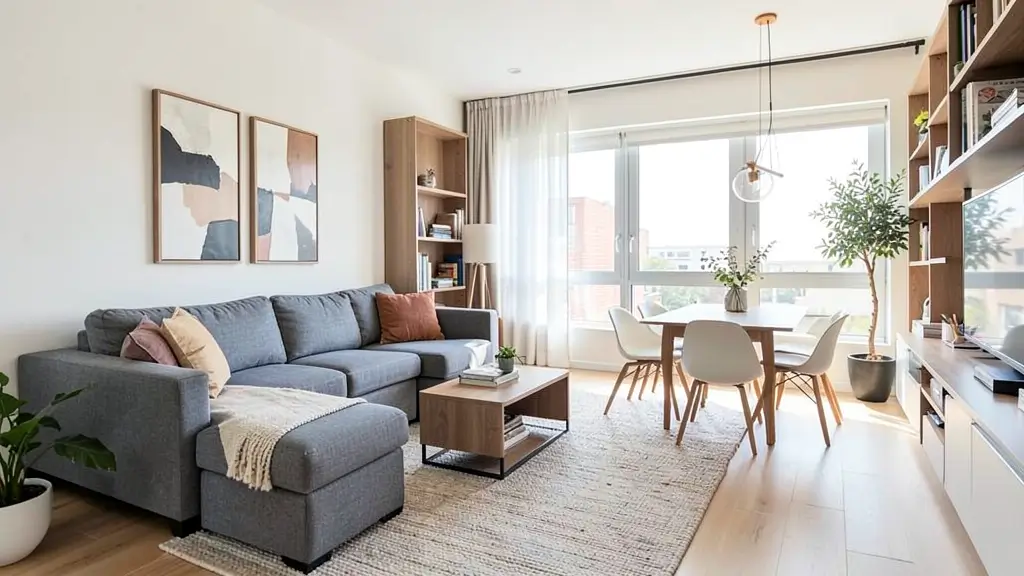
When one room serves multiple purposes, your furniture needs to multitask too. Multi-functional pieces aren’t just for tiny spaces—they’re smart investments for any combined living-dining area.
The right multi-functional furniture maintains flexibility. Your space adapts for dinner parties, movie nights, work-from-home days, and lazy Sundays. That’s the goal.
Multi-Functional MVP Pieces:
- Extendable dining tables that grow for guests
- Storage ottomans that hide blankets and clutter
- Sofa beds for overnight visitors
- Nesting tables that expand when needed
- Benches with storage doubling as seating and organization
- Bar carts serving as extra surface space and mobile storage
- Drop-leaf tables maximizing space when not in use
I owned an extendable dining table for years, and it literally changed how I entertained. Sunday dinner for two expanded to holiday gatherings for eight. Same table, different configurations.
The key: buy quality. Cheap multi-functional furniture breaks down faster because moving parts experience more wear. Invest in sturdy mechanisms.
9. Bright & Airy Room Transformations
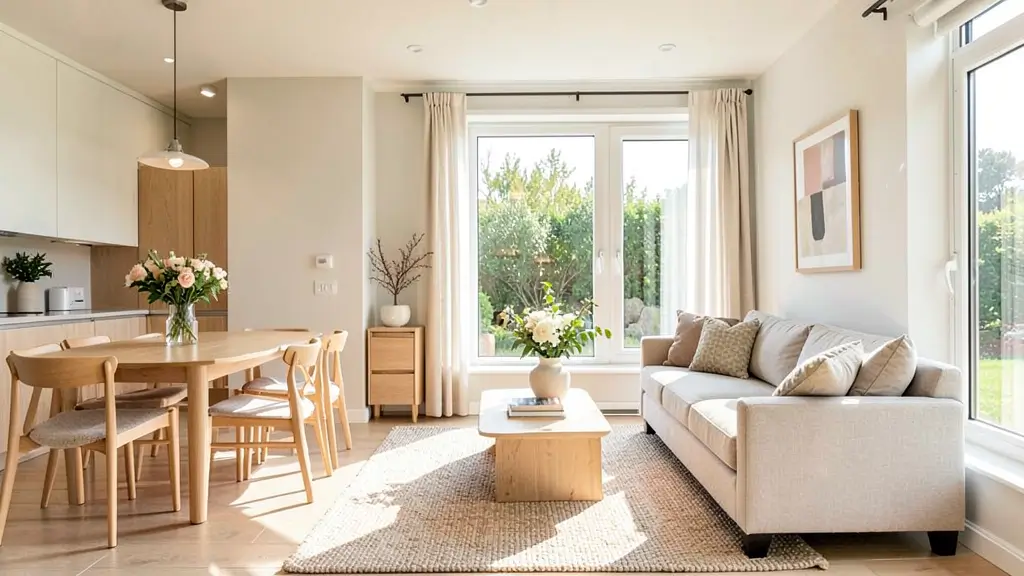
Few things frustrate me more than dark, cramped-feeling combo spaces. Light transforms rooms, and you can create that bright, airy feeling regardless of how many windows you have.
Brightness comes from deliberate design choices—color selection, reflective surfaces, window treatments, and artificial lighting working together.
Lightening Up Your Combo Space:
- White or light-colored walls reflect maximum light
- Sheer curtains allow natural light while maintaining privacy
- Mirrors positioned opposite windows bounce light around
- Glass-topped tables reduce visual heaviness
- Light wood tones over dark stains
- Metallic accents (chrome, gold, brass) that catch light
- Adequate artificial lighting for darker hours
Ever walked into a room and immediately felt happier? That’s good lighting doing its job. Never underestimate those photons 🙂
Don’t forget your floors. Light-colored rugs brighten spaces instantly. If you’re stuck with dark flooring, larger light rugs compensate significantly.
Also Read: 15 Cozy Boho Living Room Inspirations for Relaxing Vibes
10. Contemporary Chic Living-Dining Merge
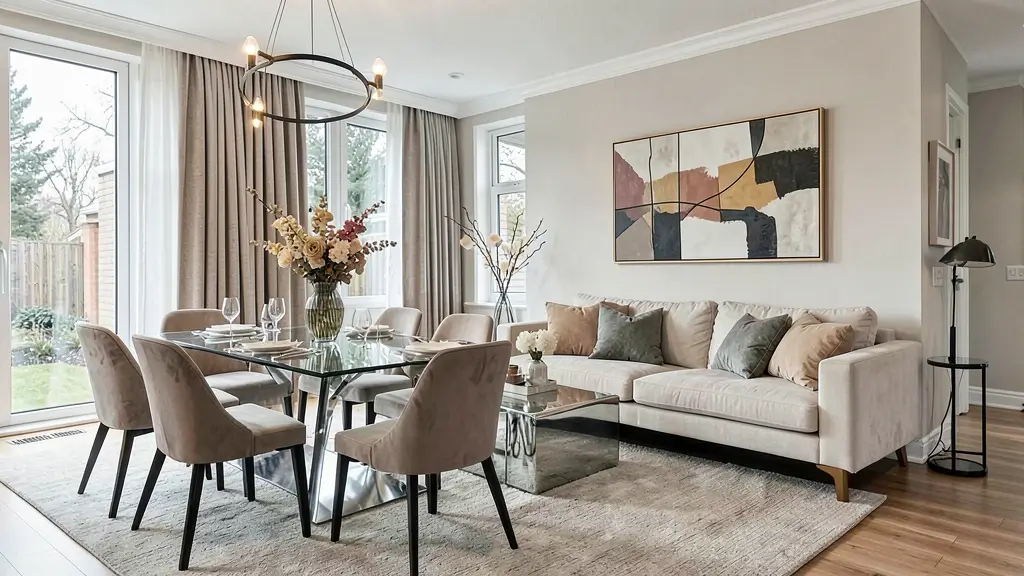
Contemporary design sits between modern minimalism and traditional comfort—it’s current, sophisticated, and livable. Contemporary chic combos feel polished without trying too hard.
This style embraces clean lines but allows for decorative moments. You’ll see neutral bases punctuated by statement accessories. Furniture leans architectural without feeling cold.
Contemporary Chic Essentials:
- Neutral foundations with one signature color
- Geometric patterns in textiles and accessories
- Sculptural furniture silhouettes
- High-quality basics over trendy pieces
- Curated accessories rather than collections
- Mixed metals for depth
- Art as focal points
What I appreciate about contemporary design: it ages gracefully. You’re not chasing trends that expire in eighteen months. Quality contemporary pieces remain relevant for decades.
Styling tip: Keep flat surfaces clean. Contemporary spaces require visual breathing room. That means no cluttered coffee tables, no overcrowded shelving. Edit, edit, edit.
11. Space-Saving Storage Solutions
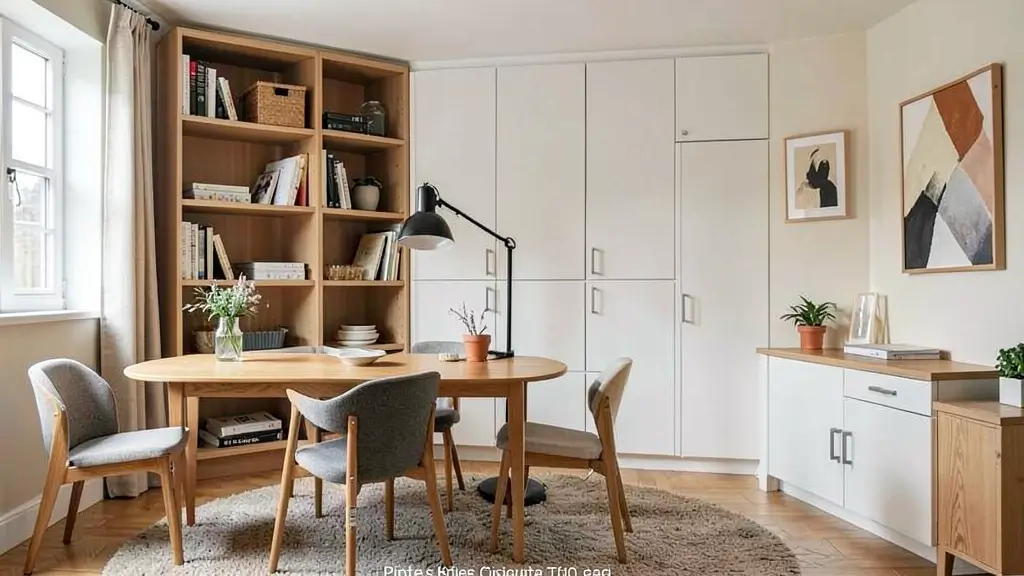
Combo rooms accumulate stuff fast—dining supplies, entertainment equipment, books, blankets, candles, random items that somehow multiply. Strategic storage keeps clutter invisible while maintaining access.
Forget traditional storage assumptions. In combined spaces, you’ll find creative solutions that blend with your design aesthetic.
Storage Ideas That Work:
- Built-in cabinetry flanking windows or fireplaces
- Floating shelves for vertical storage
- Coffee tables with drawers hiding remotes and magazines
- Sideboards or buffets storing dining essentials
- Console tables behind sofas with hidden compartments
- Media cabinets with doors concealing electronics
- Decorative baskets organizing while styling
The biggest storage mistake I see? Visible clutter. People buy storage solutions, then leave them overflowing and disorganized. Storage only works when maintained. Schedule regular purges.
Also, consider what you’re storing. Do you really need service for twelve when you’ve never hosted more than six? Less stuff means less storage needed.
12. Indoor-Outdoor Flow Design Ideas
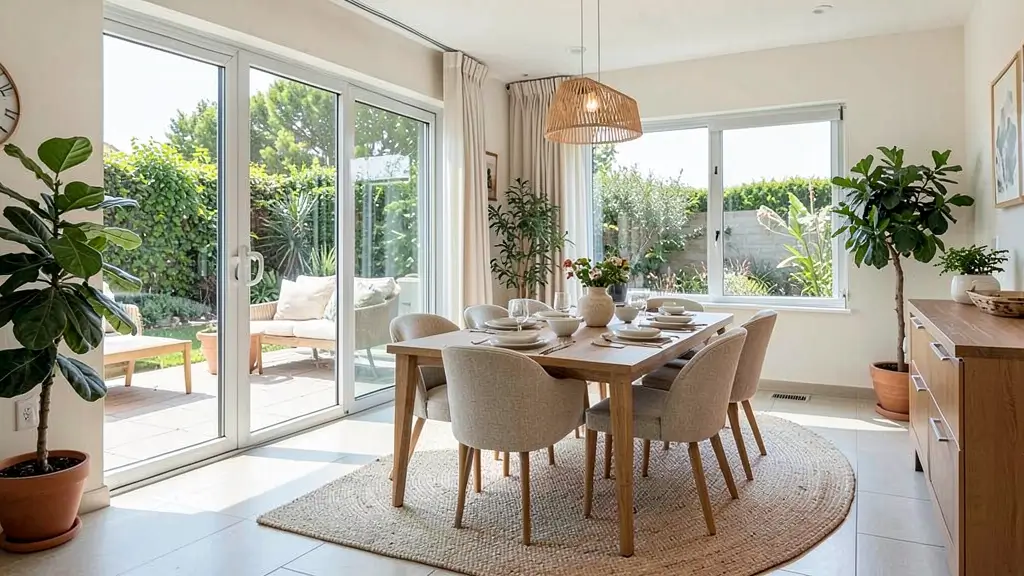
If you’re blessed with patio access, outdoor views, or even just large windows, extending your combo space visually through indoor-outdoor connection makes rooms feel enormous.
This design approach blurs boundaries between inside and outside, creating seamless transitions that expand your living area psychologically.
Creating Indoor-Outdoor Flow:
- Consistent flooring continuing onto patios (or coordinating materials)
- Similar color palettes inside and out
- Large sliding or folding doors erasing barriers
- Indoor plants echoing outdoor greenery
- Natural materials (rattan, bamboo, stone) bridging spaces
- Outdoor-inspired furniture that feels cohesive
- Unobstructed sightlines to outdoor focal points
I redesigned a small combo space once where the main feature was a glass slider leading to a courtyard garden. By framing that view with the furniture arrangement and choosing interior colors reflecting the garden, the room felt twice its actual size.
Even without outdoor access, you can fake it. Large botanical prints, abundant houseplants, and nature-inspired textures create that biophilic connection.
13. Vintage Inspired Combo Spaces
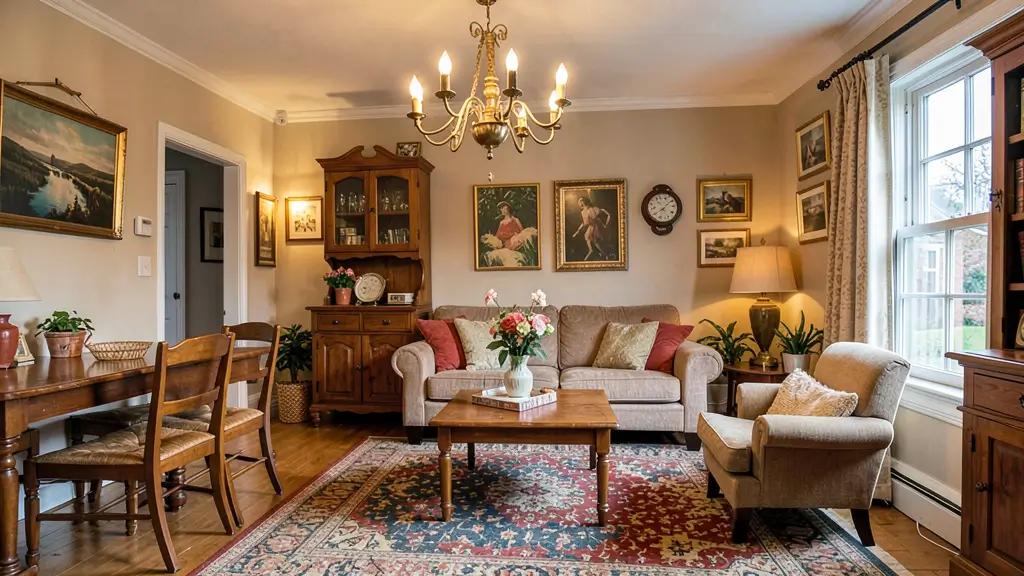
There’s something irresistible about rooms that feel collected over time—spaces where mid-century chairs mingle with art deco mirrors, where Victorian details meet 70s ceramics.
Vintage-inspired combo designs tell stories. They avoid catalog-perfect matching and embrace the patina of previous lives.
Sourcing and Styling Vintage:
- Estate sales and auctions for authentic pieces
- Reproduction furniture capturing vintage silhouettes affordably
- One hero vintage piece anchoring the space
- Mixing eras while maintaining color consistency
- Original art over mass-produced prints
- Vintage textiles (grain sacks, antique rugs, old quilts)
- Brass and aged metals connecting eras
My absolute favorite vintage score? A 1960s teak credenza that serves as my dining room storage. I found it dusty and neglected at an estate sale for $200. After some cleaning and hardware replacement, it became the centerpiece of my combo space.
Warning: Vintage requires patience. You won’t find everything in one shopping trip. Let your space evolve over months, even years.
14. Family-Friendly Living-Dining Setups
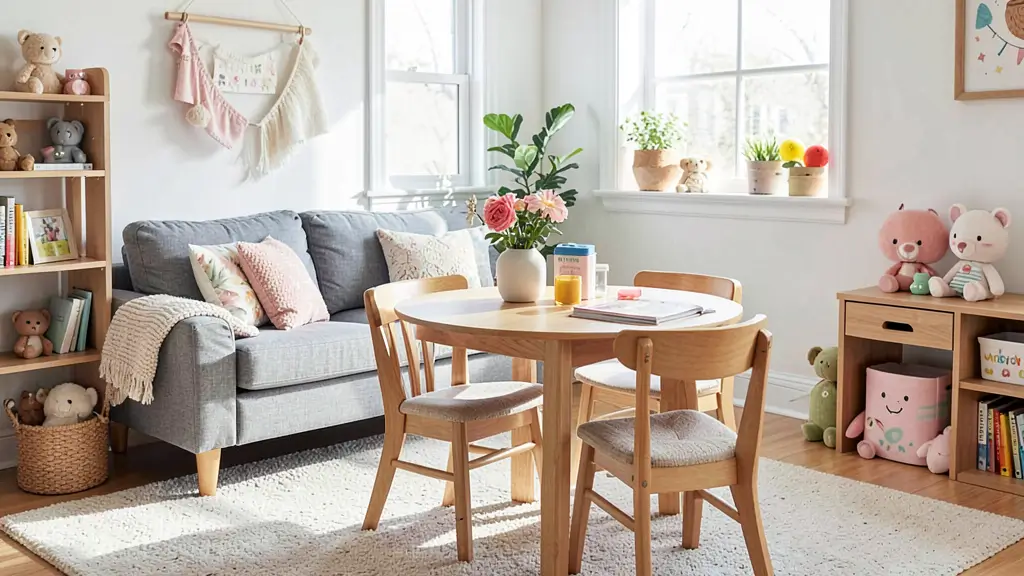
Kids change everything—including how you design combined spaces. Family-friendly combos prioritize durability, safety, and flexibility without sacrificing style (because parents deserve nice things too).
The key involves choosing materials that withstand daily abuse while maintaining visual appeal. It means anticipating messes, rough play, and ever-changing needs.
Family-Proof Design Choices:
- Performance fabrics resistant to stains (Crypton, Sunbrella)
- Leather or vinyl seating that wipes clean
- Rounded furniture edges minimizing injuries
- Indoor-outdoor rugs handling spills and vacuuming
- Lower, stable furniture preventing tip-overs
- Wipeable wall paint (satin or semi-gloss finishes)
- Storage for toys that closes and hides
- Durable dining surfaces (solid wood, laminate, quartz)
Look, I’ve seen beautiful white sofas in homes with toddlers. They work—because the owners chose slip covers that machine wash. Smart choices let you have both style and practicality.
Also consider zones. Give kids dedicated space within the combo area—a reading corner, a play table—and they’re less likely to take over everything.
15. Elegant Neutral Palette Interiors
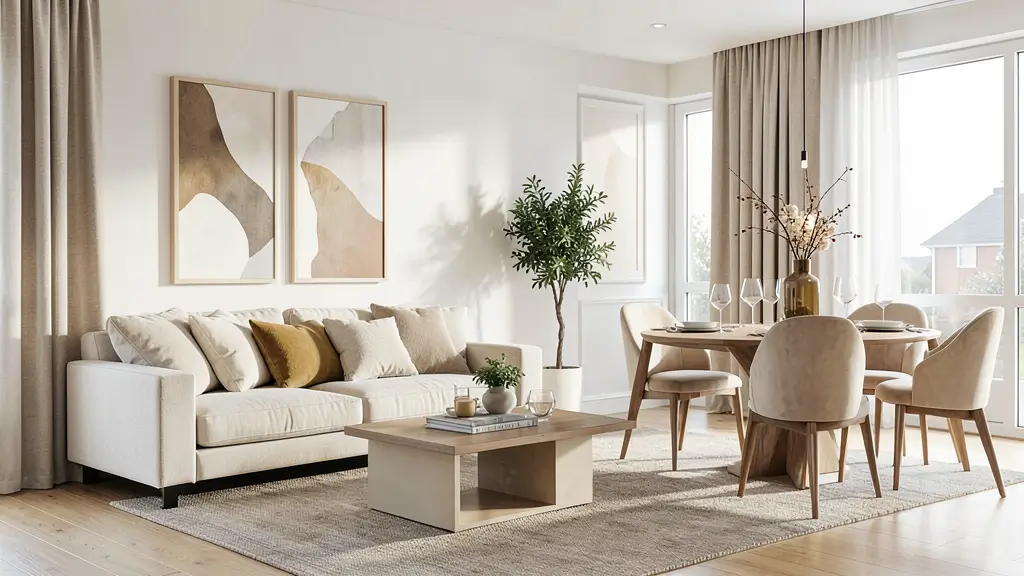
We’ve circled back to neutrals, but this time with elegance dialed up. Neutral palette interiors exude sophistication when executed with intention—varying tones, layered textures, and quality materials doing the heavy lifting.
This approach lets architectural details and furniture silhouettes shine. Color doesn’t distract from form.
Elevating Neutral Spaces:
- Tone-on-tone layering (cream, taupe, greige, mushroom)
- Rich textures compensating for color restraint
- Varied materials (velvet, linen, leather, wood, stone)
- Metallic accents providing warmth and reflection
- Architectural lighting as jewelry
- Statement furniture shapes commanding attention
- Intentional styling moments with sculptural accessories
The mistake amateurs make with neutral palettes? Going too matchy-matchy. Everything doesn’t need to be the same beige. Variation within the neutral family creates depth and interest.
I’ve designed neutral combo spaces that stop people in their tracks—not because of bold colors, but because the layering and proportion work so perfectly.
Making Your Combo Space Work for You
Here’s what I’ve learned after years of designing, redesigning, and obsessing over living-dining combinations: the best spaces reflect how you actually live.
Forget Pinterest-perfect rooms that require constant maintenance. Forget following design rules that don’t serve your lifestyle. Focus instead on these fundamentals:
- Define your zones through furniture placement, rugs, or lighting
- Maintain visual connection through consistent colors or materials
- Prioritize traffic flow ensuring movement feels natural
- Balance visual weight distributing furniture across the space
- Layer lighting for functionality and atmosphere
- Edit continuously removing what isn’t working
Your combo space doesn’t need to fit one specific style. Maybe you’re mixing Scandinavian minimalism with vintage finds. Perhaps your modern luxury room includes family-friendly fabrics. That’s completely valid.
The rooms that truly wow aren’t impressive because they follow trends—they’re impressive because they feel right. They tell stories about the people who live there. They invite you in and make you comfortable.
So whether you’re starting from scratch or refreshing an existing space, choose what resonates with you. Experiment. Make mistakes. Rearrange furniture at midnight because you suddenly see a better configuration. That’s how great rooms happen.