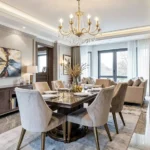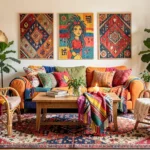


Picture this: you walk into a space where your sofa practically high-fives your dining table, and somehow, it all just works. That’s the magic of a well-designed living room and dining room combo. Whether you’re working with a sprawling open floor plan or a cozy apartment that forces you to get creative, combining these two essential spaces can feel like solving a really satisfying puzzle.
I’ve spent way too many hours (and probably too much money) experimenting with different layout styles in my own home. Some attempts were Pinterest-worthy; others looked like furniture had a fight and nobody won. Through all that trial and error, I’ve discovered what actually makes these combo spaces feel intentional, functional, and—most importantly—cozy.
So, whether you’re starting from scratch or just need fresh inspiration to revamp your current setup, I’ve rounded up 15 living room and dining room combo ideas that genuinely deliver on both style and substance. Let’s get into it.
1. Modern Minimalist Living & Dining Combo
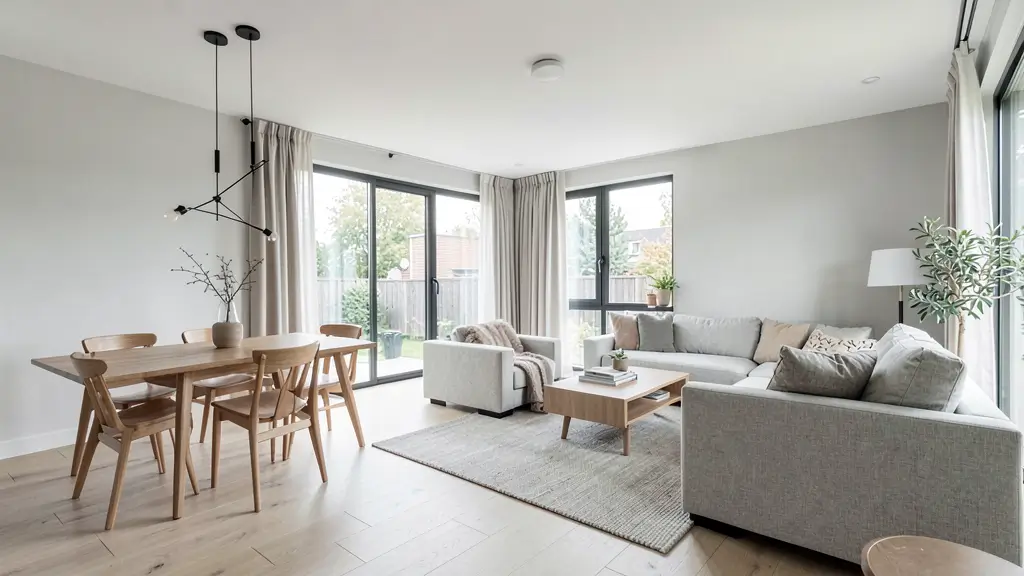
Ever walked into a room and felt like you could finally breathe? That’s the minimalist effect, and it works wonders in combined living-dining spaces.
The Core Philosophy
Modern minimalism isn’t about having nothing—it’s about having only what you need and love. In a living room and dining room combo, this translates to clean lines, neutral palettes, and furniture that earns its spot.
Think low-profile sofas in crisp whites or soft grays, a sleek dining table with simple chairs, and strategic negative space. The key here? Let the architecture speak. Big windows, interesting ceiling details, or beautiful flooring become the stars when you strip away visual clutter.
Why It Works
- Creates visual calm in smaller spaces
- Maximizes natural light by avoiding heavy furniture
- Easy to maintain and keep clean
- Timeless appeal that won’t feel dated in five years
I tried this approach in my last apartment, and honestly, it changed how I felt coming home every day. Less stuff, less stress—who knew?
2. Boho Chic Open Concept Living-Dining
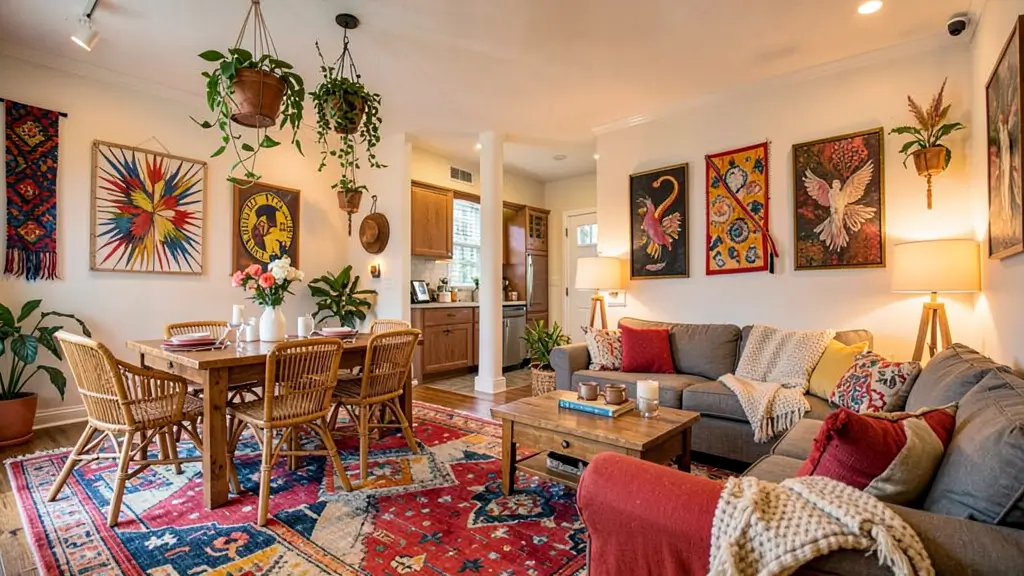
If minimalism feels too stark for your personality, boho chic might be your soulmate style. This look embraces texture, pattern, and that “collected over time” aesthetic.
Building the Boho Vibe
Layering is everything in a boho living and dining combo. Start with a vintage or rattan dining set, add a plush sectional covered in mixed throw pillows, and don’t forget the plants—lots of them.
The beauty of boho style lies in its forgiving nature. Mix a Moroccan rug with macramé wall hangings. Pair wicker chairs with a velvet sofa. Nothing has to match perfectly because that’s the whole point.
Key Elements to Include
- Natural materials: rattan, jute, bamboo, wood
- Textured textiles: chunky knit throws, embroidered cushions
- Global influences: Moroccan poufs, African baskets, Indian block prints
- Greenery galore: hanging plants, fiddle leaf figs, potted succulents
Fair warning: this style can tip into “cluttered disaster” if you’re not careful. The trick is intentional messiness—yes, that’s a thing.
3. Small Space Functional Combo Layout
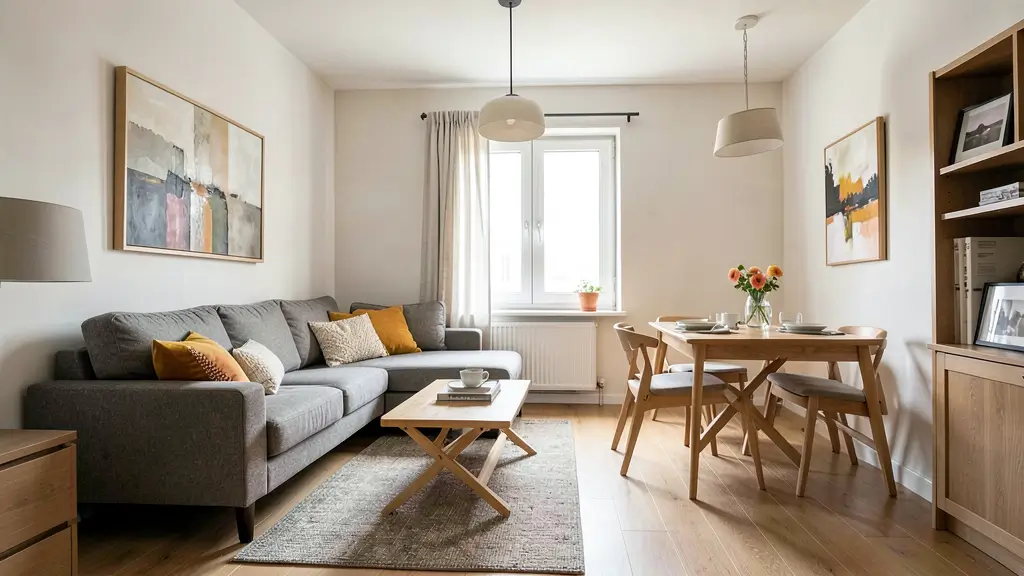
Okay, let’s talk reality. Not everyone has a massive open floor plan. Some of us are working with spaces where the dining table doubles as a desk, and the couch basically touches the fridge.
Making Every Inch Count
Functionality must come first in a compact living-dining combo. Choose furniture that multitasks: a dining table with built-in storage, a sofa bed for guests, or nesting coffee tables you can tuck away.
Consider a round dining table—it fits more people while taking up less visual space than rectangular options. Wall-mounted shelves beat bulky bookcases, and mirrors strategically placed can make even the tiniest room feel more open.
Smart Small-Space Solutions
- Drop-leaf or expandable dining tables that adjust to your needs
- Bench seating that slides under the table when not in use
- Vertical storage to free up floor space
- Light colors to create an airy feeling
- Multifunctional furniture like ottomans with hidden storage
IMO, small spaces actually force better design decisions. When you can’t just throw more furniture at a problem, you get creative.
4. Mid-Century Modern Living & Dining
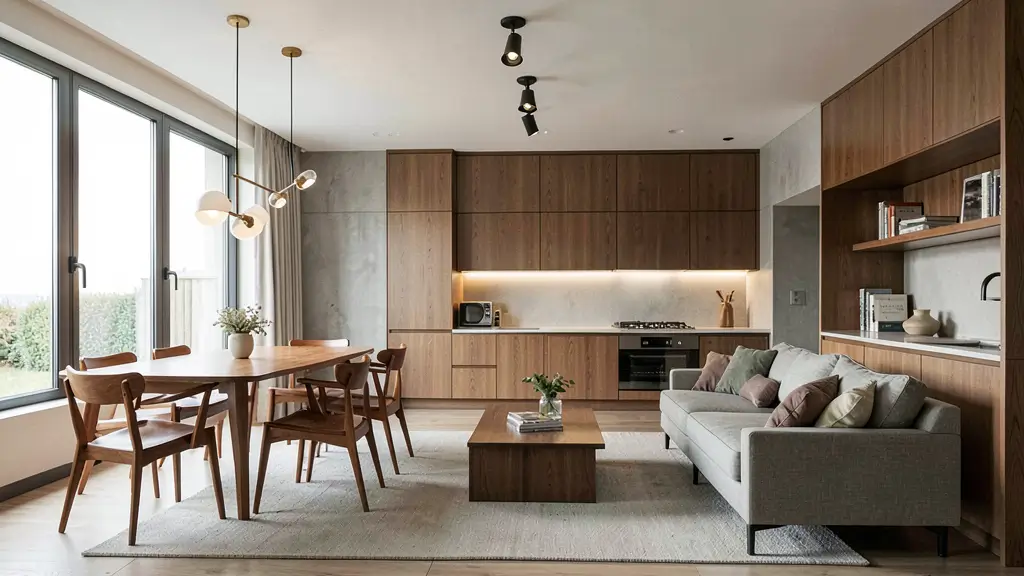
There’s a reason mid-century modern never goes out of style. Those iconic silhouettes, tapered legs, and warm wood tones feel both retro and refreshingly current.
The Timeless Appeal
A mid-century modern living and dining combo celebrates craftsmanship and simplicity. Think Eames-style chairs around an oval walnut dining table, a classic leather sofa, and statement lighting fixtures with sculptural shapes.
The color palette typically includes warm neutrals—mustard yellow, burnt orange, olive green, and teak wood tones. These spaces feel sophisticated without being stuffy.
Signature Mid-Century Elements
- Tapered wooden legs on sofas, chairs, and tables
- Organic shapes: kidney-bean coffee tables, sculptural chairs
- Bold accent colors against neutral backgrounds
- Statement lighting: Sputnik chandeliers, arc floor lamps
- Mixed materials: wood, leather, brass, marble
I scored an authentic mid-century sideboard at a thrift store last year, and it completely transformed my space. Sometimes the hunt is half the fun.
5. Cozy Rustic Living-Dining Blend
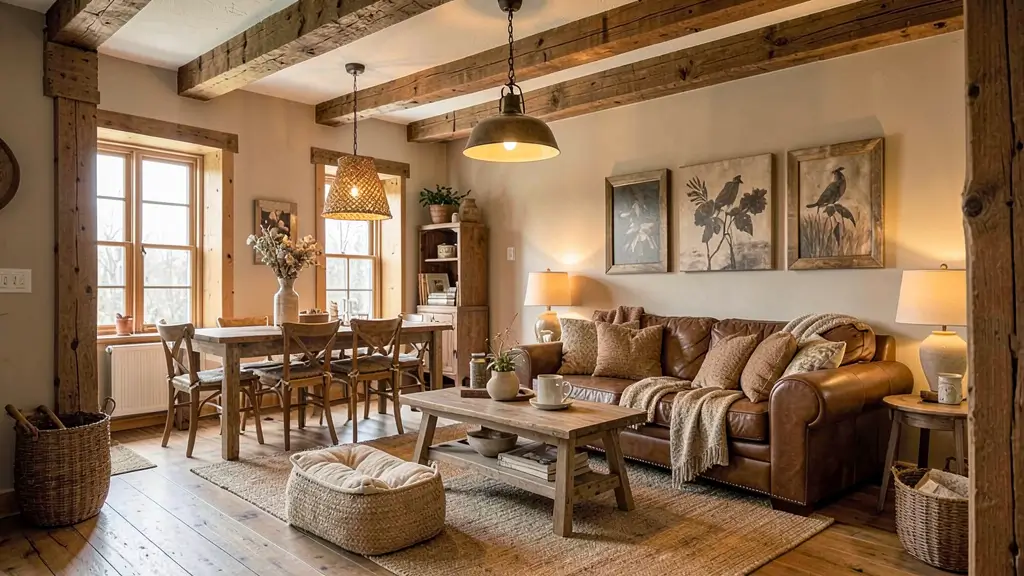
Want your home to feel like a warm hug? Rustic design delivers that cabin-in-the-woods comfort, even in urban settings.
Creating Warmth Through Texture
Rustic living and dining combos lean heavily into natural imperfections. Reclaimed wood dining tables, distressed leather armchairs, and stone or brick accent walls set the foundation.
The color palette stays earthy—warm browns, deep greens, cream, and charcoal. Soft textiles like wool throws and linen curtains balance the rougher elements and prevent the space from feeling cold.
Must-Have Rustic Features
- Reclaimed or weathered wood furniture
- Exposed beams (or faux beams if you’re renting)
- Natural stone accents
- Vintage or antique finds
- Warm, soft lighting: candles, string lights, warm-toned bulbs
Ever noticed how everyone gravitates toward the coziest corner at a party? That’s the vibe you’re creating here.
Also Read: 15 Elegant Open Concept Living and Dining Room Styling Tips
6. Scandinavian Style Open Layout
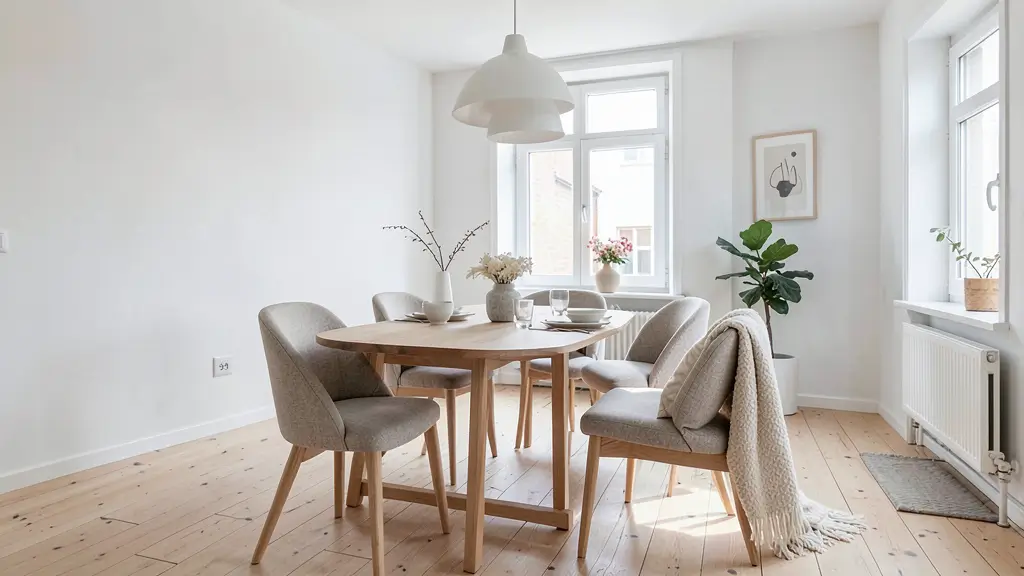
Scandinavian design has dominated the home décor conversation for years, and for good reason. It’s the perfect marriage of function, beauty, and hygge.
The Scandi Formula
Light colors, clean lines, and cozy textures define the Scandinavian living-dining combo. White walls serve as the canvas, while blonde wood furniture, simple silhouettes, and carefully chosen accessories add warmth and personality.
The key difference between Scandi and stark minimalism? Scandinavian spaces always prioritize comfort. You’ll see plenty of soft throws, candles, and inviting seating that begs you to curl up with a book.
Scandinavian Essentials
- White or light gray walls as a backdrop
- Blonde or light wood furniture
- Functional, streamlined designs
- Cozy textiles: sheepskin rugs, knit blankets
- Intentional, meaningful décor rather than excess
This style works incredibly well in small living room and dining room combos because the light palette makes spaces feel larger.
7. Colorful Eclectic Living & Dining
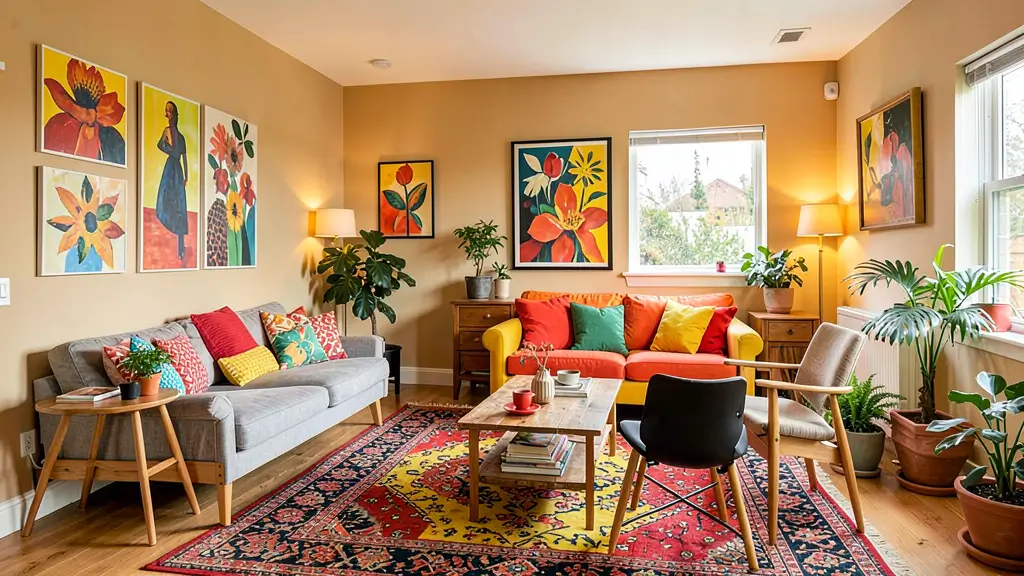
Feeling bold? An eclectic approach lets you throw out the rulebook and create a space that’s unapologetically you.
Controlled Chaos at Its Best
Eclectic living and dining combos mix patterns, colors, eras, and styles with fearless confidence. A vintage velvet sofa might sit opposite ultra-modern dining chairs. Bold wallpaper could backdrop mismatched gallery walls.
The secret to pulling this off? Find your through line. Maybe it’s a consistent color that appears throughout, or perhaps it’s a specific material like brass or natural wood. Without some unifying element, eclectic can quickly slide into chaotic.
Balancing Bold Choices
- Choose one dominant color and let others play supporting roles
- Vary scale: mix large statement pieces with smaller accessories
- Repeat patterns or textures to create visual rhythm
- Include at least one neutral to give the eye a resting place
Eclectic spaces take guts. But when they work? They’re unforgettable.
8. Luxury Contemporary Combo Space
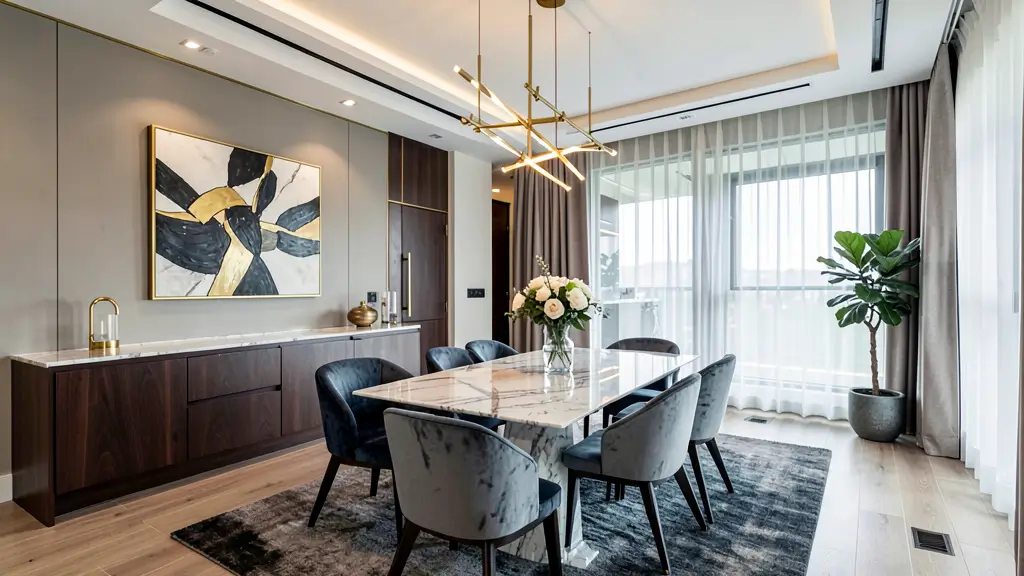
Sometimes you want your home to feel like a boutique hotel—polished, sophisticated, and quietly impressive. That’s the luxury contemporary lane.
Understated Elegance
A luxury contemporary living and dining combo focuses on quality over quantity. You’ll see fewer pieces, but each one carries weight—both visually and financially.
Think marble dining tables, custom upholstered seating, statement chandeliers, and curated art. The color palette often stays neutral (think white, black, charcoal, taupe) with occasional metallic accents in gold or brushed nickel.
Hallmarks of Luxury Design
- Premium materials: marble, velvet, silk, leather, natural stone
- Architectural details: molding, built-ins, fireplace features
- Sophisticated lighting: layered and dimmable
- Curated accessories: less is more, but what’s there is exceptional
- Custom or designer furniture pieces
FYI, you don’t need an unlimited budget to achieve this look. Strategic investment in a few key pieces—and restraint everywhere else—gets you there.
9. Farmhouse Inspired Living-Dining Area
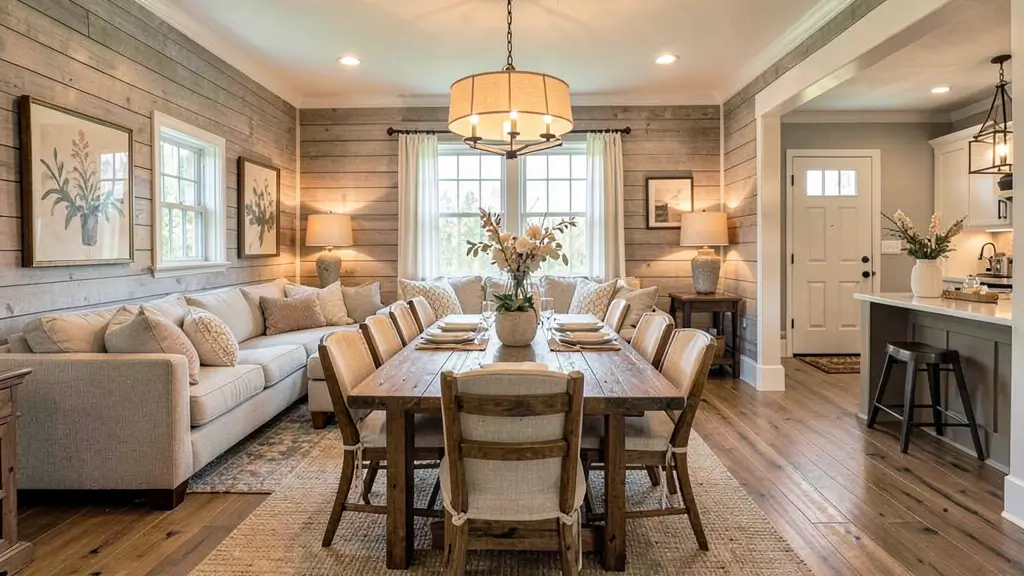
The farmhouse aesthetic has evolved beyond the shiplap-and-barn-door phase (thankfully). Today’s farmhouse spaces feel fresh, lived-in, and welcoming.
Modern Farmhouse Done Right
A farmhouse living and dining combo celebrates comfort and practicality. Large farmhouse tables surrounded by mismatched chairs invite big family dinners. Slipcovered sofas in washable fabrics handle real life with grace.
The palette mixes whites and creams with black accents, warm wood tones, and soft sage or dusty blue touches. Natural textures—linen, cotton, wicker, and galvanized metal—complete the look.
Farmhouse Must-Haves
- Large, sturdy dining table as the anchor piece
- Open shelving displaying everyday dishes and décor
- Slipcovered or linen upholstery
- Vintage and antique accents
- Fresh flowers or greenery
What I love about farmhouse style? It actually encourages wear and tear. Finally, a style that doesn’t stress me out when I spill coffee.
10. Compact Urban Apartment Combo
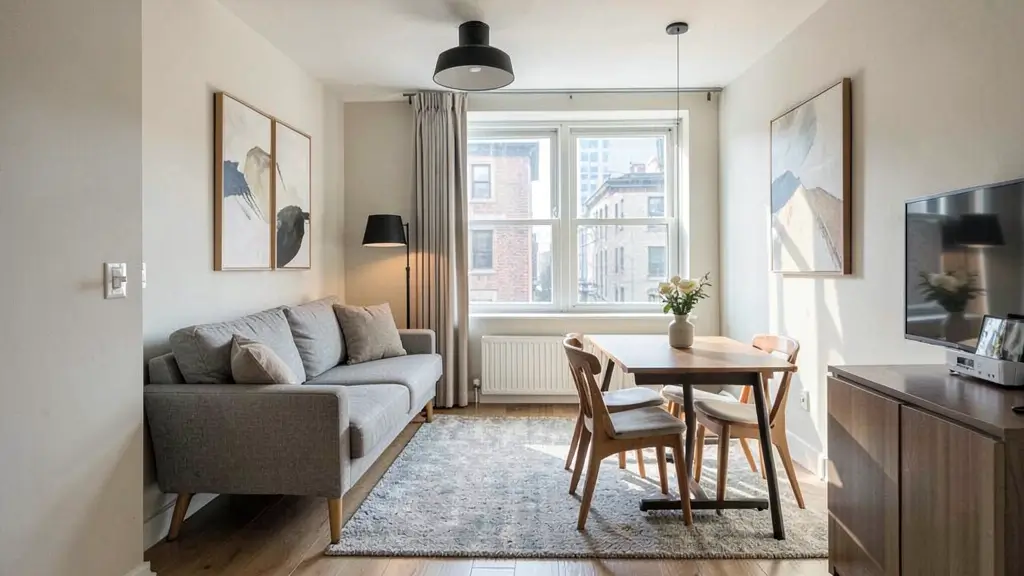
City living means getting creative with limited square footage. Your living room and dining room combo might also serve as your home office, yoga studio, and occasional guest room.
Urban Living Realities
Compact urban combos demand smart zoning without walls. Area rugs define the living space from the dining area. A sleek console table replaces a traditional sideboard. Vertical space gets maximized with tall bookshelves and wall-mounted storage.
The aesthetic often leans contemporary and streamlined—bulky furniture just doesn’t work here. Stick to leggy pieces that let light flow underneath and keep sightlines open.
Urban Apartment Strategies
- Transparent furniture: glass dining tables, acrylic chairs
- Wall-mounted everything: lights, shelves, TV
- Dual-purpose pieces: desk that becomes dining table, storage ottoman
- Mirrors to create depth and reflect light
- Consistent color palette to visually expand the space
City dwellers, I see you. You can absolutely create a beautiful living-dining combo in 600 square feet—or less.
11. Industrial Loft Style Living-Dining
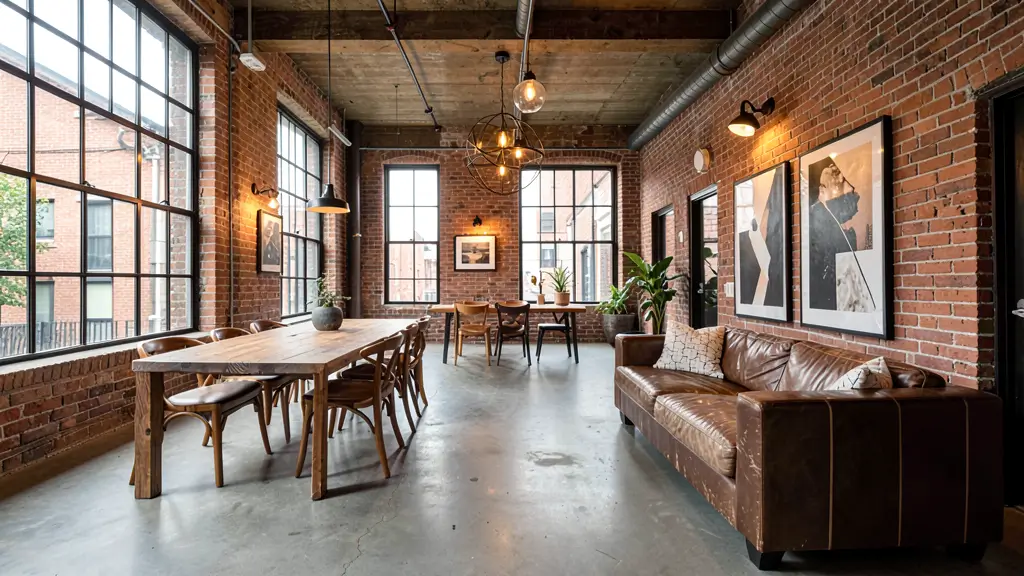
Exposed brick, metal beams, and raw concrete—industrial style celebrates architectural bones and adds warmth through deliberate contrast.
Embracing Raw Beauty
An industrial living and dining combo often starts with what’s already there: ductwork, brick walls, concrete floors, or large factory windows. The furniture you add should complement rather than compete.
Large leather sofas, reclaimed wood dining tables, and metal-framed chairs feel right at home. Lighting often becomes a statement—oversized pendant lights or Edison bulb fixtures add character.
Industrial Design Elements
- Exposed structural elements: brick, concrete, metal, pipes
- Reclaimed or salvaged materials
- Oversized proportions that match lofty ceilings
- Mix of hard and soft textures to prevent coldness
- Dark, moody color palette with warm accents
Industrial spaces can feel cold if you’re not careful. Balance all that hard material with plenty of soft textiles—think plush rugs, leather pillows, and warm throw blankets.
12. Neutral Tone Elegant Combo Room
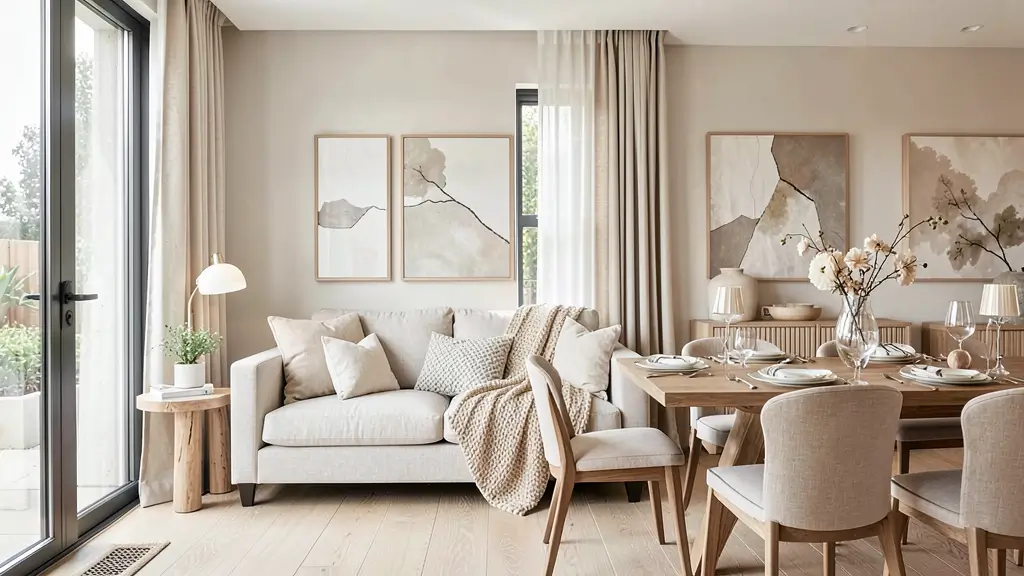
Sometimes the most impactful spaces whisper rather than shout. A neutral palette creates sophistication through subtlety and allows texture to do the talking.
The Power of Quiet
A neutral living and dining combo layers shades of white, cream, beige, taupe, and gray to create depth without color competition. The magic happens in the materials—linen, wool, cashmere, natural wood, and stone all play distinct roles.
This style suits those who find peace in simplicity but still want visual interest. It’s also incredibly versatile—change out accessories seasonally without redecorating entirely.
Layering Neutrals Successfully
- Vary undertones: mix warm (creamy) and cool (gray) neutrals intentionally
- Prioritize texture contrast: matte against shiny, rough against smooth
- Add dimension through pattern: stripes, subtle geometrics, organic prints
- Include natural elements: wood, plants, stone
- Strategic metallic accents: brass, gold, or silver for warmth
Neutral doesn’t mean boring. It means intentional. 🙂
Also Read: 15 Elegant Yellow Bedroom Styles for Modern Interiors
13. Multi-Functional Modular Space
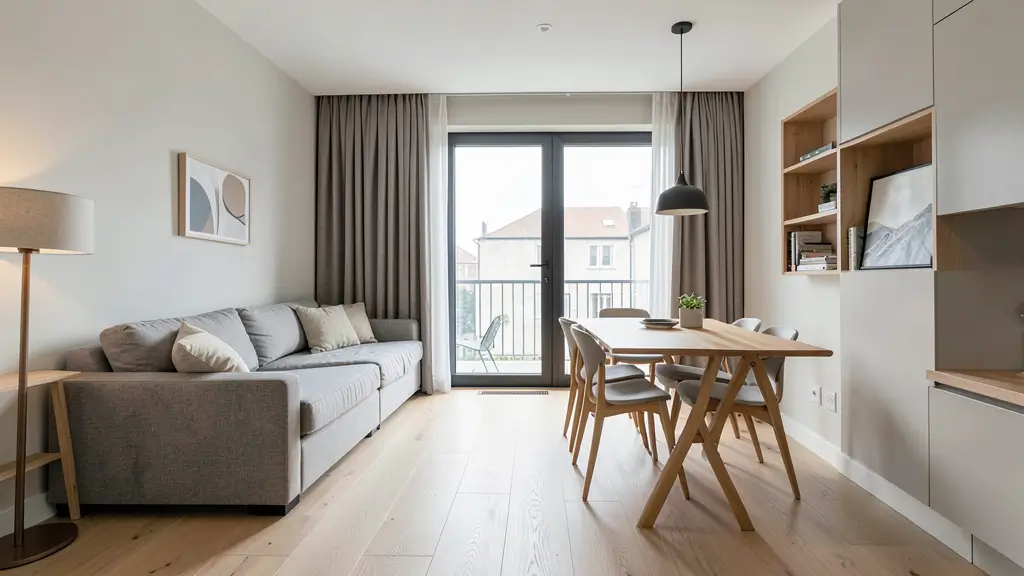
For households that need flexibility—whether you work from home, host frequently, or simply like options—modular design offers maximum adaptability.
Furniture That Flexes
Multi-functional living and dining combos feature furniture that moves, transforms, and adapts. Modular sofas reconfigure for movie nights or parties. Extendable dining tables expand for gatherings and shrink for daily use.
Wall-mounted desks fold away when not needed. Rolling carts serve as bar carts, serving stations, or storage depending on the day. Everything earns its place by doing more than one job.
Modular Must-Haves
- Sectional sofas with interchangeable components
- Nesting tables that expand when needed
- Rolling or mobile furniture for easy rearrangement
- Convertible pieces: sofa beds, desk-to-dining transformations
- Wall-mounted or foldable options to free up floor space
This approach suits renters particularly well. You can adapt the same furniture to completely different floor plans.
14. Coastal Relaxed Living & Dining
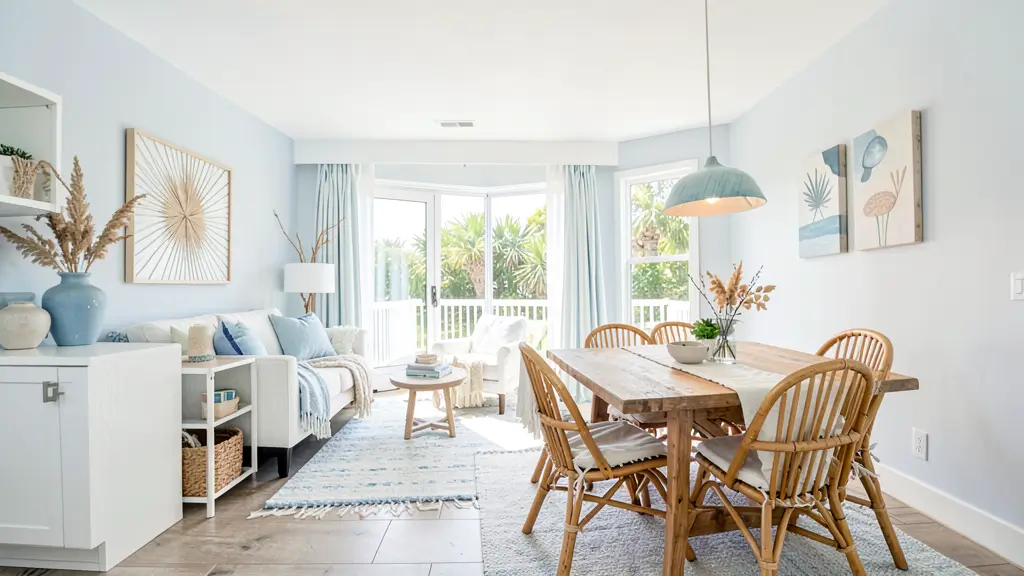
Craving vacation vibes year-round? Coastal design brings beachy calm into your everyday living space—no oceanfront property required.
Bringing the Beach Home
A coastal living and dining combo channels relaxed seaside energy through a palette of blues, whites, sandy beiges, and soft seafoam greens. Natural textures like wicker, rattan, jute, and weathered wood reinforce the connection to nature.
The key is avoiding cliché. Skip the seashell overload and nautical-themed everything. Instead, focus on the feeling of the coast: airy, light, fresh, and calming.
Coastal Design Done Well
- Light, breezy color palette: white, blue, soft greens, sandy neutrals
- Natural fiber textures: jute rugs, rattan chairs, woven baskets
- Casual, comfortable seating: slipcovered sofas, relaxed silhouettes
- Indoor-outdoor flow: if you have outdoor space, connect it visually
- Subtle coastal touches: driftwood, coral, sea glass (in moderation)
I’ve seen coastal spaces go wrong when they feel like theme park gift shops. Keep it subtle, and you’ll want to lounge there forever.
15. Zen Minimal Calm Combo Layout
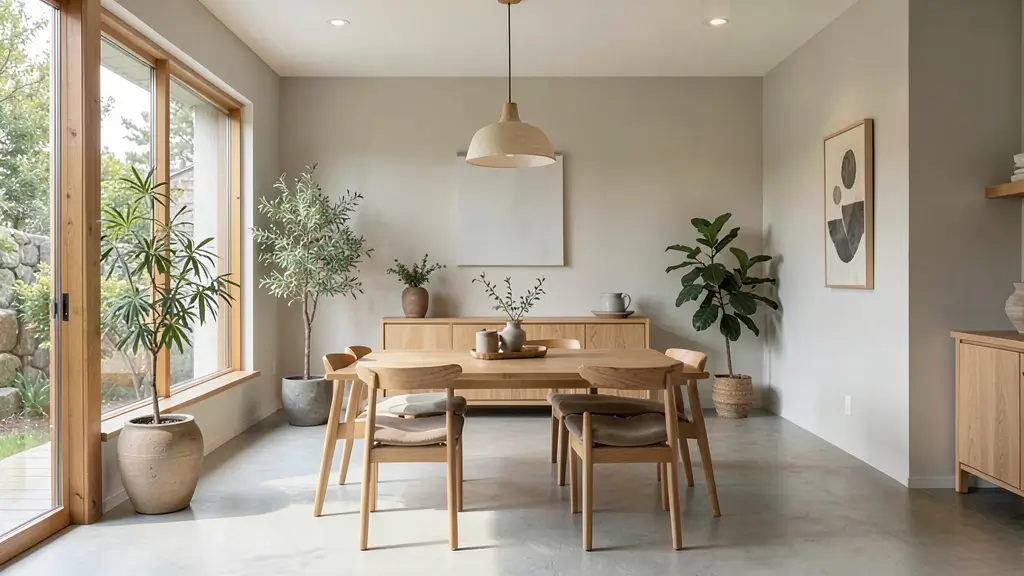
For those seeking true sanctuary, a Zen-inspired living and dining combo prioritizes peace, mindfulness, and intentional simplicity.
Creating Sanctuary
Zen minimal combos draw inspiration from Japanese design principles—clean lines, natural materials, and a deep respect for empty space. Every object serves a purpose or brings joy; everything else goes.
Low-profile furniture, neutral earth tones, and natural elements like bamboo, stone, and wood create grounding energy. The goal isn’t just aesthetic—it’s emotional. This space should make you feel calm the moment you enter.
Zen Design Principles
- Ma (negative space): embrace emptiness as a design element
- Natural materials: wood, bamboo, stone, cotton, linen
- Low-to-ground furniture: floor cushions, low coffee tables
- Warm, soft lighting: candles, paper lanterns, dimmable fixtures
- Living elements: bonsai, orchids, simple greenery
- Minimal decoration: one meaningful piece beats ten forgettable ones
After a chaotic day, coming home to a Zen-inspired space genuinely changes your mental state. It’s worth the discipline of keeping things minimal.
Bringing It All Together
So there you have it—15 cozy living room and dining room combos that prove these shared spaces can absolutely be beautiful, functional, and deeply personal. Whether you gravitate toward the warm embrace of rustic design, the clean calm of Scandinavian simplicity, or the bold personality of eclectic style, the perfect combo layout exists for your lifestyle.
Here’s what I’ve learned through years of rearranging furniture and second-guessing paint colors: the best spaces reflect how you actually live, not how design magazines tell you to live. Do you host big family dinners? Prioritize that dining table. Do you mostly eat on the couch while binge-watching shows? No judgment—design around that reality.
Remember these key principles as you plan your own living room and dining room combo:
- Define zones using rugs, lighting, and furniture arrangement
- Maintain visual flow between living and dining areas
- Balance function and beauty—neither should dominate
- Choose a style that genuinely resonates with your daily habits
- Leave room to breathe—overcrowding kills coziness
Your living-dining combo should feel like an invitation—to gather, to relax, to share meals and make memories. Don’t stress about perfection; aim for a space that makes you genuinely happy to come home to.