

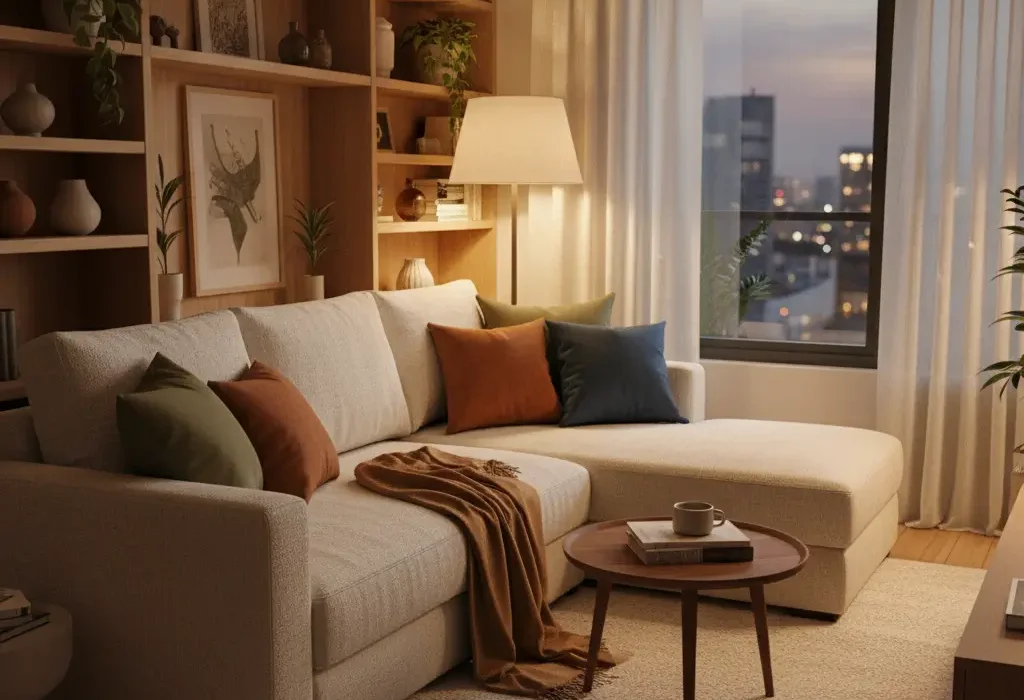
Listen, apartment living doesn’t mean you have to sacrifice style or comfort. I’ve spent years squeezing every ounce of potential out of cramped spaces, and honestly? Some of my best design work happened when I had the least square footage to work with. Your living room might be small, but it can still pack a serious punch.
Whether you’re dealing with a shoebox studio or just a modestly-sized one-bedroom, these 15 creative living room ideas will help you maximize every inch without making your space feel like a furniture warehouse. Let’s get into it.
1. Space-Saving Minimalist Layout
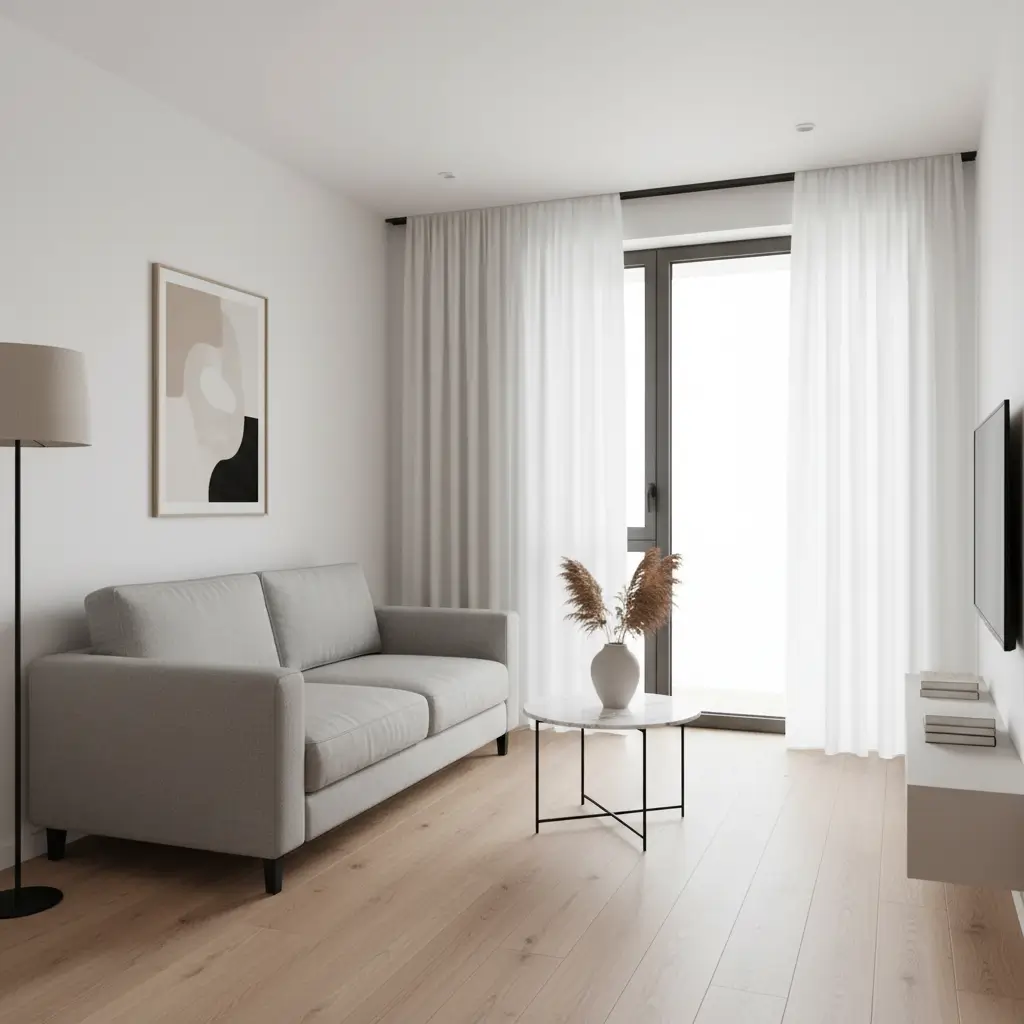
Here’s the thing about minimalism—it’s not about owning three items and calling it a day. You can absolutely embrace a minimalist layout while still having everything you need.
The secret? Intentional furniture placement. I arrange my pieces with purpose, leaving negative space that actually serves a function. Your couch doesn’t need to hug every wall, and that coffee table doesn’t require six decorative bowls on top of it.
Start by picking your essential furniture pieces:
- One quality sofa or sectional
- A streamlined coffee table (bonus points if it has hidden storage)
- One statement chair or ottoman
- A media console that’s sleek, not bulky
The minimalist approach works wonders in apartments because you’re choosing quality over quantity. I learned this the hard way after cramming my first apartment with cheap furniture from every big-box store in town. The place looked cluttered, felt smaller, and nothing actually matched. Now? I’d rather save up for one gorgeous piece than buy five mediocre ones.
Keep your color palette tight—two or three colors max. This creates visual continuity that makes your space feel larger and more cohesive. Trust me, your eyes (and your guests) will thank you.
2. Multi-Functional Furniture Setup
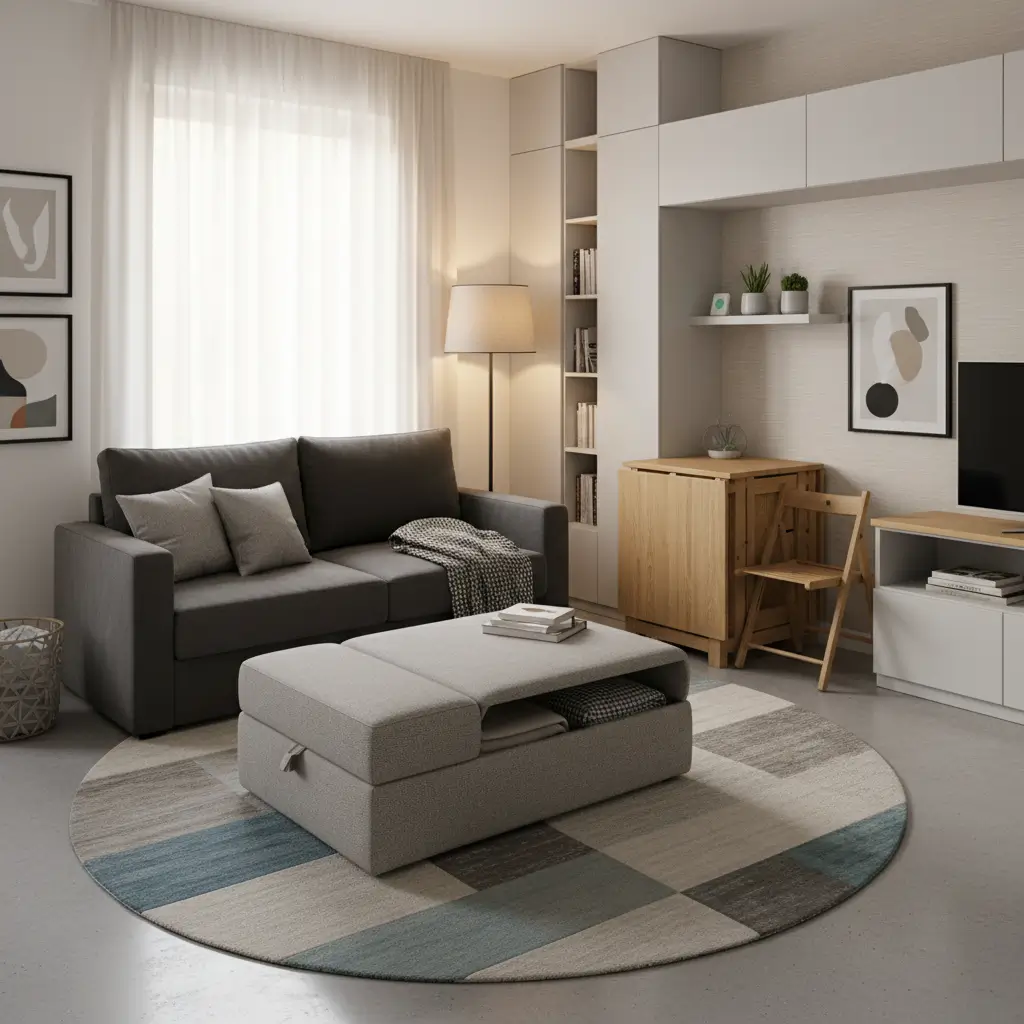
Ever play Tetris? Multi-functional furniture is basically the real-life version, except the stakes are your sanity and your security deposit.
Ottoman storage benches are my secret weapon. They provide seating, double as a coffee table when you add a tray on top, and hide all those random throws and magazines you don’t know where to put. I’ve got one that’s seen me through three apartments, and it’s still earning its keep.
Here are my favorite multi-functional pieces:
- Sofa beds or sleeper sofas: For when your friend “just needs a place to crash” (we all have that friend)
- Nesting tables: Pull them out when you need extra surface space, tuck them away when you don’t
- Storage ottomans: As mentioned, these things are gold
- Console tables with shelving: Behind the sofa, as a TV stand, or as a makeshift desk—they do it all
The best part? You’re not compromising on style. Modern multi-functional furniture looks sleek and intentional, not like you’re living in a college dorm. I’ve seen some absolutely gorgeous pieces that no one would guess fold out, flip up, or hide storage compartments.
3. Cozy Small Apartment Living Room
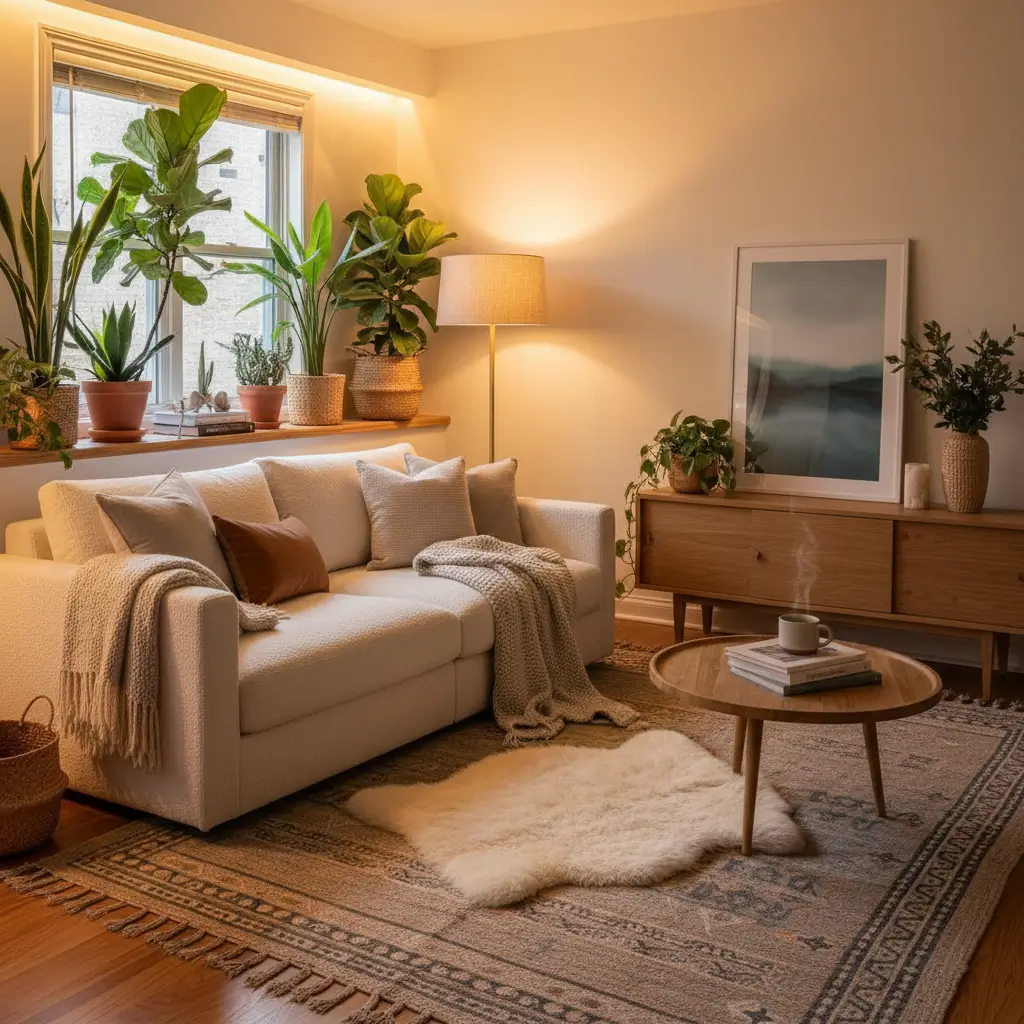
Small doesn’t mean you can’t get cozy. Actually, smaller spaces often feel MORE inviting because everything’s within arm’s reach. Kind of like a hug, but from your furniture. 🙂
Layering textures transforms a small living room from “cramped” to “cozy.” I’m talking soft throw blankets, plush area rugs, velvet pillows, and maybe a chunky knit pouf. When you engage multiple senses, your brain registers “comfortable” rather than “confined.”
Create cozy zones within your small space:
- A reading nook with a comfortable chair and good lighting
- A conversation area with seating facing each other (not all pointing at the TV)
- A window seat if you’re blessed with good natural light
Warm lighting is non-negotiable. Overhead lights are the enemy of coziness. I use a combination of floor lamps, table lamps, and string lights to create that warm glow that makes you want to curl up with a book and completely ignore your responsibilities.
Don’t forget about scent and sound. A small candle or diffuser adds another layer of comfort, and a good speaker for background music makes your living room feel like an actual living space, not just a place where your couch lives.
4. Light and Airy Neutral Design
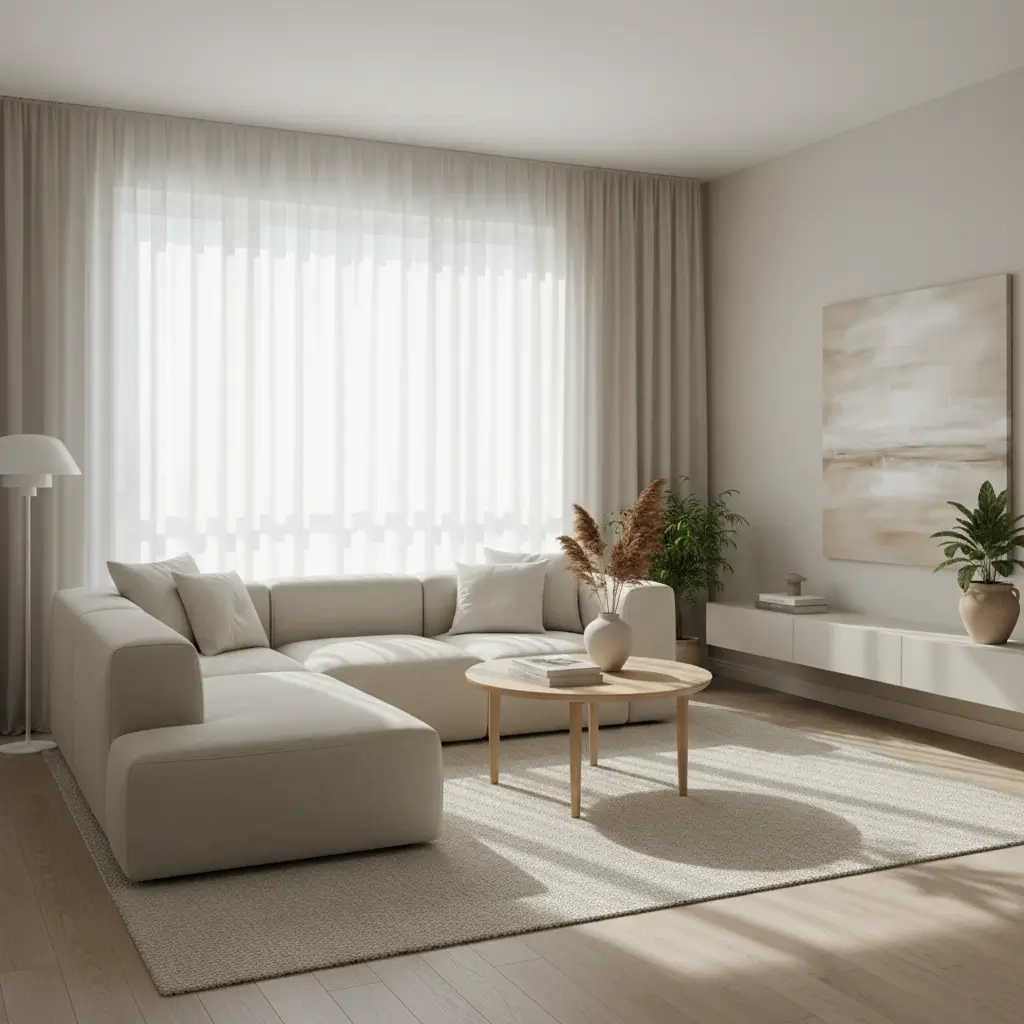
Neutrals get a bad rap for being boring, but they’re actually your best friend in apartment living. A light, airy neutral palette makes even the tiniest living room feel spacious and breathable.
I’m not saying you need to go full-on white-on-white-on-beige (unless that’s your thing—no judgment). But using soft neutrals as your base gives you incredible flexibility. Think warm whites, soft grays, beiges, taupes, and creams.
The magic happens in the layering:
- Different shades of the same color family create depth without visual clutter
- Varied textures keep neutrals from looking flat (linen curtains, wool rugs, cotton throws)
- Natural materials like wood, rattan, and stone add warmth and interest
I use pops of color sparingly—maybe through artwork, a single accent chair, or decorative pillows I can swap out seasonally. This approach keeps the space feeling fresh and open while giving me the flexibility to change things up without repainting or buying new furniture.
Natural light is your best friend here. Keep window treatments light and sheer when possible, or go with simple roller shades that disappear when raised. You want sunlight flooding in, not heavy drapes that cut your space in half.
5. Open-Concept Apartment Styling
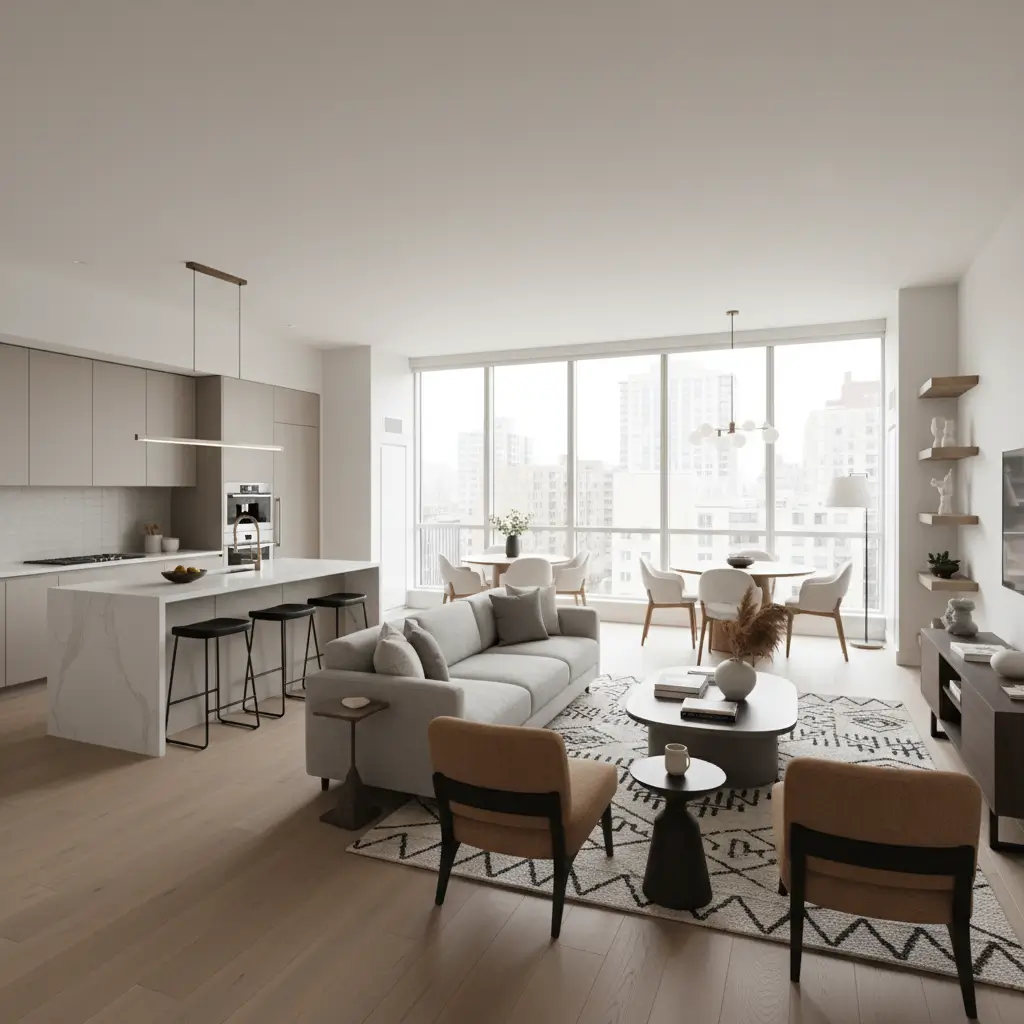
Got an open-concept apartment? Lucky you—but also, how do you define spaces without walls? It’s a design challenge that trips up a lot of people.
Area rugs are your invisible walls. I use them to define the living room space separately from the dining area or kitchen. Your furniture sits on the rug, creating a visual boundary that tells your brain “this is the living room zone.”
Here’s how I create definition in open concepts:
- Furniture placement as dividers: A bookshelf or console table behind the sofa creates a subtle barrier
- Consistent color flow: Use the same color palette throughout, but vary the intensity in different zones
- Lighting zones: Different lighting for different areas helps define purpose
- Directional furniture: Face your sofa away from the kitchen to psychologically separate the spaces
The key is creating distinction without blocking sightlines. You want to maintain that airy, open feeling while still giving each area its own identity. Think of it like different neighborhoods in the same city—they have their own character but still feel connected.
Also Read: 15 Elegant Interior Design Living Room Styles
6. Budget-Friendly Apartment Decor
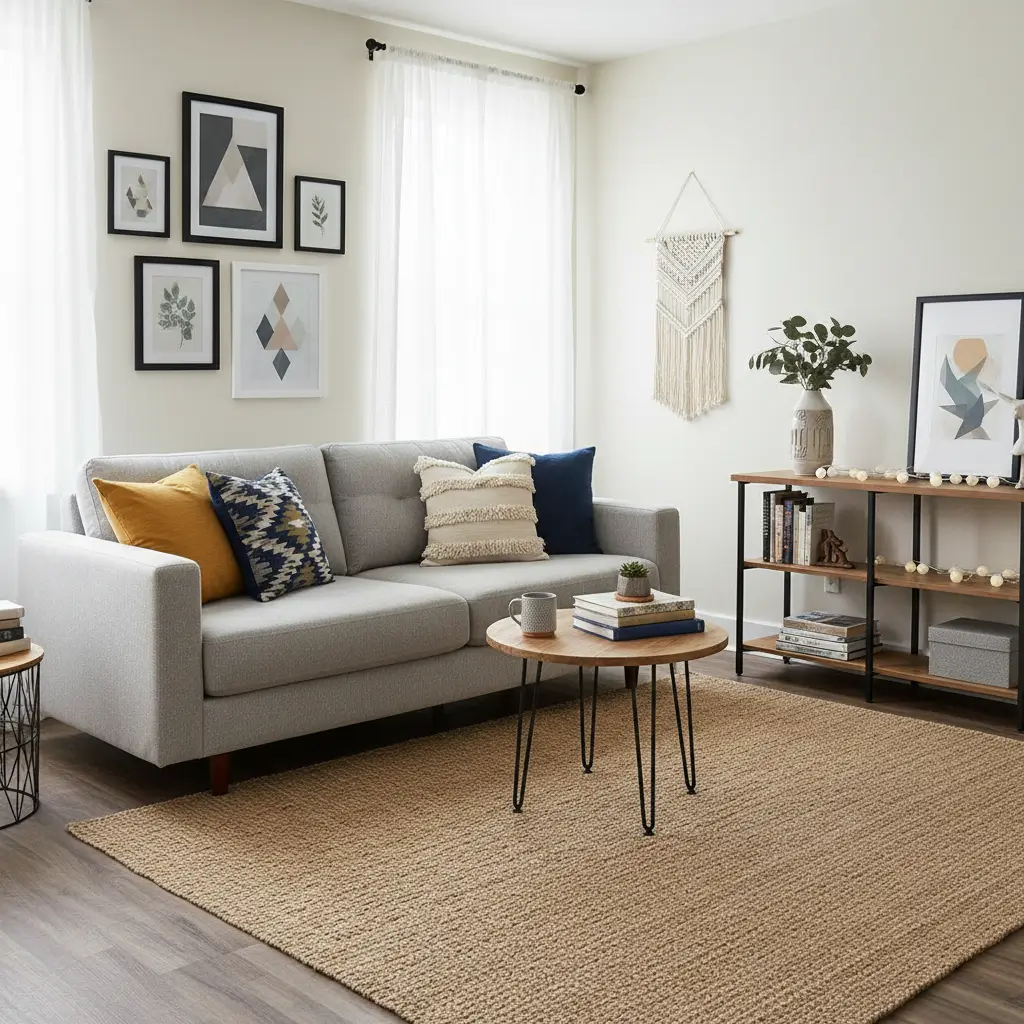
Here’s something nobody tells you: expensive doesn’t always mean better. I’ve furnished multiple living rooms on a shoestring budget, and honestly? Some of my favorite pieces cost less than a nice dinner out.
Thrift stores and Facebook Marketplace are goldmines. I scored a mid-century modern coffee table for $30 that would’ve cost $400 new. It needed some furniture oil and elbow grease, but now it’s the centerpiece of my living room.
Budget-friendly strategies that actually work:
- DIY artwork: Frame fabric remnants, create your own abstract pieces, or print free art from museums’ online collections
- Paint: A $30 can of paint can completely transform thrift store furniture
- Swaps over purchases: Trade with friends, join buy-nothing groups, refresh what you have
- One splurge piece: Save up for one quality item (like a sofa) and budget the rest around it
Plants are ridiculously affordable and make any space look more expensive. A $5 pothos in a $3 ceramic pot instantly elevates your decor. Plus, you get the added bonus of better air quality and something to talk to when you’re home alone (just me? okay then).
FYI, waiting for sales and using browser extensions for price tracking can save you serious cash on new items. I never buy anything full price anymore—patience pays off.
7. Rental-Friendly Living Room Ideas
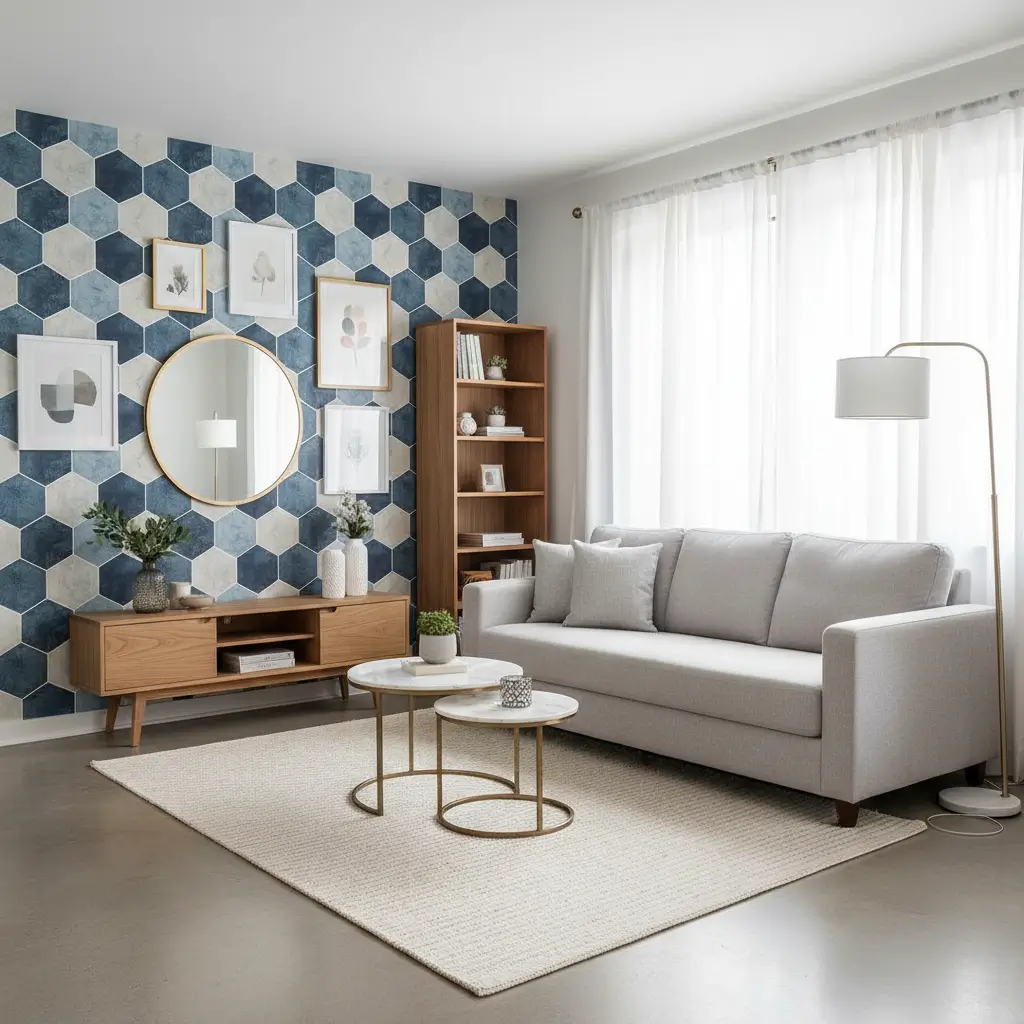
Ah yes, the eternal struggle of renters everywhere: making a space feel like home without losing your security deposit. I’ve been there, and I’ve got the battle scars (and returned deposits) to prove it.
Command strips and removable hooks are your new best friends. I hang everything from curtains to artwork using damage-free hardware. Modern rental-friendly products have come so far—you’d be amazed at what you can do without putting holes in walls.
Rental-friendly upgrades that make a difference:
- Peel-and-stick wallpaper: Accent walls without the commitment or the landlord’s wrath
- Removable floor tiles or vinyl planks: Cover ugly carpet or outdated flooring
- Freestanding shelving: No wall mounting required
- Tension rods: For curtains, room dividers, or even hanging plants
I always focus on what I can bring with me. Furniture, rugs, lighting, and decor all move from apartment to apartment. This approach saves money long-term and means each new place already feels familiar.
For things you can’t change (ugly countertops, dated fixtures, weird paint colors), work with them or distract from them. A large piece of artwork draws eyes away from that oddly textured wall. A beautiful rug covers questionable flooring. Strategic furniture placement hides wall damage you didn’t cause but definitely don’t want to explain.
8. Modern Compact Sofa Arrangement
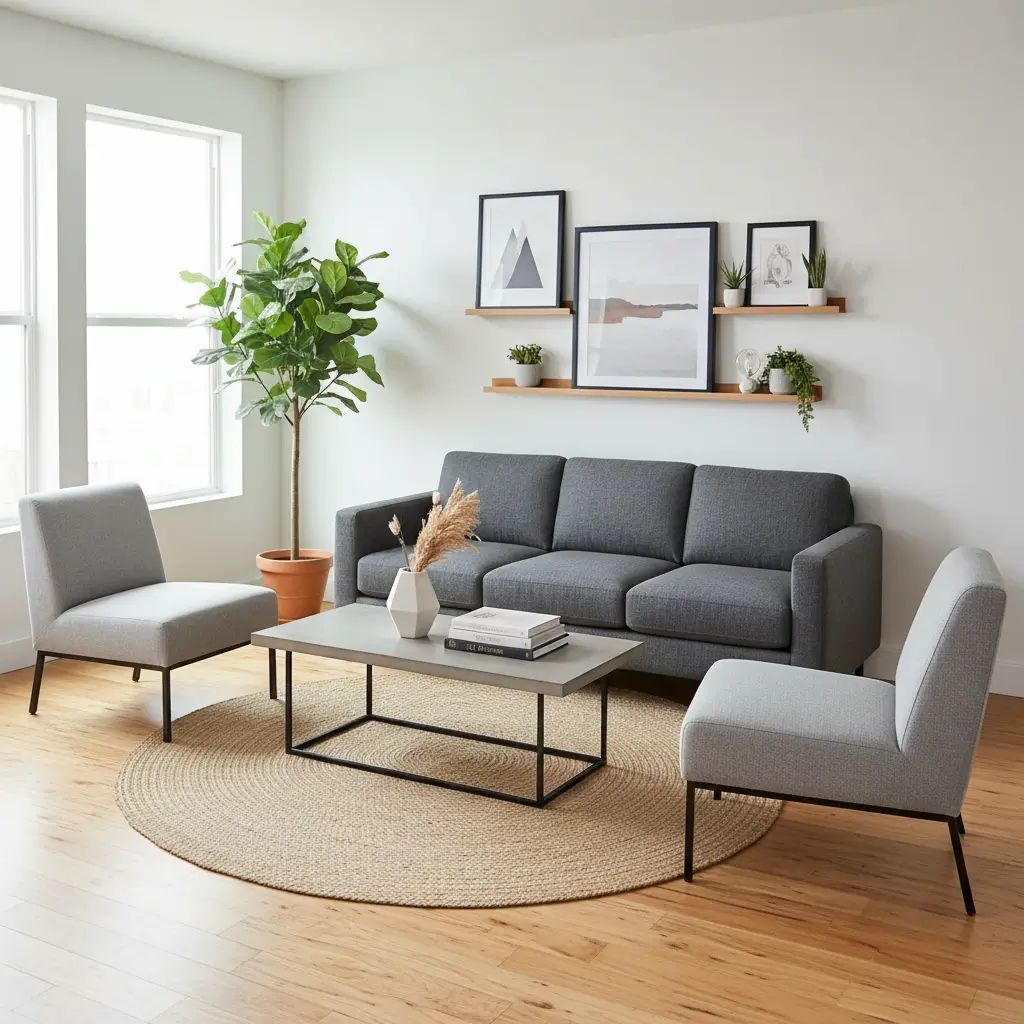
The sofa arrangement can make or break a small living room. I’ve seen people cram oversized sectionals into tiny spaces and wonder why they can barely walk through the room. :/
Scale matters desperately. A compact sofa doesn’t mean uncomfortable—it means appropriately sized. I look for sofas with clean lines, raised legs (which create visual space underneath), and streamlined arms that don’t add unnecessary bulk.
Smart sofa arrangement tips:
- Float the sofa: Pull it away from the wall by 6-12 inches to create depth and walkway space
- Angle placement: Sometimes positioning a sofa at an angle creates better flow
- Apartment-scale sectionals: Yes, they exist! Look for two-piece or modular options
- Armless or low-arm designs: These take up less visual space
I learned the hard way that you need to measure doorways and stairwells before buying furniture. Nothing’s worse than discovering your new sofa won’t actually fit through your apartment door. Measure twice, buy once—words to live by.
The sofa should anchor your living room without dominating it. Leave enough space to walk around comfortably (about 18-24 inches), and make sure it relates well to your other furniture pieces in scale and proportion.
9. Mirror Trick for Bigger Space
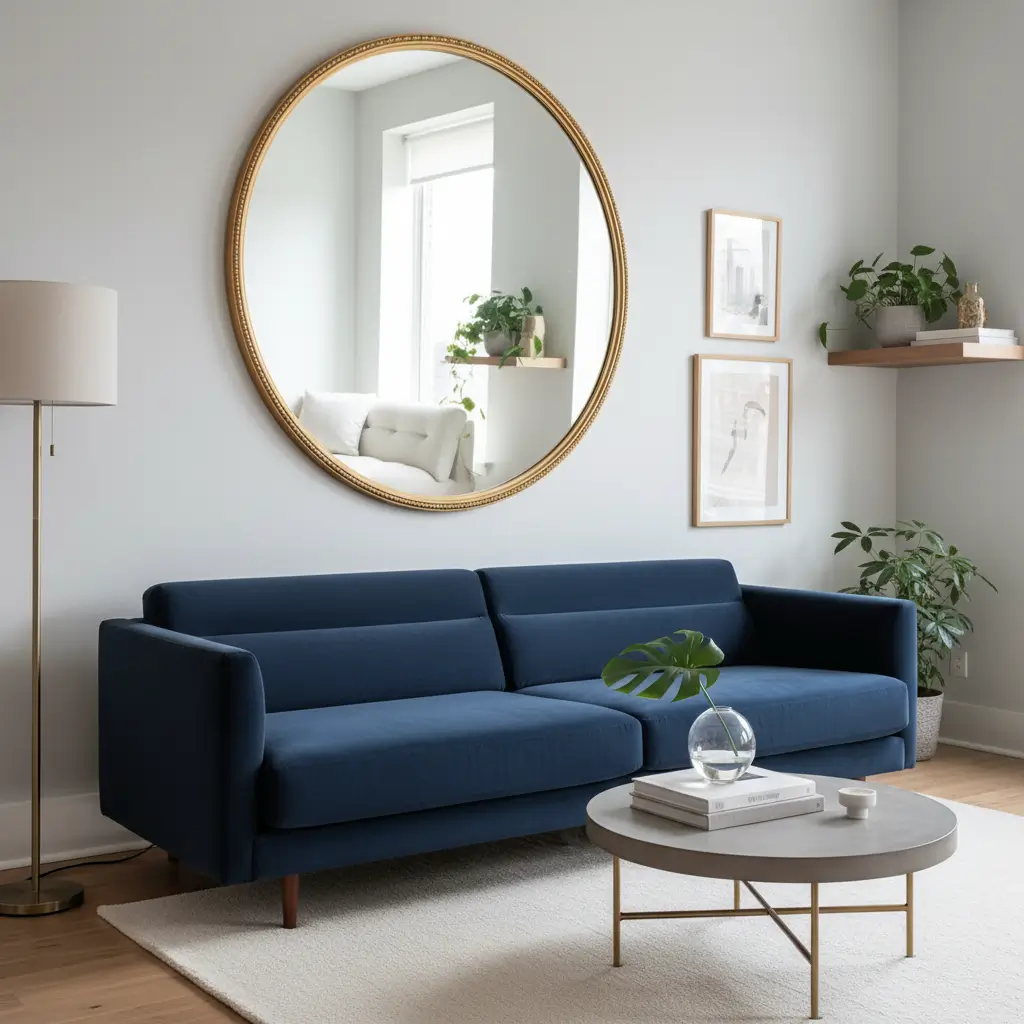
Want to know the cheapest way to double your living room’s size? Mirrors. Seriously, it’s like magic, except it’s just physics and our brains being easily fooled.
Strategic mirror placement reflects light and creates the illusion of depth. I position mirrors opposite windows to bounce natural light around the room, instantly making everything feel brighter and more spacious. The effect is honestly kind of ridiculous for how simple it is.
Where to place mirrors for maximum impact:
- Opposite or adjacent to windows: Reflects natural light throughout the space
- Behind lighting sources: Amplifies lamp or candle light
- At the end of narrow spaces: Creates the illusion of continuation
- Above furniture: Draws the eye upward, emphasizing vertical space
Go big or go home with mirrors. A large statement mirror makes more impact than a gallery wall of small ones (though that can work too). I found a floor-length mirror at a discount store for $40, leaned it against the wall, and boom—instant spatial expansion.
Avoid placing mirrors where they reflect clutter or unattractive views. You don’t want to double your visual chaos or create a perfect reflection of your neighbor’s brick wall. Be strategic about what you’re multiplying.
10. Vertical Storage Wall Design
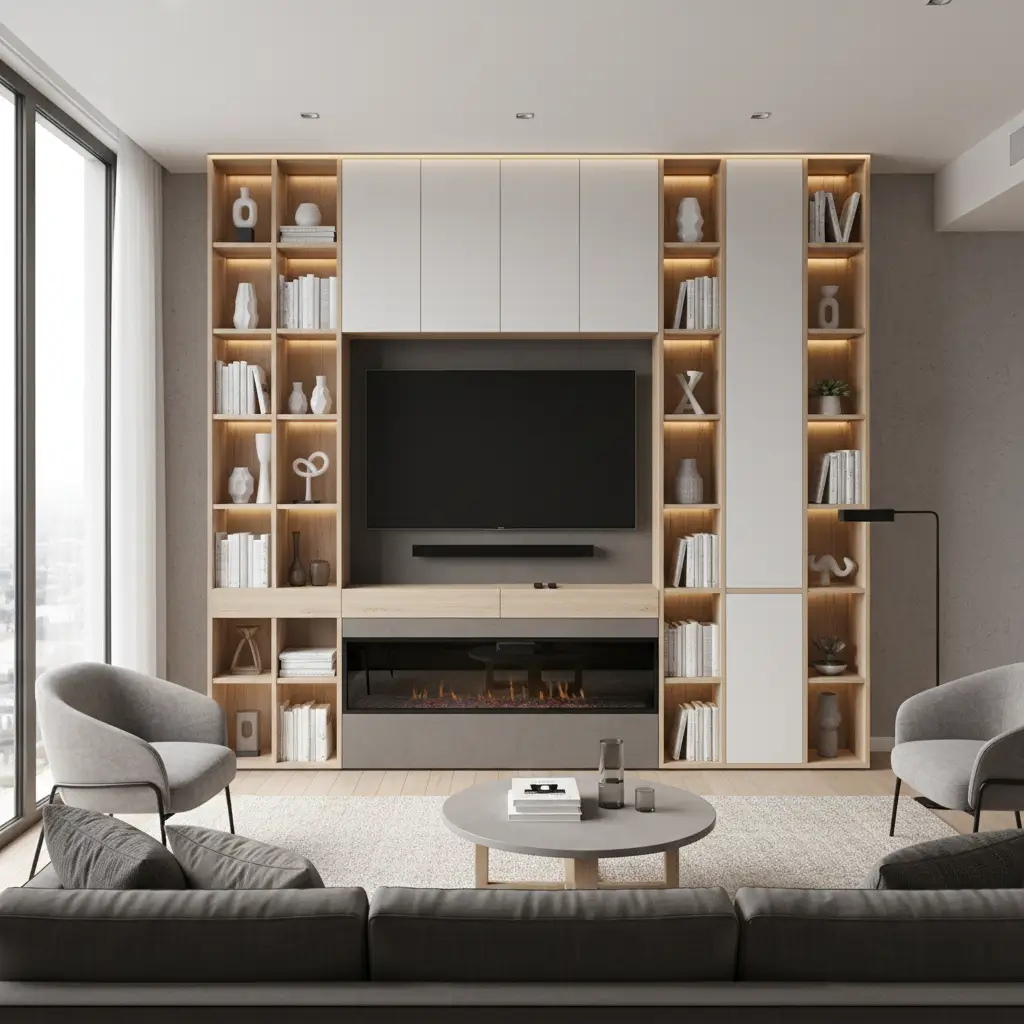
When you’re short on floor space, go up. Vertical storage is the secret sauce that keeps apartment living rooms from descending into chaos.
Floor-to-ceiling shelving maximizes every inch of wall space while keeping your floor clear. I installed a modular shelving system that reaches the ceiling, and the amount of storage it provides is honestly a little absurd. Books, plants, decorative objects, baskets full of stuff I don’t want visible—it all has a home.
Vertical storage solutions that work:
- Tall bookcases: Choose narrow and tall over short and wide
- Floating shelves: Go high—don’t just cluster them at eye level
- Wall-mounted cabinets: Storage that doesn’t touch the floor
- Pegboard systems: Customizable and visually interesting
- Ladder shelves: Lean against the wall, provide multiple tiers
The beauty of vertical storage is that it draws the eye upward, making your ceiling feel higher and your room feel larger. I paint my tall shelving the same color as the walls to make them feel built-in and less bulky.
Pro tip: Use the top shelves for items you don’t need daily. The easy-access middle zones hold frequently used items, while the top real estate stores seasonal decor, extra throw blankets, or things you reference occasionally but don’t need to grab constantly.
Also Read: 15 Modern Living Room Ideas for Small Apartments Living
11. Scandinavian Apartment Living Room
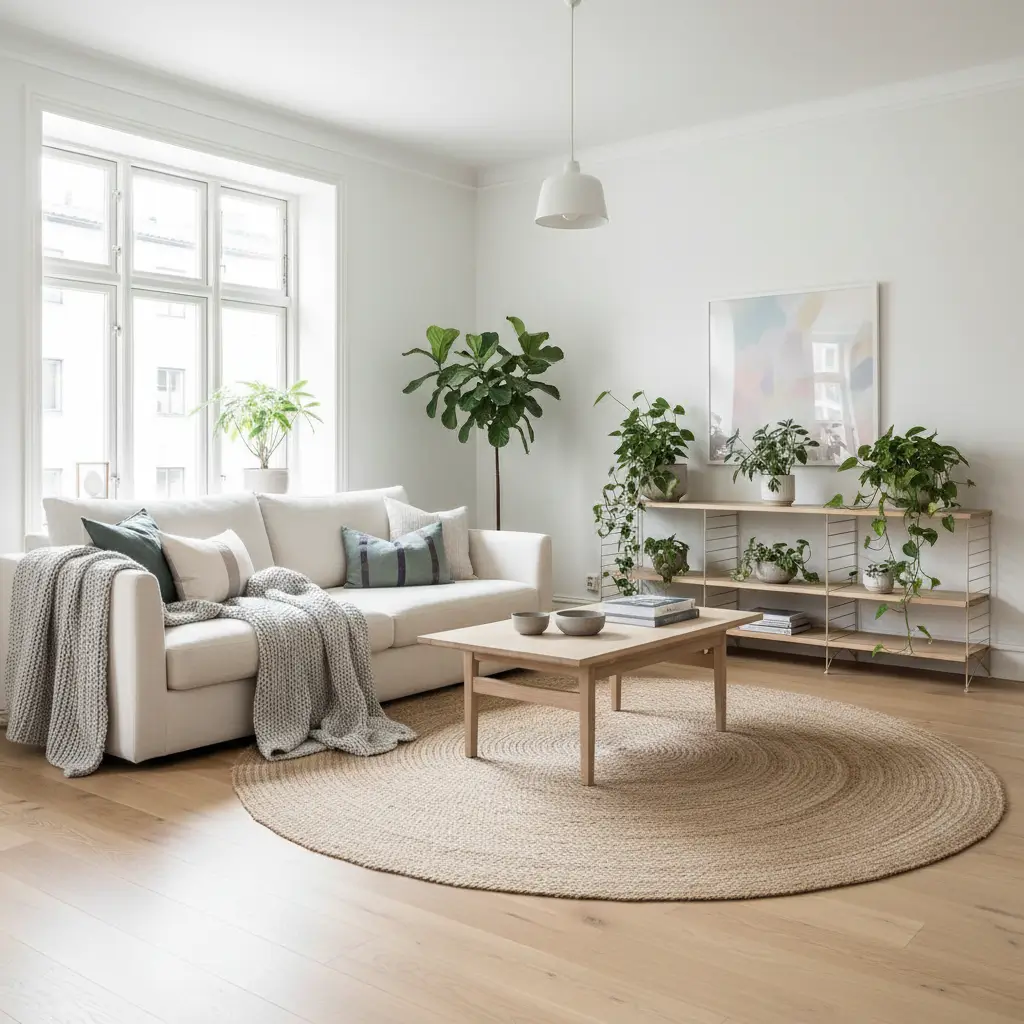
Scandinavian design and apartment living are basically soulmates. The whole philosophy centers on simplicity, functionality, and making the most of limited space—sound familiar?
The Scandi color palette is brilliant for apartments: whites, grays, and blacks accented with warm woods and occasional muted colors. This creates a clean, cohesive look that makes even small spaces feel intentional and designed.
Key elements of Scandinavian living rooms:
- Light wood furniture: Birch, pine, or ash—nothing too dark or heavy
- Minimalist decor: Every item serves a purpose (functional or bringing joy)
- Hygge factor: Cozy textiles, candles, warm lighting
- Natural materials: Wood, wool, linen, leather, cotton
- Functional storage: Everything has a place, nothing’s just decorative
I love how Scandinavian design embraces imperfection and natural materials. A wooden coffee table with visible grain and knots feels more authentic than something overly polished and perfect. There’s a warmth to Scandi style that prevents it from feeling cold or sterile.
Plants are essential here. Greenery adds life and color without disrupting the neutral palette. I’ve got pothos, snake plants, and a fiddle leaf fig (that’s somehow still alive) scattered throughout my living room, and they tie everything together beautifully.
12. Cozy Corner Seating Layout
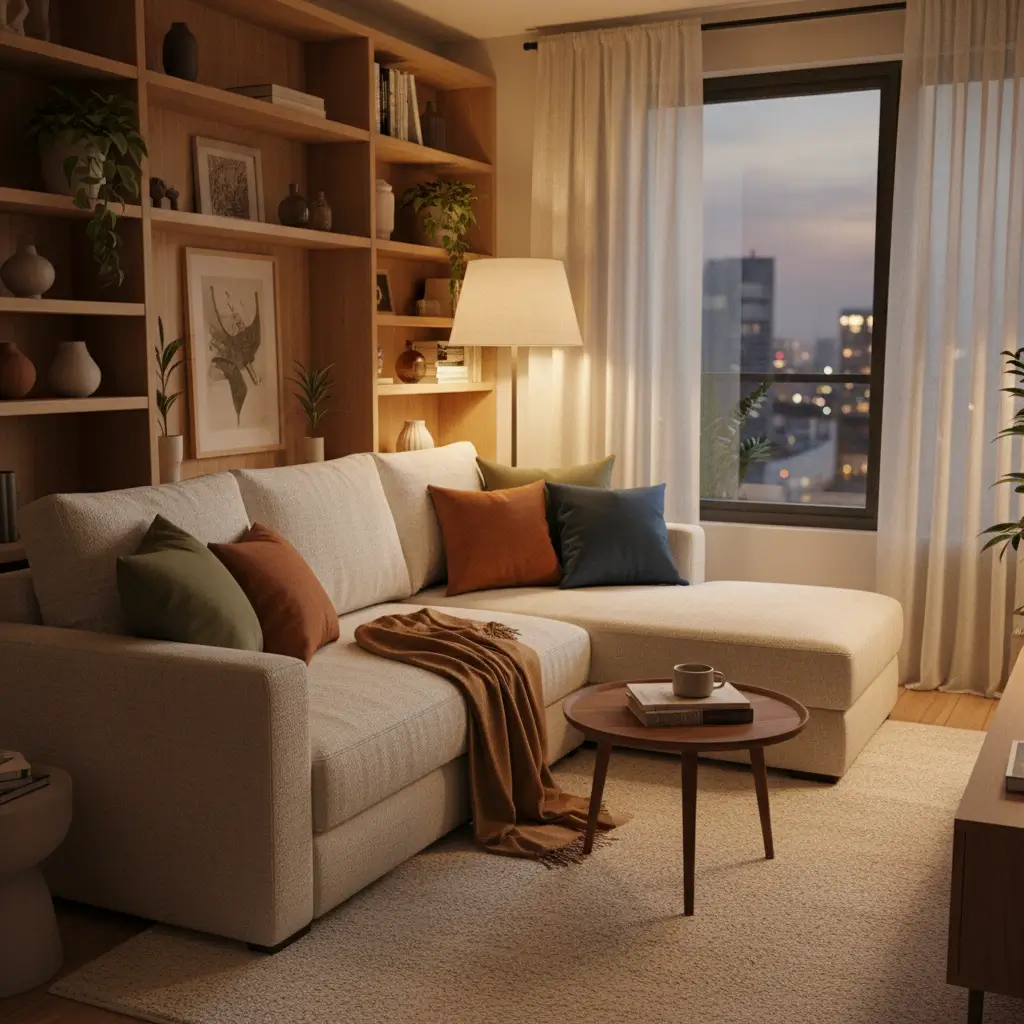
Every apartment living room has that weird corner nobody knows what to do with. You know the one—too small for a full furniture grouping, too visible to ignore completely.
Corner seating transforms dead space into your favorite spot. I created a reading nook in my corner with a compact armchair, a small side table, and a floor lamp. Now it’s where I spend most of my time, and guests always gravitate toward it.
Corner seating ideas that maximize awkward spaces:
- L-shaped bench or banquette: Built-in or freestanding, adds tons of seating
- Corner chair with ottoman: Perfect reading or conversation spot
- Floor cushions and poufs: Casual, flexible seating that’s easy to move
- Window seat: If your corner has a window, capitalize on it
I layer my corner seating with pillows and throws to make it feel intentional and inviting. The key is making the corner feel like a destination, not an afterthought. Add a small shelf or table nearby for books and drinks, and you’ve created a functional zone that adds character to your living room.
Corners also work great for vertical elements like tall plants or floor-to-ceiling curtains that draw the eye upward. You’re creating interest in a space that might otherwise fade into the background.
13. Small Apartment Gallery Wall
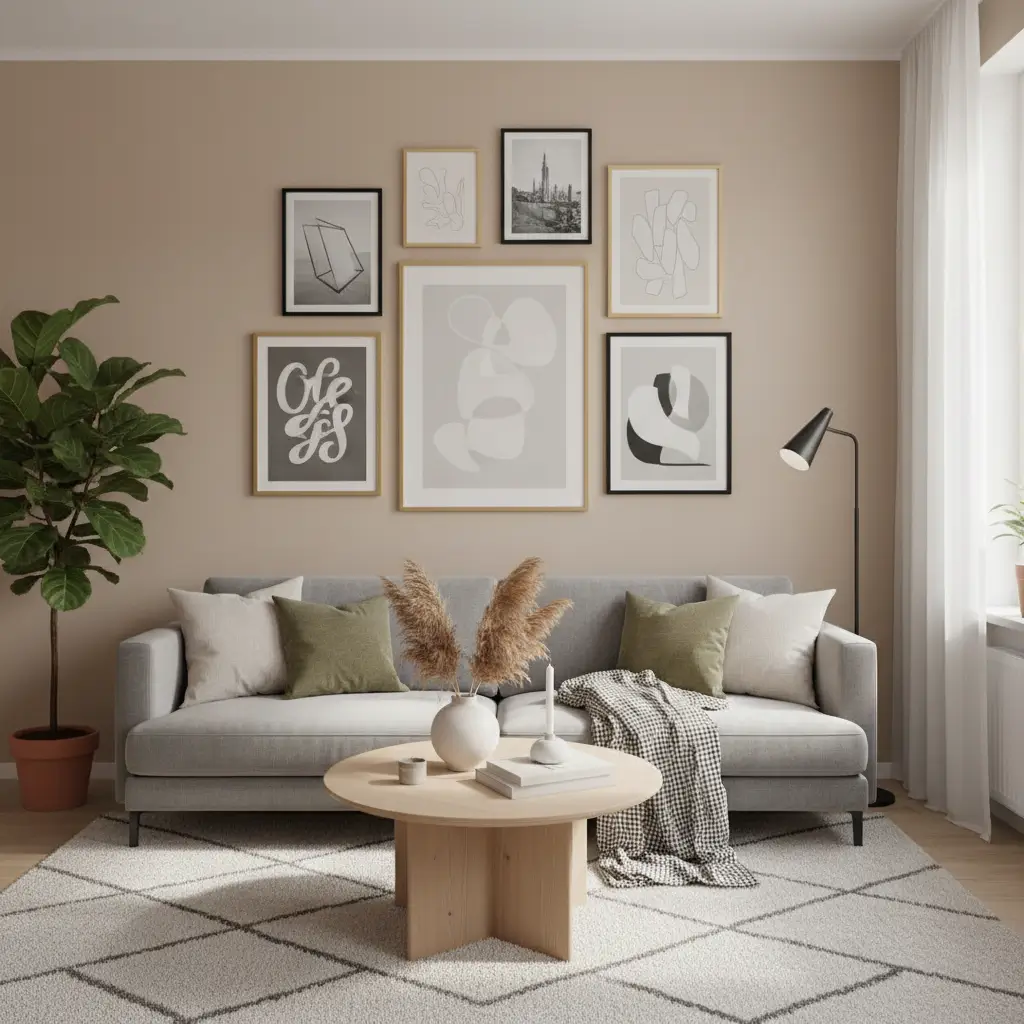
Gallery walls scare people, but they shouldn’t. A well-executed gallery wall adds personality, visual interest, and a focal point to your living room without taking up any floor space.
Start with a plan. I lay out my gallery wall on the floor first, arranging and rearranging until it feels balanced. Take a photo of your final layout so you can reference it while hanging. Trust me on this—trying to remember the arrangement while standing on a chair holding a hammer never goes well.
Gallery wall best practices:
- Mix frame sizes and orientations: Variety creates visual interest
- Maintain consistent spacing: Usually 2-3 inches between frames
- Choose a unifying element: Same frame color, mat color, or theme
- Include different types of art: Prints, photos, objects, mirrors, even small shelves
IMO, gallery walls work best on larger wall sections—above a sofa, along a hallway wall, or on a blank wall that feels too empty. Scale matters here too. Tiny frames on a massive wall look lost; large pieces on a small wall feel overwhelming.
I refresh my gallery wall seasonally, swapping out a few pieces to keep things feeling current without redoing the entire arrangement. This approach lets me enjoy new art without the commitment of storing a million frames.
14. Smart TV Wall Design
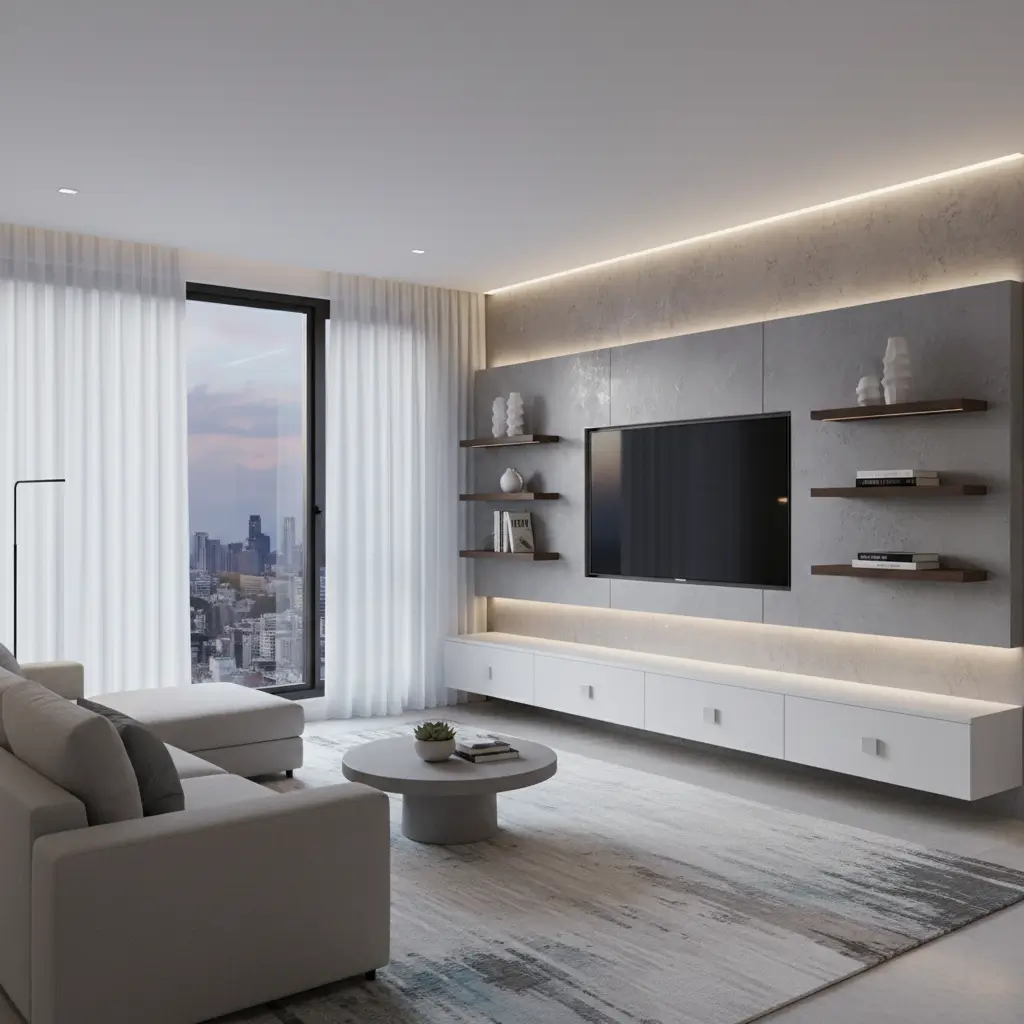
The TV wall is often the focal point of apartment living rooms, whether we like it or not. You might as well make it look intentional.
Mount that TV on the wall if your lease allows it (or use a freestanding mount if not). Getting the TV off a bulky console immediately opens up floor space and creates cleaner lines. I was skeptical about wall-mounting at first, but the difference is dramatic.
TV wall design strategies:
- Floating shelves on either side: Balance the TV with decorative elements
- Built-in or freestanding cabinets: Hide electronics and cords
- Artwork integration: Hang smaller art pieces around the TV to create a gallery-style wall
- Accent wall: Paint or wallpaper behind the TV to define the zone
- Minimal console below: Keep it simple and streamlined
Cable management is crucial. Nothing ruins a sleek TV wall design faster than a tangle of visible cords. I use cable raceways, cord covers, or mount the TV near an outlet to minimize visible wiring. Hidden cables = elevated design.
Consider the viewing angle and distance when positioning your TV. You shouldn’t crane your neck or squint to watch. The center of the screen should be roughly at eye level when you’re seated. I know this seems obvious, but I’ve seen so many TVs mounted way too high.
15. Clutter-Free Organized Living Room
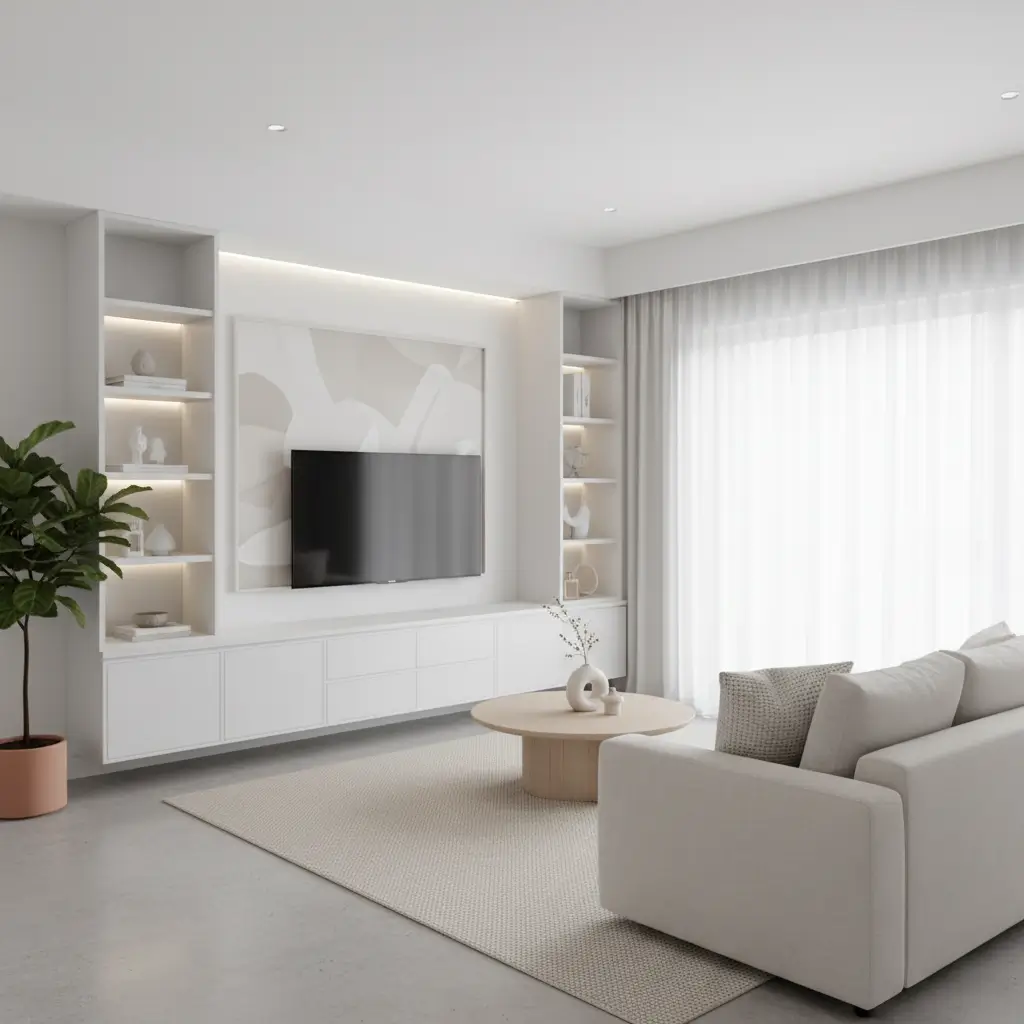
Here’s the truth: the most beautifully designed living room still looks terrible if it’s cluttered. Organization isn’t just about tidiness—it’s a design element that makes or breaks your space.
Everything needs a home. I use a combination of closed storage (baskets, cabinets, ottomans) for items I don’t want visible and open storage (shelves, trays) for things I use frequently or that look decorative.
Clutter-control systems that actually work:
- Catch-all baskets: Corral remotes, magazines, and random items
- Closed media storage: Hide gaming consoles, DVDs, and electronics
- Drawer organizers: Keep small items from becoming junk drawer chaos
- Regular purges: Monthly decluttering sessions prevent accumulation
- One in, one out rule: New item comes in, old item goes out
I’ve learned that less truly is more in apartment living rooms. Every surface doesn’t need decor. Every shelf doesn’t need to be full. Negative space is a design element—it gives your eyes places to rest and makes the items you do display stand out more.
Create daily habits that prevent clutter buildup. I spend five minutes each evening resetting my living room—putting away items, fluffing pillows, and tidying surfaces. It’s so much easier than facing a disaster zone on the weekend.
Final Thoughts
Look, apartment living comes with challenges—there’s no denying that. But here’s what I’ve learned through years of making small spaces work: constraints breed creativity. Some of my proudest design moments happened because I had to think outside the box (literally—my box was pretty small).
You don’t need a massive budget, a huge space, or a degree in interior design to create a living room you actually love. You just need to be intentional about your choices, creative with your solutions, and willing to experiment a little.
Start with one or two ideas from this list that resonate with you. Maybe you’ll try the mirror trick this weekend, or finally mount that TV you’ve been thinking about. Small changes add up to major transformations.
Your apartment living room should reflect who you are and how you actually live. Not some Pinterest-perfect fantasy that requires you to hide all signs of human existence. Create a space that’s functional, beautiful, and authentically yours.