

Let’s be brutally honest for a second. Is your dining room more of a… forgotten room? You know, the one that collects mail, stray Amazon boxes, and the occasional half-finished project? Maybe you eat there on holidays, but does it inspire you? Does it make you want to throw a fabulous, multi-course dinner party just because?
If the answer is a hesitant “no,” then you and I are on the same page. I’ve been there. Staring at a perfectly functional but soul-crushingly boring table and chairs, wondering why it doesn’t feel special. A luxury dining room isn’t just about spending a fortune; it’s about creating an experience. It’s the backdrop for memories, laughter, and incredible food.
So, if you’re ready to transform that neglected space into the heart of your home—a place that screams high-end style and sophistication—you’ve come to the right place. We’re going to walk through 15 incredible luxury dining room ideas that are less about rigid rules and more about pure, unadulterated inspiration. Let’s get this party started.
1. Marble Glam Luxury Dining
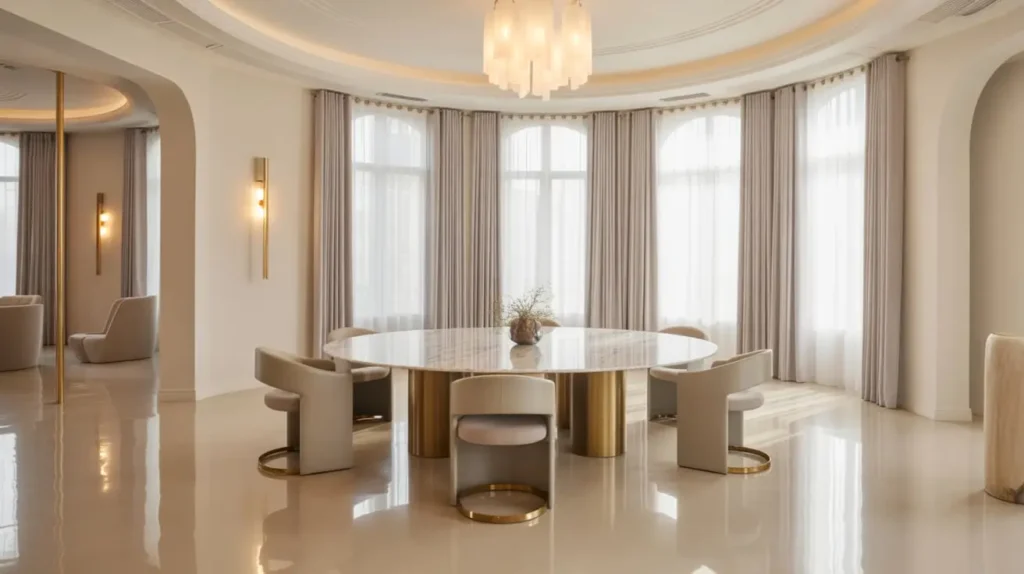
Okay, let’s kick things off with a heavyweight contender: marble. Nothing says “I have arrived” quite like a massive slab of beautifully veined stone. It’s timeless, it’s dramatic, and it has a sense of permanence that few other materials can match.
When I think of marble glam, I’m not just talking about a tabletop. I’m talking about an entire mood. The cool, smooth surface is the perfect anchor for a room, providing a solid, luxurious foundation. Ever walked into a room with a real marble table? The air just feels different, doesn’t it? It has a certain gravity.
How to Get the Look:
- The Table is the Hero: Your first and most important investment here is the dining table. Look for a substantial piece with a thick marble top. Whether you prefer the dramatic, dark veining of Calacatta Gold or the softer, more subtle look of Carrara, make sure it’s the star of the show. A real stone top is non-negotiable for this look.
- Soften the Edges: Marble can feel a bit cold and hard on its own (literally). You need to balance it with soft, contrasting textures. Think upholstered chairs in a rich fabric like velvet or boucle, a plush area rug underfoot, and maybe even some soft, flowing curtains.
- Warm Metal Accents: Pair the cool tones of the marble with warm metals. Brass or brushed gold light fixtures, chair legs, or even cutlery will add a layer of warmth and prevent the space from feeling like a mausoleum. A little warmth goes a long way.
2. Gold Accented Elegance
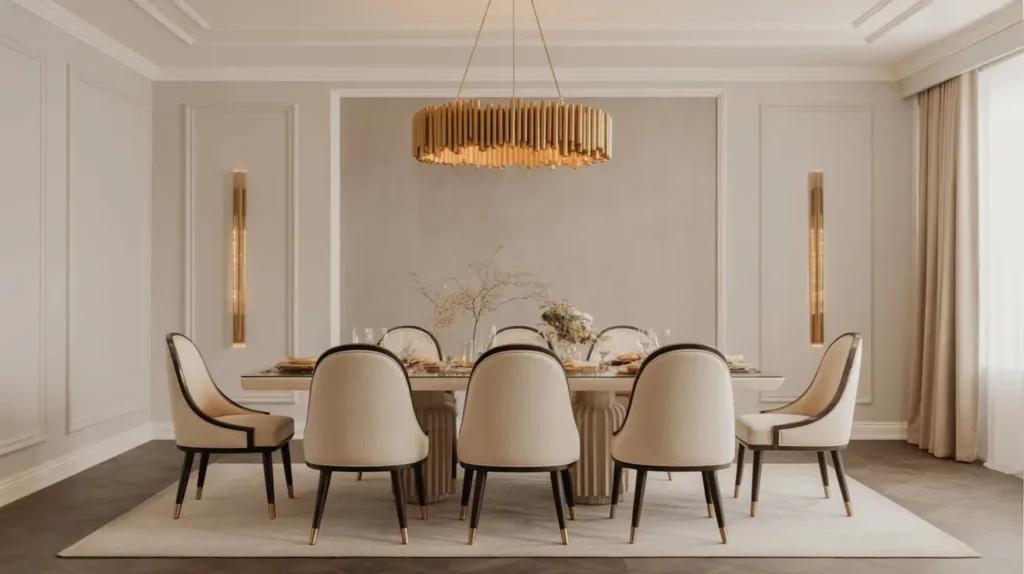
Speaking of gold, let’s talk about using it as a primary design element. Now, I know what you might be thinking. Gold can be… a lot. It can quickly veer into gaudy, over-the-top territory if you’re not careful. But when done right? It’s the definition of elegance.
Think of gold accents as the jewelry for your dining room. You wouldn’t wear every piece of jewelry you own at once, right? (At least, I hope not.) The same principle applies here. The key to gold-accented elegance is strategic placement and restraint.
I once helped a friend design their dining room, and they were terrified of gold. We started small, with just the legs of the dining chairs and the frame of a mirror. The transformation was immediate. It just elevated everything, making the space feel more intentional and cohesive.
Where to Add a Touch of Gold:
- Lighting Fixtures: A gold or brass chandelier, pendant, or sconce is a classic choice. It draws the eye upward and bathes the room in a warm, flattering light.
- Furniture Hardware & Legs: The legs of a dining table or chairs, the handles on a sideboard, or the frame of a bar cart are all perfect spots for a metallic glint.
- Tableware & Decor: This is where you can have some fun without a huge commitment. Gold-rimmed plates, gold cutlery (flatware, if you’re fancy), and gold candlesticks can add a layer of luxury to your tablescape for special occasions.
3. Crystal Chandelier Sophistication
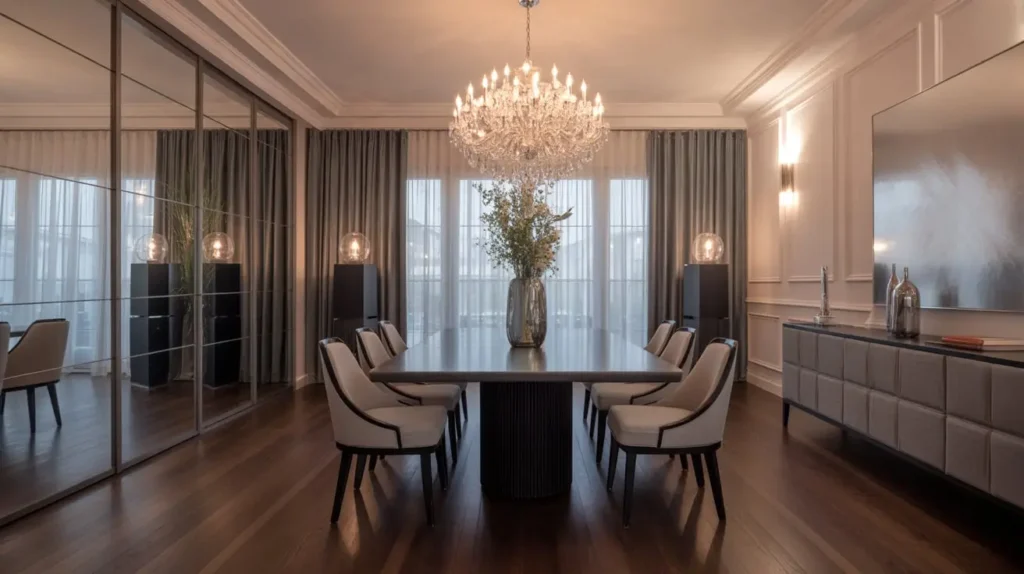
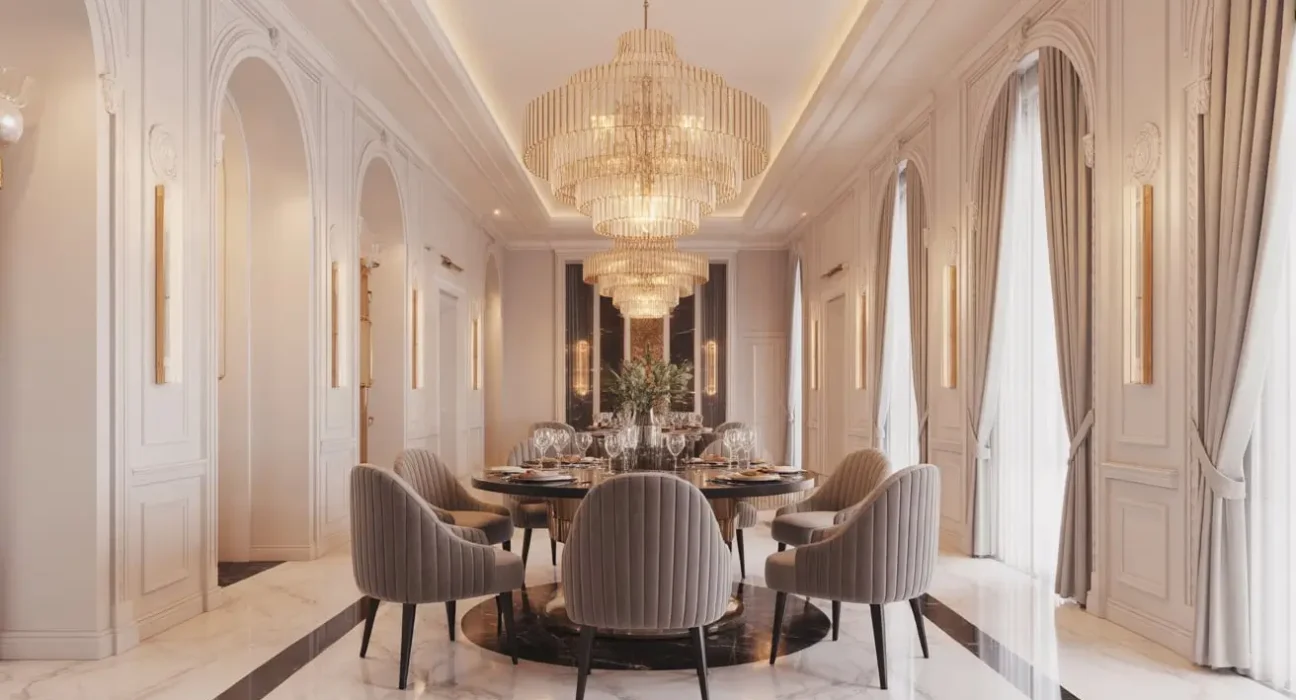
Ah, the crystal chandelier. Is there any single item more synonymous with old-school luxury? For a while, they felt a bit dated, like something you’d only find in your grandmother’s formal dining room (the one you were never allowed to enter). But guess what? They are back in a big, sparkly way.
A crystal chandelier isn’t just a light source; it’s a sculpture that plays with light. During the day, it catches the sunlight and sends rainbows dancing around the room. At night, it creates a dazzling, romantic ambiance that you just can’t replicate with a standard pendant. It’s pure drama.
Making the Chandelier Work for You:
- Go Big or Go Home: In a luxury dining room, a tiny, apologetic chandelier is a major design crime. You need a piece that is appropriately scaled to your table and room size. A good rule of thumb is that the chandelier’s diameter should be about half to two-thirds the width of your dining table.
- Modern vs. Traditional: Don’t feel locked into a super ornate, traditional design. There are countless modern interpretations of the crystal chandelier, from cascading “waterfall” styles to spiky, starburst designs. You can absolutely pair a crystal chandelier with a clean, modern dining set. The contrast is what makes it interesting.
- Consider the Drop: Make sure the bottom of the chandelier hangs about 30-36 inches above your tabletop. Any higher and it feels disconnected; any lower and you’ll be knocking your head on it and blocking your view of the person across from you. Awkward.
4. Black & Brass Modern Luxe
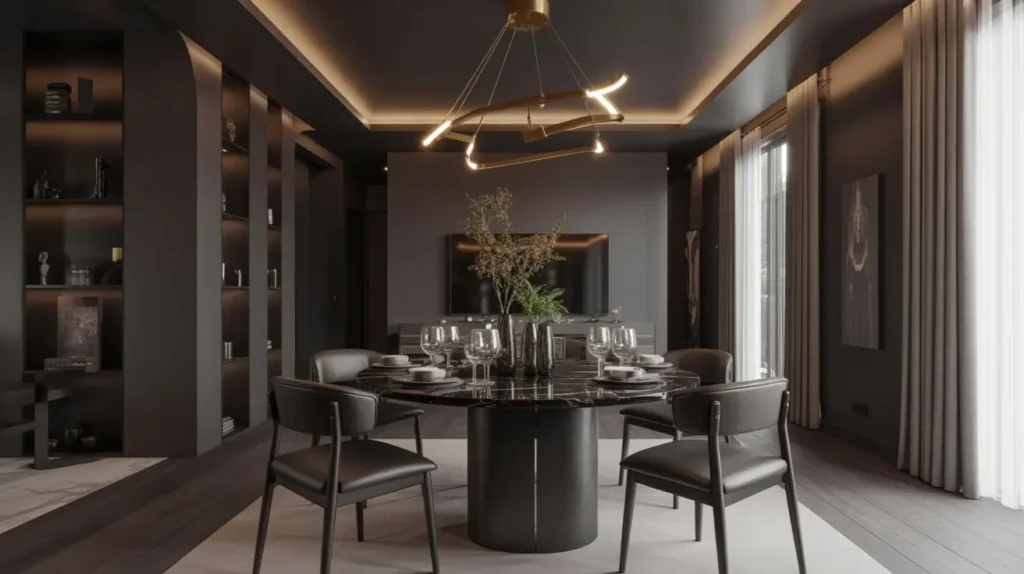
If “light and airy” isn’t your vibe, allow me to introduce you to one of my personal favorites: the black and brass combination. This look is moody, it’s sophisticated, and it has an edgy, masculine energy that feels incredibly modern and chic.
It’s the design equivalent of a perfectly tailored black suit with a pair of killer shoes. The black provides a deep, rich, and dramatic backdrop, while the brass cuts through the darkness with a warm, metallic glow. The contrast is just chef’s kiss.
This isn’t about creating a dark cave, though. The success of this style hinges on a careful balance of light and shadow.
Nailing the Black & Brass Vibe:
- Embrace Matte Black: For a truly modern feel, lean into matte black finishes. Think matte black walls (yes, really!), a black-stained wood table, or chairs with black metal frames. The lack of shine makes the color feel deep and velvety.
- Let Brass Shine: Use brass for your “highlight” pieces. A sculptural brass light fixture over the table is a must. Brass-legged chairs, a bar cart, or even just brass-framed art will pop beautifully against the black background.
- Layer Your Lighting: With a dark color palette, lighting is everything. You’ll need more than just a central overhead light. Incorporate wall sconces, a lamp on a sideboard, and plenty of candlelight to create pockets of warm, inviting light throughout the space. This is crucial to avoid a gloomy feel.
Read Also 15 Stunning Dining Room Light Fixtures Ideas and Cozy Vibes
5. Velvet Seating Opulence
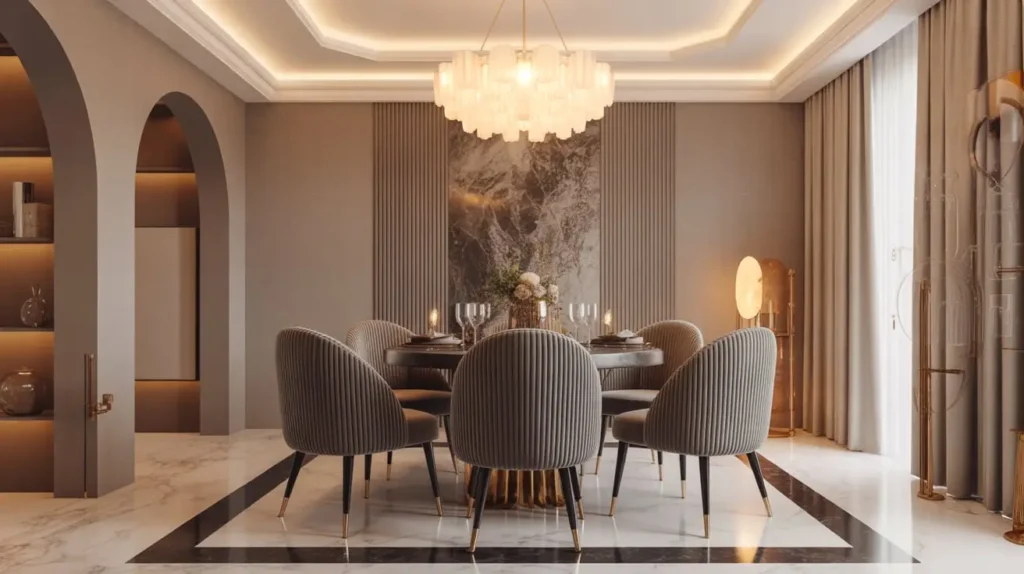
Let’s talk texture. A truly luxurious space engages all the senses, and touch is a big one. Enter velvet. Is there any fabric that feels more decadent and inviting? I think not.
Incorporating velvet dining chairs is one of the easiest ways to instantly inject a dose of opulence and comfort into your dining room. It’s a visual treat because of the way it catches the light, creating deep, saturated color. And sitting on it? Pure heaven.
I have jewel-toned blue velvet chairs in my own dining room, and they are the number one thing guests comment on. They’re comfortable, they feel special, and they make a huge statement without much effort. FYI, they’re surprisingly durable, too!
Choosing Your Velvet:
- Jewel Tones for Drama: If you want to make a bold statement, you can’t go wrong with rich jewel tones. Emerald green, sapphire blue, ruby red, or a deep amethyst purple look absolutely stunning in velvet.
- Neutrals for Sophistication: If bold color isn’t your thing, don’t worry. Velvet in a neutral shade like charcoal grey, camel, or even a dusty rose can look incredibly chic and sophisticated. It’s all about adding that plush texture.
- Mind the Mess: Okay, the practical part. Is velvet a nightmare with kids and spills? Not necessarily. Many modern velvets are performance fabrics, meaning they are treated to be stain-resistant. If you’re worried, look for “performance velvet” or maybe just enforce a strict “no spaghetti” rule. Your call. 🙂
6. Mirror-Walled Grand Dining
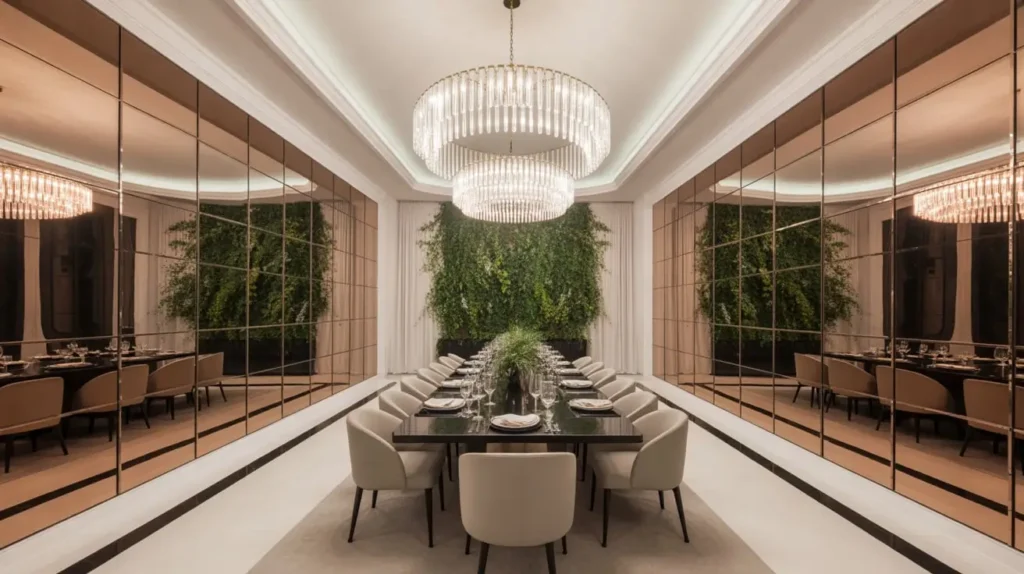
Ready for some high-impact drama? A mirror wall is a bold, glamorous move that can completely transform a dining room. It’s a trick that has been used for centuries in grand palaces and ballrooms for a reason: it works.
A wall of mirrors doubles the visual space, making a room feel larger and brighter. It reflects the light from your chandelier, the flicker of candlelight, and the faces of your guests, creating a dynamic, glittering, and festive atmosphere. It’s dinner and a show, all in one.
Now, before you have visions of a 1980s gym, let me clarify. We’re talking about elegant, intentional mirror applications.
How to Use Mirrors without the Kitsch:
- Antiqued or Smoked Mirrors: For a sophisticated, less “in-your-face” look, opt for mirror panels with an antiqued or smoked finish. The subtle patinas add texture and a sense of history, preventing that stark, funhouse-mirror effect.
- Paneled Designs: Instead of one giant sheet of glass, consider a wall of beveled mirror tiles or large panels framed with elegant wood or metal trim. This breaks up the reflection and adds an architectural element.
- Strategic Placement: You don’t have to mirror the whole room. One feature wall is often all you need. The best wall to mirror is usually the one behind the sideboard or at the head of the table, as it creates a beautiful backdrop. Avoid mirroring a wall with a cluttered view.
7. Minimal White Luxury Space
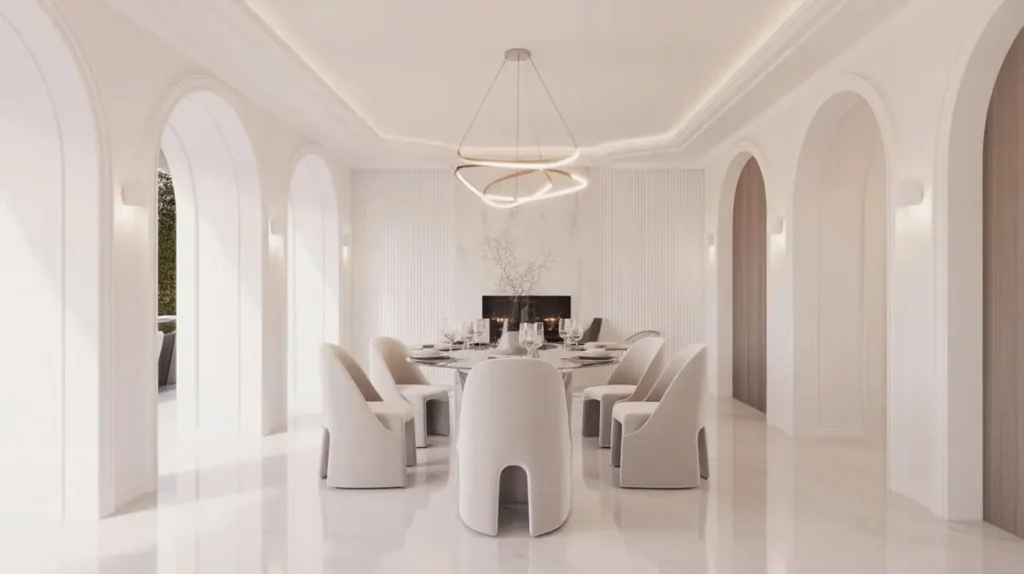
Who says luxury has to be dark and decadent? Sometimes, the most luxurious statement is one of serene, refined simplicity. A minimal white dining room is the epitome of clean, understated elegance.
But let’s be clear: this is not about a boring, sterile, all-white box. The secret to a luxurious minimal white space lies in texture, quality, and subtle variation. It’s about creating a calm, gallery-like space where the focus is on form, light, and high-quality materials.
It’s a look that requires incredible discipline. Every single object in the room must be beautiful and intentional because there’s nowhere for clutter to hide.
The Art of Minimalist Luxury:
- A Symphony of Whites: Don’t use just one shade of white. Layer different tones—from crisp, cool whites to warmer, creamier ivories—to create depth and interest.
- Texture is Everything: When your color palette is this restrained, texture becomes your best friend. Think a raw linen tablecloth, chairs with woven rush seats, a plaster-finish light fixture, a softly grained light oak table, and a high-pile wool rug. These tactile elements keep the room from feeling flat.
- Focus on Form: The shapes of your furniture are critical here. Look for pieces with clean lines and beautiful silhouettes. A sculptural dining table or iconic chair designs (like a Wishbone chair) will shine in this setting.
8. Dark Moody High-End Dining
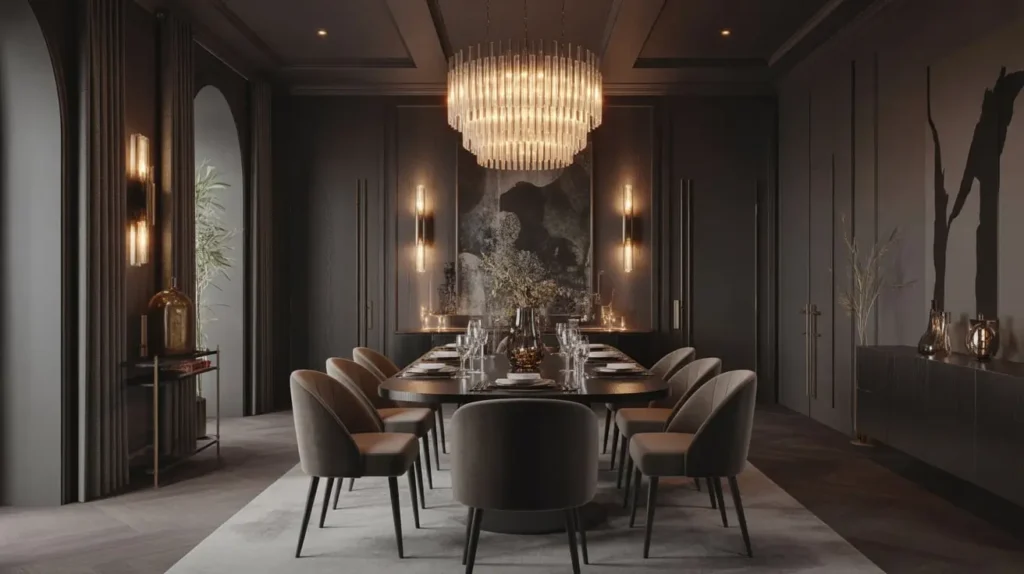
This one is for the drama lovers. A dark, moody dining room creates an intimate, cozy, and incredibly sophisticated atmosphere. It’s perfect for long, lingering dinners where the conversation flows as freely as the wine.
Painting a room in a dark color like charcoal grey, deep navy, or forest green is a bold move, but the payoff is huge. It makes the space feel like a warm embrace. The walls recede, and the focus narrows to the table and the people around it.
I once dined in a restaurant painted a deep, inky blue, and it was one of the most memorable meals of my life. The atmosphere was so enveloping and intimate; it felt like our table was the only one in the world.
Mastering the Dark Arts:
- Go All In: To get the full effect, don’t just paint one accent wall. Commit to the look and paint all the walls, the trim, and maybe even the ceiling. This creates that seamless, cocoon-like feeling.
- Layered Lighting is Non-Negotiable: I mentioned this for the Black & Brass look, but it’s even more critical here. You need multiple light sources at different heights: a dimmable overhead light, wall sconces, lamps, and lots of candles. The goal is to create pools of light, not to flood the room.
- Add Reflective Surfaces: To keep the dark colors from feeling flat, introduce elements that will bounce your carefully curated light around. A gilt-framed mirror, a crystal decanter on the sideboard, or metallic accents on furniture will add a necessary bit of sparkle.
9. Contemporary Sculptural Lighting
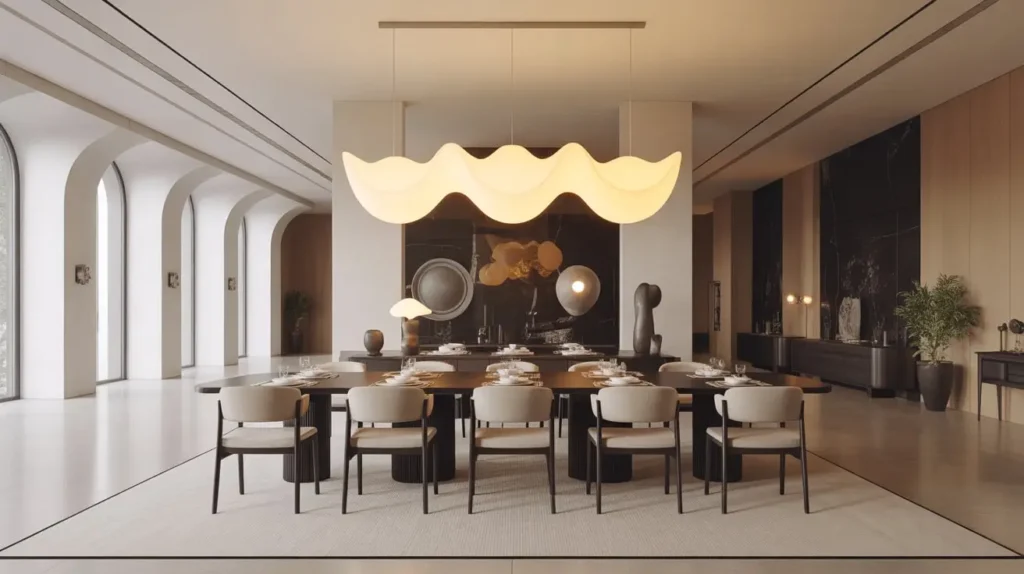
Let’s move away from the traditional chandelier for a moment. In a modern luxury dining room, the light fixture can be the primary piece of art. A contemporary sculptural light is more than just a way to see your food; it’s a conversation starter.
Think of it as a floating sculpture that commands attention. These pieces often feature abstract shapes, innovative materials like bent metal or blown glass, and integrated LED technology. They signal that your style is forward-thinking and artistic.
What’s the difference between this and a chandelier? IMO, it’s about form. A chandelier is typically symmetrical and decorative. A sculptural fixture is often asymmetrical, abstract, and challenges our perception of what a light should be.
Finding Your Light Sculpture:
- Consider the Volume: These fixtures are often about occupying three-dimensional space. Think about how the piece will look from all angles, not just from below. A large, linear fixture works well over a long rectangular table, while a more “cloud-like” or explosive design can be stunning over a round table.
- Match the Style: A spiky, Sputnik-style fixture lends a Mid-Century Modern feel, while a flowing, organic form made of LEDs feels very futuristic. Choose a style that complements the lines of your furniture.
- Check the Light Quality: Art is great, but it still needs to function. Make sure the fixture provides adequate, flattering light over the dining surface. Look for dimmable options and check the color temperature (a warm white, around 2700K, is usually best for dining).
Read Also 15 Stunning Chandelier Dining Room Ideas to Elevate Your Space
10. Grand Hotel-Inspired Dining
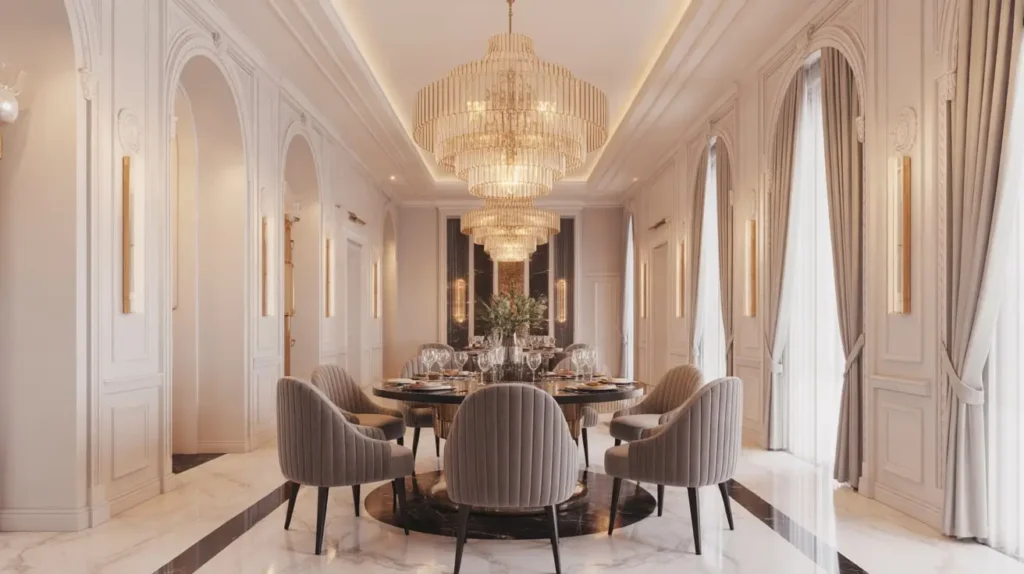
Ever sat down in the restaurant of a five-star hotel and just thought, “Wow”? There’s a certain polished, impeccable quality to hotel dining rooms that feels incredibly luxurious. You can absolutely bring that same feeling into your own home.
This style is about comfort, a sense of occasion, and flawless execution. It combines the comfort of residential seating with the polish of commercial design.
The key element that often defines this look? A banquette.
Recreating the Hotel Experience:
- Install a Banquette: A built-in or freestanding upholstered bench along one wall is the ultimate hotel-style move. It’s incredibly comfortable, saves space, and instantly makes the room feel more custom and intimate. Upholster it in a durable, luxe fabric like leather, velvet, or a tight tweed.
- Crisp Linens: Nothing says “special occasion” like a crisp, white tablecloth. While you might not use it for everyday meals, having one on hand for dinner parties instantly elevates the experience. Add high-quality cloth napkins for the full effect.
- Think in Pairs: Hotels love symmetry. Consider placing matching lamps on a sideboard, using pairs of chairs, or hanging art in a symmetrical grid to create that sense of order and calm.
11. Luxe Neutral Palette Dining
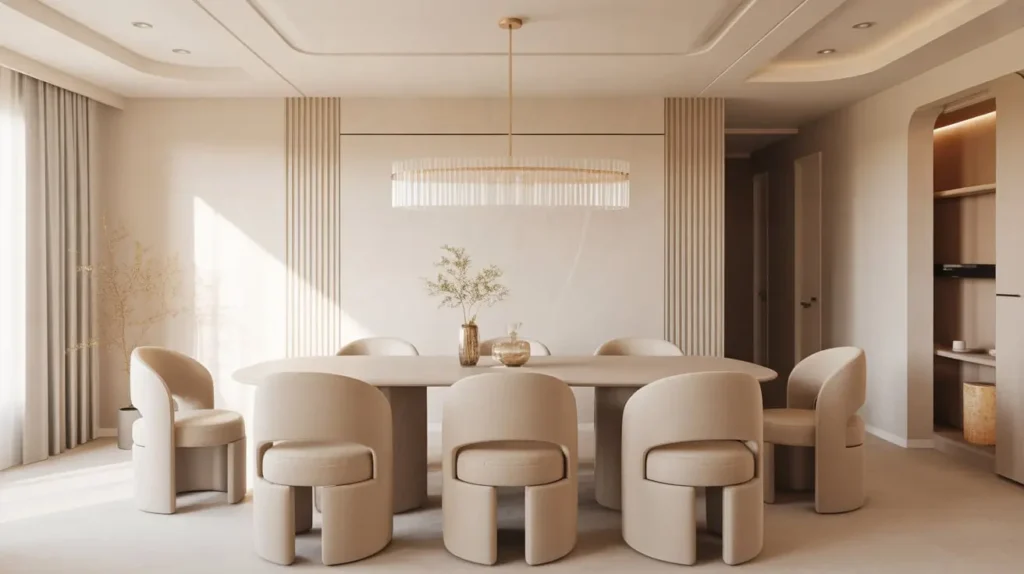
This is a cousin to the Minimal White look, but with a warmer, more layered personality. A luxe neutral palette moves beyond just white and ivory and embraces the full spectrum of sophisticated neutrals: taupe, greige, camel, mushroom, and soft charcoal.
The secret to making neutrals feel luxurious and not boring is to go all-in on texture and material quality. This is the “quiet luxury” or “stealth wealth” of interior design. It doesn’t shout; it whispers. It’s for people who appreciate the feel of a cashmere throw or the subtle grain of cerused oak.
Building a Neutral Paradise:
- Layer Tones: The key is to use multiple neutral tones in the same space. A greige wall, with a slightly darker taupe rug, cream-colored chairs, and a natural wood table creates a rich, tonal landscape that is anything but boring.
- Material Matters: This is where you invest. Think chairs upholstered in nubby boucle fabric, curtains made of heavy linen or raw silk, and a table crafted from solid, beautifully finished wood. The quality of the materials does all the talking.
- Natural Elements: Ground the neutral palette with natural elements. A large potted plant like a Fiddle Leaf Fig, a stone vase, or a wooden bowl on the table adds life and an organic touch to the serene space.
12. Statement Art Luxury Room
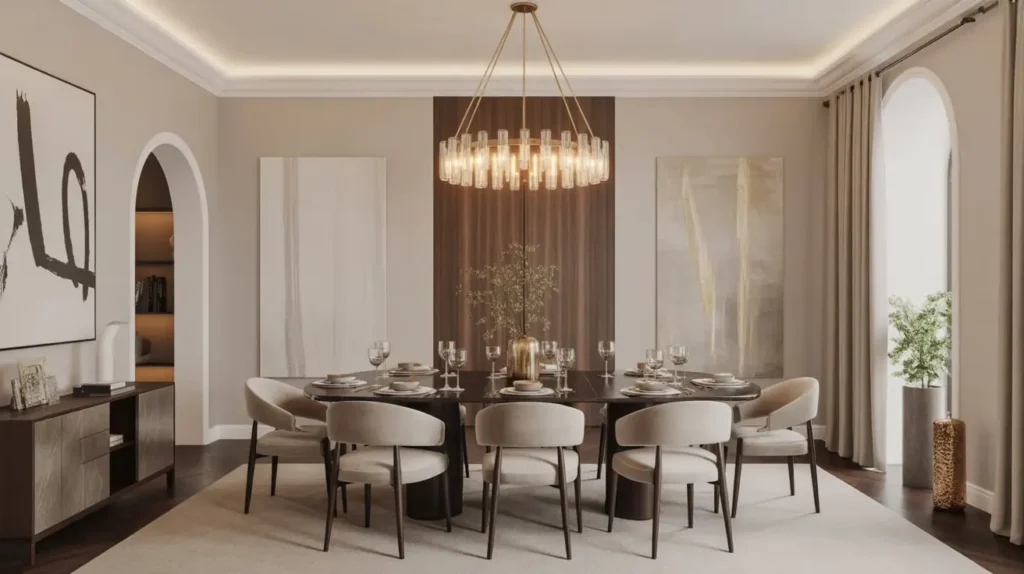
For the art lovers, why not let your collection be the star of the show? In this approach, the dining room effectively becomes a private gallery. The furniture, while still high-quality, plays a supporting role to a single, show-stopping piece of art.
This is a power move. A massive, oversized canvas, a striking sculpture, or a gallery wall of smaller pieces creates an immediate focal point and a topic of conversation. It says more about your personality than any piece of furniture ever could.
Designing Around Art:
- Go Big: When we say statement art, we mean it. For a single piece, it should be large enough to command the wall it’s on. A small, lonely painting on a big wall looks sad and unintentional. Aim for a piece that is at least two-thirds the length of your sideboard or table.
- Pull Colors from the Art: Use the artwork as your color palette. Pick out one or two of the minor colors from the piece and repeat them in your dining chairs, centerpiece, or even your tableware. This creates a sophisticated, cohesive look.
- Keep Furniture Understated: Your dining table and chairs should be elegant but simple in form. A glass-top table or one with a simple, clean-lined silhouette will allow the art to remain the focal point. You don’t want the furniture and the art to be in a screaming match for attention.
13. Oversized Round Table Glam
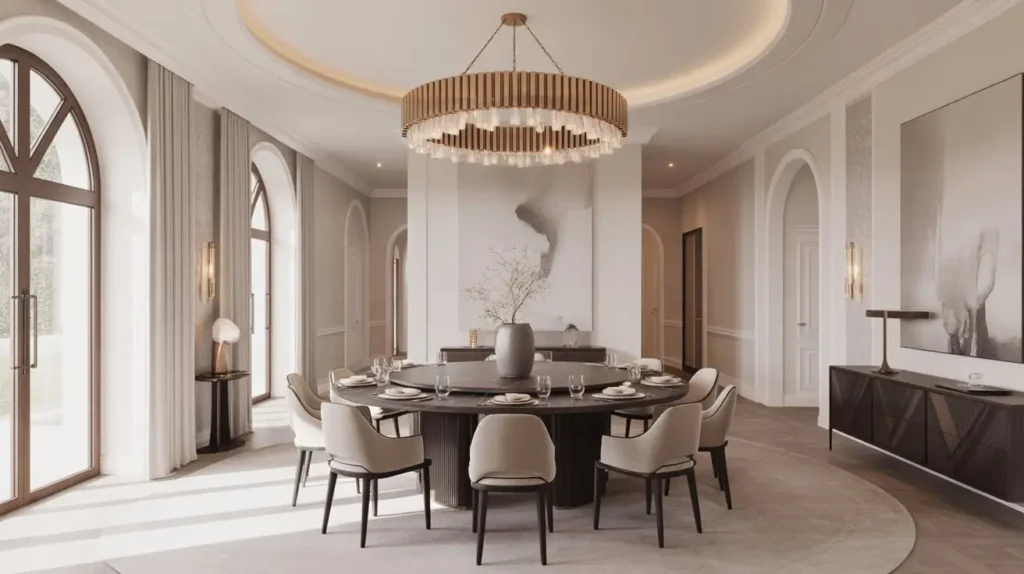
There’s something inherently social and welcoming about a round dining table. There’s no head of the table, so everyone feels equal. Conversation flows more easily. And when you make that round table oversized? That’s a statement.
An oversized round table (think 72 inches or more in diameter) suggests abundance, community, and grand-scale entertaining. It feels less formal than a long, rectangular table and encourages a more communal dining experience.
This look is perfect for larger, more open-plan spaces where the table can really breathe.
Making the Round Table Work:
- Substantial Base: A large top needs a visually and physically substantial base. A thick pedestal base, either in a sculptural wood or metal form, works much better than four skinny legs, which can look spindly under a large round top.
- The Centerpiece Challenge: The vast expanse in the middle of a large round table needs a proper centerpiece. A low, wide floral arrangement, a collection of different-sized candles, or a large decorative bowl can work well. A “Lazy Susan” can also be a surprisingly chic and functional addition.
- Lighting is Key: A single pendant or chandelier hung directly over the center of the table is the perfect way to anchor the setting and provide focused light. Ensure it’s scaled correctly to the table’s large diameter.
14. High-Ceiling Luxe Dining Hall
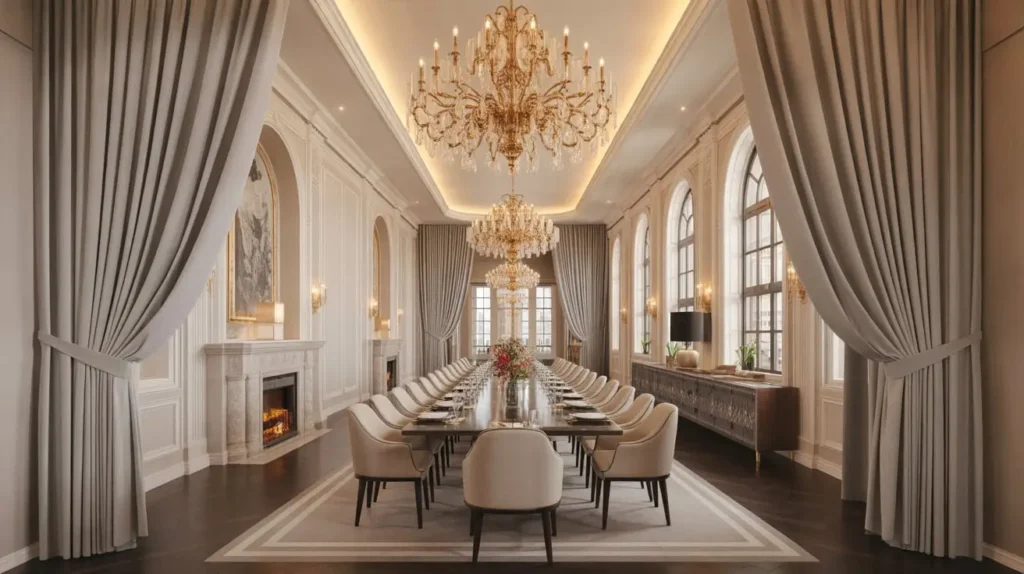
If you are blessed with high ceilings, for the love of all that is good, flaunt them! High ceilings are an architectural luxury, and your dining room design should emphasize that vertical space.
This look is about creating a sense of grandeur and awe. It’s about drawing the eye upward and making the room feel like a grand hall in a modern-day castle. It’s less about the specific furniture and more about celebrating the room’s volume.
Reaching for the Sky:
- Floor-to-Ceiling Drapery: This is the number one trick for emphasizing height. Hang your curtain rods as close to the ceiling as possible, and let the drapes fall all the way to the floor (or even “puddle” slightly). This creates a long, unbroken vertical line.
- Tall, Vertical Elements: Use other tall elements to draw the eye up. A towering indoor tree in a corner, a very tall floor mirror leaning against a wall, or a vertical piece of art can all enhance the effect.
- Dramatic Drop Lighting: A high ceiling is your license to use a truly dramatic, long pendant light or a multi-tiered chandelier. Let it drop down to the proper height over the table (30-36 inches), and the long chain or cord will itself become a beautiful design element that accentuates the room’s height.
15. Classic European Luxury Dining
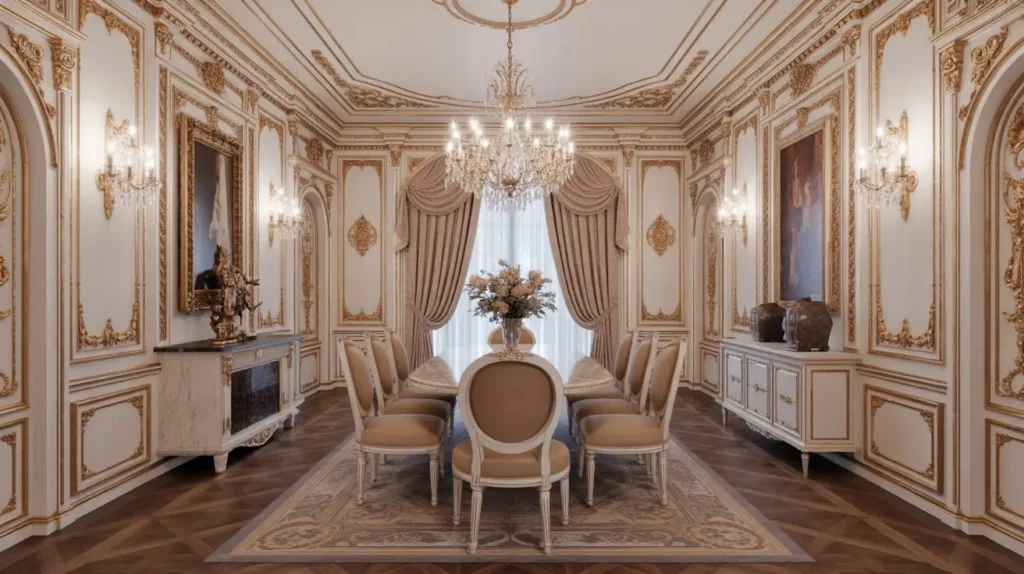
Finally, let’s take a trip across the pond. A Classic European luxury look is about embracing history, patina, and a sense of romance. Think of a chic Parisian apartment or a rustic Italian villa. It’s a style that feels collected over time, not bought in a single weekend.
This isn’t about creating a stuffy, period-perfect museum. The key to the modern European look is the mix of old and new. It’s the tension between an ornate, antique mirror and a clean, modern dining table that creates the magic.
Achieving That Continental Charm:
- Good Bones: This look is greatly enhanced by strong architectural details. Things like herringbone wood floors, intricate crown molding, and wall paneling provide the perfect historical backdrop. If you don’t have them, you can add them!
- Mix Your Furniture: This is crucial. Pair a rustic, antique farmhouse table with sleek, modern chairs. Or place contemporary ghost chairs around a heavy, ornate table. Place a sleek, modern sideboard beneath an over-the-top rococo mirror. The contrast is what makes it feel curated and personal.
- An Air of Imperfection: Don’t be afraid of a little wear and tear. A slightly chipped antique frame, a worn spot on a rug, or the patina on a vintage brass candlestick adds character and soul. True European style is lived-in, not sterile.
So, Which Style is Calling Your Name?
Whew! We’ve covered a lot of ground, from moody and modern to bright and classic. The most important thing to remember is that these aren’t rigid recipes. They are starting points—springboards for your own creativity.
Maybe you love the idea of a marble table but want to pair it with the dark, moody walls. Go for it! Perhaps you want to combine the hotel-inspired banquette with a massive piece of statement art. Why not?
The most luxurious dining room you can have is one that reflects your personal style and makes you happy to be in it. It’s a space that encourages you to slow down, connect with the people you love, and make some incredible memories.
Now, if you’ll excuse me, all this talk of beautiful dining rooms has made me want to host a dinner party. Time to go create a space that’s worth celebrating.