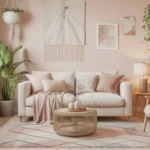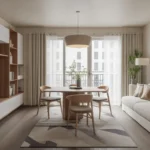


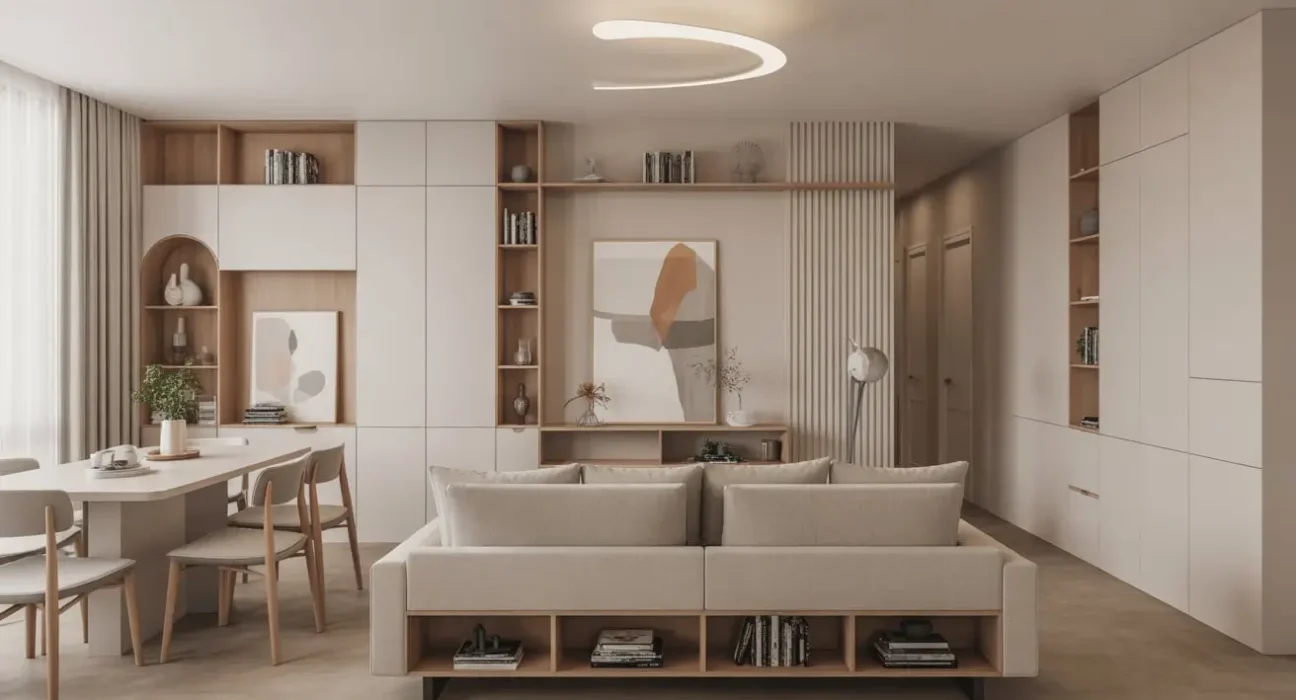
Alright, let’s have a real chat. You’re standing in the middle of your open-plan living and dining area, aren’t you? It’s that one big, slightly intimidating room that’s supposed to be the heart of your home, but right now it feels more like an empty warehouse with a sofa at one end and a table at the other. I’ve been there. My first apartment combo looked like two separate rooms that had a really awkward argument and were now giving each other the silent treatment.
The challenge is making them feel like a single, cohesive, and stylish space without just, you know, building a wall between them. How do you create a flow? How do you define zones without creating clutter? And how do you make it look like something you’d actually want to pin on Pinterest, not just a place where you eat and watch TV?
Don’t worry. I’ve gone through the trial-and-error, made the questionable design choices (we don’t talk about the lime green accent wall phase), and come out the other side with some solid ideas. We’re going to skip the generic, fluffy advice and get right to the good stuff. Here are 15 genuinely stunning and practical ideas for your modern living room and dining room combo.
1. Minimalist Modern Living-Dining Combo
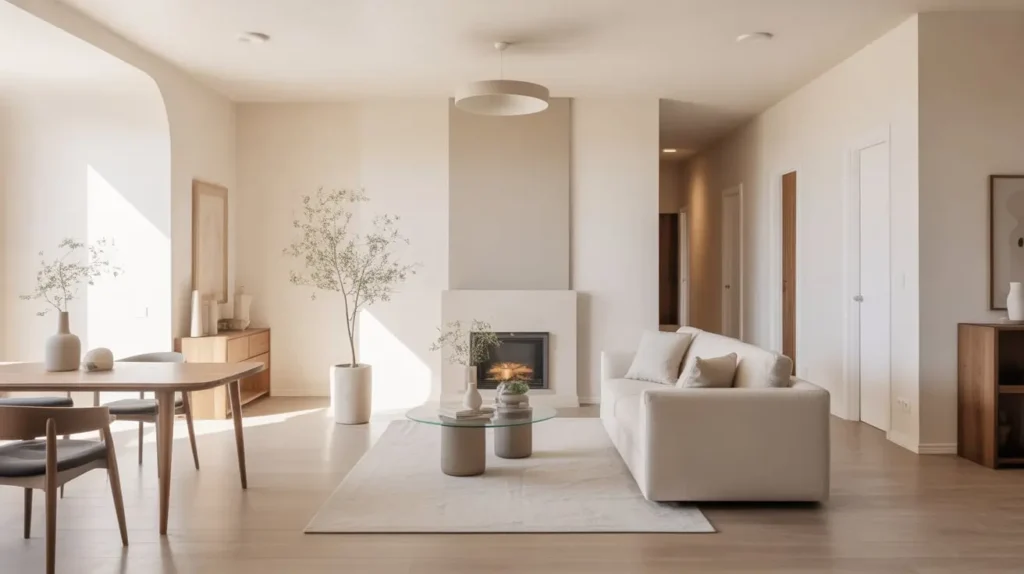
Let’s start with the classic, the clean, the “I have my life together” look. Minimalism is more than just having less stuff; it’s about intentionality. Every single piece in your room should have a purpose and a place. The goal here is to create a sense of calm and order, which is perfect for a space where you both relax and entertain.
I once tried to go full-on minimalist and ended up with a room that felt like a doctor’s waiting room. A very chic waiting room, but still… not exactly cozy. The trick is to focus on quality over quantity. Instead of five so-so decor items, get one incredible sculpture or vase. Instead of a bulky entertainment center, mount the TV and use a sleek, low-profile console.
H3: How to Keep it From Feeling Sterile
The biggest fear with minimalism? Creating a cold, lifeless void. Ever walked into a home that was too perfect? Yeah, let’s avoid that. Here’s how you keep it human:
- Focus on Form: Choose furniture with beautiful, clean lines and interesting shapes. A curved sofa or a dining table with unique legs can become the art in the room.
- Use Negative Space: Don’t feel the need to fill every corner. Negative space (the empty areas) is a design element in itself. It gives your feature pieces room to breathe and makes the whole space feel larger and more serene.
- A Touch of Nature: A single, large plant in a simple pot can bring life and organic texture to a minimalist room. Think a Fiddle Leaf Fig or a Snake Plant. It’s an instant injection of warmth.
The core of minimalist design is that it forces you to be deliberate. You can’t hide behind clutter, so every choice matters. It’s a bit of a commitment, but the payoff is a beautifully serene and organized space.
2. Scandinavian Style Open Concept Living & Dining
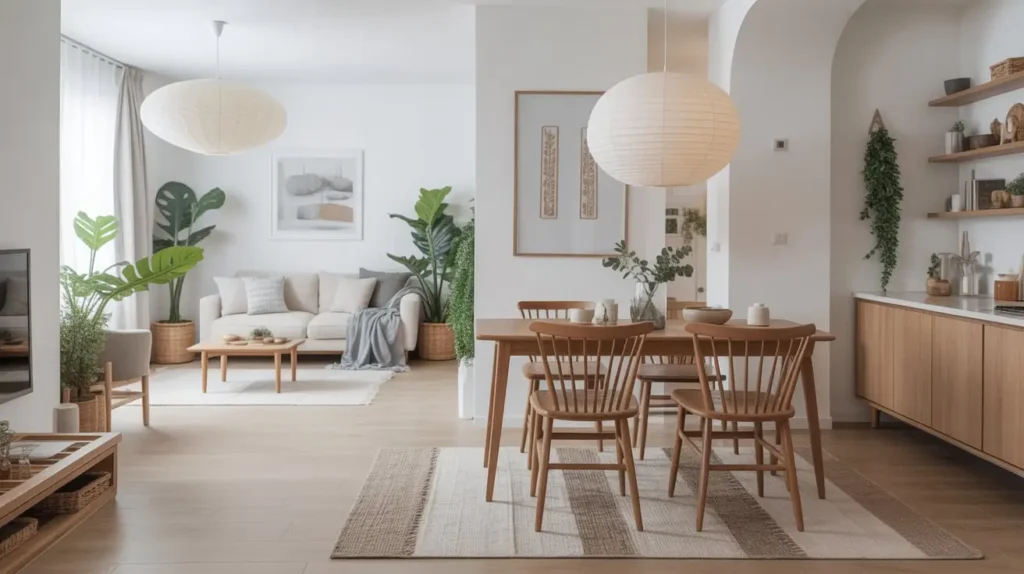
If pure minimalism feels a bit too cold for you, allow me to introduce its cozier, more approachable cousin: Scandinavian (or Scandi) design. This style is all about creating a bright, airy, and comfortable environment. Think hygge—that Danish concept of cozy contentment. Who doesn’t want more hygge in their life, right?
Scandi design uses a lot of the same principles as minimalism—clean lines, uncluttered spaces—but layers in warmth through natural materials and soft textures. It’s practical, beautiful, and incredibly livable. I find this is one of the easiest styles to pull off in a combo space because its core principles are all about light and functionality.
H3: The Key Elements of Scandi Style
You don’t need to be from Denmark to master this. Just focus on a few key ingredients:
- Light, Neutral Palette: Start with a base of white, light gray, or pale beige walls. This maximizes natural light and creates a clean canvas.
- Natural Wood Tones: Light woods like birch, ash, and pine are your best friends. Use them for your dining table, coffee table, and chair legs. The warmth of the wood beautifully contrasts with the cool, neutral walls.
- Cozy Textiles: This is where the hygge really kicks in. Layer in chunky knit blankets, faux fur throws, wool rugs, and linen cushions. Texture is everything in Scandi design.
- Simple, Functional Furniture: Look for pieces with tapered legs and unfussy designs. The furniture should feel light and almost “lifted” off the floor, which enhances the sense of space.
A large, light-colored area rug under the living room furniture can define that zone, while a simple pendant light over the dining table defines the other. The shared color palette and wood tones will tie it all together seamlessly.
3. Small Space Modern Living and Dining Fusion
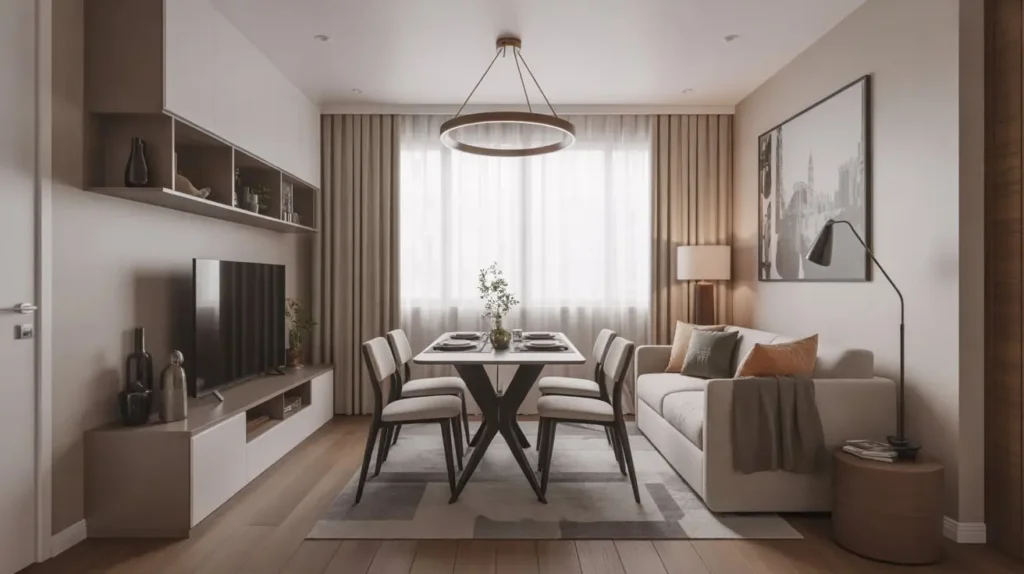
Okay, for those of us not living in sprawling suburban mansions, this one’s for you. Combining a living and dining room in a small space is less of a style choice and more of a necessity. The challenge is making it feel intentional and chic, not cramped and chaotic.
My first city apartment had a “living-dining area” that was basically a glorified hallway. The key I discovered? Defining zones without visual barriers. You can’t put up a big screen or a massive bookshelf; it will just eat up the room. Instead, you have to get clever with visual cues.
An area rug is your most powerful tool here. A rug under your sofa and coffee table instantly screams, “This is the living zone!” Even if your dining table is only five feet away, it feels like a separate area. Another trick is to use lighting. A stylish pendant light hanging over your dining table carves out that space as the “dining nook.”
For furniture, think light and leggy. Pieces that you can see under—sofas with visible legs, tables with thin frames—create an illusion of more floor space. And for the love of all that is holy, get a round dining table. It has a smaller footprint, no sharp corners to bump into, and encourages better flow and conversation. It’s a small-space superstar.
4. Neutral Toned Modern Living-Dining Setup
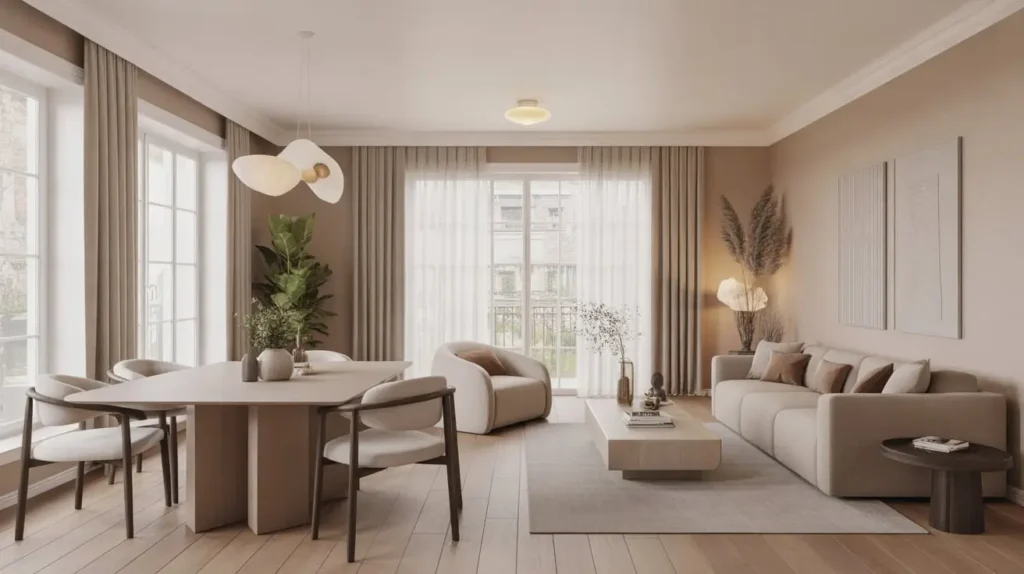
Let’s be real, going all-neutral can sometimes feel like you’re living inside a beige cloud. But when done right, a neutral-toned space is sophisticated, timeless, and incredibly calming. The secret to a killer neutral combo room isn’t about being boring; it’s about mastering tone, texture, and shade.
Instead of just one shade of beige, you need to layer. Think about a palette of ivory, cream, sand, taupe, greige (that’s gray + beige, FYI), and charcoal. When you mix these warm and cool neutrals, you create depth and interest. A light gray sofa, a cream-colored rug, a dark wood dining table, and off-white walls—suddenly, your “neutral” room is anything but one-note.
H3: Bringing a Neutral Room to Life
A neutral palette is the perfect backdrop to let texture shine. This is where you can go wild.
- Mix Your Materials: Combine a smooth leather armchair with a nubby bouclé sofa. Place a rough-hewn wooden coffee table on a soft, high-pile rug. Pair sleek metal dining chairs with a solid oak table.
- Play with Patterns (Subtly): Patterns can be neutral, too! Think herringbone-patterned pillows, a rug with a faint geometric design, or curtains with a subtle texture.
- Add Black for Drama: A few strategic pops of black will ground a neutral space and keep it from looking washed out. This could be in the form of picture frames, a lamp base, or the legs of your dining chairs. Black is the anchor in a sea of neutrals.
The beauty of this approach is its longevity. You can easily update the look with new accent pillows or a different throw blanket whenever you get bored, without having to overhaul the entire room.
Read Also 15 Smart Small Living Room and Dining Room Combos Ideas
5. Bold Color Accents in Living-Dining Combo
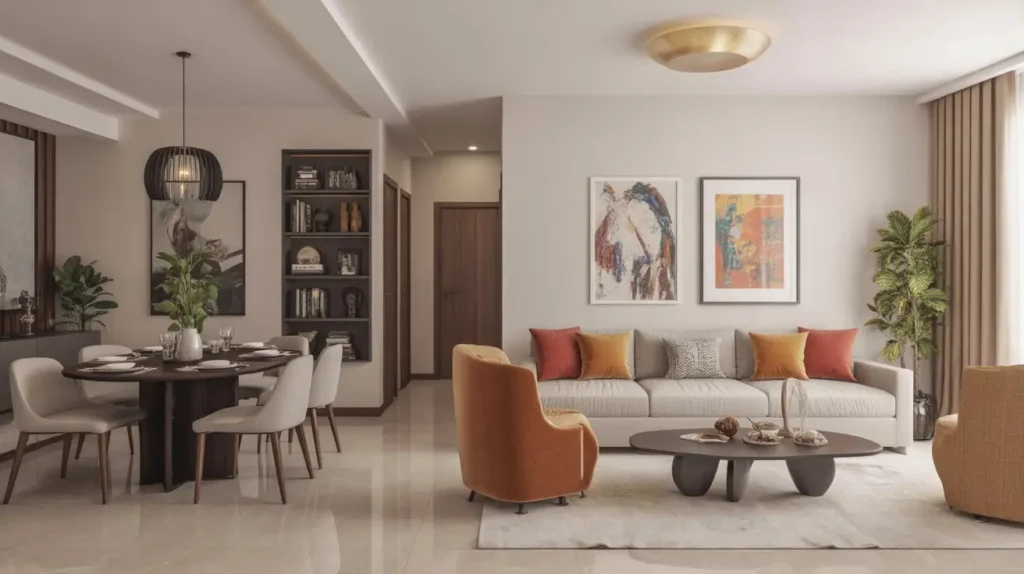
If the neutral talk made you yawn, this one’s for you. A modern space doesn’t have to be devoid of color! In fact, using bold color is an incredible way to unify your living and dining areas and inject a massive dose of personality. The key is to be strategic, not haphazard.
You don’t need to paint all four walls magenta (please don’t). The most effective way to use bold color is through the 80/20 rule. 80% of your space should be a relatively neutral base (whites, grays, woods), and the other 20% is where you go wild with a pop of saturated color.
Think about using the same accent color in both the living and dining zones to tie them together. For example:
- Emerald Green: Emerald green velvet throw pillows on the sofa, and matching green upholstery on the dining chairs.
- Deep Blue: A large, abstract blue painting in the living area, with a collection of blue glass vases as a centerpiece on the dining table.
- Mustard Yellow: A striking mustard yellow armchair and a rug in the living area that has hints of that same yellow in its pattern.
This repetition of color guides the eye through the entire space, making it feel connected and thoughtfully designed. A word of warning: pick one or two bold colors, not five. You want a statement, not a circus. 😉
6. Contemporary Loft Style Living-Dining Space
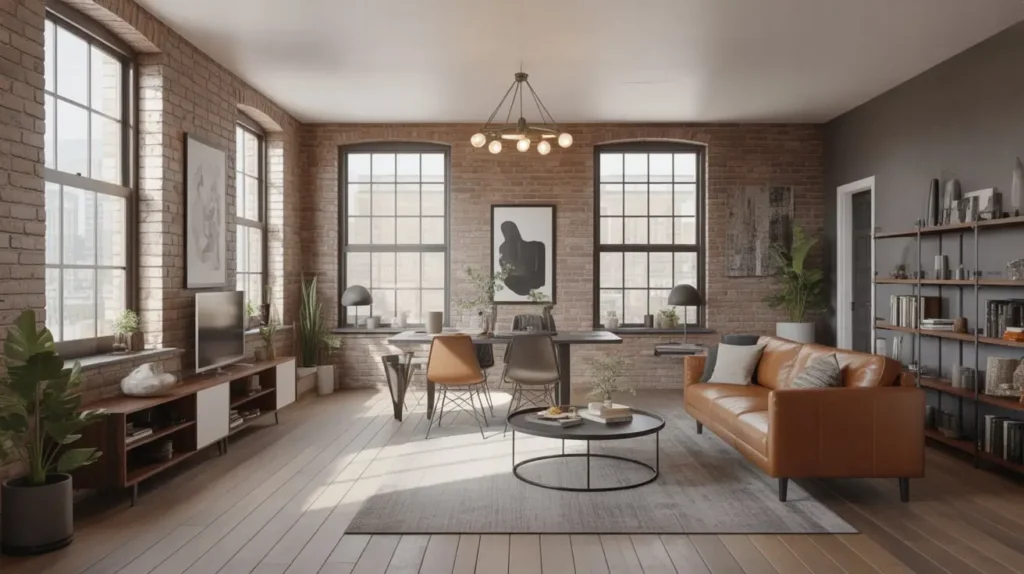
Ah, the loft. Exposed ductwork, soaring ceilings, huge windows… what’s not to love? The challenge of a loft, however, is that it’s often one massive, cavernous room. Without any walls, you have to create “rooms” yourself. This is where furniture grouping becomes an art form.
In a loft, you can go bigger with your furniture. The scale of the room demands it. A tiny sofa will look like doll furniture. Opt for a large sectional sofa to anchor the living area. This piece single-handedly creates a “room within a room” and provides a clear boundary for the lounge space.
For the dining area, choose a substantial table—a long, rectangular one works beautifully to fill the space. To further unify the zones, use a consistent design language. If your living area has furniture with black metal legs, echo that in your dining chairs or the base of your dining table. This creates a subtle but powerful visual link.
And you absolutely must use massive area rugs. In a loft, a rug isn’t just a decorative item; it’s a floor plan. A huge rug under the sectional and coffee table establishes the living room. A separate (but complementary) rug under the dining table and chairs establishes the dining room. They can have different patterns, but they should share a color story.
7. Industrial Modern Living and Dining Integration
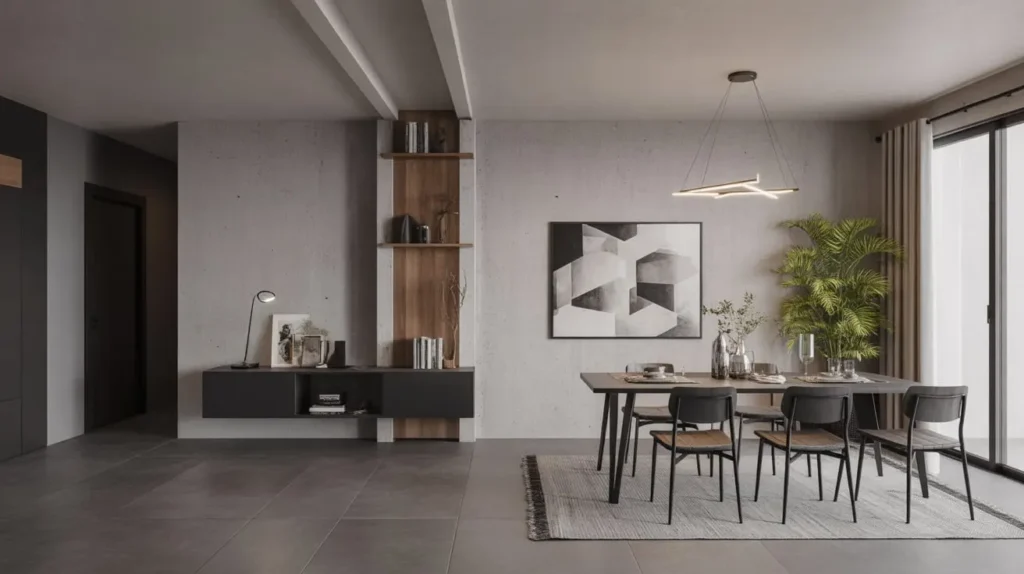
Industrial design is the cool, edgy cousin of modernism. It celebrates raw materials, structural elements, and a no-frills attitude. Think brick walls, polished concrete floors, exposed pipes, and metal accents. It’s a fantastic style for a combo space because it’s inherently open and unfussy.
I love how industrial modern blends ruggedness with sleekness. You might have a distressed leather sofa (that looks like it’s seen a few things) paired with a super-sleek, minimalist media console. It’s all about that juxtaposition of rough and smooth.
To make it work in a combo space:
- Material Consistency: Carry your key materials through both zones. If you have a coffee table with a raw steel frame, look for a dining table with a similar base or dining chairs with metal accents.
- Warm it Up: The biggest risk with industrial style is that it can feel cold and impersonal. You have to actively fight this! Introduce warmth with a soft, plush rug, wooden elements (like a butcher block dining table), and plenty of textiles.
- Lighting is Key: Industrial lighting is a feature in itself. Think about a cluster of Edison bulb pendants over the dining table and a cool, metal-armed floor lamp in the living area. The fixtures themselves become part of the decor.
And if you weren’t blessed with a genuine 19th-century warehouse apartment? No problem. Faux brick panels and concrete-effect paints have come a long way from their cheesy ancestors. You can get the look without the drafty windows.
8. Cozy Modern Living-Dining with Textured Decor
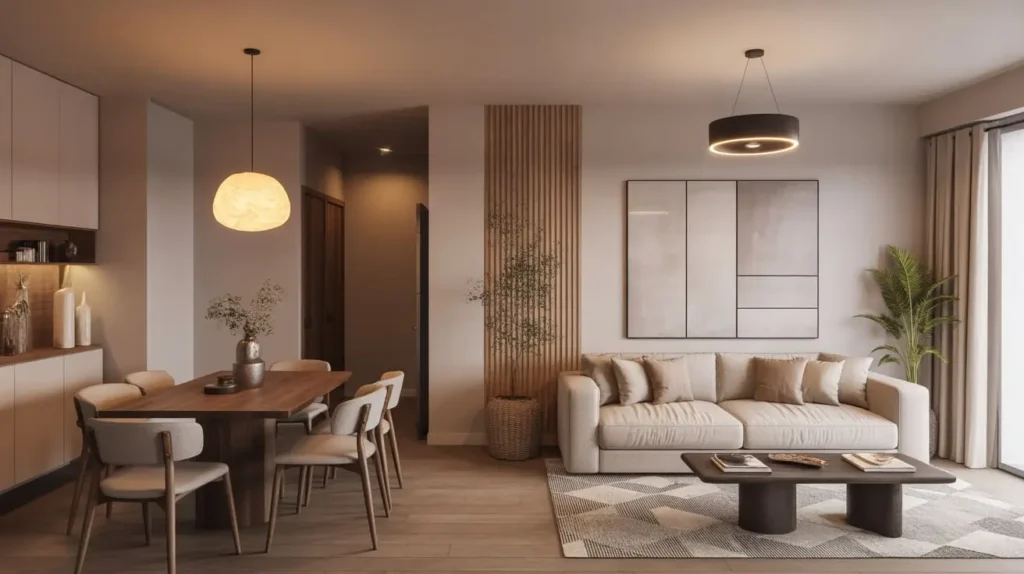
This is for the person who wants a modern look but still wants to curl up and be cozy. Modern design can sometimes get a bad rap for being cold, but that’s a total myth. You can have your clean lines and your creature comforts, too. The secret weapon? Texture, texture, and more texture.
Think of your room as a canvas. The furniture provides the shapes, and the color provides the mood. Texture provides the feeling. It’s what makes you want to reach out and touch things. It’s what makes a house a home.
In your living area, this means:
- A nubby or bouclé fabric on your sofa.
- A mix of pillows in velvet, linen, and knit fabrics.
- A high-pile or shag rug that your feet sink into.
- A chunky wool throw draped over an armchair.
Carry that same philosophy over to the dining area. Maybe your dining chairs are upholstered in a tactile fabric. Or you could use a woven table runner and placemats. Even the grain of a wooden dining table adds a layer of natural texture. By repeating these textural elements across both zones, you create a cohesive space that feels incredibly inviting and sophisticated.
9. Elegant Modern Living-Dining with Glass Elements
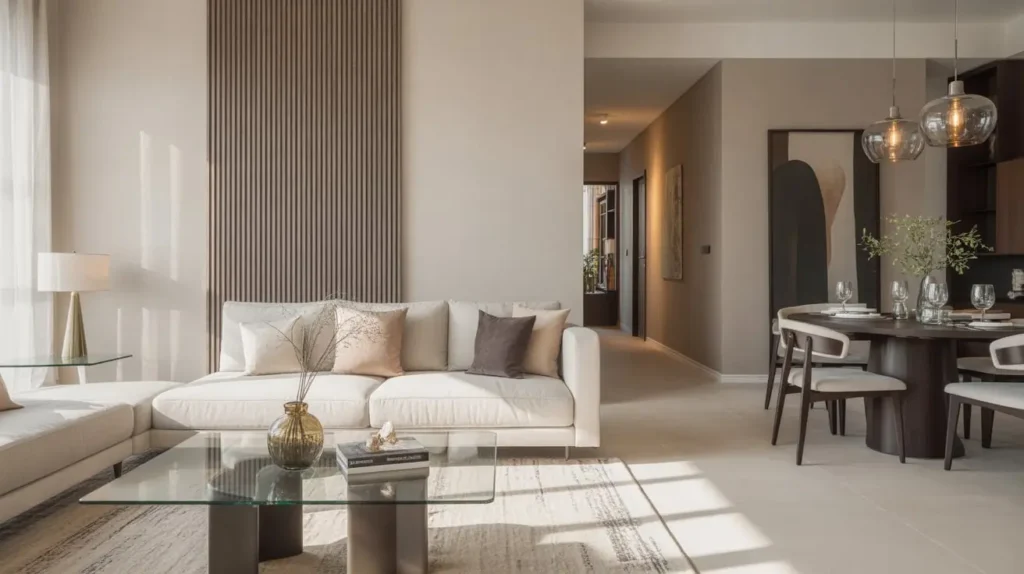
Want to add a touch of glam and make your space feel bigger and brighter? Glass is your answer. Using glass and other reflective surfaces is a classic designer trick to bounce light around a room and create an illusion of space. It’s especially effective in a modern living-dining combo.
This isn’t about having an all-glass house like you’re a villain in a spy movie. It’s about strategic placement. A glass coffee table in the living room can be a game-changer. It has zero visual weight, so it doesn’t block the view to the rest of the room, making the whole space feel more open.
In the dining area, a glass-top dining table can do the same thing. It allows you to see the rug underneath and the design of the chair legs, preventing that “heavy block” feeling that a solid wood table can sometimes create.
H3: Beyond the Tabletops
Don’t just stop at tables. Think about other ways to incorporate glass and reflective surfaces:
- A Large Mirror: Placing a large mirror on the wall in your dining area is a non-negotiable, IMO. It will reflect the living area and any windows, doubling your light and space.
- Glass Shelving: Floating glass shelves can provide storage without adding visual bulk.
- Crystal or Glass Lighting: A beautiful chandelier with glass or crystal elements over the dining table adds a touch of elegance and scatters light beautifully.
- Mirrored Accents: A side table with a mirrored finish or even a decorative tray can add a little sparkle.
Using these elements in both zones creates a chic, unified look that feels bright, airy, and undeniably elegant.
Read Also 15 Stunning Bohemian Living Room Ideas to Inspire Your Space
10. Monochrome Modern Living-Dining Layout Ideas
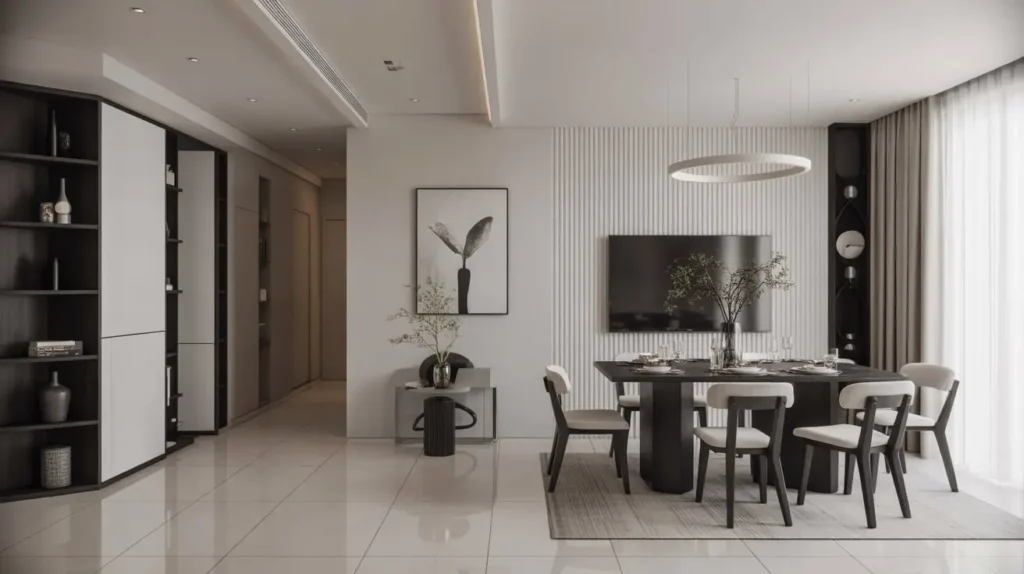
A monochrome scheme—using only black, white, and shades of gray—is the epitome of modern chic. It’s bold, it’s dramatic, and it’s surprisingly easy to pull off if you follow a few rules. A monochrome palette is fantastic for a combo room because it creates an instant, powerful sense of unity.
The key is to not have a perfect 50/50 split of black and white. That can look jarring and a bit like a chessboard. Instead, choose one as your dominant color and the other as your accent.
For a bright and airy feel, use white as your dominant color. Think white walls, a light gray sofa, and a white or light-colored rug. Then, bring in black as a powerful accent: black dining chairs, black picture frames, black metal lamp bases, and black throw pillows. Every piece of black will pop against the white background, creating a high-contrast, graphic look.
For a moodier, more dramatic vibe, you can flip the script and use black or dark charcoal as your dominant color. A dark accent wall behind the sofa or in the dining area can be stunning. Just make sure you have plenty of natural light and lots of white and light gray elements to balance it out, so it doesn’t feel like a cave.
11. Multifunctional Furniture for Living-Dining Combos
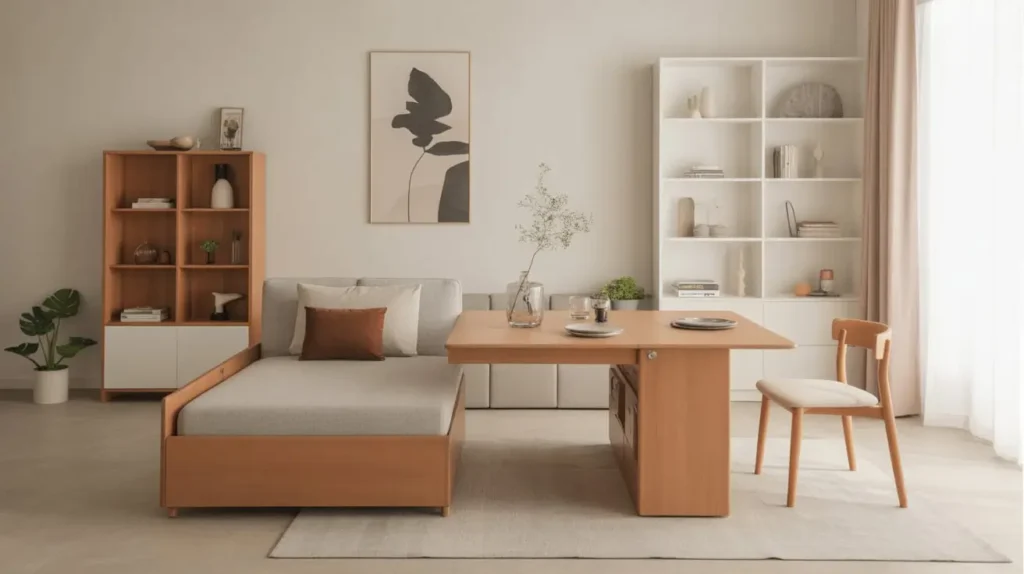
Let’s get practical. In a combo room, especially a smaller one, every piece of furniture needs to earn its keep. Multifunctional furniture isn’t just a “nice to have”; it’s a necessity for a functional, uncluttered space. These are the workhorses of modern design.
I have an expandable dining table, and it is a certified game-changer. Most of the time, it’s a cozy four-seater, perfect for daily meals. When the whole chaotic family descends for the holidays, a hidden leaf extends, and it magically seats eight. It’s basically the Mary Poppins bag of furniture.
Here are some must-have multifunctional pieces:
- Extendable Dining Table: Non-negotiable for anyone who ever hosts more than two people.
- Storage Ottoman or Coffee Table: A place to hide blankets, remotes, and general life clutter. The top can be a footrest or, with a tray, a stable surface for drinks.
- Nesting Coffee Tables: These can be clustered together for daily use or pulled apart to serve as side tables when you have guests.
- A Console Table as a Divider: Placing a slim console table against the back of your sofa can create a subtle separation between the living and dining areas. It’s a perfect spot for a lamp, some books, and it can even double as a serving buffet in a pinch.
Investing in a few clever, hardworking pieces means you need less furniture overall, which is the ultimate goal for a clean, modern combo space.
12. Open Plan Living-Dining with Natural Light
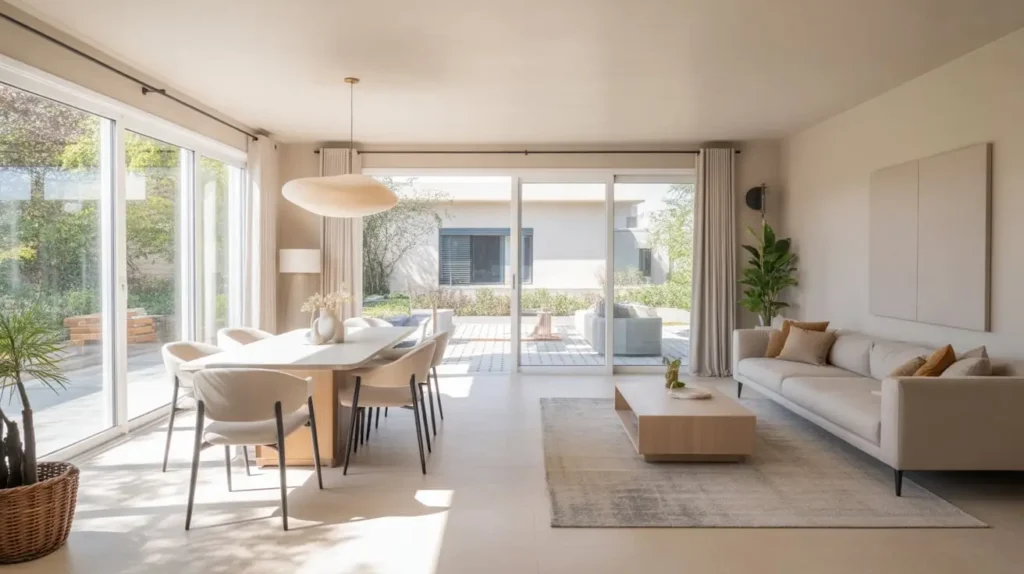
If you are lucky enough to have a space with great windows, you need to make that natural light the star of the show. Don’t fight it, feature it! Designing your combo room around the light source will make it feel ten times larger, brighter, and more inviting.
The first rule? Do not block the windows. It sounds obvious, but you’d be surprised how many people place a bulky sofa right in front of their main window. Arrange your furniture to frame the windows, not obstruct them. Float your sofa in the middle of the room facing the window, or place it on an adjacent wall.
Use light colors to your advantage. White or light-colored walls will act like a mirror, bouncing the natural light all around the room. And keep your window treatments simple and airy. Ditch the heavy, dark drapes and opt for sheer linen curtains or light-filtering roller blinds. You want privacy, not a blackout curtain that sucks all the life out of the room.
To connect the living and dining zones, ensure the light can travel freely. Use furniture with a low profile and, as we discussed, incorporate reflective surfaces like glass and mirrors to help the light penetrate even the darkest corners of the room. A well-lit space is a happy space.
13. Modern Rustic Living and Dining Combination
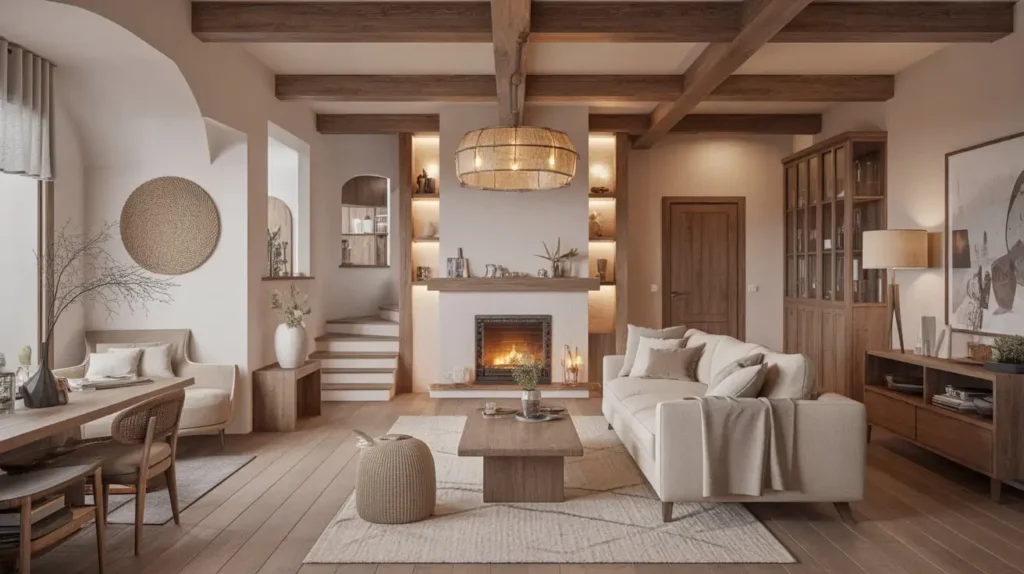
Modern rustic is the perfect marriage of clean, contemporary lines and the warmth of natural, rustic elements. It’s less “log cabin” and more “chic farmhouse in the city.” This style is fantastic for a combo room because it’s all about creating a comfortable, lived-in feel that’s still sophisticated.
The formula is simple: Pair sleek with raw.
- Living Area: Pair a clean-lined, modern sofa in a neutral fabric with a coffee table made from a thick slab of reclaimed wood.
- Dining Area: Match a minimalist, metal-base dining table with rustic wooden chairs. Or, flip it: a chunky, farmhouse-style wooden table with sleek, modern molded plastic chairs.
The key to unifying the space is to repeat these elements. If you have a reclaimed wood coffee table, maybe the light fixture over your dining table has a similar wood accent. If your sofa has black metal legs, echo that with black metal dining chairs.
Texture is also a huge player here. Think jute rugs, linen curtains, and stone or slate accents. It’s about bringing the outside in, but in a very curated and polished way. The result is a space that feels both current and timeless, cozy and cool.
14. Smart Storage Ideas for Living-Dining Spaces
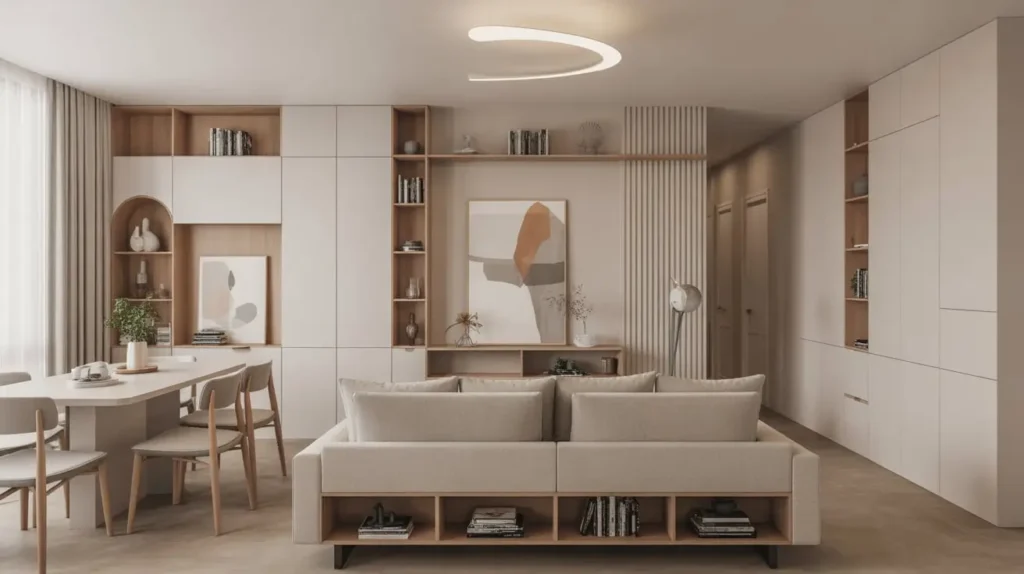
I’m going to say something controversial: a beautiful room is a clean room. I know, I know. But clutter is the number one enemy of good design, especially in an open-plan space where there’s nowhere to hide. That’s why smart, integrated storage is not just a practical consideration; it’s a design feature.
The goal is to make your storage blend in, not stick out. I tell everyone to think vertically. Built-in, floor-to-ceiling shelving units painted the same color as the wall can hold a ton of stuff without looking bulky. They create an architectural feature rather than just a piece of furniture.
A long, low credenza or sideboard that runs along a wall can span both the living and dining zones. This is a brilliant unifying element. The section in the dining area can hold dishes and linens, while the section in the living area can hide electronics and media. It provides massive amounts of storage while maintaining a clean, horizontal line that makes the space feel wider.
FYI, a cluttered space will never feel modern, no matter how much you spend on that fancy sofa. Be ruthless about what you keep on display. Use decorative boxes and baskets on open shelves to corral smaller items. A tidy, organized combo room will instantly feel more spacious, serene, and stylish.
15. Artistic Modern Living-Dining with Statement Pieces
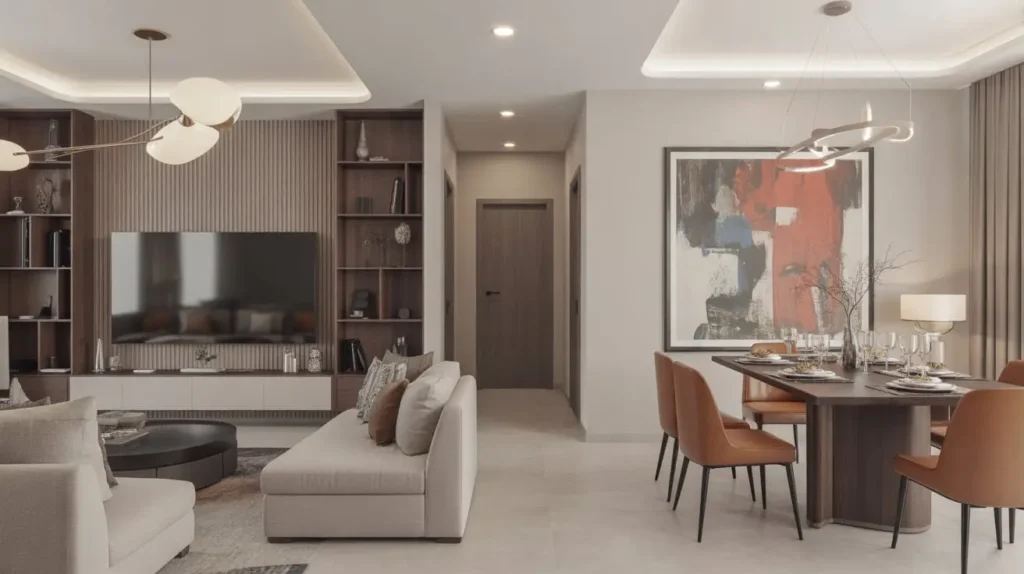
Finally, for the bold and the brave, let’s talk about making your room a gallery. If you have a passion for art, design, or just unique objects, let your combo room be the canvas. This approach uses one or two major statement pieces to define and energize the space.
This could be a massive, vibrant piece of abstract art hanging on the wall that bridges the living and dining areas. The colors in the painting can inform your choice of accent pillows and decor in both zones, creating an instant, artistic connection.
Or, your statement piece could be furniture. Ever seen a sofa in a wild shape or a sculptural, almost-art-like dining table? A piece like that doesn’t just furnish a room; it commands it. The rest of your furniture can be relatively simple and minimalist, allowing the statement piece to be the undisputed star.
A statement lighting fixture is another incredible option. A dramatic, oversized pendant or a sculptural chandelier hanging over the dining table not only defines the dining zone but also acts as a piece of installation art. It draws the eye, creates a focal point, and adds a huge dose of “wow” factor. This approach is all about confidence—picking something you love and letting it shine.
Your Space, Your Rules
So there you have it. 15 ideas to take your living-dining combo from awkward roommates to a perfectly matched power couple. The common thread through all of these? Intention. It’s about making deliberate choices that create a sense of flow and unity.
Whether you’re a die-hard minimalist, a color enthusiast, or a texture fanatic, the goal is the same: create a space that works for your life and reflects your personality. Don’t be afraid to mix and match these ideas or experiment. There’s no single “right” answer.
So, take a deep breath, look at that big, open room again, and see it not as a challenge, but as a canvas. Go make that space yours. You’ve got this