



Alright, let’s talk about something that drives so many of us absolutely bonkers: the narrow entryway. You know the one. It’s less of a grand foyer and more of a glorified hallway that serves as a dumping ground for shoes, mail, and the general chaos of daily life. I’ve been there, staring at my own skinny entryway, wondering if I was doomed to a life of tripping over sneakers just to get to my living room.
But here’s the secret: a narrow entryway isn’t a design curse. It’s a creative challenge. And honestly, with the right tricks, you can make that tiny sliver of space feel intentional, stylish, and ridiculously functional. Forget those sprawling mudrooms you see on TV. We’re working with reality here, and I’m going to share 15 ideas that have personally saved me from entryway despair. We’re about to turn that awkward corridor into a stunning first impression.
1. The Magic of a Slim Floating Console Shelf

Okay, let’s start with a true game-changer. If you think you don’t have room for a console table, you’re probably picturing some big, clunky piece of furniture. The slim floating console shelf is its sleek, minimalist cousin, and it’s perfect for tight spots. It attaches directly to the wall, so it takes up zero floor space. Zero!
This is the ultimate illusionist for a small entryway. By lifting the “table” off the ground, you create an uninterrupted line of sight to the floor, which instantly makes the space feel wider and less cluttered. It’s pure visual trickery, and I am here for it. You get a much-needed surface for your keys and mail without sacrificing an inch of precious walking room.
Why This is a Small-Space Superstar
The beauty of a floating shelf lies in its negative space. The open area underneath is just as important as the surface on top. You can tuck a pair of cute shoes or a low-profile basket there, keeping things tidy without adding visual bulk. It’s the definition of having your cake and eating it too.
Plus, it draws the eye upward, away from the narrow floor dimensions. Instead of noticing how tight the space is, guests will notice the chic, floating surface and whatever you’ve styled on it. It’s a brilliant distraction. Ever wondered why this works so well? It’s because it breaks up the vertical plane of the wall without eating into the horizontal space of the floor.
Pro-Styling Tips
To make this look work, you have to resist the urge to clutter it. This is not the place for a mountain of unopened bills.
- Keep it minimal: A small, stylish bowl for keys, a single piece of framed art leaning against the wall, and maybe a tiny plant or a slim vase. That’s it.
- Material matters: A clear acrylic or glass shelf can feel almost invisible, maximizing the sense of openness. A warm wood finish can add a cozy, organic touch, while a sleek black or white shelf offers a more modern, graphic look.
- Height is everything: I recommend installing it at a standard console table height, around 30-33 inches from the floor. This makes it feel like intentional furniture, not just a random shelf.
2. Vertical Mirror Wall Statement
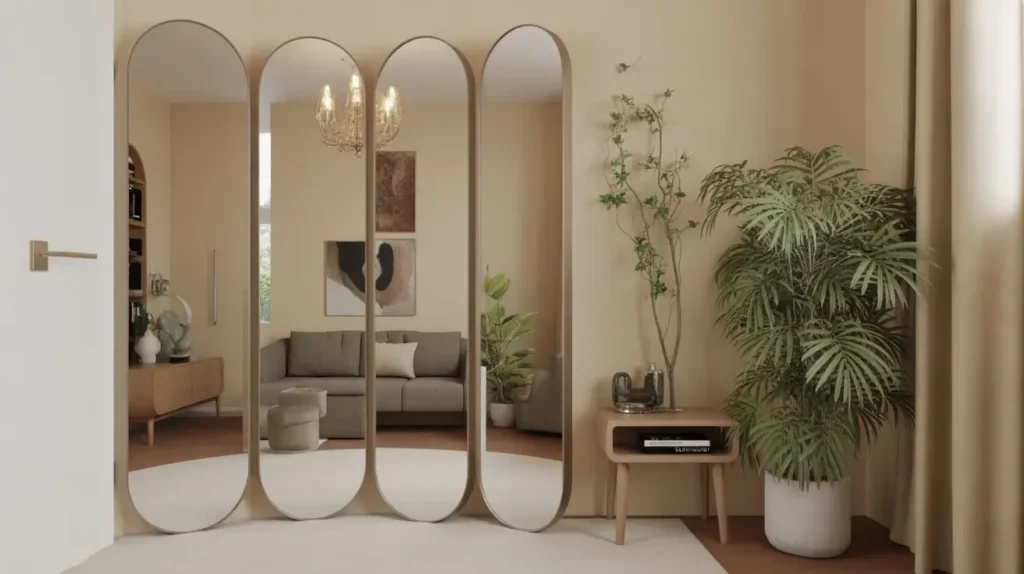
If your narrow entryway feels like a cave, the quickest way to blast it open is with mirrors. But I’m not talking about one dinky little mirror. I’m talking about making a bold vertical statement. Think tall and skinny—a floor-length mirror or a stack of smaller mirrors arranged in a column.
This is probably the oldest trick in the small-space decor book, but for good reason: it works. A tall mirror not only reflects light (making your entryway brighter), but it also reflects the room, creating an illusion of depth that can visually double the width of your hallway. It’s like knocking down a wall without, you know, actually knocking down a wall. Less dust, same effect. 🙂
Creating the Illusion of Space
A full-length mirror, either mounted on the wall or leaned against it, is my personal favorite. It draws the eye up the entire length of the wall, emphasizing verticality and making the ceiling feel higher. This is especially effective in entryways with low ceilings.
If a single large mirror isn’t your vibe, consider a gallery of them. Find three or four smaller, identical mirrors and hang them in a straight vertical line. This has a similar elongating effect but with a bit more of a decorative, gallery-wall feel. The repetition creates a rhythm that is incredibly pleasing to the eye.
Placement is Paramount
Where you put the mirror is crucial. Place it on the wall that runs parallel to the walkway. This will reflect the path and make it feel wider. Avoid placing it at the very end of a long, narrow hall, as it can sometimes create a disorienting “infinity” effect that just emphasizes the length.
Also, think about what it’s reflecting. Ideally, you want it to bounce light from a nearby window or reflect a beautiful piece of art or a doorway into another, more open room. You don’t want it perfectly reflecting the coat closet door. That’s not exactly a view worth duplicating.
3. Minimalist Wall Hook Gallery
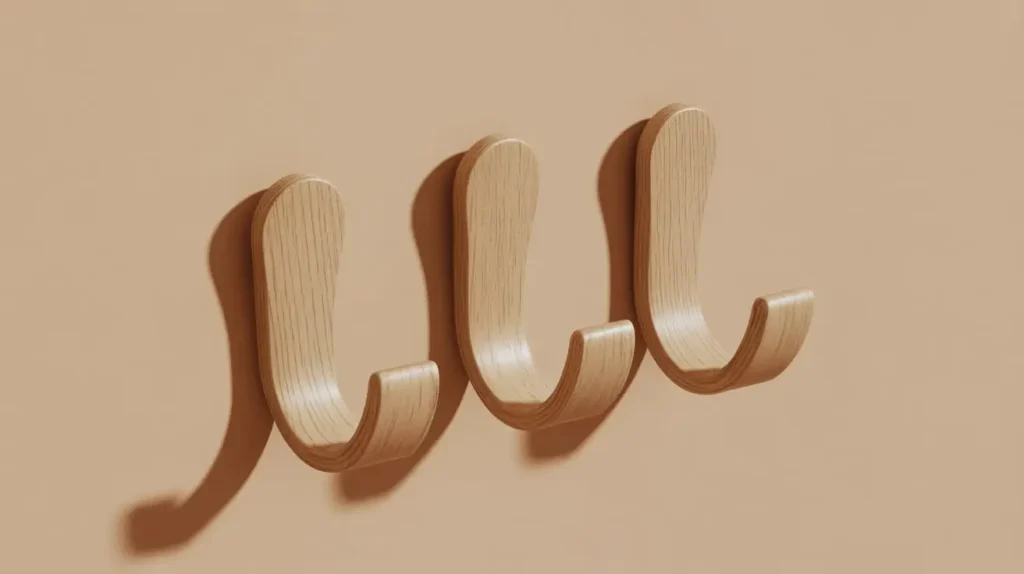
Let’s be real: you need a place to hang your coat, your bag, and that scarf you always grab on your way out. In a narrow entryway, a bulky coat rack is a certified space-killer. It juts out, snags your clothes as you walk by, and generally becomes a leaning tower of clutter. The solution? A minimalist wall hook gallery.
Instead of a single, functional-but-boring rack, think of individual hooks as little pieces of wall art. Choose a set of stylish, modern hooks and arrange them in a deliberate pattern. You can line them up horizontally, stagger them at different heights, or even create a grid. This turns a practical necessity into a cool, graphic design element.
Function Meets Form
The key here is choosing the right hooks. Ditch the generic hardware store variety and look for something with personality. Think about hooks made from wood, brushed brass, matte black metal, or even colorful geometric shapes. These small details elevate the entire look from “storage” to “decor.”
When you’re not using them to hang stuff, they just look like a cool wall installation. And when you do need them, they’re perfectly positioned to hold your essentials. It’s the ultimate in form-meets-function, and it keeps your floor completely clear.
The Art of Arrangement
How you arrange them makes all the difference. For a super clean and modern look, measure them out and hang them in a perfectly straight line with about 6-8 inches between each hook. This creates a sense of order and calm.
For a more playful, organic vibe, try a staggered arrangement. I did this in my last apartment and loved it. I placed five hooks at varying heights in a loose cluster. It looked artistic and was super practical for hanging items of different lengths, like a long trench coat next to a short purse. The trick is to make it look intentional, not like you just randomly threw them at the wall.
4. Narrow Bench with Hidden Storage

Sometimes you just need a place to sit down to wrestle your boots on. But who has room for a bench in a tiny entryway? You do, if you choose the right one. I’m talking about a super narrow bench, ideally one with hidden storage inside.
This piece does double duty (or triple duty, really). It gives you a perch for putting on shoes, a secret spot to hide away winter hats, scarves, and reusable shopping bags, and it adds a soft, welcoming texture to the space. It’s a workhorse piece disguised as a chic accent.
Finding the “Just Right” Bench
The magic words here are “slim profile” and “entryway bench.” You’ll want to measure your space carefully and look for a bench that is no more than 12-14 inches deep. Anything deeper will start to impede the walkway.
Look for benches with a lift-up top. This is the gold standard for hidden storage. You can dump all your clutter inside, close the lid, and—voila!—instant tidiness. Some benches also have cubbies or drawers underneath, which can be great for organizing shoes. IMO, the lift-top is superior because it completely conceals the mess.
Style It Smart
A storage bench can be a substantial piece, so you want to make it feel integrated and light.
- Go for legs: A bench with visible legs feels much lighter and less blocky than one that sits flat on the floor. It allows you to see the flooring underneath, which, as we know, is a key trick for making a space feel bigger.
- Add a cushion: A simple cushion in a neutral fabric or a fun pattern can soften the look and add a pop of personality.
- Keep it clear: Don’t let the top of the bench become another drop zone. Keep it clear or style it with a single, simple throw pillow. Its main job is to be a seat, so let it breathe.
Read Also 15 Aesthetic Foyer Entryway Decor Ideas for Clean Looks
5. Tall Basket Trio Organization
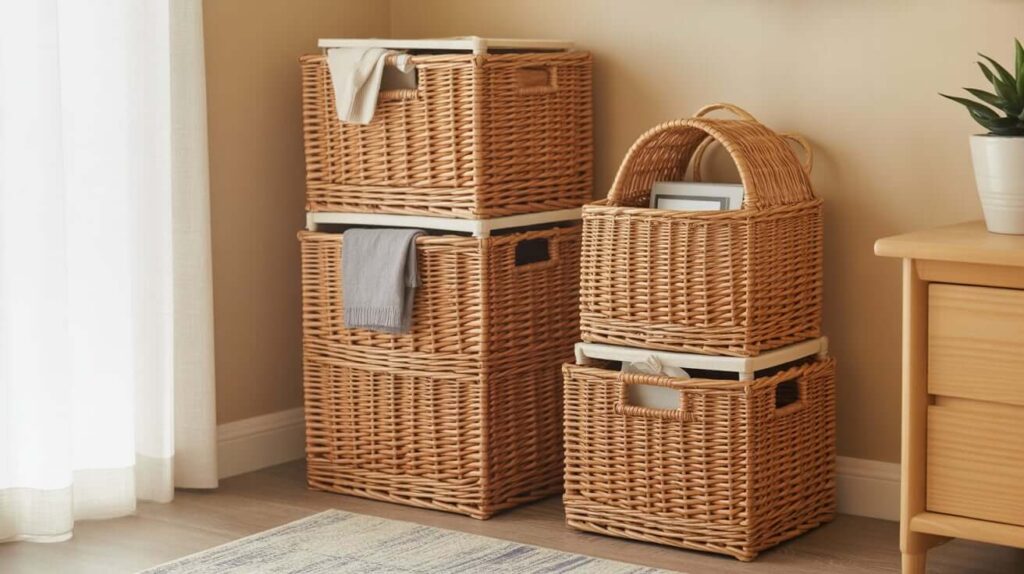
If you’re short on horizontal space, the only way to go is up. A trio of tall, narrow baskets is an amazing way to add a ton of storage and texture to your entryway without eating up your precious walkway.
Forget wide, round baskets that trip you up. We’re looking for baskets with a small footprint but plenty of height. Think “umbrella stand” proportions. Grouping three of them together creates a powerful, intentional design statement that feels both organized and effortlessly chic.
The Power of Three
Why three? In the world of design, odd numbers are more visually appealing and dynamic than even numbers. A group of three creates a sense of balance and completeness. You can choose three identical baskets for a uniform look or mix and match materials and sizes (while keeping them all tall and skinny) for a more eclectic, collected vibe.
I use this trick right by my own front door. I have three seagrass baskets of slightly different heights. One holds umbrellas, one is for my yoga mat, and the third is—if I’m being honest—a catch-all for my kid’s random sports equipment. It corrals the clutter and adds a beautiful, natural texture to the space.
What to Put in Them
The possibilities are endless. These baskets are perfect for things that are awkward to store elsewhere.
- Umbrellas and walking sticks
- Rolled-up yoga mats
- Reusable tote bags
- Dog leashes and toys
- Sports equipment like baseball bats or lacrosse sticks
By containing these items in stylish vessels, you transform them from clutter into a curated collection. It’s all about presentation, isn’t it?
6. Layered Runners for Depth

This might sound counterintuitive. Add more stuff to a small space? But hear me out. Layering two runners can be a brilliant design move that adds incredible depth, color, and personality to a long, narrow entryway.
The key is to use a larger, neutral rug as a base and then layer a smaller, more vibrant or patterned rug on top. This creates a focal point and breaks up the “bowling alley” effect that a single, long runner can sometimes create.
How to Master the Layer
The base rug should be simple and low-profile. Think of a natural fiber rug like jute or sisal. It should cover most of the length of your entryway, providing a neutral, textural foundation. Its job is to define the walkway.
Then, you bring in the star of the show: the top rug. This one can be more expressive. A colorful vintage runner, a bold geometric pattern, or a plush sheepskin can all work beautifully. It should be significantly smaller than the base rug, both in length and width, so the bottom layer frames it nicely.
The Visual Effect
What does this actually do? It creates layers of interest that stop the eye. Instead of your gaze shooting straight to the end of the hall, it pauses to take in the interplay of textures and patterns. This visual break makes the space feel more considered and less tunnel-like.
Think of it like this: a single runner says, “Hurry up, walk down this long, boring hall.” Layered runners say, “Hey, hang out for a second. Look at this cool thing I’m doing.” It’s an expert-level move that is surprisingly easy to pull off.
7. Slim Profile Console with Sconces
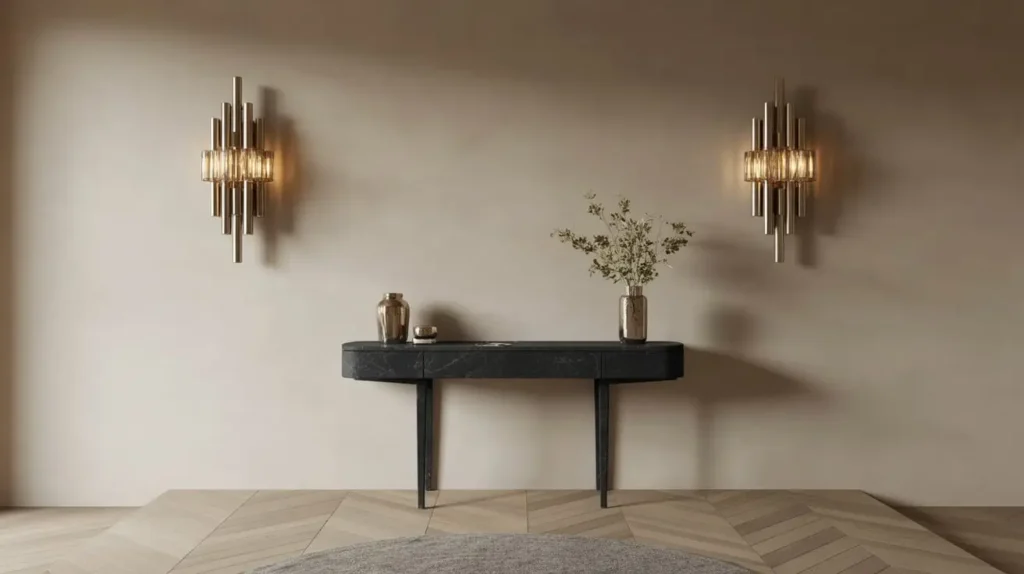
This is the elevated, more sophisticated version of the floating shelf. If you have just a little more space to play with (we’re talking a depth of 10-12 inches), a slim-profile console table with legs can anchor your entryway. The real magic, however, happens when you pair it with a set of wall sconces.
This combination creates a beautiful, symmetrical vignette that feels incredibly high-end. The console gives you a surface, and the sconces provide both ambient lighting and a major style statement. It’s a classic look that instantly makes your entryway feel like a proper, designed room.
Why Sconces are Superior
Why sconces instead of a table lamp? A few reasons. First, they free up the entire surface of your console table. This is huge in a small space where every square inch counts. You get light without sacrificing your spot for keys, a vase, or a piece of decor.
Second, they add architectural interest. Sconces become part of the wall, drawing the eye upward and creating a beautiful frame around a mirror or piece of art placed above the console. The vertical lines of the sconces can also make the wall feel taller.
Choosing the Right Pieces
You need to be picky here. The console table must be genuinely slim. Look for “sofa tables” or “console tables” and filter by the narrowest depth. Ones with thin metal legs or a minimalist “waterfall” design work best because they feel visually light.
For the sconces, you have two main options:
- Hardwired: This is the cleanest look, with no visible cords. It requires an electrician but is well worth the investment for a polished, permanent feel.
- Plug-in: A fantastic and renter-friendly alternative! Many stylish plug-in sconces are available now. You can get creative with hiding the cord or even make the cord a design feature by using a decorative fabric one.
Flank a round mirror with a pair of sleek, modern sconces above your console, and I promise your entryway will look like it’s straight out of a design magazine.
8. Floating Shoe Rack Tower
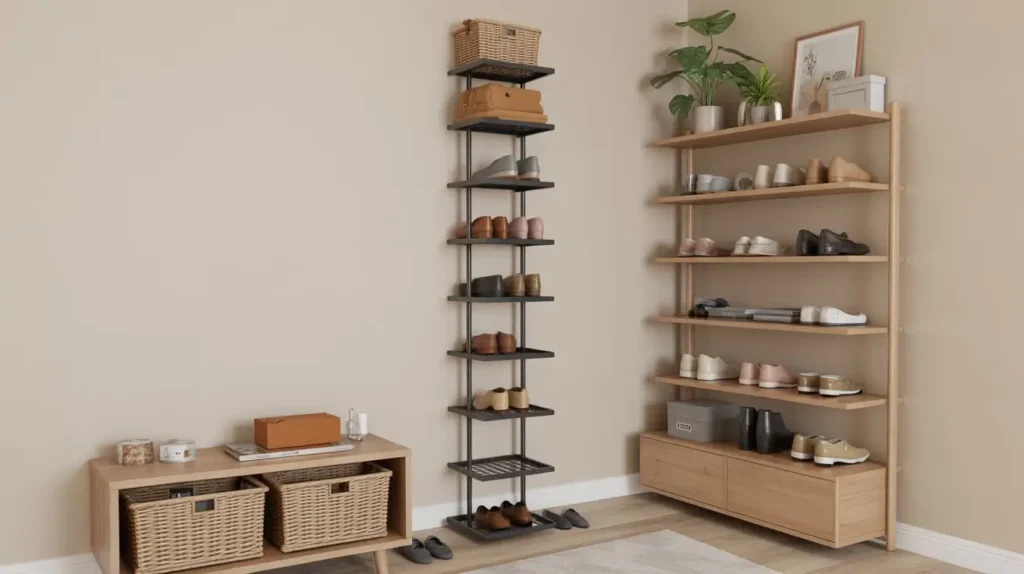
Ah, the eternal problem: shoes. They pile up, they create a tripping hazard, and they generally make a small entryway look like a mess. A traditional shoe rack on the floor can be too bulky, so let’s take it to the wall with a floating shoe rack tower.
I’m talking about a series of short, wall-mounted shelves or ledges, installed vertically one above the other. This creates a “tower” of shoe storage that uses vertical space, keeps your floor completely clear, and can even look like a cool, graphic display.
A Display for Your Kicks
Instead of hiding your shoes, this idea puts them on display. So, uh, this might be the motivation you need to keep your sneakers clean. :/ When you line up your shoes neatly on these floating ledges, they become part of the decor.
This works especially well if you have a collection of cool sneakers or beautiful heels. It’s like a little gallery for your footwear. But even if your shoes are purely functional, arranging them neatly on these shelves creates a sense of order that is far superior to a jumbled pile on the floor.
Installation and Spacing
You can buy ready-made floating shoe shelves, which are often angled slightly to hold the shoes securely. Alternatively, you can use simple picture ledges. They have a small lip on the edge that’s perfect for preventing shoes from slipping off.
Space them about 10-12 inches apart vertically to allow enough room for different shoe types, from flats to high-tops. You can install a tower of three, four, or even five shelves, depending on the height of your wall and the size of your shoe collection. This is a totally customizable solution for your specific needs.
9. Wall-Mounted Mail & Key Station

Is there anything more chaotic than a pile of mail, keys, and random pocket contents on the first available surface? To combat this, you need a dedicated wall-mounted mail and key station. This is a small, all-in-one organizer that gives everything a home.
This isn’t just about tidiness; it’s about sanity. When you have a designated slot for mail and specific hooks for each set of keys, you create a system. You know exactly where to find your car keys when you’re running late. It’s a small change that has a huge impact on your daily routine.
Finding the Perfect Organizer
There are thousands of these on the market, ranging from simple wooden boxes to sleek metal systems. Look for one that fits your aesthetic and your needs.
- A small shelf: For your wallet or sunglasses.
- A slot or two: For incoming and outgoing mail.
- A few hooks: For keys, lanyards, or the dog leash.
I personally love the ones that combine a small shelf with a mail slot and some hooks underneath. It’s a compact powerhouse of organization. Mounting it on the wall, right next to the door, keeps your console table or bench surface free for more decorative items.
Make It Your Own
Don’t just hang any old organizer. Choose one that complements your decor. You can find them in rustic wood, industrial metal, or minimalist white. You could even DIY one with a few pieces of wood and some hooks for a custom solution.
Place a tiny succulent or air plant on the shelf to add a touch of life. This simple act transforms it from a purely utilitarian object into a thoughtful part of your entryway design.
Read Also 15 Modern Small Foyer Entryway Decor Ideas for Today
10. Narrow Entryway Accent Paneling
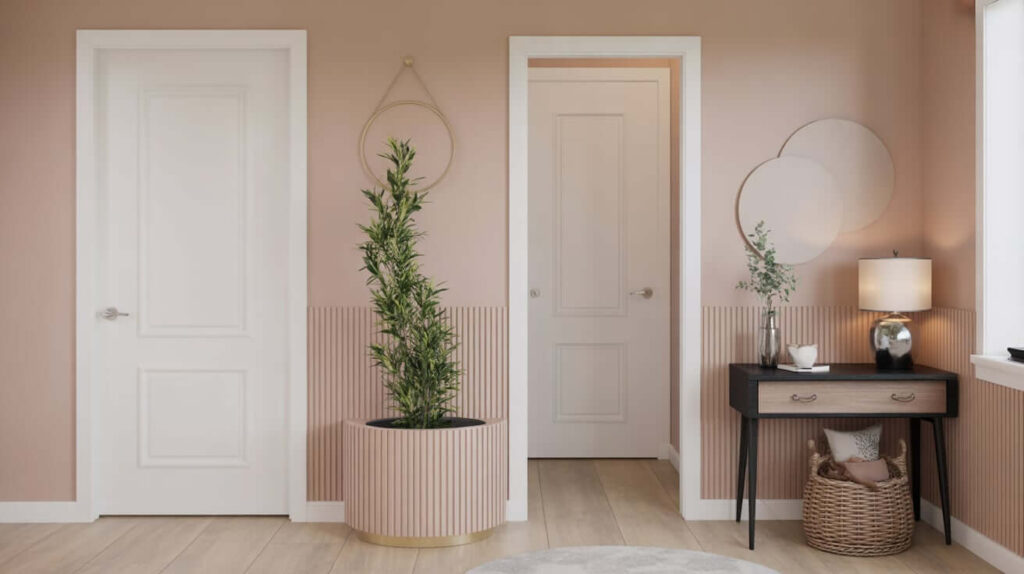
If your entryway is just a plain, boring box, adding some architectural detail with accent paneling can make a world of difference. This sounds complicated and expensive, but it doesn’t have to be. Modern trim work like board and batten, beadboard, or even simple geometric molding can add immense character and dimension.
By adding texture and shadow lines to a flat wall, you create visual interest that distracts from the narrowness of the space. It’s a technique designers use to make rooms feel more custom and luxurious, and it works just as well in a tiny hallway.
Types of Paneling to Consider
You don’t need to panel the entire entryway. In fact, focusing on one wall or just the lower half of the walls is often more effective.
- Board and Batten: This classic style, with its grid of vertical and horizontal boards, is amazing for adding a sense of structure and height. A simple version with vertical battens can make the walls feel taller.
- Beadboard: Typically installed on the lower 3-4 feet of the wall, beadboard adds a charming, cottage-like or coastal feel. Its thin vertical stripes are another great trick for visually elongating the space.
- Geometric Molding: For a more modern take, use thin pieces of trim to create a geometric pattern on one accent wall. A series of squares, rectangles, or even an abstract design can turn a boring wall into a work of art.
The Magic of Paint
Once your paneling is installed, paint is your best friend. Painting the trim and the wall the same color (a technique called color drenching) creates a subtle, textural effect that feels very sophisticated and modern. A rich, dark color like navy or charcoal can create a cozy, dramatic jewel-box effect, while a soft neutral will keep it feeling light and airy.
11. Vertical Greenery Wall
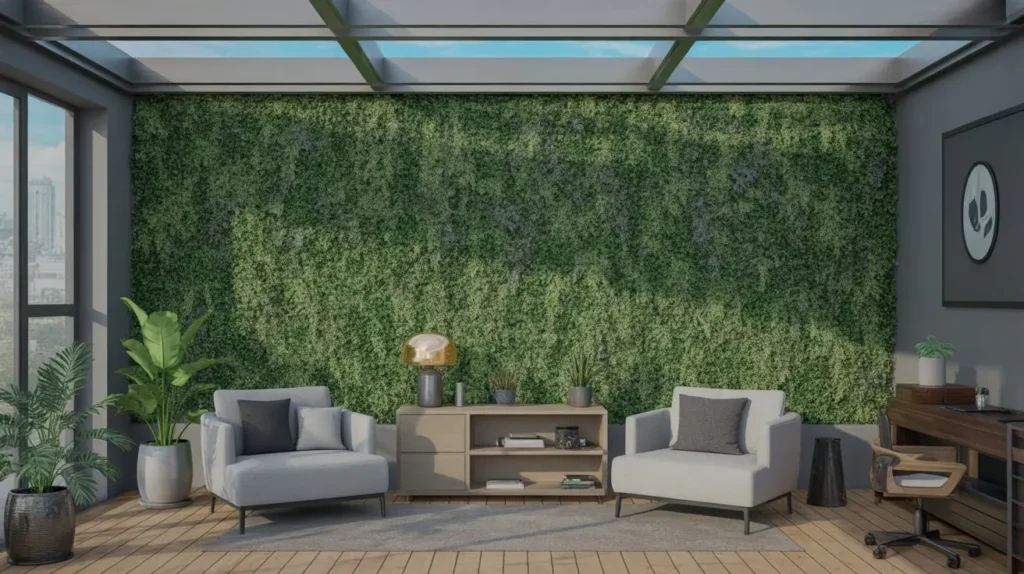
Want to breathe some life into your cramped entryway? Literally? A vertical greenery wall, or “living wall,” is a stunning way to introduce nature and create a vibrant focal point. This doesn’t mean you need a complex, self-irrigating system (though those are cool). A simpler approach can have just as much impact.
Hanging a series of wall-mounted planters in a vertical line or using a trellis with climbing plants can transform a bland wall into a living, breathing piece of art. It adds color, texture, and a sense of calm—the perfect antidote to a stressful day.
Low-Maintenance Greenery
Let’s be realistic. Most entryways don’t get a ton of natural light, and you’re probably not looking for another high-maintenance thing to take care of. So, choosing the right plants is key.
- Pothos: The undisputed king of low-light, easy-care plants. Its trailing vines are perfect for a vertical display.
- Snake Plant: This plant thrives on neglect and has a strong, vertical shape that works well in narrow spaces.
- ZZ Plant: Another nearly indestructible option that tolerates low light and infrequent watering.
- Faux Plants: No shame in the faux game! Modern artificial plants look incredibly realistic. A wall of high-quality faux greenery gives you the look without any of the work. FYI, this is a great option for super dark hallways.
Installation Ideas
You can buy modular wall planter systems that make it easy to create a grid of plants. Another idea I love is to install a few simple shelves and line them with small, potted plants. Or, hang a simple black metal trellis and train a pothos to climb up it. The contrast of the green leaves against the dark metal is beautiful.
12. Art Trio in a Linear Layout

A big, bulky piece of art can overwhelm a narrow hall. But a strategic arrangement of smaller pieces can create a beautiful flow and a sense of length. My favorite configuration is an art trio hung in a strict linear layout.
This means taking three pieces of art of the same size and orientation (e.g., all vertical) and hanging them in a perfect line, either horizontally along the wall or vertically up the wall. This creates a clean, graphic, and intentional look that is far more impactful than a single, lonely frame.
Horizontal vs. Vertical
- Horizontal Layout: Hanging three pieces in a horizontal line draws the eye along the length of the entryway. This is great for creating a sense of movement and guiding guests into the rest of your home. Use identical frames and maintain precise, even spacing (2-3 inches between each frame) for a polished, gallery-like feel.
- Vertical Layout: Stacking three frames vertically is a fantastic way to emphasize height and make your ceiling feel taller. This is a great solution for a shorter entryway wall where you want to add some drama.
Choosing the Art
The art itself can be a cohesive series—three related photographs, three abstract prints from the same artist, or three botanical illustrations. This creates a strong, unified statement.
Alternatively, you can create a “triptych” out of a single image. Some art providers will print a single large photo or piece of art across three separate canvases or framed prints. When hung together, they form one large, cohesive image, which is a very cool and modern effect.
13. Slim Cabinet with Sliding Doors
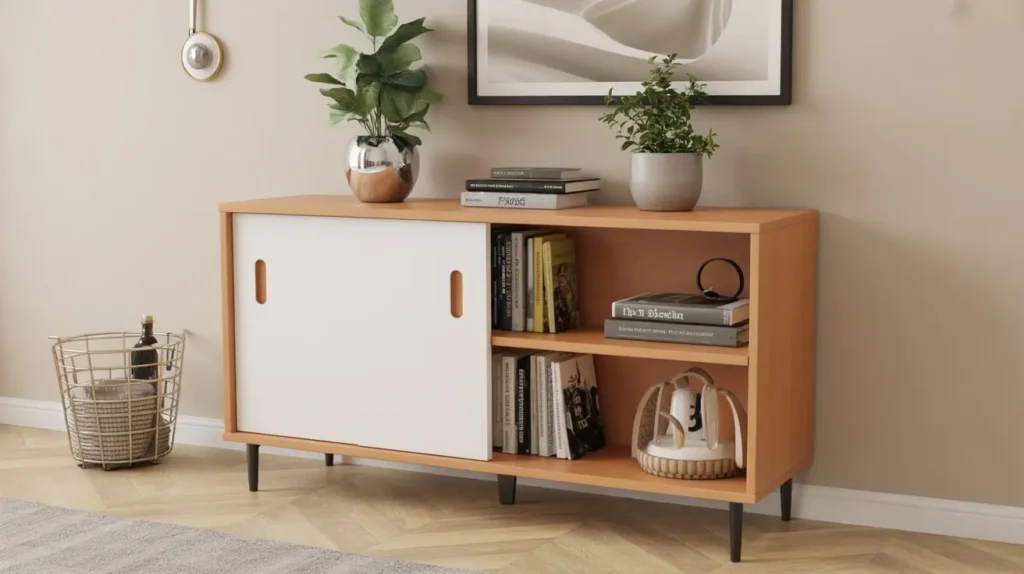
If you need serious, concealed storage but don’t have the clearance for swinging doors, a slim cabinet with sliding doors is your absolute best friend. This is the ultimate problem-solver for narrow hallways where every inch of walkway is precious.
A traditional cabinet door needs space to swing open, which can completely block your path. Sliding doors move along a track, requiring zero outward clearance. This means you can place a cabinet in a super-tight spot and still have full access to what’s inside. It’s a genius design for small-space living.
What to Look For
Search for “slim shoe cabinets” or “narrow media consoles” with sliding doors. These pieces are specifically designed for tight spaces. They often have a depth of only 9-12 inches, which is significantly less than a standard cabinet.
Inside, you’ll often find angled shelves perfect for shoes, or simple shelving for baskets, bins, and other entryway clutter. This is where you hide the stuff you don’t want anyone to see: the dog-walking shoes, the jumble of winter accessories, the kids’ backpacks. It’s a clutter-hiding champion.
Style and Material
These cabinets come in all sorts of styles. A sleek, white one can blend seamlessly into the wall, minimizing its visual impact. A cabinet made of warm wood with caned or rattan sliding doors can add a ton of texture and a trendy, bohemian feel. The key is to choose a piece that feels light. Look for ones with legs to create that all-important sense of openness underneath.
14. Entryway Niche Lighting
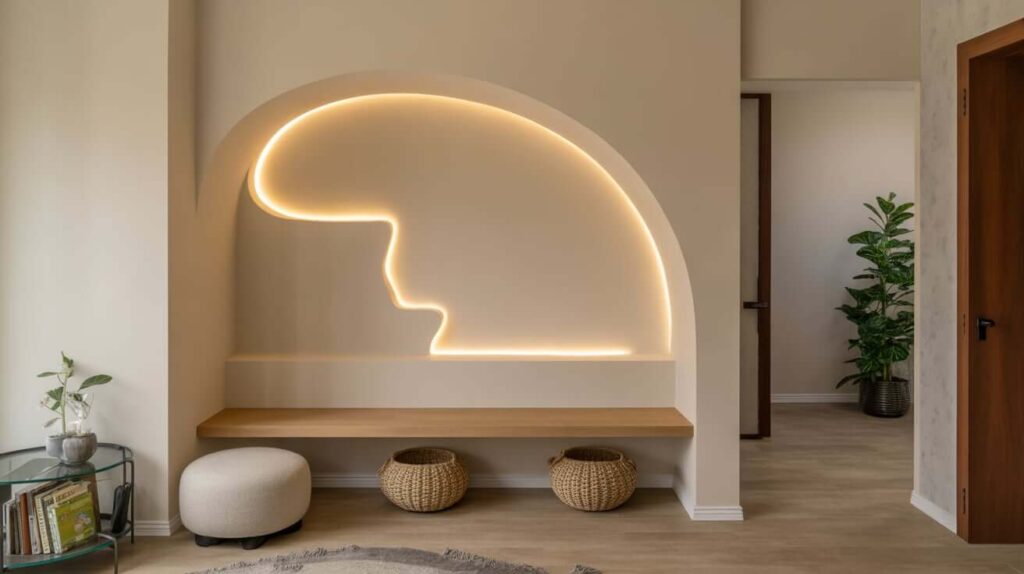
This is a high-impact, custom-look idea that is so worth the effort. If you have a small, awkward nook or you’re willing to do a bit of light construction, creating a built-in niche with integrated lighting is a showstopper.
Imagine a small, recessed box in the wall, beautifully lit from within by a hidden LED strip. It’s the perfect spot to display a single, stunning vase, a small sculpture, or a piece of treasured pottery. It turns a dead space into a dramatic, gallery-like feature.
Creating the Niche
This is easiest to do if you have drywall. You (or a handy person) can frame out a small box between the wall studs. The standard space between studs is about 14.5 inches, which is the perfect width for a vertical niche. You can make it as tall as you like.
Once the niche is built and finished, you install a low-profile LED strip light along the top or one of the sides, hiding the source of the light itself. This creates a beautiful, soft glow that washes down over whatever you place inside. The effect is incredibly chic and expensive-looking.
Why It Works in a Narrow Space
A niche is brilliant because it adds storage and display space without protruding into the hallway at all. In fact, it recesses into the wall, creating a sense of depth and architectural interest.
The integrated lighting also adds a gorgeous layer of ambient light, which is crucial for making a small, dark space feel more welcoming. It’s a detail that feels intentional and custom, instantly elevating your entire entryway. Is this more work than hanging a picture? Yes. Does it look a million times cooler? Also yes.
15. Suspended Peg Rail System
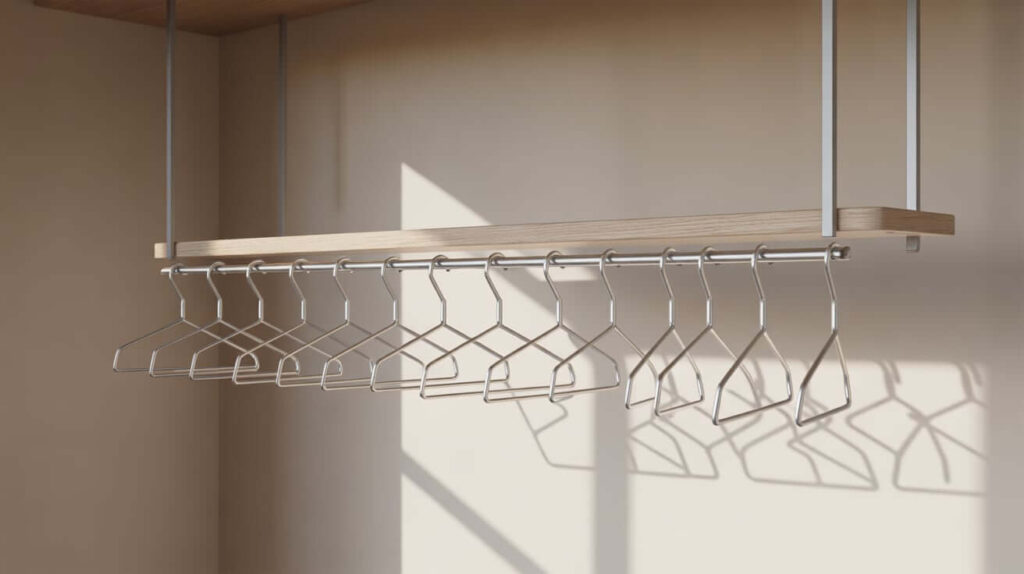
Let’s end with a solution that is endlessly versatile, stylish, and perfect for narrow walls: the suspended peg rail system. This is a modern, minimalist take on the classic Shaker peg rail. But instead of mounting it directly to the wall, you suspend it from the ceiling using leather straps or ropes.
This creates a light, airy, and unexpected storage solution. It feels less heavy than a wall-mounted shelf and has a cool, slightly industrial or Scandinavian vibe. It draws the eye up and creates a unique focal point.
The Ultimate in Versatility
A suspended peg rail is the ultimate chameleon. You can hang almost anything from it.
- Coats, scarves, and bags on the pegs themselves.
- Wire baskets from S-hooks for holding mail or gloves.
- A small hanging planter to add a touch of green.
- A mirror with a leather strap hung from one of the pegs.
- Your keys on a stylish keychain.
Because it floats in front of the wall, it adds a layer of dimension to the space. You can easily customize the height and the accessories to fit your exact needs.
DIY Potential
This is a fantastic DIY project. All you need is a wooden dowel, some leather straps (you can buy these at a craft store), and the right hardware to anchor it to your ceiling. Drill holes through the dowel for the pegs, sand it, stain it or paint it, and you have a completely custom, high-style storage piece for a fraction of the cost of a designer one.
It’s a functional sculpture for your entryway, proving that even the most practical items can be beautiful.
Your Entryway, Your Welcome
So there you have it. Your narrow entryway doesn’t have to be a source of frustration. It’s a blank canvas waiting for a little creativity. Whether you opt for the visual trickery of a giant mirror, the brilliant functionality of a slim cabinet, or the simple charm of a wall hook gallery, the goal is the same: to create a space that feels welcoming, organized, and uniquely you.
Don’t feel like you have to do everything at once. Pick one or two ideas that really speak to you and your space. The biggest takeaway? Think vertically, choose multi-functional pieces, and never, ever underestimate the power of a good mirror. Now go reclaim that hallway and make an entrance you can be proud of