

So, you’ve knocked down that wall (or maybe you’re lucky enough to have moved into a place with an open floor plan already), and now you’re staring at this massive space wondering how to make it look like something out of an interior design magazine. Trust me, I’ve been there. When my partner and I first tackled our open concept living and dining room, we ended up with a sofa facing nowhere, a dining table that felt like it belonged in a different house, and a rug that somehow made everything worse. Fun times.
But here’s the good news: styling an open concept space doesn’t require a design degree or a bottomless budget. It requires intention, a bit of creativity, and knowing what actually works. I’ve spent years obsessing over this stuff—rearranging furniture at midnight, collecting inspiration photos like they’re trading cards, and learning from plenty of mistakes.
Ready to transform your open concept living and dining room into something that actually flows? Let’s get into these 15 styling tips that’ll help you nail it.
1. Cozy Neutral Open Concept Living and Dining Room
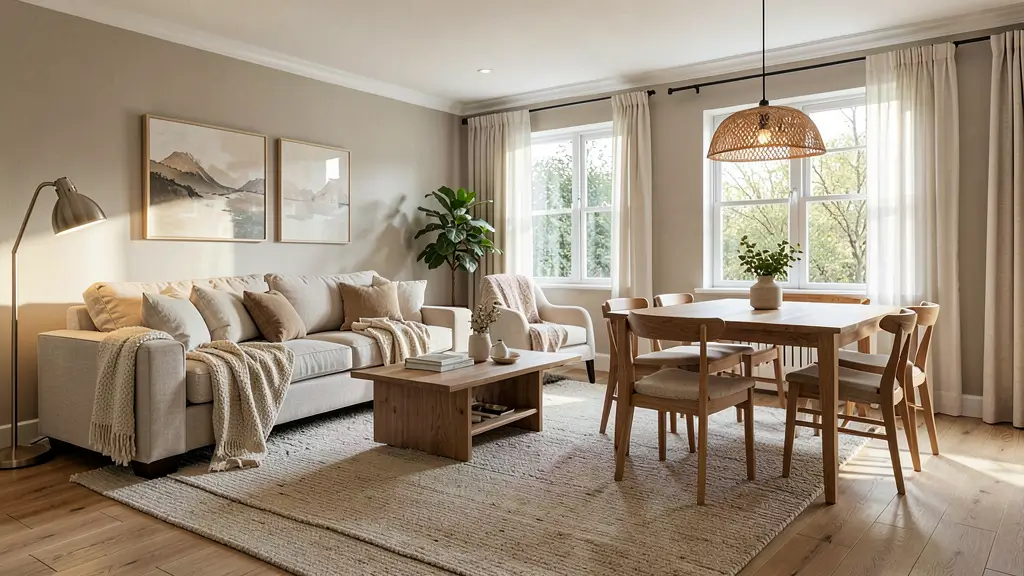
Let’s start with the most universally appealing approach: the cozy neutral palette. This style works beautifully in open concept spaces because neutral tones create visual continuity between your living and dining areas without making the space feel monotonous.
Think warm whites, soft beiges, creamy ivories, and gentle greiges (yes, that’s a real color—gray meets beige). The magic happens when you layer different textures within this palette. A linen sofa, a chunky knit throw, a jute rug, and some wooden dining chairs can all exist in similar color families while feeling completely distinct.
Here’s what makes cozy neutrals work in open layouts:
- Multiple texture layers prevent the space from feeling flat
- Warm undertones (think cream over stark white) add instant coziness
- Natural materials like wood, rattan, and linen add visual interest without competing colors
- Soft lighting from table lamps and candles enhances the warm atmosphere
The key mistake people make? Going too matchy-matchy. Your living room sofa and dining chairs don’t need to be the same shade of beige. In fact, they shouldn’t be. Vary your neutrals slightly, and the space gains depth while maintaining that cohesive, collected-over-time feel.
2. Modern Minimalist Open Concept Living and Dining Room
Ah, minimalism. It sounds so easy, right? Just own less stuff. Except then you realize you need some furniture, and suddenly you’re overthinking every single piece. Been there, done that, bought the one expensive chair that was supposed to “spark joy.”
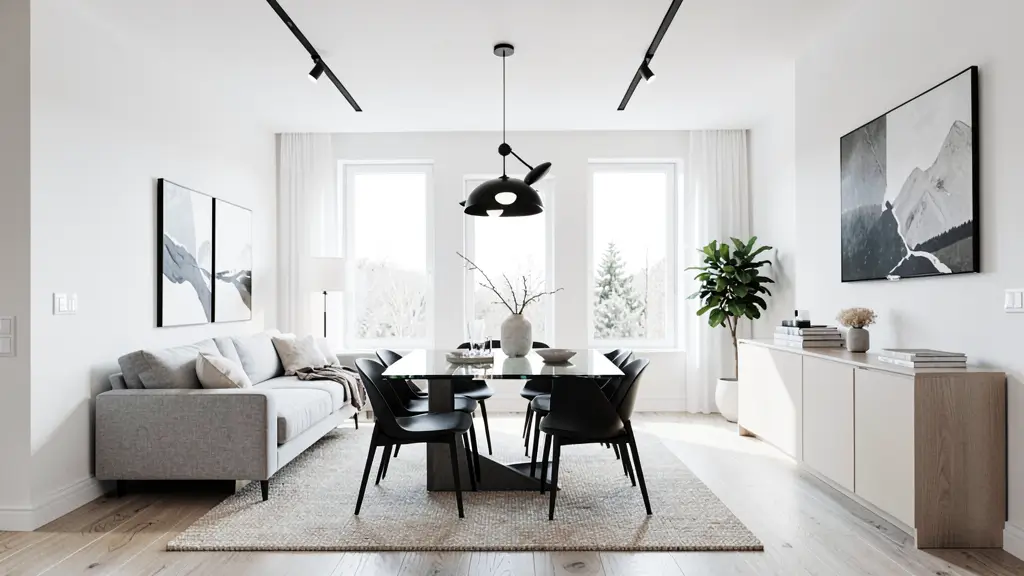
Here’s the thing about modern minimalist open concept design: it’s not about having nothing—it’s about having only what matters. In an open floor plan, this approach actually makes a ton of sense because fewer visual distractions allow the space itself to breathe.
For this style, focus on:
- Clean lines on all furniture pieces—no ornate details or fussy curves
- Quality over quantity—invest in a few stunning pieces rather than filling every corner
- Hidden storage to keep clutter invisible (because minimalism with visible mess is just chaos)
- A strict color palette of 2-3 colors maximum
- Negative space as an intentional design element, not an afterthought
The dining area in a minimalist open concept should feel like a natural extension of the living space. A simple rectangular table with streamlined chairs, maybe a single pendant light overhead, and you’re done. Resist the urge to add a centerpiece, then another, then a table runner. Sometimes the empty table IS the statement.
3. Small Space Open Concept Living and Dining Layout
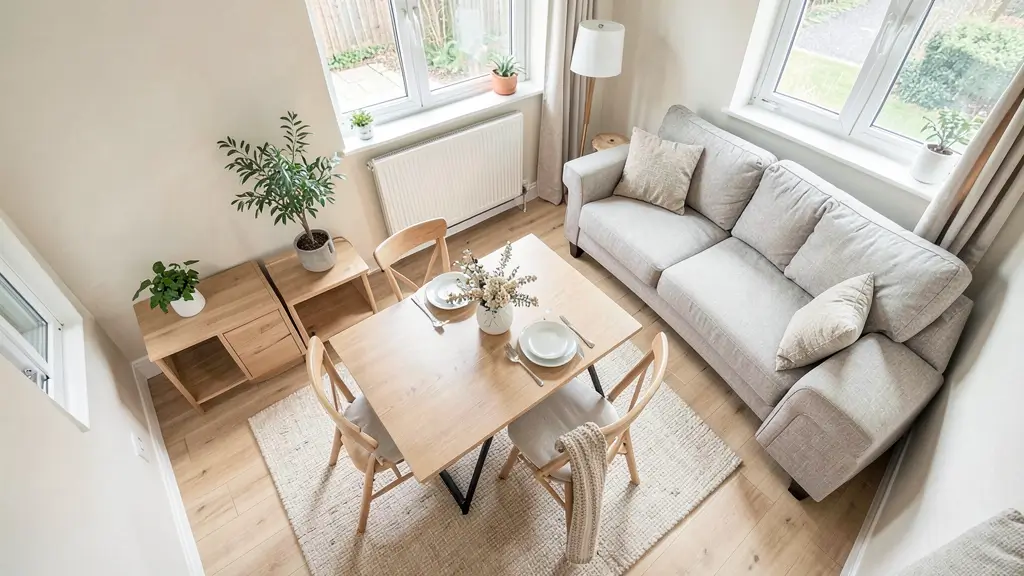
Now we’re talking about real-life challenges. Not everyone has a sprawling loft with 20-foot ceilings. Most of us work with spaces that are open concept out of necessity rather than luxury—because the alternative would be living in a series of tiny, cramped boxes.
Making a small open concept work requires strategic furniture placement and some clever visual tricks. The goal is to define each zone without physical barriers while maximizing every square foot.
Furniture Selection for Small Spaces
Choose furniture that serves double duty whenever possible. An extendable dining table saves space on regular days but expands for dinner parties. A sofa with built-in storage hides blankets and pillows. Coffee tables with lower shelves provide extra real estate for books and remotes.
Zone Definition Without Walls
You can separate your living and dining areas using:
- Area rugs that anchor each space distinctly
- Lighting changes—a pendant over dining, floor lamps in living
- Furniture arrangement with the sofa back serving as a subtle divider
- Ceiling treatments or different paint colors (if you’re feeling ambitious)
Scale Matters—A Lot
That oversized sectional you’re eyeing? It’ll eat your entire small space alive. In compact open concepts, appropriately scaled furniture makes the difference between cozy and claustrophobic. Measure twice, buy once, and maybe visualize with painter’s tape on the floor before committing.
4. Scandinavian Style Open Concept Living and Dining Room
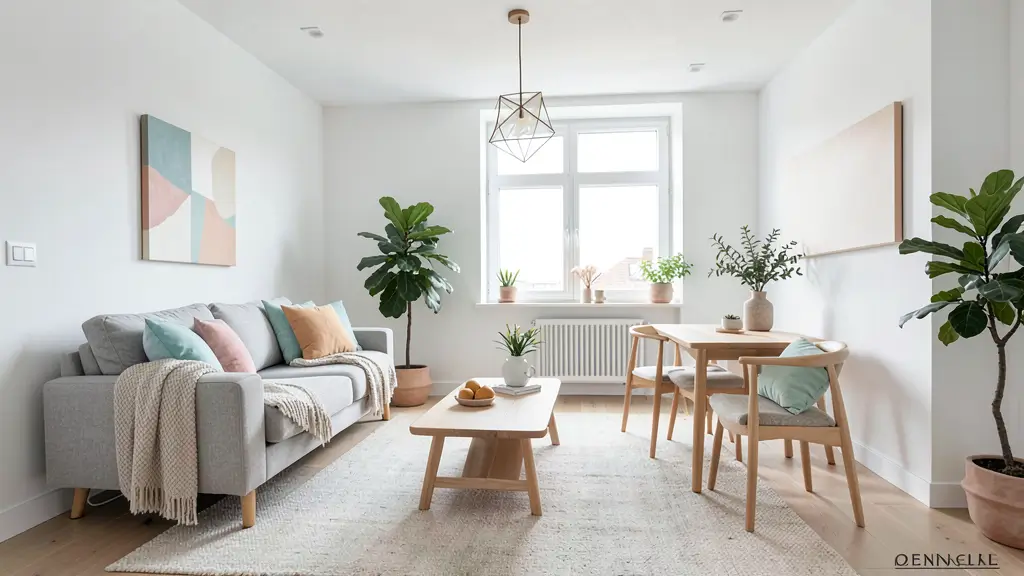
Scandinavian design and open concept layouts go together like coffee and Sunday mornings. The Scandi approach emphasizes light, function, and warmth—all things that make open living spaces feel intentional rather than chaotic.
Ever wondered why Scandinavian interiors always look so effortlessly put-together? It’s the combination of clean aesthetics with organic materials. Light wood floors, white walls, simple furniture shapes, and then those cozy textiles that make you want to curl up with a book and never leave.
For your Scandinavian open concept space, consider:
- Pale wood tones for flooring, furniture, and accents (oak and ash are classics)
- White or light gray walls to maximize natural light reflection
- Black accents used sparingly for contrast (a pendant light, chair legs, frames)
- Greenery—Scandinavians love their houseplants, and they add life to minimal spaces
- Textural contrast through wool throws, sheepskin rugs, and linen curtains
The dining area in a Scandi open concept often features a simple wooden table with mismatched chairs (intentionally, of course), a striking pendant light, and maybe a single branch in a ceramic vase. It’s effortless, which actually requires quite a bit of effort to achieve. Ironic, isn’t it?
Also Read: 15 Elegant Yellow Bedroom Styles for Modern Interiors
5. Luxury Open Concept Living and Dining Room Design
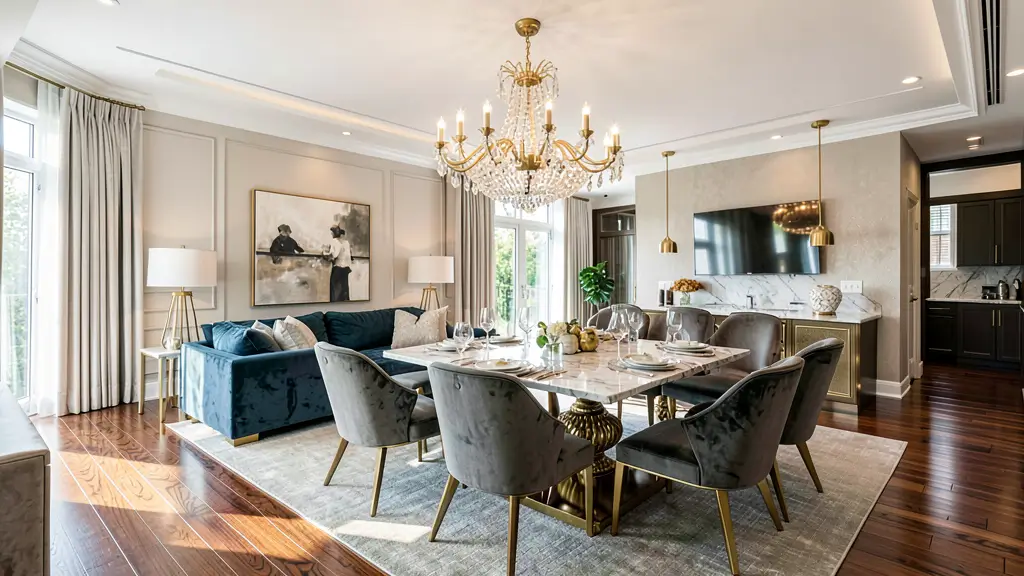
Okay, let’s talk about the fancy stuff. Luxury open concept design isn’t just about spending money—though, let’s be honest, it usually involves a decent budget. It’s about creating a sense of elevated sophistication where every element feels considered and intentional.
In a luxurious open concept, the transition between living and dining should feel seamless and polished. Think high-end materials, statement furniture, and those finishing touches that make guests quietly wonder how much you spent. (You don’t have to tell them.)
Key Elements of Luxury Open Concept Design
Materials make the difference. Marble accents, brass hardware, velvet upholstery, and solid wood pieces signal quality immediately. You can’t fake marble with a vinyl sticker and expect the same effect—trust me, people notice.
Symmetry and proportion play huge roles in luxury aesthetics. A pair of matching table lamps, two identical armchairs flanking the fireplace, evenly spaced dining chairs—these create visual order that reads as sophisticated.
Layered lighting is non-negotiable. Recessed ceiling lights, statement chandeliers, sconces, and table lamps all working together create dimension and drama. IMO, lighting upgrades offer the biggest bang for your buck when aiming for that luxury feel.
The Dining Statement
In luxury open concepts, the dining area often steals the show. A substantial table in a rich wood or marble, upholstered dining chairs (yes, they’re less practical but infinitely more elegant), and a dramatic light fixture overhead create a space that feels worthy of celebration.
6. Rustic Farmhouse Open Concept Living and Dining Room
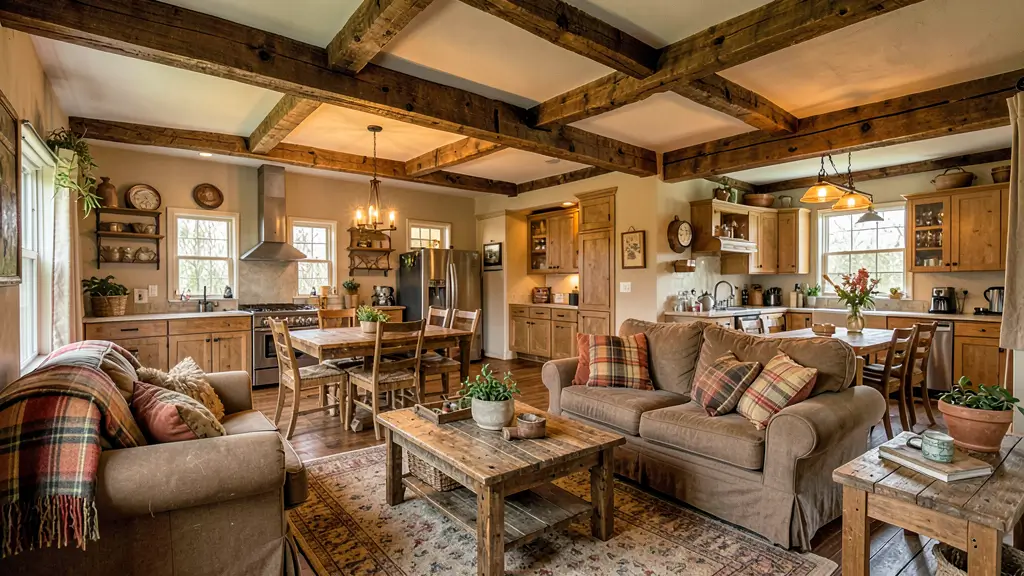
There’s something deeply comforting about farmhouse style. Maybe it’s the nostalgia, maybe it’s the promise of fresh-baked bread and slower living. Either way, rustic farmhouse open concepts bring warmth and character that modern minimalism simply can’t replicate.
The beauty of this style in an open layout is how naturally the living and dining zones connect. Farm life was communal—everyone gathered around the same big table, conversations flowed between cooking and relaxing—and this design philosophy carries into how the space functions.
Here’s what defines the rustic farmhouse look:
- Reclaimed wood elements: barn doors, exposed beams, chunky wooden tables
- Vintage and antique pieces: an old ladder for blanket storage, mismatched chairs with history
- Neutral palette with earthy accents: whites, creams, wood tones, with touches of sage or dusty blue
- Natural textiles: cotton, linen, burlap (yes, even burlap can look chic)
- Industrial touches: wrought iron light fixtures, metal stools, galvanized accents
The dining table is the heart of any farmhouse home. Go big—a substantial wood table that shows its grain and maybe some character marks. Pair it with a mix of seating: a wooden bench on one side, individual chairs on the other. It should look like it’s hosted decades of Sunday dinners, even if you bought it last month.
7. Boho Chic Open Concept Living and Dining Room
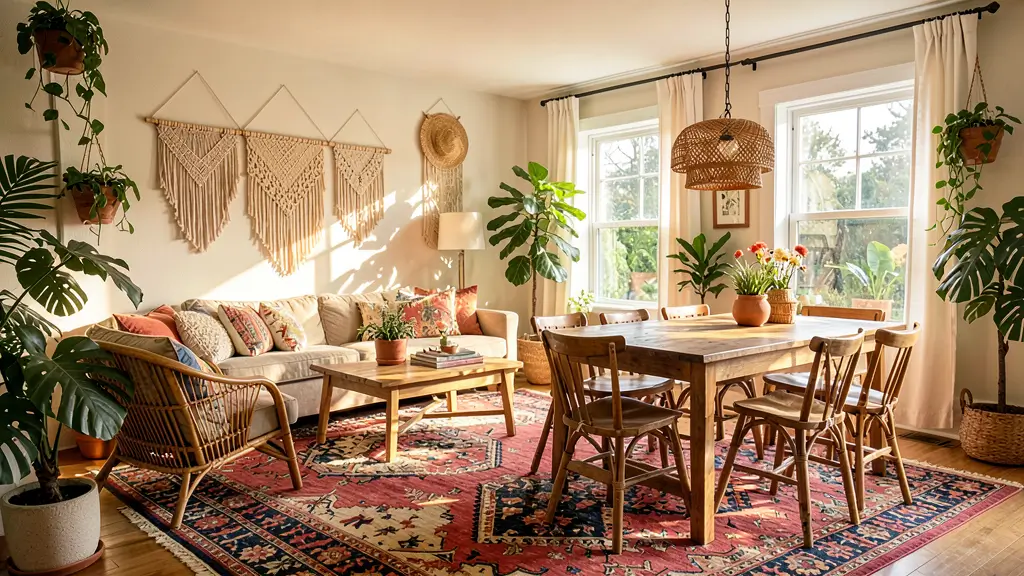
If you’re someone who can’t commit to one style, one color, or one cultural influence, boho chic might be your calling. This eclectic approach celebrates collected pieces, global influences, and the kind of organized chaos that somehow just works.
Boho open concepts succeed because they embrace layers and personality over rigid rules. Your dining chairs don’t need to match—in fact, they probably shouldn’t. Your rug might be Moroccan while your coffee table is mid-century modern while your dining table is reclaimed wood. And somehow, it all belongs together.
Building a Boho Open Concept Space
Start with a neutral base—white or warm-toned walls give you maximum flexibility. Then layer in:
- Textured textiles everywhere: macramé wall hangings, woven baskets, fringed throws
- Mixed patterns: florals with geometrics, stripes with ikat—break the “rules”
- Plants, plants, and more plants: every boho space needs greenery cascading from shelves
- Low furniture: floor cushions, poufs, and lower sofas create that relaxed vibe
- Global accents: pieces from different cultures and travels add authenticity
The dining area in boho spaces often features pendant lights with texture (rattan, woven fibers), a wood table with natural edges, and seating that prioritizes comfort over formality. Think cushioned chairs, maybe even floor seating for casual gatherings.
8. Black and White Open Concept Living and Dining Room
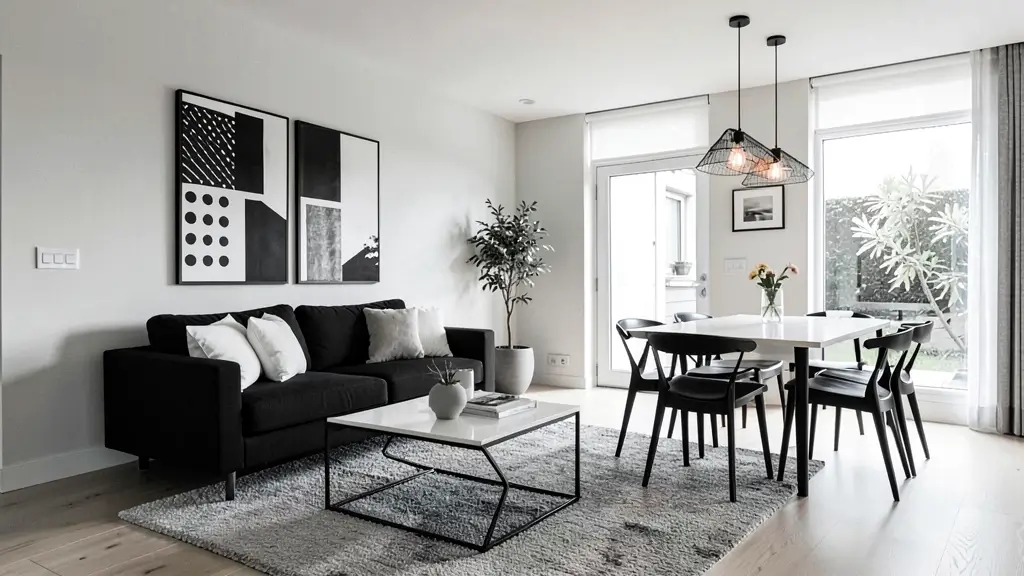
High contrast, maximum drama. A black and white open concept is not for the faint of heart, but when done right, it creates one of the most striking interiors you can achieve.
The challenge with monochromatic schemes in open layouts is avoiding that sterile, impersonal feel. The solution? Texture, pattern variation, and warm accents that soften the stark contrast while maintaining the graphic impact.
Making Black and White Feel Livable
You need variety in your textures. A black velvet sofa feels completely different from black leather dining chairs, even though they’re technically the same color. White shiplap walls read warmer than white painted drywall. Mix matte and glossy finishes for added dimension.
Patterns break the monotony. A striped rug, geometric throw pillows, or a black-and-white artwork collection adds visual interest without introducing new colors.
Don’t forget about warmth. Introduce natural wood tones, brass or gold accents, and greenery to prevent your space from feeling like a photography studio. A warm wood dining table between black and white elements grounds the whole room.
9. Warm Earth Tone Open Concept Living and Dining Room
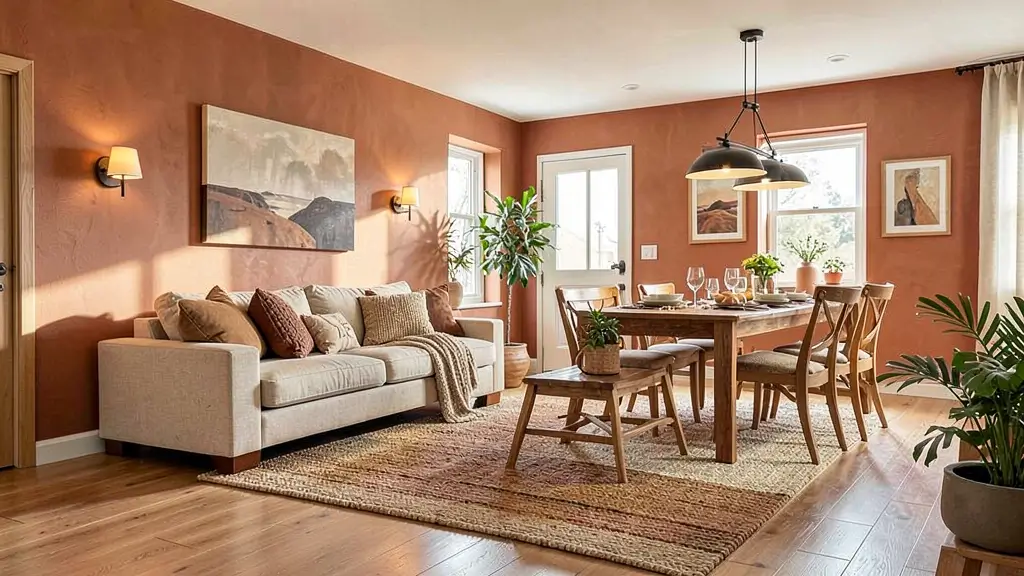
After years of gray domination in interior design, warm earth tones have made a glorious comeback. Terracotta, rust, olive, mustard, caramel—these colors wrap you in warmth the moment you walk in.
In an open concept living and dining room, earth tones create a cohesive, grounded atmosphere. These colors naturally complement each other (because they literally come from the same earth palette), making it easy to transition between zones without jarring color shifts.
Here’s how to build your earth-toned open concept:
- Start with a warm neutral base: beige walls, terracotta tiles, or warm wood floors
- Layer complementary earth tones: rust throw pillows, olive dining chairs, mustard accents
- Add black for contrast: just a few touches to ground the warm colors
- Include natural materials: leather, stone, clay, wood in their natural states
- Bring in greenery: plants add life and echo the nature-inspired palette
The dining area thrives with earthy ceramics for serving, perhaps a terracotta pendant light, and wooden furniture that shows its grain. It should feel like gathering around a table in Tuscany, even if you’re actually in Ohio.
10. Coastal Style Open Concept Living and Dining Room
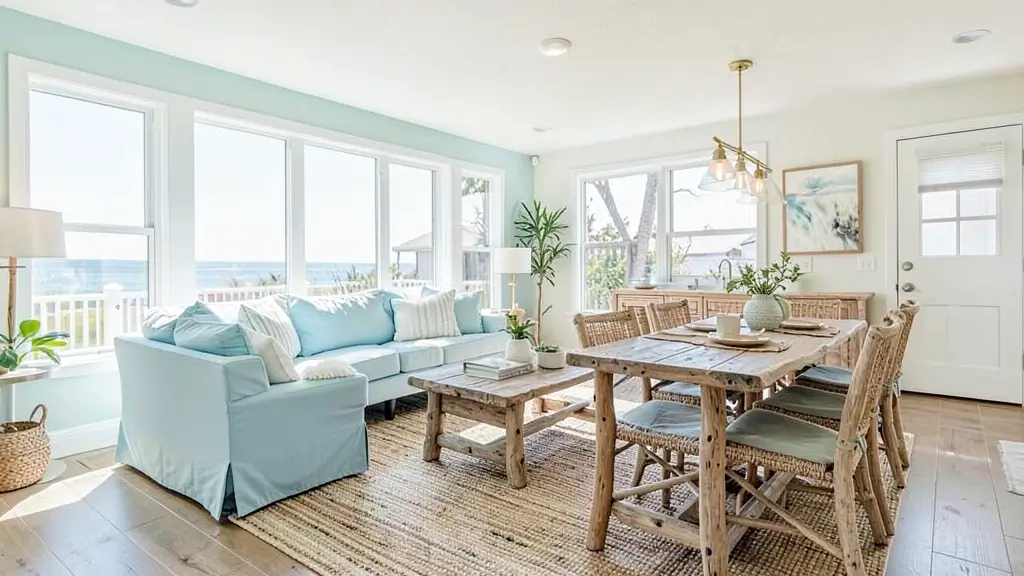
You don’t need to live by the beach to bring coastal vibes into your open concept space. This breezy, relaxed style works anywhere you want that vacation-every-day feeling—which, honestly, sounds pretty great no matter your zip code 🙂
Coastal design in open layouts emphasizes airiness, natural light, and a connection to nature. The color palette sticks to ocean-inspired hues: blues ranging from sky to navy, sandy beiges, driftwood grays, and crisp whites.
Essential Elements of Coastal Open Concepts
Light is everything. If you have windows, maximize them. Sheer curtains or none at all. Mirrors to bounce light around. Everything should feel bright and airy.
Natural textures ground the beachy palette: jute rugs, rattan furniture, woven baskets, linen upholstery. These materials add warmth and prevent the blue-and-white scheme from feeling cold.
Casual comfort defines coastal furniture choices. Slipcovered sofas, cushioned dining chairs, and relaxed arrangements say “kick off your sandals and stay awhile.”
The dining area in coastal spaces often features a white or light wood table, blue-and-white patterned dishes displayed on open shelving, and maybe a rope-wrapped pendant light. No flip-flops required, but encouraged.
11. Elegant Open Concept Living and Dining Room With Chandelier
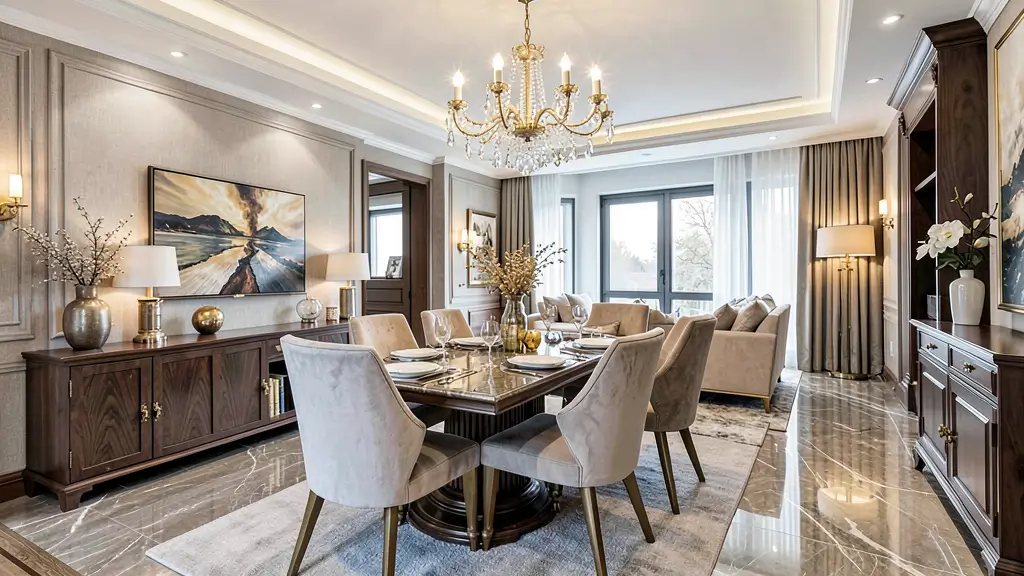
Nothing announces sophistication quite like a statement chandelier hanging in your open concept space. This single element can define your entire aesthetic while providing functional lighting that brings both zones together.
Choosing the right chandelier for an open floor plan involves scale, placement, and style considerations. Too small, and it gets lost in the openness. Too large, and it overwhelms. Positioned wrong, and it lights the floor instead of your dinner.
Chandelier Placement in Open Concepts
If your open concept has one massive ceiling expanse, you have options. You can:
- Center it over the dining table for traditional elegance
- Install multiple coordinating fixtures to define each zone
- Choose one dramatic piece that anchors the entire open space
- Consider a linear chandelier for rectangular dining tables
Style Considerations
Your chandelier sets the tone. Crystal chandeliers bring classic luxury. Modern sculptural fixtures add contemporary edge. Rustic iron or wood keep things relaxed. Beaded or rattan work for boho or coastal vibes.
The key is making sure your chandelier coordinates with (but doesn’t necessarily match) other lighting in the open space. A statement dining chandelier paired with simpler floor and table lamps in the living area creates a nice hierarchy without competition.
12. Open Concept Living and Dining Room With Large Windows
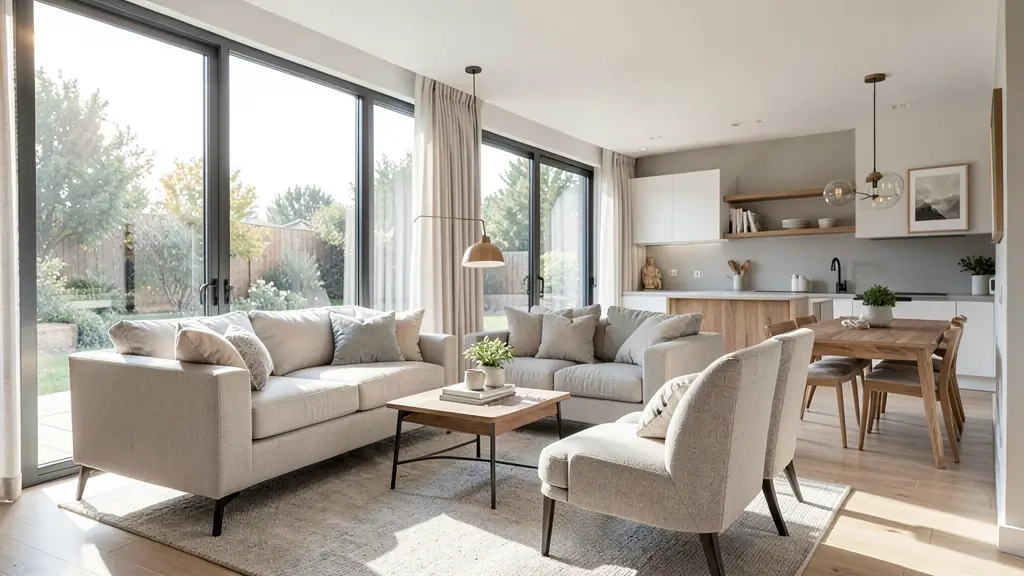
If you’re blessed with large windows in your open concept space, you’ve basically won the interior design lottery. Natural light transforms everything—colors look truer, spaces feel bigger, and your mood genuinely improves. (Science says so.)
The challenge becomes working WITH your windows rather than against them. Here’s how to maximize this architectural advantage.
Window Treatment Strategies
When you have great windows, show them off. Floor-to-ceiling curtains mounted at ceiling height make windows appear even larger. Sheer fabrics filter light without blocking it. If privacy isn’t a concern, skip treatments entirely and let the architecture shine.
Furniture Arrangement Considerations
Position furniture to take advantage of natural light without fighting it. Avoid blocking windows with tall furniture. Place seating to capture views. Use the natural focal point of large windows to orient your living area arrangement.
Light Management
Large windows means managing glare and heat. Layered window treatments (sheers plus heavier curtains) allow flexibility throughout the day. Consider the sun’s path when placing your TV—there’s nothing elegant about squinting at a washed-out screen.
The dining area near large windows transforms every meal into an event. Morning coffee with sunshine, dinner parties with sunset views—it’s basically restaurant ambiance in your own home.
Also Read: 15 Cozy Blue Bedroom Designs for a Relaxing Haven
13. Contemporary Open Concept Living and Dining Room Layout
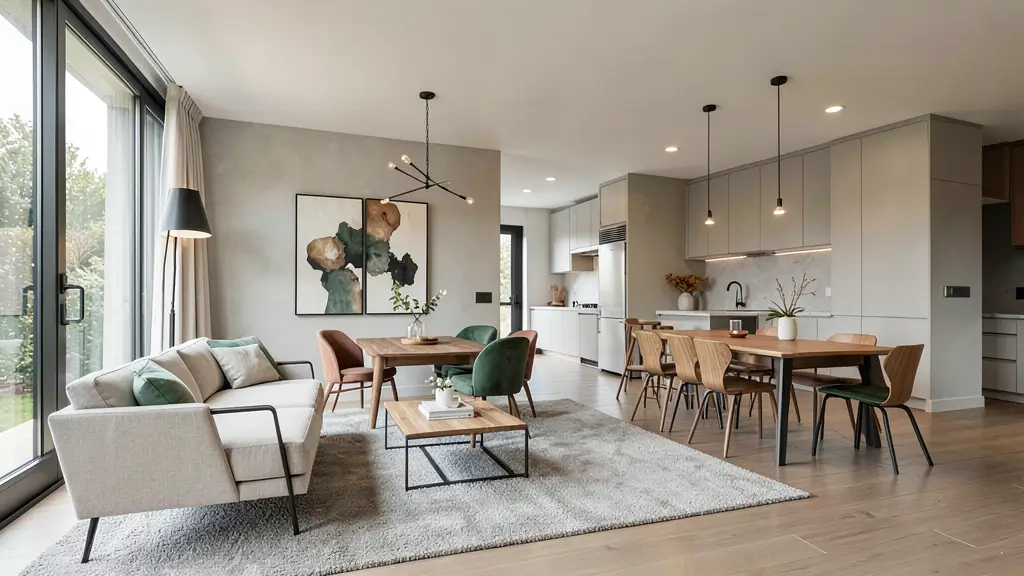
Contemporary design evolves constantly—it reflects what’s happening NOW in design culture. This means your contemporary open concept might look quite different from one designed five years ago, and that’s entirely the point.
Current contemporary open concept trends emphasize organic shapes, sustainable materials, warm minimalism, and tech integration. It’s sleek but not cold, modern but not sterile.
Defining Contemporary Open Concept Features
- Curved furniture breaking from boxy minimalism: rounded sofas, oval dining tables
- Mixed materials creating textural interest: stone, metal, wood, and fabric combinations
- Warm neutrals replacing cool grays as the foundation palette
- Statement lighting as sculptural art, not just function
- Hidden technology keeping spaces visually clean
Layout Principles
Contemporary open concept layouts favor fluid movement between zones. Furniture floats in the space rather than pushing against walls. Defined areas emerge from arrangement rather than physical barriers.
The dining zone in contemporary spaces often features an architecturally interesting table (maybe asymmetrical, maybe unusual material) with chairs that could be gallery pieces. It’s designed living—everything intentional, nothing accidental.
14. Japandi Style Open Concept Living and Dining Room
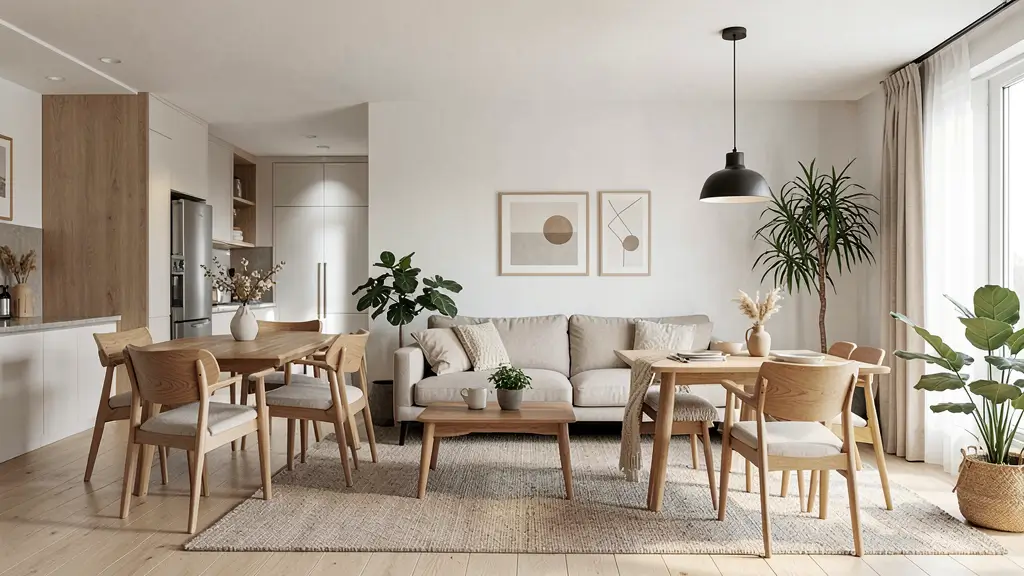
FYI, if you haven’t heard of Japandi, you’re about to find your new favorite design style. This hybrid combines Japanese minimalism with Scandinavian functionality, creating spaces that feel serene, warm, and deeply intentional.
Japandi open concepts emphasize simplicity, natural materials, craftsmanship, and restrained color palettes. Every object earns its place. Nothing exists purely for decoration.
Core Japandi Principles for Open Concepts
Wabi-sabi aesthetics embrace imperfection. That slightly irregular ceramic bowl or weathered wooden table holds beauty in its flaws. This philosophy keeps Japandi spaces from feeling cold or museum-like.
Functionality first drives every design decision. Furniture serves purposes. Storage hides clutter. The space supports daily life beautifully.
Natural materials dominate: wood (especially light-toned), stone, paper, cotton, linen, wool. Nothing synthetic or flashy.
Muted color palettes keep the focus on form and texture: warm whites, beiges, soft grays, occasional black accents, and nature-inspired greens and terracottas.
The Japandi Dining Experience
Japandi dining areas often feature low tables (though Western-height works too), simple wooden chairs, ceramic dishware displayed as art, and minimal decoration. Perhaps a single branch in a vase, a handmade pottery piece, nothing more. The beauty is in the restraint.
15. Open Concept Living and Dining Room With Statement Rug
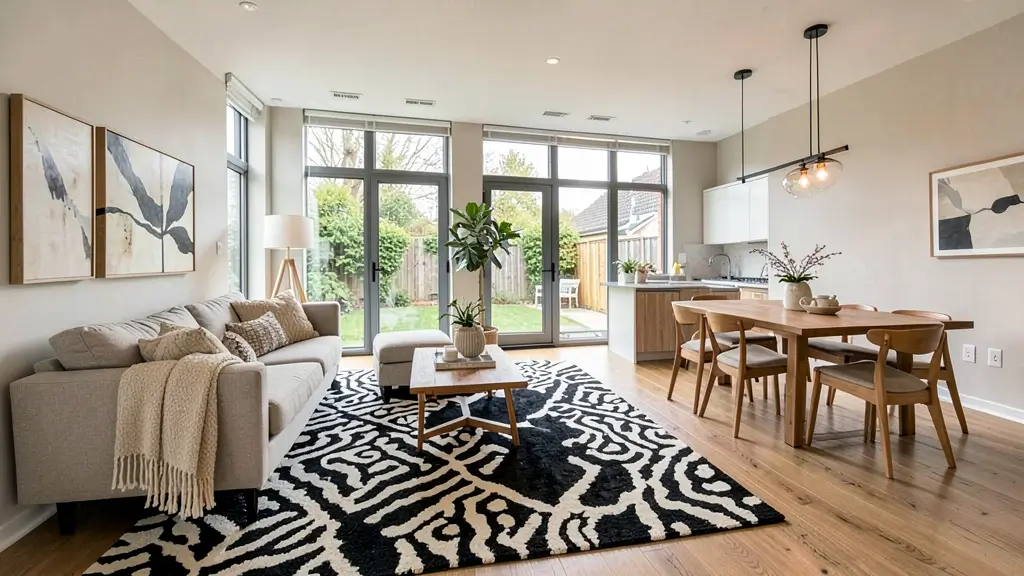
We saved an important one for last. Statement rugs do so much work in open concept spaces—they define zones, add color and pattern, ground furniture groupings, and bring visual interest to floors that might otherwise feel like endless expanses.
The right rug can make your open concept living and dining room feel like TWO distinct spaces while maintaining overall cohesion. The wrong rug (wrong size, wrong style, wrong placement) can throw everything off.
Rug Sizing Rules
Bigger is almost always better. The most common mistake? Rugs that are too small. Your living area rug should be large enough that at least the front legs of all furniture sit on it—ideally, all legs.
For the dining area, your rug must accommodate chairs pulled out. Measure your table, add about 24-30 inches on each side, and that’s your minimum rug dimension. People scraping chair legs off rug edges during dinner is deeply annoying.
Coordinating Two Rugs
If you’re using rugs to define both living and dining zones:
- They don’t need to match exactly but should complement each other
- Consider one bold pattern and one more subtle to avoid visual competition
- Keep them in the same color family for cohesion
- Similar quality levels prevent one area looking cheaper than the other
Placement and Proportion
Your rugs should feel proportional to furniture groupings and to each other. A massive living room rug next to a tiny dining rug looks unbalanced. Take photos from different angles before committing—sometimes what looks right standing next to it looks weird from across the room.
Bringing It All Together
Here’s the thing about open concept living and dining rooms: they’re simultaneously easier and harder to style than traditional separated rooms. Easier because you only have one major space to consider. Harder because every decision affects the whole—you can’t close a door and hide a styling mistake.
The best open concept spaces share common characteristics regardless of style:
- Intentional zone definition through rugs, lighting, or furniture arrangement
- Cohesive color story that flows between areas without jarring transitions
- Varied but coordinated furniture that feels collected rather than catalog-purchased
- Thoughtful lighting layers addressing different activities and moods
- Personal touches that make the space uniquely yours
Whether you lean toward minimalist restraint or boho abundance, coastal freshness or farmhouse warmth, the principles remain consistent. Define your zones, maintain visual flow, choose quality over quantity, and don’t be afraid to let your personality show.
My final piece of advice? Start with what you love rather than following trends blindly. That statement rug that makes your heart sing? Build around it. Those mismatched dining chairs you inherited? They might add more character than anything you could buy new. The chandelier that’s slightly over-the-top? Maybe that’s exactly what your space needs.