

So, you’re staring at your bathroom floor again, aren’t you? I’ve been there. You’re standing in the doorway, coffee in hand, caught in that familiar state of design analysis paralysis. You want something timeless but not boring, stylish but not so trendy it’ll be “out” by next year. You want character, charm, and a floor that doesn’t scream, “I got this at a big box store fire sale.”
Let me introduce you to my not-so-secret obsession: the penny tile. These tiny, charming circles have been around for over a century, and for good reason. They’re the unsung heroes of the bathroom world, capable of transforming a drab space into something truly special. I fell in love with them when renovating my own guest bath, and trust me, the journey from “What am I doing?” to “Wow, I’m a genius” was paved with these little ceramic dots.
Forget the idea that they’re just for vintage-style homes. We’re about to explore 15 incredible ways to use penny tiles that prove just how versatile they are. Ready to give your bathroom floor the glow-up it deserves? Let’s get to it.
1. Classic White Penny Tile Bathroom Floors
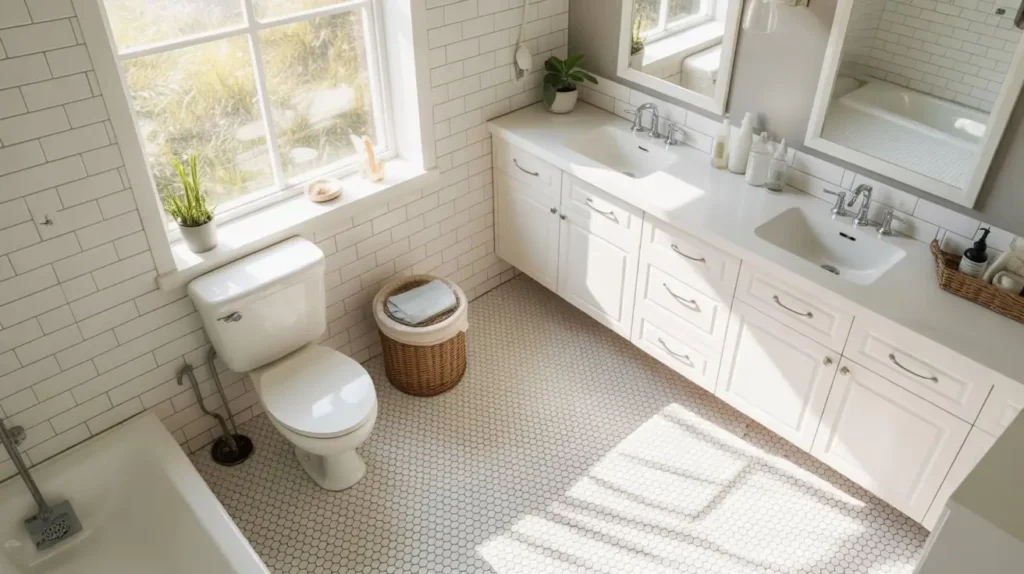
Let’s start with the OG, the little black dress of bathroom flooring: classic white penny tile. You simply can’t go wrong here. It’s clean, it’s bright, and it has a timeless appeal that works with literally any design style, from modern farmhouse to ultra-sleek minimalist.
Think of a white penny tile floor as your blank canvas. The real magic happens with the grout. Seriously. Do you want a subtle, seamless look that makes the floor feel like a single textured surface? Go with a light gray or white grout. It’s soft, forgiving, and creates an airy, spacious vibe.
But if you want that classic, graphic punch? Charcoal or black grout is your best friend. This makes every single tile pop, creating a stunning grid-like pattern that’s visually fascinating. I personally love this high-contrast look; it adds so much personality without needing a single drop of color. It’s a bold choice that whispers “I have excellent taste” instead of shouting it.
2. Colorful Penny Tile Patterns for Modern Bathrooms
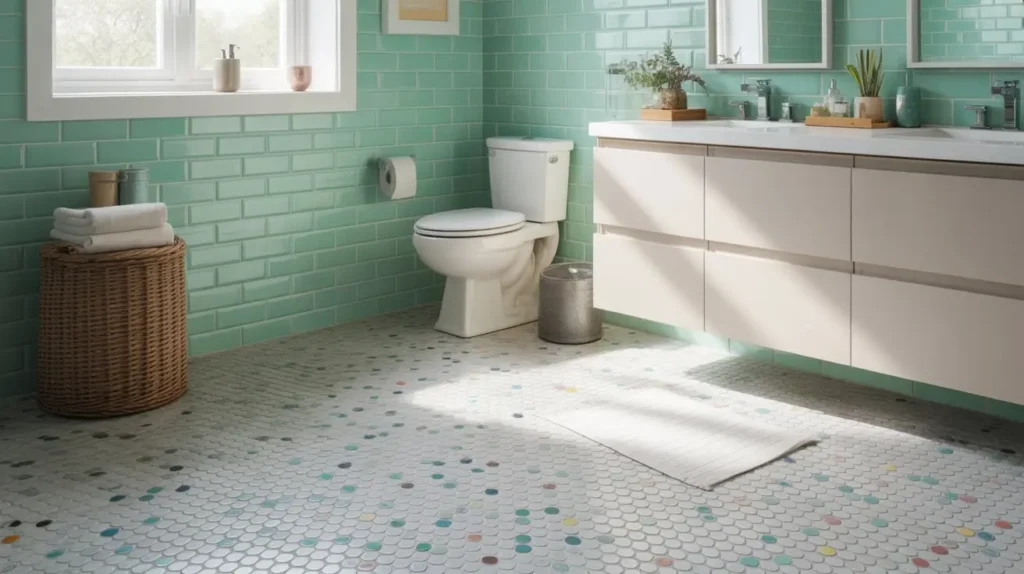
Alright, now for the fun stuff. If the idea of a plain white floor makes you yawn, why not use those tiny tiles to create your own masterpiece? Colorful penny tiles are perfect for injecting personality and creating custom patterns that are uniquely you. The floor becomes your canvas, and the tiles are your paint.
Creating Your Own Mosaic
You can go as simple or as complex as you want. Think about spelling out a word like “HELLO” by the door or creating a simple floral mosaic in the center of the room. I once saw a bathroom where the owner, a total character, had a tiny rubber ducky tiled into the floor right in front of the tub. How can you not smile at that every morning?
Pre-Made Patterns
Feeling a bit overwhelmed by the idea of designing your own pattern? No worries. Many tile suppliers offer pre-sheeted mosaic patterns, from elegant floral designs to cool geometric fades. This gives you that custom look without the headache of placing each individual colored tile yourself. It’s a fantastic way to get a high-end, designer feel without, you know, hiring a high-end designer.
3. Black Penny Tile Floor Ideas for a Sleek Look
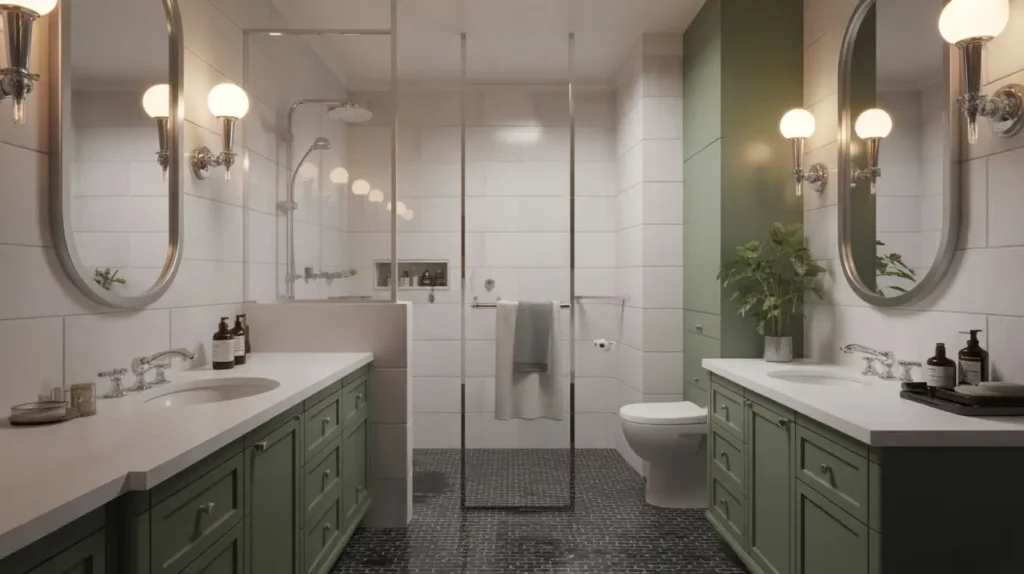
Ready to embrace your dark side? A black penny tile floor is pure, unadulterated drama. It’s sophisticated, moody, and incredibly chic. A bathroom with a black penny tile floor doesn’t just exist; it makes a statement. It says you’re confident, you’re bold, and you’re not afraid of a little dust. (Okay, maybe that last part is a joke… sort of.)
But doesn’t a black floor make a room feel smaller? That’s the common fear, but I find it’s mostly a myth if you do it right. The key is balance.
- Pair it with light walls: Crisp white, light gray, or even a soft beige on the walls will create a stunning contrast that keeps the room from feeling like a cave.
- Embrace good lighting: Make sure your bathroom is well-lit with both overhead and vanity lighting. The light will reflect off the tiles, creating a subtle shimmer.
- Choose your finish wisely: A matte black penny tile offers a modern, velvety look that’s great at hiding water spots. A glossy black finish, on the other hand, is super glamorous and reflects light beautifully, adding a touch of old-school Hollywood glam.
I love a black penny tile floor paired with warm brass or gold fixtures. The combination is just chef’s kiss—elegant, warm, and utterly luxurious.
4. Vintage-Inspired Penny Tile Bathroom Designs

Penny tiles practically scream “vintage charm.” They were wildly popular in the early 20th century, so using them is a natural way to achieve that nostalgic, historic feel. If you’re restoring an old home or just love that classic Americana aesthetic, this is your jam.
To really lean into the vintage vibe, it’s all about the details. Think of a classic black-and-white combination, maybe with a simple flower pattern or a decorative border (we’ll get to that later!). This was a hallmark of pre-war bathrooms and instantly transports you back in time.
Pair your vintage-inspired floor with other period-appropriate elements:
- A pedestal sink or a console sink with exposed plumbing.
- Polished nickel or chrome fixtures for that authentic sparkle.
- A classic clawfoot tub as the centerpiece.
- Wainscoting or beadboard on the lower half of the walls.
Putting these elements together with a penny tile floor doesn’t just create a vintage-themed room; it creates a space that feels genuinely historic and soulful. It feels less like a design choice and more like a story.
Read Also 15 Stylish Black and White Tile Bathroom Designs for an Epic Upgrade
5. Small Bathroom Hacks with Penny Tile Flooring
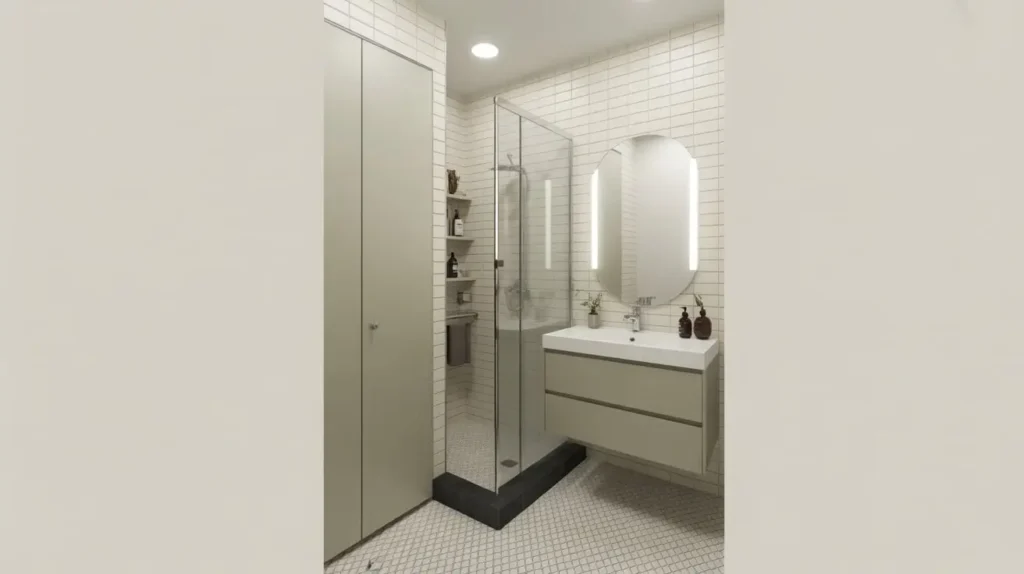
Got a small bathroom? A powder room that feels more like a closet? Join the club. A common misconception is that you should use large tiles in a small space to make it feel bigger. I’m here to tell you that penny tiles can be your secret weapon.
Here’s the logic: the sheer number of tiles and grout lines creates a grid-like texture that tricks the eye. Instead of seeing a tiny floor, your brain registers a large, expansive pattern, which can create an illusion of more space. It’s a bit of visual voodoo, but it works.
For maximum effect in a tiny bathroom:
- Stick to a light color: A white or light gray penny tile floor will reflect light and make the space feel more open and airy.
- Use a matching grout color: A grout that blends in with the tile (e.g., light gray grout on white tile) creates a more seamless, expansive look. High-contrast grout can feel a bit busy in a super tight space.
- Run the tile up the wall: Want to take it a step further? Run the penny tile from the floor up one of the walls, like the one behind the shower. This continuous surface blurs the line between floor and wall, making the whole room feel taller and more cohesive.
6. Geometric Penny Tile Floor Patterns You’ll Love
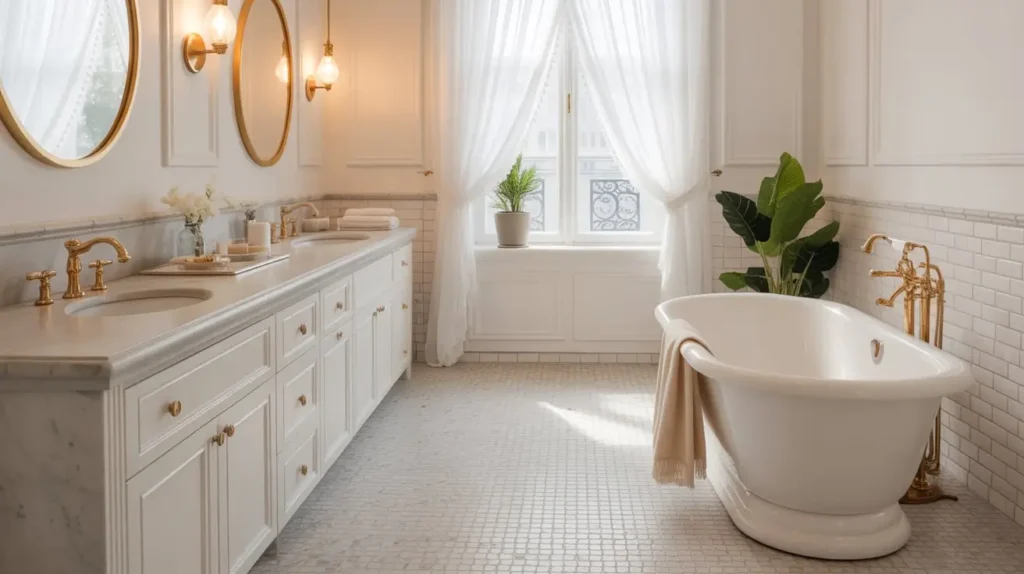
If you love the order and rhythm of geometric designs, penny tiles are a fantastic medium. Because of their small, uniform shape, you can create some seriously cool and intricate patterns that feel both classic and modern at the same time. This isn’t your grandma’s bathroom floor (unless your grandma was a super cool, design-forward artist).
You can go for a repeating pattern across the entire floor, like a honeycomb effect using three different colors or a mesmerizing wave pattern. These designs add a ton of dynamic energy to the room without being overwhelming. They draw the eye down and make the floor the undeniable star of the show.
My personal favorite? The fade or ombré effect. Imagine starting with a dark blue penny tile at one end of the bathroom that gradually fades into a light blue and then to white at the other end. It’s a stunning, artistic statement that looks incredibly high-end. It takes some serious planning (and a very patient tile setter), but the result is a one-of-a-kind floor that you’ll never get tired of looking at.
7. Penny Tile and Marble Combo Bathroom Floors
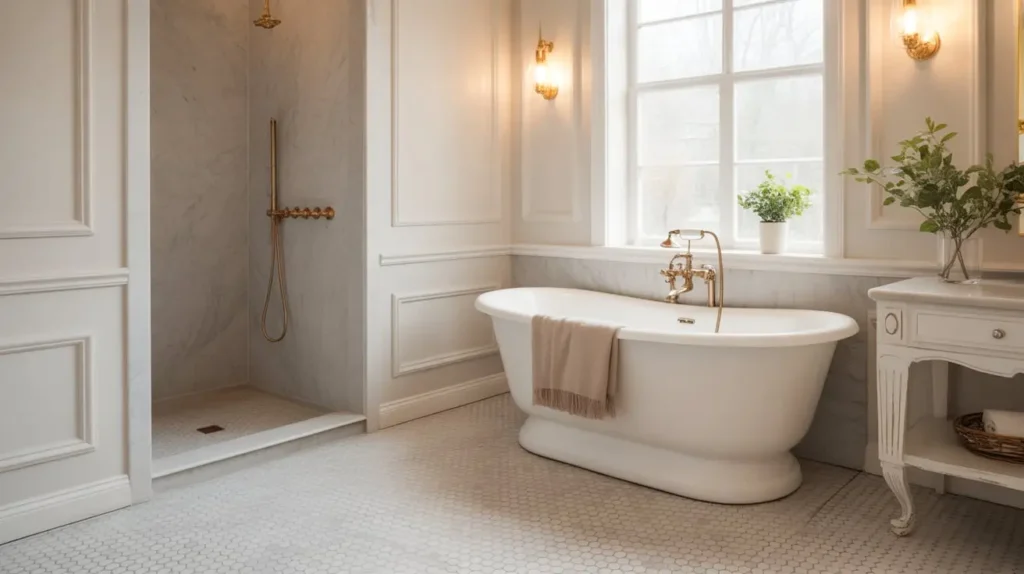
Okay, let’s talk luxury. If you want a bathroom that feels like a five-star hotel spa, consider combining the humble penny tile with its much fancier cousin: marble. This combination is the perfect marriage of high and low, classic and luxurious. It’s sophisticated, elegant, and surprisingly versatile.
How to Make it Work
There are a few ways to pull this off beautifully:
- Marble Border: Use large marble tiles (like a 12×24 Carrara) to create a border around the room, and fill the center with penny tiles. This frames the floor beautifully and gives you the best of both worlds.
- Penny Tile “Rug”: Do the opposite! Use marble for the main flooring and create an inlay or “rug” effect in front of the vanity or tub using penny tiles. A black penny tile inlay in a white marble floor? Absolutely breathtaking.
- Separate Zones: Use marble in the main bathroom area and switch to penny tiles inside the shower. This is a practical choice—the extra grout lines on penny tiles provide excellent slip resistance—and it also helps to visually define the shower space.
Why does this combo work so well? The intricate, busy pattern of the penny tiles provides a perfect textural contrast to the smooth, sweeping veins of the marble. It’s a design power couple.
8. Budget-Friendly Penny Tile Bathroom Transformations

Let’s be real: renovations can get expensive. Fast. If you’re looking for a flooring option that delivers a major style impact without obliterating your bank account, penny tiles are a fantastic contender. FYI, the tiles themselves are often surprisingly affordable, sometimes costing less per square foot than larger, more “premium” tiles.
The real cost of a tile job often comes down to labor. Because penny tiles come on mesh-backed sheets (usually 12×12 inches), they cover ground relatively quickly. However, the sheer number of grout lines means the grouting process can be more time-consuming.
Tips for a Budget-Friendly Project
- DIY the installation: If you’re handy and have an almost supernatural level of patience, you can install penny tile floors yourself. We’ll get into some tips for that in a bit. This is the single biggest way to save money.
- Shop around for your tile: Prices can vary wildly between suppliers. Check online tile retailers, local shops, and even big box stores. You might be surprised where you find the best deal.
- Keep the pattern simple: A single-color floor is going to be far cheaper and easier to install than a complex, custom mosaic. The classic white with dark grout look gives you a ton of style for a minimal cost.
You don’t need a millionaire’s budget to get a bathroom floor that looks like a million bucks. You just need some smart choices and a little bit of elbow grease.
9. Spa-Like Bathrooms with Neutral Penny Tiles
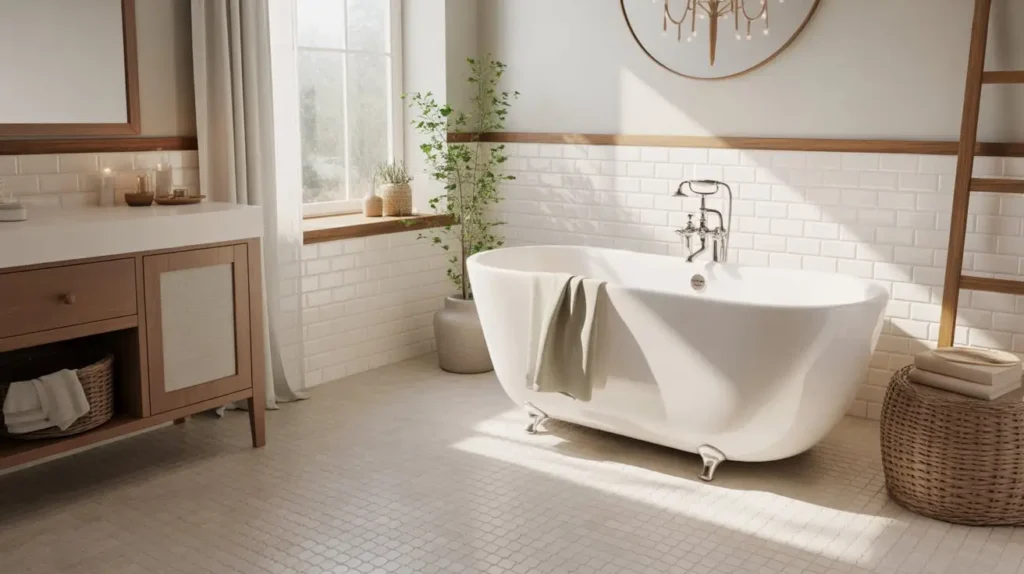
Ever walked into a spa and felt your shoulders instantly drop? You can recreate that serene, calming atmosphere in your own bathroom, and a neutral penny tile floor is the perfect foundation. Forget bright colors or dramatic contrasts; this look is all about soft, soothing, and earthy tones.
Think about colors that feel organic and calming:
- Soft Grays: From pale dove gray to a slightly moodier charcoal, gray penny tiles are incredibly chic and sophisticated.
- Warm Beiges and Taupes: These colors bring a warmth and earthiness to the space that feels grounding and comfortable.
- Pale Greens and Blues: Think seafoam green or a barely-there sky blue. These colors have a natural connection to water and tranquility, making them perfect for a spa-like retreat.
To complete the look, pair your neutral penny tile floor with natural materials like wood (a teak vanity or bath mat), woven baskets for storage, and lots of plush, white towels. Keep the rest of the decor minimal and uncluttered. The goal is to create a peaceful sanctuary where the textures—the smooth tiles underfoot, the soft towels, the warm wood—are the main event.
Read Also 15 Bright White Tile Bathroom Designs for Dream Homes
10. Bold and Bright Penny Tile Floor Ideas
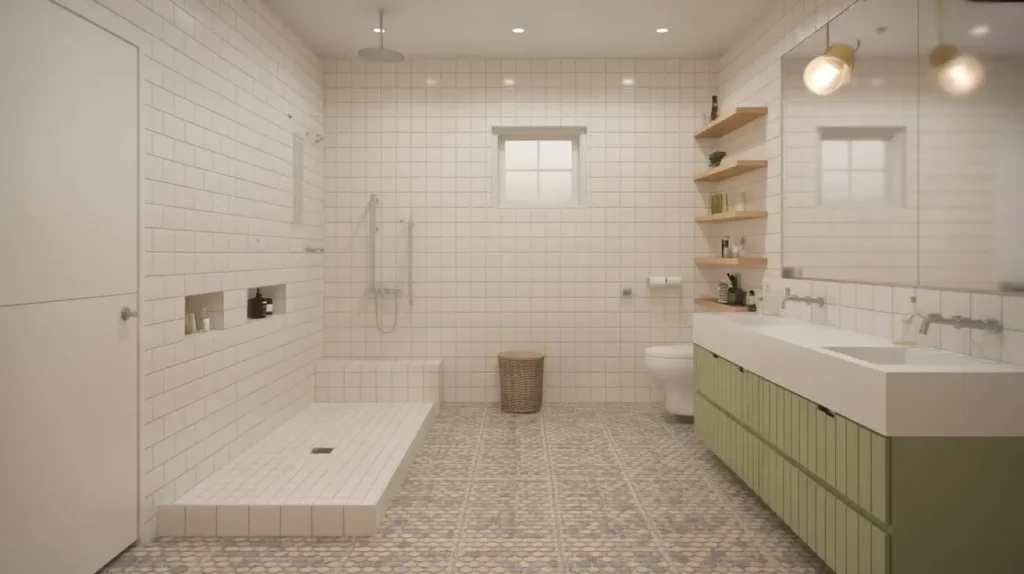
On the complete opposite end of the spectrum, maybe “serene” isn’t your thing. Maybe you want your bathroom to wake you up in the morning better than a double espresso. If that’s you, then a bold, bright penny tile floor is calling your name. This is your chance to play with color and make a seriously fun statement.
Think of a floor in a single, saturated hue. Imagine a vibrant cobalt blue, a sunny marigold yellow, or a rich emerald green. A floor like this is an instant mood-booster. It’s impossible to be grumpy in a bathroom with a bright yellow floor. I’m pretty sure that’s a scientific fact. 😉
The key to pulling off a bold color is to let it be the star. Keep the walls relatively simple—a crisp white is always a winner—and choose fixtures that complement, rather than compete with, the floor. A solid, bright floor acts as a powerful anchor for the entire room’s design. It’s a brave choice, but when it works, it’s absolutely spectacular.
11. How to Mix Penny Tiles with Subway Walls

The penny tile and subway tile combination is a match made in design heaven. It’s like the peanut butter and jelly of the bathroom world. It just works. But why? It’s all about the balance of shape and scale.
You have the small, circular, and busy pattern of the penny tiles on the floor. Then you have the larger, rectangular, and orderly pattern of the subway tiles on the wall. The contrast is perfection. The subway tiles provide a clean, simple backdrop that allows the more intricate penny tile floor to shine without overwhelming the space.
My Favorite Combos
- Classic Black & White: This is the most iconic pairing. A white penny tile floor with black grout, paired with classic white subway tiles with black grout. It’s graphic, timeless, and has that perfect vintage-meets-industrial vibe.
- Color on the Floor: Use a colorful penny tile on the floor (like a deep navy or green) and keep the subway tiles on the wall a simple, clean white. This grounds the space with color while keeping the overall feel bright and open.
- The Inversion: Feeling daring? Put black subway tile on the walls and classic white penny tile on the floor. This is a super dramatic and modern take on the classic combo.
No matter how you combine them, this pairing is a can’t-miss formula for a stylish and cohesive bathroom.
12. DIY Penny Tile Bathroom Floor Installation Tips
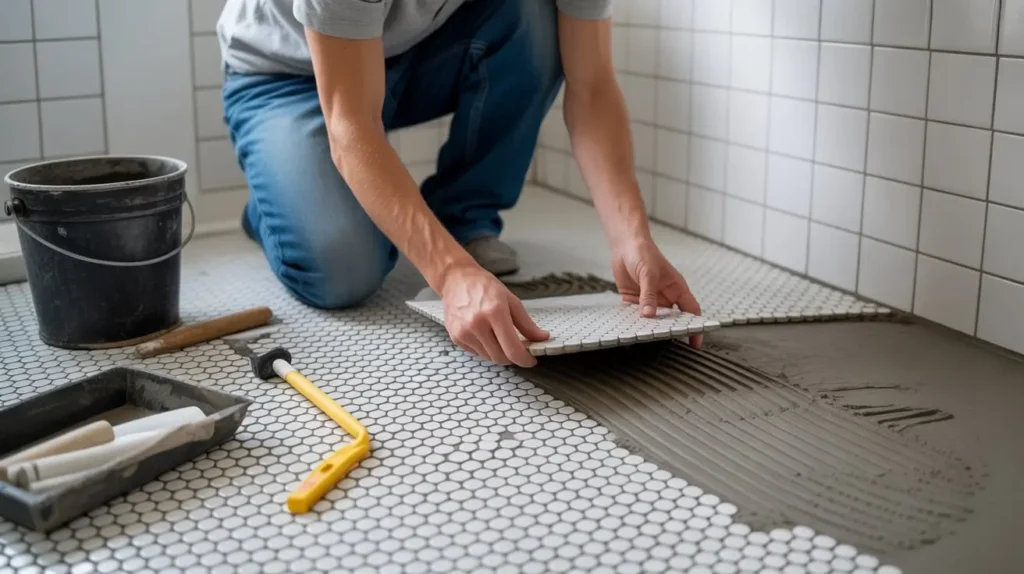
So, you’ve decided to take the plunge and install your own penny tile floor. First of all, I salute your bravery. It’s a totally doable project, but it requires patience. Like, a lot of patience. This is where your relationship with your partner (or your own sanity) might be tested. Kidding… mostly.
Here are a few tips I learned the hard way to make your DIY installation a success:
- Prep is Everything: Your subfloor must be perfectly level, clean, and stable. Any bumps or dips will be painfully obvious with small tiles. Use a self-leveling compound if needed. Do not skip this step!
- Dry Fit First: Before you mix a single drop of thin-set mortar, lay out your tile sheets on the floor. This helps you plan your cuts and ensure you don’t end up with a weirdly tiny sliver of tile in a super visible spot.
- Watch for Sheet Lines: The biggest rookie mistake is being able to see the square outlines of the mesh sheets in the final product. To avoid this, slightly stagger the sheets like you would with bricks and “borrow” a few tiles from the edge of one sheet to fill in the gaps with the next. This breaks up the grid pattern and creates a more seamless look.
- Use the Right Trowel: A small V-notch trowel is usually best for penny tiles. It applies just the right amount of thin-set without a ton of excess oozing up between the tiles.
- Grouting is the Final Boss: Use a high-quality grout and a good grout float. Apply it diagonally across the tiles to really pack it into all those tiny joints. And be prepared for a lot of wiping. And then more wiping. When you think you’re done wiping, wipe one more time.
13. Minimalist Bathrooms Featuring Penny Tile Floors
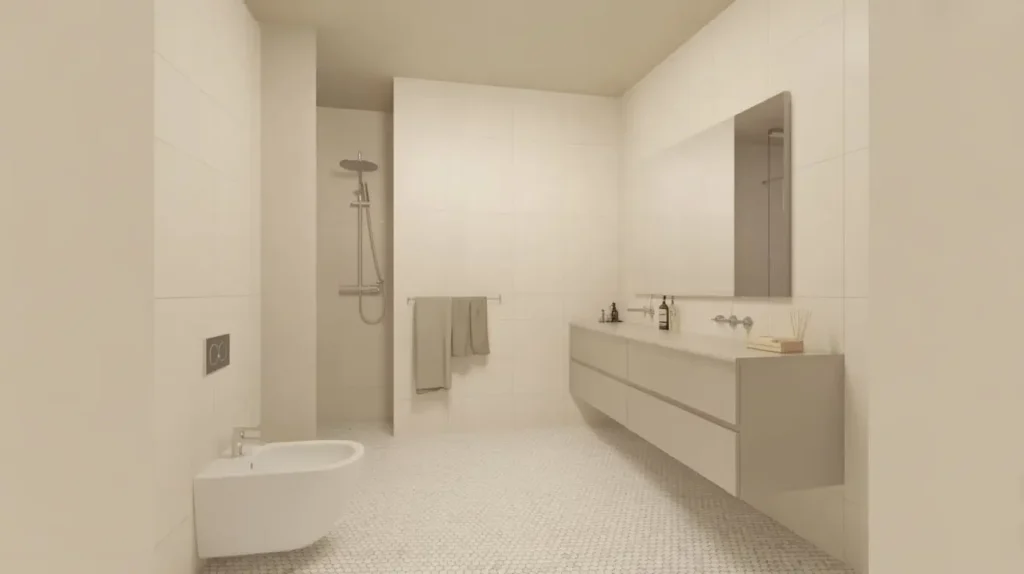
Wait, can a pattern as busy as penny tile really work in a minimalist bathroom? Absolutely. The key to making it work is adhering to the core principles of minimalism: a monochromatic color palette, clean lines, and a complete lack of clutter.
For a minimalist look, a white penny tile floor with matching white grout is the perfect choice. The texture of the tiles adds a layer of subtle, organic interest without introducing any visual noise. It’s texture, not pattern, that becomes the focus. The floor feels soft and tactile, almost like a textile, which is a wonderful way to add warmth to a stark minimalist space.
Pair this floor with:
- A floating vanity with clean, simple lines.
- A frameless glass shower door.
- Matte black or brushed nickel fixtures.
- Completely clear countertops (yes, you can do it!).
The result is a bathroom that feels incredibly calm, intentional, and serene. The penny tiles provide just enough detail to keep the space from feeling sterile, proving that minimalism doesn’t have to be boring.
14. Unique Hexagon vs. Penny Tile Comparisons
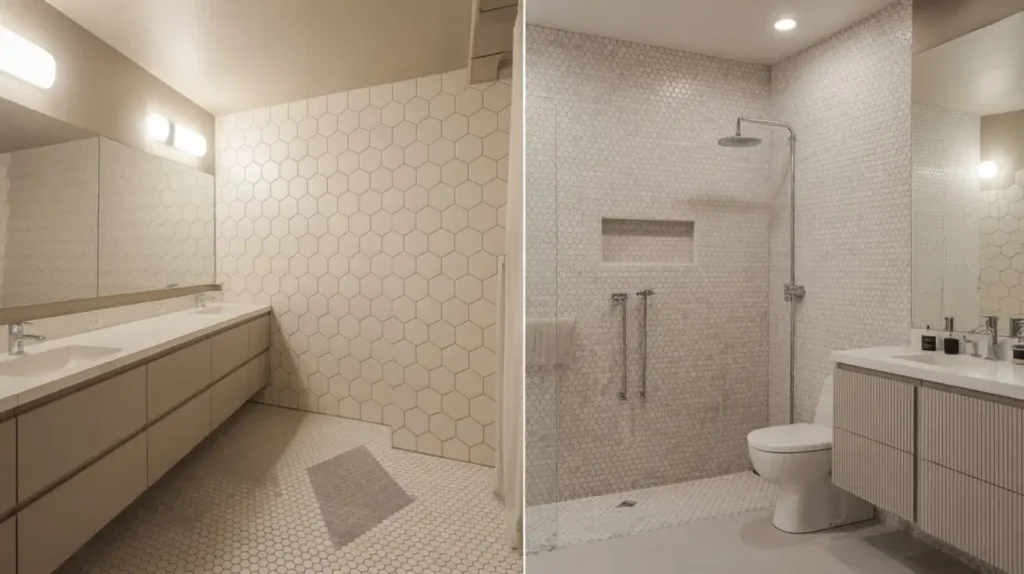
Ah, the great debate of the small tile world: penny vs. hexagon. They’re often used interchangeably to achieve a similar vintage-yet-modern vibe. So what’s the difference, and which one is right for you? Let’s break it down.
H3: The Penny Tile
- The Vibe: Playful, charming, and slightly more vintage or retro. The round shape is softer and has a certain bubbly personality. IMO, it feels a bit more whimsical and nostalgic.
- The Look: The circular pattern creates a dot-grid effect that is highly textural and visually intricate. It can feel a bit busier than hex tile.
- Best For: Achieving a true early-20th-century look, creating custom mosaics with curves (like flowers or script), or adding a touch of playful charm.
H3: The Hexagon Tile
- The Vibe: A bit more modern, structured, and geometric. The straight lines and sharp angles of the hexagon give it a slightly more sophisticated and contemporary edge.
- The Look: Creates a classic honeycomb pattern that feels both natural and mathematical. It’s orderly and clean, and can feel a bit less “busy” than a penny tile floor.
- Best For: Modern, Scandinavian, or mid-century modern designs. It’s a great choice if you want a small-format tile that feels a little more grown-up and less overtly retro than penny rounds.
Ultimately, there’s no wrong answer here. It really comes down to personal preference. Do you lean more towards soft and playful circles, or do you prefer the clean, structured look of hexagons? Go with your gut; you can’t lose.
15. Patterned Borders and Penny Tile Floor Styling
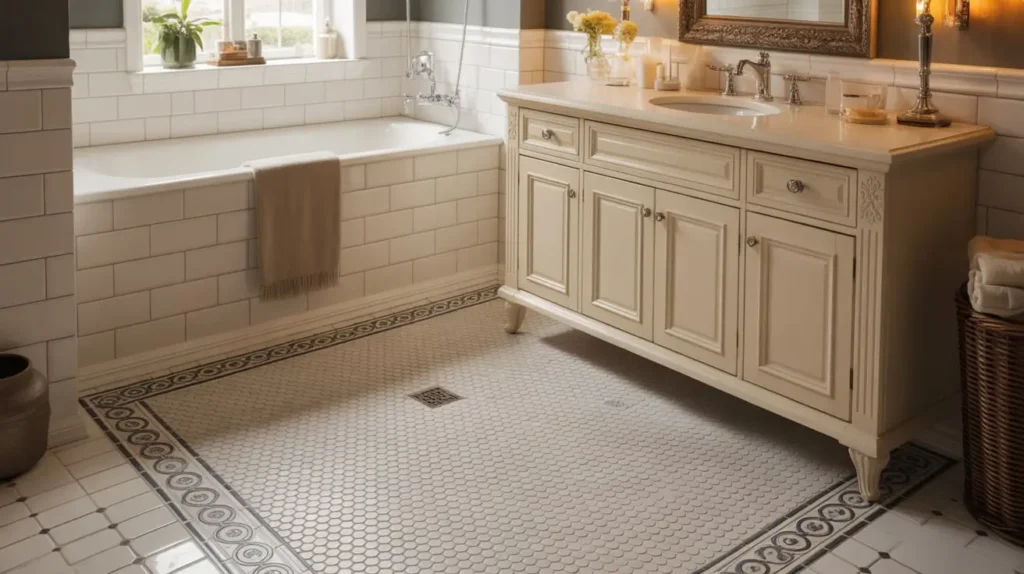
A fantastic way to elevate a simple penny tile floor is by adding a patterned border. This is a classic technique that adds a custom, finished look to the entire room. It acts like a frame for your floor, drawing the eye in and defining the space. It’s a small detail that makes a huge impact.
There are so many creative ways to do this:
- The Simple Contrast Border: The easiest and most classic option. If your floor is white penny tile, create a border two or three tiles wide using black penny tile. It’s simple, graphic, and incredibly effective.
- The Greek Key: This is a more intricate, geometric border that looks amazing in a vintage-inspired or Art Deco bathroom. It requires careful planning but adds a serious dose of sophistication.
- The Scalloped Edge: Instead of a straight border, you can create a soft, scalloped edge where the tile meets the wall or another flooring type. This is a charming, unexpected detail that works beautifully with the round shape of the tiles.
- A “Rug” Inlay: As we mentioned earlier, you can use a border to create the effect of a permanent tile “rug” in the center of the room or in front of the vanity.
A border is your chance to add that final, personalized touch that takes your floor from “nice” to “wow.”
So, Are Penny Tiles Right for You?
Whew, that was a lot. But are you feeling inspired yet? 🙂
From the timeless elegance of classic white to the bold drama of a custom mosaic, penny tiles offer a world of possibilities. They can be budget-friendly, luxurious, minimalist, or maximalist. They prove that good things really do come in small packages. They add texture, character, and a touch of nostalgic charm that larger, more generic tiles just can’t match.
My final piece of advice? Don’t be afraid to make a choice that reflects your personality. Your home should be a reflection of you, and your bathroom floor is a pretty great place to start. So go ahead, embrace the little circles. I have a feeling you’ll love the result.