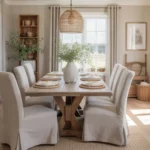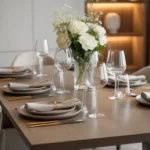


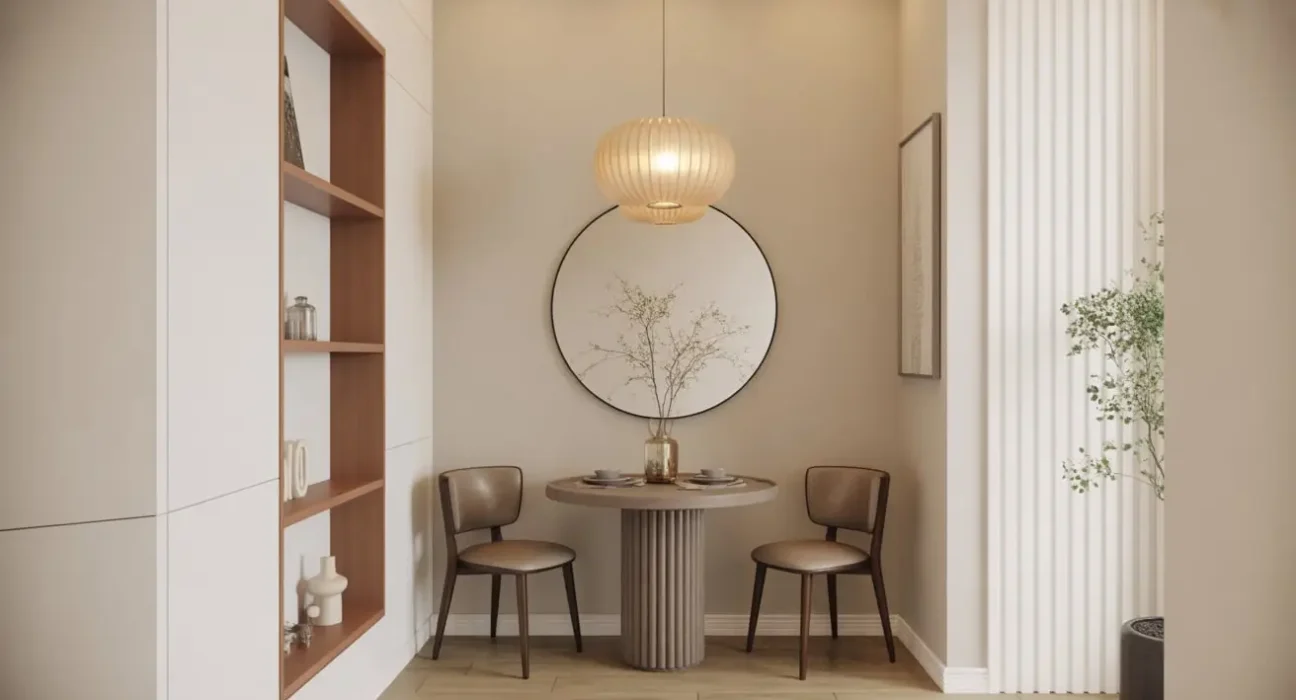
Let’s have a real talk. You have a “dining room” that’s more like a “dining suggestion.” It’s that awkward corner of the living room, that sliver of space by the kitchen, or a nook that seems to mock you with its tiny proportions. I’ve been there. My first apartment had a dining area so small that if a guest needed to use the restroom, the whole table had to stand up. Fun times.
You’ve probably scrolled through endless photos of sprawling, banquet-sized dining rooms and felt a pang of envy. But what if I told you that your small dining space isn’t a curse? It’s a creative challenge. With a little bit of design magic—and a few clever tricks I’ve learned along the way—you can transform that cramped corner into a beautiful, functional, and inviting place to eat, work, and entertain.
Forget the idea that you need a huge room for a proper dining experience. We’re about to turn your space-saving struggles into a major style victory. Ready to make every square inch count? Let’s get into it.
1. Multifunctional Foldable Dining Tables
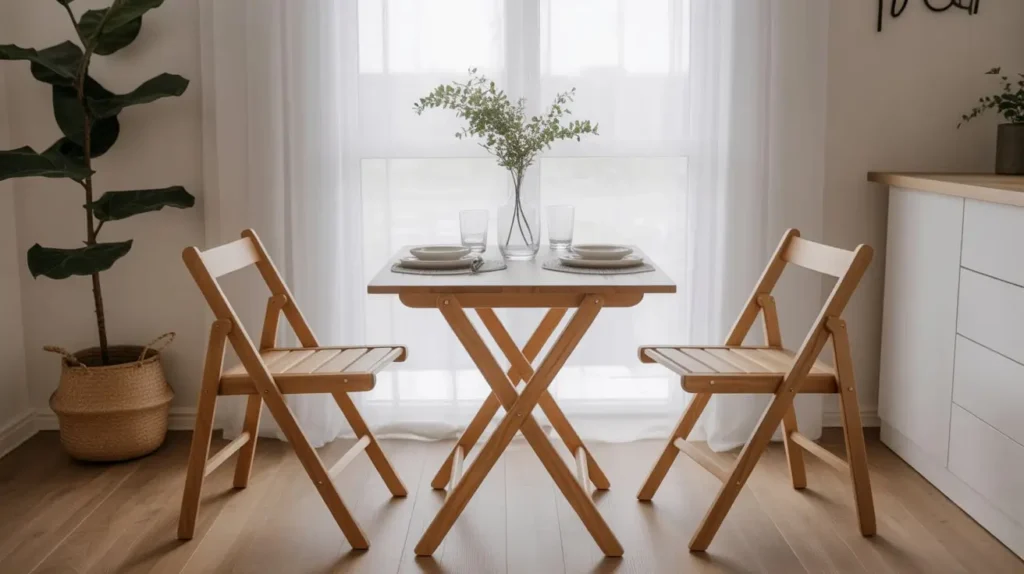
Okay, first things first. If your dining table only serves one purpose, it’s not working hard enough for you. In a small space, every piece of furniture needs to have a resume with multiple skills. This is where the multifunctional foldable dining table comes in to save the day.
I’m not talking about those wobbly card tables from your childhood. Modern foldable tables are sleek, sturdy, and incredibly clever. They can go from a slim console table against the wall—perfect for holding a lamp and your keys—to a cozy two-person breakfast spot, and then expand to a full four- or six-seater when you have guests. It’s like the Swiss Army knife of furniture.
Why This is a Game-Changer
Imagine this: Monday through Friday, it’s a compact work-from-home desk. On Saturday night, you unfold one leaf for a romantic dinner. On Sunday, you fully extend it to host a small brunch. You’re not sacrificing your living space for a piece of furniture you only use occasionally. You’re making the furniture adapt to your life. That’s a power move.
What to Look For
- Drop-leaf designs: These tables have hinged sections (leaves) on one or both sides that you can raise or lower.
- Gateleg tables: This is a classic style where the leaves are supported by legs that swing out like a gate. They often have a very narrow central section when folded.
- Hidden storage: Some of these beauties even come with built-in drawers or small cabinets in the central column. A place to stash placemats, coasters, or even a laptop? Yes, please.
This isn’t about compromise; it’s about being smart. You get the functionality of a large table without the daily space commitment.
2. Space-Saving Corner Dining Nooks
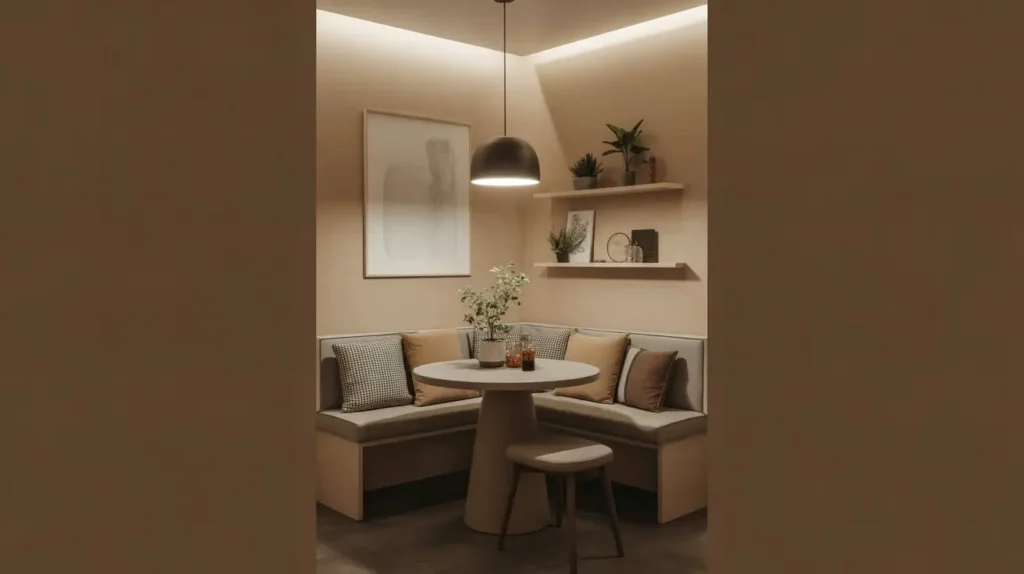
Have an awkward, empty corner? Don’t just stick a sad-looking plant there and call it a day. Claim that space and turn it into the coziest spot in your home with a corner dining nook. There’s something inherently charming and intimate about a built-in booth or banquette. It instantly feels like your own private café.
A corner nook is a masterclass in space efficiency. By pushing the seating and table directly into the corner, you eliminate the wasted space you’d normally need to leave behind chairs for people to pull them in and out. It’s a simple geometric trick that reclaims valuable floor space for traffic flow.
I once helped a friend build a simple DIY banquette in their tiny condo. We used two pre-made storage benches from IKEA, topped them with a custom cushion, and paired it with a small table and two chairs. It completely transformed their “walkway” into a designated, functional dining area. Plus, the benches provided a ton of hidden storage for board games and extra linens.
Pro Tips for the Perfect Nook
- Go L-shaped: An L-shaped banquette is the most common and effective setup for a corner.
- Lift-top storage: Opt for benches with lift-top seats. It’s the perfect spot to hide things you don’t use every day.
- Pair with a pedestal table: A table with a single central leg (a pedestal base) makes sliding in and out of the booth a million times easier. No one wants to straddle a table leg.
A dining nook feels intentional and custom-built, even if it’s a simple setup. It tells the world, “Yes, this is a dining area, and it’s awesome.”
3. Minimalist Floating Shelves for Dining Rooms
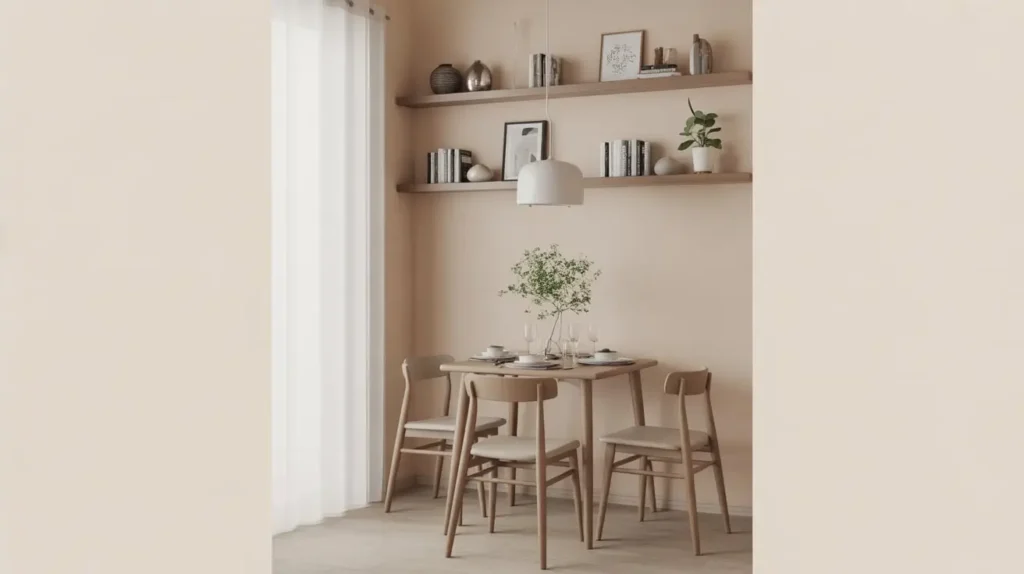
Traditional buffets or china cabinets are gorgeous, but in a small dining room, they can be absolute monsters. They eat up precious floor space and can make a room feel heavy and cluttered. My solution? Look up! Minimalist floating shelves are your new best friend.
Floating shelves create storage and display space without a single inch of a footprint on your floor. They draw the eye upward, which creates an illusion of height and openness. You can use them to store your everyday dishes, display your favorite glassware, or even show off some small plants and art.
The key here is minimalism. Don’t overload them. Think of it as a curated display, not a storage free-for-all. A few neatly stacked plates, a row of wine glasses, and a small trailing plant look chic and deliberate. A mountain of mismatched mugs and souvenir shot glasses? Not so much.
Curating Your Shelves
I like to follow a simple formula for styling shelves: mix functional items with decorative ones.
- Functional: Your prettiest plates, bowls, and glasses.
- Decorative: A small vase, a framed photo, a unique candle, or a small sculpture.
- Greenery: A touch of green from a small plant always brings life to the space.
By keeping the floor clear, you’re creating negative space, which is a designer’s secret weapon for making a room feel bigger and more breathable. It’s not about having less stuff; it’s about storing it smarter.
4. Mirror Accents to Open Up the Room

This is one of the oldest tricks in the book for a reason: it works. Putting a large mirror in a small dining area is like adding a window. It bounces light around the room, making it feel brighter and more expansive, and it reflects the view, creating a sense of depth.
But please, I beg you, don’t just grab any old mirror from the discount store. The style and placement are everything. A large, simple-framed mirror or even a collection of smaller, uniquely shaped mirrors arranged as a gallery can act as a piece of art. It should be a feature, not just a functional afterthought.
Strategic Mirror Placement
Where you hang the mirror matters. A lot.
- Opposite a window: This is the ultimate move. It will capture the natural light and the view from outside, effectively doubling both.
- Behind the dining table: Placing a large mirror on the wall behind the table creates a beautiful backdrop and makes the dining area feel much grander. It reflects your pendant light and the tablescape, adding a touch of drama and sparkle.
- On an adjacent wall: If you have a long, narrow room, placing a mirror on the long wall can help it feel wider.
I once hung an oversized, round mirror in a tiny, windowless dining nook. The effect was immediate. It broke up the solid wall and made the whole space feel less boxy and claustrophobic. It’s a simple change with a massive impact.
Read Also 15 Stunning Farmhouse Dining Room Decor Ideas to Try Now
5. Compact Round Dining Tables
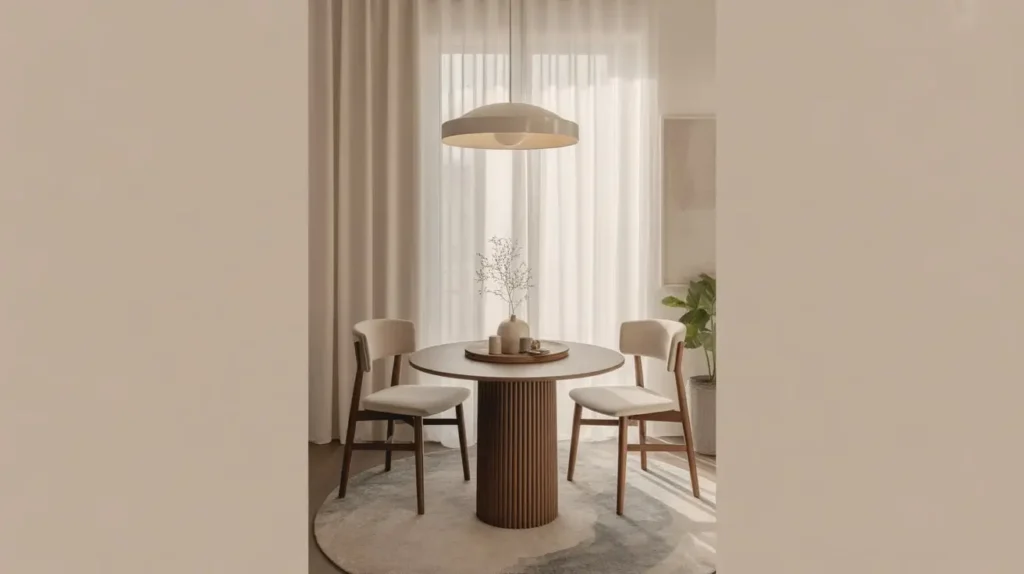
I have a personal vendetta against sharp corners in tight spaces. I’ve lost count of the number of times I’ve hip-checked the corner of a rectangular table while trying to navigate a small room. This is why I am a huge advocate for compact round dining tables.
Think about it: a round table has no sharp corners to bump into, which instantly improves traffic flow. It’s much easier to walk around. Visually, the curved edges soften the room and make it feel less cluttered than a table with harsh, 90-degree angles.
Plus, there’s a social benefit. Everyone at a round table is facing each other, which makes conversation feel more inclusive and intimate. You can also typically squeeze one more person in a pinch compared to a square table of a similar size. Ever wondered why this works so well? It’s pure geometry, my friend.
The Secret Weapon: The Pedestal Base
If you take one piece of advice about round tables, let it be this: choose a pedestal base. A table with one central support instead of four legs on the corners is the undisputed champion of small-space dining.
- More legroom: No one has to awkwardly straddle a table leg.
- Easier seating: You can push chairs all the way in without legs getting in the way, which saves a ton of space when the table isn’t in use.
A small round pedestal table is the perfect blend of form and function for a tight spot.
6. Light and Airy Color Palettes
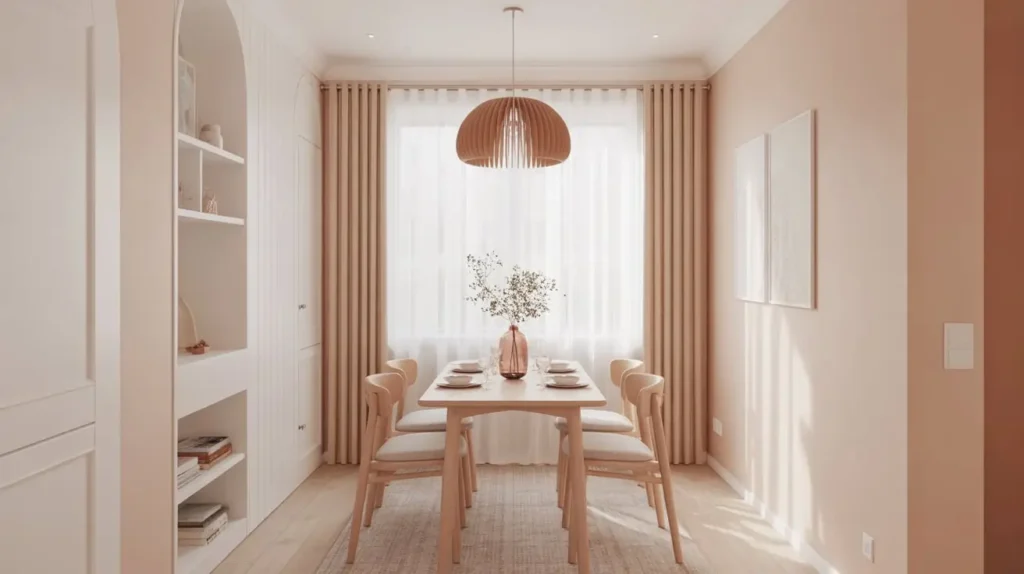
This might sound obvious, but it’s amazing how many people overlook the power of color. Dark, heavy colors absorb light and can make a small room feel like a cave. To maximize the sense of space, you need to embrace a light and airy color palette.
Think whites, soft grays, pale blues, and warm beiges. These colors reflect light, making the walls recede and the room feel bigger and more open. This doesn’t mean your dining area has to be a sterile white box, though. The trick is to use a light color as your base and then add personality with accents.
For example, paint the walls a soft, creamy white, and then bring in color with your chairs, artwork, or a beautiful centerpiece. I love using a monochromatic scheme—different shades and tints of the same color—to create a sophisticated, layered look that doesn’t feel chaotic.
How to Add Interest without Adding Bulk
- Texture is your friend: If you’re using a lot of white, introduce different textures to keep it from feeling flat. Think a woven rug, linen chair cushions, or a ceramic vase.
- A pop of color: Paint one small accent wall, or choose dining chairs in a bold, fun color. This adds personality without overwhelming the space.
- Wood tones: Natural wood tones bring warmth to a light color scheme. A light oak or ash table can look stunning against white walls.
You want the room to feel like a deep breath of fresh air. A light color palette is the foundation for achieving that vibe.
7. Wall-Mounted Storage Solutions
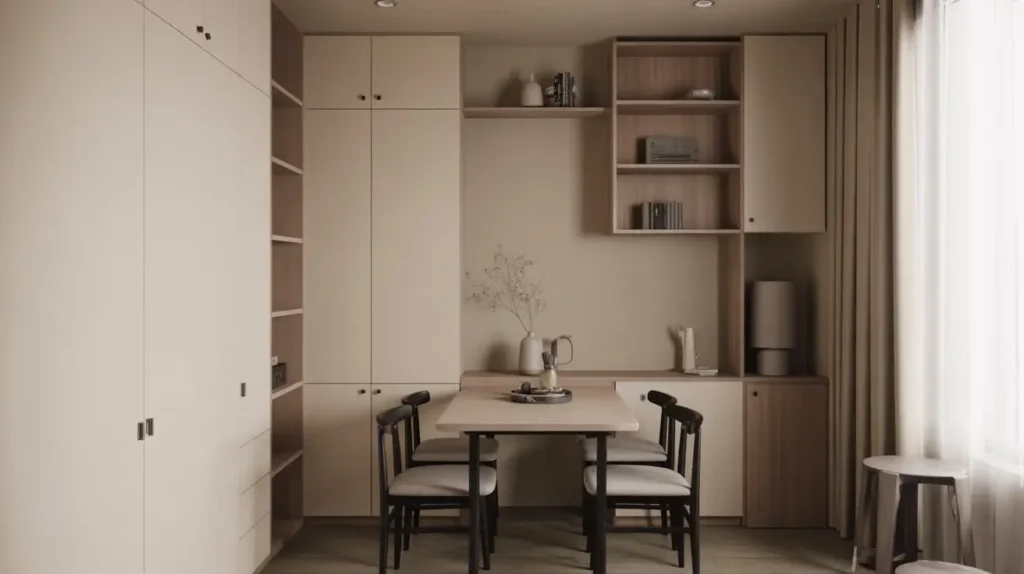
We talked about floating shelves, but let’s take it a step further. What about your wine glasses, your small collection of cookbooks, or your favorite serving platters? Instead of a bulky cabinet, use dedicated wall-mounted storage solutions.
This is about getting creative and using vertical space. Think:
- Wall-mounted wine racks: They can be a piece of art in themselves, displaying your bottles in a sleek, organized way.
- Picture ledges: These are not just for pictures! Their slim profile is perfect for displaying small cookbooks or decorative plates.
- Hanging pot racks (in moderation): If your dining area is adjacent to the kitchen, a small, stylish pot rack can be used for more than just pots. Hang your best copper mugs or a few small herbs from it.
The goal is to get things off the floor and off your surfaces. When your floor and tabletop are clear, your brain registers the space as larger and more organized. Wall-mounted options provide essential storage while maintaining that precious, uncluttered feeling. It’s a win-win.
8. Small Space Pendant Lighting
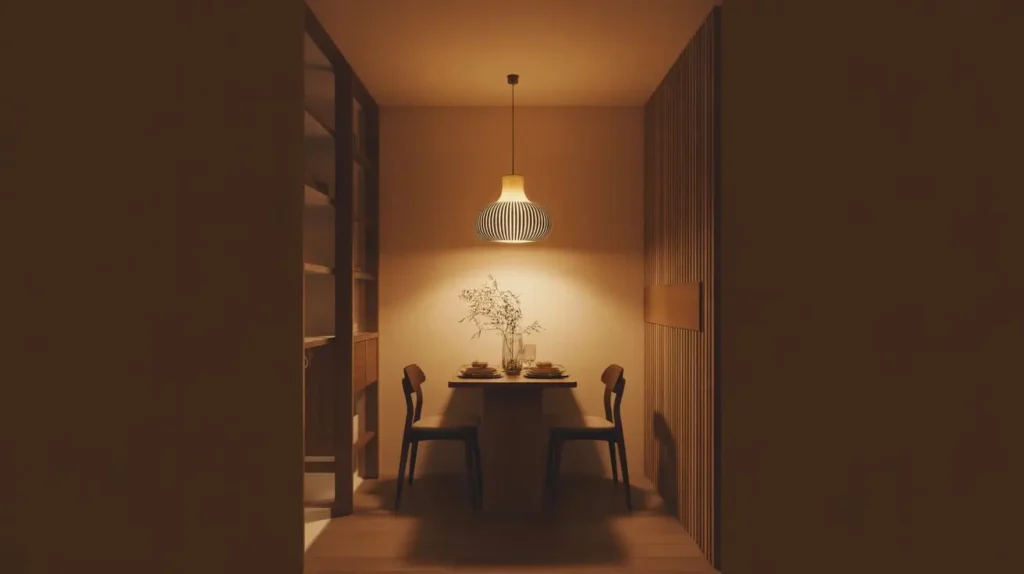
Bad lighting can kill the mood in any room, but in a small space, it’s a critical error. A single, harsh overhead flush-mount light does nothing for ambiance and can make a room feel flat. The solution? A beautiful pendant light hung directly over your dining table.
A pendant light does two brilliant things. First, it defines the dining zone. It acts as a visual anchor, clearly marking “this is where we eat.” This is especially important in an open-plan living area where you need to create distinct functional zones.
Second, it creates intimacy and mood. The pool of light cast down onto the table makes the dining experience feel cozier and more focused. It draws people in. Just make sure you get the scale and height right. A pendant that’s too big will overwhelm the space, and one that’s too small will look silly. Hang it low enough to feel intimate, but high enough that you don’t bonk your head on it. FYI, the general rule is 30-36 inches above the tabletop.
Choosing the Right Pendant
- Go for “visually lightweight” styles: Look for pendants made of glass, wireframe, or light-colored fabric. These allow you to see through them, so they don’t feel like a heavy visual block in the room.
- Consider a cluster: A small cluster of three mini-pendants can have a bigger impact than one medium-sized one.
- Don’t forget a dimmer switch: This is non-negotiable, IMO. A dimmer allows you to go from bright light for a game night to a soft, romantic glow for dinner.
9. Convertible Bench Seating

Benches are a small dining room’s secret weapon. A dining bench can seat more people in the same amount of space as chairs. You can comfortably fit three kids or two and a half adults (kidding… mostly) on a bench that would otherwise only accommodate two chairs.
When pushed against a wall, a bench takes up far less room than chairs, which need space behind them to be pulled out. And when you’re not using it for dining, a bench can be a versatile piece of furniture. Tuck it under the table to free up floor space, or pull it out into the living area for extra seating when you have a crowd.
Benches with a Bonus
I’m a huge fan of furniture that does double duty. Look for a convertible bench with hidden storage. A bench with a lift-top seat is the perfect place to stash placemats, tablecloths, kids’ art supplies, or anything else that tends to clutter up your dining area.
You get seating, you save space, and you get storage. What’s not to love? It’s the ultimate triple threat for small-space living.
Read Also 15 Cozy Boho Dining Room Decor Ideas with Warm Style
10. Vertical Gardens and Green Accents
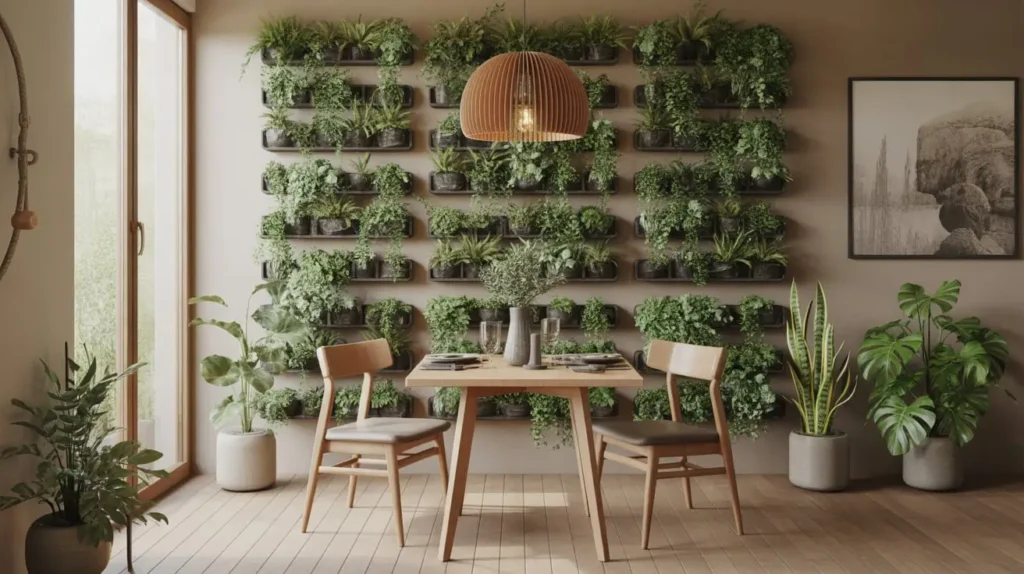
When you can’t build out, build up. This applies to greenery, too! A big, bushy floor plant can take up a surprising amount of real estate. Instead, bring nature into your small dining room with a vertical garden or other clever green accents.
Living walls or vertical gardens are stunning features that add texture, color, and life without using any floor space. You can buy pre-made kits or DIY a system of wall-mounted planters. If a full living wall feels too ambitious, there are simpler ways to get the same effect.
Go Green Vertically
- Hanging planters: Hang a trailing plant like a pothos or string of pearls from a hook in the ceiling or a wall-mounted bracket. It draws the eye up and adds a beautiful, organic touch.
- Wall-mounted planters: Small, individual planters arranged in a group on the wall can look like living art.
- A slim herb garden: If your dining area gets good light, a small wall-mounted herb garden is both beautiful and functional. Fresh basil for your pasta, anyone?
Plants make a space feel healthier and more alive. By taking them vertical, you get all the benefits without sacrificing an inch of your precious floor.
11. Slim Furniture with Hidden Storage
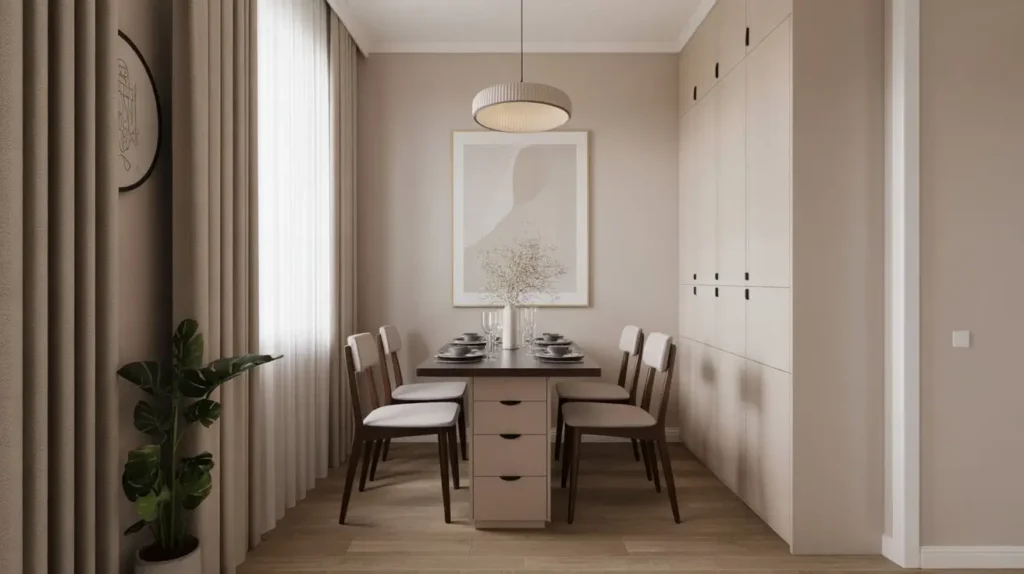
We’ve talked about storage a bit, but let’s zero in on the furniture itself. When you’re shopping for a small dining area, your mantra should be: slim and smart. Bulky, heavy-legged furniture is your enemy. Look for pieces with a slender profile and delicate legs.
Furniture with “legs” is key. A cabinet or console that is lifted off the floor on slim legs creates the illusion of more space because you can see the floor underneath it. This visual trick makes the whole room feel lighter and less crowded. Compare a blocky, solid cabinet to a mid-century modern credenza on hairpin legs. Which one feels heavier? Exactly.
And, of course, always look for that bonus hidden storage. A slim buffet with sliding doors (which don’t require clearance to swing open) or a dining table with a secret drawer can be a lifesaver for stashing away clutter before guests arrive.
12. Scandinavian-Inspired Small Dining Decor
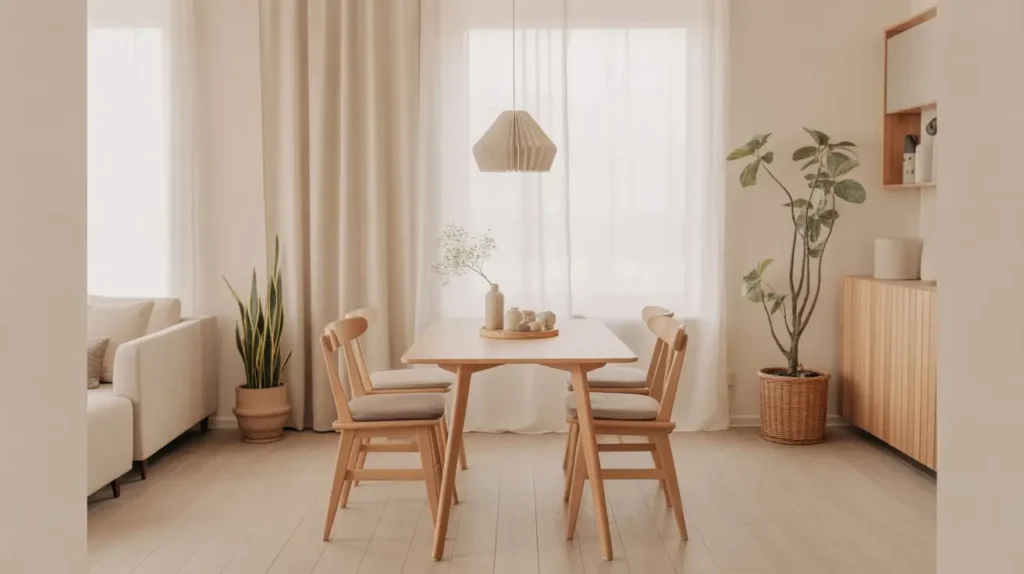
There’s a reason why everyone is obsessed with Scandinavian design, especially for small spaces. The entire ethos is built on functionality, simplicity, and a deep appreciation for light. If you want a blueprint for a beautiful and practical small dining room, look no further than Scandi-inspired decor.
What does this look like in practice?
- Light wood tones: Think ash, light oak, and birch. These woods feel warm and natural without being heavy.
- Clean lines: Scandi furniture is known for its simple, uncluttered forms. No fussy details, just beautiful craftsmanship.
- Neutral color palette: A base of white and gray is common, often accented with black, soft blues, or dusty pinks.
- Emphasis on natural light: Keep window treatments minimal—think sheer linen curtains or no curtains at all.
The Scandinavian approach, often associated with the concept of “hygge” (a feeling of coziness and contentment), proves that you don’t need a lot of stuff to create a warm and inviting space. It’s about choosing a few high-quality, beautiful pieces and letting them shine.
13. Layered Rugs for Cozy Ambience
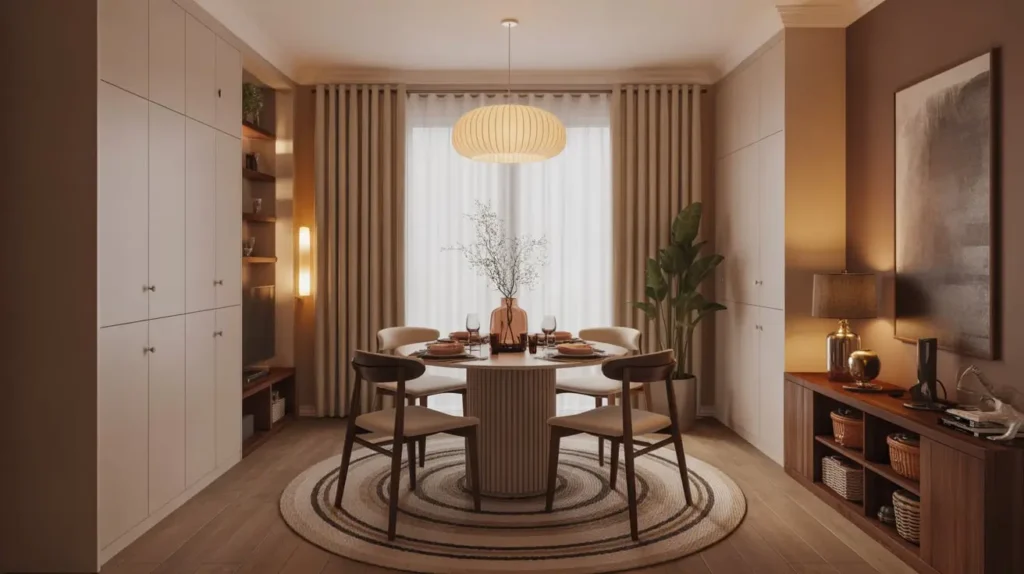
Okay, a rug in a dining room can be controversial. “What about spills?” you cry. I hear you. But a rug can do wonders for a small dining area, especially in an open-concept space. It helps define the dining zone, anchoring the table and chairs and separating it from the living area.
The trick is to choose the right rug and maybe even get a little creative with layering. A low-pile or flatweave rug is much easier to clean than a high-pile shag rug. Jute or sisal rugs are durable and great at hiding crumbs.
For a touch of personality and extra coziness, try layering a smaller, more colorful rug on top of a larger, neutral one. For example, lay down a large, inexpensive jute rug that defines the whole space, and then place a smaller, more plush vintage-style rug just under the table. This adds depth, texture, and a pop of color without a huge commitment. And if that spaghetti sauce disaster does happen, it’s much easier to clean or replace the smaller rug. 🙂
14. Art and Gallery Walls to Add Depth
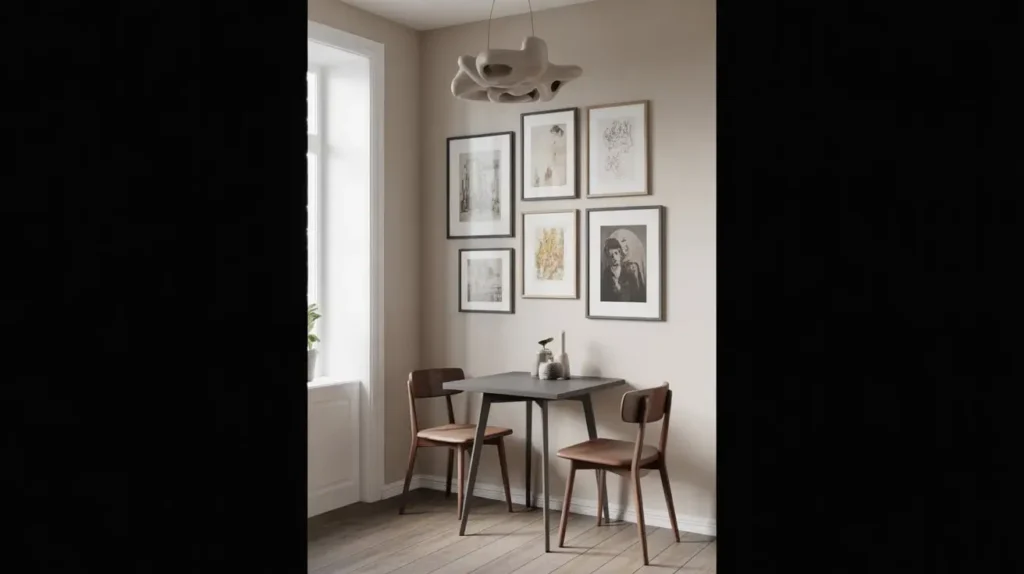
Bare walls can make a small room feel boring and boxy. A well-curated gallery wall or a single piece of large-scale art can add personality, color, and, surprisingly, a sense of depth.
A gallery wall, a collection of smaller framed pieces, can make a wall feel more expansive. It gives the eye a lot to look at, creating interest and distracting from the room’s small dimensions. Mix and match frames, sizes, and mediums—photos, prints, and even small objects—for an eclectic, personal look.
Alternatively, a single, oversized piece of art can make a huge statement. It acts as a focal point and can trick the eye into thinking the wall is larger than it is. A landscape painting or photograph is particularly effective, as it can feel like another window, adding a sense of depth to the room. Don’t be afraid to go big! A tiny piece of art on a big wall looks timid; a big piece of art on a small wall looks bold and intentional.
15. Transparent Furniture to Create Illusion of Space
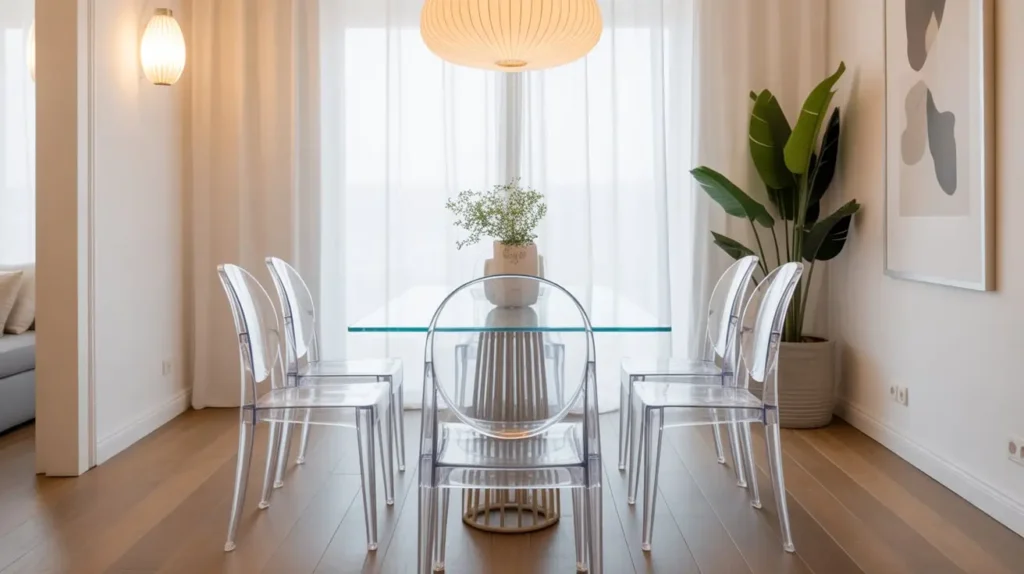
Last but certainly not least, let’s talk about the magic of “ghost” furniture. Transparent furniture, typically made from acrylic or lucite, is an incredible tool for small spaces because it has almost zero visual weight.
A set of clear acrylic “ghost chairs” around a small table can look incredibly chic. You can see right through them, so they don’t create a visual barrier. They perform their function—giving you a place to sit—without cluttering up the space. The room instantly feels more open because your eye can travel through the furniture to the wall or floor beyond.
You can also find transparent console tables or even dining tables. A clear table can be a really cool, modern statement, especially when paired with more traditional or solid-colored chairs for contrast. It’s a bit of a daring look, but the payoff in terms of creating an illusion of space is enormous. It’s the ultimate “now you see it, now you don’t” design trick.
Final Thoughts
So, there you have it. 15 ideas to take your tiny dining corner from an afterthought to a destination. Remember that cramped dinner party I mentioned at the beginning? It doesn’t have to be your reality. A small dining room isn’t a limitation; it’s an invitation to be more creative, more intentional, and smarter about your design choices.
Don’t try to do everything at once. Pick one or two ideas that really speak to you and start there. Maybe it’s finally getting that round pedestal table you’ve been eyeing, or perhaps it’s spending a weekend putting up floating shelves. The goal is to create a space that you love, that works for your life, and that makes you happy to sit down for a meal—whether it’s a party of six or just you and a bowl of cereal.
Your home should be a reflection of you, not a collection of compromises. Now go reclaim that corner and make it beautiful! You’ve got this