


Let’s be honest. You open your front door, and before you can even get your whole body inside, your shoulder is already bumping into a wall. You take one step and nearly trip over a pile of shoes that has formed its own hostile ecosystem. Your keys? Probably in the abyss. Your mail? Currently acting as a coaster for a mystery cup. This, my friend, is the tragic tale of the tiny entryway.
It’s that awkward, cramped, and frankly depressing patch of floor that’s supposed to welcome you home but instead just screams, “Good luck finding a place for your stuff!” I’ve wrestled with my fair share of ‘entryways’ that were basically just a suggestion of a hallway, so I feel your pain on a spiritual level. It feels like a lost cause, a space too small to be useful and too visible to ignore.
But what if I told you it doesn’t have to be this way? What if that sad little corner could become a functional, organized, and—dare I say—stylish first impression? It’s not about magic; it’s about being clever. We’re going to transform that awkward patch of floor into a welcoming, organized, and truly smart space. Ready? Let’s fix this.
1. Slim Floating Shelf Setup
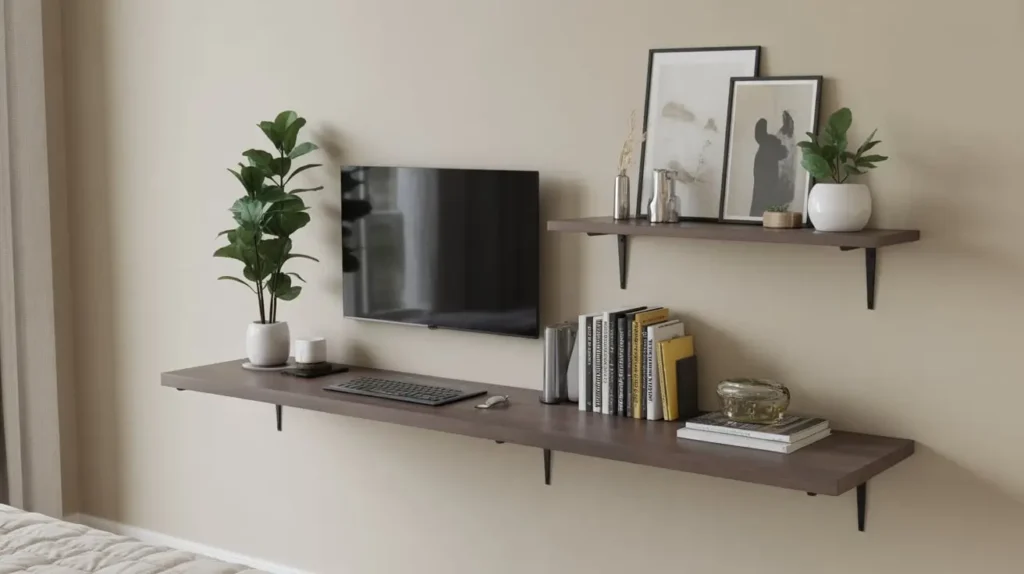
First up is the minimalist’s dream and the small-space-dweller’s savior: the slim floating shelf. This is quite possibly the most effective trick in the book for creating a functional surface out of thin air.
A floating shelf is exactly what it sounds like—a shelf that mounts directly to the wall with no visible brackets or legs. It hovers, creating an incredibly clean, uncluttered look that is perfect for tight quarters.
Why It’s a Small Space Superstar
The genius of the floating shelf is that it takes up zero floor space. This is the golden rule of small entryway design. By keeping everything off the ground, you create an uninterrupted sightline that makes the entire area feel bigger and more open. It combats the claustrophobic feeling that furniture legs can create in a narrow hall.
It’s the perfect, minimalist drop zone. You don’t need a massive table to hold your essentials. A simple, slim shelf is all you need for a designated spot to toss your keys, wallet, and sunglasses. No more frantic morning searches!
Getting It Just Right
To make this work, proportion is everything. You’ll want a shelf that’s relatively narrow—think 6 to 9 inches deep. Anything deeper will start to feel intrusive and become a hip-checker every time you walk by. The length can vary, but something around 24 to 36 inches usually does the trick.
Mount it at a comfortable height, typically around standard table height (30-34 inches), so it feels like a natural place to set things down. Style it simply:
- A small, decorative bowl for your keys.
- A tiny succulent or air plant that doesn’t require a PhD in horticulture to keep alive.
- Maybe a sleek, framed photo.
Resist the urge to clutter it. The whole point is its simplicity. It’s a functional drop zone, not a storage unit.
2. Narrow Console with Hidden Storage

Okay, so maybe the floating shelf is a bit too minimalist for you. You’ve got more stuff. Mail, dog leashes, that reusable bag you always forget—I get it. In that case, let me introduce you to the narrow console table with hidden storage.
This is the floating shelf’s slightly more responsible older sibling. It offers a surface and a place to hide the clutter that inevitably accumulates by the front door. We’re talking about tables with slim drawers or small cabinets.
The Beauty of Hiding Your Mess
Let’s be real: no one’s entryway is perfectly styled 24/7. Life is messy. That’s why hidden storage is your best friend. A slim drawer is the perfect place to stash mail, pens, and loose change, keeping the surface clear and serene.
A console table still provides that essential drop-zone surface for your keys and phone, but it does the heavy lifting by concealing the less-than-beautiful necessities. Out of sight, out of mind, right? It gives you function without sacrificing that clean, put-together look you’re aiming for.
What to Look For
The key here is the word “narrow.” You need to be ruthless. Look for console tables that are 10 to 12 inches deep at most. I once made the mistake of buying a 15-inch deep table for my small hallway, and it instantly became a human traffic jam. Measure your space, and then measure it again.
Look for models with at least one or two small drawers. Some even have a lower shelf where you can place a couple of attractive baskets for even more concealed storage (think shoes or winter hats). The goal is to find a piece that works hard without looking like it’s breaking a sweat.
3. Vertical Mirror Wall Accent

This one is less about storage and more about pure, unadulterated illusion. If your entryway feels like a dark, narrow cave, a mirror is the fastest way to blast it open with light and the perception of space.
We’re not talking about a dinky little mirror, either. Go big or go home. A tall, vertical mirror—either a full-length one leaned against the wall (if you have the floor space) or a large one mounted vertically—can dramatically change the feel of your entry.
How the Magic Works
Mirrors are tricksters of the best kind. They do two brilliant things for a small space:
- They bounce light around. A mirror placed opposite a light source (like a lamp or a nearby window) will grab that light and throw it all over your dark entryway, making it feel brighter and more cheerful.
- They create the illusion of depth. By reflecting the room, a mirror tricks your eye into thinking the space is deeper than it actually is. It’s like adding a window to a windowless wall.
Plus, let’s be practical for a second. Who doesn’t need one last, critical check of their hair/shirt/spinach-in-teeth situation before bolting out the door? A large mirror is as functional as it is stylish.
Placement Is Everything
To maximize the effect, hang your mirror on the longest wall of your entryway. This gives it the most surface area to reflect, enhancing the feeling of spaciousness. If you have a console table or floating shelf, hanging a round or rectangular mirror above it creates a beautiful, classic focal point.
If you’re really tight on space, consider a set of mirror tiles to create a custom-sized accent wall. It’s a bit more work, but the payoff in light and perceived space can be huge.
4. Minimalist Hook Rack Entry

Are you tired of the dreaded “chair-drobe” migrating to your front door? You know, the pile of jackets, scarves, and bags that lives on the one available surface? It’s time to reclaim your entryway with a simple, elegant hook rack.
Forget those bulky, floor-hogging coat trees that tip over if you look at them wrong. A wall-mounted hook rack is sleek, space-efficient, and incredibly practical. It provides a designated home for your daily essentials, keeping them off the floor and out of the way.
Why Hooks Beat a Coat Tree
In a small entryway, every square inch of floor is precious real estate. A coat tree, with its wide base, eats up a significant chunk of that space. Hooks, on the other hand, use vertical wall space, which is almost always underutilized.
They also encourage minimalism. You can only hang so many items on a few hooks, which forces you to be selective. It’s a “grab-and-go” system for the coat you wear daily, not a long-term storage solution for your entire winter wardrobe. Unless you enjoy a fun game of ‘Jenga with Jackets’ every time you come home, this is the way to go.
Choosing Your Hooks
You can go one of two ways here: a pre-made rack with several hooks on a single board or a series of individual, decorative hooks.
- Hook Rack: This is the easiest option. Look for one that matches your style—be it a rustic wooden plank with cast iron hooks or a sleek, modern metal bar.
- Individual Hooks: This approach gives you more flexibility. You can stagger them at different heights for visual interest and to accommodate items of different lengths (like a long scarf and a short jacket). You can also find some seriously cool, sculptural hooks that double as wall art when they’re not in use.
Install them at a height that’s comfortable for everyone in the household. This simple addition can single-handedly solve 50% of your entryway clutter problem.
Read Also 15 Delightful Black Entryway Table Decor Ideas for Eye-Catching Spaces
5. Compact Bench with Baskets
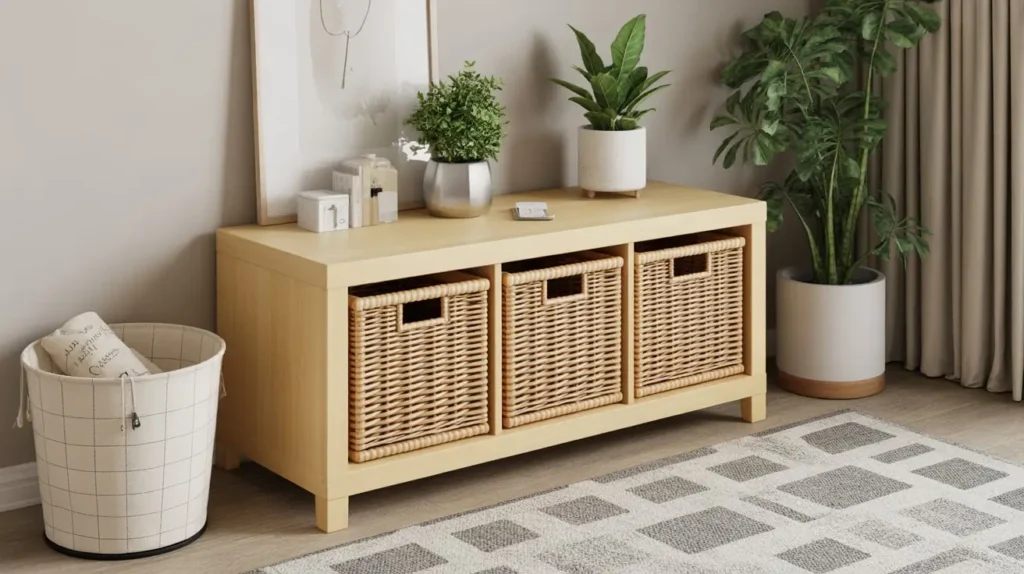
Where do you sit to wrestle your boots on in the winter? On the floor? While hopping precariously on one foot? A small bench is a game-changer, providing a moment of grace in your daily routine. And if that bench has storage, you’ve hit the jackpot.
A compact entryway bench offers a seat and a storage solution all in one. It’s the perfect blend of hospitality and practicality. Even the smallest of entryways can often accommodate a slim bench.
The Sit-and-Store Solution
The primary function is, of course, giving you a place to sit while you deal with your footwear. It’s a small luxury that makes a huge difference, especially if you have kids or just hate the one-legged-hop dance.
But the real magic happens underneath. The open space below the bench is prime real estate for storage baskets. This is where you can hide the shoe pile. Assign one basket per person or one for winter gear and one for everything else. It keeps the clutter contained and out of sight.
Finding the Perfect Fit
Measure your space carefully. You’re looking for a bench that is narrow in depth (around 12-14 inches) and not overly long. Many companies now make benches specifically designed for small entryways.
Look for a style that complements your home. A simple wooden bench can feel rustic and warm, while a metal one can be more industrial and modern. An upholstered bench adds a touch of softness and comfort. Just make sure you can fit at least one or two decent-sized baskets underneath it. Pro tip: measure the height of the space under the bench before you go basket shopping. Trust me on this.
6. Corner Floating Shelf Tower
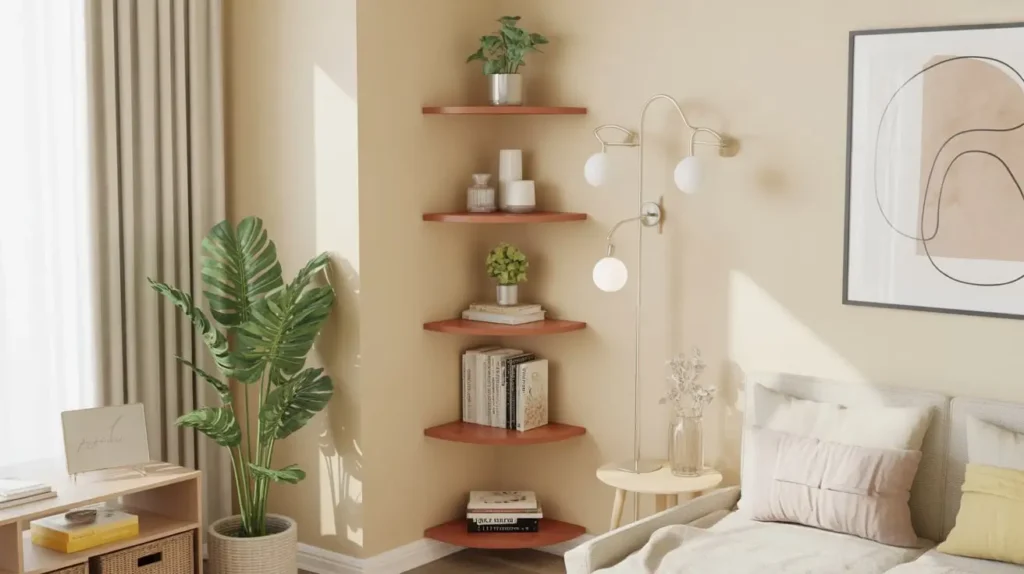
Got an awkward, empty corner that’s just collecting dust bunnies? Corners are notoriously difficult to decorate and often end up as dead space. It’s time to put that corner to work with a vertical tower of floating shelves.
Instead of a single shelf, you install a series of three to five small shelves stacked vertically up the corner. This draws the eye upward, making the ceiling feel higher, and provides multiple surfaces for both decor and function without eating into your precious walkway.
Why It’s a Genius Move
This idea is brilliant because it tackles a space that is almost always wasted. A corner shelf tower gives you the storage benefits of a bulky étagère or bookcase but with the light, airy feel of floating shelves.
It’s the perfect spot for things that don’t quite fit on a single drop-zone shelf. You can use it to:
- Display a collection of small plants.
- Store hats or gloves in small, stylish baskets.
- Create a mini art gallery with framed photos.
- Keep a designated bowl for keys on one shelf and a spot for outgoing mail on another.
How to Install Them
You can buy shelves designed specifically for corners, which makes installation a breeze. They come in various shapes, from simple triangles to more elegant curved designs.
When installing, think about spacing. Don’t place them too close together, or it will look cluttered. A good rule of thumb is to leave at least 10-12 inches of vertical space between each shelf. This gives your items room to breathe and keeps the whole setup from feeling heavy.
7. Wall-Mounted Drop Zone
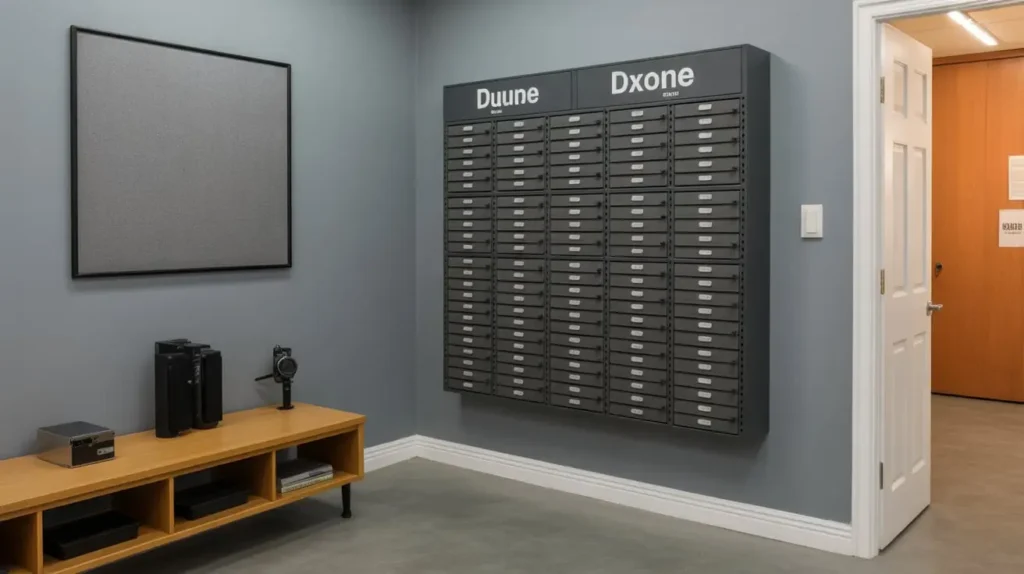
If you’re a fan of maximum efficiency, the all-in-one, wall-mounted drop zone is for you. Think of it as a mini command center for your entryway. These units are specifically designed to consolidate all your entry essentials into one compact, organized station.
These organizers typically combine several functions into one piece. You’ll often find a small shelf, a few hooks, and a mail sorter or a small pocket all integrated into a single, wall-mounted unit.
The Ultimate Organizer
Why fumble with a separate shelf, hook rack, and mail bowl when you can have it all in one place? A wall-mounted drop zone is the epitome of purpose-built design. Everything has its place: keys on the hooks, mail in the slot, sunglasses on the shelf.
This is especially fantastic for people living in apartments or homes with literally no defined entryway—where the front door opens directly into the living room. Mounting one of these on the small sliver of wall next to the door frame instantly carves out a functional “entry” space.
Picking the Right One
These come in a huge variety of styles, from modern metal and wood combos to rustic, farmhouse-inspired designs. Before you buy, think about what you really need to store.
- Do you get a lot of mail? Look for one with a deep pocket or multiple slots.
- Is it mostly for keys and dog leashes? Prioritize a unit with plenty of sturdy hooks.
- Need a spot for your wallet and phone? Make sure the shelf portion is wide enough.
Mount it at eye level or slightly above your light switch for easy access. It’s a small, simple change that can bring a massive amount of order to your daily routine.
8. Mini Gallery Wall Entry
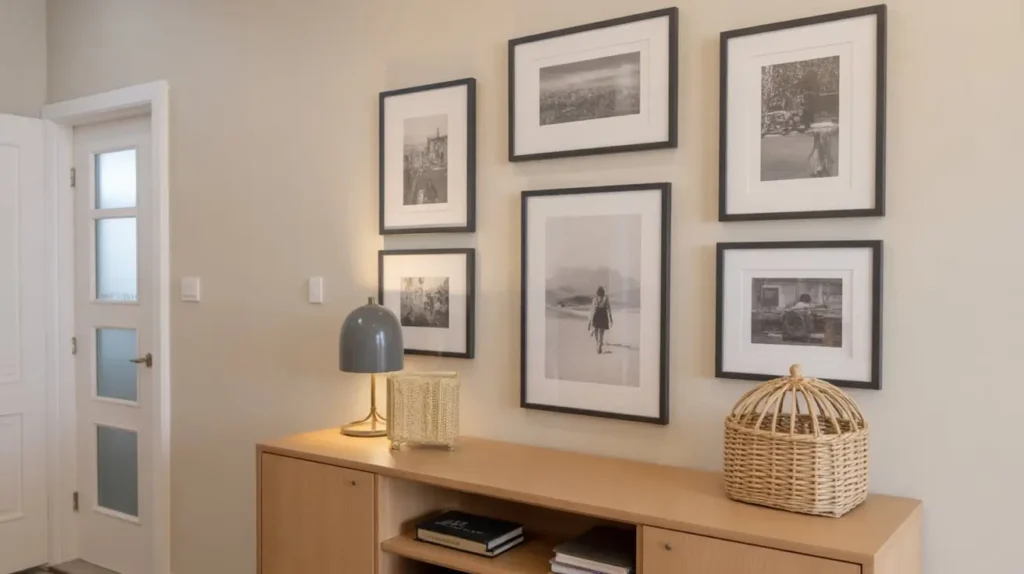
Who says an entryway has to be all about storage? If your space is so ridiculously small that any furniture is out of the question, lean into pure style. A mini gallery wall can turn a boring wall into a stunning focal point.
This is your chance to inject a huge dose of personality right at the front door. It’s a declaration of your style and a wonderful way to welcome guests (and yourself) into your home.
Making a Big Impact in a Small Space
A gallery wall works because it draws the eye upward and creates a point of interest. Instead of noticing the cramped quarters, people’s attention will be captured by the art. It makes the space feel intentional and curated rather than neglected.
You’re not just hanging pictures; you’re telling a story. It could be a collection of family photos, a series of prints from your favorite artist, or an eclectic mix of art, photos, and even small, flat objects like a beautiful postcard or a decorative plate.
Curating Your Collection
The key to a successful gallery wall in a small space is cohesion. You don’t want it to feel chaotic. Achieve a unified look by sticking to one of these principles:
- Consistent Frames: Use frames that are all the same color (e.g., all black, all white, all brass). The art inside can be varied, but the frames will tie everything together.
- Consistent Color Palette: Choose art and photos that share a similar color scheme. This creates a harmonious, visually pleasing effect.
- A Clear Theme: Group items by a theme, like travel photos, botanical prints, or abstract black-and-white art.
Before you hammer any nails, lay out your arrangement on the floor. Play with the spacing and composition until it feels balanced. Then, take a photo so you can replicate it on the wall.
9. Slim Shoe Cabinet Makeover
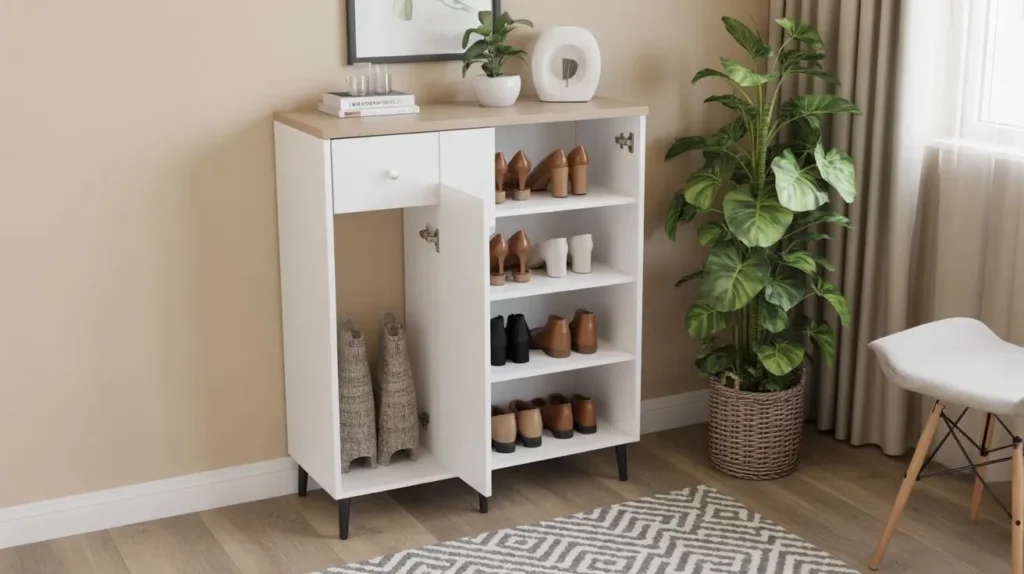
Let’s talk about the biggest offender in entryway clutter: shoes. They multiply. They lie in wait to trip you. A pile of shoes by the door is the fastest way to make even a lovely home feel messy. The solution? A slim, Scandi-style shoe cabinet.
These cabinets are a stroke of pure genius. They are incredibly shallow—often only 6-9 inches deep—and feature tilt-out compartments that store your shoes vertically. You can fit a surprising number of pairs in a very small footprint. This is a total game-changer, IMO.
The MVP of Shoe Storage
I cannot overstate how revolutionary these cabinets are for small spaces. Because they are so slim, you can place them in the narrowest of hallways where no other piece of furniture would fit. They mount to the wall for stability, so they feel like a built-in feature.
The tilt-out design keeps your shoes completely hidden, instantly eliminating the visual clutter of a messy shoe pile. Most models also have a flat top surface, which gives you a bonus landing strip for your keys and mail. It’s a shoe rack and a console table all in one.
Giving It a Glow-Up
Many of these cabinets come in basic white or black, which is great for a minimalist look. But they are also the perfect canvas for a little DIY magic. You can easily:
- Paint it a bold, statement color to create a focal point.
- Add new hardware. Swap the basic knobs or pulls for something more stylish, like brass or leather pulls.
- Apply wallpaper or contact paper to the drawer fronts for a pop of pattern.
With a little creativity, you can turn a functional piece from IKEA or Wayfair into something that looks like a high-end, custom piece of furniture.
Read Also 15 Unique Entryway Wall Decor Designs for Home Makeovers
10. Boho Woven Basket Entry
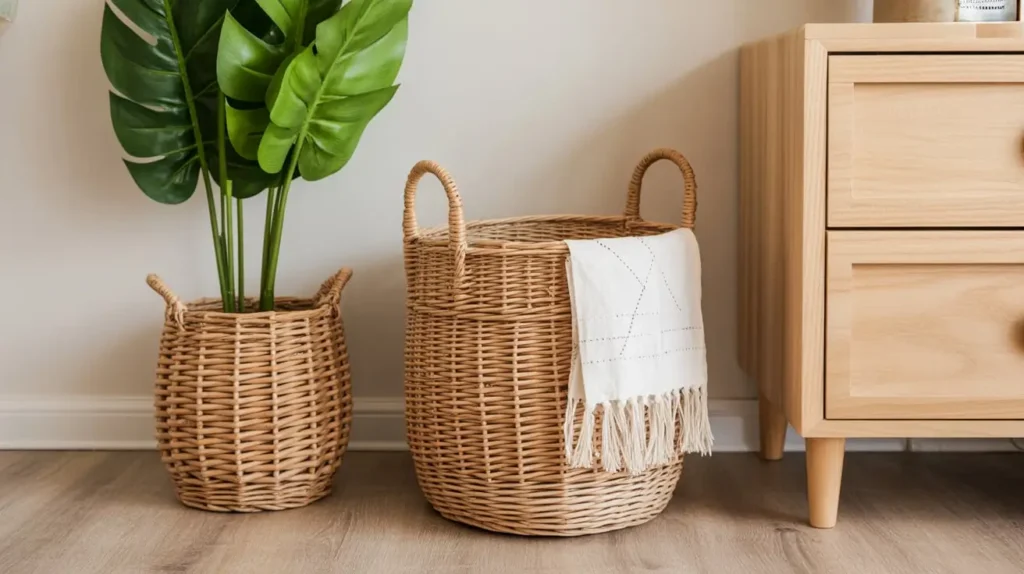
Sometimes the simplest solutions are the most effective. If you’re looking for an easy, affordable, and stylish way to tackle entryway clutter, look no further than a large, beautiful woven basket.
This idea is perfect for those who love a more relaxed, bohemian, or coastal vibe. A natural fiber basket—think seagrass, jute, or rattan—adds a wonderful layer of texture and warmth to your entry, making it feel instantly more inviting.
Effortless Style and Function
What’s not to love? A large floor basket is a super-versatile catch-all. You can toss just about anything in there:
- Shoes (it’s a much prettier version of the shoe pile)
- Umbrellas
- Reusable shopping bags
- Kids’ backpacks
- Yoga mats
It’s an “organized chaos” approach. The clutter is still there, but it’s contained in one attractive vessel, so it looks intentional. It’s a low-effort, high-impact solution that you can implement in about five minutes.
Choosing the Right Basket
Look for a basket that is sturdy and has a wide mouth for easy access. A basket with handles is a plus, as it makes it easy to move for cleaning. Size matters—you want something substantial enough to hold your stuff without looking comically oversized for the space.
You can also use a collection of smaller baskets for more specific organization. Place a few on a low bench or shelf to sort hats, scarves, and gloves. The natural texture of the woven material will make your entryway feel cozier and more curated.
11. Modern Black Metal Shelf Styling
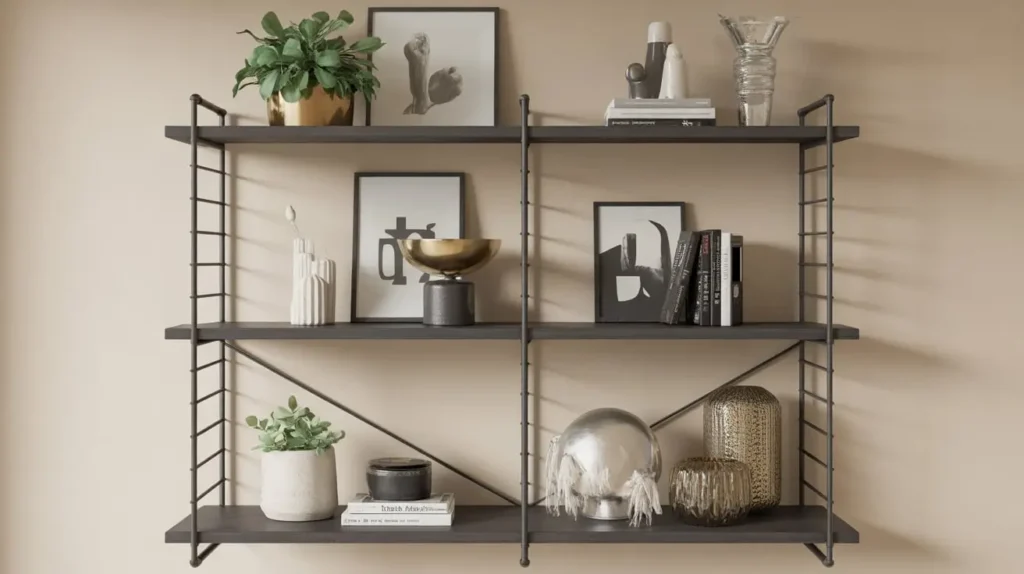
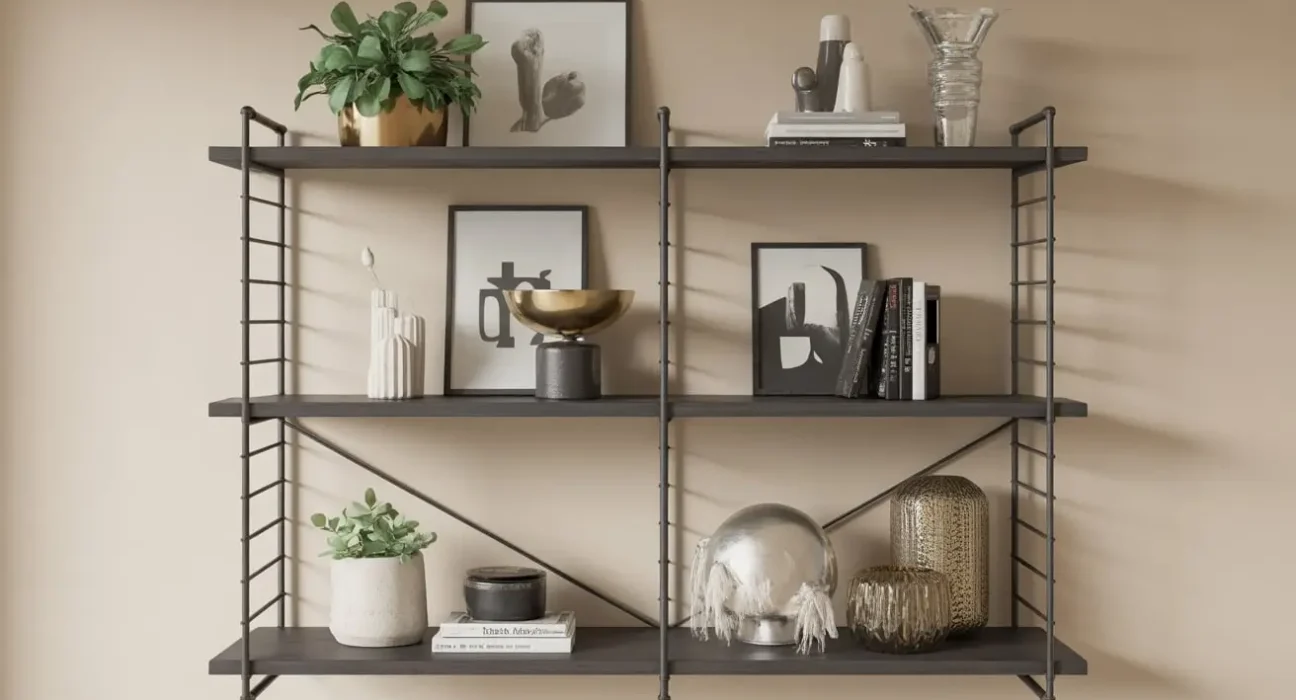
For a look that is a bit more edgy, industrial, or modern, consider a slim black metal shelving unit. These open-air shelves have a graphic, architectural quality that can make a strong statement without overwhelming a small space.
Unlike a solid wood bookcase, the open design of a metal shelf allows light and air to pass through, so it doesn’t feel heavy or bulky. It has a “less is more” vibe that works perfectly in a minimalist or contemporary home.
The “Negative Space” Advantage
The beauty of these shelves is the negative space they create. The empty areas around the shelves are just as important as the shelves themselves. This openness prevents the unit from looking like a solid block of furniture, which is crucial in a tight entryway.
It gives you multiple tiers of storage and display space. You can use the top for a drop zone, a middle shelf for a plant or a stack of books, and the bottom shelf for a pair of stylish baskets or your go-to shoes.
Styling It Like a Pro
The key to making an open metal shelf look chic and not cluttered is curated styling. You can’t just throw everything on it.
- Mix materials: Combine the hard metal with soft textures. Think a small woven basket, a stack of fabric-bound books, or a ceramic vase.
- Vary heights: Place tall objects next to short ones to create a dynamic, interesting composition.
- Leave some breathing room: Don’t fill every inch of every shelf. Empty space is essential for a high-end, styled look.
This is a great option if you have a collection of beautiful objects you want to display but still need the functionality of entryway storage.
12. Neutral Textured Rug Accent

Never underestimate the power of a good rug. In a small entryway, a runner or a small accent rug does so much more than just protect your floors. It defines the space, adds a layer of texture and warmth, and can tie your whole design scheme together.
Even if your entryway is just a few square feet, a rug visually anchors the area, signaling, “This is the entryway.” It creates a zone, separating it from the rest of your living space.
More Than Just a Pretty Face
Of course, a rug has a practical job to do: it’s the first line of defense against dirt, mud, and whatever else you’re tracking in on your shoes. But we can do better than a grim, industrial-looking mat.
Choosing a rug with a subtle pattern and a rich texture can elevate your entryway from purely functional to beautifully designed. A neutral color palette—think creams, grays, tans, and charcoals—will keep the space feeling open and bright, while the texture (like a woven jute or a low-pile wool) adds visual interest.
What to Look For
For a narrow hallway, a runner is your best bet. It will lead the eye down the hall, making it feel longer. For a more square-shaped entry, a 2’x3′ or 3’x5′ accent rug will work perfectly.
Look for materials that are durable and easy to clean. Jute and sisal are wonderfully textured but can be a bit rough and tricky to clean. Indoor/outdoor rugs made from polypropylene are a fantastic, budget-friendly option because they are incredibly durable and can literally be hosed off. And please, for the love of all that is good, use a rug pad. It will prevent slipping and make the rug feel much more plush underfoot.
13. Statement Wall Sconce Entry
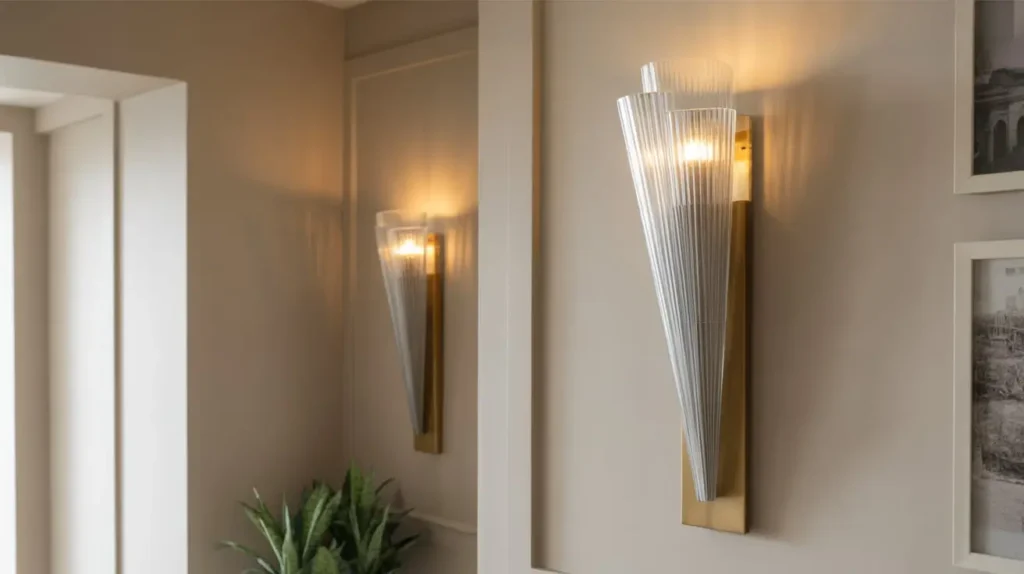
Bad lighting can make any space feel grim, but in a small entryway, it’s a death sentence. A single, sad, overhead boob light just isn’t going to cut it. One of the most sophisticated upgrades you can make is to add a statement wall sconce.
A sconce provides beautiful, layered ambient lighting that makes a space feel warm and inviting. And, most importantly for our purposes, it frees up surface space. You don’t need to waste precious shelf or table real estate on a clunky lamp.
The Plug-In Magic Trick
“But I’m a renter!” or “I don’t want to hire an electrician!” I hear you. This is where the magic of the plug-in sconce comes in. These fixtures mount to your wall just like a hardwired one, but they have a cord that you simply plug into the nearest outlet. No electrician needed! 🙂
To get that sleek, professional look, you can buy a simple cord cover that sticks to the wall and can be painted the same color as your wall. It hides the cord perfectly, giving you the high-end look of a hardwired sconce without any of the hassle or expense. It’s one of my all-time favorite design hacks.
Choosing Your Style
The sconce is a perfect opportunity to add a piece of “wall jewelry.” This is your chance to make a statement.
- For a modern look, go for a simple brass or black sconce with a clean, geometric shape.
- For a more traditional or farmhouse vibe, a sconce with a classic lantern shape or an articulated arm can be beautiful.
- For a touch of glam, look for something with a glass or crystal element.
Place it above your console table or next to your mirror to create a glowing, welcoming vignette.
14. Micro Mudroom Peg Rail
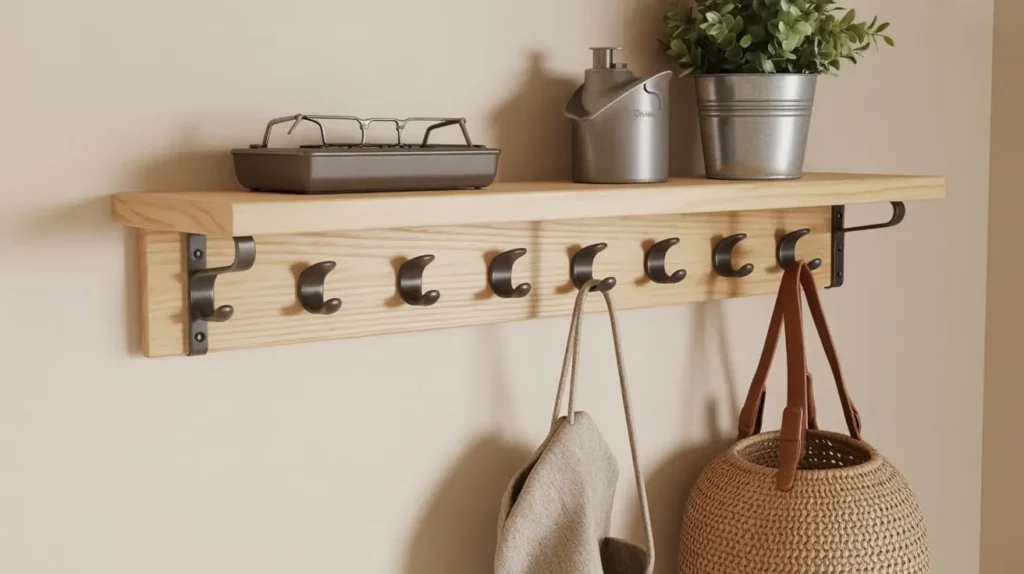
The peg rail is the humble, hardworking ancestor of the modern hook rack, and it’s making a huge comeback for a reason. Inspired by traditional Shaker design, a peg rail is simply a length of wood with evenly spaced wooden pegs. It’s minimalist, incredibly functional, and has a timeless charm.
It’s more versatile than a standard hook rack. The pegs are perfect for hanging coats and bags, but you can also hang other things from the pegs, which is where the “micro mudroom” concept comes in.
A System, Not Just a Hook
Think of the peg rail as a modular system. Yes, you can hang your jacket on a peg. But you can also:
- Hang a woven basket with a handle from a peg to hold mail or gloves.
- Drape your scarves over the pegs.
- Hang a small mirror with a leather strap from a peg.
- Hang a small, floating shelf that is designed to rest on two pegs.
This versatility allows you to customize your storage to your exact needs. It creates a whole wall of function that can be adapted and changed as the seasons (and your storage needs) change.
How to Make It Work
Install a peg rail along a full wall of your entryway for a dramatic, high-impact look. Or, run a shorter length of it above a small bench. You can buy them pre-made or easily make one yourself with a piece of wood and some dowels.
Paint it the same color as the wall for a subtle, built-in look, or stain the wood to create a warm, rustic contrast. It’s a beautifully simple system that packs a massive organizational punch.
15. Minimal Floating Ledge Decor
Finally, what if you have no space? I mean zero space. Your front door opens, and you are immediately in your living room. There’s no wall for a console, no floor for a bench. For you, I present the minimal floating ledge.
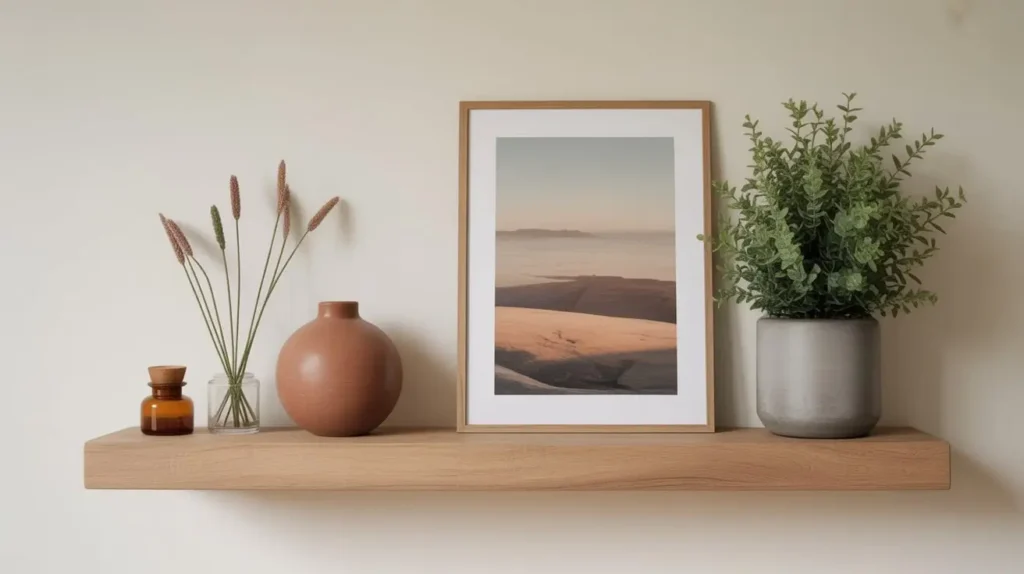
This is the tiniest of all entryway solutions. We’re talking about a super-slim picture ledge, often only 3-4 inches deep. It’s not meant to be a functional drop zone in the traditional sense. Its purpose is purely to create the feeling of an entryway through intentional decor.
The Power of Suggestion
A picture ledge installed on the wall nearest the door acts as a visual cue. It says, “The home starts here.” It gives you just enough space to create a tiny, curated moment.
This isn’t where you’ll dump your keys (they’d probably fall off, anyway). This is where you can lean a small piece of framed art, place a single tiny vase with a flower sprig, or display a beautiful object. It’s about adding a touch of beauty and intention to an otherwise non-existent space.
Making It Meaningful
Because the ledge is so small, everything you place on it has to count. Choose one or two items that bring you joy.
- A favorite small-scale art print.
- A postcard from a memorable trip.
- A single, beautiful candle (unlit, for safety!).
- A tiny air plant in a miniature pot.
This micro-display adds a layer of personality and warmth right at the threshold, proving that you don’t need a grand foyer to make a welcoming first impression. It’s about making the most of what you have, even if it’s only a few inches of wall.
Your Entryway, Reclaimed
There you have it. Fifteen ways to take back your tiny entryway from the brink of chaos. That small, awkward space doesn’t have to be a source of daily frustration. With a little bit of smart planning and a dash of style, it can become one of the most functional and charming spots in your home.
It’s not about having a huge budget or a massive foyer. It’s about being intentional. It’s about finding clever solutions that work for your space and your life. Whether you opt for a floating shelf, a magic mirror, or a hard-working shoe cabinet, the goal is the same: to create a space that welcomes you home and makes your life just a little bit easier.
So go on, reclaim that tiny patch of real estate by your front door. Your future, less-stressed self will thank you every time you walk in the door without tripping over a rogue shoe.