

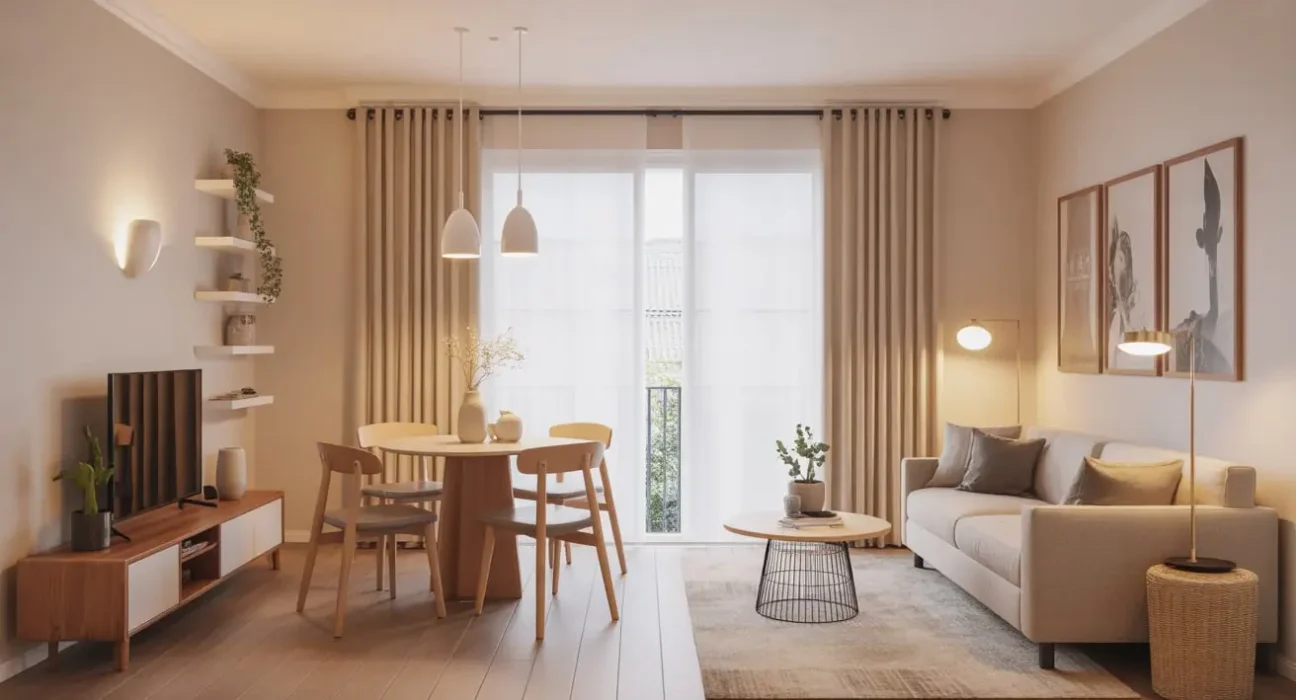
Let’s be real for a second. You’ve scrolled through Pinterest, you’ve binged the home makeover shows, and you’re staring at that one awkward room in your home that’s supposed to be both a living and a dining area. Right now, it probably feels more like a cluttered hallway where a sofa and a table are in a silent standoff. I’ve been there. My first apartment had a living/dining “space” so small I could practically butter my toast from the couch. It was… cozy, to put it nicely.
But here’s the secret they don’t always tell you: a small living and dining room combo isn’t a curse. It’s a creative opportunity. It forces you to be smarter, more intentional, and ultimately, cozier than you ever thought possible. You don’t need a sprawling open-plan mansion to have a space that’s both functional and drop-dead gorgeous. You just need a few clever tricks up your sleeve.
So, grab a coffee (or a glass of wine, I don’t judge), and let’s chat. I’m going to walk you through 15 game-changing ideas that will transform your compact combo space from a source of stress into your favorite spot in the house. We’re going to make that room work for you, not against you.
H2: 1. Multi-Functional Furniture Layouts: The Unsung Heroes
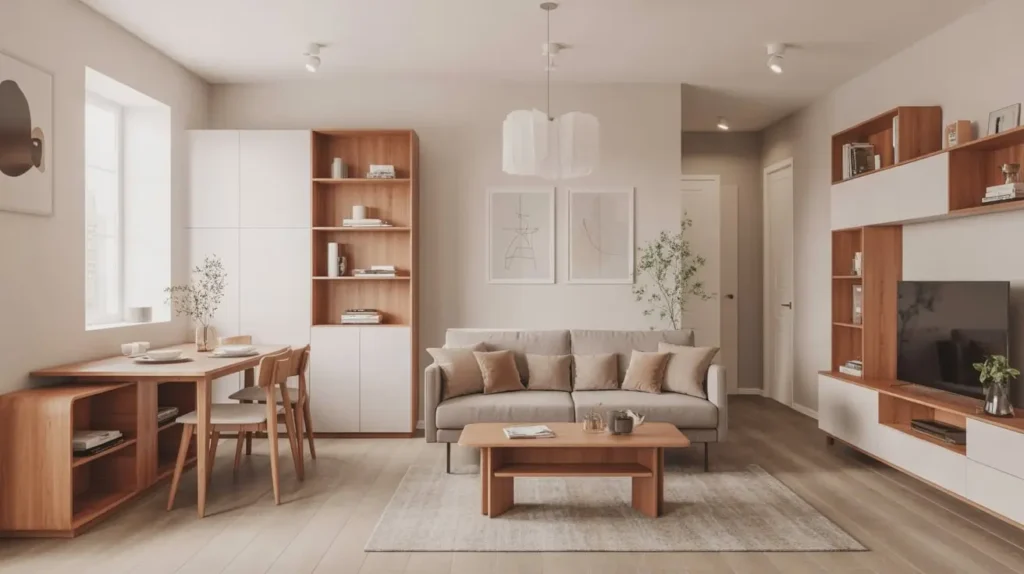
If your furniture only does one thing, it’s not working hard enough. In a small space, every single piece needs to pull double, or even triple, duty. Think of your furniture as employees—you don’t want any slackers.
This is the absolute cornerstone of small-space living. Why have a coffee table when you can have a coffee table that secretly holds all your board games and extra blankets? Or better yet, one that lifts up to become a dining table or a work-from-home desk? Seriously, these exist, and they are magnificent.
H3: Why This Is a Game-Changer
Multi-functional pieces aren’t just about storage. They’re about flexibility. Your living room on a Tuesday night might be a chill zone for Netflix, but on a Saturday, it needs to be an entertaining space for friends. Furniture that can adapt is key.
- Storage Ottomans: These are my personal favorite. They’re a footrest, extra seating for guests, and a hiding spot for everything from magazines to your kid’s toys. No one will ever know the chaos that lives inside.
- Lift-Top Coffee Tables: I had one of these in my old apartment, and it was revolutionary. It went from a standard coffee table to my dining table in about five seconds. Perfect for solo dinners or working on a laptop without hunching over like a gremlin.
- Sleeper Sofas & Futons: The modern versions are a far cry from the lumpy, back-breaking contraptions you remember from your college dorm. A stylish sleeper sofa means your living room can become a guest room at a moment’s notice.
My advice? Before you buy any piece of furniture, ask yourself: “What else can you do for me?” If the answer is “nothing,” you might want to reconsider. It sounds harsh, but your square footage is precious.
H2: 2. Open Shelving for Space Optimization: Go Vertical, Visually
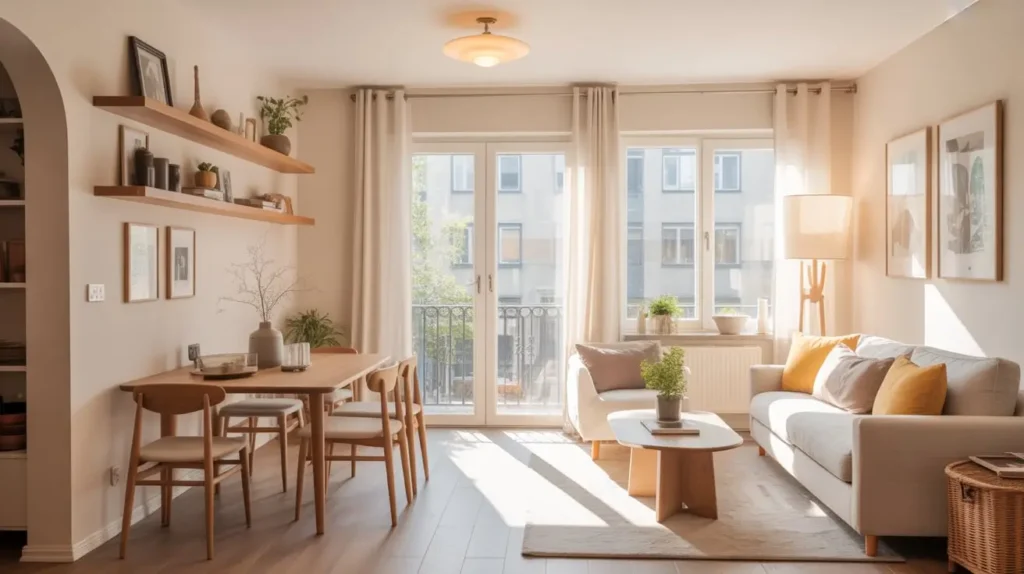
Heavy, closed cabinets can feel like giant, space-sucking blocks in a small room. They visually shrink the space and make everything feel cramped. The solution? Open shelving.
I know what you’re thinking: “But my stuff is a mess!” Fair point. Open shelving forces you to be a bit of a curator. You can’t just shove things in and slam the door shut. But the payoff is a room that feels infinitely more open, airy, and personalized.
It’s about displaying the things you love—books, plants, a cool vase you found at a flea market—and finding clever storage boxes for the less-than-pretty essentials. It draws the eye upward, creating an illusion of height and giving your living-dining combo a curated, gallery-like feel.
H3: 3. Foldable Dining Tables for Compact Spaces: Now You See It, Now You Don’t
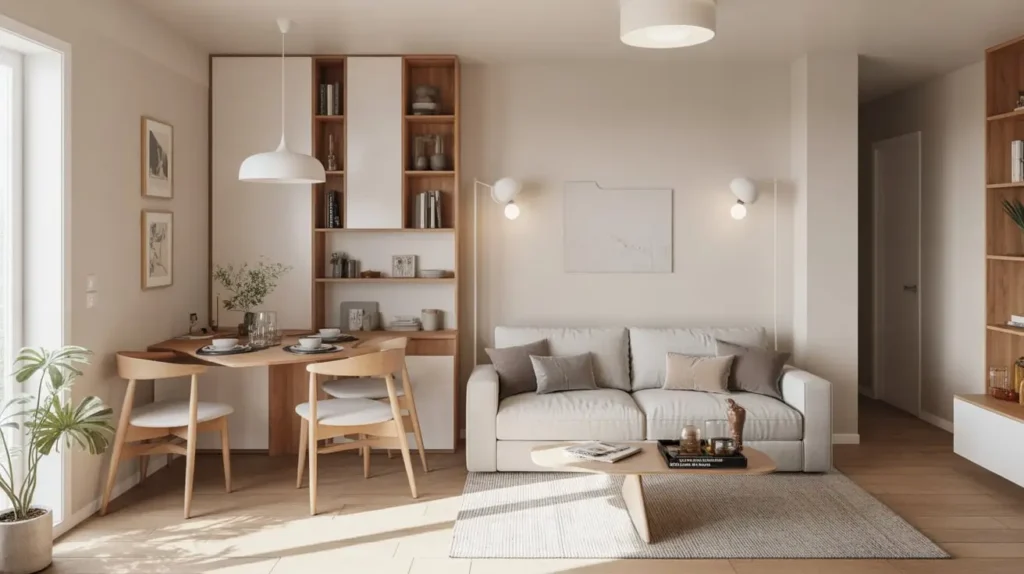
Remember those clunky dining tables that dominate a room even when only one person is using them? Yeah, those are not your friends in a small combo space. Enter the magic of foldable and drop-leaf tables.
These tables are the Houdinis of the furniture world. A gateleg table, for instance, can sit demurely against a wall looking like a slim console table, holding a lamp and a couple of books. But when guests arrive, you can unfold one or both “gates” to create a dining space for four or even six people. It’s pure genius.
Another fantastic option is a wall-mounted drop-leaf table. When not in use, it folds flat against the wall, taking up virtually zero floor space. When you need it, you simply pull it up. It’s the ultimate space-saver for truly tiny living and dining room combos. Just make sure it’s installed properly—you don’t want your dinner suddenly ending up on the floor. Trust me on that one. :/
H2: 4. Minimalist Scandinavian Design Combo: Less Is So Much More
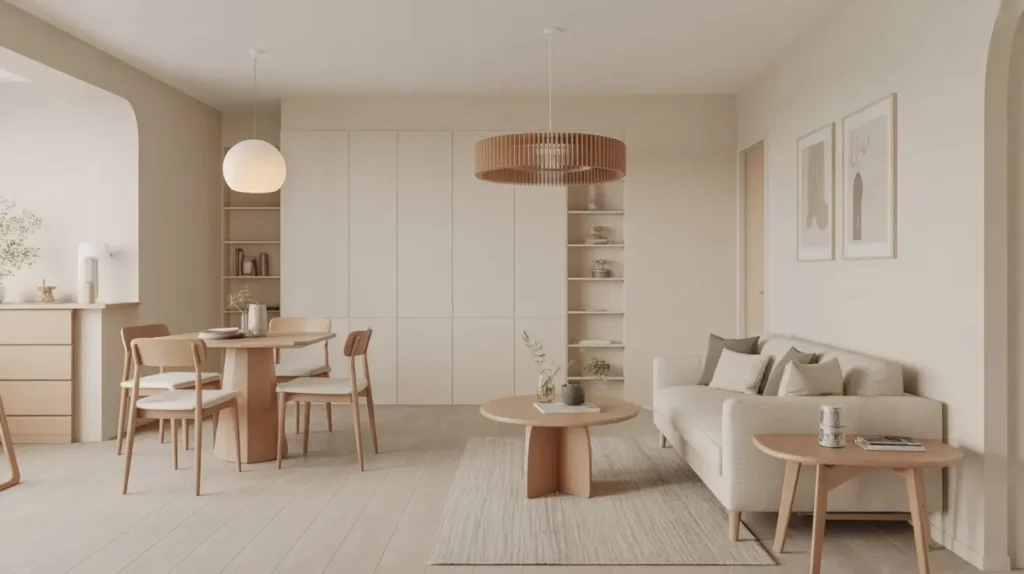
Ever wondered why those Scandinavian homes on Instagram look so effortlessly chic and serene, even when they’re small? It’s not an accident. The entire philosophy of Scandinavian design is practically tailor-made for compact spaces.
At its core, it’s about a few key principles:
- Light, neutral color palettes: Think whites, grays, and soft, muted tones that reflect light.
- Natural materials: Light woods like birch and pine, wool, and linen add warmth and texture.
- Minimalism and functionality: Every piece has a purpose, and there’s a distinct lack of clutter. It’s about “hygge”—that feeling of cozy contentment.
By embracing this “less is more” approach, you naturally create a space that feels uncluttered, calm, and visually expansive. You’ll have a living-dining area that focuses on clean lines, quality pieces, and an overall feeling of brightness. It’s a style that inherently avoids the “too much stuff in one room” problem.
Read Also 15 Stunning Shelf Decor Living Room Ideas to Transform Your Space
H2: 5. Bright Color Palettes to Expand Small Rooms: The Oldest Trick in the Book
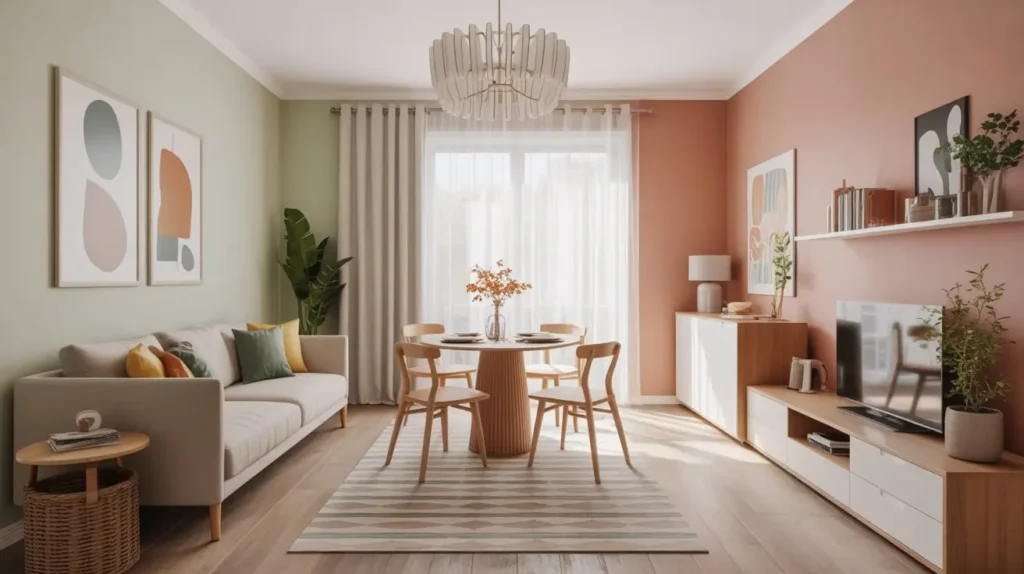
This is probably the first piece of advice anyone ever gets about small spaces, and for good reason: it works. Painting your walls a light, bright color is the fastest way to make a room feel bigger and more open.
But let’s be clear: “bright” doesn’t have to mean boring, sterile white. In fact, a stark, cold white can sometimes make a room feel like a hospital. The key is to choose whites with warm undertones, or to explore other light-reflecting colors.
Think about:
- Soft, pale blues and greens: These colors are calming and can evoke a sense of sky and nature, making the room feel less confined.
- Warm grays (greige): A sophisticated neutral that provides a beautiful backdrop for your furniture and decor without feeling cold.
- Creamy off-whites: These add a touch of warmth and coziness that a pure white can lack.
The goal is to have your walls recede, not jump out at you. Bold, dark colors absorb light and can make walls feel like they’re closing in, which is the last thing you want in a small living and dining combo. If you absolutely love a dark color, consider using it on a single accent wall, preferably one that gets a lot of natural light.
H2: 6. Corner Seating Solutions for Tight Areas: Claiming Awkward Spaces
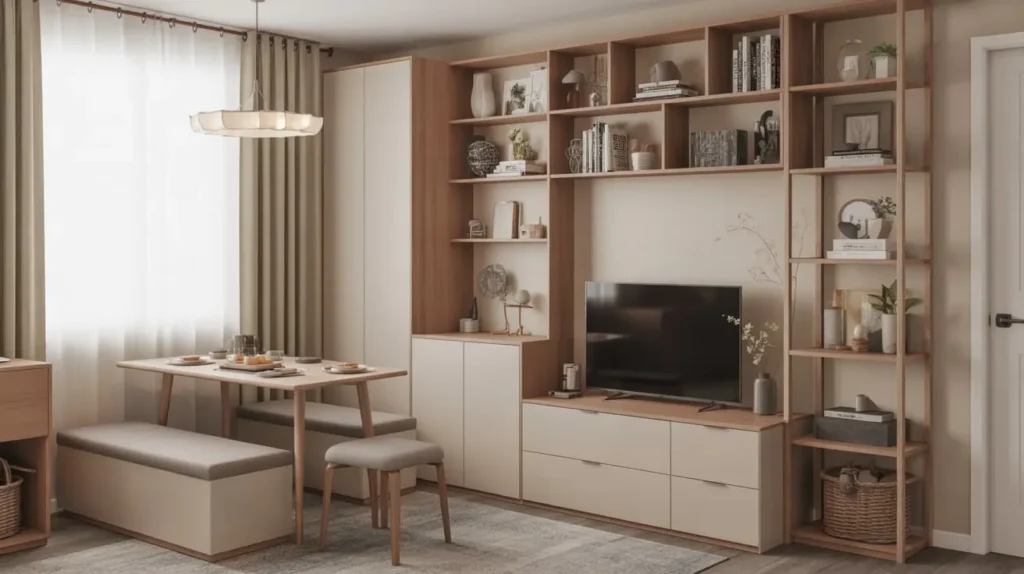
Corners are often the most underutilized real estate in any room. We tend to just stick a sad-looking lamp or a lonely plant there and call it a day. In a small living-dining combo, that’s a massive waste of potential.
This is where corner seating, like a banquette or a small sectional sofa, becomes your secret weapon. A built-in dining banquette, for example, can be tucked neatly into a corner, providing way more seating than individual chairs would, and it often includes hidden storage underneath the benches. It feels intentional, custom, and incredibly cozy.
On the living room side, a small L-shaped or sectional sofa can define the corner of the living area, creating a clear boundary from the dining space while maximizing seating. It feels more inclusive and conversational than a standard sofa and a separate armchair. You’re essentially turning a dead zone into the most popular spot in the room.
H2: 7. Hidden Storage Ideas in Living-Dining Combos: Out of Sight, Out of Mind
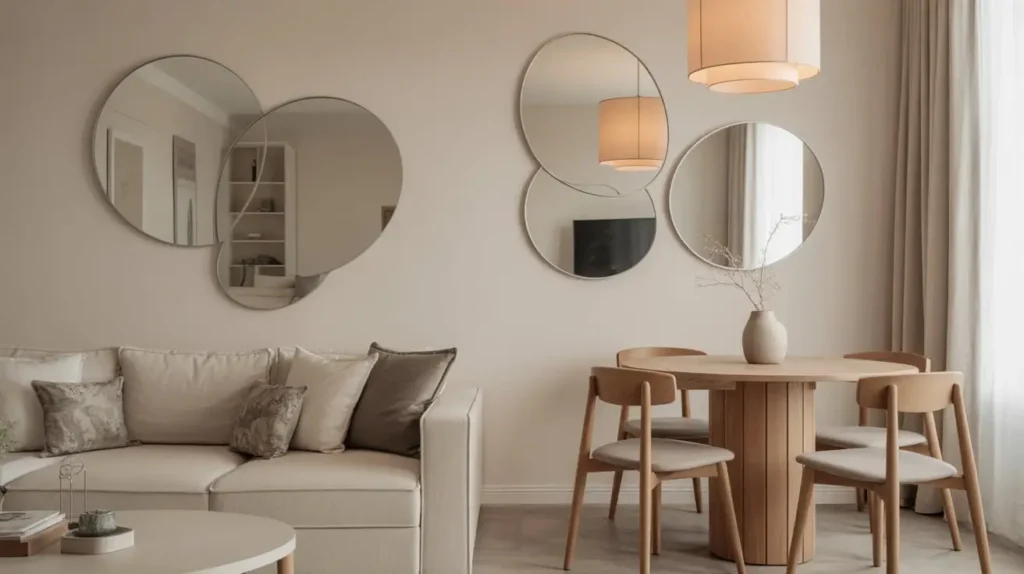
Clutter is the number one enemy of a small space. It makes a room feel chaotic, messy, and about ten times smaller than it actually is. The solution is ruthless decluttering followed by brilliant hidden storage.
We already touched on storage ottomans and banquettes, but the possibilities are endless.
- A dining bench with a lift-up seat: Perfect for stashing placemats, napkins, and other dining essentials right where you need them.
- TV consoles with solid doors: Instead of open shelves that show off a tangle of wires and old DVDs, choose a sleek console that hides everything away.
- Nesting tables: These are fantastic because they provide extra surface area when you need it and tuck neatly away when you don’t.
I once found a vintage trunk that I used as a coffee table. It looked amazing and held all of my winter sweaters. The goal is to find pieces that look like stylish furniture but are secretly working as hard as a storage unit. Your guests will be impressed by your tidy home, never knowing about the carefully organized chaos hidden just beneath the surface. It’s our little secret. 🙂
H2: 8. Mirrors to Create the Illusion of Space: Your Best Friend in Design

If you do only one thing from this list, let it be this. Mirrors are pure magic in a small space. They are the cheapest, easiest way to create the illusion of depth and double your light. It’s not just smoke and… well, mirrors. There’s real science to it.
A large mirror placed strategically can make a room feel almost twice as big. It reflects the view, the light, and the space, tricking your eye into perceiving more depth than is actually there.
H3: Pro-Tips for Mirror Placement
Where you put the mirror is crucial. Don’t just hang it anywhere.
- Opposite a window: This is the ultimate move. The mirror will capture the natural light from the window and bounce it all around the room, making your space significantly brighter. It also reflects the view outside, bringing a sense of the outdoors in.
- Behind the dining table: Placing a large mirror on the wall behind your dining set can make the dining “zone” feel much grander and more defined. It reflects the tablescape and any pendant lighting you have, creating a beautiful, layered effect.
- On a long wall: A large, floor-length mirror leaned against a wall can create a dramatic sense of height and depth, making the entire room feel more expansive.
Seriously, a big mirror is a better investment than a lot of fancy decor. It’s a workhorse that looks good doing its job.
H2: 9. Vertical Storage and Wall-Mounted Décor: Look Up!
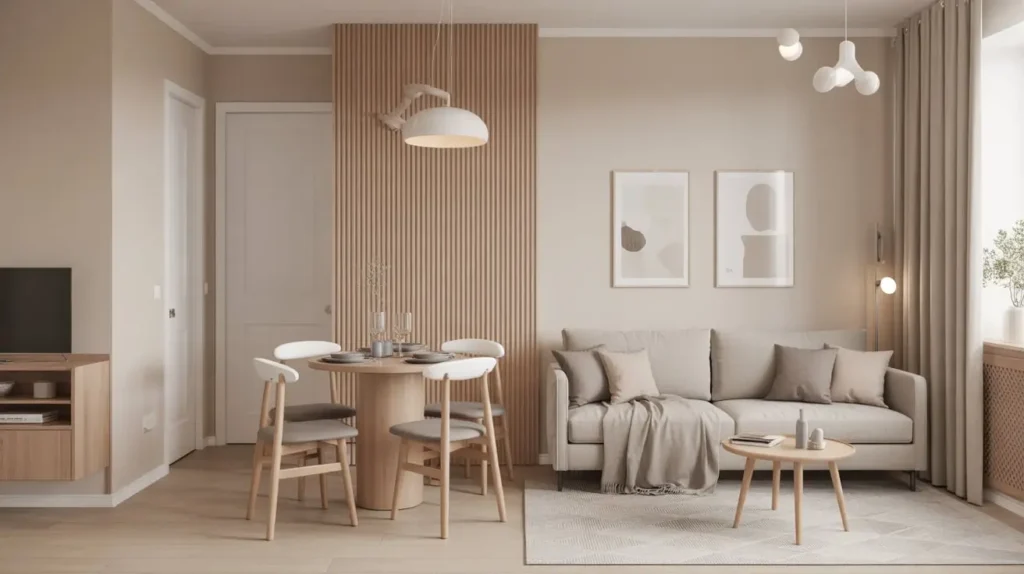
When you can’t build out, you have to build up. This is the mantra of every small-space dweller. Using your vertical space is critical in a living-dining combo because it draws the eye upward and frees up precious floor space.
Instead of a wide, short bookcase, opt for a tall, narrow one. It holds just as much but takes up a fraction of the footprint. Better yet, go for wall-mounted or floating shelves. These create a feeling of airiness because you can see the floor underneath them.
This principle also applies to your TV. Mounting your TV on the wall instantly frees up the surface of a console table for decor, or it allows you to have a much slimmer console, or none at all. The same goes for lighting—wall-mounted sconces instead of floor lamps can save you a surprising amount of room.
Read Also 15 Gorgeous Clawfoot Tub Bathroom Ideas to Inspire Your Remodel
H2: 10. Small Rugs to Define Separate Zones: The Psychological Room Divider

In an open-plan living and dining room, it can feel like everything is floating in one big, confusing space. How do you create the feeling of two separate rooms without putting up a wall? The answer is surprisingly simple: rugs.
A well-placed rug is like a psychological boundary line. It says, “Hey, everything on me is part of the living room,” while the area off the rug can be clearly designated as the dining space. It’s an incredibly effective way to create “zones.”
But here’s a crucial tip: do not buy a tiny rug. This is one of the most common mistakes I see. A small rug floating in the middle of your seating area will look like a postage stamp and will actually make the room feel smaller. As a rule of thumb, the front legs of your sofa and any armchairs should be sitting on the rug. For the dining area, the rug should be large enough that all the chairs are still on it even when they’re pulled out from the table. It’s a small detail that makes a world of difference, IMO.
H2: 11. Glass and Acrylic Furniture for Openness: The “Ghost” Furniture Trend
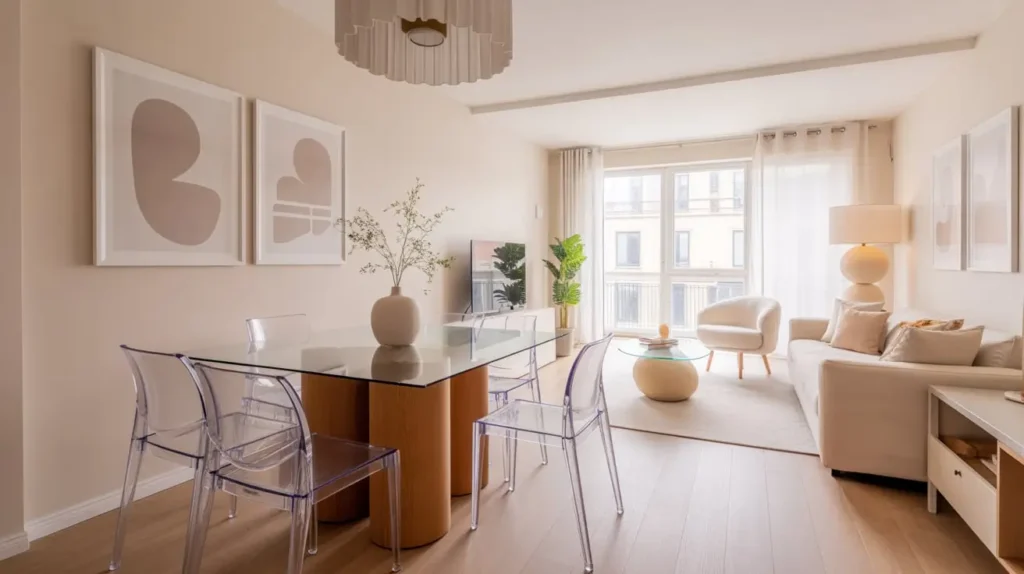
What if you could have a coffee table or a console table that was practically invisible? That’s the beauty of glass and acrylic furniture. These pieces are often called “ghost” furniture because they have a physical presence without a visual one.
Think about it. A solid wood coffee table creates a visual block in the middle of the room. A glass one, however, allows your eye to travel right through it to the floor and the rug beyond. This creates a powerful sense of openness and uninterrupted space.
This is perfect for:
- Coffee tables
- Console tables
- Dining tables (if you’re brave enough to keep it clean!)
- Side tables
The only downside, and it’s a notable one, is the maintenance. Glass and acrylic are magnets for fingerprints and dust. But if you’re willing to give them a quick wipe-down every now and then, the visual payoff in a small living and dining combo is enormous.
H2: 12. Lighting Tricks to Make Rooms Feel Bigger: Let There Be (Layered) Light
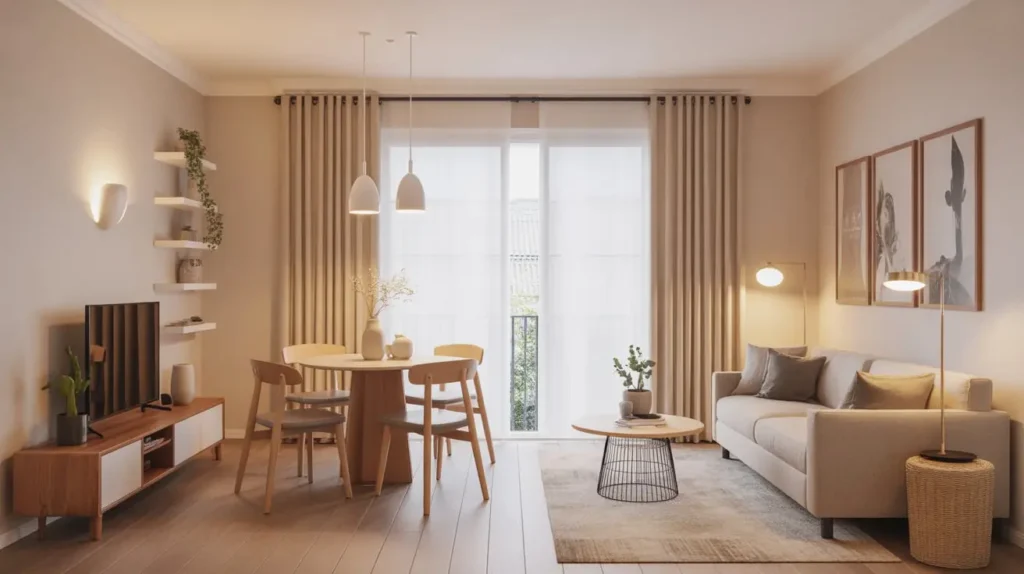
A single, sad ceiling light in the middle of the room is a recipe for a dim, flat-looking space. Good lighting isn’t just about being able to see; it’s about creating mood, depth, and the illusion of space. The key is layered lighting.
You need three types of lighting working together:
- Ambient Lighting: This is your overall illumination, like a stylish flush-mount ceiling fixture or recessed lighting. Get this on a dimmer switch. This is non-negotiable. It allows you to control the mood instantly.
- Task Lighting: This is focused light for specific activities. Think of a pendant light over the dining table to define that zone, or a reading lamp next to the sofa.
- Accent Lighting: This is the fun part. It’s about highlighting architectural features or decor. A small spotlight pointed at a piece of art or a plant, or an uplight in a corner can add incredible depth and make the room feel more dynamic.
By combining these three layers, you eliminate dark corners and create a warm, inviting glow that makes the entire room feel more spacious and well-designed.
H2: 13. Modular Sofa and Dining Set Combos: The Ultimate in Flexibility
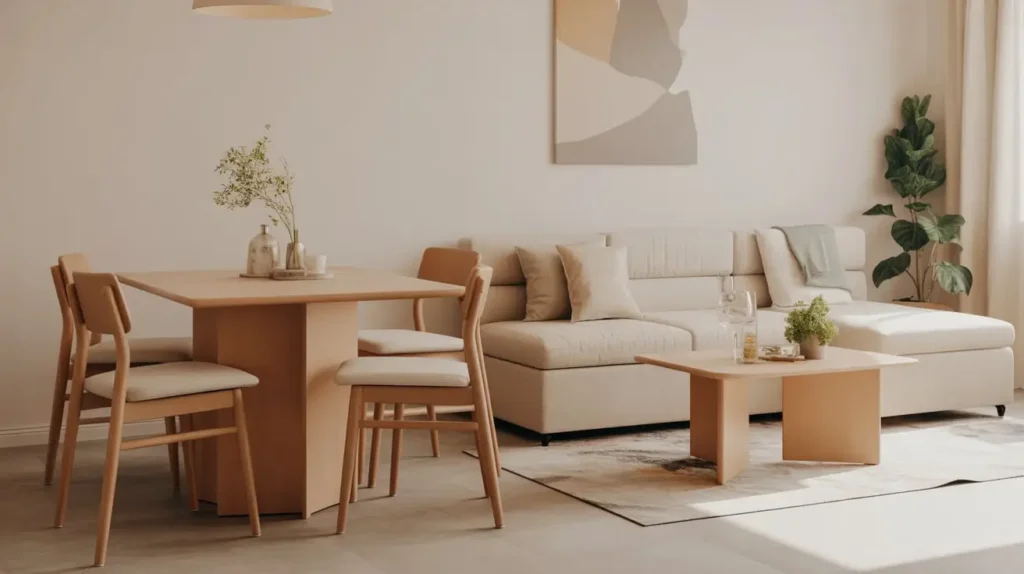
Why commit to one rigid layout when you can have a dozen? Modular furniture is designed to be reconfigured to suit your needs. A modular sofa, for example, is made up of individual sections that you can rearrange.
Want a classic sofa with a chaise lounge? Done. Need to break it up into two smaller loveseats for a party? You can do that too. Want to create one giant lounge pit for a movie marathon? Easy. This level of flexibility is a godsend in a small living-dining combo where the function of the room changes daily.
You can also find modular dining sets, often with benches and stools that can be tucked away or repurposed as side tables. This approach allows your furniture to adapt to your life, not the other way around.
H2: 14. Creative Room Dividers for Visual Separation: The Wall-less Wall
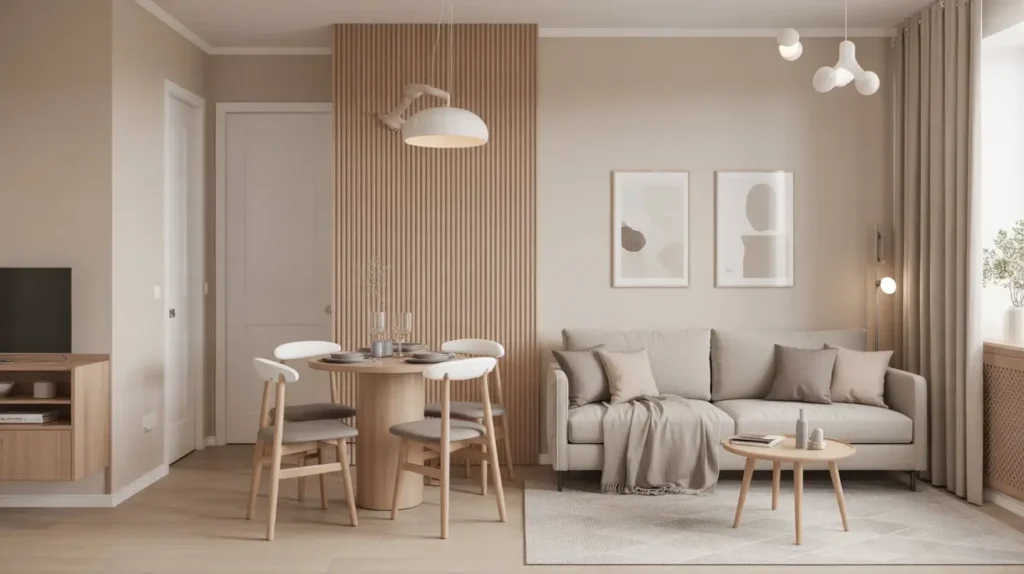
Sometimes a rug just isn’t enough. You crave a bit more physical separation between your living and dining areas, but a solid wall would completely close off the space and block all the light. So, what’s the solution? A creative, non-obstructive room divider.
Forget those old, flimsy folding screens. We’re talking about smart, stylish solutions that define the space without suffocating it.
- An open-backed bookshelf: This is my all-time favorite. It clearly separates the living and dining zones while still allowing light and conversation to flow through. Plus, it provides a ton of storage and display space for both sides.
- A slatted wood partition: These are incredibly chic and modern. They create a strong visual line of separation but are mostly air, so they don’t feel heavy or block your line of sight.
- A strategically placed console table: Placing a slim console table against the back of your sofa can create a subtle but effective barrier. It acts as a “border” for the living area and gives you a surface for a lamp or decor.
The goal is to suggest separation, not demand it. You want to maintain that open, airy feeling while still giving each zone its own identity.
H2: 15. Multi-Purpose Islands or Consoles: The Bridge Between Spaces
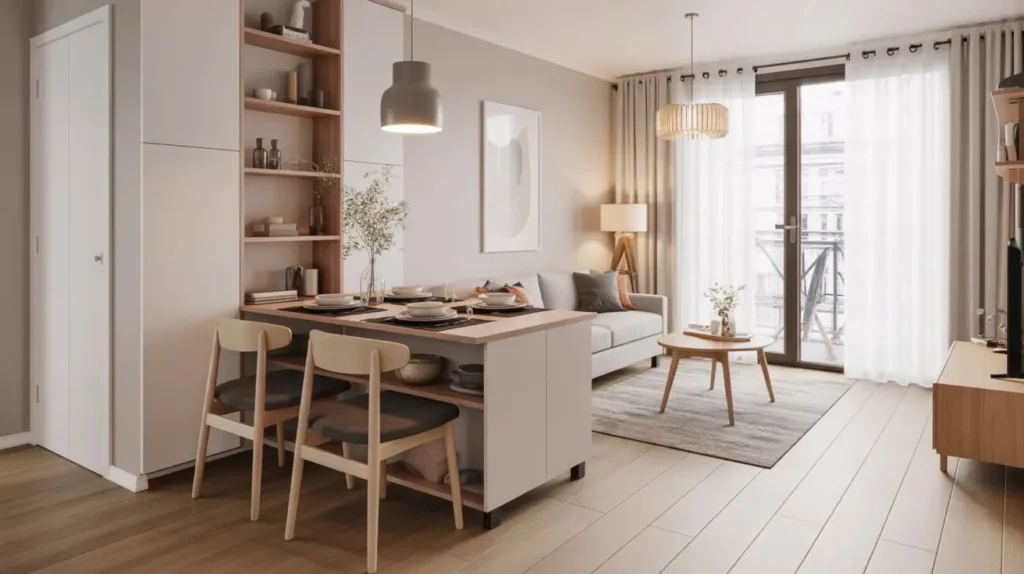
If you have just a little more room to play with, a multi-purpose island or a tall console can be the perfect piece to bridge the gap between your living and dining areas.
Imagine a slim kitchen island that faces the living area. The side facing the kitchen is for prep, but the side facing the sofa has an overhang and a couple of bar stools. Suddenly, it’s a breakfast bar, a spot for guests to chat with you while you cook, and a serving station for parties.
Alternatively, a bar-height console table placed behind the sofa can function as a sleek dining spot for two. Add a couple of stylish stools, and you have a dining area that takes up almost no extra floor space. It’s a brilliant way to integrate the dining function into the living space in a way that feels modern and intentional.
H2: Your Space, Your Rules
And there you have it—15 ideas to take your small living and dining room combo from cramped and awkward to cozy and chic. Remember, the goal isn’t to cram every single one of these ideas into your room. That would be… a lot.
Instead, pick and choose the ones that speak to you and your lifestyle. Maybe you’re all in on the Scandinavian minimalist vibe, or perhaps a clever corner banquette with hidden storage is the solution you’ve been dreaming of.
Don’t be afraid to experiment. Move furniture around. Try a new layout for a week. The beauty of a small space is that it’s a manageable design laboratory. Your home should be a reflection of you, so have fun with it. At the end of the day, creating a space you love to live in is the only rule that truly matters. Now go make that room amazing