


Ever stood in the middle of your living room and felt like the walls were slowly closing in? Yeah, I’ve been there. My first apartment living room was less of a “room” and more of a glorified hallway where a sofa went to feel sad. You start wondering if “cozy” is just a real estate agent’s nice way of saying “claustrophobic.”
But here’s the thing: a small living room doesn’t have to feel like a penalty box. You don’t need to sacrifice comfort or style just because you’re short on square footage. Over the years, through a lot of trial and (hilarious) error, I’ve learned that a small space is just a design challenge waiting for a clever solution. It’s about making every inch work harder, not about wishing you had more of them.
So, let’s chat. Forget the generic advice you’ve read a million times. We’re going to talk about real, actionable ideas that transform a cramped space into a comfortable, functional, and honestly, pretty stunning sanctuary. Ready to make your tiny living room the most popular room in the house? Let’s get into it.
1. Floating Furniture Layout

Okay, I’m starting with an idea that feels completely backward, but I need you to trust me on this. Your first instinct in a small room is to shove every piece of furniture flush against the walls to maximize the open floor space in the middle, right? We all do it. But it actually makes the room feel smaller, like everything is clinging to the edges for dear life.
The solution? A floating furniture layout. This means you intentionally pull your furniture away from the walls, even if it’s just by a few inches. By creating this little bit of “breathing room,” you create the illusion of a larger, more thoughtfully arranged space. It allows for pathways and defines the living area as its own distinct zone, especially in an open-concept studio.
How to Make Floating Work for You
I know, it sounds like you’re losing precious space. But you’re trading a few inches of unused perimeter for a massive gain in perceived size and flow.
- Anchor with a Rug: The number one rule for a floating layout is to use an area rug to anchor the entire arrangement. Your main furniture (sofa, chairs, coffee table) should all have at least their front legs on the rug. This creates a cohesive “island” that feels intentional.
- Mind the Gap: You don’t need a massive gap. Even 3–5 inches between the back of your sofa and the wall can make a world of difference. It prevents that “stuck-on” look.
- Create a Focal Point: A floating layout works best when it’s oriented toward a focal point, like a fireplace, a window with a view, or your media center. This gives the arrangement a clear purpose.
2. Multi-Functional Sofa Solutions
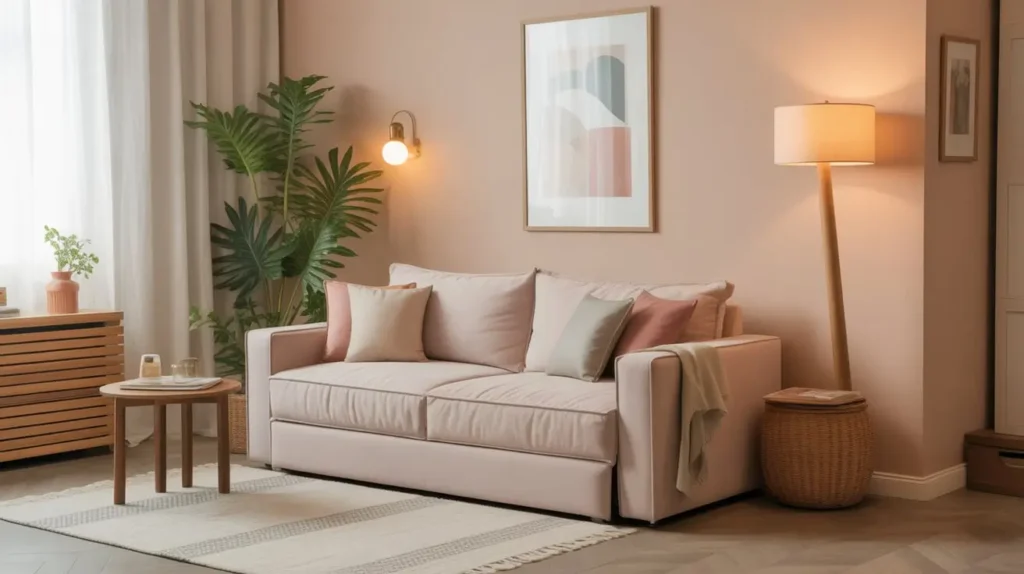
In a small living room, every piece of furniture needs to earn its keep. And let’s be honest, the sofa is the biggest, laziest freeloader of them all. It just sits there, taking up a massive footprint. It’s time to put that sofa to work. A multi-functional sofa isn’t just a piece of furniture; it’s your secret weapon.
We’re talking about sofas that do more than just offer a place to binge-watch your favorite show. Think sleeper sofas for unexpected guests (or, let’s be real, for your friend who missed the last train home), or sofas with hidden storage compartments underneath the cushions. Suddenly, your couch is a guest room and a storage unit. How’s that for an overachiever?
Choosing Your Sofa Sidekick
Not all multi-functional sofas are created equal. You want to avoid the lumpy, back-breaking futon from your college days that your friends still bring up in therapy.
- Sleeper Sofa Mechanism: Test it out in the store if you can! Is it a clunky, finger-trapping nightmare to pull out? Or is it a smooth, one-person job? IMO, a memory foam mattress in a sleeper is a game-changer.
- Storage Sofas: Look for models with hydraulic lifts under the chaise lounge portion. This makes accessing your hidden stash of blankets, board games, or seasonal decor incredibly easy. No more wrestling with heavy cushions.
- Modular Designs: Some modern sofas come in modular pieces you can rearrange. You can turn a 3-seater into a sofa with a chaise or even two separate seats. This flexibility is golden in a small space.
3. Vertical Storage Accent Walls

When you can’t build out, you build up. This is the golden rule of small-space living. Your floor space is prime real estate, so why are your walls sitting there empty? A vertical storage accent wall is one of the most effective ways to add storage, personality, and visual height to your living room.
I’m not just talking about a single lonely bookshelf. I mean a floor-to-ceiling statement. This draws the eye upward, making your ceilings feel miles high, and it gives you a designated home for books, plants, decor, and even some not-so-pretty essentials hidden away in stylish baskets.
Creating a ‘Wow’ Wall (Not a ‘Whoa, That’s a Lot of Stuff’ Wall)
The key is to make it look curated, not cluttered. You want an art installation that happens to hold your stuff.
- Mix Open and Closed Storage: A wall of nothing but open shelves can quickly look messy. Integrate cabinets or drawers at the bottom or middle to hide the clutter. Open shelves are for your pretty, curated items; closed storage is for everything else.
- Go Monochromatic: For a super sleek, built-in look, paint the shelving the exact same color as the wall. This makes the unit recede visually, so it doesn’t feel like it’s eating up the room. It just looks like a cool architectural feature.
- Add Integrated Lighting: Installing some simple LED strip lighting or a few picture lights above the shelves can elevate the entire look. It highlights your decor and adds a warm, ambient glow to the room.
4. Light-Reflecting Mirror Design

This is probably the oldest trick in the book, but it’s a classic for a reason: it works. Mirrors are pure magic in a small space. They bounce light around the room, making it feel brighter and more open, and they create an illusion of depth, tricking your brain into thinking the room is bigger than it is.
But just hanging any old mirror on a wall won’t cut it. The placement and style of the mirror are crucial. You want to be strategic to get the maximum effect. Think of a mirror less as a tool for checking your hair and more as a second window.
Mirror, Mirror on the Wall, Make My Room Look Less Small
Where you hang a mirror is just as important as the mirror itself. A poorly placed mirror can just reflect more clutter or a boring blank wall.
- Opposite a Window: This is the ultimate power move. Placing a large mirror directly across from your main window will double the amount of natural light in your room. It essentially creates a new light source and reflects the view, bringing the outdoors in.
- Go Big or Go Home: Don’t be timid. A collection of tiny mirrors can look cluttered. Instead, opt for one large, oversized mirror. Leaning a full-length floor mirror against a wall is a chic, low-effort way to make a huge impact.
- Mirrored Furniture: Feeling bold? Mirrored furniture, like a console table or cabinet, can do the same job. It reflects light and floor space, making the piece itself seem to disappear. Just be prepared to wipe off fingerprints. A lot.
Read Also 15 Smart Small Living Room Ideas for Cozy Modern Spaces
5. Built-In Seating Corners
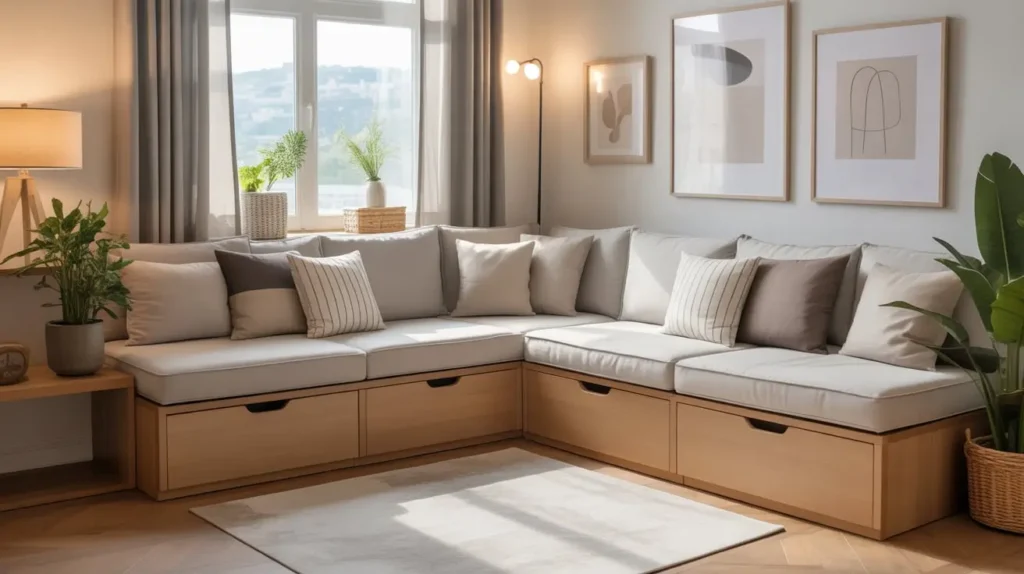
Got an awkward, useless corner in your living room? Of course you do. Every small living room has one. It’s that dead zone where a floor lamp looks lonely and a plant goes to die. It’s time to reclaim that corner and turn it into a cozy, functional feature with built-in seating.
A corner banquette or a window seat not only provides a ton of extra seating without taking up the central floor space, but it also offers a massive opportunity for hidden storage underneath. Lift-top benches are perfect for stashing away things you don’t need every day. You’ve just turned a dead corner into a reading nook, extra guest seating, and a storage chest.
Nailing the Nook
A built-in might sound like a big, expensive project, but it doesn’t have to be.
- The DIY Approach: You can create a convincing “built-in” look by placing two low, backless storage benches in an L-shape. Throw on some custom-cut foam cushions, add a mountain of pillows, and voilà—instant corner nook.
- Maximize Comfort: This isn’t just a perch; it should be inviting. Use plush fabrics and plenty of pillows in different sizes and textures. A wall-mounted sconce or a small reading lamp will complete the cozy vibe.
- Integrate a Table: Add a small pedestal table or a C-table that can slide over the bench to hold a cup of coffee or a laptop. This makes the nook a truly functional spot for more than just sitting.
6. Open-Leg Furniture Styling
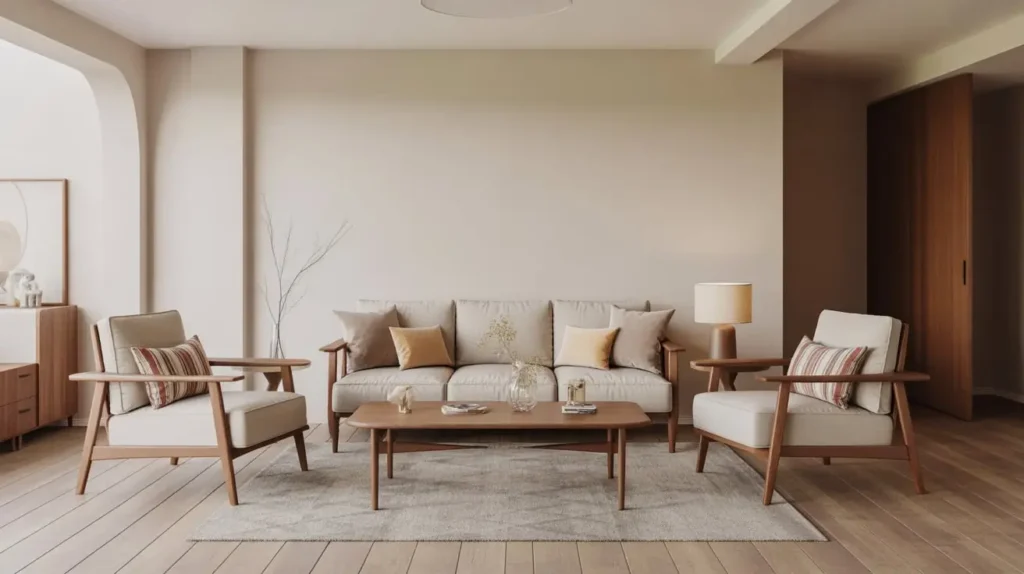
This is a subtle one, but it makes a shocking amount of difference. When you’re choosing furniture for a small space, look at the legs. Seriously. Bulky furniture that sits flat on the floor—like a skirted sofa or a blocky cabinet—eats up visual space and makes a room feel heavy and crowded.
Instead, opt for open-leg or “leggy” furniture. Sofas, armchairs, coffee tables, and media consoles raised on slender legs allow you to see the floor underneath them. This creates a sense of openness and airiness. Your eye follows the line of the floor under the furniture, which makes the room feel larger and less cluttered. It’s a simple visual trick that pays huge dividends.
Let Your Furniture Breathe
It’s all about creating visual space where there is none.
- Mid-Century Modern is Your Friend: This design style is famous for its tapered, raised legs on everything from credenzas to sofas. It’s a perfect aesthetic for small spaces because it’s inherently light and airy.
- Consistency is Key: Try to have most of your main pieces share this characteristic. If your sofa, accent chairs, and side tables are all raised on legs, the cumulative effect will be powerful.
- Think Beyond the Sofa: This applies to everything. A media console on legs looks far less imposing than a solid block. A bookcase with an open, ladder-style frame feels lighter than a traditional, solid-backed one.
7. Foldable Living Room Elements
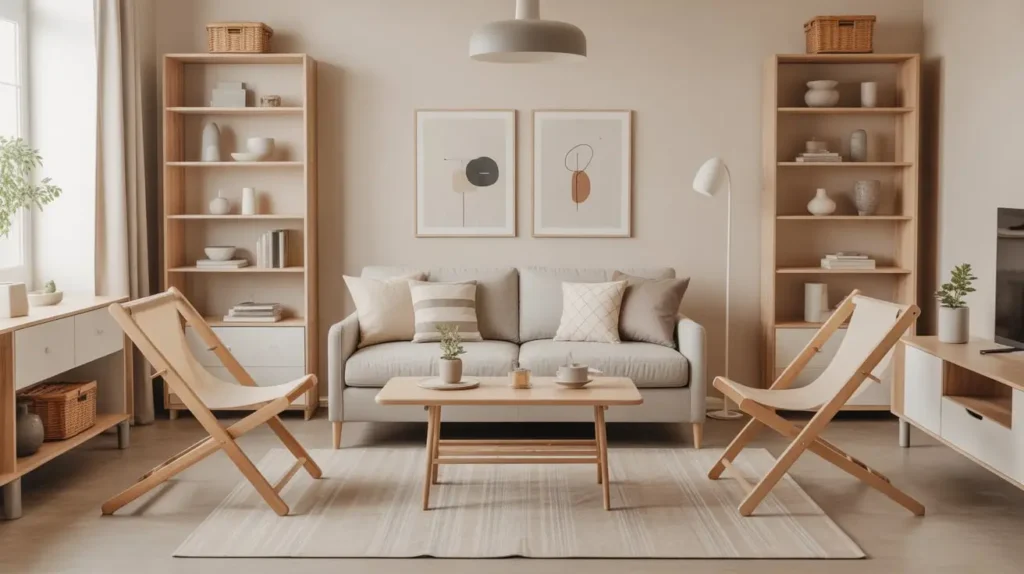
Remember those Transformer toys from when you were a kid? That’s the energy we’re channeling here. In a truly tiny space, some furniture just doesn’t need to be there 24/7. Foldable or collapsible furniture gives you the function when you need it and the floor space back when you don’t.
I once had a dining table that folded down into a slim console table. Most of the time, it sat against a wall holding a plant and some mail. But when friends came over, it unfolded to seat six. It was a complete game-changer. Think about what you actually need on a daily basis versus what you only need occasionally.
The Art of the Fold
This isn’t about flimsy, unstable card tables. Modern foldable furniture is surprisingly stylish and sturdy.
- Fold-Down Desks: Need a workspace but don’t have a home office? A wall-mounted, fold-down desk provides a sturdy surface for your laptop and folds up to look like a simple, shallow cabinet when you’re done.
- Nesting Tables: Instead of one large coffee table, consider a set of nesting tables. You can spread them out when you have guests or tuck them neatly into a single, small footprint for everyday use.
- Folding Chairs That Don’t Look Sad: Invest in a couple of stylish folding chairs. There are beautiful designs in wood, metal, and acrylic that can be hung on wall hooks as “art” when not in use. Much better than stashing ugly metal chairs in a closet.
8. Wall-Mounted Media Units

The traditional TV stand is a space-hogging beast. It’s deep, it’s bulky, and it collects an obscene amount of dust behind it. In a small living room, giving that much floor space to a piece of furniture that just holds your TV and a couple of dusty electronics is a crime.
The sleek, modern solution is to mount your TV on the wall and pair it with a wall-mounted media unit. This frees up the floor completely, making the room feel instantly bigger and way easier to clean. Seriously, being able to vacuum underneath your media console is a luxury you didn’t know you needed.
Getting Your TV Off the Ground
This instantly modernizes a space and is one of the best things you can do for a small living room.
- Floating Consoles: A wall-mounted or “floating” console below the TV provides storage for your cable box, gaming console, and remotes without touching the floor. It creates a clean, minimalist look.
- Hide the Wires: The only thing that ruins this sleek look is a tangle of ugly wires. Run the cables through the wall using a cable management kit. It’s a small DIY project that makes a world of difference. If you’re renting, you can use a paintable cord cover that sticks to the wall.
- Choose the Right Size: Don’t get a floating console that’s wider than your TV. A unit that is slightly narrower or the same width as the TV will look more balanced and intentional.
9. Neutral Color Space Illusion

Color has a powerful effect on how we perceive a space. While I love a bold, dramatic room, dark and saturated colors can make a small room feel like a cave. When your goal is to maximize the sense of space and light, a neutral color palette is your best friend.
Light, neutral colors like white, cream, soft gray, and beige are brilliant light reflectors. They bounce light around, making walls seem to recede and the room feel more expansive and airy. A cohesive, light-colored backdrop creates an illusion of depth and allows your furniture and decor to be the stars of the show.
It’s Not About Being Boring
Neutral doesn’t have to mean bland. The secret to a beautiful neutral room is texture.
- Layer Tones and Textures: To prevent your room from looking like a sterile hospital room, layer various shades of the same neutral color and introduce a ton of different textures. Think a bouclé sofa, a chunky knit throw, a linen curtain, a jute rug, and a smooth ceramic vase. The interplay of textures adds warmth and visual interest.
- The 60-30-10 Rule: Stick to a simple color rule. 60% of your room should be a dominant neutral (walls, large furniture), 30% a secondary neutral or a soft color (rug, chairs, curtains), and 10% an accent color (pillows, art, decor).
- Paint the Ceiling: Painting the ceiling the same light color as the walls (or even a shade lighter) erases the hard line where the wall ends and the ceiling begins. This tricks the eye and makes the ceiling feel higher.
Read Also 15 Stunning Boho Living Room Inspirations Mid-Century Modern Ideas
10. Compact Sectional Arrangement

Wait, a sectional in a small living room? Have I lost my mind? It sounds counterintuitive, but a well-chosen compact sectional can actually be a more space-efficient solution than a traditional sofa-and-armchair combo.
Think about it: a sofa and one or two chairs create awkward, unused gaps between them and take up more overall floor space. A small-scale sectional, on the other hand, neatly tucks into a corner, maximizing seating and creating a cozy, unified look. You get more bums on seats for the square footage you’re using. 🙂
The Sectional Secret
The key here is “compact.” We are not talking about the monstrous, room-swallowing sectional you’d find in a suburban basement.
- Measure, Measure, Measure: This is not a piece of furniture you can eyeball. Use painter’s tape on your floor to map out the exact dimensions of the sectional before you buy. Make sure you still have clear walkways.
- Look for Apartment-Sized Models: Many brands now offer “apartment-sized” or “condo” sectionals with a shallower depth and shorter overall length.
- Choose a Chaise, Not a Corner: A sectional with a chaise lounge on one end is often more versatile in a small space than a true L-shaped corner sectional. The chaise portion is visually lighter and can double as a footrest or extra seat.
11. Hidden Storage Coffee Tables
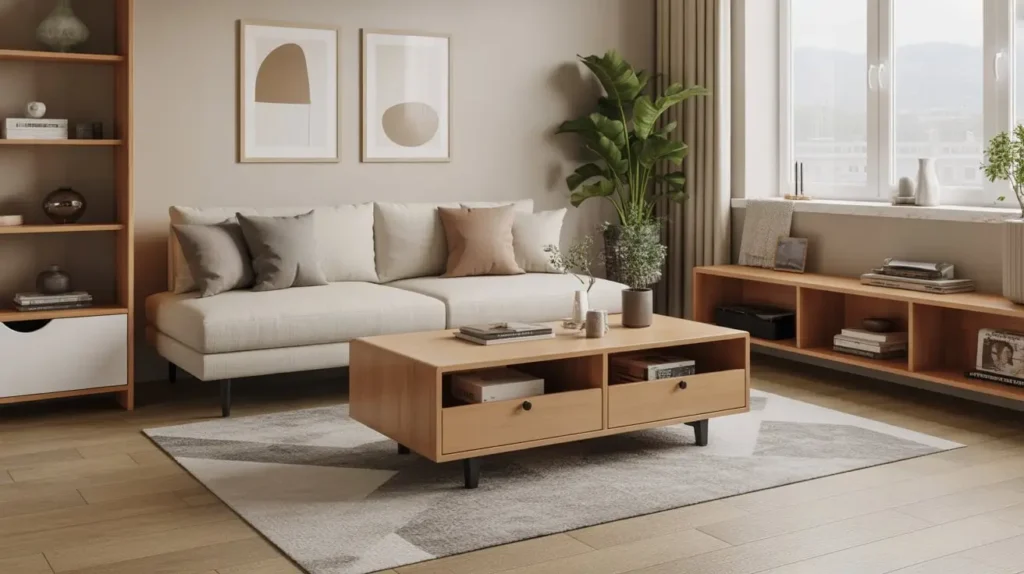
The coffee table is the epicenter of the living room. It’s also a magnet for clutter: remote controls, magazines, coasters, half-empty mugs… you know the drill. In a small space, that surface clutter can make the whole room feel chaotic. Enter the hidden storage coffee table.
This is one of my absolute favorite small-space hacks. A coffee table with a lift-top, drawers, or a hollow interior is a godsend. It gives you a place to instantly stash all that visual noise when guests are about to arrive. Some lift-tops even rise to desk height, creating a perfect spot to work or eat.
Stash Your Stuff in Style
Your coffee table is about to become the hardest-working piece of furniture you own.
- The Lift-Top: A lift-top coffee table is the MVP. It not only hides clutter but also provides an ergonomic surface for your laptop. No more hunching over.
- Drawers and Shelves: A coffee table with a lower shelf is good, but one with deep drawers is even better. Drawers keep the mess completely out of sight.
- Storage Ottomans: An upholstered storage ottoman can function as a coffee table (just add a tray on top), extra seating, and a footrest, all while hiding a surprising amount of stuff inside. It’s the ultimate triple threat.
12. Minimalist Decor Zoning
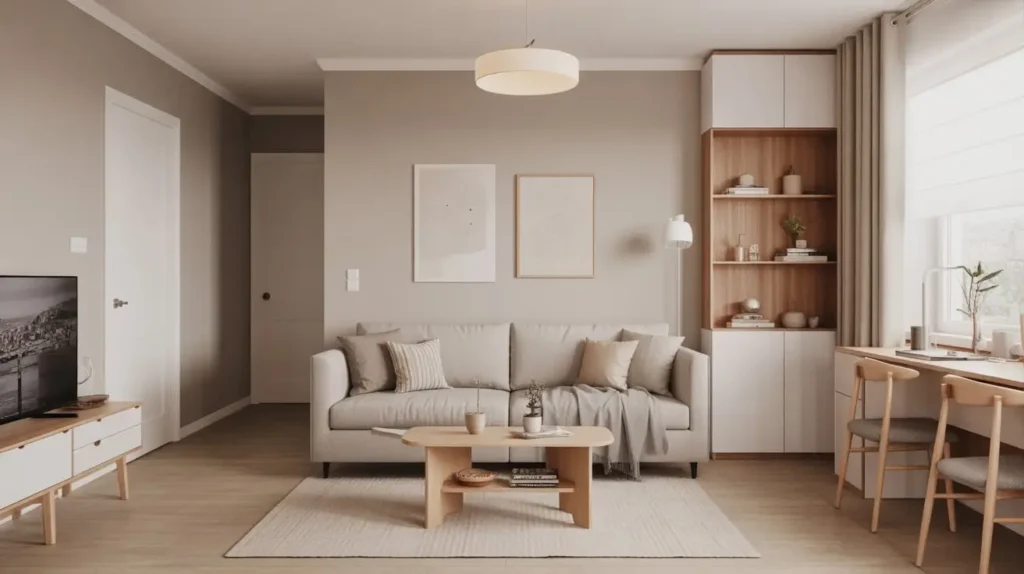
In a small living room, especially an open-plan one, things can start to feel like a jumble. Where does the living room end and the dining area begin? Zoning is the design technique of using visual cues to create distinct “areas” or “zones” for different activities, even without walls.
This doesn’t mean you need to get rid of all your decor. It’s about being intentional. A well-placed rug, a strategically hung piece of art, or a specific furniture grouping can signal to your brain, “This is the lounge area,” or “This is the reading nook.” It brings order to the chaos.
Creating Your Zones
You’re the architect of your own little world. Define your spaces.
- The Power of the Rug: As we mentioned with floating layouts, an area rug is the easiest and most effective way to define a zone. It visually anchors the living room seating area and separates it from the rest of the space.
- Furniture as a Divider: You can use furniture to create a soft boundary. The back of a sofa, a slim console table, or an open-backed bookshelf can effectively partition a space without blocking light or sightlines.
- Lighting Zones: Use lighting to define areas. A pendant light over a dining spot, an arc lamp over the sofa, and a task lamp in a reading corner all help to create distinct, functional zones.
13. Slim Profile Shelving Systems
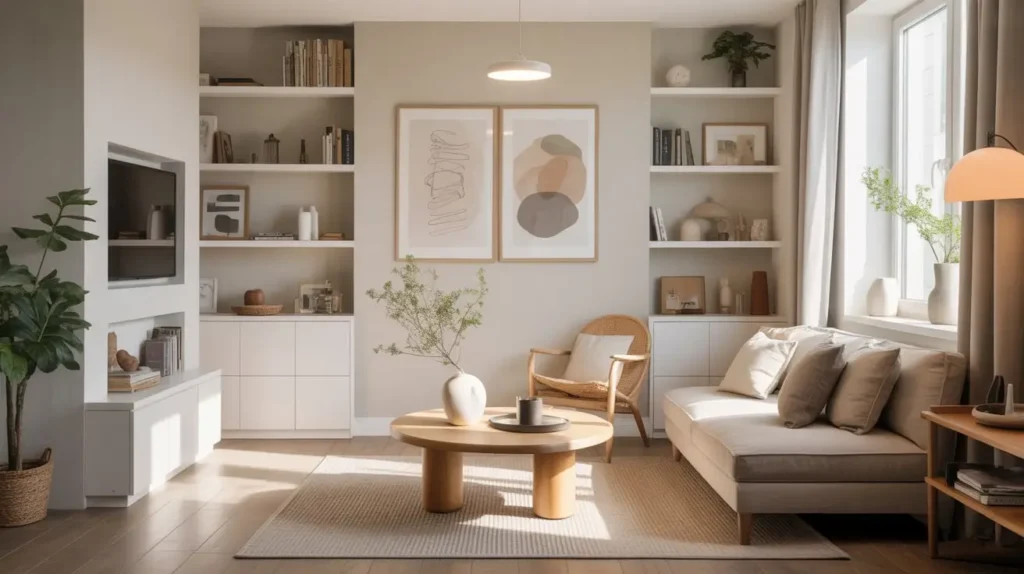
We’ve talked about vertical storage, but let’s get specific about the type of shelving. Bulky, deep bookcases can feel like they’re lunging into the room, eating up valuable space. The solution is to embrace slim profile shelving systems.
These are shelves with a much shallower depth, often no more than 8-12 inches. They are perfect for paperbacks, small decor items, and picture frames. Because they don’t jut out as far, they provide a ton of storage without making the room feel cramped. Ladder shelves and picture ledges are fantastic examples of this.
Think Thin
Less is more when it comes to shelf depth.
- Ladder Shelves: These are brilliant. They lean against the wall and have shelves that get progressively narrower toward the top. This design is visually lightweight and adds a casual, stylish vibe.
- Picture Ledges: These ultra-slim shelves are perfect for displaying art, photos, and small trinkets. You can easily swap out the display for a fresh look without putting a million nail holes in your wall. Arrange them in a gallery wall-style grid for maximum impact.
- Wall-Mounted Spine Bookcases: For the book lover with no floor space, a vertical “spine” bookcase mounts to the wall and holds books horizontally in a neat stack. It has a tiny footprint but holds a surprising number of books.
14. Window-Focused Seating Layout

Your window is your living room’s greatest natural asset. It provides light, a view, and a connection to the outside world. So why do so many of us block it with a TV stand or the back of a hulking sofa? It’s time to reorient your room and create a window-focused seating layout.
Instead of making the TV the center of the universe, arrange your seating to take advantage of the window. Place a sofa facing it, or flank it with two comfortable armchairs. This not only makes the room feel more pleasant and connected to the outdoors, but it also draws attention to the brightest part of the room, enhancing the sense of space.
Let the Light In
Make your window the star it was born to be.
- Frame the View: Place two matching chairs or a pair of benches on either side of the window. This frames the view beautifully and creates a perfect conversation spot.
- Low-Profile Sofa: If your best layout requires a sofa in front of the window, choose a low-profile model with a back that doesn’t rise above the windowsill. This ensures you don’t block precious light.
- Light and Airy Window Treatments: Ditch the heavy, dark drapes. Opt for sheer curtains, light-filtering blinds, or simple Roman shades. Mount the curtain rod high and wide—several inches above and beyond the window frame—to trick the eye into thinking the window is much larger than it is.
15. Glass and Lucite Accents
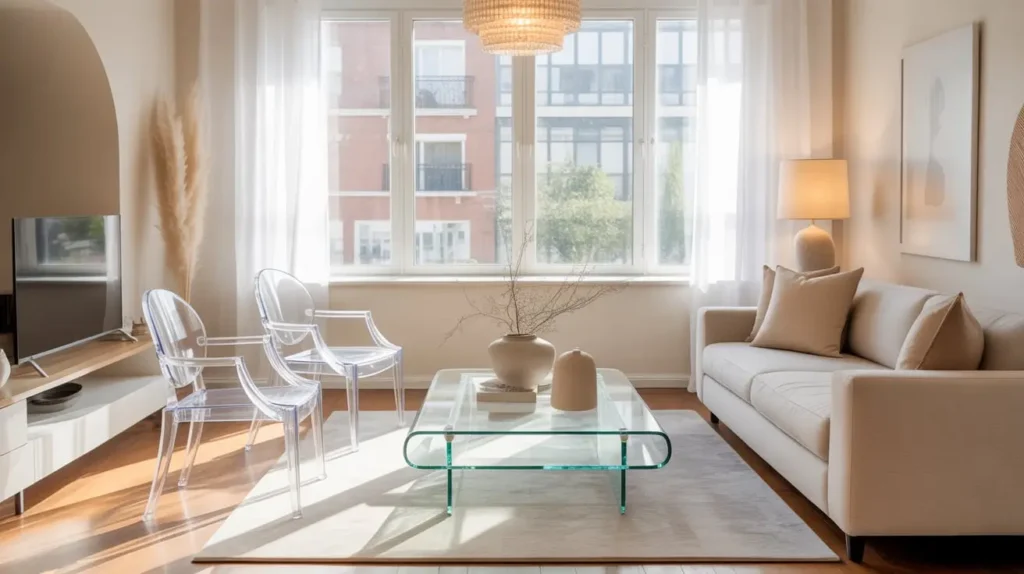
Our final trick is all about visual deception. Solid, opaque furniture, no matter how small, has a visual weight that can bog down a room. Glass and Lucite (acrylic) furniture are the ultimate ninjas of small-space decor. They are physically there, but visually, they almost disappear.
A glass coffee table or clear acrylic console table does its job without blocking sightlines. You can see the floor, the rug, and the legs of other furniture right through it. This creates a powerful illusion of spaciousness and keeps the room feeling uncluttered and open. It’s like having ghost furniture, but in a chic, non-spooky way.
The Clearly Superior Choice
Worried about it looking cheap or dated? Modern acrylic and glass furniture is incredibly sophisticated.
- The Waterfall Table: A coffee table or console table made from a single bent sheet of glass or Lucite is a timeless, elegant choice. The seamless “waterfall” edges are pure minimalist perfection.
- Mix with Solid Pieces: A room full of clear furniture might feel a bit like an ice palace. The key is to mix these transparent pieces with solid, textured items. A clear coffee table on a plush, colorful rug, for example, creates a beautiful contrast.
- Don’t Forget the Details: This trick also applies to smaller items. A clear acrylic tray on an ottoman, glass lamp bases, or a Lucite bar cart can all contribute to this lightweight, airy aesthetic without a huge commitment.
So, What’s the Takeaway?
Living in a small space isn’t a curse; it’s a creative opportunity. It forces you to be smarter, more intentional, and more clever with your design choices. It’s not about having less; it’s about making what you have work harder and look better.
By floating your furniture, embracing vertical space, and using visual tricks with mirrors and clear materials, you can transform a room that feels small and restrictive into one that feels comfortable, expansive, and uniquely you. So go on, pick an idea and try it this weekend. Reclaim your living room. You deserve a space you absolutely love coming home to. Happy decorating