

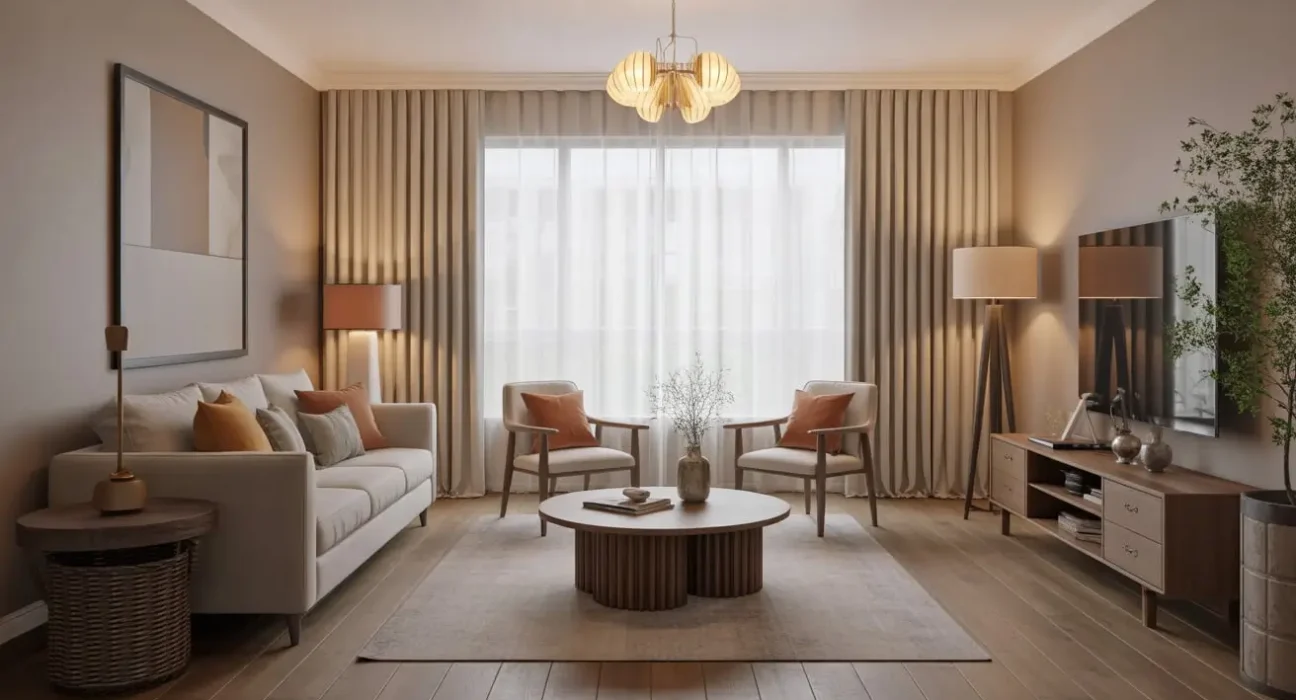
Staring at your living room windows, feeling… nothing? I’ve been there. It’s that awkward phase where your room is almost done, but the naked windows are screaming for attention. It’s the decorating equivalent of a blank-page stare, and the pressure to pick the perfect curtains can be surprisingly intense. Will they be too bold? Too boring? Will they make my room look like a gloomy cave or a doctor’s waiting room?
Honestly, I’ve made just about every curtain mistake in the book. I once bought curtains that were comically short, making my windows look like they were wearing high-water pants. It was a dark time. But through trial, error, and a slightly obsessive amount of scrolling through design blogs, I’ve learned a thing or two.
So, let’s skip the panic. Think of me as your design-obsessed friend who’s here to spill all the tea on window treatments. We’re going to walk through 15 charming living room curtain ideas that will take your space from “meh” to “wow.” No more analysis paralysis. Let’s get those windows dressed.
1. Modern Minimalist Living Room Curtains
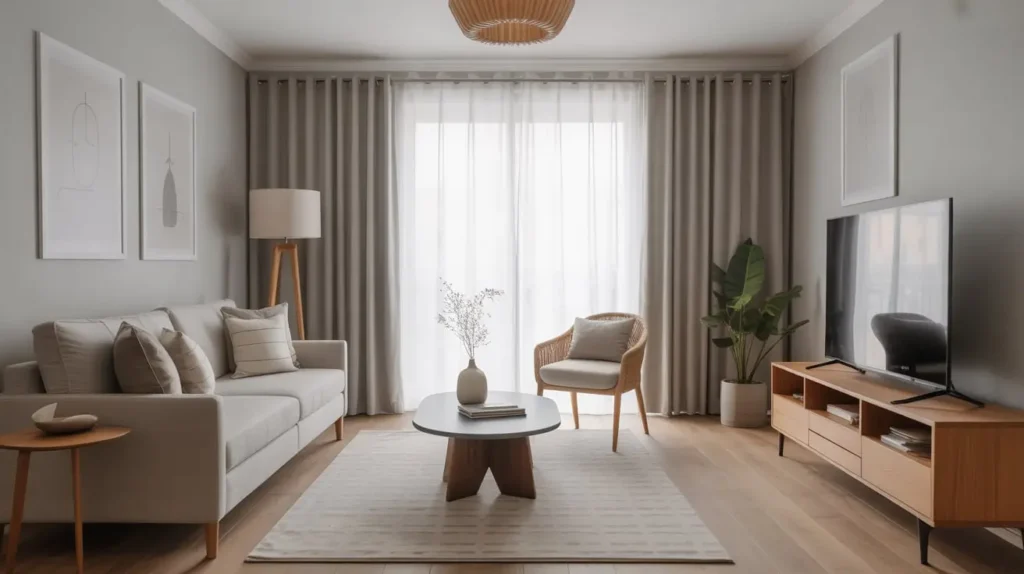
Let’s start with the clean and serene. Modern minimalist curtains are the answer for anyone who believes that less is, unequivocally, more. This look is all about simplicity, function, and letting your room’s architecture and furniture do the talking. You won’t find any frills, ruffles, or dramatic swoops here. Thank goodness.
Why This Look Just Works
I love this style because it’s incredibly versatile. It doesn’t shout for attention; it elegantly complements the space. Minimalist curtains create a sense of calm and order, which, let’s be real, is something most of us could use more of in our lives. They prove that you don’t need a ton of detail to make a significant impact. They are the strong, silent type of the curtain world.
How to Nail the Minimalist Vibe
Getting this right is all about restraint. Focus on three key things: fabric, color, and hardware.
- Fabric Choice: Go for clean, simple textiles. Think high-quality linen, smooth cotton blends, or a lightweight wool. The texture should be subtle, adding a touch of warmth without being distracting.
- Color Palette: Stick to a solid, neutral color scheme. Crisp white, soft gray, beige, or even a muted charcoal are your best friends here. The goal is for the curtains to blend seamlessly with your wall color, creating a cohesive, elongated look.
- Hardware Style: This is crucial. Opt for simple, slim curtain rods in matte black, brushed nickel, or brass. For the curtains themselves, I personally prefer simple grommets or a hidden tab-top for that clean, uninterrupted line. No fussy pleats, please.
A Quick Pro-Tip
Don’t mistake “minimalist” for “boring.” The beauty of this style is in the quality of the materials. A cheap, thin polyester curtain will look sterile, but a beautiful, heavy linen curtain in the same simple style will look incredibly chic and expensive. It’s all in the details.
2. Boho Chic Window Drapes Inspiration
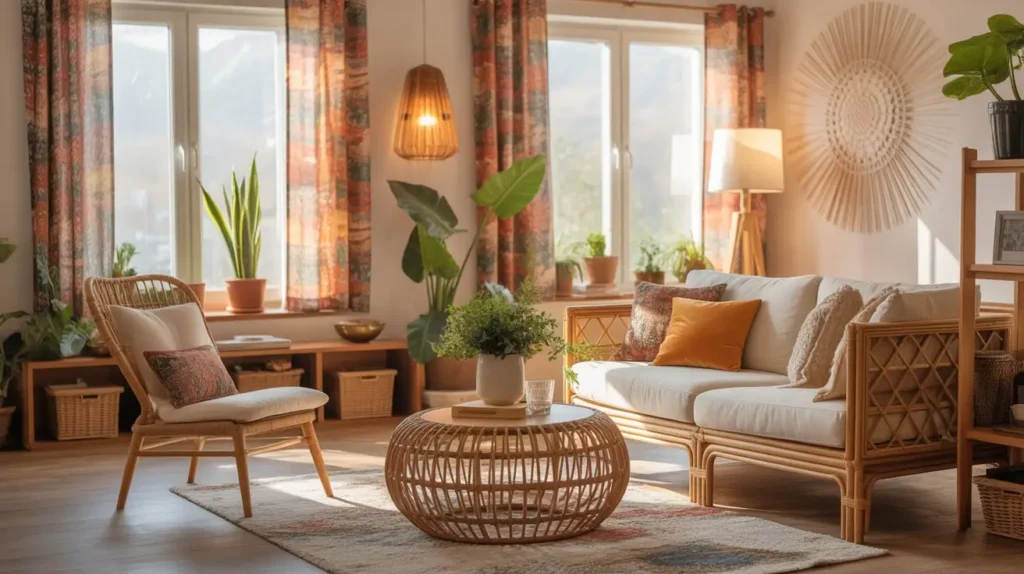
Alright, time to swing to the complete opposite end of the spectrum. If minimalism feels a little too restrictive for your free spirit, then boho chic is calling your name. This style is all about texture, pattern, global influences, and a laid-back, eclectic vibe. It’s personal, cozy, and a little bit wild.
Unleash Your Inner Free Spirit
What’s not to love? Boho curtains instantly inject personality and warmth into a living room. They tell a story. Maybe you’re a world traveler, or maybe you just wish you were—your curtains don’t have to know the difference. This look is forgiving, fun, and creates an environment that feels like a warm, welcoming hug. It’s less about perfection and more about creating a space that feels uniquely you.
The Essentials for a Boho Look
To achieve that effortlessly cool boho look, you need to embrace layers, textures, and patterns.
- Materials to Look For: Texture is your best friend. Look for curtains made of natural fibers like raw cotton, jute, or slub linen. Details like macrame, tassels, pom-poms, or crochet trim are classic bohemian touches.
- Patterns and Colors: Don’t be shy! Ikat, paisley, geometric prints, and floral block prints all work beautifully. Stick to earthy tones like terracotta, mustard yellow, olive green, and creamy whites as your base, then layer in some brighter pops of color.
- Layering is Key: A classic boho move is to layer a patterned or textured curtain over a simple sheer panel. This adds depth and gives you more control over light and privacy.
A Word of Sarcastic Caution
There’s a very, very fine line between “boho chic” and “everything I found at a flea market” explosion. The key to keeping it chic is to have a somewhat cohesive color palette. Let the textures and patterns be wild, but tie them together with 2-3 dominant colors to prevent visual chaos. Unless chaos is your thing, in which case, you do you.
3. Luxury Velvet Curtains for Elegant Living Rooms
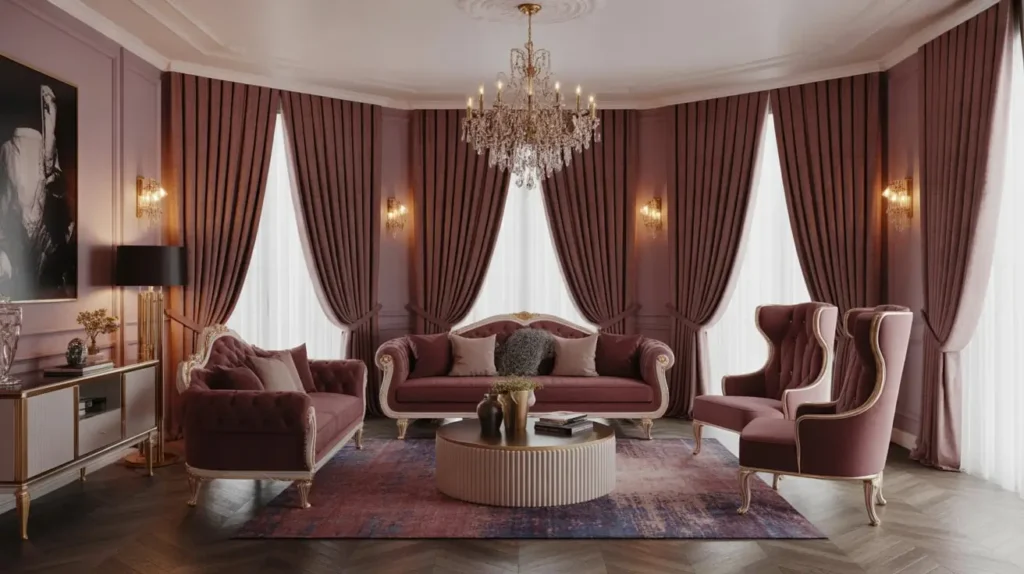
Ready to feel a little fancy? Enter velvet curtains. Nothing says “I have my life together and my home is fabulous” quite like a pair of plush, heavy velvet drapes. They are the epitome of luxury, adding instant drama, sophistication, and a touch of old-world glamour to any living room.
The Undeniable “Wow” Factor
I’m a huge fan of velvet for a few reasons. First, the texture is just decadent. It catches the light in a way that no other fabric does, creating a rich, dynamic look. Second, they are incredibly functional. The weight of the fabric makes them excellent for blocking out light and providing insulation, which can help with your energy bills. Plus, they have amazing sound-dampening qualities, making your living room feel like a cozy, quiet sanctuary.
Velvet Dos and Don’ts
Velvet can be a bit of a diva, so here’s how to handle it.
- DO go for rich colors. While neutral velvet is lovely, this fabric truly shines in deep, saturated jewel tones. Think emerald green, sapphire blue, ruby red, or a dramatic amethyst.
- DON’T skimp on fullness. Velvet curtains look their best when they are full and voluminous. You’ll want to get panels that are at least twice the width of your window.
- DO consider the room. In a large, bright living room, floor-to-ceiling velvet curtains are a showstopper. In a smaller room, they can feel a bit heavy. But who am I to stop a maximalist from creating a moody, dramatic cocoon?
- DON’T forget the hardware. Pair them with substantial, elegant hardware. A thick rod in a burnished gold or antique brass finish perfectly complements the luxurious feel of the velvet.
My Personal Take
I once put deep teal velvet curtains in a living room with high ceilings, and it completely transformed the space. It went from a nice-but-generic room to a place with serious character and warmth. It’s a bold move, but the payoff is huge.
4. Sheer Curtains for Bright & Airy Spaces
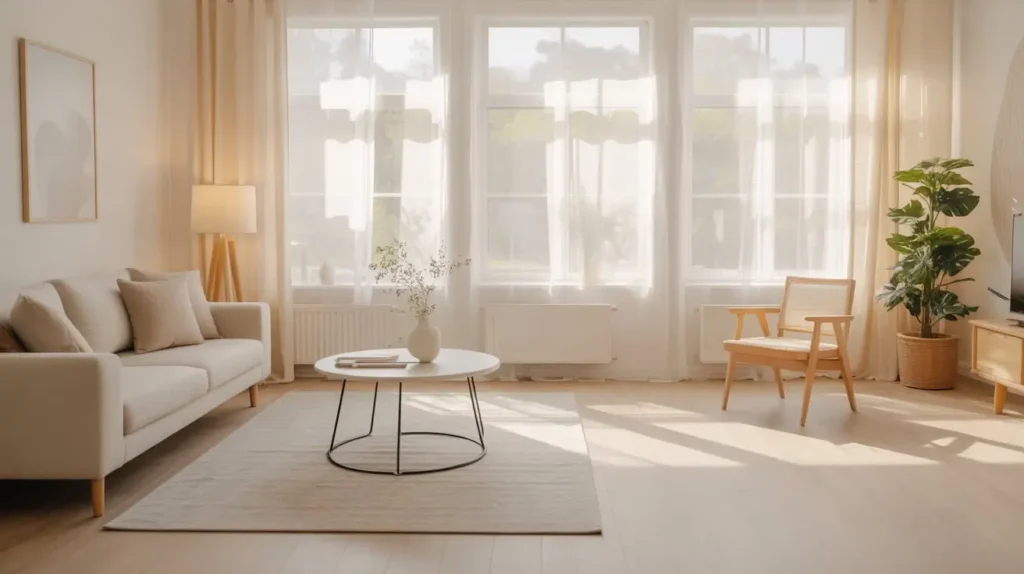
Sometimes, you don’t want to block the light—you want to celebrate it. That’s where sheer curtains come in. They are the ultimate solution for creating a bright, airy, and ethereal living room. They offer a whisper of privacy while letting all that beautiful natural light pour in.
Like a Soft-Focus Filter for Your Life
Why do I adore sheers? They soften the harsh glare of direct sunlight, bathing your room in a dreamy, diffused glow. It’s like putting a real-life soft-focus filter on your living room. They make a space feel larger, more open, and incredibly serene. Plus, watching them gently billow in the breeze from an open window is just plain poetic.
Getting Sheers Right
While they seem simple, there are a few tricks to making sheer curtains look chic, not cheap.
- Choose the Right Fabric: Look for high-quality sheers. Linen sheers offer a beautiful, natural texture, while voile or organza can provide a crisper, more formal look. Avoid shiny, stiff polyester if you can—it often looks dated.
- Go for Volume: This is the number one rule for sheers. You need a lot of fabric. Aim for panels that are two to three times the width of your window. Skimpy sheers are a major design faux pas. The fullness is what gives them that luxurious, billowy effect.
- Length Matters: Always, always, always have them either “kiss” the floor or puddle slightly. Sheers that are too short look awkward and cheapen the entire look.
The Privacy Question
Okay, let’s be real. Sheer curtains are not for exhibitionists, but they do offer more privacy than you’d think. During the day, it’s quite difficult for people to see in from the outside. At night, with the lights on inside, it’s a different story. If nighttime privacy is a concern, consider layering them with blinds or a heavier set of drapes.
Read Also 15 Gorgeous Living Room Curtains Ideas Modern for Chic Looks
5. Layered Curtain Ideas for Cozy Living Rooms
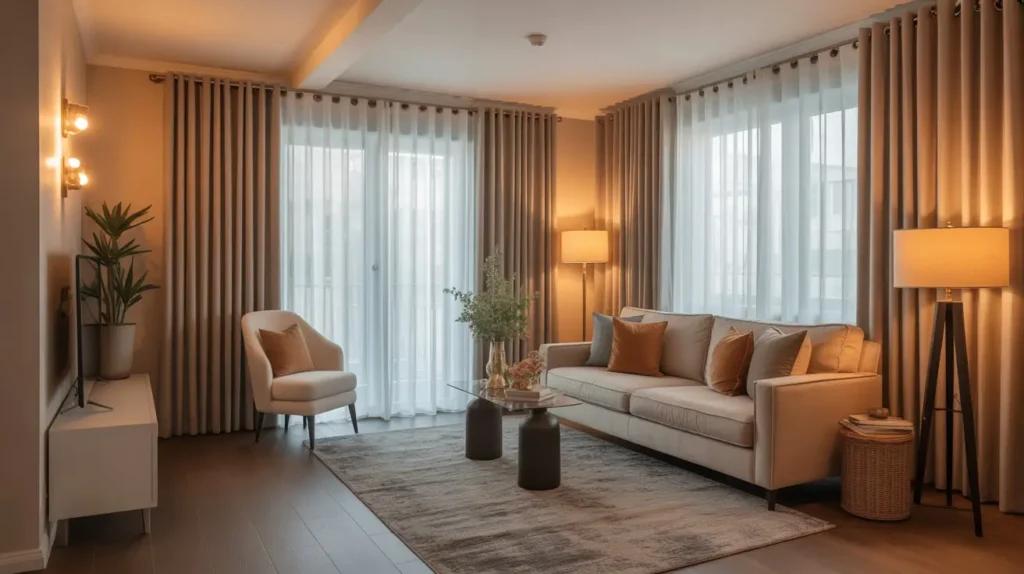
Can’t decide between sheers for light and heavy drapes for privacy? Why not have both? Layering curtains is the brilliant, “have your cake and eat it too” solution of the window treatment world. It’s practical, stylish, and adds incredible depth and dimension to your living room.
The Best of Both Worlds
I’m a huge proponent of layering. It’s the interior design equivalent of a stylish fall outfit—functional and chic. You get the soft, light-filtering benefits of a sheer curtain during the day and the privacy, insulation, and light-blocking power of a heavier curtain at night. It’s the ultimate in versatility and makes your windows look so much more “finished” and custom.
How to Master the Art of Layering
It’s easier than it looks, I promise. You just need the right setup.
- The Hardware: You’ll need a double curtain rod. This is a single bracket that holds two separate rods, one in front of the other. The back rod holds your sheer layer, and the front rod holds your main, heavier curtains.
- The Combination: The classic combo is a simple white or off-white sheer curtain on the back rod and a more substantial curtain on the front. This is where you can play with color, pattern, or texture.
- Color and Pattern Play:
- Subtle & Sophisticated: Pair a white sheer with a solid-color curtain in a neutral like gray, beige, or navy.
- Bold & Beautiful: Use a simple sheer as a neutral backdrop for a bold, patterned curtain on the front layer.
- Textural Dream: Combine a linen sheer with a heavy velvet or wool curtain for a rich, tactile experience.
A Designer’s Secret
When layering, make sure your front curtains are wide enough to stack completely off the window when they’re open. This allows the sheer layer to be fully visible and lets the maximum amount of light in. It looks so much more professional than having the heavy curtains partially blocking the glass all the time.
6. Bold Color Curtains to Make a Statement
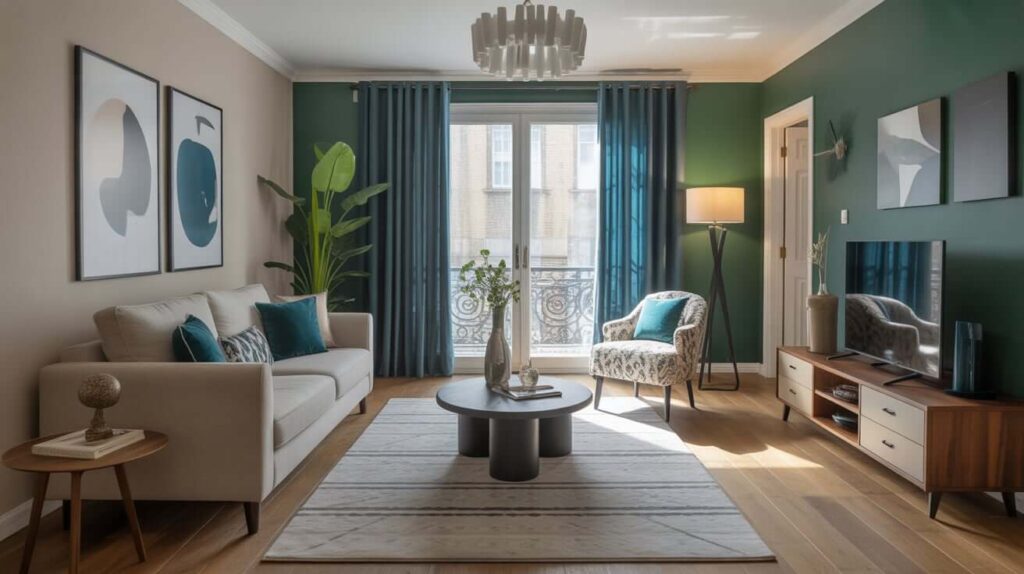
Are you tired of playing it safe with beige and gray? Do you want your living room to have a little more… pizzazz? Then it’s time to embrace the power of bold color. A pair of vibrant curtains can act as the focal point of your room, injecting energy, personality, and a serious dose of fun.
Not for the Faint of Heart
Choosing a bold color for your curtains is a commitment, but it’s one that can pay off spectacularly. It’s an easy way to make a huge design impact without having to paint all your walls. It can tie a whole color scheme together or serve as the one dramatic element in an otherwise neutral space. IMO, a room with a confident pop of color always feels more interesting.
How to Wield Color Wisely
Going bold doesn’t mean going crazy. A little strategy goes a long way.
- The 60-30-10 Rule: This is a classic design principle. Your main color (walls) is 60%, your secondary color (furniture) is 30%, and your accent color is 10%. Your bold curtains can be that powerful 10% accent.
- Pick a Color from Your Room: Look around. Is there a color in a piece of art, a rug, or a throw pillow that you love? Pull that color out and use it for your curtains. This makes the choice feel intentional, not random.
- Consider the Mood: Colors have a psychological effect. Yellows can feel cheerful and energetic, deep blues can be calming and sophisticated, while rich reds are passionate and dramatic. What vibe are you going for?
- Fabric Matters: A bold color will look different on different fabrics. A sunny yellow in a light linen feels fresh and airy, while the same yellow in a heavy velvet feels opulent and rich.
My Two Cents
If you’re nervous, start with a color that’s bold but not neon. A deep teal, a mustard yellow, or a burnt orange can provide that “wow” factor without being overwhelming. And remember, it’s just curtains. If you hate it in a year, you can change it. It’s not like you tattooed your wall. 🙂
7. Neutral Toned Curtains for Calm Interiors
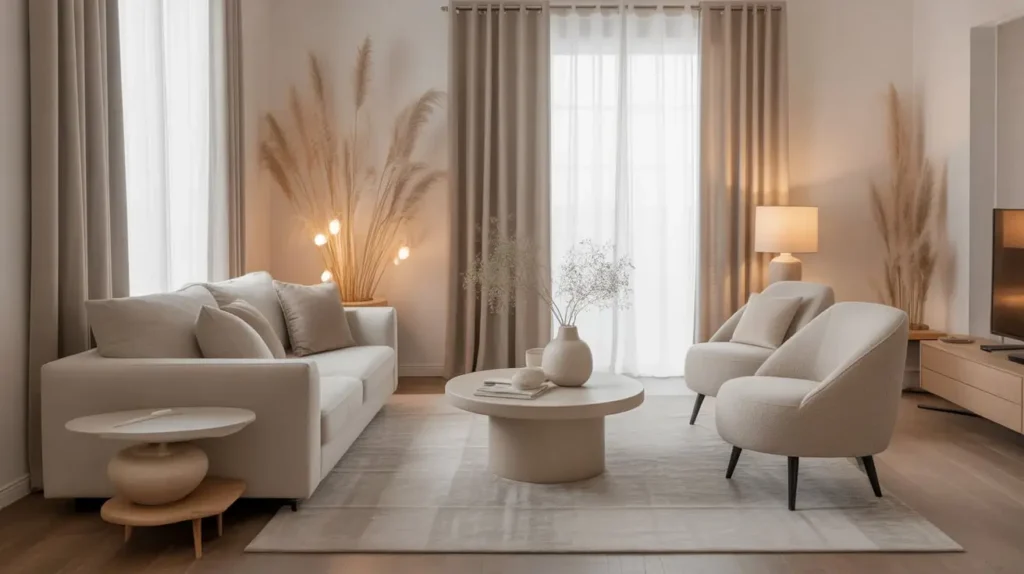
After that jolt of color, let’s bring the heart rate back down. Neutral curtains are the unsung heroes of interior design. They are timeless, sophisticated, and create a serene, calming atmosphere that is impossible to get tired of. When in doubt, you can truly never go wrong with a beautiful neutral.
The Power of Understatement
Don’t mistake “neutral” for “boring.” A well-chosen neutral curtain in a beautiful fabric adds warmth, texture, and elegance without competing with your other decor. They create a perfect, harmonious backdrop, allowing your furniture, art, and accessories to take center stage. Think of them as the perfect supporting actor who makes the whole movie better.
Choosing Your Perfect Neutral
“Neutral” is a surprisingly broad category. Let’s break it down.
- The Palette: We’re talking shades of white, cream, beige, greige, taupe, and soft gray.
- Warm vs. Cool: Pay attention to the undertones. A creamy beige will feel warmer and cozier, while a crisp light gray will feel cooler and more modern. Hold fabric swatches up to your wall color to see what works best.
- Texture is Everything: When you’re not using bold color or pattern, texture becomes your primary tool for adding interest. Look for nubby linens, woven cottons with a visible grain, or even a subtle herringbone or jacquard pattern in a single neutral tone.
The “White Curtain” Dilemma
Ever wondered which white to choose? A stark, pure white curtain looks amazing in a very modern, crisp space. However, in most homes, an off-white or light cream is more forgiving. It feels a bit softer and warmer and won’t look quite as jarring against walls that aren’t also pure white.
8. Patterned Curtains to Add Personality

If your living room feels a little one-note, patterned curtains are the perfect way to crank up the volume on your home’s personality. From subtle geometrics to bold, oversized florals, a pattern can introduce movement, rhythm, and a point of interest into your space.
Making a Lasting Impression
I think patterned curtains are one of the fastest ways to establish a style. A classic damask says “traditional elegance,” a quirky animal print says “eclectic and fun,” and a clean geometric says “modern and graphic.” They can tie together disparate elements in a room or be the jumping-off point for your entire color scheme.
How to Pick a Pattern Without Regretting It
Choosing a pattern can feel daunting. Will you get sick of it? Maybe! But here’s how to make a smart choice.
- Scale is Key: The size of the pattern should relate to the size of your room. In a large room with high ceilings, you can handle a large-scale, dramatic pattern. In a smaller room, a smaller, more delicate pattern might be less overwhelming.
- Consider Your Existing Patterns: If your rug is a riot of color and pattern, you might want to opt for a more subtle, two-toned pattern on your curtains. If your room is mostly solids, feel free to go wild with your window treatments. The rule of thumb is to mix scales: a large pattern with a medium pattern and a small pattern.
- Pattern Styles to Consider:
- Geometric: Clean, modern, and graphic. Think chevrons, stripes, or honeycomb patterns.
- Floral/Botanical: Can range from traditional and romantic to modern and abstract. Leafy green prints are hugely popular right now.
- Abstract: Like a piece of modern art for your windows.
- Ikat/Global: Adds a well-traveled, bohemian feel.
A Tip for the Timid
If you’re afraid to commit to a full-on pattern, look for a curtain with a patterned border or trim. This gives you that little pop of personality without overwhelming the space. It’s like dipping your toes in the pattern pool instead of doing a cannonball.
9. Floor-to-Ceiling Curtains for Height & Drama
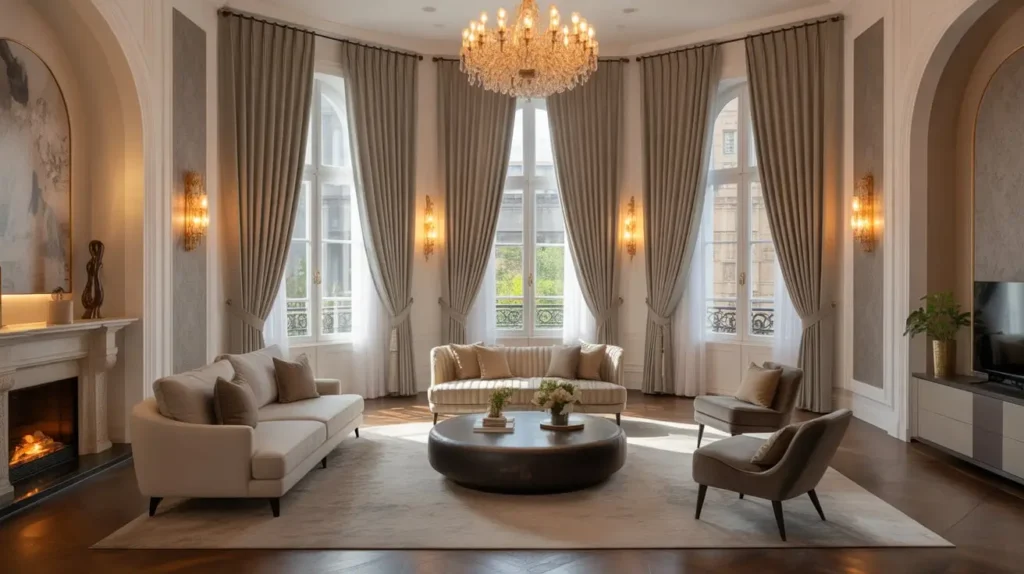
Want to know a designer trick that works in literally any room? Hang your curtains high and wide. Taking your curtains all the way from the floor to the ceiling is a transformative move that adds instant height, drama, and a sense of grandeur to your living room.
The Supermodel of Curtain Placements
This is my absolute favorite trick in the book. It’s an optical illusion that works wonders. By mounting the curtain rod as close to the ceiling as possible, you draw the eye upward, making your ceilings feel much higher than they actually are. Extending the rod beyond the window frame makes the window itself appear larger and more substantial. It’s magic.
How to Achieve This Grand Look
The execution is simple, but precision is key.
- Measure, Measure, Measure: You need to measure from just below the ceiling (or crown molding) all the way down to the floor. Your curtains should either just “kiss” the floor or puddle slightly (about 1-2 inches extra fabric). Never, ever let them hang inches above the floor. This is the “high-water pants” look I mentioned earlier. Avoid it at all costs.
- Go Wide: Mount your curtain rod so that it extends at least 6-12 inches on either side of the window frame. This allows you to pull the curtains completely clear of the glass when they’re open, maximizing your natural light and your view.
- Fullness is Your Friend: Just like with sheers, this look demands fullness. Skimpy panels that are stretched taut when closed will ruin the effect. You want luxurious folds of fabric, so aim for a total curtain width that is 2 to 2.5 times the width of the area you are covering.
Is It Worth the Custom Cost?
You might need to buy longer-than-standard panels or even go custom for this look, but FYI, it is 100% worth it. The impact it has on a room is far greater than the extra cost. It makes any room look more expensive and professionally designed.
Read Also 15 Stunning Blue Curtains Living Room Ideas for Modern Homes
10. Blackout Curtains for Functional Style
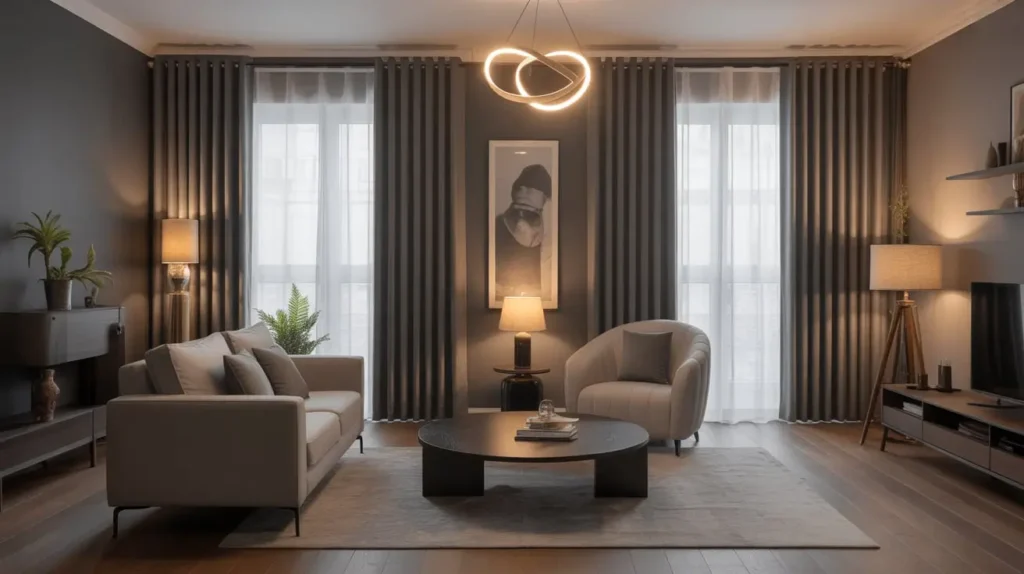
Blackout curtains have a reputation for being purely functional—and maybe a little bit ugly. But I’m here to tell you that they’ve had a major glow-up. You can now find blackout curtains that are just as stylish as their non-blackout counterparts, offering the perfect blend of form and function.
More Than Just for Bedrooms
Sure, they’re a lifesaver for light sleepers, but blackout curtains are amazing in a living room, too. Have you ever tried to watch a movie on a sunny afternoon with a glare across the TV screen? It’s the worst. Blackout curtains solve that problem instantly, turning your living room into the perfect home theater. They also offer superior insulation against heat and cold and provide total privacy.
Finding Stylish Blackout Options
Forget those stiff, plastic-y hotel curtains of yesteryear. Modern blackout curtains are a different breed.
- Look for “Lined” Curtains: The best options are often regular decorative curtains (like linen, cotton, or even velvet) that have a separate blackout liner sewn onto the back. This way, you get the beautiful fabric you want facing the room, with all the functional benefits hidden behind.
- Color Isn’t a Limitation: You are no longer limited to dark colors! Thanks to multi-layered fabric technology, you can now find effective blackout curtains in light colors, including white and cream.
- Consider a Layered Approach: If you can’t find a blackout curtain in the exact style you love, create your own. Layer a stylish decorative curtain panel over a simple blackout roller shade. You get the aesthetic you want with the function you need.
My Personal Experience
I have blackout-lined linen curtains in my living room, and they are a game-changer. 90% of the time, they’re open and just look like beautiful, textural linen drapes. But for family movie nights or on scorching hot summer days, closing them makes the room incredibly comfortable and dark. It’s a feature you won’t know how you lived without.
11. Linen Curtains for Natural & Relaxed Vibes
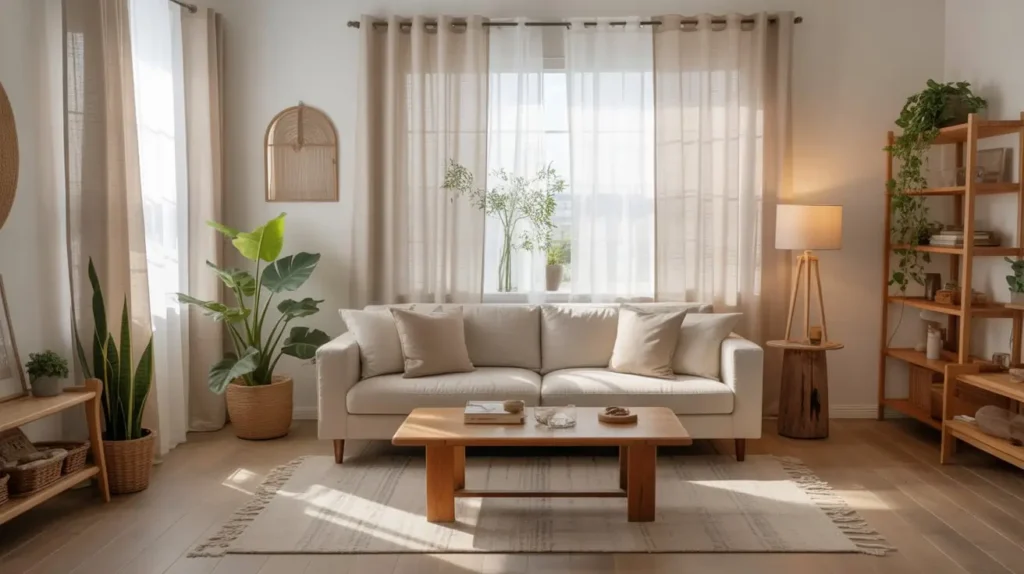
There is something so effortlessly chic about linen curtains. They bring a natural, organic, and relaxed feeling to a living room that is both timeless and very of-the-moment. If you’re aiming for a “coastal grandma,” modern farmhouse, or just a generally laid-back and sophisticated vibe, linen is your answer.
The Beauty of Imperfection
What I love most about linen is its perfect imperfection. The natural slubs and textures in the fabric give it character and depth. It’s not meant to be perfectly crisp and stiff; its beauty lies in its soft, flowing drape. Linen curtains filter light beautifully, creating a soft, warm glow without blocking the light completely.
Working with Linen
Linen is a natural fiber with a mind of its own. Here’s what you need to know.
- Embrace the Wrinkles: Linen will wrinkle. That’s part of its charm. If you’re someone who needs everything to be perfectly pressed, this might not be the fabric for you. You can steam them to release the worst of the wrinkles from packaging, but a few gentle creases are part of the relaxed look.
- Linen Blends: For a slightly less wrinkle-prone option, look for a linen-cotton or linen-viscose blend. You’ll still get that lovely linen texture, but with a bit more stability and a smoother drape.
- Color Choices: Linen looks stunning in its natural, undyed state—a beautiful oatmeal color. It also takes dye beautifully, looking gorgeous in earthy tones, soft pastels, and classic whites and grays.
A Quick Styling Tip
Because of their light and airy nature, linen curtains look fantastic hung with clip rings on a simple metal rod. This enhances their casual, breezy feel and makes them easy to open and close.
12. Transitional Style Curtains for Mixed Decor
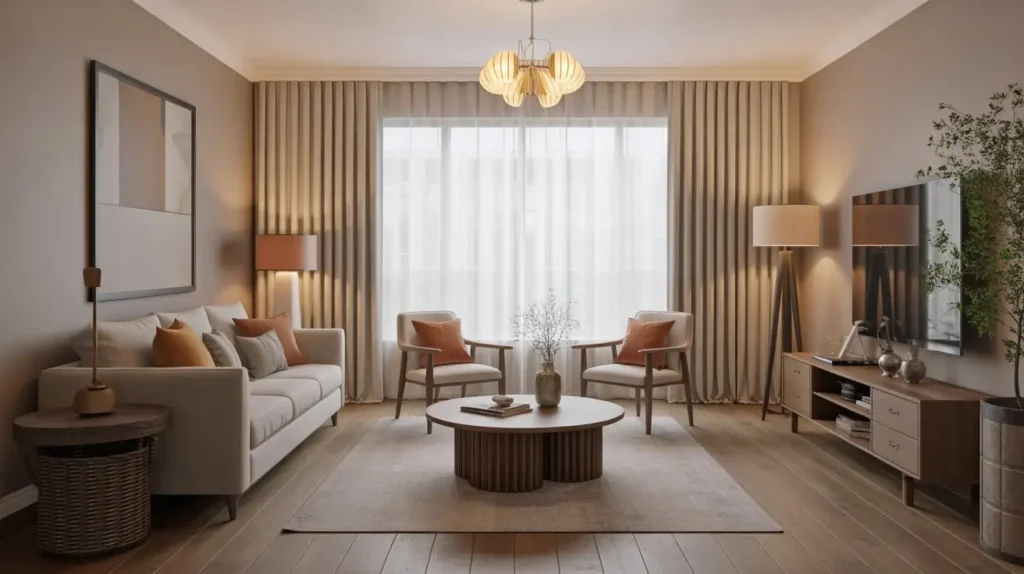
Is your living room a mix of modern and traditional pieces? Do you love clean lines but also crave a bit of cozy comfort? Welcome to the world of transitional style. It’s all about blending the best of both worlds, and your curtains can be the perfect element to tie it all together.
The Ultimate Bridge Builder
Transitional curtains act as a bridge between different styles. They have the simplicity of modern design but with the softness and warmth of traditional decor. This style is perfect for people whose tastes aren’t confined to a single, strict category (which, let’s face it, is most of us).
How to Get the Transitional Look
The key is balance. You’re looking for something that’s not too stark and not too fussy.
- Fabric and Texture: Look for high-quality fabrics with subtle texture. A heavy linen blend, a raw silk, or a soft woven cotton works perfectly. They have more weight and presence than a minimalist curtain but are less opulent than velvet.
- Subtle Patterns: If you want a pattern, keep it understated. A tone-on-tone stripe, a subtle geometric print, or a small-scale damask in a neutral color palette can add interest without screaming for attention.
- Elegant Pleats: This is a great style for more structured headings. A classic pinch pleat or a tailored Parisian pleat adds a touch of traditional elegance that feels polished and timeless, without being stuffy.
The Color Sweet Spot
Stick to a sophisticated, calming color palette. Soft neutrals are always a win, but you can also venture into muted colors like dusty blue, sage green, or a soft charcoal gray. The goal is a look that feels curated and calm, not chaotic.
13. Curtain Rod & Hardware Styling Ideas
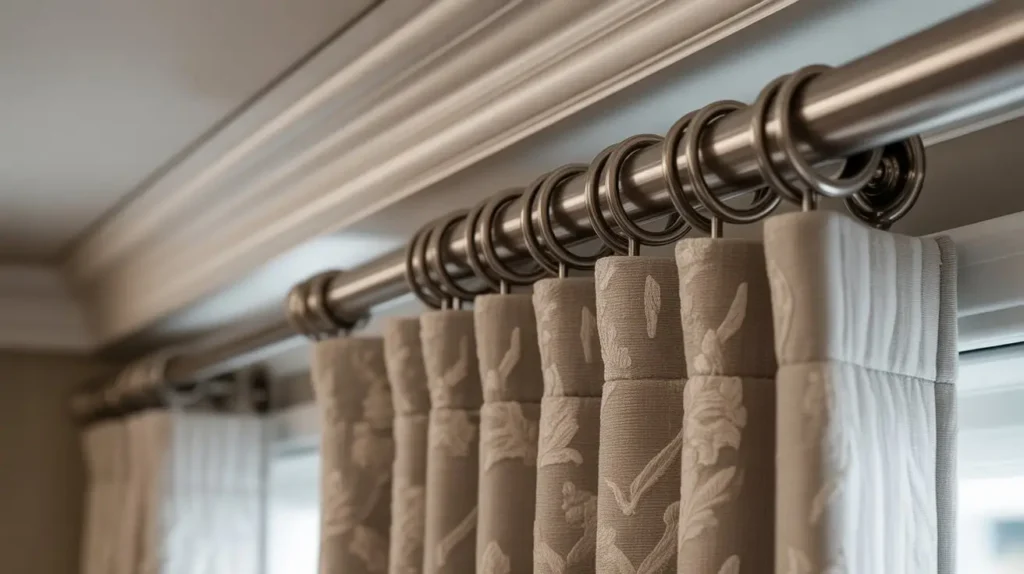
We’ve talked so much about the fabric, but let’s not forget the “jewelry” for your windows: the curtain rods and hardware. The right hardware can completely elevate your curtain choice, while the wrong hardware can make even the most expensive curtains look cheap.
It’s More Important Than You Think
Seriously, don’t treat your curtain rod as an afterthought. It’s a key part of the overall look. It helps define the style, adds a finishing touch, and can even become a decorative element in its own right. A flimsy, sagging rod is a design crime.
A Guide to Choosing Hardware
Here’s a quick rundown of how to match your hardware to your style.
- For a Modern/Minimalist Look:
- Rod: Slim, simple metal rod.
- Finish: Matte black, brushed nickel, or white.
- Finials (the end caps): Simple end caps or a clean cylinder. Nothing ornate.
- For a Farmhouse/Industrial Look:
- Rod: A thick, dark metal rod, sometimes resembling plumbing pipe.
- Finish: Matte black, dark bronze, or galvanized steel.
- Finials: A simple bend (a French return) or a basic cap.
- For a Traditional/Glam Look:
- Rod: A substantial rod, can be metal or wood.
- Finish: Antique brass, polished nickel, or a rich wood stain.
- Finials: Ornate and decorative. Think glass orbs, carved designs, or intricate scrollwork.
- For a Boho Look:
- Rod: A simple wood or bamboo rod.
- Finish: Natural wood or painted white.
- Finials: A simple cap or a carved, textural design.
A Final Hardware Tip
No matter the style, always choose a rod that is sturdy enough to support the weight of your curtains without bowing in the middle. For wide windows, make sure you have enough support brackets (at least one in the center).
14. Eco-Friendly & Sustainable Curtain Options
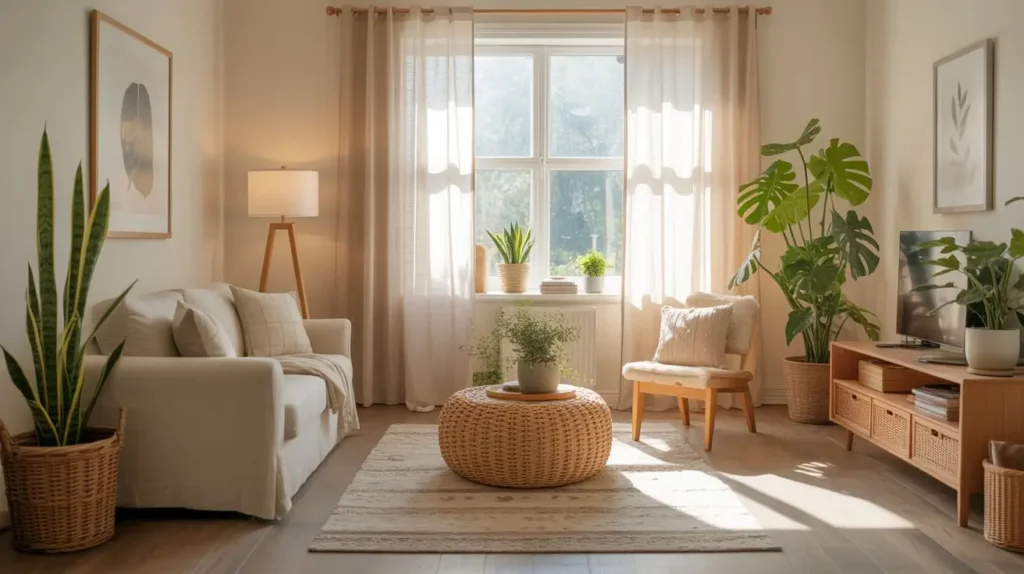
Feeling good about your home means more than just liking how it looks. For many of us, it also means making choices that are better for the planet. The great news is that sustainable and eco-friendly curtain options are more stylish and accessible than ever before.
Decorating with a Conscience
Choosing eco-friendly curtains means looking for materials that are renewable, biodegradable, or made with environmentally friendly processes. It’s a way to bring natural beauty into your home while minimizing your environmental footprint. And honestly, these natural materials often look and feel far superior to their synthetic counterparts.
What to Look For in a Sustainable Curtain
Keep an eye out for these materials and certifications.
- Organic Cotton: Grown without harmful pesticides and synthetic fertilizers, making it better for the soil, the farmers, and your home’s air quality.
- Hemp: A super-plant! Hemp is incredibly durable, naturally resistant to mold and UV light, and requires very little water to grow. Hemp curtains have a lovely, linen-like texture.
- Linen: Made from the flax plant, linen is a strong, biodegradable fiber that requires far fewer resources to produce than conventional cotton.
- Bamboo: A fast-growing, renewable resource. Bamboo fabric can be incredibly soft and has a beautiful, silky drape.
- Recycled Materials: Some companies now offer curtains made from recycled materials, like recycled polyester from plastic bottles.
- Certifications: Look for labels like GOTS (Global Organic Textile Standard) or OEKO-TEX, which certify that the textiles are free from harmful substances.
A Small Step with a Big Impact
Choosing sustainable curtains is a small change, but it’s part of a larger movement toward more conscious consumption. Plus, filling your home with natural, non-toxic materials just feels better. It creates a healthier, more serene environment for you and your family.
15. Seasonal Curtain Ideas for Year-Round Decor
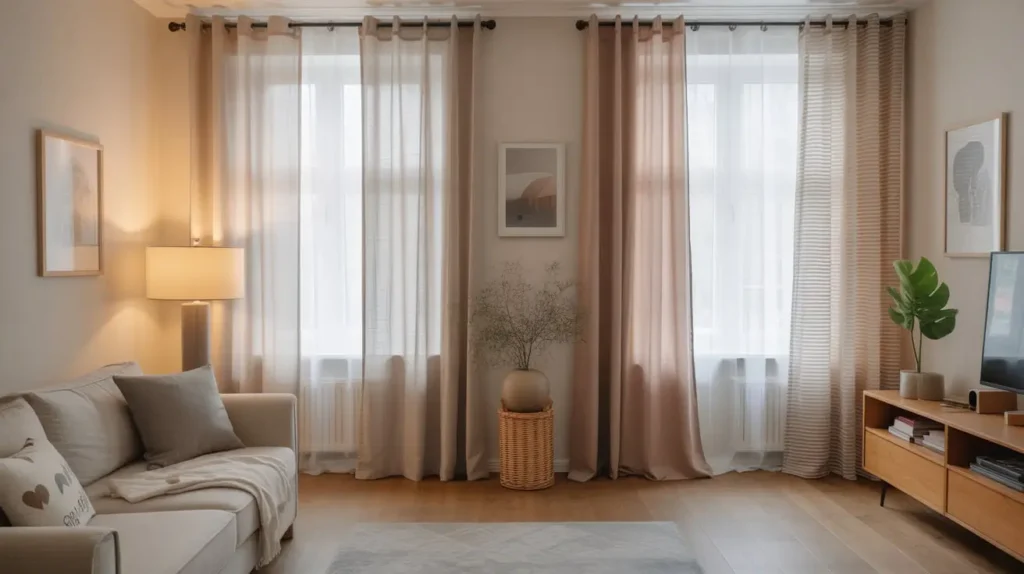
Last but not least, who says you have to stick with one set of curtains all year? If you love to refresh your decor with the changing seasons, swapping out your curtains is one of the most impactful changes you can make. It’s like changing the whole outfit of your living room.
A Fun and Fresh Approach
I know, it sounds like a lot of work. But if you use simple clip rings for your curtains, changing them out is a breeze. It’s a fantastic way to keep your living room from feeling stagnant and allows you to embrace the unique mood of each season.
Ideas for Every Season
Here’s how you can play with seasonal curtains:
- Spring: Time to lighten up! Swap out heavy drapes for lightweight linen or cotton sheers in soft pastels, crisp whites, or a cheerful floral print. It feels like a breath of fresh air after a long winter.
- Summer: Think breezy and light. Sheer white curtains that billow in the breeze are classic. You could also go for a fun, coastal-inspired stripe in blue and white or a vibrant botanical print that brings the outdoors in.
- Autumn: This is the time to get cozy. Bring in curtains with more texture and warmth. Think woven plaids, rich colors like mustard yellow, burnt orange, or olive green, or fabrics like a lightweight wool or a textured cotton.
- Winter: Go for maximum coziness and a touch of luxury. This is the perfect time to bring out the heavy velvet curtains in a deep jewel tone or a rich charcoal gray. A thick, insulated curtain can also help keep the cold drafts at bay.
The Practical Side
The key to making this work is smart storage. When you take a set of curtains down, fold them neatly and store them in a breathable fabric bag to keep them clean and ready for next year. It’s a little extra effort for a huge decorative payoff.
Ready to Dress Your Windows?
Whew! We’ve covered a lot of ground, from sleek minimalism to cozy, layered looks. The most important takeaway? Your living room curtains are so much more than just fabric panels. They are a powerful tool to control light, create a mood, and express your personal style.
Don’t be afraid to try something new. Whether you’re drawn to the drama of floor-to-ceiling velvet or the breezy charm of linen sheers, the perfect choice is the one that makes you happy every time you walk into the room. So, take another look at those bare windows. They’re not a problem; they’re an opportunity.
Go on, give those windows the love they deserve. You’ve got this.